
What drives the cost of custom cream boxes and which finishes work?
Short answer: Four main factors set your unit price: flat blank area (cube size plus inserts), order quantity (including multi-SKU grouping), base construction (tuck vs auto lock or two-piece), and surface finishes. Request up to three quantity tiers when quoting custom cream boxes to compare price breaks.
On this page
- Which four spec choices have the biggest impact on custom cream box pricing
- How does sharing one 50 g jar dieline across Day, Night and Barrier Creams cut cost
- Which finishes protect cream boxes from rich emollients and vanity moisture
- Why is the top lid the smartest place for foil stamping or embossing on a cube box
- How do I coordinate my outer cream carton with jar labels and tamper seals
- Common mistakes
- FAQs
Request a custom quoteFree dieline & 3D mockup
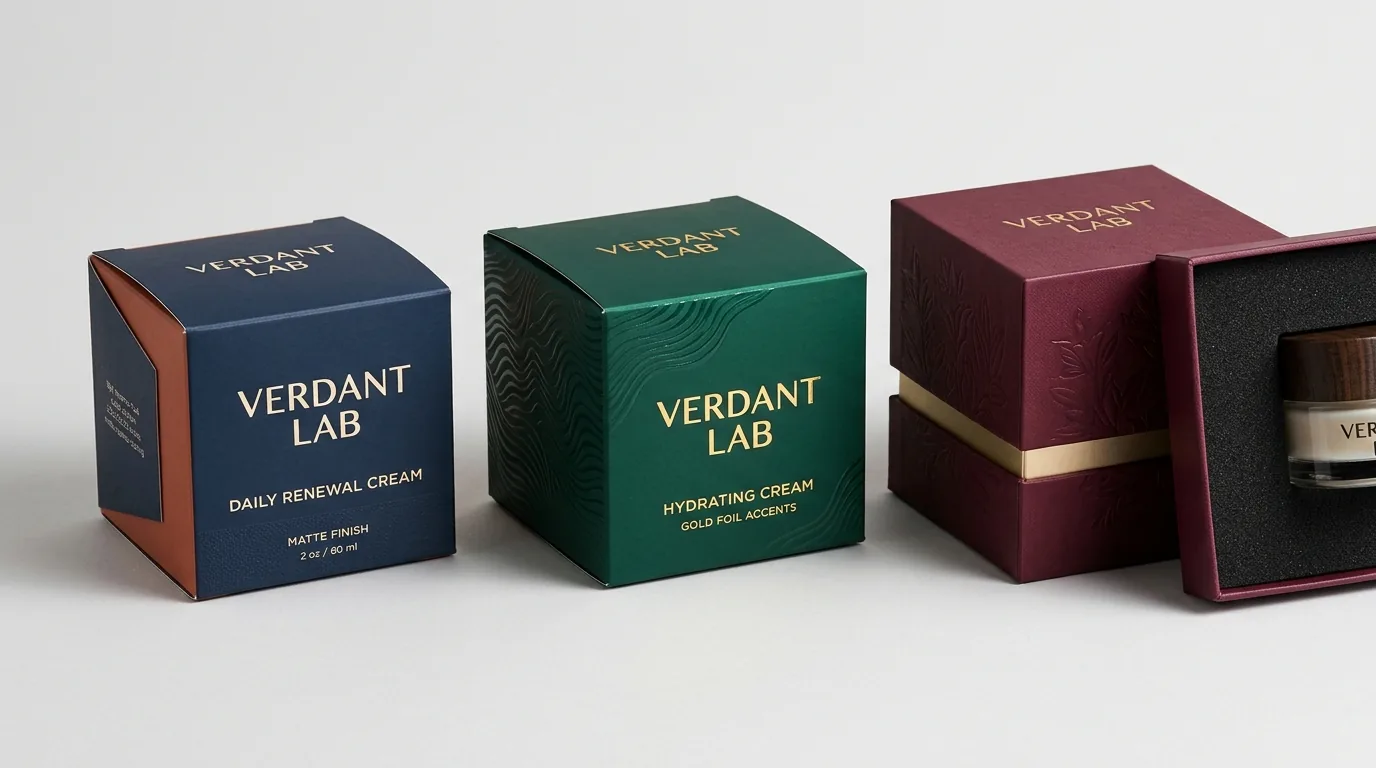
The unit cost of a custom cream box is driven by how much paperboard the flat dieline consumes, how many press and finishing passes your artwork requires, and how many total cartons run on press at once. Because CubitPack never charges for cutting dies, printing plates, design help or US ground shipping to all 50 states, your budget goes directly into the board stock, ink and finishes. You can lower your per-box cost significantly by standardizing one 50 g jar size across your Day Cream, Night Cream and Gel Moisturizer so all three SKUs share one cube dieline and combine toward a single higher quantity tier. When selecting finishes for emollient-rich creams and body butters, start with an oil-resistant exterior lamination (soft-touch, matte or gloss), then add one focused focal detail such as top-lid foil stamping or blind embossing.
Which four spec choices have the biggest impact on custom cream box pricing?
Every custom carton is built to order, which means small adjustments to how your dieline nests on a parent press sheet or how the bottom flaps are glued can shift the unit price noticeably. Review the breakdown below before submitting your specs for printed cream jar cartons. Because press setup is amortized across the total sheet count, jumping from 1,000 boxes to 2,500 or 5,000 boxes produces the steepest drop in unit price. That is why our quote form lets you enter three different quantities at once so you can see the exact volume savings side by side. In addition to press volume, how the flat carton blank nests on the parent paperboard sheet plays a major role in material efficiency. A standard 2.75 × 2.75 × 2.5 in straight or reverse tuck cube uses a compact cross-shaped blank that tiles across a press sheet with minimal paper trim waste. Adding a separate folded card pedestal riser or a notched top spatula collar introduces a second die-cut piece of paperboard, whereas building an extended fifth-panel spatula tab directly onto the main carton blank keeps everything on one press sheet.
| Cost driver | Lower-cost spec choice | Higher-tier spec upgrade |
|---|---|---|
| Order quantity & SKUs | 2,500 to 10,000+ boxes (or 3 SKUs sharing 1 dieline) | Single 1,000-box run with unique dimensions |
| Carton structure | One-piece straight or reverse tuck end cube | Pre-glued auto lock bottom or two-piece rigid box |
| Internal inserts | Built-in top neck/spatula tab on the box blank | Separate folded card pedestal + EVA foam well |
| Board stock | Standard white card or natural brown kraft | Heavy-caliper board, E-flute corrugated or rigid board |
| Color & printing | Outside CMYK or 1-2 Pantone colors | Outside + full interior routine printing + multiple PMS |
| Surface finishes | Matte or gloss lamination alone | Soft-touch lamination + hot foil + multi-level emboss |
How does sharing one 50 g jar dieline across Day, Night and Barrier Creams cut cost?
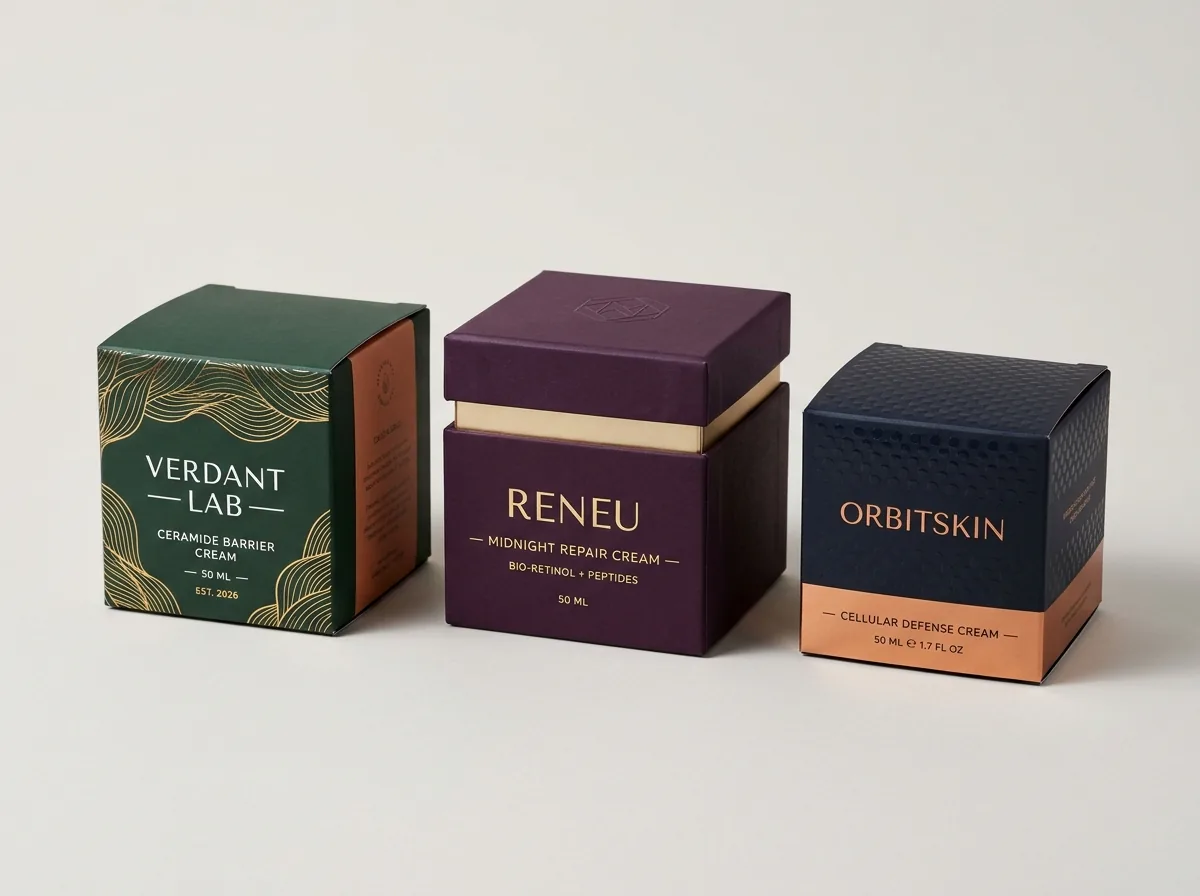
Most skincare brands launch or expand with a family of jar products: for example, a Vitamin C Day Cream, a Peptide Night Cream, and a Ceramide Recovery Balm. If you source three slightly different 50 g jars from different glass suppliers, each SKU requires its own dieline layout and separate press setup. Instead, keep the exact same 50 g jar mold for all three formulas and differentiate the products through jar tint, cap color and carton artwork. When all three cartons share an identical 2.75 × 2.75 × 2.5 in cube dieline, we can gang-run your artworks together on the same parent press sheets. Select "2 designs" or "3+ designs" in Step 2 of the quote form and list your breakdown in the notes (for instance, 1,000 Day Cream + 1,000 Night Cream + 500 Recovery Balm = 2,500 total boxes). You qualify for the 2,500-unit price break while keeping each SKU's inventory lean and fresh.
- Standardize the jar: use one 50 g jar dimension across Day, Night and Mask SKUs so one dieline fits all.
- Keep the same board and base coat: run all ganged SKUs on white card with soft-touch lamination so they print on the same sheet.
- Vary the CMYK colorways freely: each SKU on a ganged CMYK sheet can have its own background color, text and INCI panel at no extra plate fee.
- Print inside the lid instead of buying paper leaflets: eliminate separate instruction inserts and co-packing stuffing labor.
Which finishes protect cream boxes from rich emollients and vanity moisture?
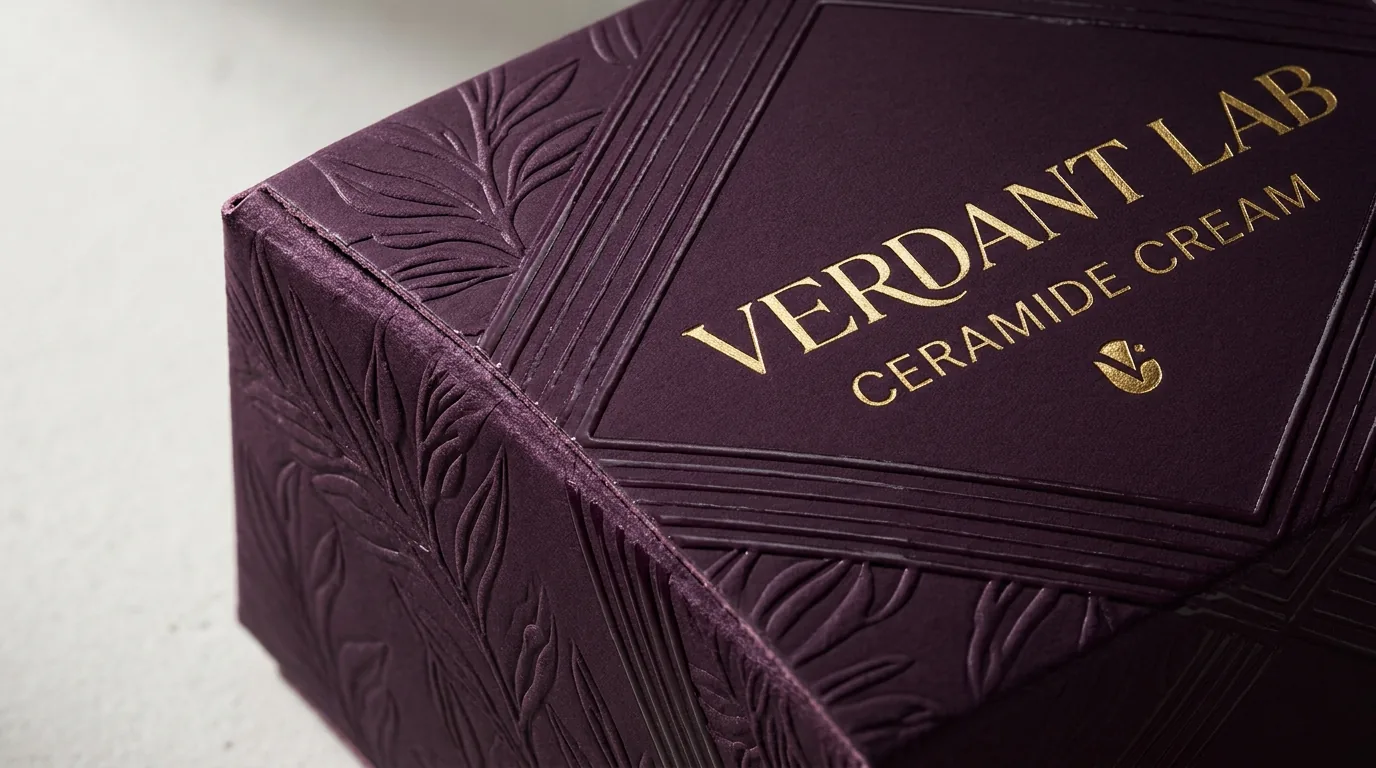
Face creams, night masks, shea body butters and cleansing balms are packed with plant oils, squalane, triglycerides and waxes. During contract filling and capping, or when a customer opens the box on a bathroom vanity with moisturized hands, trace amounts of cream can transfer onto the outer carton. On raw, unlaminated paperboard, even a tiny fingerprint of facial oil leaves a permanent translucent grease spot. Laminating the exterior of your custom skincare boxes and cream cartons solves oil transfer and fold-cracking in one step. Matte lamination gives a smooth, low-glare clinical look that hides scuffs during parcel transit and keeps small 6 pt back-panel INCI text crisp under bright retail lighting. Soft-touch lamination upgrades that matte barrier with a velvety, peach-skin texture that customers associate with luxury moisturizers and eye creams. Gloss lamination provides the most water- and oil-repellent wipe-clean surface, making it popular for shower masks, body butters and barrier ointments.
Know your size? Compare pricing across up to 3 quantities.
Request a Quote →Why is the top lid the smartest place for foil stamping or embossing on a cube box?
Unlike tall serum or lotion bottles where the front panel dominates eye-level shelves, cube cream boxes sit low (often only 2 to 2.75 inches tall). On boutique tables, vanity drawers and e-commerce unboxing videos, the customer looks straight down at the square top tuck flap before they ever read the front panel. Concentrating your decorative finish on the top lid and the upper half of the front panel gives you maximum visual impact without paying to foil-stamp all four sides. A blind-embossed monogram crest on the top lid (pressing a raised 3D seal into soft-touch white card without ink) adds sculptural depth that customers feel the moment their thumb touches the flap. Pairing that top emboss with a clean metallic foil product name on the front face, or a glossy spot UV frame around your key ceramide or peptide claim, creates a balanced, clutter-free design that photographs cleanly from both top and front angles.
How do I coordinate my outer cream carton with jar labels and tamper seals?
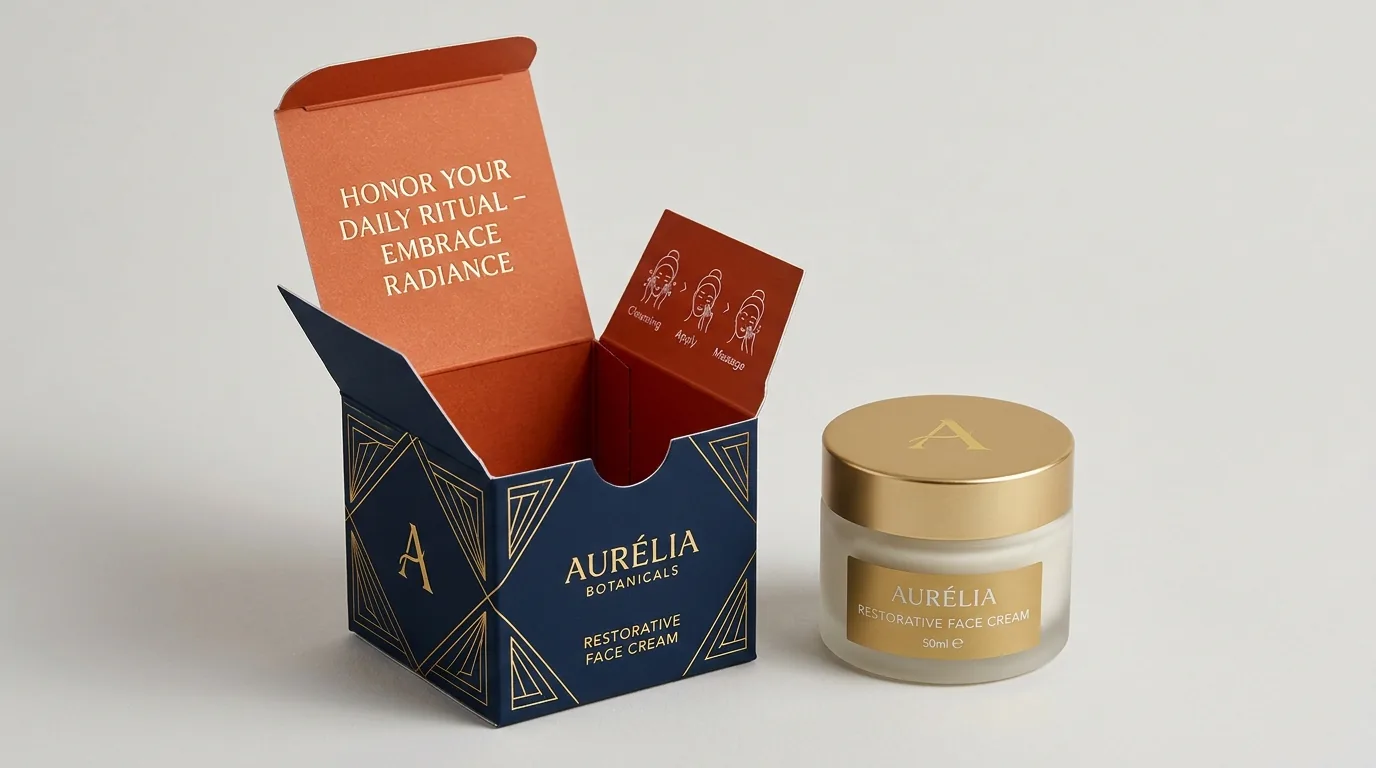
When a customer lifts the jar out of the box and recycles the carton, the jar stays on their bathroom counter for the next 60 to 90 days. If you use stock glass or frosted acrylic jars rather than direct screen-printed glass, ordering coordinated custom jar labels and custom seal stickers alongside your cream boxes keeps your Pantone colors and finishes consistent across both layers. A popular setup for 50 g and 100 g creams is a soft-touch cube carton on the outside, a clear tamper-evident lollipop seal across the top flap, a waterproof film wrap label around the jar body, and a round metallic or embossed circle label on the screw cap lid. Because CubitPack produces both folding cartons and custom labels, our prepress team matches your Pantone ink formulas across the outer carton, the primary jar label and the lid seal in one streamlined workflow.
What are the most common cream box budgeting and finish mistakes?
Smart spec choices keep your unit cost down while protecting the box from oil and transit scuffs. Avoid these five mistakes
- Ordering three separate 1,000-box orders with slightly different cube sizes instead of standardizing one jar dieline for a 3,000-box price break.
- Skipping exterior lamination on dark navy, black or forest green cube cartons, which allows ink to crack white along the four vertical fold scores.
- Using unlaminated paperboard for oil-rich body butters or facial balms where handling leaves grease marks on the carton.
- Paying for a separate folded paper instruction leaflet when the wide interior walls and inside lid of a cube box can be printed directly.
- Layering foil, embossing and spot UV on all four side panels instead of focusing decorative finishes on the top lid and front display panel.
Find your size
Suggested inside size: 2 × 2 × 1.75 in
A starting point. Your account manager confirms the size with you before the proof.
Quote this size →Packaging for this
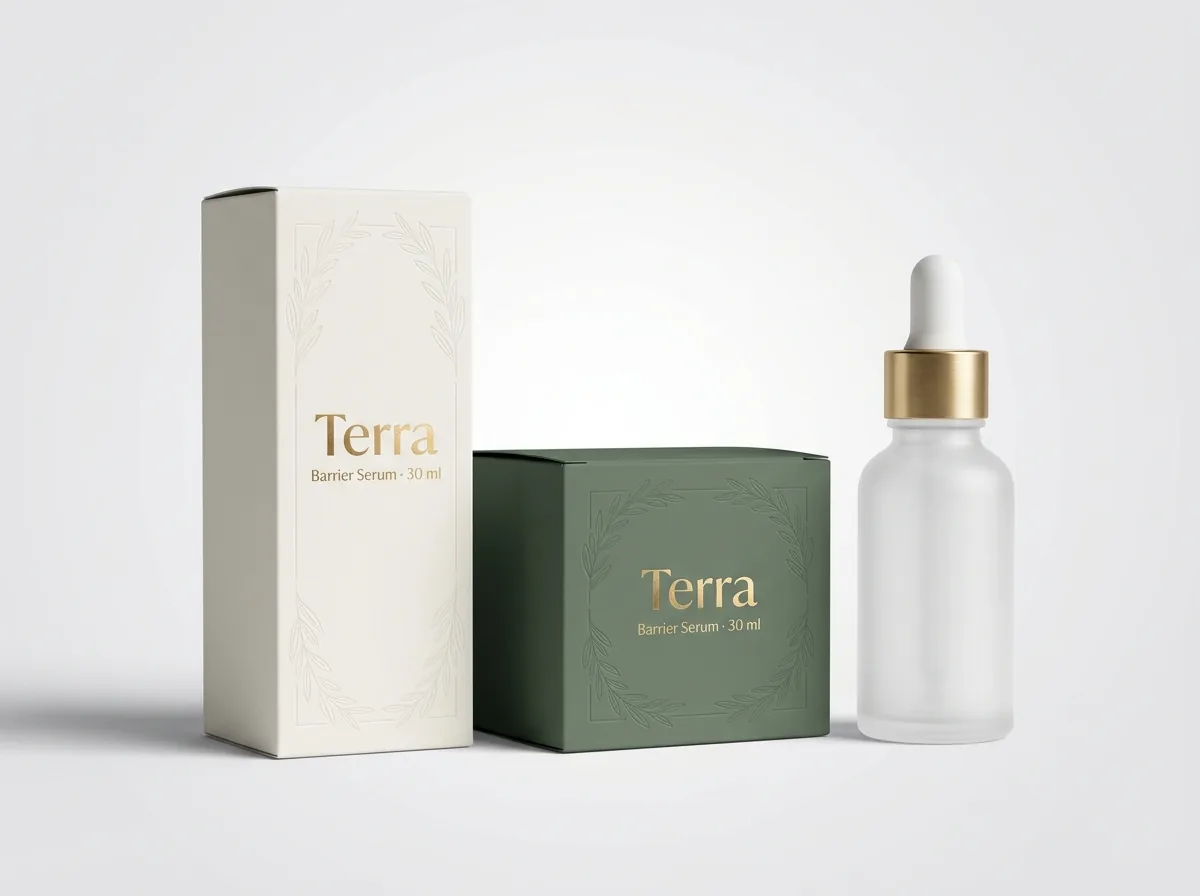
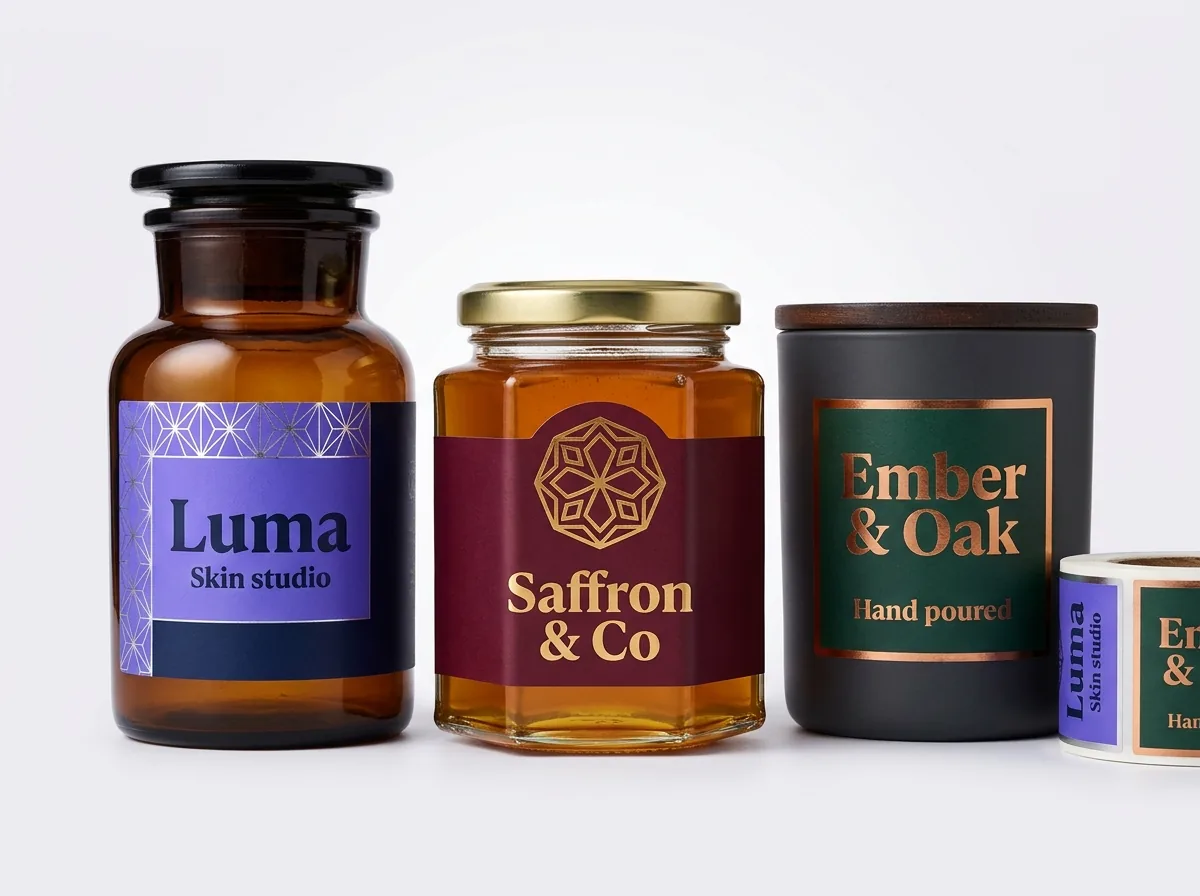
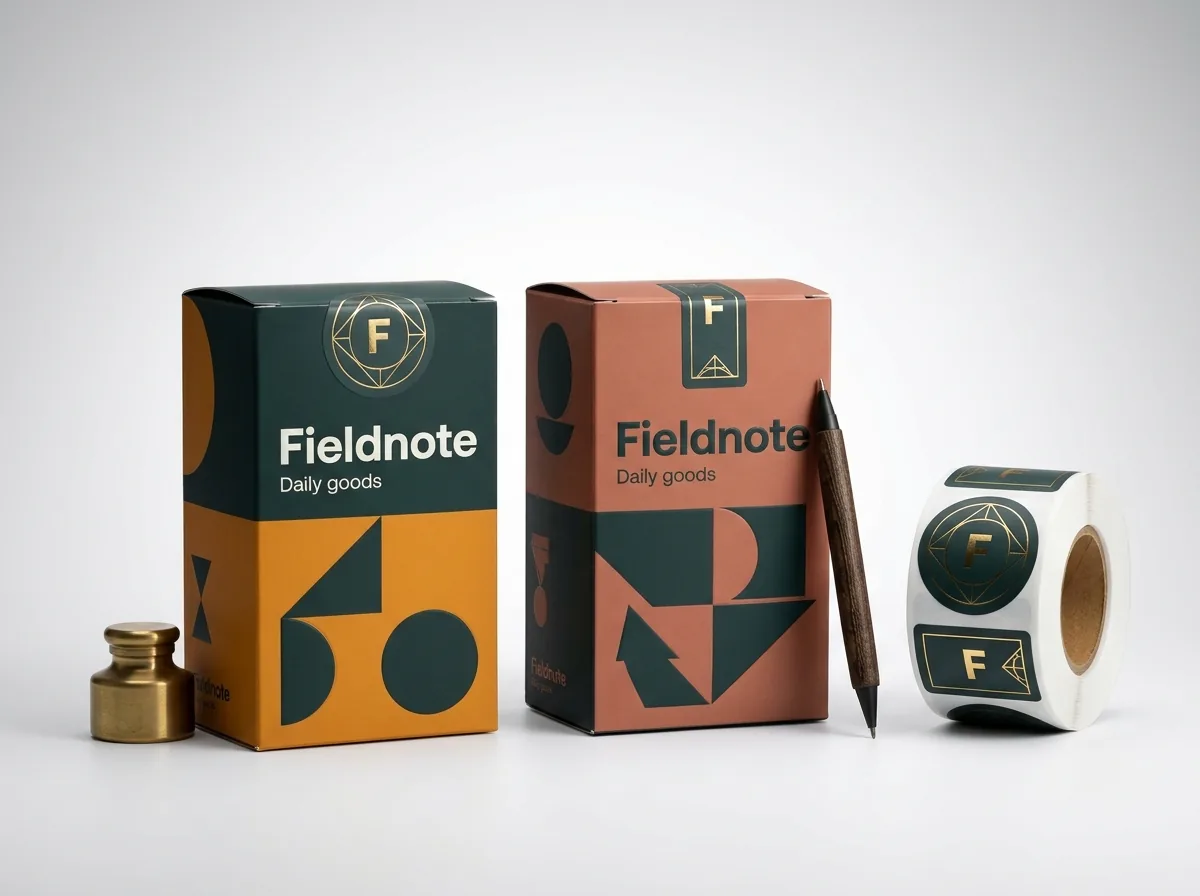
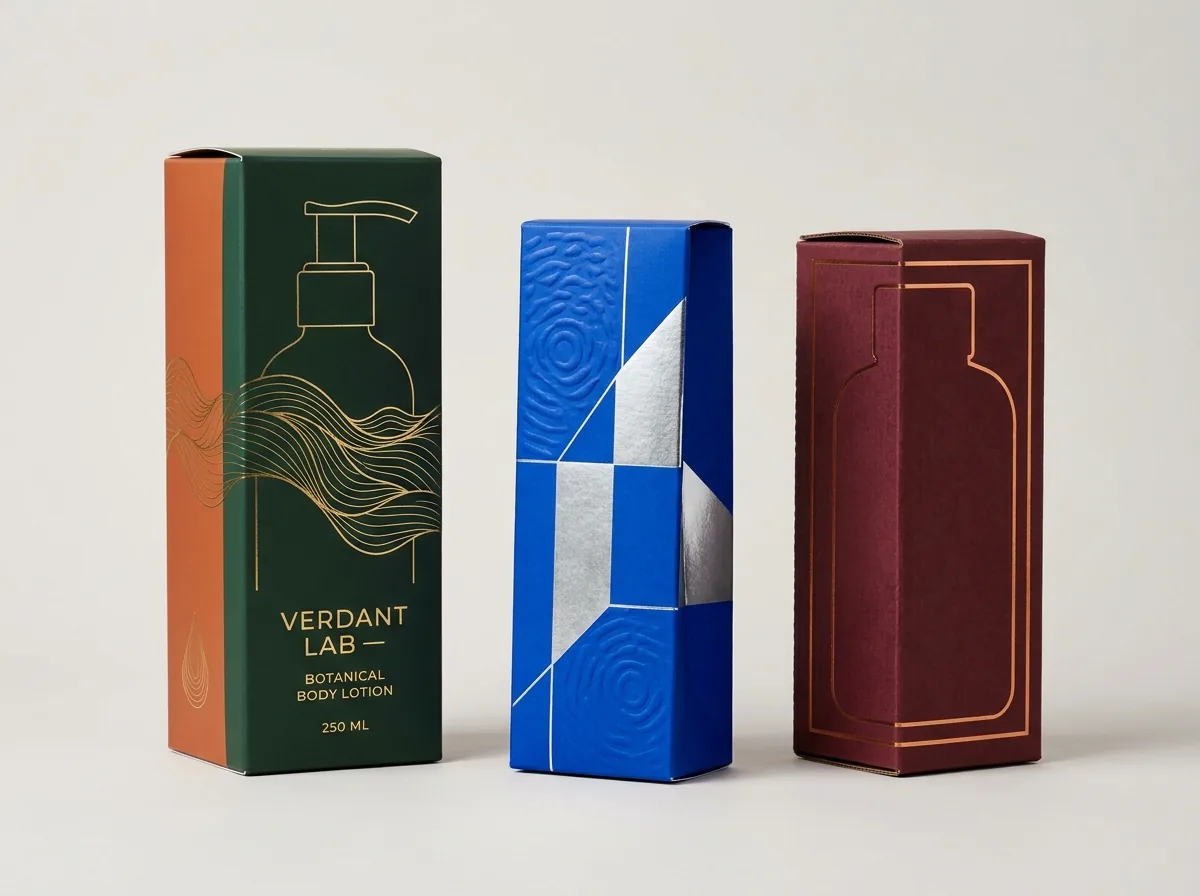
Ready to order cream boxes? Compare up to 3 quantities with a free 3D mockup.
Request a Quote →Questions about cream boxes
Are there extra charges for cutting dies, printing plates or custom dielines?
No. CubitPack never charges for custom dielines, cutting dies, printing plates, prepress artwork setup or US ground shipping to all 50 states. Your quote covers the finished boxes delivered to your door, with 10% off your first order.
How can I compare prices for 1,000, 2,500 and 5,000 cream boxes at once?
Step 1 of the quote form includes three quantity boxes with quick-add presets. Enter up to three quantities, such as 1,000, 2,500 and 5,000, and your account manager will send back a clear price for each tier in 5-7 minutes.
Can I split a 1,000-box or 2,500-box order across Day Cream and Night Cream?
Yes. When both creams use the same jar and box dimensions, pick '2 designs' or '3+ designs' in Step 2 of the quote form and note your quantity split. Grouping identical box sizes lets you share press setup and lower your unit cost.
Does soft-touch lamination protect dark cream boxes from edge cracking?
Yes. Lamination bonds a thin, flexible film over the printed paperboard before the box is die-cut and creased. That film bridges across the 90-degree fold scores so deep solid colors fold cleanly without exposing white paper fibers.
What if I have a lower written quote from another US packaging supplier?
Send us the competitor's written quote. Under CubitPack's price-beat guarantee, we beat any written quote from a US competitor for the exact same box specifications, board and quantity.
Can I feel the difference between matte, gloss and soft-touch finishes before ordering?
Yes. Order our $50 sample kit, which is credited in full toward your first order, to inspect board stocks, laminations, foil stamping, embossing and spot UV in your hands before finalizing your cream box specs.
Still have a question? Ask a packaging specialist.
Request a Quote →Request your cream boxes quote
Tell us your size and quantities, and one dedicated account manager prepares pricing for each tier.
- Free design & AI-to-print studio + 3D mockup
- No die or plate charges · 4–5 day rush available
- Free shipping to all 50 states
- 10% off your first order
This guide compiles CubitPack's decided pricing and service rules from our published product specifications alongside sheetfed offset gang-run mechanics and cosmetic lamination performance standards. A packaging specialist verified every detail. Spot an error? Let us know and we will fix it.
Sources
What changed
- October 22, 2026: First published.
- October 22, 2026: Updated specifications, terminology, and verified source links.
More guides
New packaging guides by email
Sizes, materials and design tips. Unsubscribe anytime.