
Cube tuck cartons vs two-piece boxes for face creams: how to choose?
Short answer: Pick a folding cube carton (straight tuck for light 15 g to 30 g jars, or auto lock bottom for heavy 50 g to 100 g glass jars) when ordering 1,000+ units that ship flat. Choose two-piece or tray-and-sleeve custom cream boxes for prestige unboxing or smaller 50-unit rigid runs.
On this page
- How do tuck cubes, auto lock cubes, tray-and-sleeve and two-piece cream boxes compare
- Straight tuck end vs auto lock bottom: which cube base holds heavy glass jars
- Why do luxury face creams use two-piece lid-and-base or shoulder-neck boxes
- When is a tray-and-sleeve drawer box the smartest pick for cream jars
- How do warehouse storage and e-commerce shipping affect your box style choice
- Common mistakes
- FAQs
Request a custom quoteFree dieline & 3D mockup
Choosing the right structure for a face cream jar comes down to four practical factors: the filled weight of your jar, how you want the customer to lift the jar out, your warehouse storage space, and your order quantity. Standard straight tuck end cube cartons work cleanly for lightweight 15 g eye creams and plastic pots, while pre-glued auto lock bottom cube cartons support heavy 50 g, 100 g and 200 g glass moisturizer jars without bottom-flap sagging. Both folding carton styles start at 1,000 units, use zero die or plate charges, and ship completely flat to save storage space. When you want a ceremony-style reveal where a telescoping lid lifts off a pedestal base, or when you only need a small 50-to-250-unit launch run, a two-piece rigid box or double-wall tray-and-sleeve carton delivers a substantial keepsake presentation.
How do tuck cubes, auto lock cubes, tray-and-sleeve and two-piece cream boxes compare?
Unlike tall serum vials that stay inside the carton until the top flap is opened, wide-mouth cream jars are squat and dense. Shoppers want to lift the jar out smoothly without fighting tight side walls, and retail shelves require a base that never bows downward under thick glass. Compare the four main structural families used for printed cream jar boxes below. Notice how folding carton structures (straight tuck end, auto lock bottom, and folding tray-and-sleeve) start at 1,000 units and ship flat, whereas wrapped rigid two-piece and shoulder-neck boxes start at just 50 units and ship pre-assembled (or as collapsible rigid boxes).
| Box style | Best jar weight & use case | Minimum & shipping format |
|---|---|---|
| Straight tuck end cube | 15 g eye pots, 30 g light jars, plastic pods | 1,000 boxes · ships flat |
| Auto lock bottom cube | 50 g to 200 g heavy glass & double-wall jars | 1,000 boxes · ships flat, pre-glued base |
| Tray and sleeve (folding) | Refillable jar + pod sets, night mask kits | 1,000 boxes · ships flat |
| Two-piece folding box | Mid-tier gift creams and spa retail lines | 1,000 boxes · ships flat, folds into lid & tray |
| Two-piece rigid box | Prestige anti-aging creams, PR kits, small launches | 50 boxes · ships assembled |
Straight tuck end vs auto lock bottom: which cube base holds heavy glass jars?
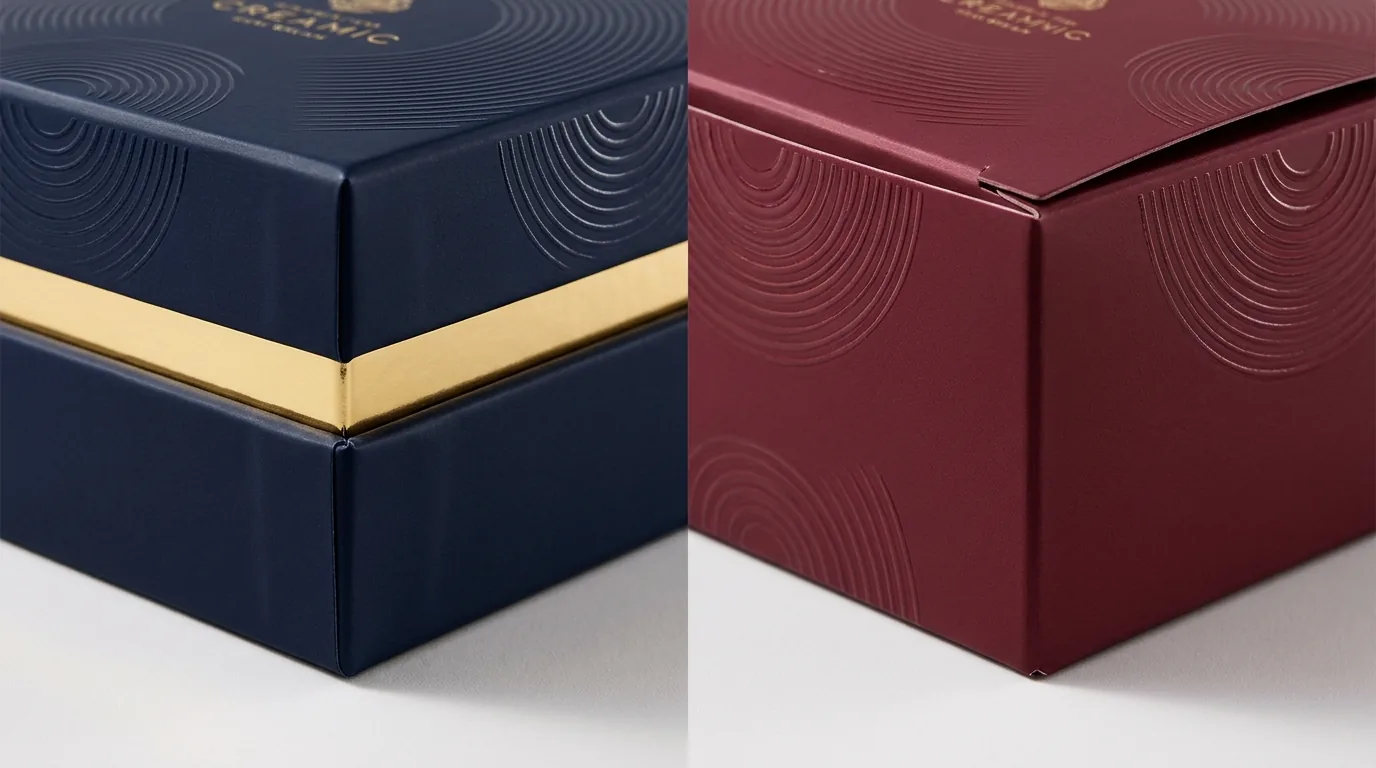
Inside the folding carton category, your main structural choice is between straight tuck end boxes and auto lock bottom boxes. Because a cream jar is nearly as wide as it is tall, its entire weight presses down on a wide square bottom panel (often 2.75 × 2.75 in or 3.375 × 3.375 in). On a wider square span, an unglued bottom tuck flap has much more leverage to flex downward than it does on a narrow 1.5-inch serum box. If you pack a 15 g under-eye cream, a 30 g polypropylene jar or an inner refill cup weighing under 3 ounces, a straight tuck end cube with slit-lock (cherry-lock) tabs holds the base flat and gives you a continuous, uninterrupted front panel. Once you step up to a 50 g thick-sham glass moisturizer jar or a 100 g to 200 g body butter tub weighing 6 to 14 ounces, upgrade to a pre-glued auto lock bottom. The four bottom flaps overlap and lock together automatically as soon as your packer pops the flat carton open, preventing bottom drop-through and cutting manual packing time in half across multi-thousand-unit fulfillment runs.
Why do luxury face creams use two-piece lid-and-base or shoulder-neck boxes?
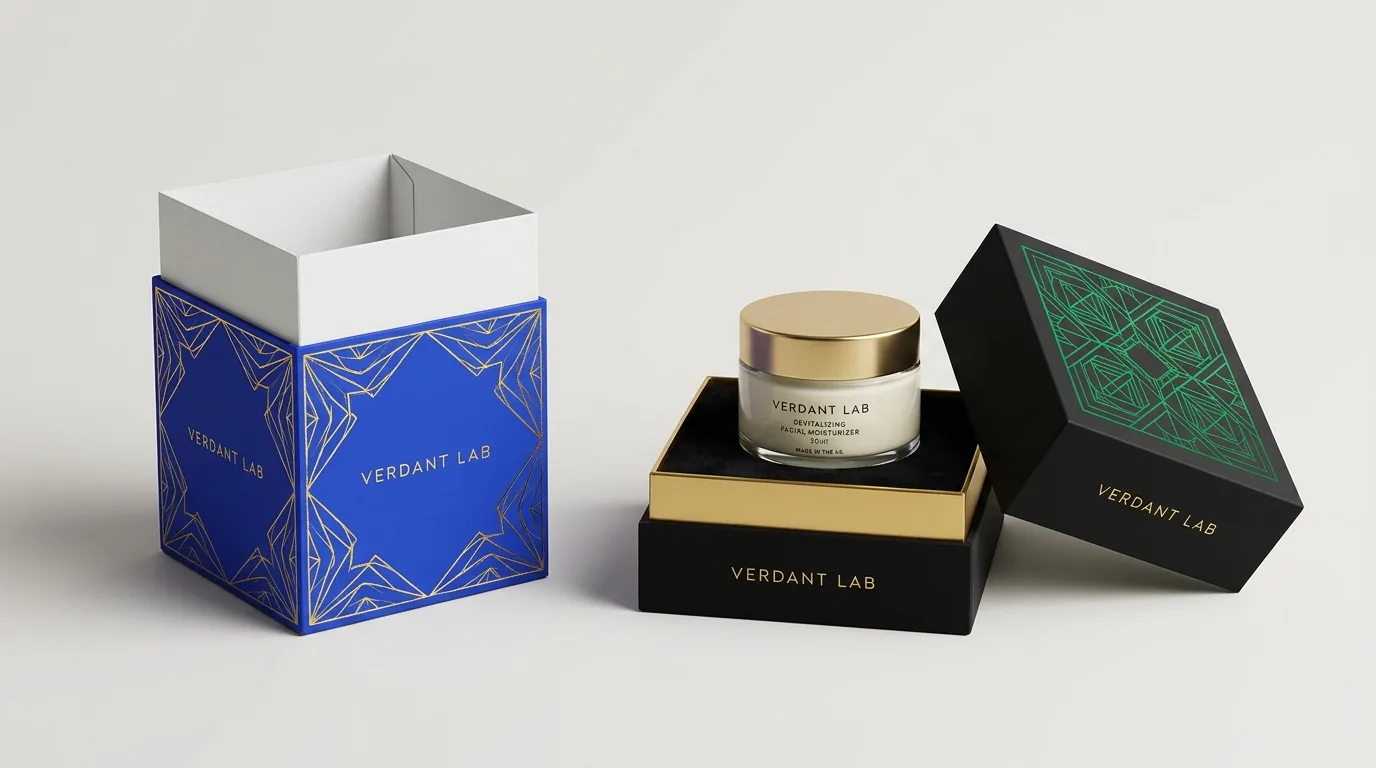
Think about the physical motion of taking a squat 50 g jar out of a top-opening cube box: the customer has to reach two fingers down inside the top opening and pinch the smooth glass cap to pull the jar upward. On flagship peptide creams, cellular night masks and spa treatments, brands often prefer a presentation where the lid lifts straight up to reveal the jar sitting proudly on an elevated pedestal. You can achieve that lift-off ceremony in two ways. For runs of 1,000 units or more that need to ship flat to your co-packer, custom two-piece boxes made from folding paperboard fold into a double-wall base tray and a telescoping lid, paired with a die-cut card riser that holds the lower half of the jar. For prestige lines or smaller initial runs starting at just 50 units, custom rigid boxes (either classic two-piece lid-and-base or shoulder-neck style where an inner neck ring leaves the jar sitting half-exposed when the lid comes off) use thick chipboard wrapped in soft-touch or linen paper.
- Top-opening cube (STE / Auto lock): fastest to pack, most compact on retail shelves, lowest unit cost at 1,000+ units.
- Folding two-piece box: ships flat, folds into double-wall tray and lid, lets customers lift the jar straight off a pedestal.
- Rigid two-piece or shoulder-neck box: starts at 50 units, thick non-bending chipboard walls, ideal for luxury hero SKUs and PR sets.
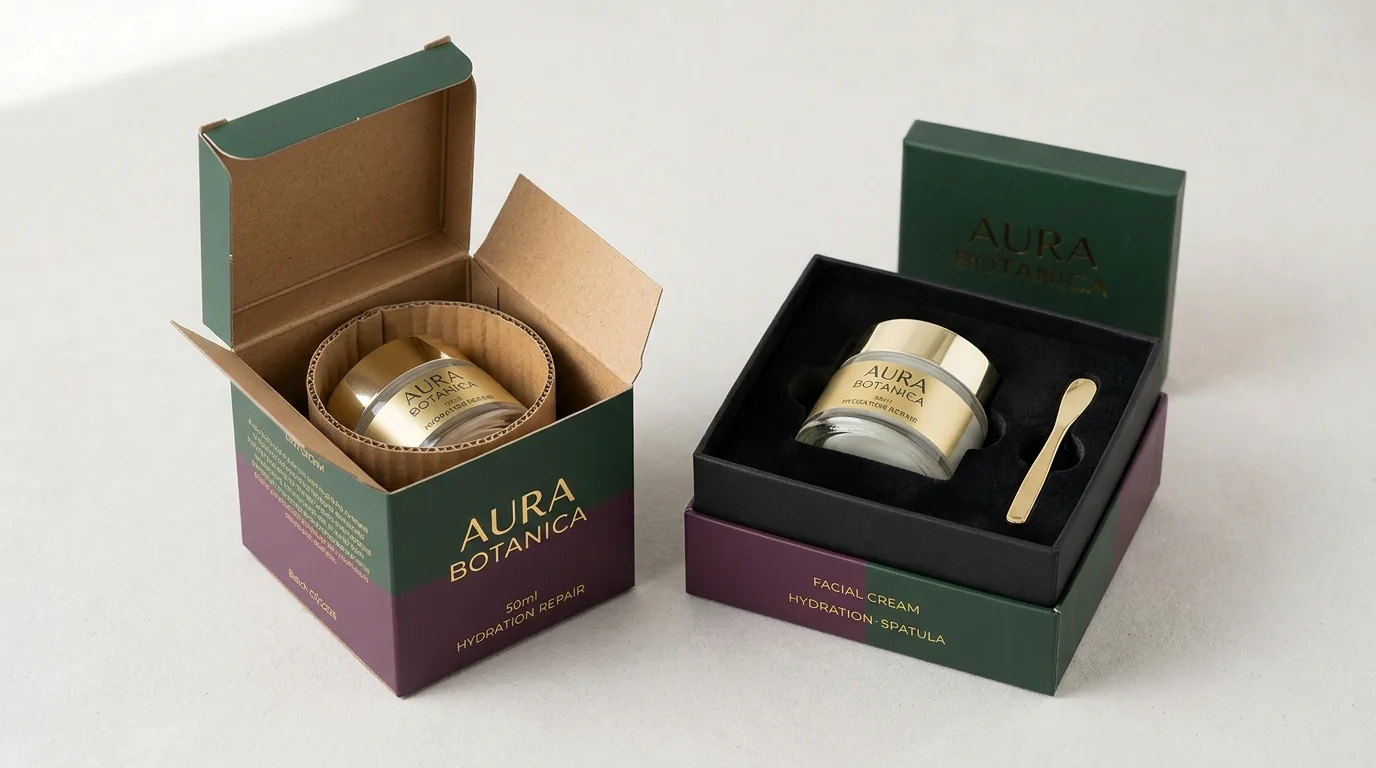
- Spatula presentation: two-piece boxes let you recess a mini applicator spatula into the pedestal collar right beside the jar.
Know your size? Compare pricing across up to 3 quantities.
Request a Quote →When is a tray-and-sleeve drawer box the smartest pick for cream jars?
Refillable skincare jars have become a major growth category in clean beauty: the customer buys the heavy outer glass or aluminum jar once, then orders lightweight polypropylene refill pods for repeat purchases. A tray and sleeve box fits refillable cream systems and multi-item routines naturally. First, the outer four-sided sleeve acts as a clean structural band with no top or bottom tuck flaps required, while the inner double-wall drawer tray slides out horizontally with a ribbon pull or thumb notch. Second, for starter kits that include both the 50 g master jar and a spare 50 g refill pod (or a 50 g face cream paired with a 15 g eye cream), a rectangular tray-and-sleeve carton holds both items side by side in a single die-cut insert cavity so customers see the complete moisturizer system in one smooth slide without opening separate tuck flaps.
How do warehouse storage and e-commerce shipping affect your box style choice?
Before choosing between a folding cube carton and a rigid two-piece box, check where your empty packaging will be stored and how finished orders ship. Five thousand flat auto-lock cube cartons for a 50 g jar stack neatly into a few master cartons on a single pallet corner. Five thousand pre-assembled rigid two-piece boxes occupy several pallets of warehouse volume because each box is already erected around air. If you fulfill orders through a third-party logistics (3PL) warehouse that charges monthly pallet storage fees, or if your contract formulator has limited staging space at the filling line, flat-shipped folding cartons (auto lock bottom, straight tuck end or folding tray-and-sleeve) with a custom cardboard insert give you strong parcel drop protection with minimal storage footprint. On the other hand, if you are producing a limited-edition holiday skincare collection, a clinical influencer PR kit, or a flagship anti-aging jar priced at the top of your range, ordering 100 to 500 rigid two-piece boxes gives your product an unmistakable vanity keepsake presence with zero folding labor required during pack-out.
What are the most common mistakes when choosing a cream box style?
Matching the wrong base or lid style to a wide jar causes shelf sagging or awkward unboxing. Avoid these five structural mistakes
- Using an unglued friction-tuck bottom on a wide 3-inch cube holding a heavy 50 g or 100 g glass jar, which bows open when lifted.
- Making a two-piece telescoping lid the exact same depth as the base without a finger notch or neck reveal, making the lid hard to grip and lift.
- Ordering pre-assembled rigid boxes for a 10,000-unit mass run without confirming pallet storage capacity at your co-packer.
- Putting a squat jar at the bottom of a deep top-opening box without a pedestal riser, forcing customers to fish the jar out.
- Forgetting a top collar or recess for the cosmetic spatula, allowing the scoop to rattle against the jar lid during parcel transit.
Find your size
Suggested inside size: 2 × 2 × 1.75 in
A starting point. Your account manager confirms the size with you before the proof.
Quote this size →Packaging for this
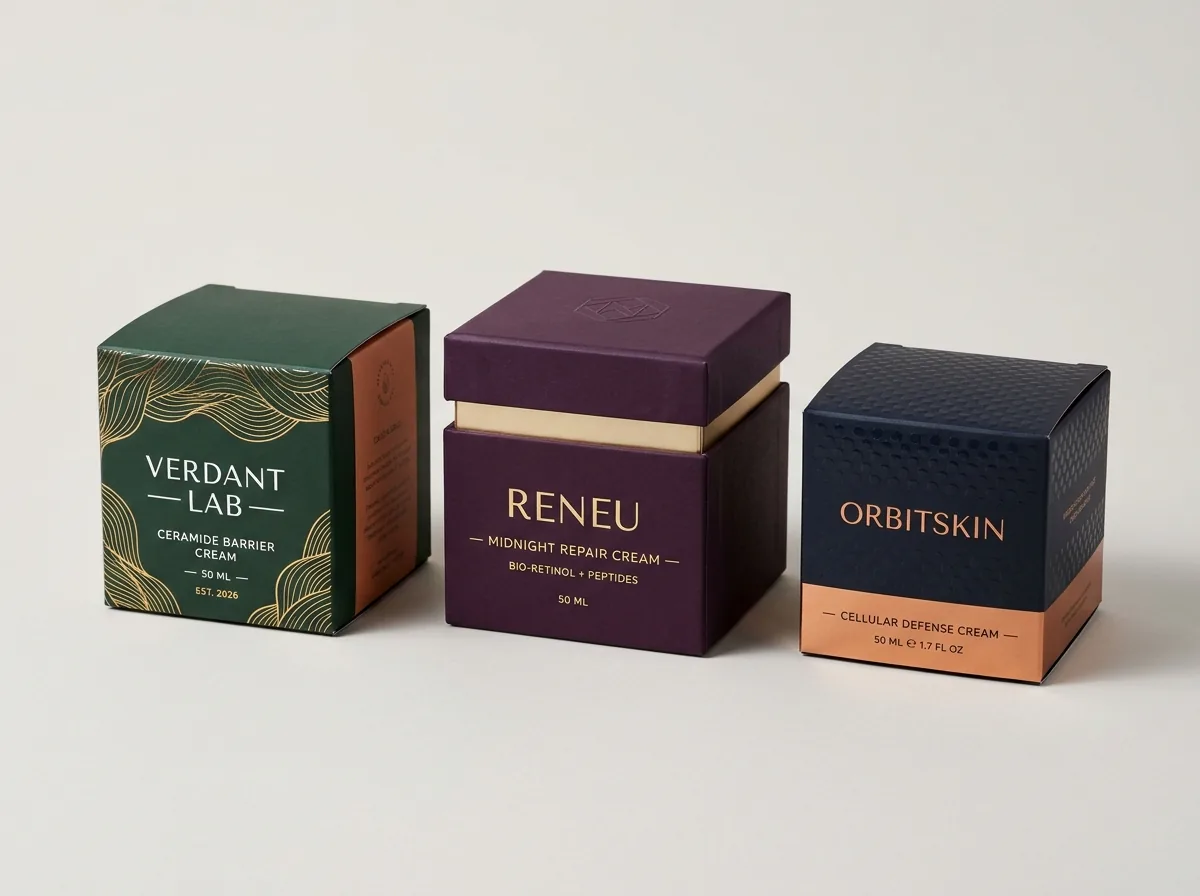
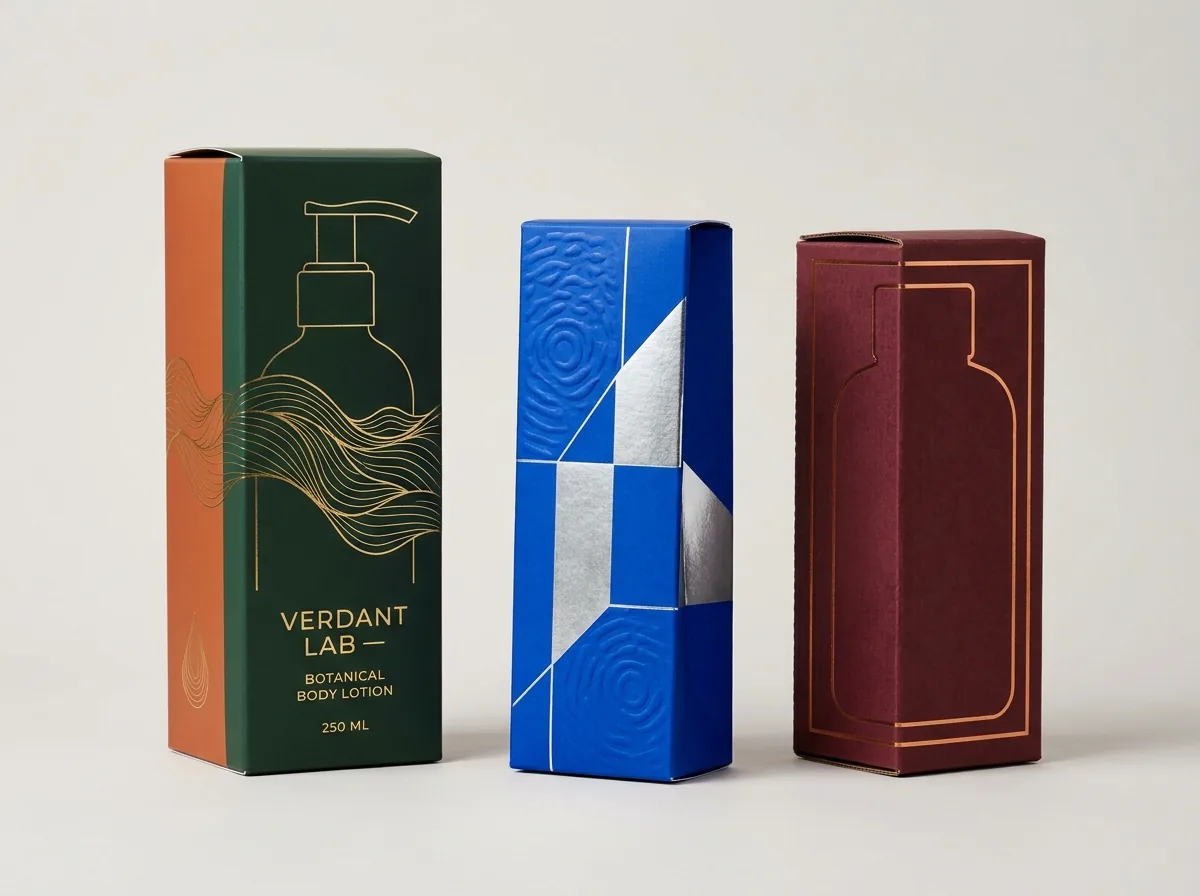
Ready to order cream boxes? Compare up to 3 quantities with a free 3D mockup.
Request a Quote →Questions about cream boxes
Can I order fewer than 1,000 cream boxes if I choose a rigid two-piece style?
Yes. While custom folding cartons (such as straight tuck end and auto lock bottom cubes) have a 1,000-box minimum, custom rigid two-piece and drawer boxes start at just 50 boxes. Small trial orders on folding cartons are also considered case by case.
Why is an auto lock bottom recommended for 50 g and 100 g glass cream jars?
Wide-mouth glass jars have a large footprint and weigh 6 to 12 ounces when filled. On a wide square base, a standard tuck flap can flex downward, whereas a pre-glued auto lock bottom interlocks four flaps to support the jar flat.
How do you make a two-piece cream box easy to open without the lid sticking?
We either design the telescoping lid 1/2 inch shorter than the base tray so the customer can grip the exposed lower rim, add two semi-circular thumb notches on the sides of the lid, or build a shoulder-neck ring that stops the lid mid-way.
Can a folding cube cream box still have an elevated pedestal and spatula holder?
Yes. We can pair a flat-shipped auto lock bottom cube carton with a folded card bottom riser and a notched top collar. You get the flat storage and lower unit cost of a folding carton with a structured unboxing presentation.
Which cream box style is fastest for a co-packer to assemble by hand?
An auto lock bottom folding carton is the fastest flat-shipped style: squeezing the sides pops the pre-glued bottom shut in one second, leaving only the top lid flap to tuck after dropping the jar inside.
Can I compare folding cube cartons and two-piece boxes before deciding?
Yes. Mention both styles in your quote notes so your account manager can price both side by side, and order our $50 sample kit (credited toward your first order) to feel our folding paperboard and rigid board constructions in person.
Still have a question? Ask a packaging specialist.
Request a Quote →Request your cream boxes quote
Tell us your size and quantities, and one dedicated account manager prepares pricing for each tier.
- Free design & AI-to-print studio + 3D mockup
- No die or plate charges · 4–5 day rush available
- Free shipping to all 50 states
- 10% off your first order
This comparison evaluates folding carton and rigid set-up box constructions against standard 15 g to 200 g cosmetic jar weights, co-packing erection times, and CubitPack's decided minimums. A packaging specialist checked every specification. Spot something wrong? Tell us and we will fix it.
Sources
What changed
- October 22, 2026: First published.
- October 22, 2026: Updated specifications, terminology, and verified source links.
More guides
New packaging guides by email
Sizes, materials and design tips. Unsubscribe anytime.