
What size box fits 30 ml foundation bottles, sticks and compacts?
Short answer: A cylindrical 30 ml (1 fl oz) foundation pump bottle typically needs an inside box size of 1.5 × 1.5 × 4.75 inches, while heavy square 30 ml glass bottles usually take 1.75 × 1.75 × 5.0 inches. Measure your bottle with calipers, add 1/16 to 1/8 inch clearance, and order custom foundation boxes to match.
On this page
- How do I measure a glass foundation bottle or compact for a carton
- What are the standard foundation box dimensions by container type
- How much extra box room do I need for a cardboard neck insert
- How do I size cartons for cushion compacts, refill pans and sticks
- Can I use one box size across 30 foundation shades and different formulas
- Common mistakes
- FAQs
Request a custom quoteFree dieline & 3D mockup
The right foundation carton size always starts with the physical bottle, tube or compact sitting on your desk rather than the nominal 30 ml (1 fl oz) fill volume. Two 30 ml glass pump bottles can differ by a quarter inch in width and half an inch in height depending on glass wall thickness, base punt depth and overcap style. Use digital calipers to measure the widest point of the bottle body and the full assembled height from the bottom glass heel to the top of the pump cap. Add 1/16 inch (0.0625 in) of clearance on length and width for a snug slip fit without an insert, or 1/4 inch to 3/8 inch when adding a folded paperboard neck collar. Add 1/8 inch (0.125 in) to the vertical height so the top tuck flap closes flat without pressing down on the pump actuator or dropper bulb.
How do I measure a glass foundation bottle or compact for a carton?
Glass cosmetic molds have subtle draft angles and thick bottom heels that a flat desk ruler can easily misread by 1/16 inch. Close a pair of digital calipers around the bottle at three places: the bottom heel, the mid-body label panel and the upper shoulder right below the pump collar. Record the largest horizontal reading as your bottle width and depth. Next, snap the overcap onto the pump or screw the glass dropper tightly into the neck and measure the total standing height from the table surface to the top of the closure. Folding cartons are always quoted and built by inside dimensions written in the order Length × Width × Height (L × W × H). On a square bottle, length across the front panel and width from front to back are identical. On an oval bottle, squeeze tube or rectangular compact case, length is the wider front face that faces the customer on the shelf, width is the narrower side gusset, and height is the vertical distance from bottom flap to top flap. When you order printed foundation bottle cartons, our prepress engineers verify these three inside numbers before generating your dieline.
- Measure bottle width and depth with calipers across the base heel, middle wall and shoulder.
- Measure total assembled height with the pump actuator and overcap fully seated.
- Add 1/16 in (1.5 mm) to length and width for a direct slip fit with no internal insert.
- Add 1/8 in (3 mm) to height so the top tuck flap folds flat without crowning over the cap.
- Write inside dimensions in inches as Length (front) × Width (side) × Height (top to bottom).
What are the standard foundation box dimensions by container type?
Because CubitPack builds every order to your exact dieline with no die or plate charges, you never have to squeeze a custom bottle into a stock carton. Still, most complexion containers fall into seven common size families. Use the reference chart below to estimate your carton size and pick the matching structural style before measuring your final production bottle. Notice how glass foundation bottles require taller vertical footprints and stronger bottom flaps than lightweight plastic squeeze tubes or flat powder compacts. If your brand sells both a liquid pump foundation and a matching concealer or primer, checking these dimensions side by side helps you align shelf heights across your retail display tray.
| Foundation container type | Typical inside box size (L × W × H) | Recommended carton style |
|---|---|---|
| 30 ml (1 fl oz) cylindrical glass pump | 1.5 × 1.5 × 4.75 in | Straight tuck end or auto lock bottom |
| 30 ml heavy-wall square glass pump | 1.75 × 1.75 × 5.0 in | Auto lock bottom + neck insert |
| 30 ml serum tint with bulb dropper | 1.625 × 1.625 × 4.25 in | Straight tuck end + top shoulder cradle |
| 15 ml travel pump or mini bottle | 1.25 × 1.25 × 3.625 in | Reverse tuck end |
| Twist-up cream foundation stick (9-12 g) | 1.25 × 1.25 × 3.75 in | Reverse tuck end |
| 40 ml plastic squeeze tube or airless oval | 2.0 × 1.375 × 4.875 in | Reverse tuck end or straight tuck end |
| Pressed powder compact pan (9-10 g) | 3.0 × 3.0 × 1.0 in | Straight tuck end or open sleeve |
| Hinged cushion compact with mirror & puff | 3.25 × 3.25 × 1.375 in | Straight tuck end or tray and sleeve |
How much extra box room do I need for a cardboard neck insert?
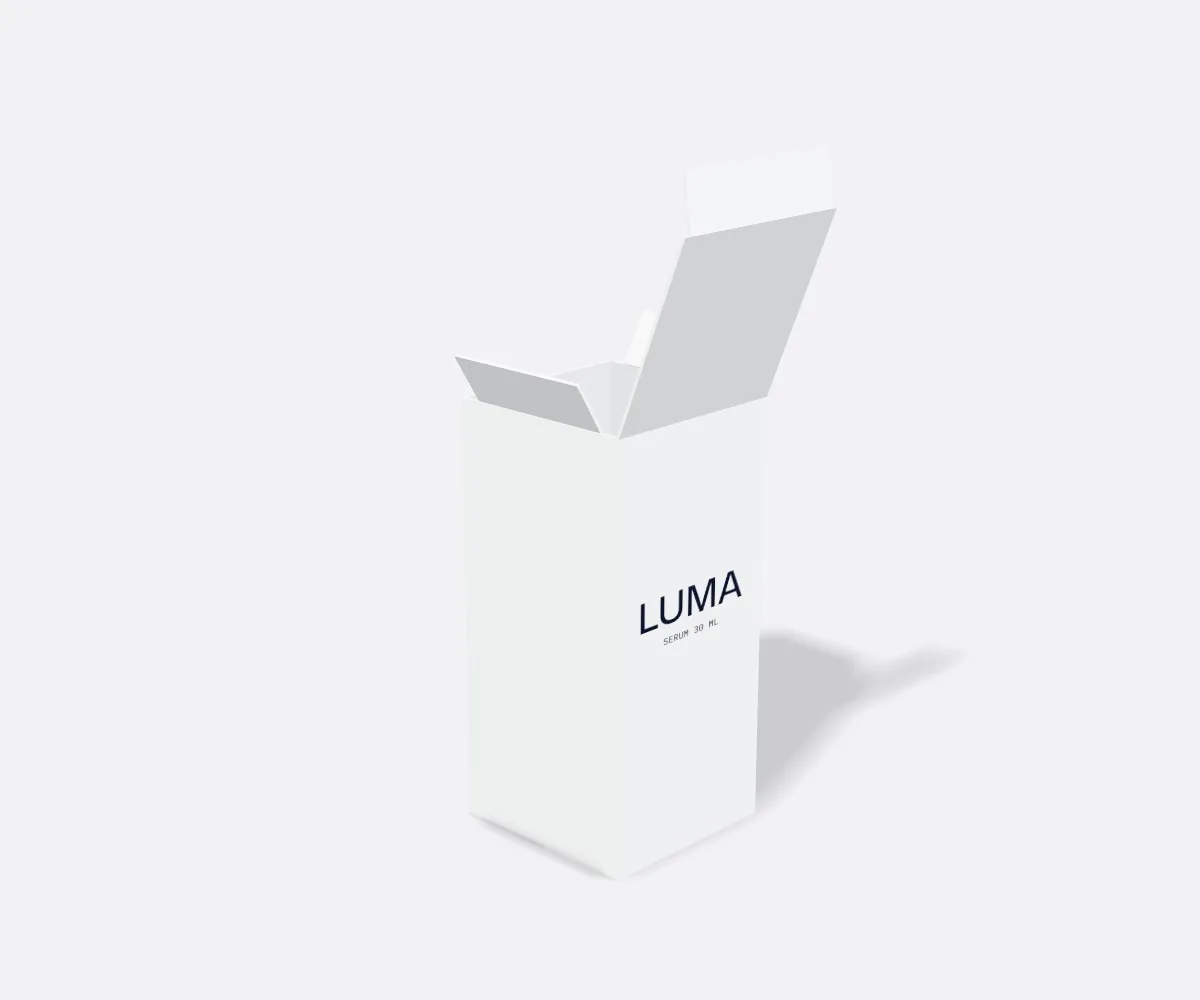
When a 30 ml glass foundation bottle ships through parcel networks or sits behind a front die-cut window, a plain outer carton is often not enough. Adding a folded paperboard insert (either a top neck collar that grips the pump shoulder or a full U-shaped flute cradle) suspends the glass away from the outer walls and absorbs drop shock. However, an internal insert takes up physical space inside the carton. For a top shoulder collar that folds down from the upper walls, add 1/8 inch to the total carton height and 1/8 inch to length and width so the double layer of folded board slides in smoothly. For a full four-wall corrugated or folded card cradle around a heavy glass bottle or a delicate dropper pipette, add 1/4 inch to 3/8 inch to both length and width. You can pair your carton with custom cardboard inserts engineered on the exact same CAD file so the outer carton and inner collar lock together without guesswork.
Know your size? Compare pricing across up to 3 quantities.
Request a Quote →How do I size cartons for cushion compacts, refill pans and sticks?
Complexion compacts and stick foundations have a much lower center of gravity than liquid pump bottles, which changes how you orient the carton panels. On a round or square cushion compact case (typically 2.875 to 3.125 inches wide and 0.875 to 1.25 inches thick), set the large square face as the front and back panels (Length × Height) and the narrow thickness as the side panel (Width). That gives you a wide billboard on the front for your brand logo and a wide back panel for your INCI ingredient list. If you sell magnetic metal refill pans or replacement cushion cartridges, a slim envelope-style folding carton or a custom sleeve box around 2.5 × 2.5 × 0.5 inches keeps board waste low while protecting the pressed powder cake from cracking. For twist-up stick foundations, measure the cap diameter and check whether the base dial flares wider than the barrel before locking in your square width.
Can I use one box size across 30 foundation shades and different formulas?
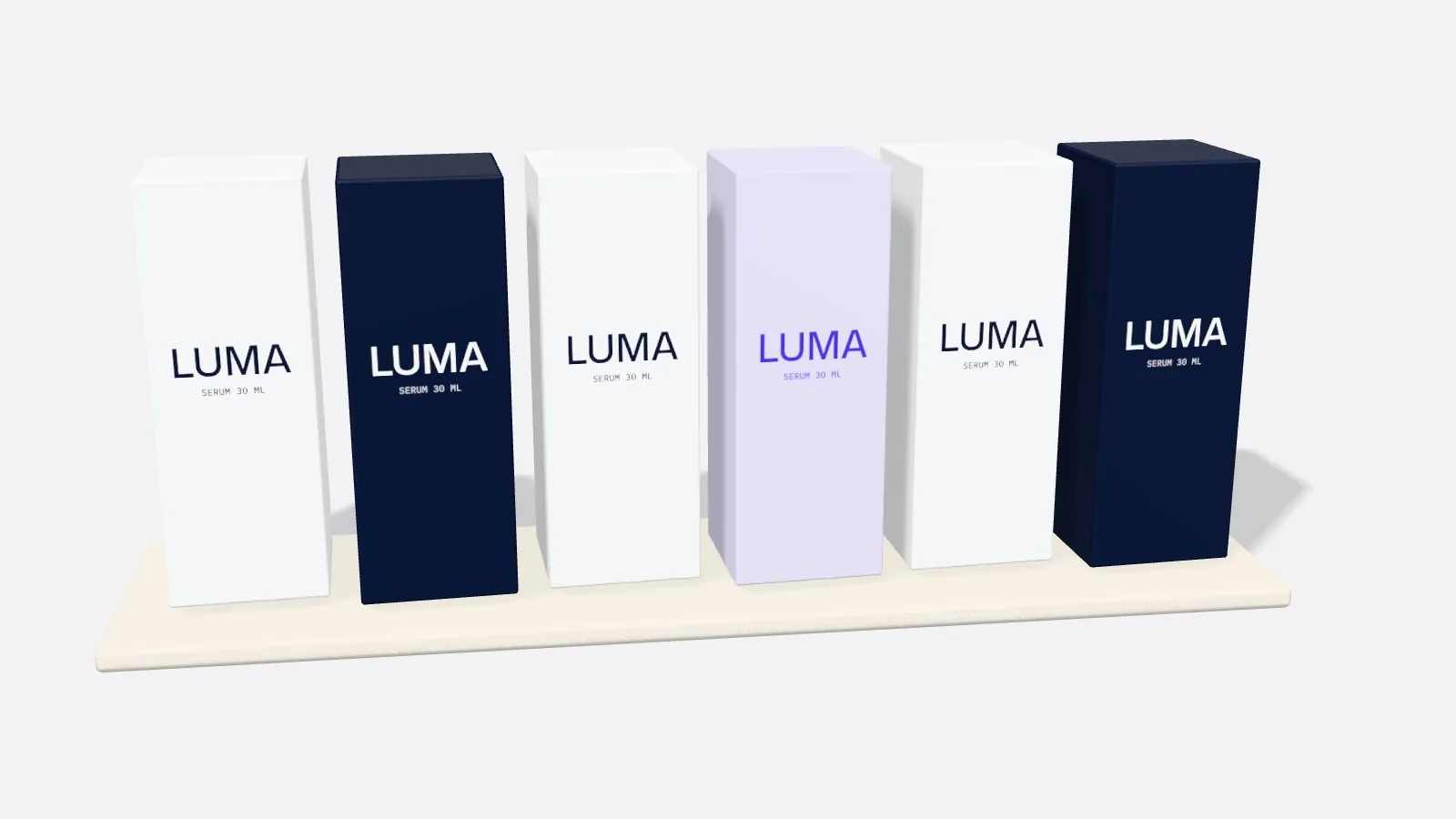
Yes, and standardizing your carton footprint is the single smartest way to control packaging costs on a complexion launch. All 20, 30 or 50 shades of a 30 ml liquid foundation share the exact same glass bottle mold, so they use one master dieline. When you request a quote from CubitPack, we gang-run or split your shades across that shared dieline with zero die or plate charges. Even if you offer two finishes (such as a matte liquid foundation and a luminous hydrating foundation), choosing bottles with the same outer diameter and height lets both lines share one structural dieline and one custom insert size. If you also pack matching custom serum boxes or custom skincare boxes, our structural team can align your carton heights so your entire shelf collection forms a clean horizontal line.
- Use one shared inside dimension across every shade in a liquid or compact collection.
- Keep foil stamping or embossing plates in the same position across all shades so one plate covers the whole run.
- Swap only the CMYK or Pantone shade band, shade number, undertone callout and UPC barcode per SKU.
- Order a physical prototype or paid printed sample (credited to your order) to test bottle fit before printing all shades.
What are the most common foundation box sizing mistakes?
A 1/16 inch miscalculation on a glass foundation bottle either jams the packing line or lets the bottle rattle and chip. Watch out for these five sizing errors
- Measuring the bottle without the overcap or pump actuator installed, leaving the carton 1/4 inch too short to close.
- Using zero clearance around a square glass bottle. Molded glass tolerances vary by ±1 mm, so zero clearance scrapes matte lamination inside the carton.
- Adding a cardboard neck collar later without expanding the outer box dimensions to fit the folded board layers.
- Orienting a flat cushion compact so the narrow 1-inch spine is the front panel instead of the wide 3-inch square face.
- Guessing box size from fluid ounces (30 ml / 1 fl oz) instead of measuring the physical bottle's glass wall thickness and heel.
Find your size
Suggested inside size: 1.5 × 1.5 × 4.75 in
A starting point. Your account manager confirms the size with you before the proof.
Quote this size →Packaging for this
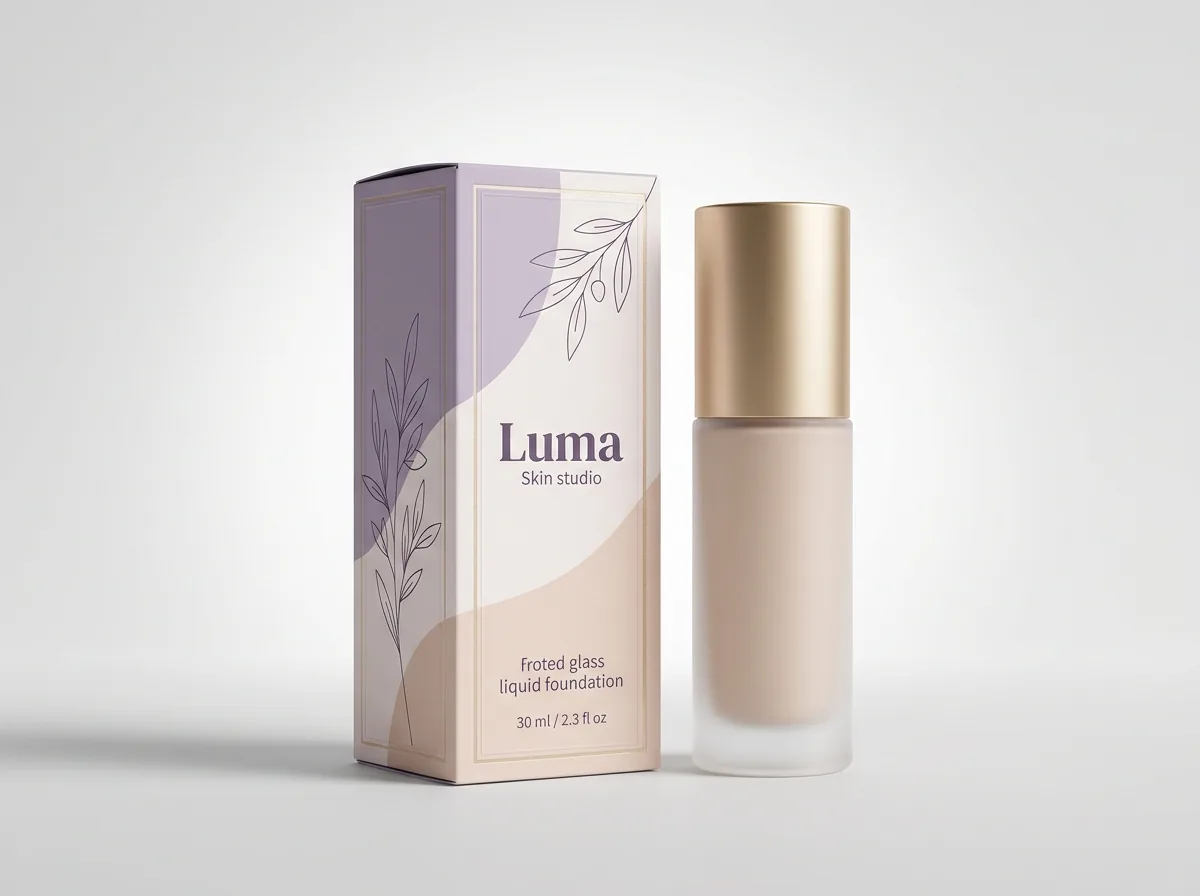
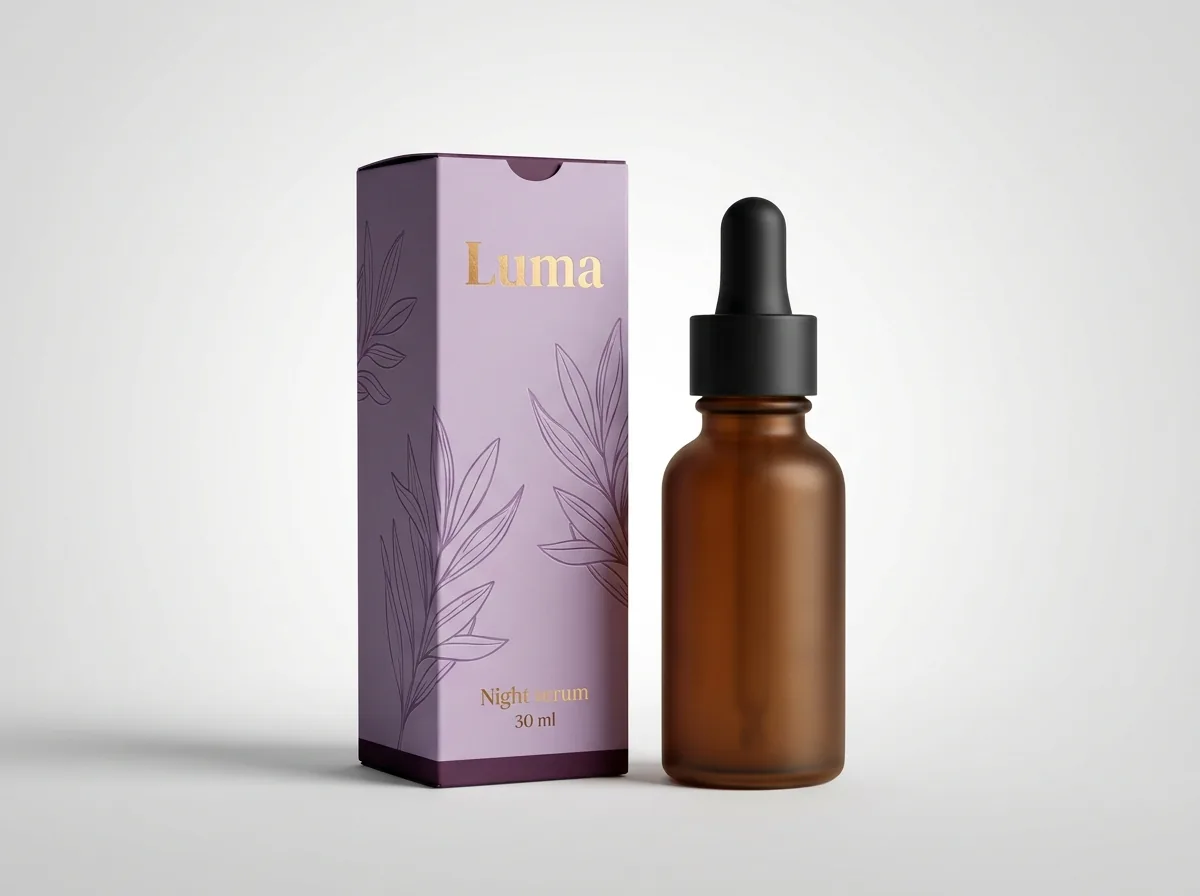
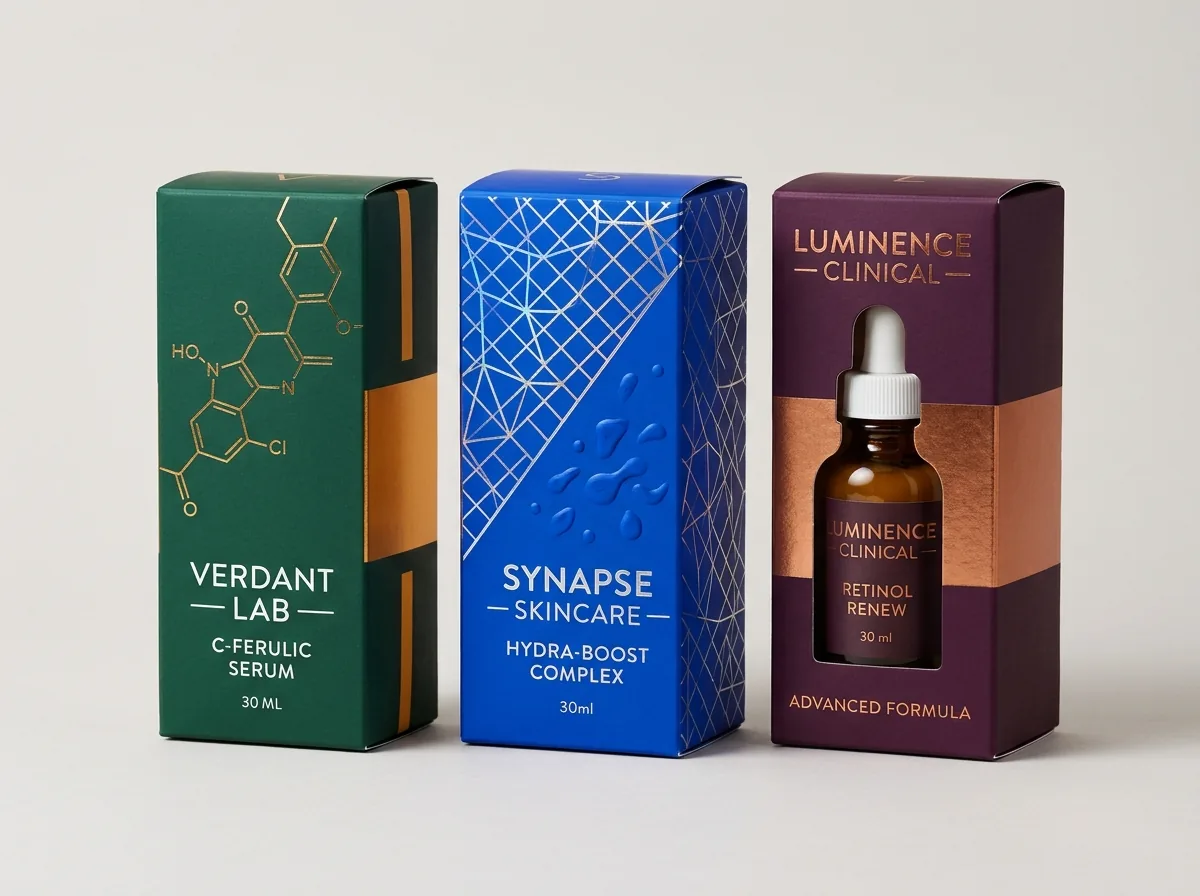
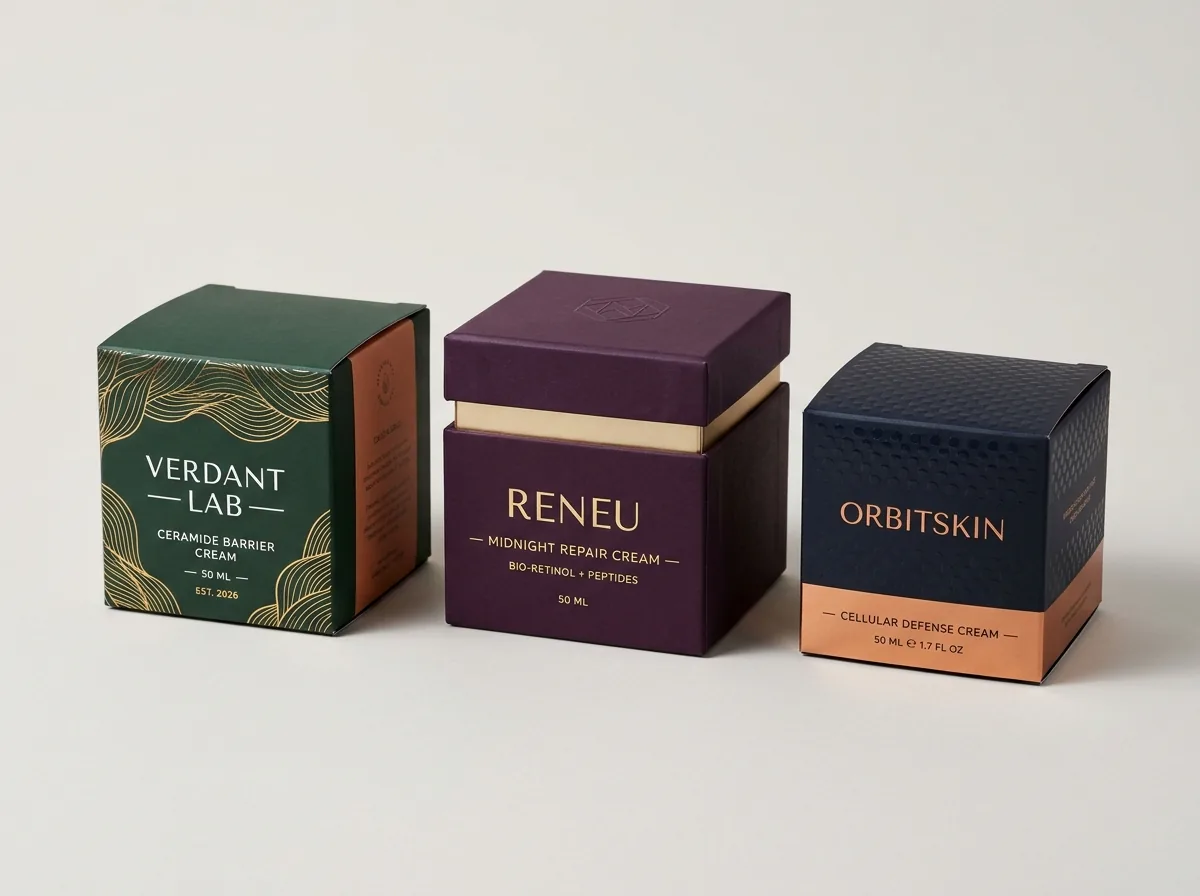
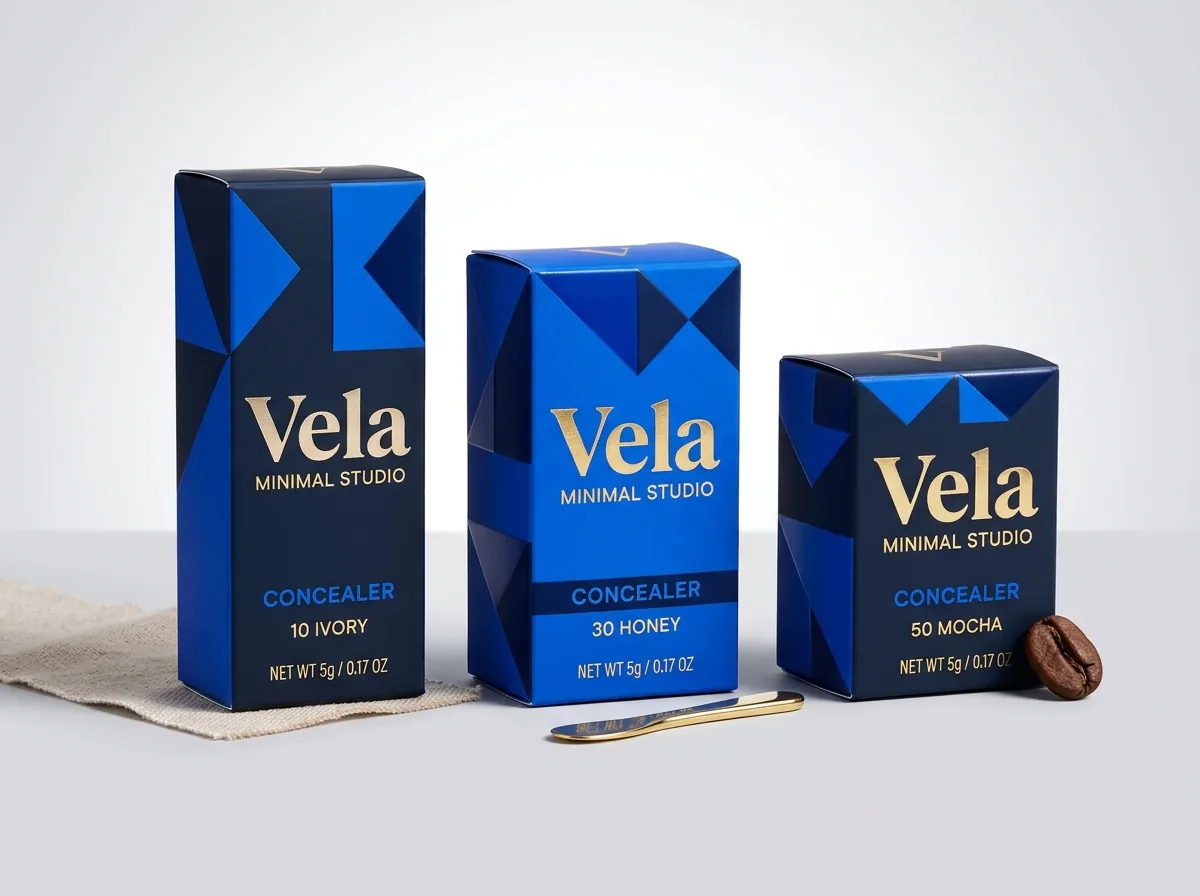
Ready to order foundation boxes? Compare up to 3 quantities with a free 3D mockup.
Request a Quote →Questions about foundation boxes
Is a 30 ml foundation box measured by inside or outside dimensions?
Custom folding cartons are always specified and quoted by inside dimensions: length × width × height in inches. Measuring the usable space inside the crease lines guarantees your glass bottle or compact slides in without catching on the board thickness.
How much clearance should I add to my foundation bottle measurements?
For a standard bottle with no internal insert, add 1/16 inch (about 1.5 mm) to the length and width, and 1/8 inch (about 3 mm) to the height. That keeps the bottle snug while allowing fast hand or machine loading.
Why do two 30 ml (1 fl oz) foundation bottles need different box sizes?
The 30 ml mark only measures the internal cavity holding the liquid makeup. A prestige square bottle with a heavy 12 mm glass base punt and double-walled overcap is much wider and taller than a thin cylindrical airless pump bottle.
What size box fits a foundation bottle plus a makeup brush or sponge?
A foundation + brush duo usually needs a rectangular carton around 3.25 × 1.75 × 5.25 inches with a two-cavity cardboard or EVA foam insert that keeps the heavy glass bottle from crushing the brush bristles.
Can CubitPack measure my foundation bottle and make the dieline for me?
Yes. Send us your bottle's spec sheet or exact caliper measurements, and our design team will create a custom dieline and 3D mockup for free before you pay, with no die or plate charges.
How can I test my foundation box size before running 1,000 units?
Every order includes a free digital proof and 3D mockup before payment. If you want to test the physical fit with your glass bottle in hand, you can order a physical prototype or a paid printed sample (credited toward your order).
Still have a question? Ask a packaging specialist.
Request a Quote →Request your foundation boxes quote
Tell us your size and quantities, and one dedicated account manager prepares pricing for each tier.
- Free design & AI-to-print studio + 3D mockup
- No die or plate charges · 4–5 day rush available
- Free shipping to all 50 states
- 10% off your first order
The container dimensions and clearance rules in this guide are based on standard 30 ml cosmetic glass molds, airless pump housings and compact cases, checked by a CubitPack packaging specialist. Spot something off? Tell us and we will update it.
Sources
What changed
- October 22, 2026: First published.
- October 22, 2026: Updated specifications, terminology, and verified source links.
More guides
New packaging guides by email
Sizes, materials and design tips. Unsubscribe anytime.