
Single-wall vs double-wall cardboard boxes: when do you need 48 ECT heavy-duty board?
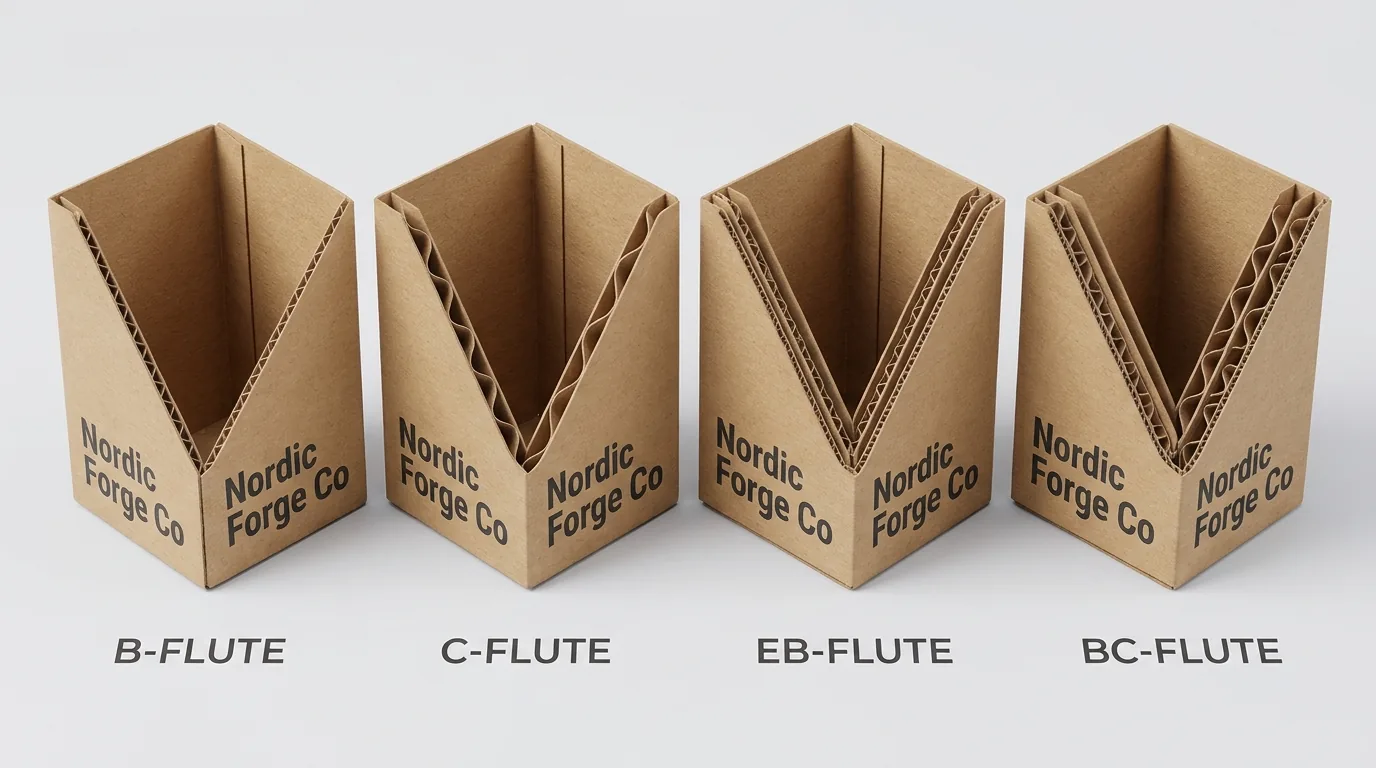
Short answer: Use single-wall 32 ECT B-flute or C-flute custom cardboard boxes for individual shipments up to 30-40 lb. Step up to double-wall 48 ECT corrugated board (EB-flute for printed retail kits up to 65 lb, or BC-flute for master cartons up to 85 lb) whenever payloads exceed 40 lb, hold fragile glass, or stack on winter pallets.
On this page
- How do single-wall and double-wall flute profiles compare in thickness, ECT and weight limit
- EB-flute vs BC-flute: which double-wall cardboard box should you choose
- How does double-wall board thickness change your inside vs outside box dimensions
- Why do winter humidity and pallet stacking require 48 ECT double-wall boxes even under 40 lb
- Can adding corrugated box inserts to a 32 ECT box replace a double-wall outer carton
- Common mistakes
- FAQs
Request a custom quoteFree dieline & 3D mockup
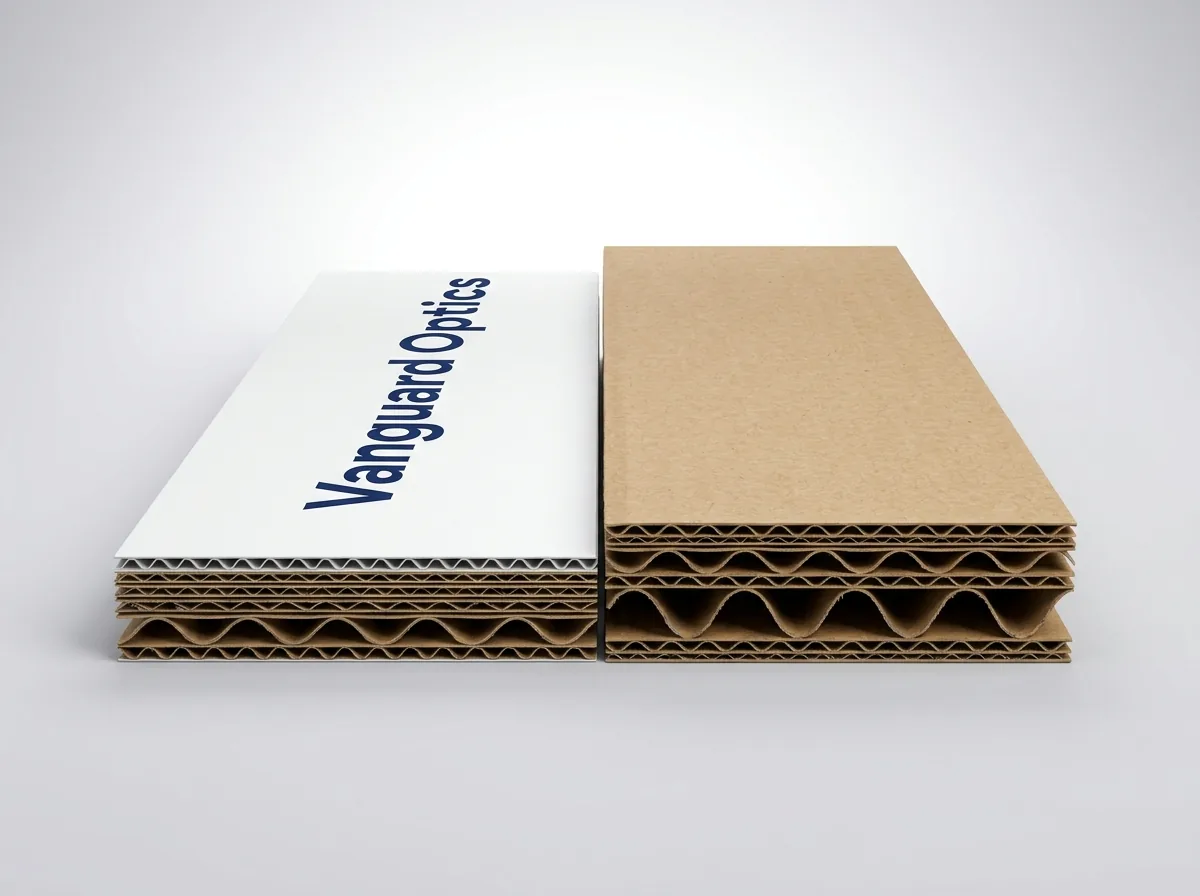
The structural difference between single-wall and double-wall cardboard boxes comes down to the number of fluted corrugated mediums sandwiched between the flat linerboards. A single-wall box has one wavy fluted arch glued between two liners (3 plies total, 1.5 mm to 4.0 mm thick) and is rated at 32 ECT (Edge Crush Test) or 200# Mullen Burst for everyday 10 lb to 40 lb parcel deliveries. A double-wall cardboard box bonds two separate fluted mediums between three liners (5 plies total, 4.5 mm to 7.0 mm thick), raising vertical stacking strength to 48 ECT or 275# burst for 45 lb to 85 lb loads. At CubitPack, custom single-wall and double-wall corrugated boxes start at 250 units (1,000 for folding paperboard cartons) with 10 to 14 business day turnaround, 4 to 5 business day rush, zero die or plate charges, and free shipping to all 50 US states.
How do single-wall and double-wall flute profiles compare in thickness, ECT and weight limit?
Whether you are ordering corrugated cardboard boxes for direct-to-consumer parcel shipping or wholesale pallet fulfillment, selecting the wrong flute profile either wastes money on over-engineered board or results in crushed bottom tiers at the warehouse. Compare the five standard single-wall and double-wall corrugated grades in the table below, or plug your payload weight and stacking height into our corrugated flute and ECT selector.
| Board wall & flute | Plies & wall thickness | Standard ECT / burst | Safe gross load | Primary packaging use case |
|---|---|---|---|---|
| E-Flute Single-Wall | 3-ply · 1/16 in (1.5 mm) | 32 ECT | Up to 10-15 lb | Printed DTC mailer boxes, cosmetic kits, apparel & subscription boxes |
| B-Flute Single-Wall | 3-ply · 1/8 in (3.0 mm) | 32 ECT / 200# | Up to 25-30 lb | Heavy mailer boxes, canned beverage carriers & retail display cartons |
| C-Flute Single-Wall | 3-ply · 5/32 in (4.0 mm) | 32-44 ECT / 200# | Up to 35-45 lb | Everyday RSC shipping boxes, e-commerce fulfillment & dry goods |
| EB-Flute Double-Wall | 5-ply · 3/16 in (4.5 mm) | 48 ECT / 275# | Up to 50-65 lb | High-graphic heavy appliance boxes, glass bottle sets & club-store cartons |
| BC-Flute Double-Wall | 5-ply · 9/32 in (7.0 mm) | 48-51 ECT / 275# | Up to 65-85 lb | Heavy-duty wholesale master cartons, auto parts, tools & bottom pallet tiers |
EB-flute vs BC-flute: which double-wall cardboard box should you choose?
Many buyers assume all double-wall cardboard boxes are rough brown industrial shippers, but combining two different flute sizes unlocks both smooth graphic printing and heavy-duty stacking resistance: - EB-flute double-wall (4.5 mm / 3/16 inch thick): Pairs a fine outer E-flute layer (90 flutes per linear foot) with a structural inner B-flute layer (47 flutes per foot). Because the outer E-flute has closely spaced arches, it prevents the washboarding ridges that ruin halftone graphics on coarse flutes - making EB-flute the top choice for branded custom mailer boxes, espresso machine cartons, and multi-bottle gift boxes weighing 30 to 65 lb. - BC-flute double-wall (7.0 mm / 9/32 inch thick): Pairs a puncture-resistant B-flute layer with a thick cushioning C-flute layer (39 flutes per foot). That 7.0 mm five-ply wall absorbs conveyor drops, forklift vibration, and top-load compression on 48 x 40 inch GMA pallets, making BC-flute the workhorse for custom shipping boxes and wholesale master cases.
How does double-wall board thickness change your inside vs outside box dimensions?
In the packaging industry, custom box dimensions are always written in the order Length × Width × Depth (Height) using inside usable dimensions. When you upgrade a box from single-wall to double-wall corrugated board, the thicker 5-ply walls fold inward at every score line and consume more interior space (known as score take-up). If you measure the outside of an existing box instead of the product itself, a BC-flute double-wall carton will finish roughly 0.50 to 0.625 inches smaller on the inside than its outside footprint. Before submitting your quote, run your product measurements through our box size calculator and apply these interior clearances: - E-flute single-wall (1.5 mm): Add +1/8 in (3 mm) to product L × W × H. - B-flute or C-flute single-wall (3.0-4.0 mm): Add +1/4 in (6 mm) to product L × W × H. - EB-flute double-wall (4.5 mm): Add +3/8 in (10 mm) to product L × W × H. - BC-flute double-wall (7.0 mm): Add +1/2 in (13 mm) to product L × W × H (plus insert thickness if adding custom box inserts or corrugated partitions). Always verify how the flaps meet at the top and bottom of a double-wall Regular Slotted Container (RSC, FEFCO 0201). Because two 7.0 mm BC-flute walls add more than half an inch to the outside width of the box, structural engineers offset the creasing rules on the inner minor flaps and outer major flaps by 3 mm to 5 mm so the outer flaps fold completely flat without riding up at the center seam.
Know your size? Compare pricing across up to 3 quantities.
Request a Quote →Why do winter humidity and pallet stacking require 48 ECT double-wall boxes even under 40 lb?
Gross weight is only half of the engineering equation. Even if your packed carton weighs just 25 lb, three supply-chain conditions require stepping up from 32 ECT single-wall to 44 ECT heavy single-wall or 48 ECT double-wall board: 1. Non-load-bearing contents (headspace air gap): If the items inside the box do not reach the top flaps (for example, bagged powders, flexible pouches, or round jars with neck space), the four vertical cardboard walls carry 100% of the pallet stack above them. 2. Winter condensation and 75%+ relative humidity: Corrugated paper fibers are hygroscopic. At 80% relative humidity inside winter freight trailers or coastal ports, standard corrugated board loses 35% to 45% of its dry Box Compression Test (BCT) strength. Starting with 48 ECT double-wall board preserves a safe stacking margin. 3. Multi-tier 48 x 40 pallet stacking: Bottom-tier master cartons stacked 4 to 5 layers high in LTL freight support 300 to 600 lb of dynamic load during highway braking. Check your exact pallet Ti-Hi layout with our master carton and pallet calculator before ordering custom corrugated boxes.

Can adding corrugated box inserts to a 32 ECT box replace a double-wall outer carton?
Often, yes - and it can lower both unit cost and carrier dimensional weight. When shipping 6 or 12 glass bottles, candle tumblers, or honey jars, a full-height interlocking grid of custom cardboard inserts inside a 32 ECT C-flute single-wall box acts like internal steel columns right under the top flaps, boosting top-to-bottom compression strength by 40% to 60% while keeping glass walls from clinking together. From a parcel freight perspective, keeping the outer carton in 32 ECT single-wall C-flute with an interior partition grid saves roughly 0.35 inches on outside length, width, and height compared to a heavy 5-ply BC-flute box with separate bubble wrap. Across thousands of UPS and FedEx Ground shipments, shaving that extra half-inch off the exterior cube frequently keeps the carton one dimensional-weight bracket lower. Use our dimensional weight calculator to compare the outer cube of a BC-flute double-wall box against a 32 ECT single-wall custom printed cardboard box with vertical cell dividers.
- Choose 32 ECT E-flute or B-flute single-wall for DTC mailers and retail kits under 30 lb.
- Choose 32-44 ECT C-flute single-wall for standard RSC parcel shipping up to 40-45 lb.
- Choose 48 ECT EB-flute double-wall when you need sharp exterior graphics plus 50-65 lb strength.
- Choose 48-51 ECT BC-flute double-wall for 45-85 lb master cartons, metal hardware, and pallet base tiers.
- Pair 32 ECT single-wall cartons with full-height corrugated partitions for multi-jar glass shipments.
What mistakes happen when ordering heavy-duty and double-wall cardboard boxes?
Avoid these five structural mistakes when specifying heavy-duty cardboard cartons and corrugated master cartons
- Entering outside dimensions from a single-wall sample when ordering BC-flute double-wall boxes, losing 1/2 inch of interior space to thicker wall folds.
- Shipping 45+ lb of dense metal tools, auto parts, or glass jars in a 32 ECT single-wall box with a single strip of thin acrylic tape.
- Using interlocking brick-style pallet stacking instead of corner-aligned column stacking, which cuts vertical box compression strength by up to 45%.
- Leaving 1 to 2 inches of empty headspace above the product inside the carton so the top flaps cave inward under stacked freight.
- Ordering coarse BC-flute double-wall for a luxury retail kit with fine 8pt text when smooth EB-flute double-wall delivers 48 ECT strength with a clean E-flute print surface.
Packaging for this
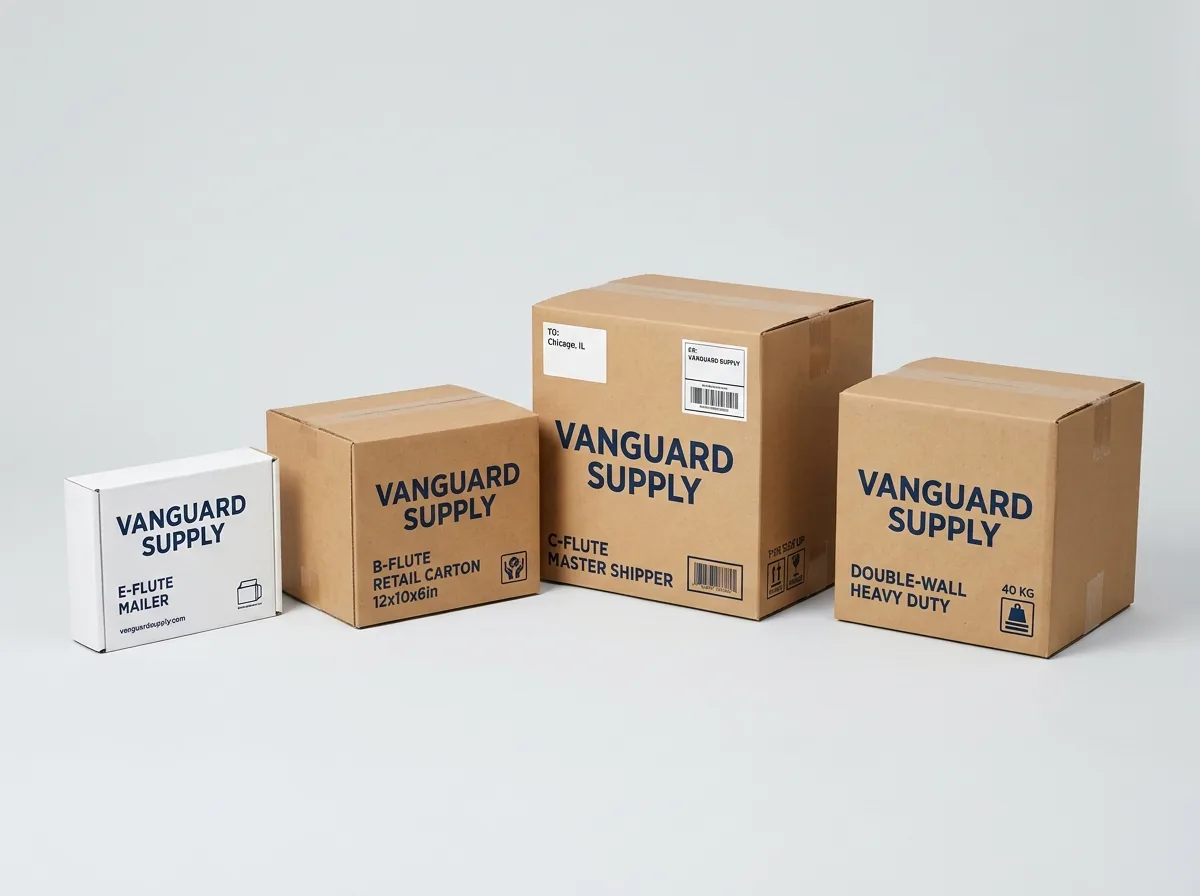
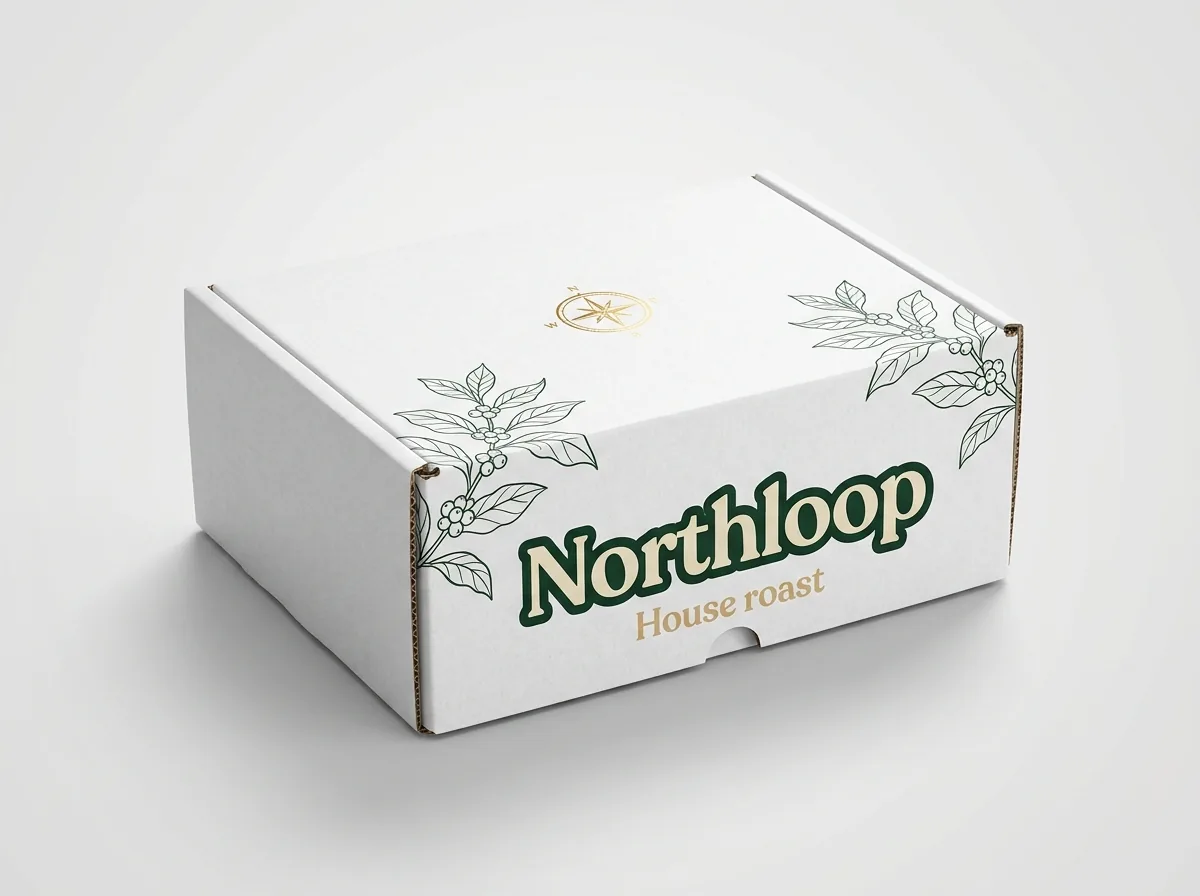


Ready to order cardboard boxes? Compare up to 3 quantities with a free 3D mockup.
Request a Quote →Questions about cardboard boxes
At what weight should I switch from single-wall to double-wall cardboard boxes?
Switch from 32 ECT single-wall to 48 ECT double-wall cardboard boxes whenever the packed carton exceeds 35 to 40 lb, contains dense shifting metal or glass items without full-height dividers, or sits on the bottom tiers of a double-stacked LTL pallet.
What is the thickness difference between single-wall and double-wall corrugated cardboard?
Single-wall corrugated board ranges from 1.5 mm (1/16 inch E-flute) to 3.0 mm (1/8 inch B-flute) and 4.0 mm (5/32 inch C-flute). Double-wall board combines two flutes, measuring 4.5 mm (3/16 inch EB-flute) or 7.0 mm (9/32 inch BC-flute).
Can double-wall cardboard boxes be custom printed with my logo and brand colors?
Yes. Both EB-flute and BC-flute double-wall boxes can be custom printed outside and inside in CMYK or Pantone spot colors on kraft or white linerboard. For fine graphics or halftone gradients on a heavy box, choose EB-flute double-wall so the smooth outer E-flute liner prints cleanly.
What is the minimum order quantity for custom double-wall cardboard boxes at CubitPack?
Custom corrugated shipping and mailer boxes (both single-wall and double-wall) start at 250 units, while folding paperboard cartons start at 1,000 units. Standard turnaround is 10 to 14 business days, with 4 to 5 business day rush available and free shipping to all 50 US states.
Do double-wall boxes ship flat to save warehouse storage space?
Yes. All custom single-wall and double-wall corrugated boxes ship knocked-down flat (KDF) in strapped bundles or palletized loads with pre-scored fold lines and pre-glued manufacturer joints so they pop open in seconds at your packing bench.
How do I seal the bottom of a heavy 50 to 80 lb double-wall cardboard box?
Use 3-inch fiberglass-reinforced water-activated paper tape (WAT) applied in an H-seal pattern across the center seam and both outer edge seams. Reinforced paper tape bonds directly into the kraft liner fibers so heavy payloads cannot push the bottom flaps open.
Still have a question? Ask a packaging specialist.
Request a Quote →Request your cardboard boxes quote
Tell us your size and quantities, and one dedicated account manager prepares pricing for each tier.
- Free design & AI-to-print studio + 3D mockup
- No die or plate charges · 4–5 day rush available
- Free shipping to all 50 states
- 10% off your first order
The single-wall vs double-wall flute thicknesses, 32 ECT to 48 ECT load benchmarks, and inside dimension allowances in this guide come from CubitPack's published corrugated specifications and FEFCO/TAPPI engineering standards, verified by a packaging specialist. Spot something off? Tell us and we will fix it.
Sources
What changed
- November 18, 2026: First published.
More guides
New packaging guides by email
Sizes, materials and design tips. Unsubscribe anytime.