
Seal-end vs tuck-top cereal boxes: which closure should you choose?
Short answer: Choose seal-end custom cereal boxes when you pack on an automated or semi-automated hot-melt glue line and need tamper-evident grocery closures. Choose reverse tuck end or auto-lock bottom with a tuck top when your team erects and loads inner pouches by hand.
On this page
- What is the structural difference between seal-end and tuck-top cereal cartons
- How do seal-end, reverse tuck, straight tuck, and auto-lock cereal boxes compare
- How does the reclosable pantry tab-and-slot top work after opening
- When should you upgrade from a tuck bottom to a seal-end or auto-lock bottom
- Do grocery retailers require glued flaps for tamper evidence on cereal boxes
- Common mistakes
- FAQs
Request a custom quoteFree dieline & 3D mockup
The right top and bottom closure for a breakfast cereal carton depends on two practical factors: how your co-packer seals the box on the packing line and how heavy the cereal is inside the inner liner bag. A full seal-end carton uses four overlapping flaps on both the top and bottom that are bonded shut with hot-melt adhesive on a horizontal or vertical cartoner, creating a rigid, sift-resistant, tamper-evident block for supermarket aisles. A tuck-top carton - paired with either a reverse tuck bottom for light 7 to 10 oz puffs or a pre-glued auto-lock bottom for heavy 12 to 18 oz oat granola - closes by hand in seconds without glue equipment. At CubitPack, every closure style can include a reclosable top tab-and-slot lock with no die or plate charges, and you review a digital proof and 3D mockup before paying.
What is the structural difference between seal-end and tuck-top cereal cartons?
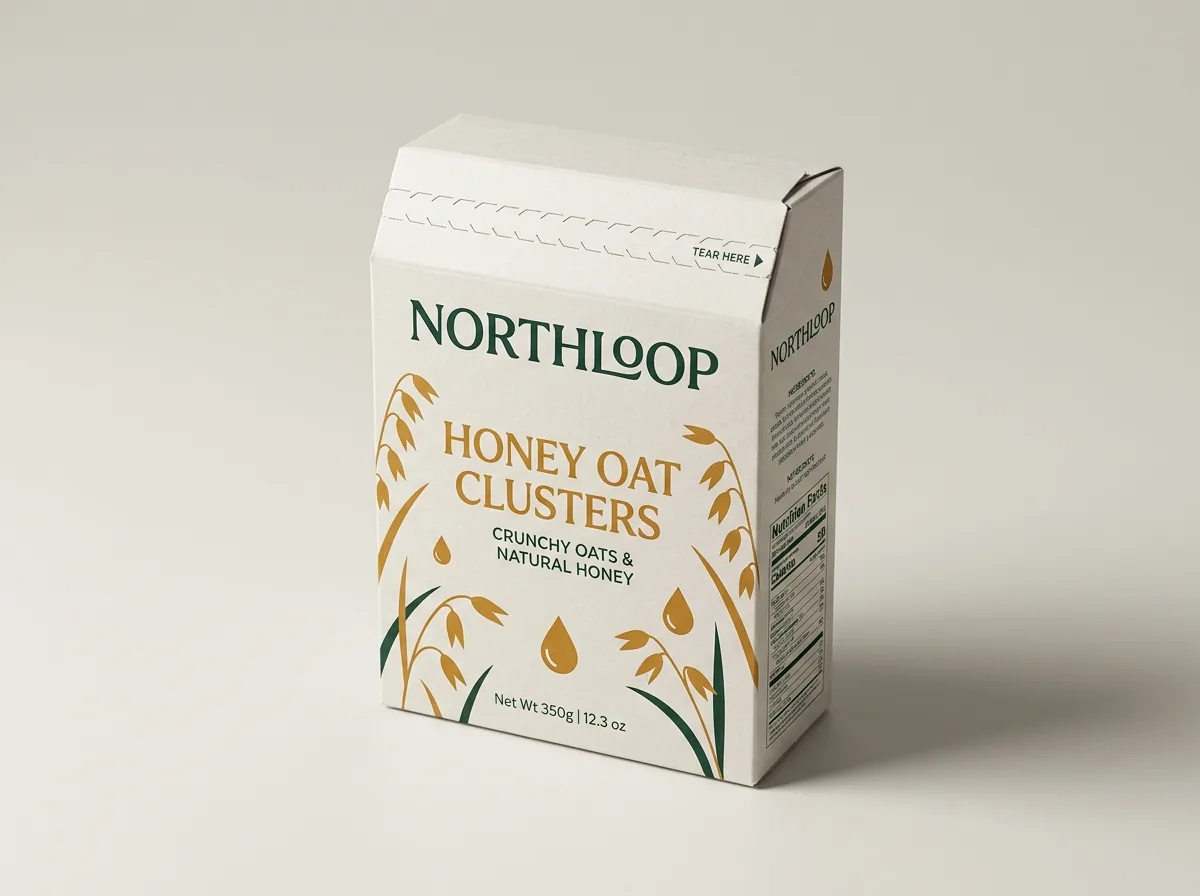
Walk down any grocery breakfast aisle and you will see two main carton architectures standing side by side. National flake and puffed-grain brands almost universally run custom seal-end boxes. On a seal-end dieline, the top and bottom have two inner dust flaps plus two wide major flaps (front and back) that fold over each other and bond with beads of hot-melt glue. Once the adhesive sets, the top and bottom act like solid wooden beams that keep the tall front and back panels from twisting. Artisanal granola makers, emerging keto and high-protein DTC brands, and promotional cereal runs often choose tuck-end architectures for their printed cereal cartons. Instead of overlapping glue flaps, a tuck flap has a scored crease and a friction tongue with corner slit-locks that tucks neatly behind the front or back wall. Because no hot-melt glue pot is needed to close the carton after sliding the sealed inner pouch inside, a small team can pack 1,000 to 5,000 boxes by hand at a fulfillment table.
- Full seal-end (glued top and bottom): four flaps fold and bond with hot-melt glue or double-sided tape on each end.
- Reverse tuck end (RTE): top flap tucks to the back while bottom flap tucks to the front; nests tightly on press sheets.
- Straight tuck end (STE): both top and bottom flaps tuck toward the back panel so the front face has zero raw paper edges.
- Hybrid auto-lock bottom + tuck top: factory pre-glued crash-lock floor paired with a hand-closed tuck lid or tab-lock top.
How do seal-end, reverse tuck, straight tuck, and auto-lock cereal boxes compare?
Use the side-by-side matrix below to match your co-packer equipment, target retail channel, and inner bag weight to the right folding carton closure. Every option ships flat and pre-glued along the vertical side seam so master cases stack compactly on pallets in your warehouse. Notice that while reverse tuck end (RTE) is the most economical structure on press because the alternating flaps interlock on the parent paperboard sheet, stepping up to an auto-lock bottom or full seal-end base is essential once your cereal pouch crosses 12 ounces of dense oats, nuts, or dried fruit.
| Closure style | Packing line & speed | Best fill weight & channel |
|---|---|---|
| Full seal end + top lock tab | Automated or semi-auto hot-melt glue cartoner | 10 to 24 oz supermarket flakes, puffs, and family packs |
| Reverse tuck end (RTE) with slit locks | Hand erect or tuck cartoner · no glue needed | 1.5 oz mini packs and 7 to 10 oz keto/protein DTC cereals |
| Straight tuck end (STE) | Hand erect · clean front presentation | Collector boxes, influencer kits, and boutique shelves |
| Auto-lock bottom + tuck top | Pops open by hand in 2 seconds · no glue needed | 10 to 18 oz dense granola, muesli, and ancient grains |
| Auto-lock bottom + glue/tape seal top | Hand pop-open base + tape or glue top seal | Retail co-ops requiring tamper-evident top flaps without a cartoner |
How does the reclosable pantry tab-and-slot top work after opening?
A classic complaint about glue-sealed cartons is that tearing the top flaps open leaves a ragged lid that springs upward in the kitchen cabinet. Modern cereal dielines solve this with a built-in reclosable tab-and-slot lock die-cut directly into the top major flaps. During production, our die-cutting platen scores a curved locking tongue into the outer top major flap and cuts a matching crescent slot into the inner major flap beneath it. We also add lightly perforated glue-release zones (often called zipper or fiber-tear strips) where the hot-melt adhesive sits. When the shopper slides a finger under the top flap and pulls upward, the glue release breaks cleanly along the perforation without ripping the outer tab. From the second bowl onward, the shopper folds the inner dust flaps down and slips the curved tongue into the slot to lock the box shut.
Know your size? Compare pricing across up to 3 quantities.
Request a Quote →When should you upgrade from a tuck bottom to a seal-end or auto-lock bottom?
Puffed corn, toasted oat rings, and crisp rice cereals are light for their size, typically weighing 7 to 11 ounces inside a full carton. Because the inflated inner pillow bag presses outward against the front, back, and side walls of the box, friction helps hold the bag up, and a reverse tuck end box with corner slit-locks easily supports the weight. Granola clusters, muesli, sprouted nuts, and seed blends behave very differently. A 12 to 16 ounce pouch of honey-baked oats sits like a dense brick at the bottom of the carton. If a shopper lifts a heavy granola box whose bottom is held shut only by a friction tuck flap, the concentrated weight of the pouch can push the bottom tongue out of its slit-locks. For any cereal or granola over 10 to 12 ounces packed by hand, specify a pre-glued auto-lock bottom box (crash-lock base) so the floor cannot drop out. Because the four bottom flaps are folded and glued during carton manufacturing, your fulfillment crew simply squeezes the opposite corners of the flat carton and the base locks flat in one motion.
Do grocery retailers require glued flaps for tamper evidence on cereal boxes?
When your cereal is hermetically heat-sealed inside an inner BOPP, PET, or HDPE pillow pouch, the inner bag itself is the primary food-safety and tamper-evident seal. However, large conventional supermarket chains and club stores strongly prefer a glued or taped outer carton top so shoppers cannot open a box in the aisle, swap inner bags, or slip out promotional inserts. If you are fulfilling 4-box variety bundles directly to consumers from your website or selling in specialty boutiques, a reverse tuck end or straight tuck end with slit-locks is widely accepted and saves gluing labor. If you are pitching regional or national grocery distributors but still hand-packing your runs of 1,000 to 5,000 boxes, you can get a tamper-evident top without buying a hot-melt cartoner: either apply a clear perforated custom seal sticker across the tuck-top seam, or order an auto-lock bottom box with a pre-applied peel-and-stick adhesive tape strip under the top major flap.
- High-speed grocery co-packer: choose full seal-end flaps glued on a horizontal or vertical cartoner.
- Hand-packed grocery launch: choose auto-lock bottom + top flap with peel-and-seal adhesive tape or wafer seal sticker.
- DTC e-commerce variety bundles: choose reverse tuck end (RTE) with corner slit-locks for fast manual assembly.
- Collector & promotional kits: choose straight tuck end (STE) so the front display face has clean folded edges top and bottom.
What are the most common cereal box closure mistakes?
Avoid these five structural closure errors before you send your cereal dieline to press
- Ordering full seal-end glue flaps for a 1,000-box hand-packed run when your team does not have a hot-melt glue applicator or tape sealer.
- Using a standard friction bottom tuck flap without slit-locks or an auto-lock base for heavy 12 to 16 oz oat granola pouches.
- Putting ink or slick UV coating over the glue-lap zones on seal-end flaps, which prevents hot-melt or water-based glue from bonding into the paper fibers.
- Forgetting to add perforated glue-release zones on a seal-end top flap, causing the board to shred across your reclosable tab when opened.
- Placing critical text or logos right over the die-cut slot of the top pantry lock tab where the knife cuts through the board.
Find your size
Suggested inside size: 3.5 × 1.5 × 4.75 in
A starting point. Your account manager confirms the size with you before the proof.
Quote this size →Packaging for this
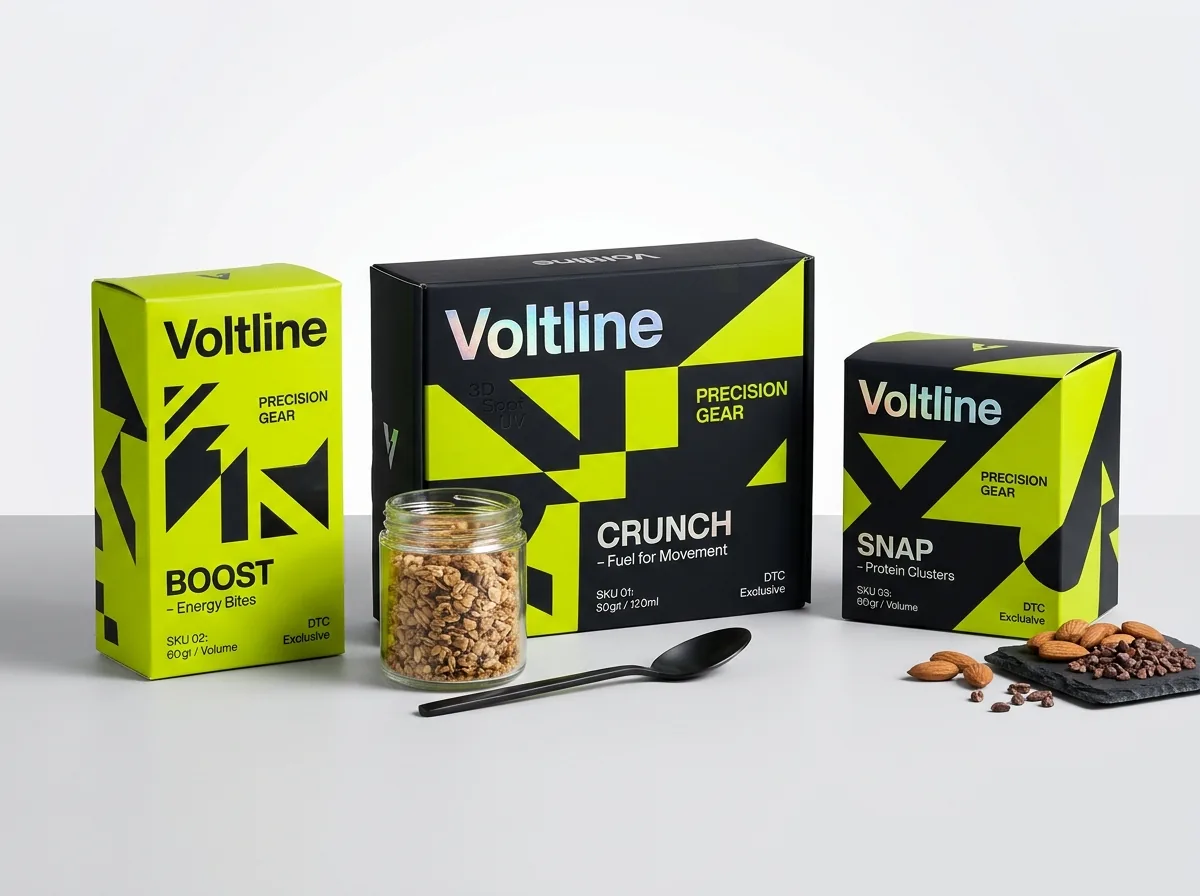
Ready to order cereal boxes? Compare up to 3 quantities with a free 3D mockup.
Request a Quote →Questions about cereal boxes
Can we hand-seal a seal-end cereal box if we do not have an automated cartoner?
Yes, for smaller runs of 1,000 to 2,500 boxes, co-packers and founders often close seal-end flaps using a benchtop hot-melt glue gun, a double-sided ATG tape roller, or pre-applied peel-and-stick tape strips. If you want zero taping or gluing by hand, choose a reverse tuck end or auto-lock bottom with a tuck top.
Which closure style has the lowest unit cost for custom cereal boxes?
Reverse tuck end (RTE) and full seal-end cartons have the lowest unit cost because both require only one straight-line side-seam glue pass at the factory, and RTE flaps interlock tightly on the parent press sheet to minimize paperboard waste.
Why must glue flaps stay unlaminated and free of varnish on seal-end boxes?
Hot-melt and cold-set packaging adhesives bond by gripping raw paperboard fibers. If gloss lamination, matte film, or UV coating covers the top and bottom glue flaps, the adhesive sits on slick plastic and pops open in cold delivery trucks. Our prepress team automatically masks glue zones on your proof.
Does adding a reclosable tab-and-slot top lock cost extra?
No. Because CubitPack charges zero die or plate fees, adding a reclosable pantry lock tab and slot to the top flaps of your seal-end or tuck-top cereal box is included in your custom dieline at no extra charge.
Which closure is best for a 1.5 oz single-serve mini cereal box?
Single-serve mini boxes (around 3.5 × 1.5 × 4.75 in) work well with either a reverse tuck end with slit-locks for gift and sampler packs, or a mini seal-end closure with a perforated tear-open top for hotel and foodservice counters.
Can I test both a seal-end and a tuck-top sample before ordering 1,000 boxes?
Yes. You can order our $50 sample kit (credited toward your first order) to inspect different box closures and boards in person, or request a paid custom printed prototype of your exact cereal dieline before full production.
Still have a question? Ask a packaging specialist.
Request a Quote →Request your cereal boxes quote
Tell us your size and quantities, and one dedicated account manager prepares pricing for each tier.
- Free design & AI-to-print studio + 3D mockup
- No die or plate charges · 4–5 day rush available
- Free shipping to all 50 states
- 10% off your first order
The closure comparisons and glue-masking rules in this guide follow standard folding carton engineering practices for VFFS bag-in-box cereal lines and manual fulfillment tables. A CubitPack packaging specialist reviewed every section. Spot something wrong? Let us know and we will fix it.
Sources
What changed
- October 22, 2026: First published.
- October 22, 2026: Updated specifications, terminology, and verified source links.
More guides
New packaging guides by email
Sizes, materials and design tips. Unsubscribe anytime.