
Tear-away display caddies vs tuck cartons vs snack mailers: which works best?
Short answer: Match your custom snack boxes to how the customer buys each item: use perforated tear-away caddies for single-bar impulse sales next to checkout registers, auto-lock or gravity-feed folding cartons for 5-to-12 count grocery shelves, and E-flute corrugated mailers for DTC variety packs.
On this page
- Why do checkout counters, grocery aisles, and DTC subscriptions need different boxes
- How do counter caddies, grocery cartons, dispensers, and snack mailers compare
- How does a perforated tear-away counter display caddy work at checkout
- When should you choose a gravity-feed dispenser over a standard tuck carton
- Why do DTC variety snack boxes need E-flute or B-flute corrugated mailers
- Common mistakes
- FAQs
Request a custom quoteFree dieline & 3D mockup
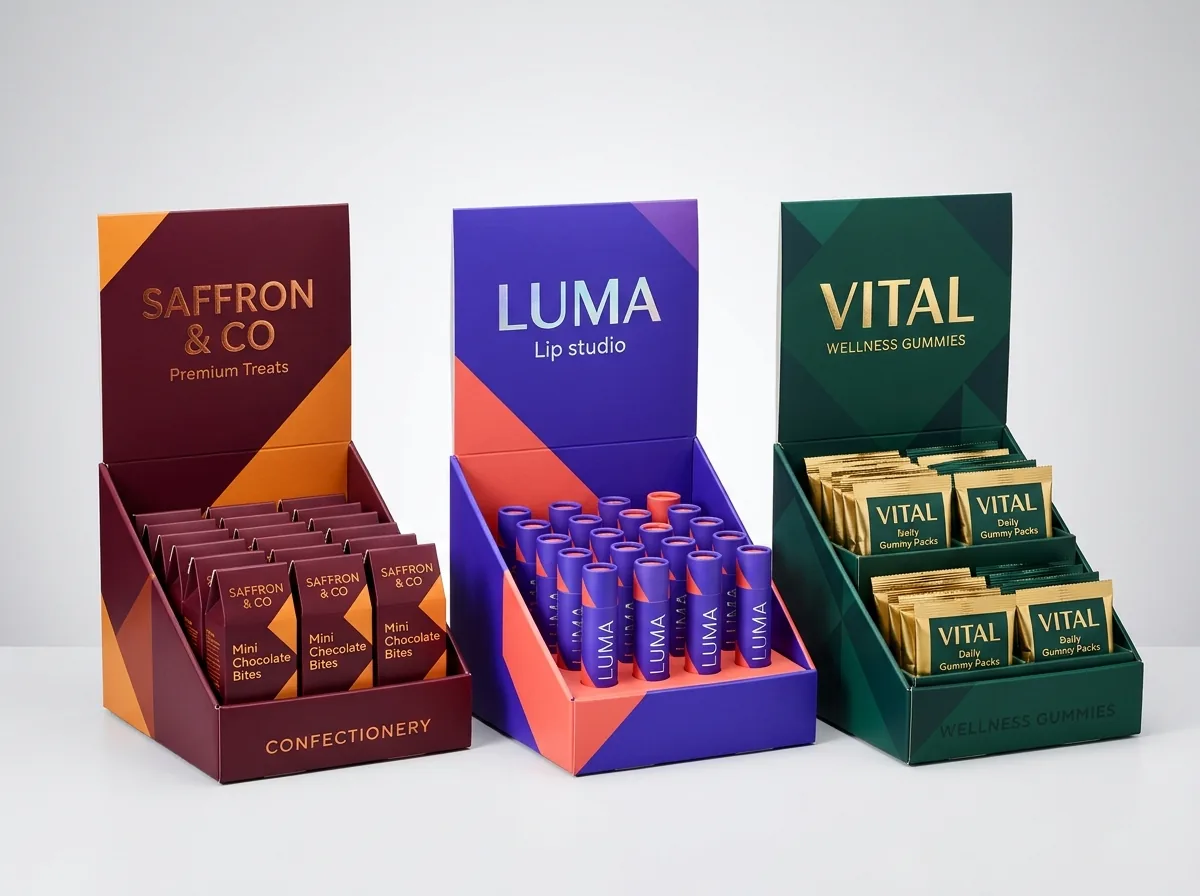
Snack brands rarely rely on a single carton style because convenience store counters, supermarket center aisles, and e-commerce parcel networks demand completely different structures. A perforated tear-away display caddy (PDQ) ships closed to protect 12 or 24 single bars, then zips open at the checkout register so shoppers can grab one bar while a fold-up header advertises your brand. A grocery multipack carton - built as a seal-end box, auto-lock bottom tuck carton, or bottom gravity-feed dispenser - sells 5 to 12 units as a single household purchase and stays closed until it reaches the customer's kitchen pantry. A DTC snack variety mailer uses fluted E-flute or B-flute corrugated board so assorted bags of chips, cookies, and nuts survive UPS and USPS sorting without crushing. At CubitPack, we build all three formats from 1,000 units with zero die or plate charges.
Why do checkout counters, grocery aisles, and DTC subscriptions need different boxes?
The exact same flow-wrapped protein bar or trail-mix pouch often sells in three places at once: singly for impulse buyers next to a coffee shop register, in a 6-pack box on a supermarket shelf, and in a 16-pack sampler bundle ordered online. Using a plain grocery tuck carton on a coffee shop counter fails because the closed front wall hides the bars inside, while shipping a thin paperboard grocery carton through the mail without an outer box results in crushed corners and popped wrapper seams. When planning your printed snack packaging, start by separating single-unit merchandising from multi-unit household packs and parcel-ready shippers. Each structure uses different score lines, perforation ratios, and paperboard calipers to do its job cleanly from co-packer line to end consumer.
- Checkout & cafe counters (single-unit sales): perforated tear-away caddy with a sloped tray lip and fold-up header card.
- Grocery center aisles (5 to 12 count household packs): vertical auto-lock bottom, seal-end, or gravity-feed folding carton.
- DTC e-commerce & corporate gifting (8 to 36 count assortments): roll-end tuck-top E-flute or B-flute corrugated mailer.
- Grab-and-go coolers & travel plazas: windowed bistro tuck carton or gable carrier with internal cardboard compartments.
How do counter caddies, grocery cartons, dispensers, and snack mailers compare?
Use the comparison table below to evaluate the four primary snack box architectures across sales channel, typical unit count, board stock, and shopper interaction. Every style ships flat to your co-packer or fulfillment warehouse, and all four can be combined in a single multi-SKU packaging run starting at 1,000 boxes. Notice how the role of the top lid changes across formats: on a counter caddy, the lid folds backward into a vertical sign; on a gravity dispenser, the top stays closed while a bottom door opens; and on a DTC mailer, the wide hinged lid becomes an unboxing stage. Selecting the right lid and base combination ensures your packaging works naturally in the environment where shoppers actually discover and eat your snack.
| Snack box format | Best channel & unit count | Board stock & key mechanism |
|---|---|---|
| Tear-away PDQ counter caddy | Convenience, gym & cafe registers (12–24 units) | Stiff white card or E-flute · zip-tear hood + fold-up header |
| Auto-lock / seal-end multipack | Supermarket & natural grocery aisles (5–8 units) | White or kraft paperboard · reclosable top tuck or tab lock |
| Gravity-feed pantry dispenser | Family packs of pouches, chews & bars (8–16 units) | White paperboard · perforated bottom pull-out tray slot |
| Corrugated variety snack mailer | DTC subscriptions, care packages & offices (8–36 units) | E-flute or B-flute corrugated · ear-lock roll-end tuck lid |
| Compartmentalized bistro box | Airlines, trains, cafes & wineries (3–5 food items) | Kraft or white card + divider · top window & grease barrier |
How does a perforated tear-away counter display caddy work at checkout?
A tear-away counter display box solves a classic retail headache: how do you ship 12 bars safely inside a master case and still turn the box into an open tray in five seconds at the cash register? The secret is a continuous perforated zipper line that runs horizontally across the lower front face, angles upward along both side walls, and meets a double fold score on the back panel. When the store clerk pulls the thumb-notch tear strip, the front and side hood lifts away cleanly. The clerk then folds the scored top lid backward in half and tucks its locking tongue into the back wall, creating a double-thick vertical billboard behind the standing bars. Because the lower 1.5 inches of the front wall remains intact as a retaining lip, the first row of bars cannot tip forward onto the counter even when customers pull snacks out during a busy morning rush. For heavier 18-count or 24-count caddies holding dense protein bars or glass-jarred nut snacks, pairing the perforated hood with an auto-lock bottom base prevents the bottom flaps from bowing when the clerk lifts the full caddy out of the master shipping carton.
Know your size? Compare pricing across up to 3 quantities.
Request a Quote →When should you choose a gravity-feed dispenser over a standard tuck carton?
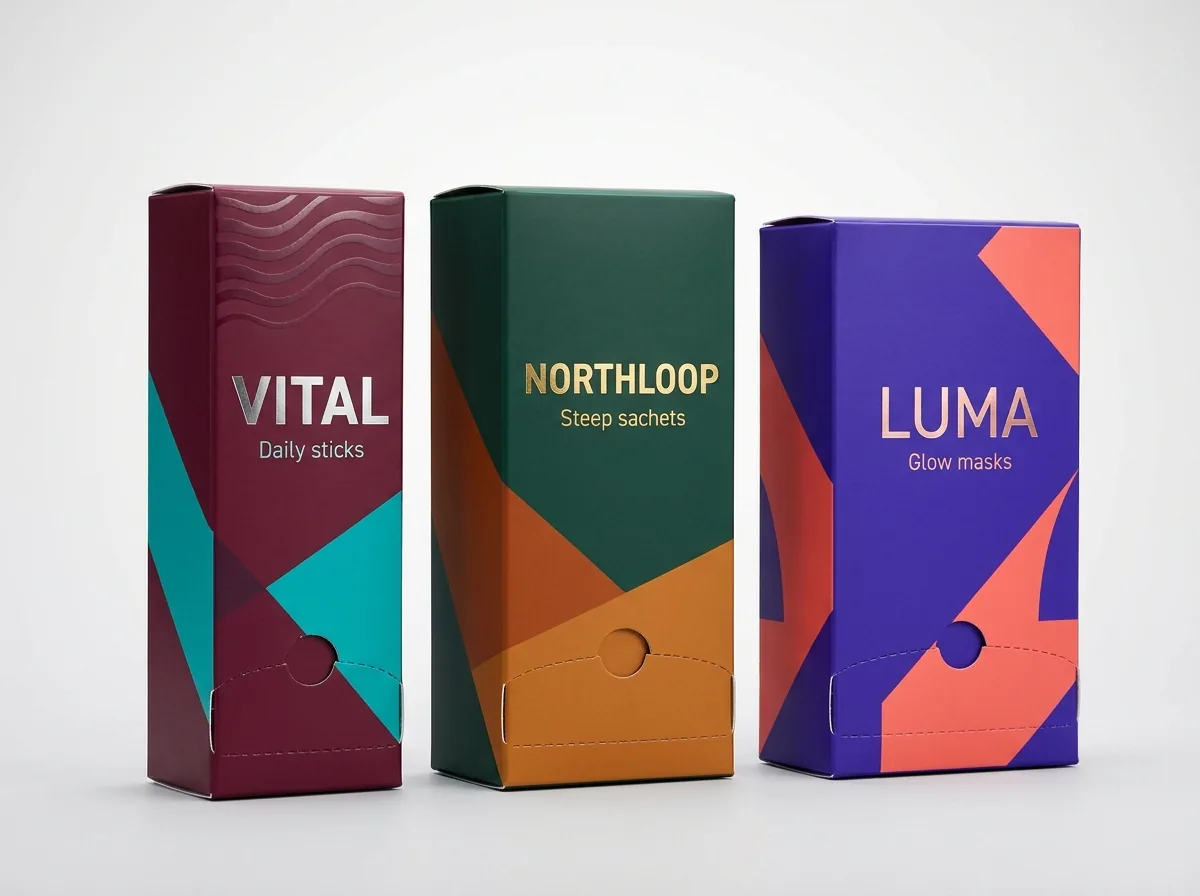
For 5-count or 6-count boxes of granola bars, a compact vertical auto-lock bottom box or seal-end carton with a top tuck flap is the industry workhorse. Shoppers open the top flap in the kitchen and pull a bar out from above. Because the footprint is narrow across the shelf, retail category managers can face four or five flavors side by side in a two-foot grocery section. Once a family multipack holds 8, 10, or 16 pouches of fruit snacks, mini cookies, meat sticks, or nut packs, a tall vertical box often sits on a middle pantry shelf with other items stacked on top of it. Adding a perforated dispenser box opening across the bottom 2 inches of the front panel lets kids and parents pull out the bottom pouch without taking the carton off the shelf. As each pouch is removed, gravity drops the next pouch into the lower tray so the household always finishes the oldest pack first.
Why do DTC variety snack boxes need E-flute or B-flute corrugated mailers?
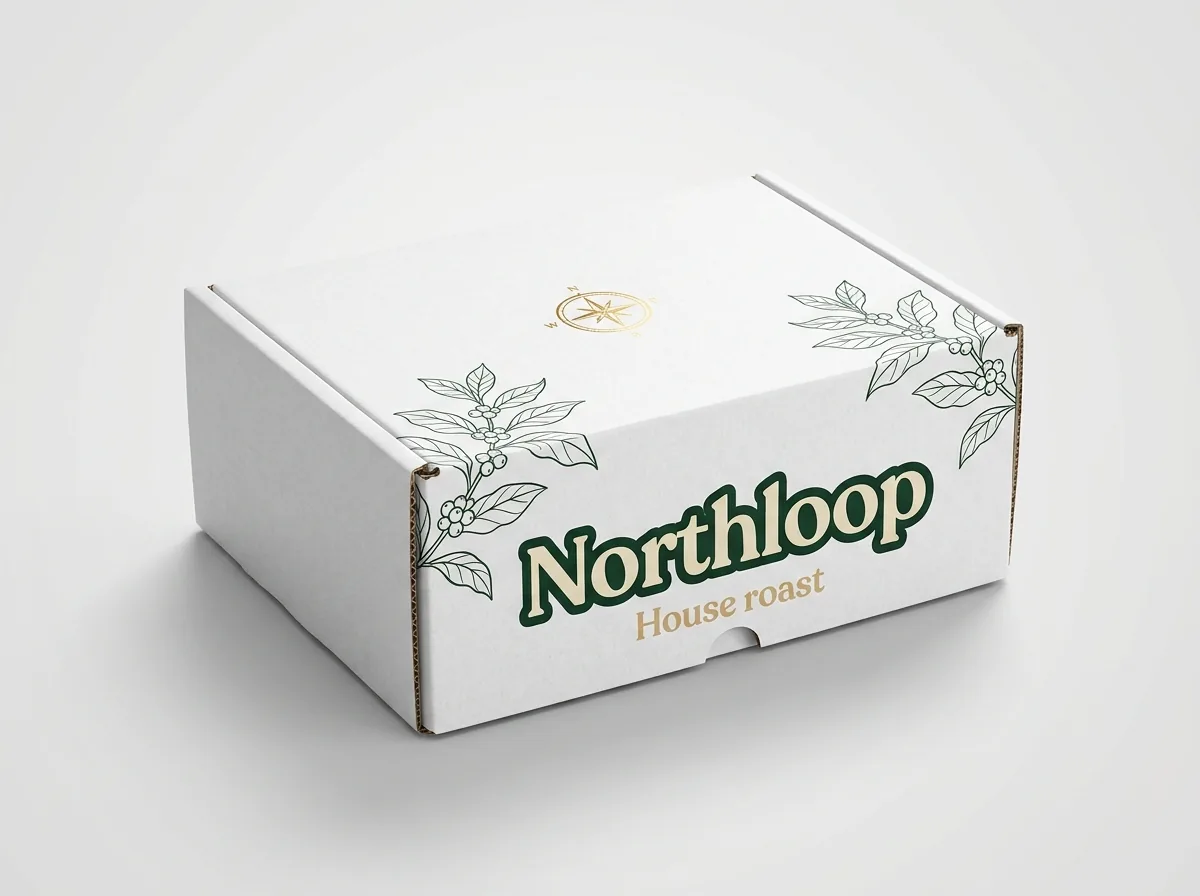
Folding paperboard works well when snacks ride to grocery stores stacked tightly inside a corrugated master case on a shrink-wrapped pallet. Direct-to-consumer (DTC) variety snack boxes travel alone through parcel conveyor chutes, where a 40-pound box can land directly on top of your package during automated sortation. For 8 to 15 item monthly snack curation boxes, an E-flute custom mailer box gives you 90 flutes per foot for high crush resistance while providing a smooth clay-coated or kraft outer surface that prints nearly as sharply as a folding carton. For large 24 to 36 item office breakroom boxes or heavy assortments containing jarred salsas and canned drinks, step up to thicker B-flute corrugated board and add a die-cut cardboard divider grid so heavy items stay anchored in their own cells. Many corporate gifting and subscription brands also print a full-color flavor map and allergen guide across the inside lid so opening the mailer feels like opening a menu.
- Folding paperboard (white or kraft card): best for retail shelf cartons and counter caddies shipped inside master cases.
- E-flute corrugated (approx. 1/16 in thick): best for 8 to 16 item DTC snack subscription mailers and heavy 24-bar counter caddies.
- B-flute corrugated (approx. 1/8 in thick): best for 24 to 36 item office breakroom boxes and college care packages.
- Inside lid printing: turns the wide inner lid of a corrugated snack mailer into a flavor map, nutritional key, or game board.
What are the most common mistakes when choosing a snack box style?
Avoid these five channel and structure mismatches before you order your custom snack packaging
- Sending a closed grocery tuck carton without a perforated tear-away hood to convenience stores and cafes that sell single bars at the register.
- Mailing a thin folding paperboard snack carton directly through USPS or UPS without an E-flute corrugated mailer wall.
- Designing a fold-up counter caddy header that only prints on the outside of the box, leaving a blank unprinted board when the lid folds backward.
- Making the bottom slot of a gravity-feed pantry dispenser too narrow for pillowed fruit-snack pouches to slide out smoothly.
- Showing both the single-bar UPC and the 12-pack caddy UPC on the outside of a wholesale box, causing checkout scanners to ring up the wrong price.
Find your size
Suggested inside size: 5.5 × 2.0 × 6.25 in
A starting point. Your account manager confirms the size with you before the proof.
Quote this size →Packaging for this
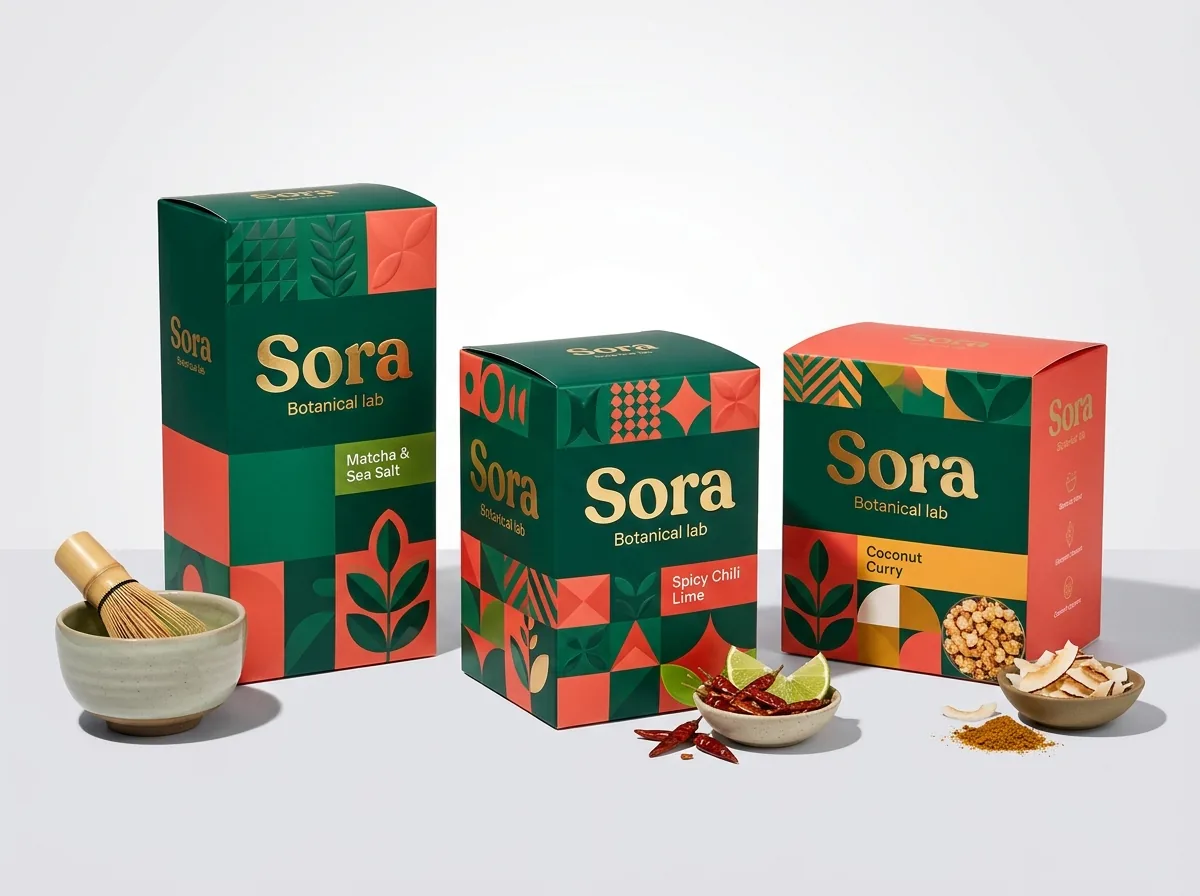
Ready to order snack boxes? Compare up to 3 quantities with a free 3D mockup.
Request a Quote →Questions about snack boxes
Can one 12-count snack box work for both retail counter display and online multipack orders?
Yes. A perforated tear-away counter caddy ships as a fully sealed rectangular carton. Online and club-store customers keep the box intact as a 12-pack in their pantry, while convenience stores and cafes pull the perforated strip to convert it into a counter tray.
Should a 12-bar counter display caddy be made from paperboard or E-flute corrugated?
For standard 1.4 oz to 2.0 oz granola, oat, or protein bars (12 bars totaling under 1.5 pounds), stiff white or kraft paperboard folds crisply and keeps unit cost low. For heavy 24-count caddies or dense nut-butter jars, E-flute corrugated adds extra wall rigidity.
How does the top lid of a tear-away caddy become an upright header sign?
The top lid has a horizontal fold score across its center and a small locking tab on its front edge. Once you tear away the perforated front hood, you fold the lid backward along the center score and tuck the tab into a slot on the back wall.
Do DTC variety snack mailers need tape to stay closed in the mail?
Roll-end tuck-top (RETT) corrugated mailers lock securely at the front with cherry-lock or ear-lock tabs, and most subscription brands add a single custom packaging sticker or tamper-evident seal strip across the front flap before handing the parcel to USPS or UPS.
Can I order both 6-count grocery cartons and 12-count counter caddies in one run?
Yes. Mention both structures and sizes in the quote form notes so your account manager quotes them together. You receive free custom dielines, digital proofs, and 3D mockups for both boxes before payment.
What is the minimum order quantity for custom snack caddies and variety mailers?
Folding carton multipacks and paperboard counter caddies start at 1,000 boxes, while custom printed corrugated mailer boxes start at 250 boxes. Standard turnaround is 10 to 14 business days (rush in 4 to 5 days) with free shipping to all 50 US states.
Still have a question? Ask a packaging specialist.
Request a Quote →Request your snack boxes quote
Tell us your size and quantities, and one dedicated account manager prepares pricing for each tier.
- Free design & AI-to-print studio + 3D mockup
- No die or plate charges · 4–5 day rush available
- Free shipping to all 50 states
- 10% off your first order
The structural comparisons across PDQ counter caddies, gravity-feed pantry cartons, and E/B-flute variety mailers in this guide reflect retail merchandising standards and ISTA parcel transit guidelines. A CubitPack packaging specialist checked every section. Spot something wrong? Let us know and we will fix it.
Sources
What changed
- October 22, 2026: First published.
- October 22, 2026: Updated specifications, terminology, and verified source links.
More guides
New packaging guides by email
Sizes, materials and design tips. Unsubscribe anytime.