
What size snack box fits bars, pouches, and variety packs?
Short answer: Stack your wrapped bars or pouches in their exact row-by-column grid, measure across the crimped wrapper fin seals, and add 1/8 to 1/4 inch per side. Popular custom snack boxes measure 5.5 × 2.0 × 6.25 in for 6 bars, 6.25 × 5.5 × 5.75 in for 12-bar caddies, and 10 × 8 × 4 in for variety mailers.
On this page
- How do you measure flow-wrapped snack bars and pillow pouches for a box
- What is the complete snack box size chart for bars, pouches, and mailers
- How do you size 6-bar grocery multipacks vs 12-bar checkout caddies
- What dimensions work best for DTC variety snack subscription mailers
- How do you size compartmentalized bistro boxes and pantry dispensers
- Common mistakes
- FAQs
Request a custom quoteFree dieline & 3D mockup
Sizing a snack box accurately starts with measuring the finished, sealed wrapper rather than the bare food item inside. Flow-wrapped granola bars, protein brownies, and meat sticks have crimped horizontal fin seals at both ends that add 1/2 to 1 inch to the bar's length, while nitrogen-flushed chip and fruit-chew pouches expand into a pillowed belly in the center. To find your inside Length × Width × Height in inches, arrange your wrapped snacks on a flat table in the exact rows and columns they will sit inside the carton, measure the total span including the wrapper fins, and add 1/8 to 1/4 inch of breathing room on all three axes so co-packers can load the carton quickly without bending the wrapper ends. At CubitPack, every size is cut to order with no die or plate charges.
How do you measure flow-wrapped snack bars and pillow pouches for a box?
The number-one sizing mistake in snack packaging happens when a founder measures an unwrapped 4-inch oat bar, orders a 4.25-inch tall counter caddy, and discovers on packing day that the flow-wrapped bar actually measures 5.5 inches from top fin seal to bottom fin seal. Folding those stiff metallized film fins over to force the bar into a short box crinkles the wrapper and pops cold-seal or heat-seal seams open. Before locking in the dimensions for your printed snack cartons, pull 12 or 24 real production samples off your wrapper line. Stand or lay them in the exact orientation you want shoppers to see when the box opens, and measure the group as a complete block rather than multiplying the thickness of a single bar by twelve on a calculator.
- Step 1 (Tip-to-tip wrapper length): measure from the outer edge of the top crimped fin seal to the outer edge of the bottom fin seal, or fold the fins flat if your co-packer tucks them.
- Step 2 (Group stack depth): line up 6 or 12 wrapped bars face-to-back between two straightedges and measure the combined depth under light hand pressure.
- Step 3 (Clearance buffer): add 1/8 inch to Length and Width on folding paperboard cartons, or 1/4 inch on corrugated display caddies and mailers.
- Step 4 (Headspace): add 1/4 inch above standing bars so the top lid closes flat without crushing the upper wrapper fin.
What is the complete snack box size chart for bars, pouches, and mailers?
Every CubitPack order is cut to your exact inside Length × Width × Height in inches with zero die or plate fees. Use the benchmark table below to compare standard US grocery multipacks, convenience-store checkout caddies, airline bistro trays, and e-commerce variety mailers. Notice how 12-count bar caddies can be arranged in two different footprints depending on retail shelf depth: a square 2-row-by-6-deep caddy (6.25 × 5.5 × 5.75 in) for narrow coffee-shop register counters, or a single-file 1-row-by-12-deep caddy (3.25 × 9.5 × 5.75 in) for deep convenience-store gondola shelves. If you sell both 6-count grocery packs and 12-count foodservice caddies, keeping the vertical height identical across both boxes lets your co-packer run both cartons through the same case-sealing height guide without stopping the line between retail and wholesale formats.
| Snack format & count | Inside box size (L × W × H) | Recommended structure & board |
|---|---|---|
| 5 or 6 flow-wrapped bars (grocery pack) | 5.5 × 2.0 × 6.25 in | Auto-lock or seal-end carton · white or kraft card |
| 12-bar counter caddy (2 rows of 6) | 6.25 × 5.5 × 5.75 in | Perforated tear-away PDQ caddy · stiff card |
| 12-bar narrow shelf caddy (1 row of 12) | 3.25 × 9.5 × 5.75 in | Perforated tear-away caddy · stiff card or E-flute |
| 20 or 24 meat sticks / slim bars | 5.5 × 5.0 × 6.5 in | Tear-away counter display · fold-up header |
| 8 to 10 fruit snack or cracker pouches | 6.5 × 3.25 × 7.5 in | Vertical carton with bottom gravity dispenser slot |
| 4-cell cafe / airline bistro snack box | 7.0 × 5.5 × 2.25 in | Window tuck box + 4-cell cardboard divider |
| 8 to 12 item DTC variety snack mailer | 10.0 × 8.0 × 4.0 in | E-flute corrugated roll-end tuck mailer |
| 24 to 36 item office breakroom box | 14.0 × 10.0 × 5.5 in | B-flute corrugated mailer or pop-open display tray |
How do you size 6-bar grocery multipacks vs 12-bar checkout caddies?
In the supermarket aisle, a 5-count or 6-count multipack carton is designed to maximize front billboard space while occupying as little shelf depth as possible. Most brands stand five or six wrapped bars vertically inside a 5.5 × 2.0 × 6.25 inch auto-lock bottom box or seal-end carton. Standing the bars vertically gives you a 5.5 × 6.25 inch front face for flavor photography and macro callouts. At a gym front desk, cafe register, or convenience store checkout, shoppers buy single bars out of an open counter display box. If you place 12 bars in two vertical columns of six (6.25 inches wide across the front by 5.5 inches deep), two full wrapper faces greet the customer side by side. Keep the height of the carton 1/4 inch taller than the standing wrapper so the top lid bears the stacking load inside the master shipping case rather than crushing the bars inside.
Know your size? Compare pricing across up to 3 quantities.
Request a Quote →What dimensions work best for DTC variety snack subscription mailers?
Curated snack boxes - such as international snack clubs, healthy office snack drops, and college exam care packages - combine items of wildly different shapes: nitrogen-puffed chip bags, flat seaweed crisps, round cookie tins, and heavy nut packs. If the outer custom mailer box is too deep (for example, 8 inches tall), heavy items tumble to the bottom during parcel sorting and pop the chip bags. A wide, shallow footprint between 3.5 and 5.5 inches tall works far better for both transit protection and unboxing presentation. When a subscriber opens the hinged lid of a 10 × 8 × 4 inch or 14 × 10 × 5.5 inch mailer, every snack bag sits in a single or double visible layer rather than buried in a deep pit. Keeping the total cubic volume compact also keeps your parcel below USPS and UPS dimensional-weight surcharges while leaving a flat inner lid for a printed tasting menu.
How do you size compartmentalized bistro boxes and pantry dispensers?
For cafe grab-and-go coolers, airline catering, and winery tasting rooms, a bistro snack box acts as a portable charcuterie tray. A 7.0 × 5.5 × 2.25 inch or 8.0 × 6.0 × 2.5 inch shallow tuck box paired with a die-cut custom cardboard insert divides the interior into 3 or 4 clean cells - for example, a 2.5 × 2.5 inch corner cell that locks a round 2 oz hummus or cheese cup in place alongside rectangular cells for artisan crackers, almonds, and dried fruit. For family-size fruit snack, biscuit, and granola-bite boxes sold in club stores or grocery aisles, a vertical dispenser box (around 6.5 × 3.25 × 7.5 in) includes a perforated pull-out tray door across the bottom 2 inches of the front panel. Make sure the height of that bottom opening is at least 1/2 inch taller than the thickness of a single lying pouch so kids can slide one pack out without jamming the stack above it during busy school mornings.
- Bistro dip-cup cell: measure the top rim diameter of your 2 oz or 3 oz portion cup and add 1/16 inch for a snug divider fit.
- Bistro box height: match the tallest cup or cracker stack plus 1/8 inch so contents cannot hop over the internal divider walls.
- Gravity dispenser door height: size the bottom slot 1.5× the thickness of one flat pouch so packs feed smoothly.
- Club-store master tray: group two or three 6-count cartons inside a perforated corrugated shelf tray for warehouse clubs.
What are the most common snack box sizing mistakes?
Avoid these five frequent measurement errors before you approve your custom snack box dieline
- Measuring the bare snack bar length and forgetting the 1/2 to 1 inch crimped flow-wrap fin seals at both ends.
- Multiplying the thickness of one flat pouch by ten instead of measuring a real stacked group of ten nitrogen-flushed pouches.
- Making a 12-bar counter caddy 1/8 inch shorter than the standing bars, which transfers top-down shipping weight directly onto the bars.
- Using a deep cube box instead of a wide, shallow mailer for DTC snack assortments, letting heavy items crush chip bags.
- Making the internal divider walls in a bistro box shorter than the box lid, allowing almonds or crackers to spill between cells in transit.
Find your size
Suggested inside size: 5.5 × 2.0 × 6.25 in
A starting point. Your account manager confirms the size with you before the proof.
Quote this size →Packaging for this
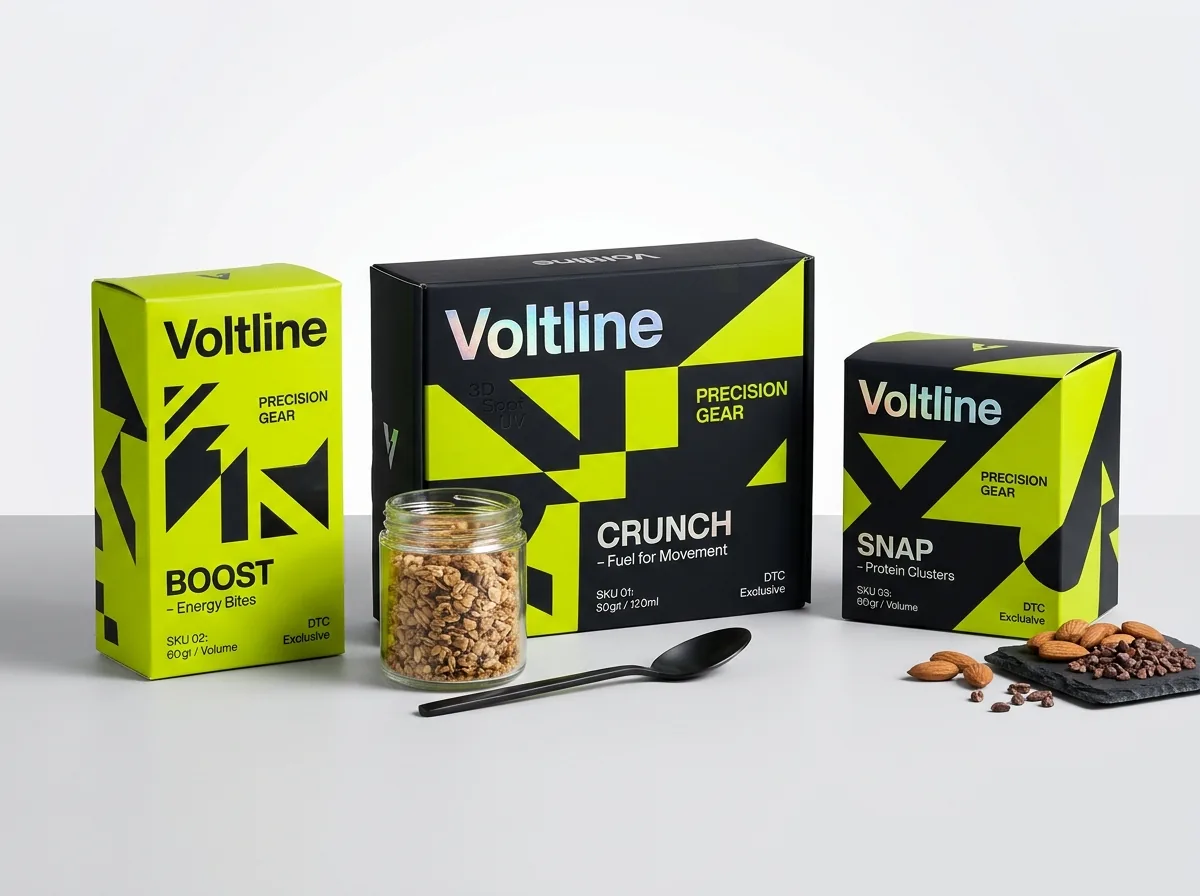
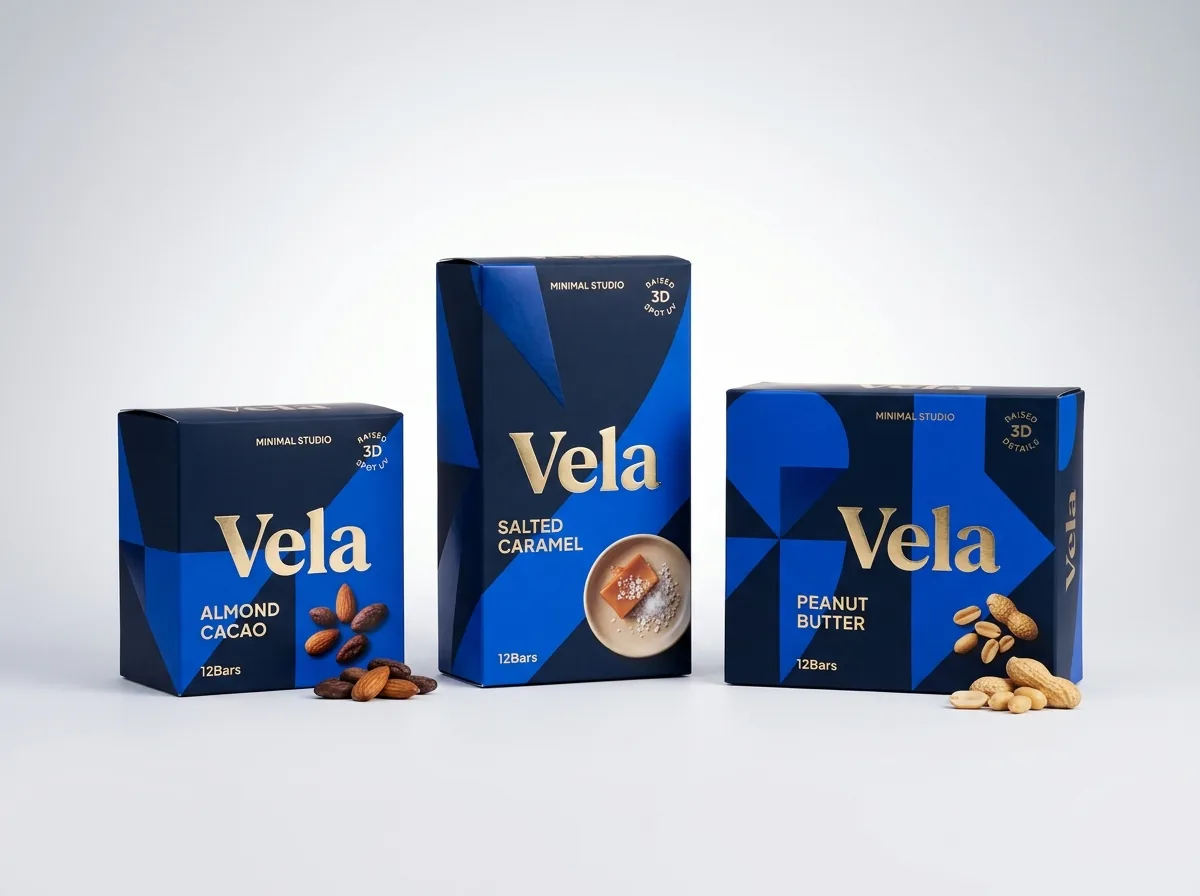
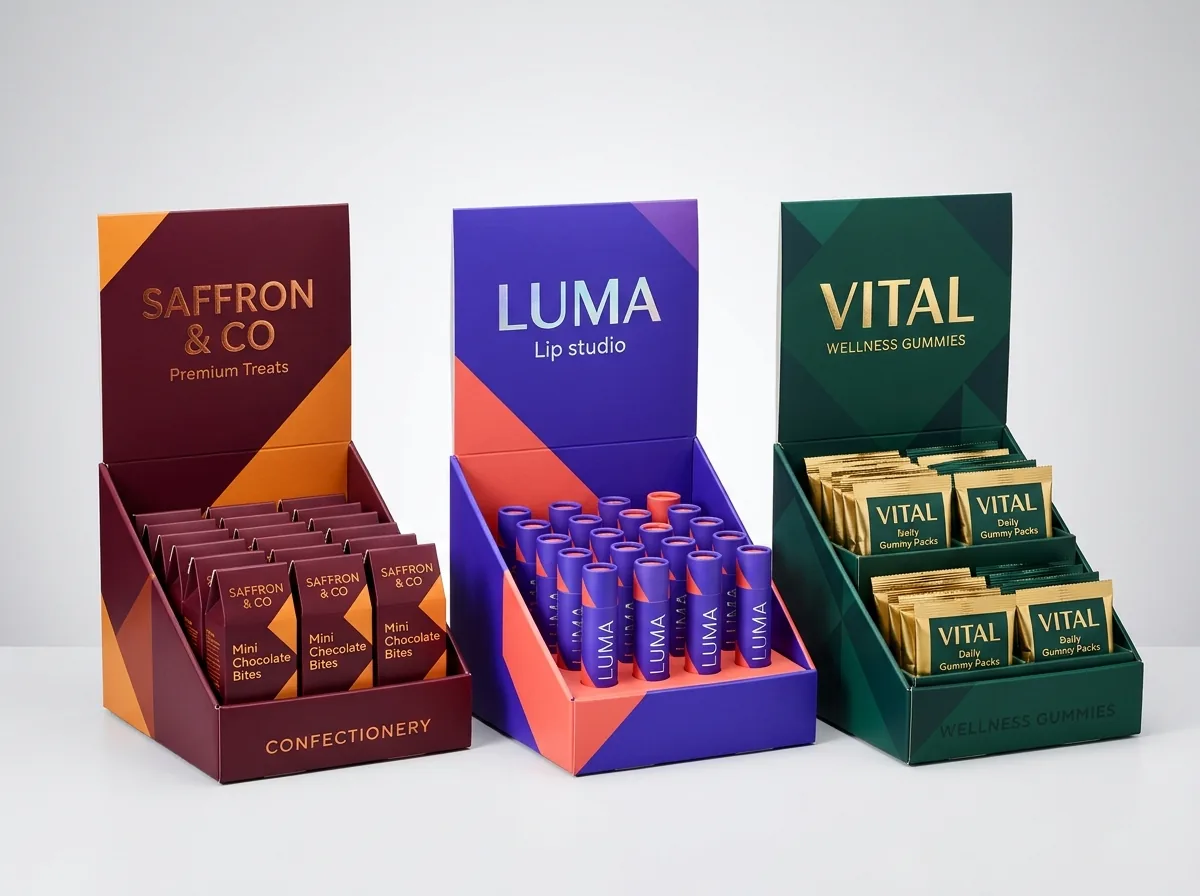
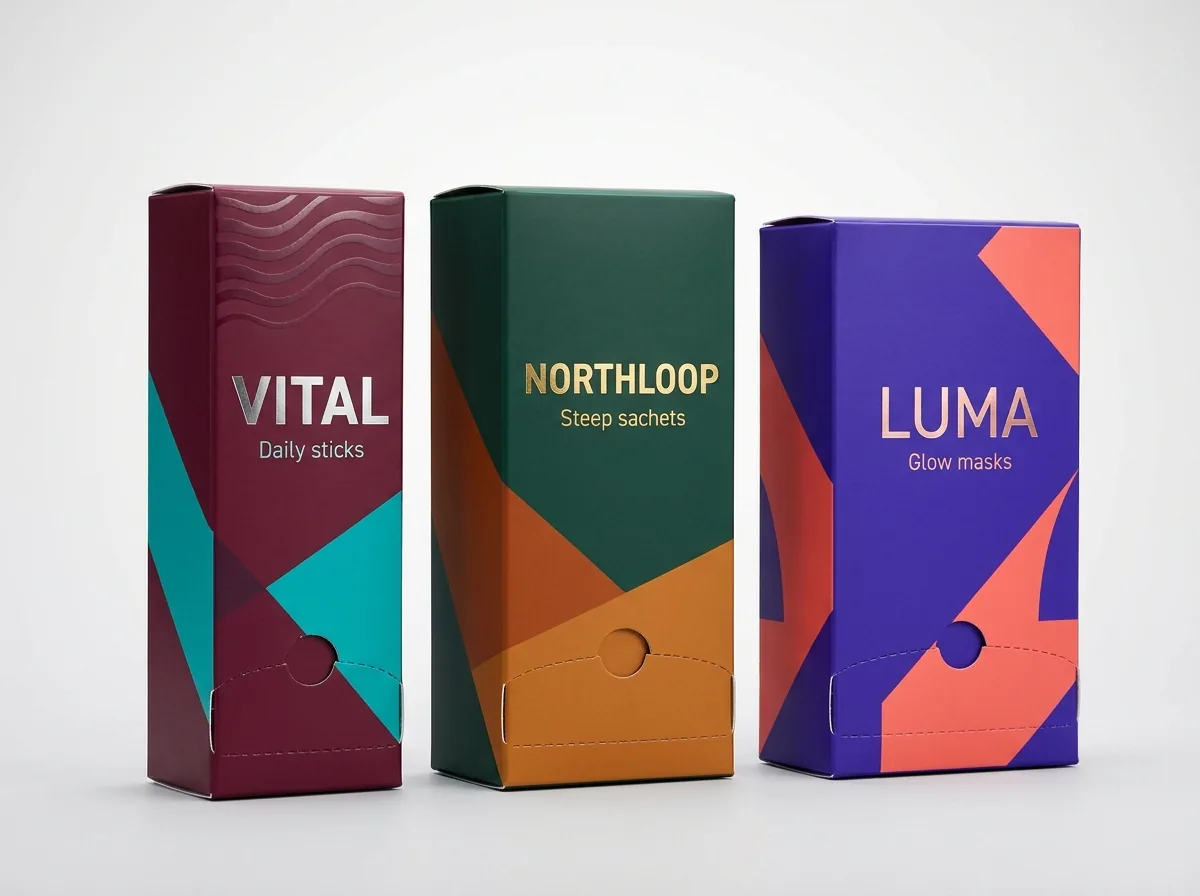
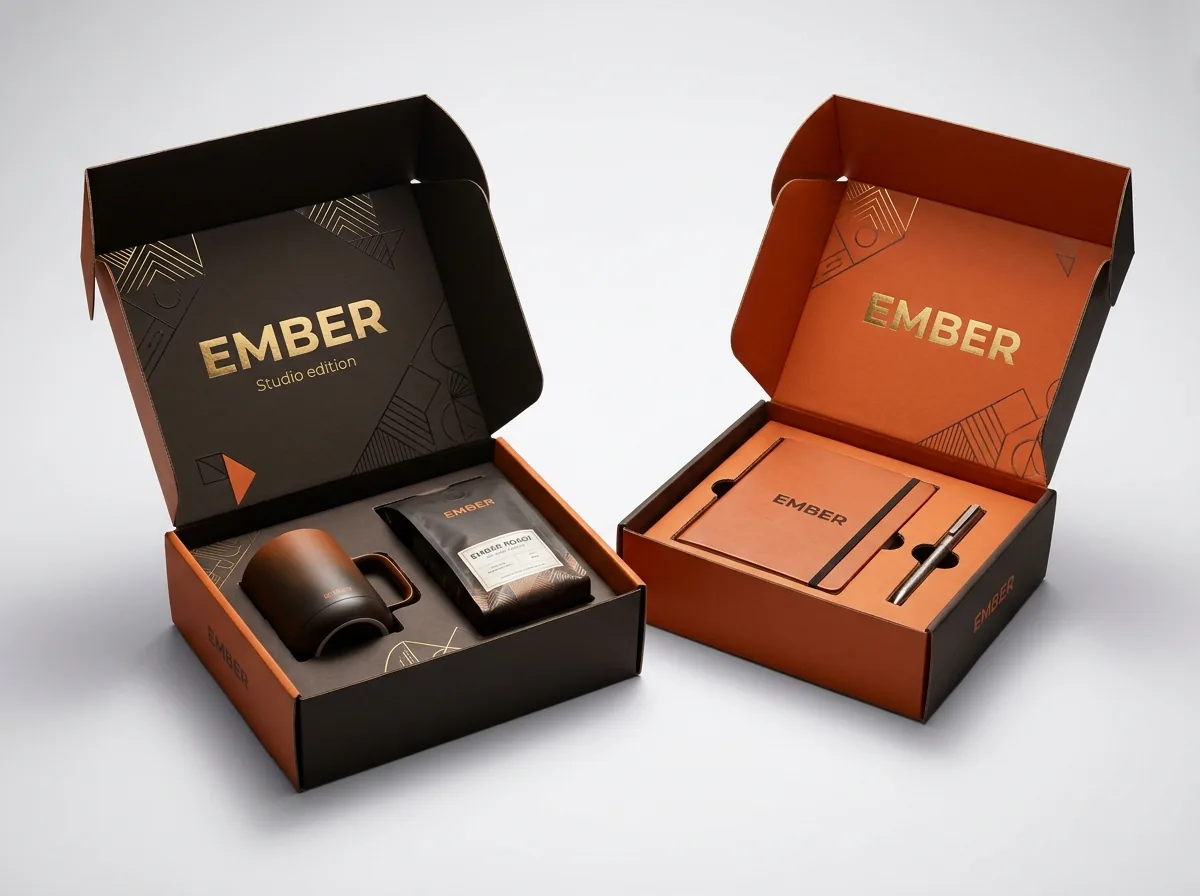
Ready to order snack boxes? Compare up to 3 quantities with a free 3D mockup.
Request a Quote →Questions about snack boxes
What size box do I need for 12 flow-wrapped protein or granola bars?
A standard 12-count counter caddy arranged in 2 rows of 6 upright bars typically measures 6.25 × 5.5 × 5.75 inches (inside Length × Width × Height). If you prefer a narrow single-row caddy of 12 bars front-to-back, 3.25 × 9.5 × 5.75 inches is a common starting footprint.
What size box holds 5 or 6 snack bars for grocery store shelves?
A 5-count or 6-count grocery pantry carton typically measures 5.5 × 2.0 × 6.25 inches when the bars stand upright, or 5.5 × 6.25 × 2.0 inches if the carton is designed to lie flat. Always measure your wrapped bar tip-to-tip first.
Are snack box dimensions written as inside or outside measurements?
Inside. All CubitPack folding cartons, counter caddies, and corrugated mailers are quoted by inside Length × Width × Height in inches so your stacked bars, pouches, or dividers fit cleanly inside the score lines.
What size corrugated mailer is best for a monthly variety snack subscription box?
For an 8 to 12 item monthly snack curation box, a 10.0 × 8.0 × 4.0 inch E-flute corrugated mailer is the most popular size. For a larger 24 to 36 item family or office breakroom box, step up to a 14.0 × 10.0 × 5.5 inch B-flute mailer.
Can you size a custom cardboard divider insert to match my bistro snack box?
Yes. Send us the dimensions or physical samples of your dip cup, cracker pack, and snack compartments, and our structural designers will build the outer box and the interlocking cardboard divider dieline together at no charge.
Can I see a 3D mockup and test my snack box size before ordering 1,000 units?
Yes. Every order includes a free custom dieline proof and 3D mockup before you pay. You can also order our $50 sample kit (credited toward your first order) or request a paid custom printed prototype to test-fit your wrapped bars.
Still have a question? Ask a packaging specialist.
Request a Quote →Request your snack boxes quote
Tell us your size and quantities, and one dedicated account manager prepares pricing for each tier.
- Free design & AI-to-print studio + 3D mockup
- No die or plate charges · 4–5 day rush available
- Free shipping to all 50 states
- 10% off your first order
The bar-stack tolerances, flow-wrap fin allowances, and variety mailer footprints in this guide come from standard CPG co-packing specifications and parcel dimensional-weight rules. A CubitPack packaging specialist verified every row. Spot an error? Tell us and we will fix it.
Sources
What changed
- October 22, 2026: First published.
- October 22, 2026: Updated specifications, terminology, and verified source links.
More guides
New packaging guides by email
Sizes, materials and design tips. Unsubscribe anytime.