
PETG vs OPS vs PLA shrink sleeve films: which resin fits my container and heat tunnel?
Short answer: When specifying custom shrink sleeves, match the film resin to your container's contour and wall rigidity: choose PETG (up to 75%–78% transverse shrink) for steep glass necks and aluminum cans, OPS (65%–70% shrink) for flexible squeeze bottles that need gentle shrink force, or PLA for chilled cold-chain drinks.
On this page
- How do PETG, OPS, PLA, and floatable polyolefin shrink films compare side by side
- When do steep bottle contours and beverage cans require PETG shrink film
- Why do thin-walled HDPE and PET squeeze bottles need low-force OPS film
- How do steam tunnels, radiant infrared tunnels, and hot-air tunnels affect film choice
- How do vertical tear perforations and floatable films support PET bottle recycling
- Common mistakes
- FAQs
Request a custom quoteFree dieline & 3D mockup
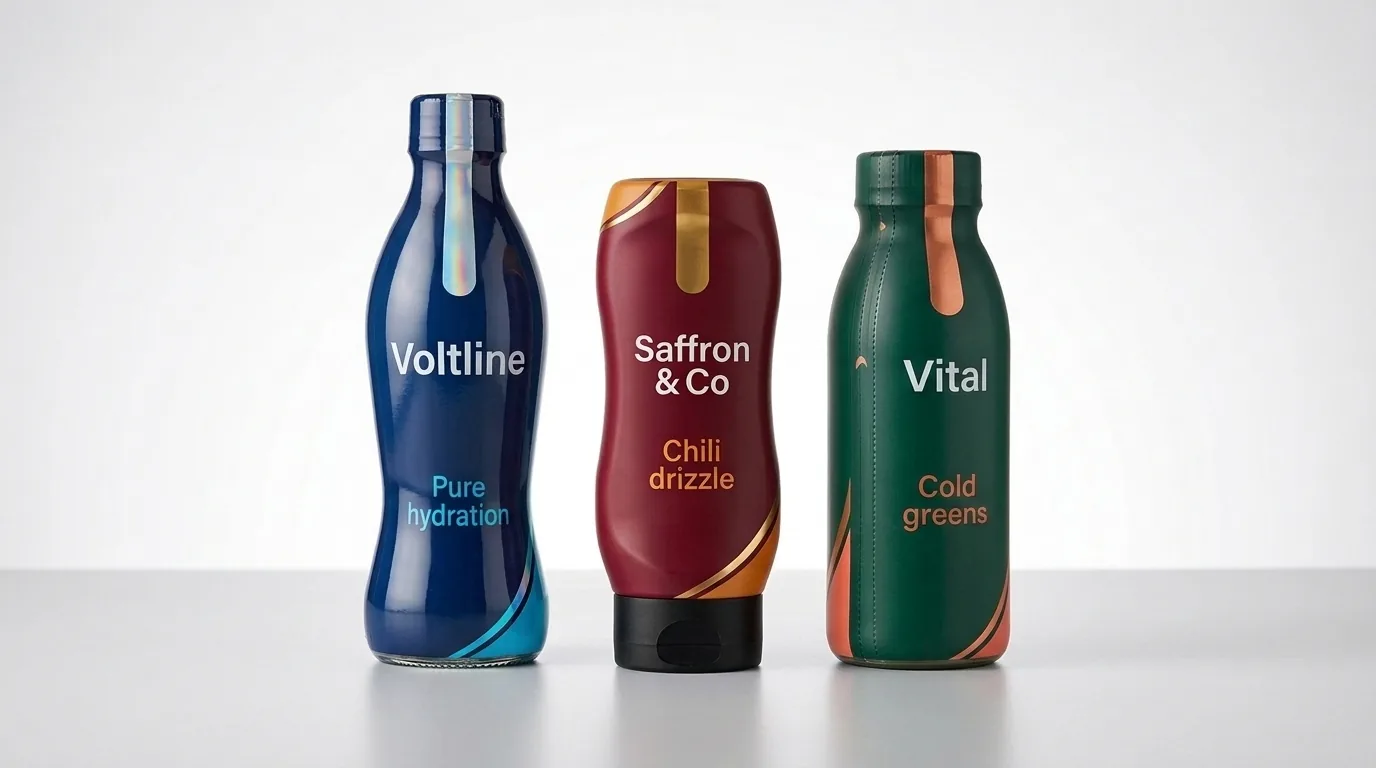
Every heat-shrink sleeve begins as a clear biaxially or monoaxially oriented polymer web engineered to relax and contract circumferentially when heated inside a steam, hot-air, or radiant infrared tunnel. While shoppers only see the finished 360-degree graphics on the shelf, picking the wrong polymer resin for your container geometry or co-packer tunnel causes dog-eared neck wrinkles, crushed plastic walls, or split back seams. In modern North American label converting, four primary film families dominate commercial production: glycol-modified polyester (PETG), oriented polystyrene (OPS), bio-derived polylactic acid (PLA), and low-density floatable polyolefins designed for clear PET bottle recycling streams. At CubitPack, custom shrink sleeves start at 500 units and ship free to all 50 US states in 10–14 business days (or 4–5 days rush), with free design help and zero plate fees.
How do PETG, OPS, PLA, and floatable polyolefin shrink films compare side by side?
Modern US retailers and beverage co-packers have largely moved away from legacy PVC shrink films in favor of chlorine-free PETG, OPS, PLA, and polyolefin substrates. Before ordering 360-degree printed shrink sleeves or calculating your tube width in our layflat width and cut height sizing guide, compare the four industry film families across FINAT and APR converting benchmarks
| Shrink film resin | Max TD shrink % | Shrink force & stiffness | Ideal containers & tunnel notes |
|---|---|---|---|
| PETG (Glycol-modified polyester) | 75% – 78% | High shrink force · High tensile stiffness & gloss | 12/16 oz cans, glass hot sauce, steep hourglass necks; excels in steam tunnels |
| OPS (Oriented polystyrene) | 65% – 70% | Low / gentle shrink force · Lower density (1.05 g/cm³) | Thin-walled HDPE squeeze bottles, yogurt drinks, flexible plastic tubs |
| PLA (Polylactic acid, bio-derived) | 70% – 75% | Moderate shrink force · Low activation temperature | Cold-pressed juices, kombucha, chilled shots; avoid >105°F summer trailers |
| Floatable Polyolefin (cPO / PO) | 65% – 70% | Balanced force · Specific gravity < 1.0 g/cm³ | Clear PET water, soda, and RTD bottles entering float-sink wash recycling |
When do steep bottle contours and beverage cans require PETG shrink film?
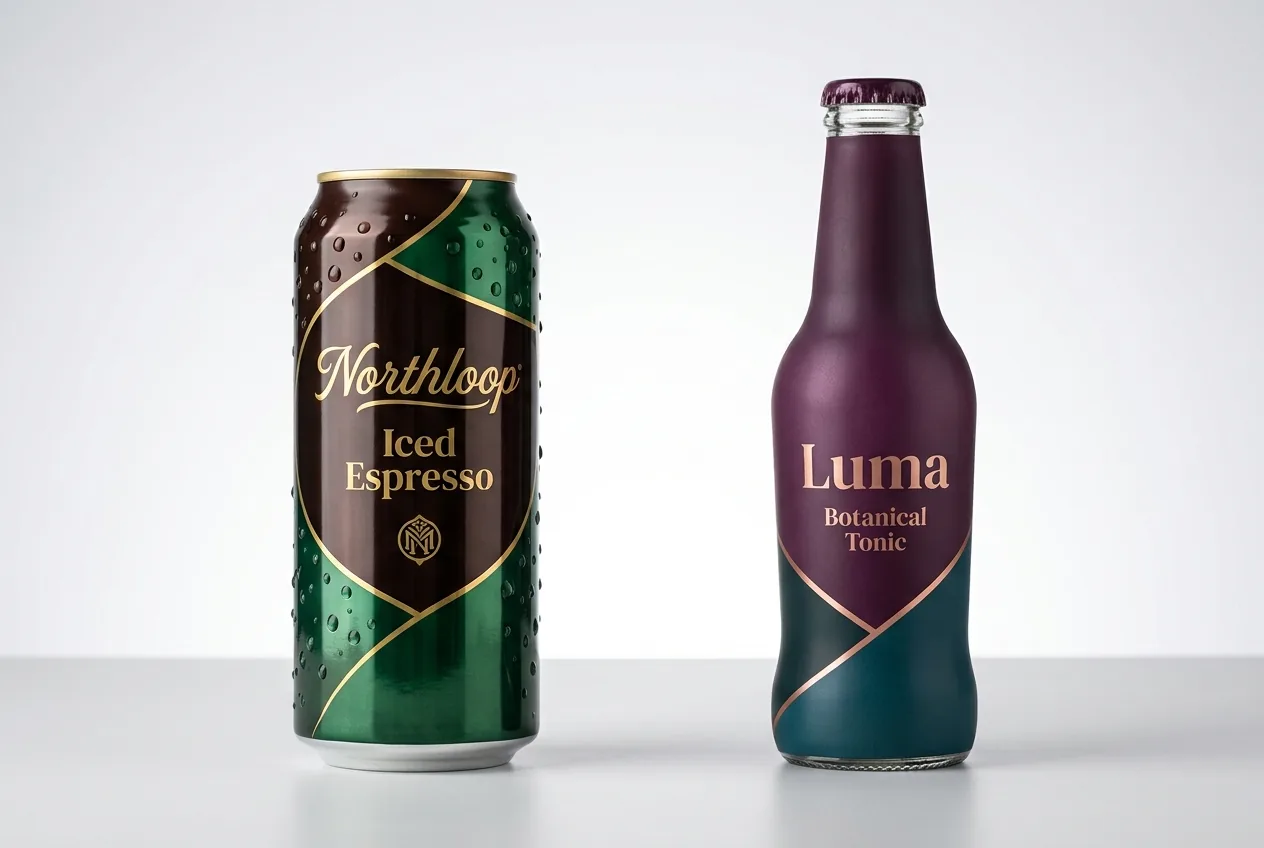
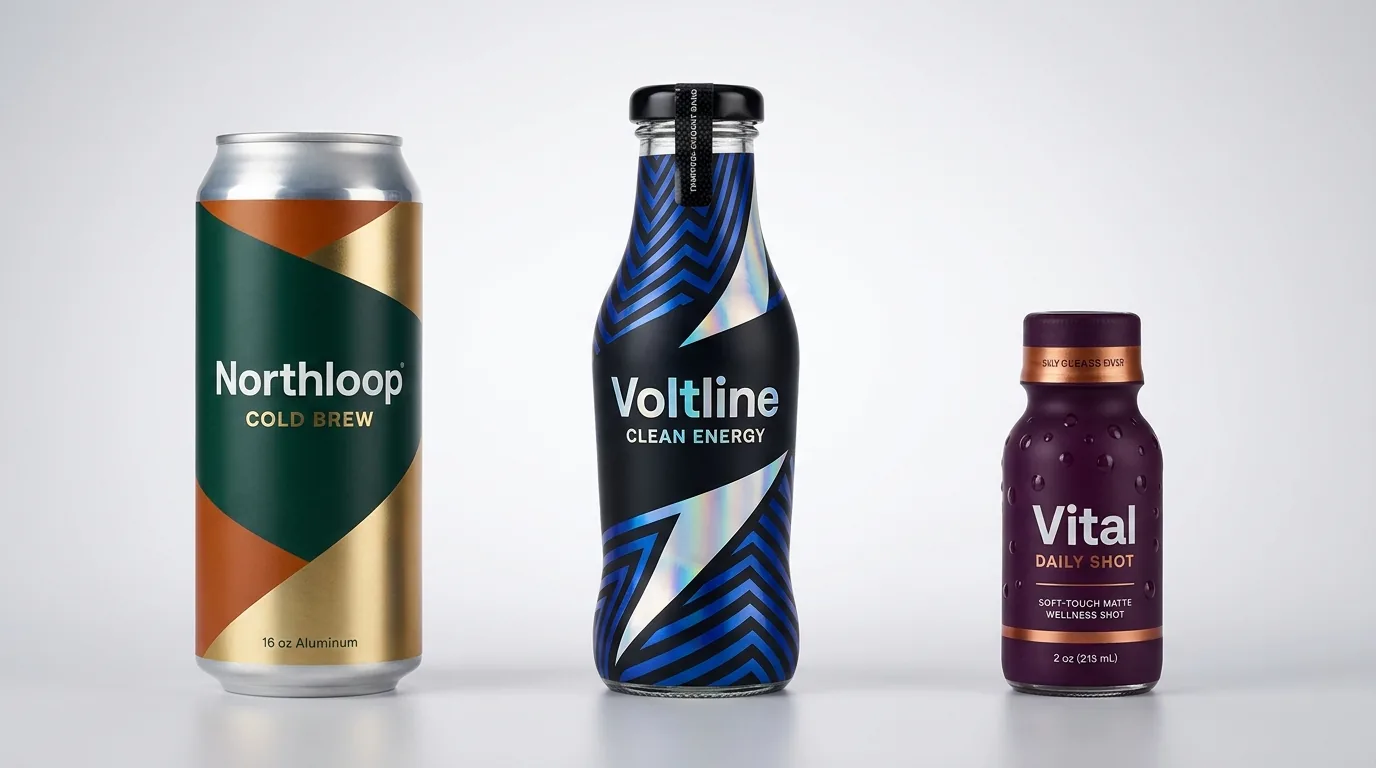
PETG is the workhorse resin of North American craft beverage canning, wellness shots, and glass bottle sleeving because it combines up to 78% circumferential shrinkage with exceptional machine-web tensile strength and glass-like clarity. Brands upgrading from standard custom water bottle labels or custom juice labels rely on PETG whenever three mechanical demands overlap
- Extreme neck-to-body diameter ratios above 60% transverse shrink: On a 5 oz woozy hot sauce bottle or a 70 mm wide RTD carafe that narrows sharply to a 28 mm threaded cap, only a 75% to 78% TD shrink curve can pull slack film taut around the cap ring without leaving fluted vertical pleats.
- High-speed inline mandrel sleeving and pasteurization toughness: PETG resists web snapping at 150 to 300+ cans per minute, holds crisp T-seam welds, and withstands cold-fill condensation, ice-bucket immersion, and tunnel washdowns without scuffing or clouding.
- Sharp gloss and tactile Spot UV contrast: PETG's smooth surface delivers brilliant reverse-printed Pantone vibrancy and supports exterior matte over-varnishes, metallic foil effects, and raised Spot UV textures.
- Dimensional stability during warm summer freight: Unlike lower-temperature bio-resins, unshrunk PETG rolls tolerate typical ambient warehouse and closed-van transit conditions up to 95°F (35°C) without premature roll blocking or layflat width shrinkage.
Why do thin-walled HDPE and PET squeeze bottles need low-force OPS film?
Higher maximum shrink percentage is not always better if your container has soft, flexible plastic walls. As polymer film heats up and contracts around a bottle, it exerts inward hoop tension (shrink force) measured in Newtons per millimeter. If high-force film is shrunk onto a lightweight, unfilled condiment squeeze bottle, thin dairy cup, or light-grammage PET packer, the film squeezes harder than the plastic wall can push back
- Preventing ovalized or paneled squeeze bottles: Oriented polystyrene (OPS) exhibits a smoother, more gradual temperature-to-shrink curve than PETG and exerts significantly lower inward hoop stress, hugging thin HDPE and polypropylene squeeze bottles without pinching their waists.
- Empty-bottle sleeving vs filled-bottle sleeving: Co-packers who sleeve bottles empty before filling lack internal liquid hydraulic support. Unless compressed air is injected into empty thin-walled bottles inside the tunnel, specifying a gentler-force film prevents permanent sidewall buckling.
- Soft hand-squeeze recovery in consumer use: When a customer squeezes a ranch dressing, honey, sriracha, or body-lotion bottle repeatedly in the kitchen or shower, flexible OPS rebounds smoothly alongside the container wall rather than creasing stiffly or cracking.
- Higher footage yield per pound of film: Because OPS has a lower specific gravity (around 1.05 g/cm³ compared with 1.32 g/cm³ for PETG), an equivalent micron thickness yields roughly 25% more linear meters per kilogram on large roll-fed runs.
Know your size? Compare pricing across up to 3 quantities.
Request a Quote →How do steam tunnels, radiant infrared tunnels, and hot-air tunnels affect film choice?
Always ask your co-packer or production manager what type of heat tunnel sits over your conveyor before finalizing your quote notes, just as you verify unwind specs on custom roll labels, metallic highlights on custom foil labels, or transparent substrates on custom clear labels. Tunnel heat transfer physics directly govern how smoothly each polymer shrinks across dark and light artwork zones
- Pressurized steam tunnels (75°C to 95°C / 167°F to 203°F): Saturated steam transfers latent heat six to eight times more uniformly than dry air and wraps smoothly around cold, wet filled beverage bottles and cans. Steam is the gold standard for full-body contoured PETG, PLA, and polyolefin sleeves.
- Electric hot-air and radiant infrared (IR) tunnels (130°C to 200°C air temp): Dry hot-air blowers and quartz IR emitters cost less to install and need no boiler or floor drain, making them popular for neck tamper bands and dry jars. However, dark black ink absorbs radiant IR faster than white ink, requiring careful zone baffling so high-force films do not overheat.
- Cold-chain storage rules for bio-derived PLA sleeves: PLA activates cleanly at lower steam temperatures (around 65°C to 80°C), saving tunnel energy, but unshrunk PLA rolls and finished pallets must be kept out of unconditioned 110°F+ summer freight trailers to avoid premature film relaxation.
- Multi-zone nozzle staging from base to cap: Regardless of resin, aiming the first tunnel manifold low at the bottom container heel locks vertical graphic registration before upper steam or hot-air nozzles finish shrinking the steep neck collar.
How do vertical tear perforations and floatable films support PET bottle recycling?
In municipal Materials Recovery Facilities (MRFs), standard PET bottle flake has a specific gravity around 1.35 g/cm³ and sinks to the bottom of float-sink wash tanks so lighter polyolefin caps (<1.0 g/cm³) float away cleanly. Because standard PETG (1.32 g/cm³) also sinks alongside PET flake while clumping at dryer temperatures, the Association of Plastic Recyclers (APR) recommends two practical design paths when ordering custom printed shrink sleeves and setting up files per our artwork pre-distortion and perforation guide
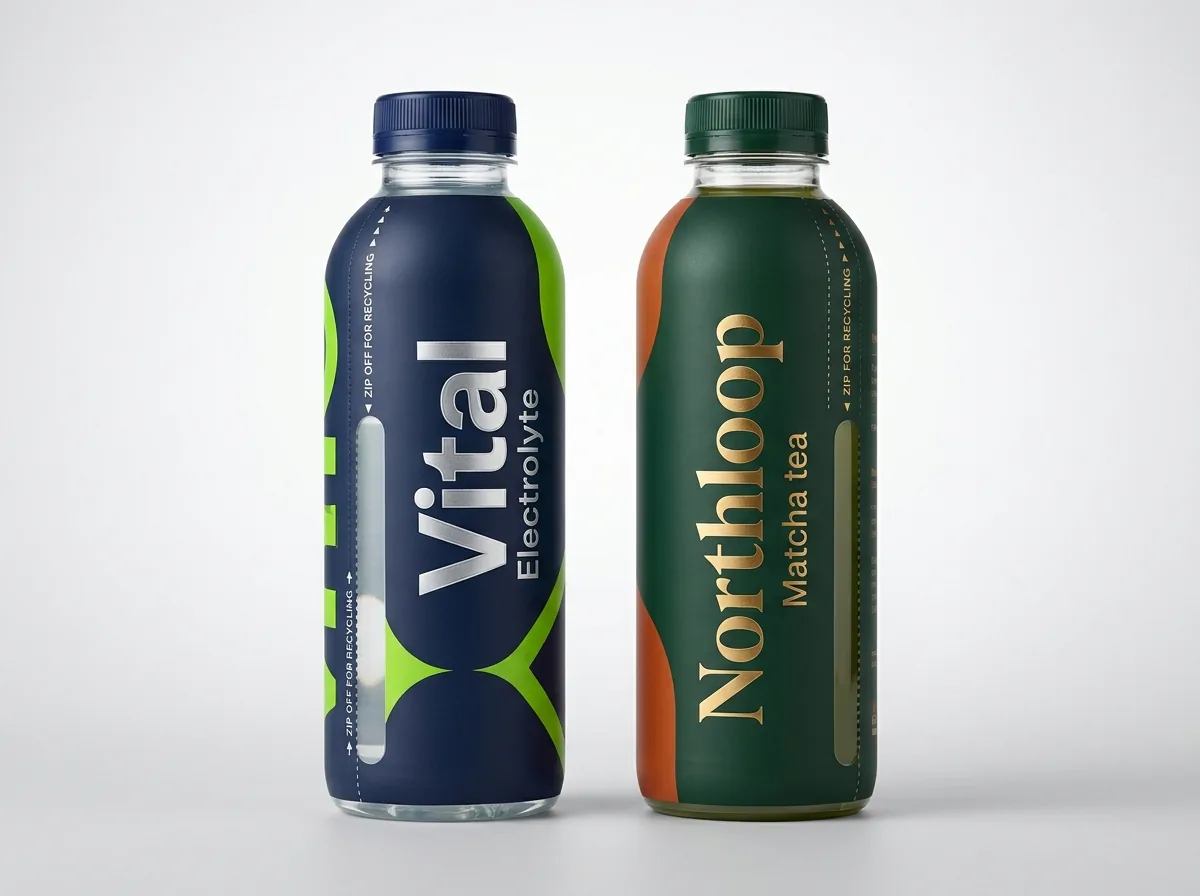
- Full-body vertical consumer tear-off perforations: Adding a dual-row vertical micro-perforation strip running top to bottom with a clear 'Tear Here Before Recycling' callout lets consumers zip off any PETG or OPS sleeve cleanly in two seconds so bare clear PET enters the bin.
- Low-density floatable polyolefin sleeves (<1.0 g/cm³): For high-volume clear PET beverage brands seeking whole-bottle wash-tank separation without consumer removal, floatable polyolefin shrink films grind into flakes that float cleanly off sinking PET flake.
- Order from 500 sleeves with free proofing and Price Beat protection: Test your container and tunnel setup starting from 500 shrink sleeves in 10–14 business days (4–5 business days rush available), complete with free 2D/3D proofing, free 50-state US shipping, and our Price Beat guarantee.
What are the five costliest shrink sleeve film selection mistakes?
Avoid these five resin and tunnel mismatches when specifying custom shrink sleeves for a new bottle or can
- Specifying lower-shrink 65% OPS film on a steep long-neck bottle requiring 74% transverse contraction, leaving loose unshrunk pleats around the collar.
- Running high-shrink-force PETG on lightweight, unfilled HDPE squeeze bottles in a dry hot-air tunnel, pinching and ovalizing the flexible sidewalls.
- Shipping unshrunk bio-derived PLA sleeve rolls in unrefrigerated summer boxcars above 105°F, causing roll blocking and premature edge curl before application.
- Wrapping clear PET beverage bottles edge-to-edge in dark non-floatable film without a vertical tear-off perforation, blocking optical MRF sorters.
- Ordering production rolls without telling your packaging specialist whether your filling line uses a pressurized steam tunnel or a radiant IR hot-air tunnel.
Packaging for this
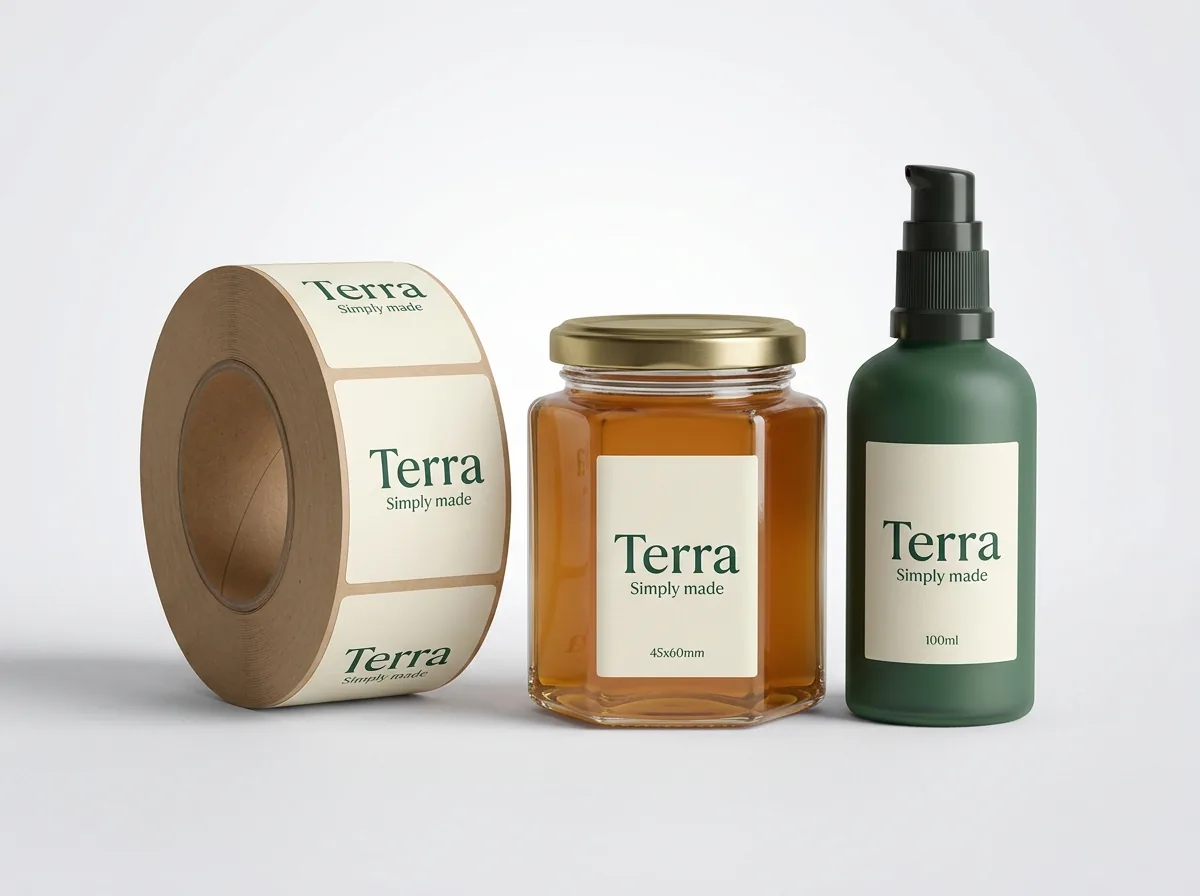
Ready to order shrink sleeves? Compare up to 3 quantities with a free 3D mockup.
Request a Quote →Questions about shrink sleeves
Which shrink sleeve film is most popular for 12 oz and 16 oz aluminum beverage cans?
PETG is the industry standard for 12 oz sleek, 12 oz standard, and 16 oz tallboy aluminum beverage cans. Filled, sealed cans handle PETG's firm shrink tension effortlessly, and PETG grips the tapered upper neck chime cleanly in steam tunnels while resisting ice-chest moisture.
When should I choose OPS instead of PETG for custom shrink sleeves?
Choose OPS when wrapping thin-walled, squeezable HDPE, LDPE, or polypropylene containers with moderate curves (under 65% transverse shrink), especially if sleeves are heat-shrunk onto empty bottles before liquid filling. OPS exerts gentler inward tension so flexible plastic walls stay round.
Can PLA shrink sleeves withstand hot warehousing or summer freight?
Unshrunk PLA film activates at lower temperatures than PETG or OPS, so rolls and finished goods should be stored and shipped below 100°F to 105°F (38°C to 40°C). That makes PLA best suited to cold-chain juices, kombucha, and refrigerated dairy lines.
Do steam shrink tunnels work better than electric hot-air tunnels?
For full-body contoured bottles and cold-filled beverage cans, pressurized steam tunnels transfer heat far more evenly across 360 degrees and operate at lower temperatures (80°C–95°C) without overheating dark inks. Electric hot-air and radiant IR tunnels work well for neck tamper bands and simple straight cylinders.
How can we make shrink-sleeved PET beverage bottles easier to recycle?
Follow APR Design Guide best practices by either adding a full-height dual vertical micro-perforation tear strip so consumers peel the sleeve off before recycling, or specifying a low-density floatable polyolefin film (<1.0 g/cm³) that separates cleanly in MRF wash tanks.
Can I test shrink sleeve film samples before placing a large production order?
Yes. Custom shrink sleeves start at just 500 units (with smaller trial runs reviewed case by case), and you can order a $50 CubitPack sample kit or a paid printed product sample credited toward your order to test tunnel performance firsthand.
Still have a question? Ask a packaging specialist.
Request a Quote →Request your shrink sleeves quote
Tell us your size and quantities, and one dedicated account manager prepares pricing for each tier.
- Free design & AI-to-print studio + 3D mockup
- No die or plate charges · 4–5 day rush available
- Free shipping to all 50 states
- 10% off your first order
We cross-checked transverse shrink curves, specific gravity values, shrink-force mechanics, and MRF wash-tank separation rules against FINAT shrink sleeve technical manuals, Tag and Label Manufacturers Institute (TLMI) standards, and the Association of Plastic Recyclers (APR) Design Guide. A packaging specialist verified every comparison row. Spot something wrong? Tell us and we fix it.
Sources
- PETG (75–78%), OPS (65–70%), and PLA (70–75%) transverse shrink curves, shrink-force mechanics, and steam vs hot-air tunnel behavior.
- Specific gravity float-sink wash separation (<1.0 g/cm³ polyolefin vs >1.30 g/cm³ PETG) and full-height vertical tear perforations.
- Chlorine-free North American shrink film converting standards and machine web tensile requirements.
What changed
- November 16, 2026: First published comparing PETG, OPS, PLA, and floatable polyolefin shrink sleeve films across shrink curves, squeeze-bottle tension, tunnels, and APR recycling.
More guides
New packaging guides by email
Sizes, materials and design tips. Unsubscribe anytime.