
How do you convert a 3D AI packaging mockup into a flat 2D dieline?
Short answer: Converting a 3D AI packaging mockup into a flat 2D dieline requires drafting the cut-and-crease CAD grid from your product inside length, width, and height, then redrawing all six panels of custom folding cartons with 0.25 inch bleed. CubitPack performs this rebuild free and sends a 3D proof before payment.
On this page
- What panel math turns a 3D AI render into a flat folding carton dieline
- How does our studio unwrap and rebuild 3D AI artwork across all six faces
- Why do board thickness and score-line allowances matter when building the dieline
- What goes on the back, bottom, and inside panels that the AI render didn't show
- How do you verify your rebuilt dieline before 50 to 1,000+ boxes are printed
- Common mistakes
- FAQs
Request a custom quoteFree dieline & 3D mockup
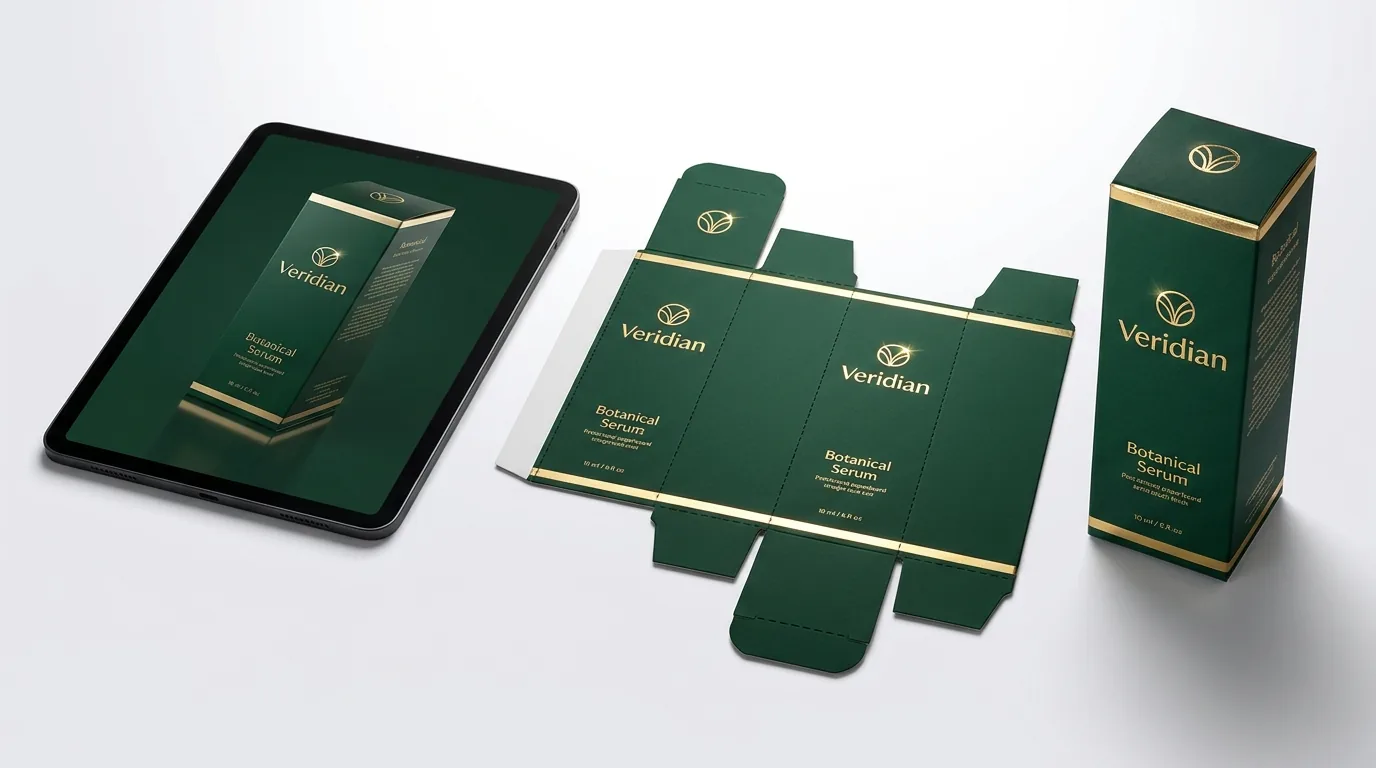
AI image generators like Google Gemini, ChatGPT, and Midjourney draw a single perspective photograph showing two or three visible faces of a box, with foreshortened angles and no back panel, bottom lock, dust flaps, or side glue seam. Commercial die-cutting and offset presses cannot cut or print from an angled perspective image. Instead, manufacturing starts with a flat 1:1 vector CAD dieline engineered to your container's exact inside dimensions plus caliper allowances for 14pt to 24pt paperboard or E-flute corrugated board. Our AI-generated packaging rebuild service takes your 3D AI concept and physical product dimensions, drafts the complete ECMA or FEFCO structural dieline, de-warps and redraws your graphics, typography, and foil masks onto every flat panel, and shows you both the 2D print proof and an interactive 3D mockup before payment. Every order includes zero die or plate setup charges, a dedicated packaging specialist, and free delivery across all 50 US states in 10 to 14 business days or 4 to 5 days with rush production.
What panel math turns a 3D AI render into a flat folding carton dieline?
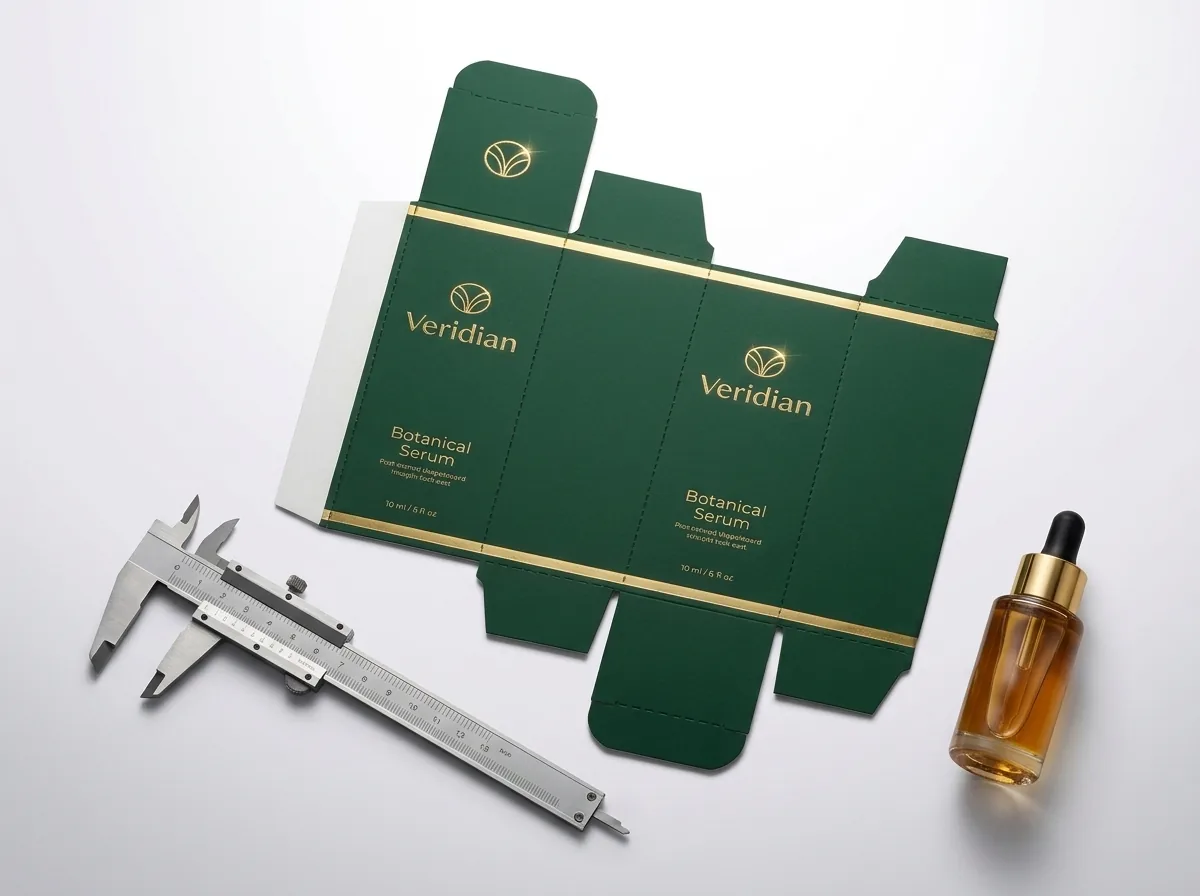
When you look at an AI-generated box render, the front face and right side wall are foreshortened by virtual camera perspective, and at least four structural panels are completely hidden from view. Before placing a single logo or color block, a structural designer calculates the flat 2D CAD layout for printed folding cartons from your physical product's measurements rather than guessing proportions from the AI picture. The table below shows how each panel on a flat dieline is calculated from your inside dimensions. Every panel, score rule, glue tab, and bleed margin is verified by a packaging specialist before your digital proof and 3D mockup are sent for approval.
| Dieline zone | What the 3D AI image shows | Actual 2D CAD formula (inside L x W x H) | Prepress requirement |
|---|---|---|---|
| Front & back panels | Angled front face with perspective distortion | Exact inside Length (L) x Height (H) in 1:1 flat scale | 0.125 in inner safe zone clear of score lines |
| Left & right side walls | One foreshortened side wall; opposite side hidden | Exact inside Width (W) x Height (H) mirrored on both sides | Continuous horizontal alignment of wrap-around bands |
| Top & bottom tuck flaps | Closed lid seam; tuck tongue hidden inside | Inside Width (W) plus caliper offset + friction tuck tongue | Slit-lock notches and unvarnished clearance on friction tabs |
| Dust flaps (4x) | Completely invisible inside the closed box | 0.5 x Width (W) with 45-degree shoulder clearance cuts | Flood coat background color so no white gap shows when opened |
| Side glue flap | Completely invisible behind the rear corner | 0.5 in to 0.75 in tapered tab on left edge of flat sheet | Kept 100% ink-free and coating-free for permanent PVA bond |
| Outer bleed perimeter | Cropped tightly at the 3D box silhouette | 0.125 in to 0.25 in artwork extension past all cut lines | Background colors and patterns extended past steel knife rules |
How does our studio unwrap and rebuild 3D AI artwork across all six faces?
Stretching a skewed screenshot in photo software blurs edges and leaves lighting glare baked into the ink. Instead, our designers treat your 3D AI mockup as the visual blueprint and reconstruct each graphical layer natively onto the flat CAD grid.
- Step 1, Measure the physical product and select the ECMA or FEFCO style: You send your container's length, width, height, and weight alongside your AI image. We pick the right structure, such as a straight tuck end box for lightweight bottles or an auto lock bottom box for heavier jars.
- Step 2, Generate the 1:1 vector cut-and-crease CAD grid: We plot cut lines, crease rules, perforation slits, and glue-free zones scaled to the exact caliper of your chosen 16pt to 24pt paperboard or corrugated flute.
- Step 3, De-warp motifs and extend wrap-around patterns: Borders, color blocks, and illustrations visible on the front and right side of your AI render are redrawn flat and extended continuously across the hidden left wall, back panel, lid, and dust flaps.
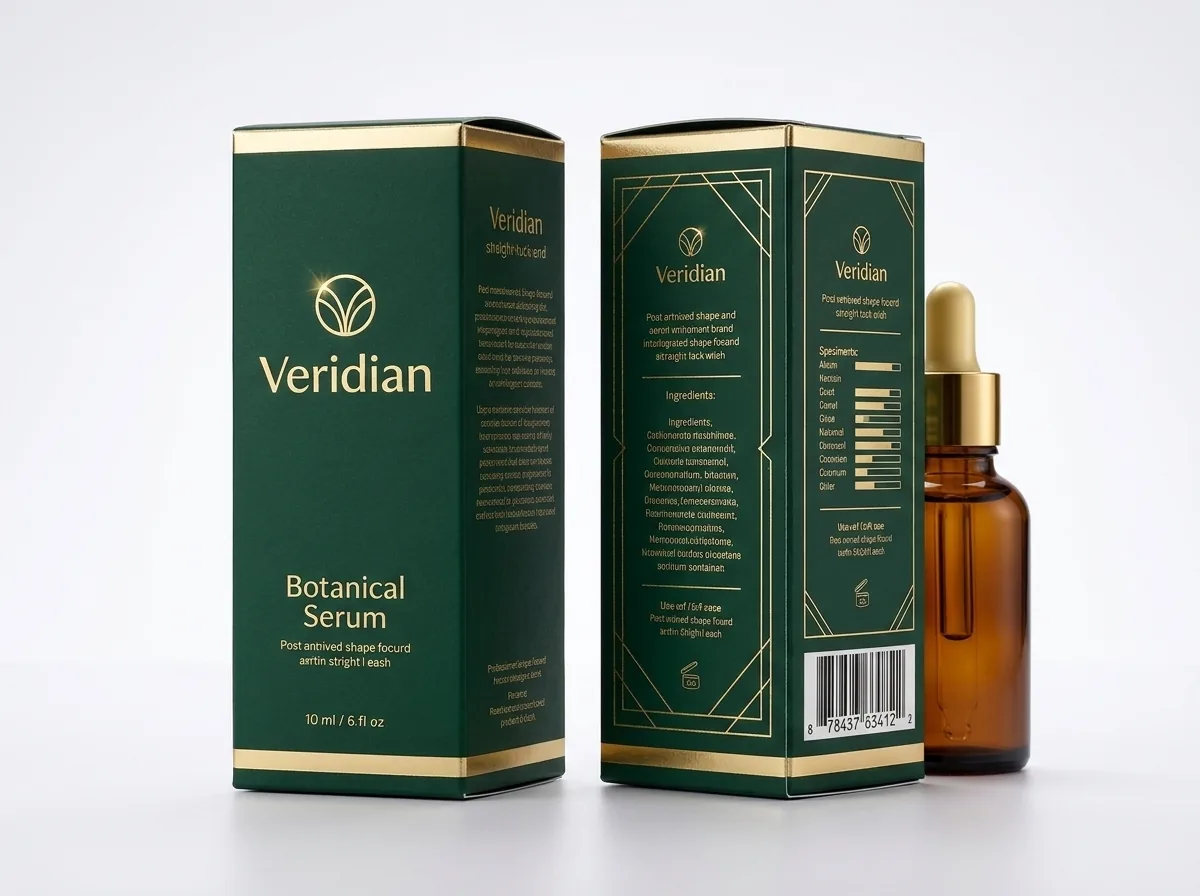
- Step 4, Typeset vector copy on back and bottom panels: Because the AI image never showed your back panel, we lay out your real ingredient list, usage directions, brand story, and scannable GS1 barcode in crisp vector fonts.
- Step 5, Fold the flat dieline back into an interactive 3D proof: Before you pay, we send the flat press PDF plus a 3D folded mockup so you can rotate all six sides and confirm the rebuilt dieline matches your original AI vision.
Why do board thickness and score-line allowances matter when building the dieline?
An AI image treats packaging walls as infinitely thin surfaces. In real manufacturing, folding an 18pt paperboard sheet or a 1.6 mm E-flute corrugated blank consumes interior space at every 90-degree crease and double-wall rollover. If a dieline is drawn to the outside dimensions of a product without caliper compensation, the bottle or jar will bind against the flaps and bow the carton outward.
- Paperboard folding cartons (14pt to 24pt / 0.35 to 0.60 mm): Add 1/16 inch (1.5 mm) to length and width and 3/32 inch (2.5 mm) to height so inner tuck flaps clear the product top without bulging.
- E-flute corrugated mailers (1/16 inch / 1.6 mm wall): Double-folded side walls consume two full board thicknesses on each side, requiring precise roll-over score offsets on custom mailer boxes.
- Rigid setup boxes (1.5 mm to 2.5 mm grayboard): V-grooved chipboard corners and wrapped paper turn-ins require separate lid, base, and neck dielines rather than a single folding sheet.
- Insert cavities (cardboard, EVA foam, or molded pulp): When your AI render shows a bottle cradled inside a box, we engineer a separate insert dieline locked to the outer carton's inside dimensions.
Know your size? Compare pricing across up to 3 quantities.
Request a Quote →What goes on the back, bottom, and inside panels that the AI render didn't show?
A single 3D AI generation only shows the hero front and one side angle. Turning that concept into retail-ready or e-commerce-ready packaging means completing the unseen 60 percent of the box using your brand guidelines and required product copy.
- Back panel hierarchy: We carry over the background color, border framing, and typography style from your AI front panel to organize your product description, directions, and company address cleanly.
- Bottom panel barcode and batch zone: We place a high-contrast white window with a vector UPC barcode, recycling icons, and an unvarnished lot/expiry stamp window.
- Inside lid and unboxing graphics: If your AI prompt showed an open box with an interior pattern, we map that artwork onto a second press sheet side for inside printing.
- Window patching cutouts: If your AI render included a transparent peek window, we add a dedicated die-cut window aperture and clear PET film patch specification.
How do you verify your rebuilt dieline before 50 to 1,000+ boxes are printed?
Every custom order at CubitPack includes a two-part pre-production check before you pay: a flat 2D technical PDF proof showing cut lines (solid), crease lines (dashed), bleed margins, Pantone or CMYK callouts, and foil/emboss masks, paired with a 3D digital mockup rendered directly from that flat dieline. Minimum orders start at 50 units for rigid boxes, 250 units for corrugated mailer boxes, 500 units for labels and pouches, and 1,000 units for paperboard folding cartons, with no die or plate charges and free shipping to all 50 US states in 10 to 14 business days (or 4 to 5 days with rush). If you want to test the physical fit in your hands first, you can also order our $50 Sample Kit (credited toward your first order) or request a paid physical prototype.
What mistakes happen when brands try to trace a 3D AI mockup into a dieline themselves?
Avoid these five structural and prepress errors when moving from a 3D AI render to a flat dieline
- Tracing the perspective polygon instead of drawing orthogonal 90-degree panels. A perspective trapezoid will never fold into a square box.
- Forgetting the side glue flap or coating over it. Without an unvarnished 0.5 to 0.75 inch glue tab, high-speed folder-gluers cannot seal the carton seam.
- Sizing the dieline to outside product dimensions with zero clearance. Neglecting board caliper makes tuck flaps pop open and tears dust wings during packing.
- Stopping background colors right on the cut line. Die-cutting tolerances require 0.125 to 0.25 inch bleed past every outer knife edge so white board never flashes on corners.
- Placing fine text or foil stamping directly across a crease rule. Score rules crush and stretch fibers, so text and foil plates must sit at least 0.125 inches clear of fold lines.
Packaging for this
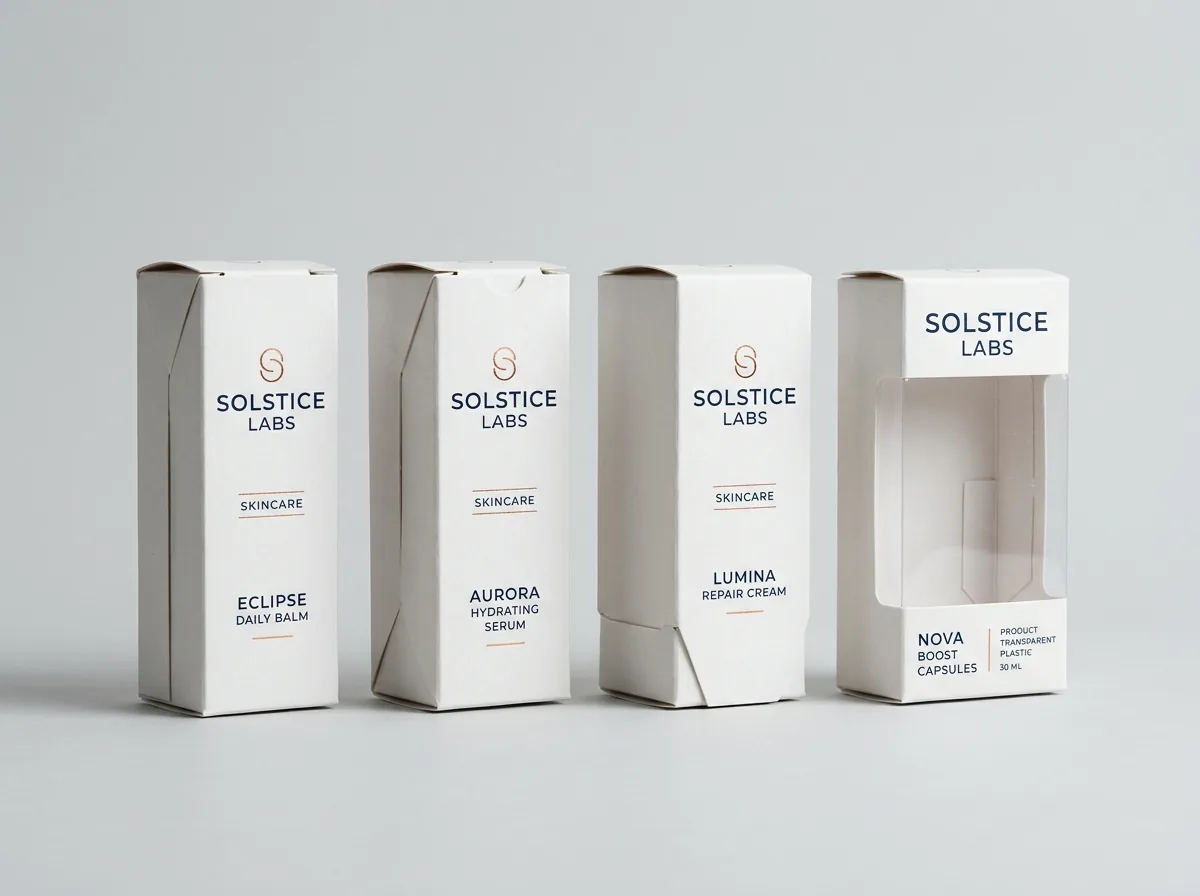
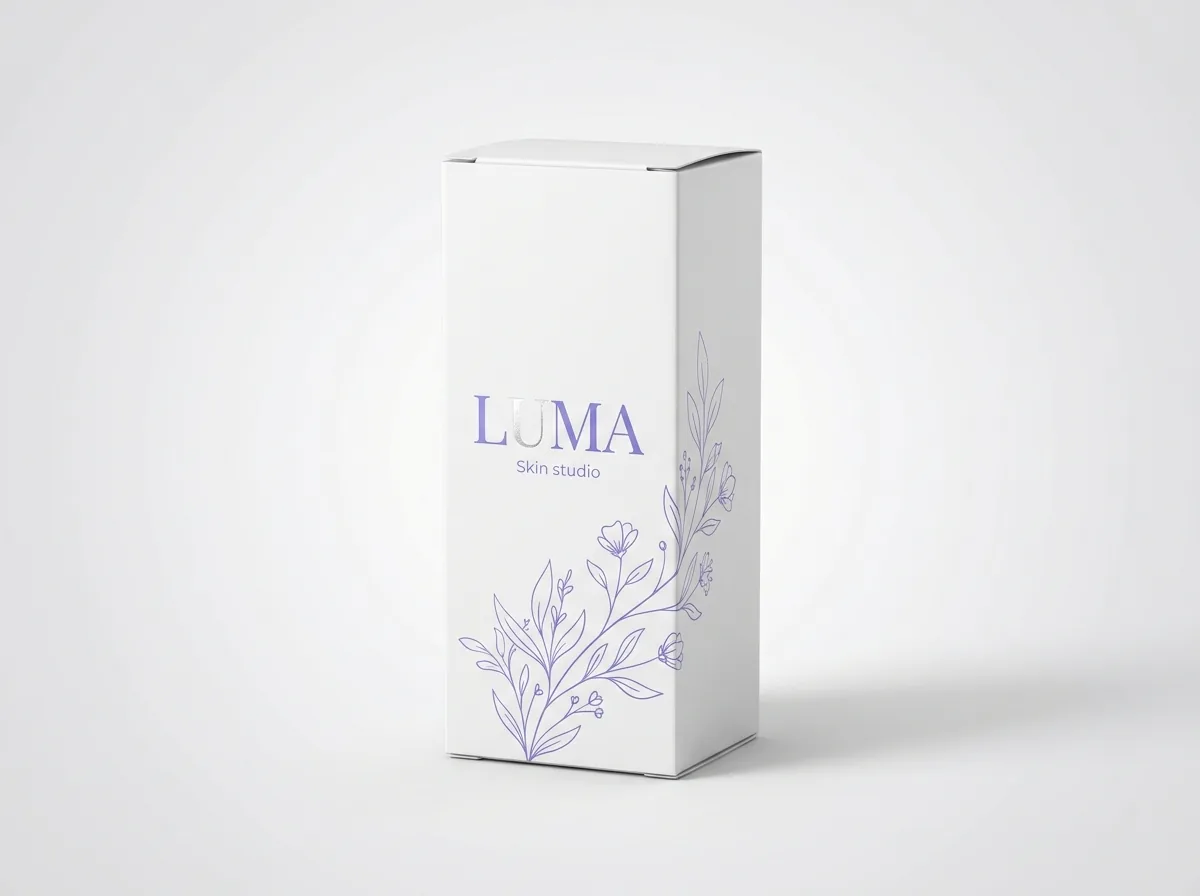
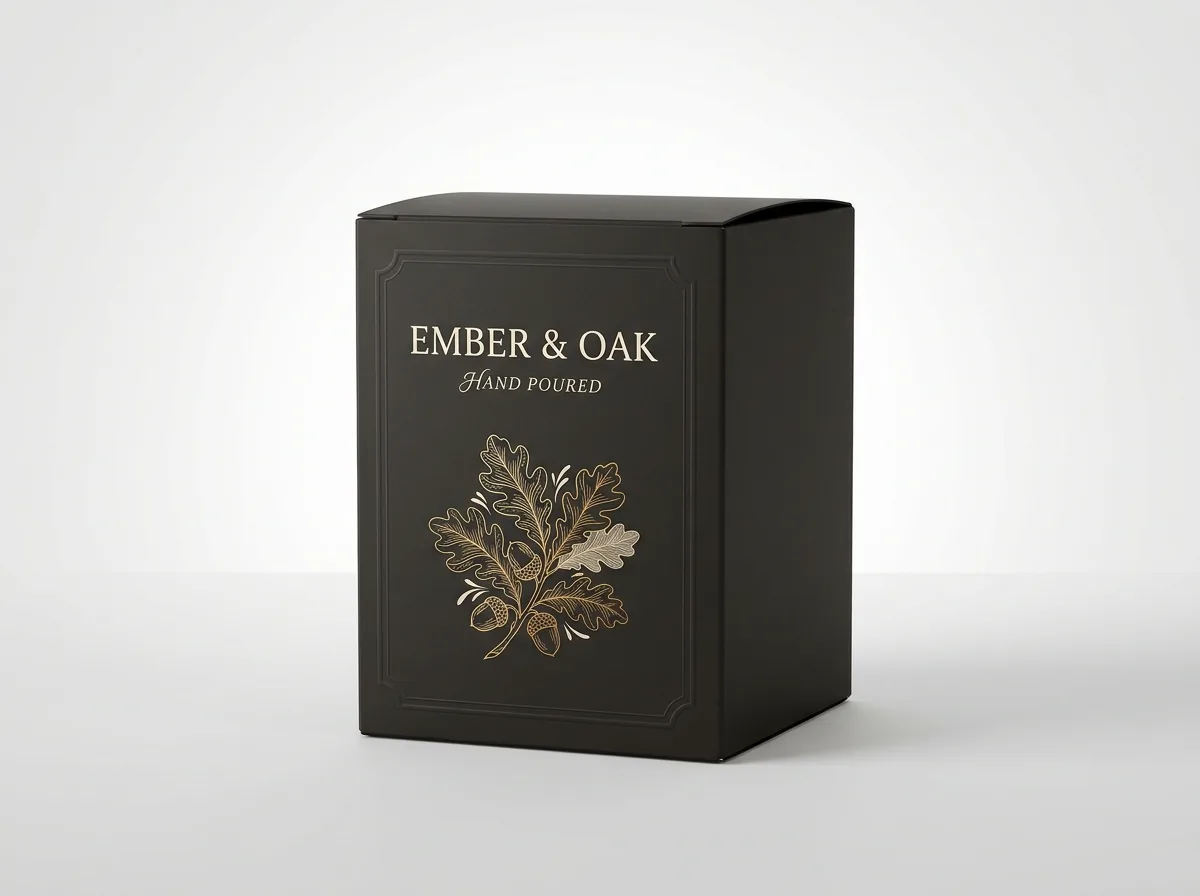
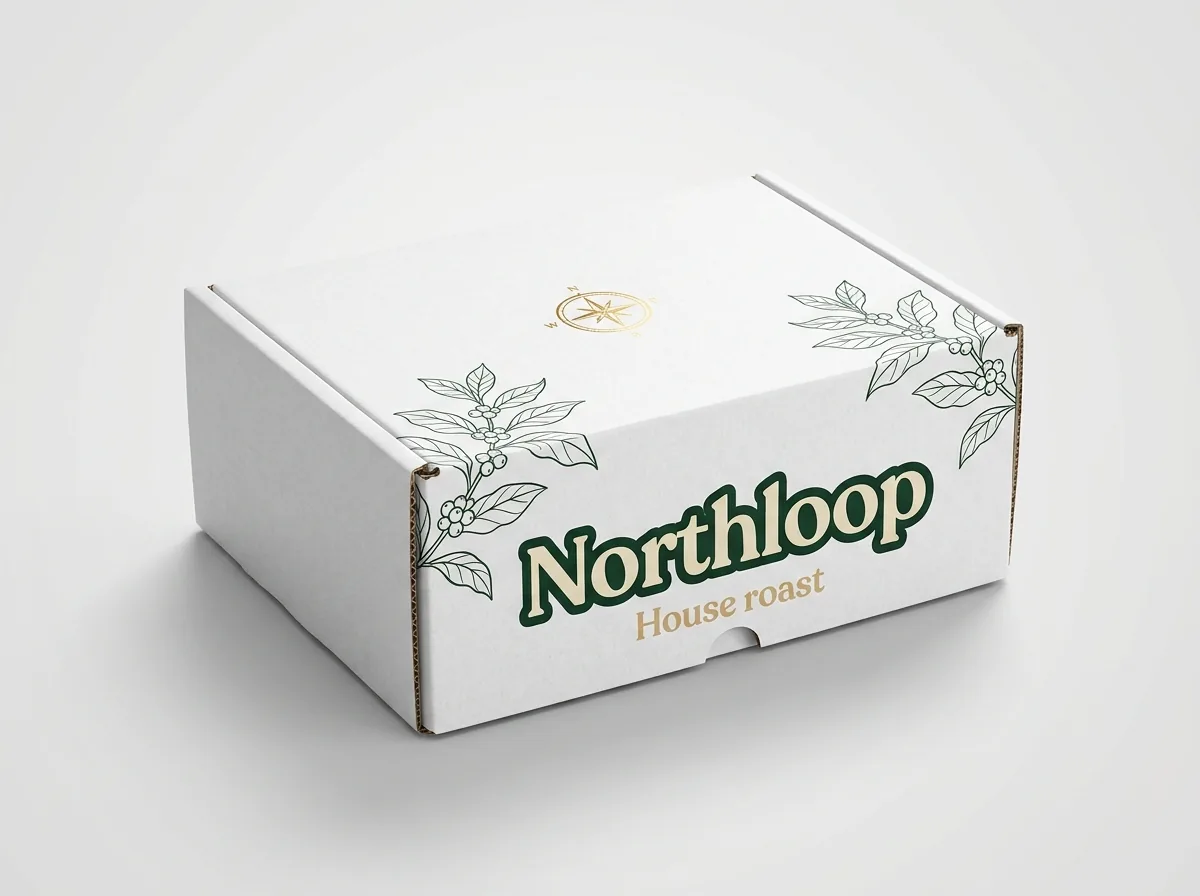
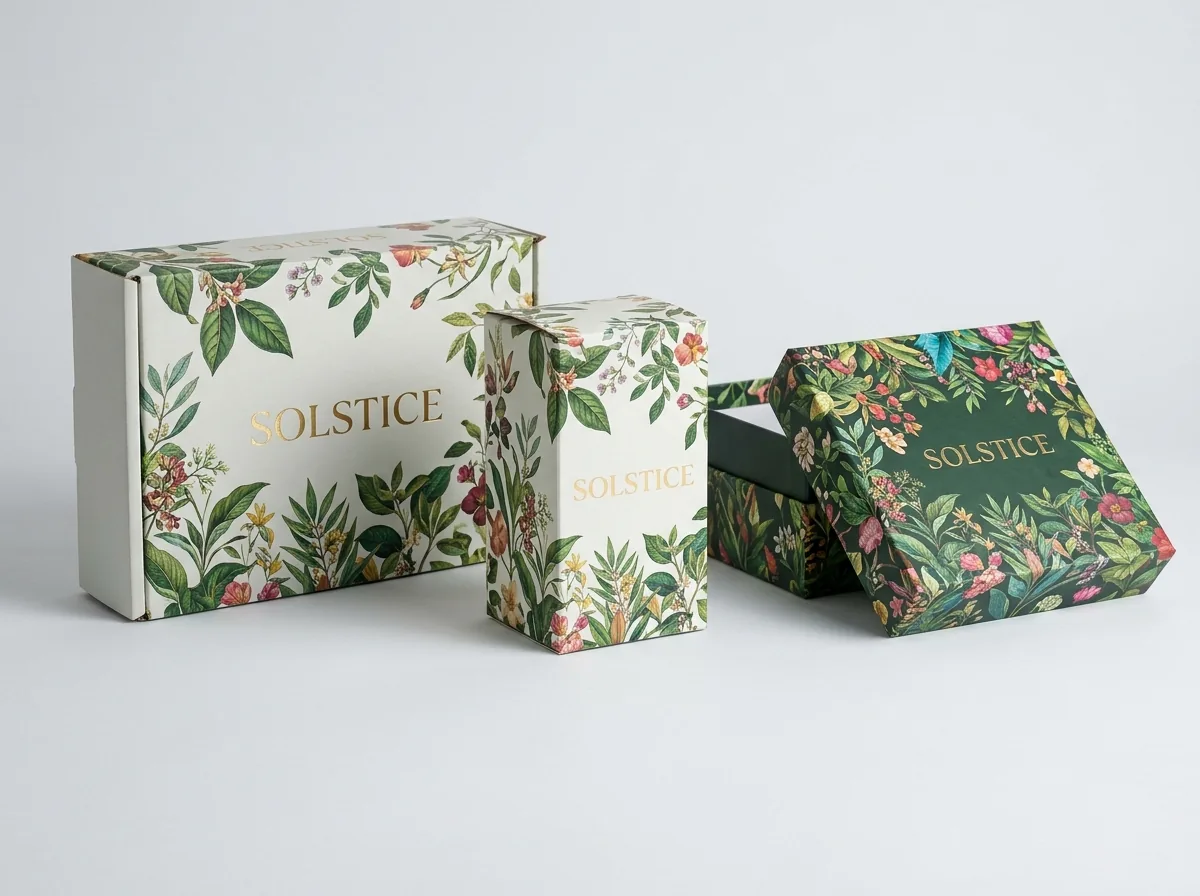
Ready to order folding cartons? Compare up to 3 quantities with a free 3D mockup.
Request a Quote →Questions about folding cartons
Can any AI tool export a real press-ready CAD dieline automatically?
No. Image generators like Google Gemini, ChatGPT, and Midjourney output flat pixel arrays (PNG, JPEG, or WebP) with no CAD dimensions, cut/crease layers, or caliper math. Our studio drafts the real vector dieline from your product size for free.
Do I need to know my exact flat dieline dimensions before requesting a quote?
No. Simply measure your product's length, width, and height (or tell us the bottle, jar, or item size) and attach your 3D AI image. Our specialists calculate the inside box dimensions and draw the dieline for you.
Is there a fee for converting my 3D AI mockup into a flat production dieline?
No. Custom dieline engineering, flat artwork reconstruction, vector typography setup, and your digital proof and 3D mockup are included free with every custom packaging order, with zero die or plate charges.
Can I download standard dielines myself before sending my AI concept?
Yes. You can use our free online dieline template generator to preview and download 1:1 layered SVG dielines for 14 ECMA and FEFCO box styles with no login required, or let our team build yours.
How do you recreate the back and bottom of the box if my AI image only shows the front?
We extend the color palette, borders, and typographic style from your front AI concept across the side, back, and bottom panels, then typeset your real ingredients, warnings, and GS1 barcode in clean vector text.
How fast can my rebuilt dieline go into production once I approve the 3D proof?
Standard production takes 10 to 14 business days from proof approval and payment, with free shipping across all 50 US states. Need boxes for an urgent launch? Rush production takes 4 to 5 business days.
Still have a question? Ask a packaging specialist.
Request a Quote →Request your folding cartons quote
Tell us your size and quantities, and one dedicated account manager prepares pricing for each tier.
- Free design & AI-to-print studio + 3D mockup
- No die or plate charges · 4–5 day rush available
- Free shipping to all 50 states
- 10% off your first order
We verified folding carton and corrugated dieline panel formulas against ECMA folding carton codes, FEFCO 0427 mailer standards, and commercial flatbed die-cutting bleed and glue-flap tolerances, reviewed by a CubitPack packaging specialist.
Sources
What changed
- November 16, 2026: Published complete technical prepress and buyer guide for convert 3d ai packaging mockup to flat dieline.
More guides
New packaging guides by email
Sizes, materials and design tips. Unsubscribe anytime.