
Window candy boxes vs theater cartons and counter displays: which fits?
Short answer: Match custom candy boxes to your retail fixture: choose glued seal-end theater cartons for supermarket shelves and cinema concessions, patched window tuck boxes for fudge slabs and candy bento gifts, extended hang-tab boxes for convenience-store pegboards, and fold-up counter display trays for checkout impulse sales.
On this page
- How do window boxes, theater cartons, hang packs, and counter displays compare
- Why do CPG gummy and sour brands use glued seal-end theater cartons
- When do window tuck boxes and gable totes beat a solid theater carton
- Hang-tab pegboard boxes vs checkout counter display caddies: which drives more impulse sales
- How do pillow boxes and two-piece bento boxes work for gifts and party favors
- Common mistakes
- FAQs
Request a custom quoteFree dieline & 3D mockup
Candy is the ultimate impulse category, which means the box structure has to match the exact store fixture where shoppers make a three-second buying decision. In grocery aisles and movie theaters, a glued seal-end carton (theater box) provides tamper-evident security, stacks cleanly in spring-loaded shelf pushers, and features a perforated side pour spout. At coastal fudge shops, tourist gift stores, and e-commerce boutiques, a patched window tuck box or compartmented bento box lets the vibrant colors and sanded sugar textures of your confections sell themselves on sight. Meanwhile, convenience stores and pharmacies rely on two merchandising workhorses: extended hang-tab boxes that suspend from pegboard hooks, and 12- or 24-unit counter display caddies (PDQ trays) that sit right beside the register. At CubitPack, every style starts at 1,000 units with free custom dielines, no die or plate charges, and free shipping to all 50 states.
How do window boxes, theater cartons, hang packs, and counter displays compare?
Before picking a carton style, ask where your candy sits when a shopper reaches for it: stacked on a supermarket shelf, hanging on a wire peg hook, displayed on a sweet-shop counter table, or nested inside a checkout register caddy. Each fixture puts different demands on closure security, front panel visibility, and packing speed. Use the side-by-side matrix below to compare the five primary structures we manufacture on our printed candy packaging line. Every structure ships flat in master cartons to minimize storage space in your facility.
| Box style | Target retail fixture | Key functional advantage |
|---|---|---|
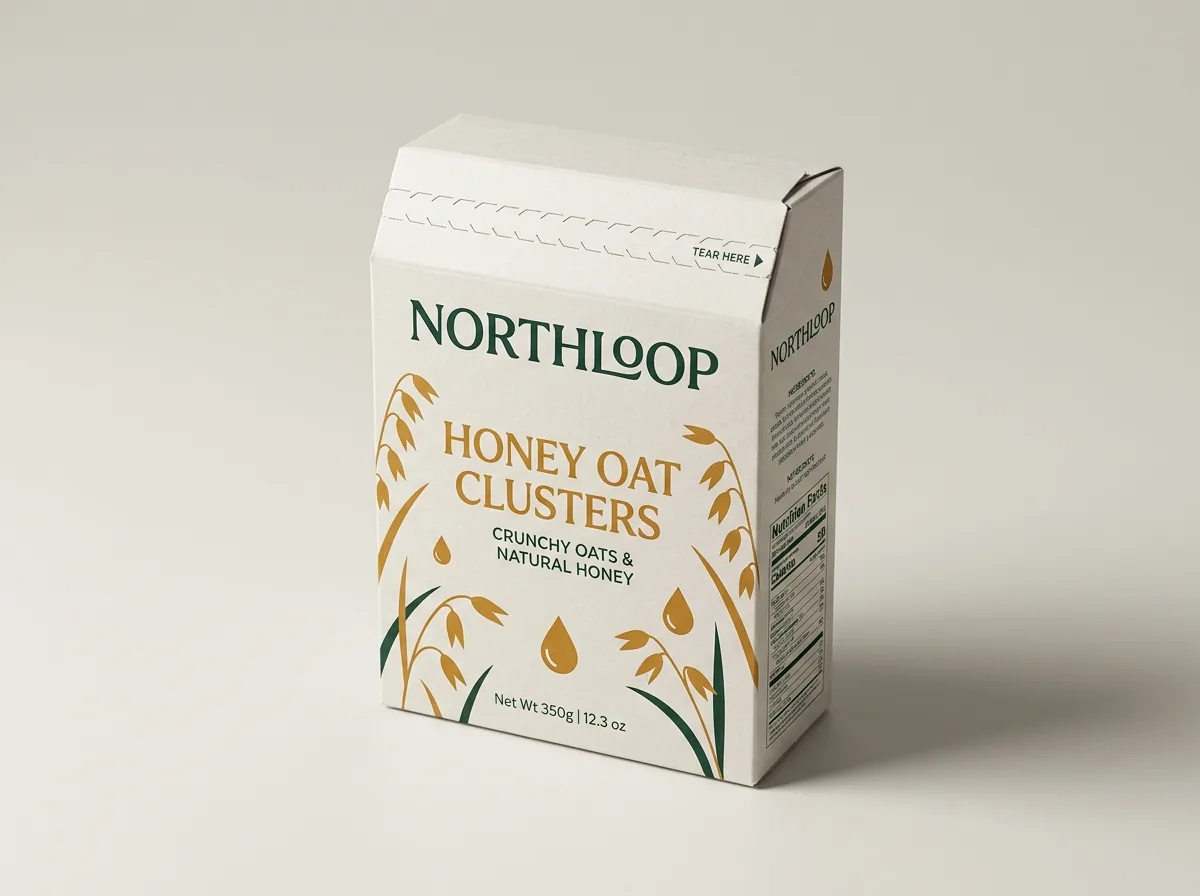
| Seal-end theater box | Cinema concessions, grocery shelves, vending | Tamper-evident glued flaps + side thumb pour spout |
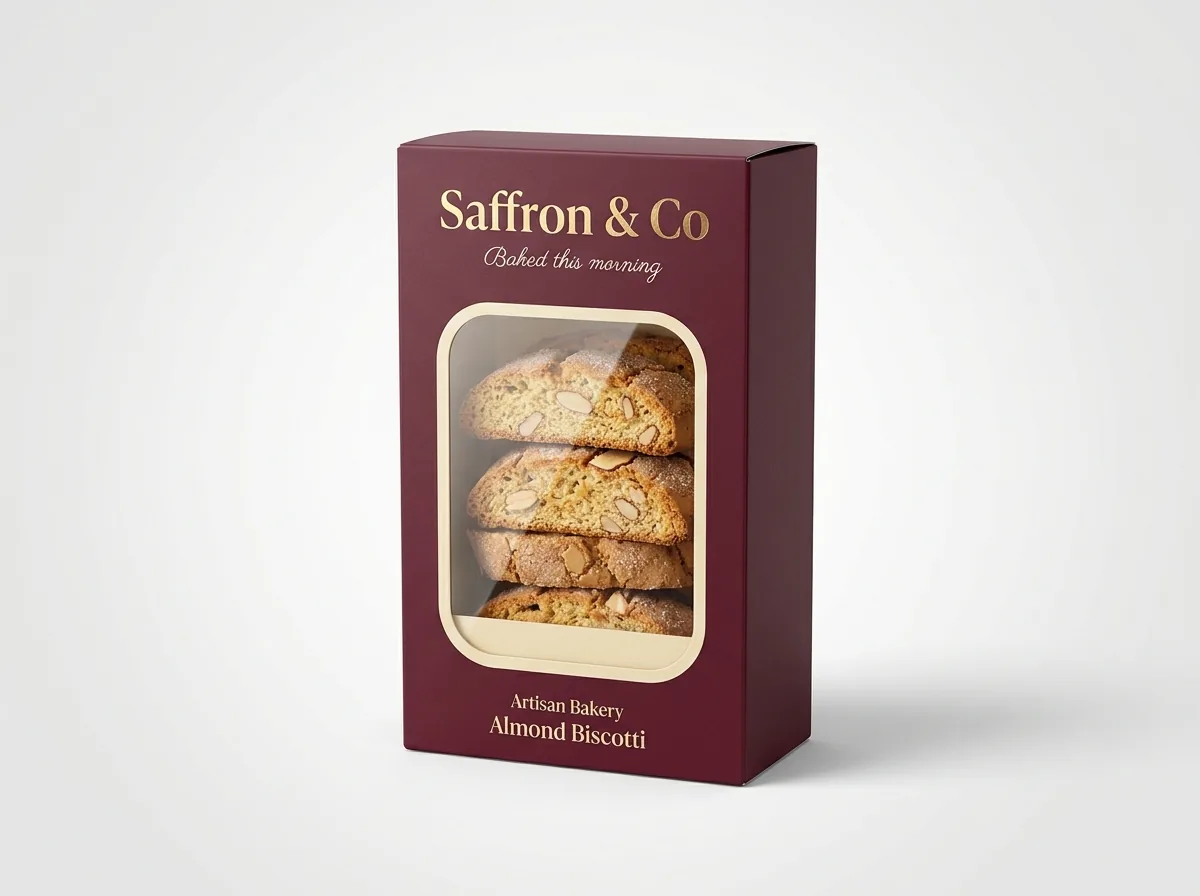
| Window tuck / two-piece box | Fudge counters, gift tables, e-commerce bentos | Shows actual candy color, texture, and swirl patterns |
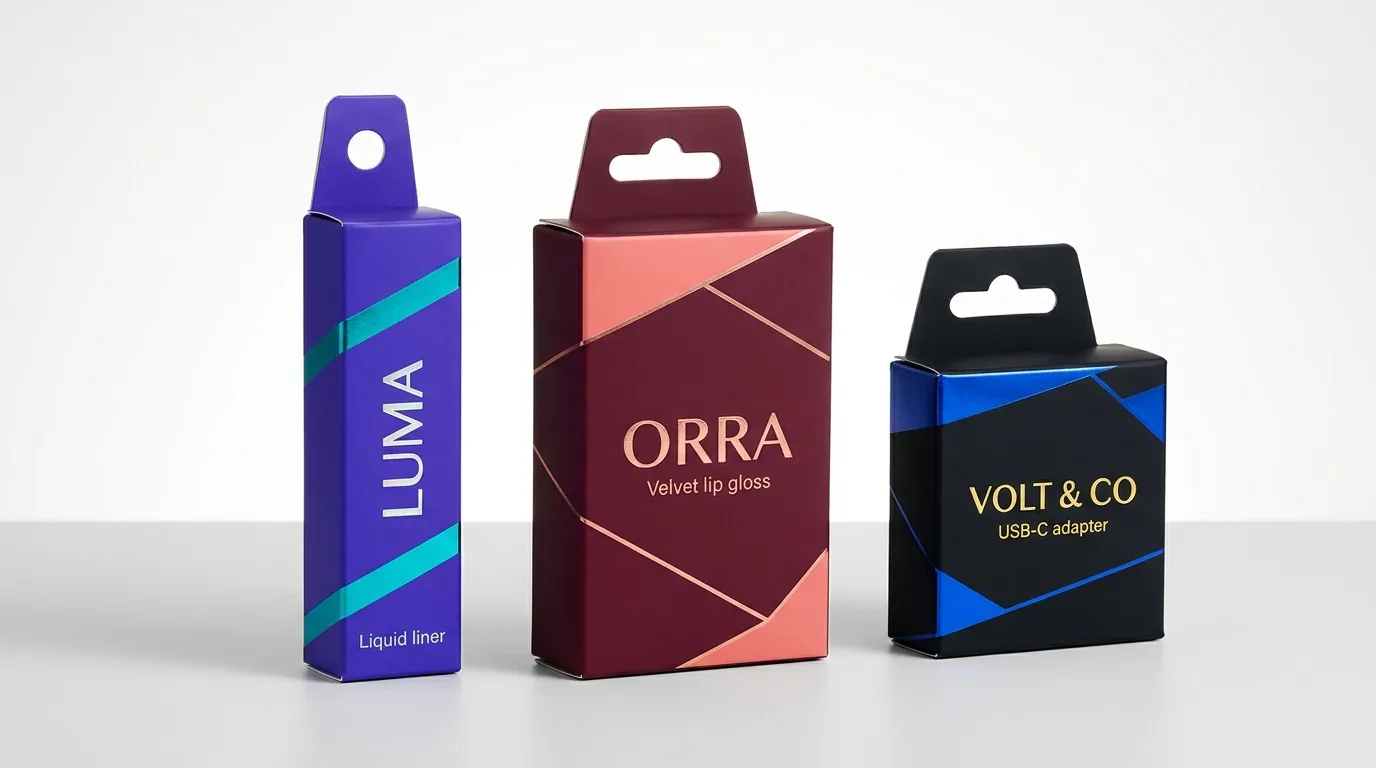
| Pegboard hang-tab box | Convenience store, pharmacy, and checkout hooks | Hangs eye-level on wire hooks or stands on flat shelves |
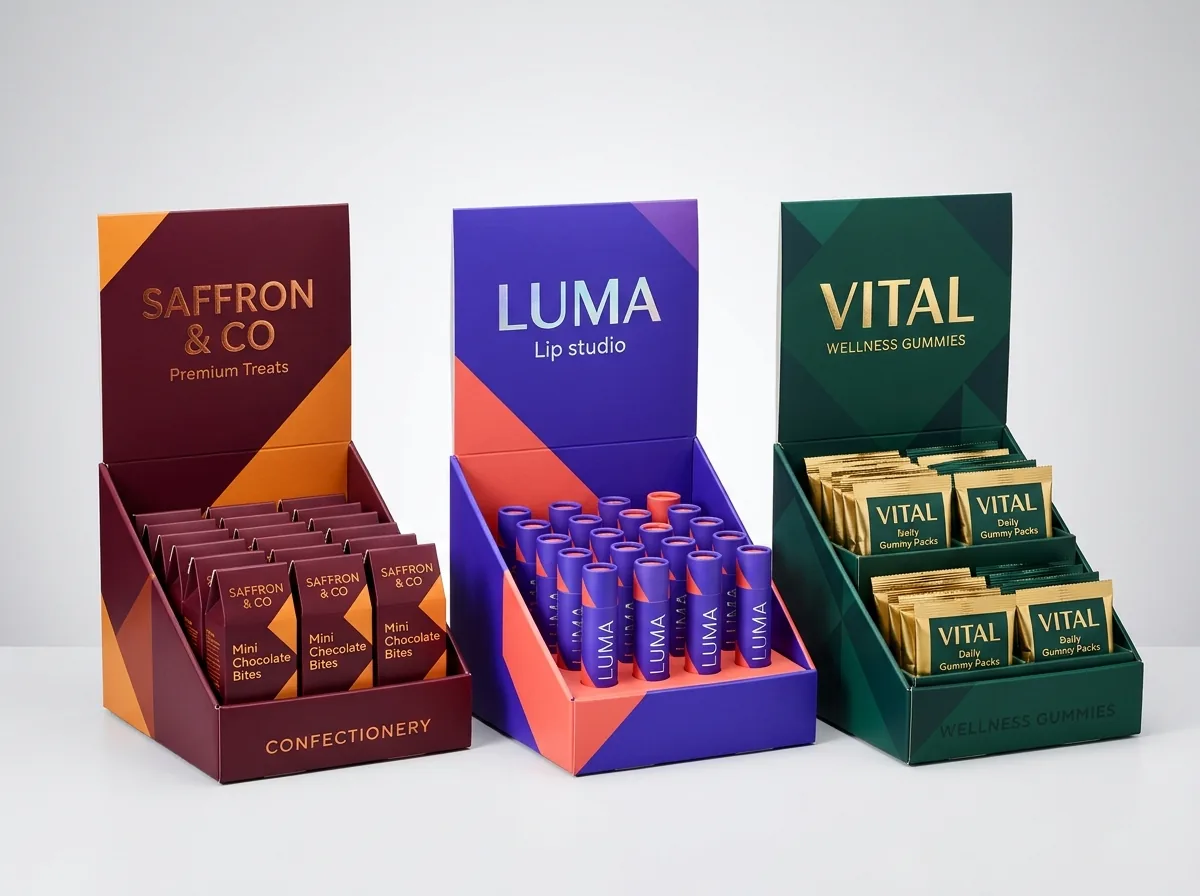
| Counter display box (PDQ) | Cash register counters, coffee bar impulse zones | Fold-up billboard header holds 12–24 individual packs |
| Gable handle tote box | Boardwalk taffy shops, tourist markets, fairs | Built-in top carry handle + wide bottom gusset |
Why do CPG gummy and sour brands use glued seal-end theater cartons?
When you sell 3.5 oz to 5 oz packs of gummies, sour chews, licorice bites, or chocolate-panned nuts into supermarkets, drugstores, and movie theaters, retail buyers almost always require a tamper-evident closure so shoppers cannot open flaps in the aisle. A custom seal end box replaces friction tuck flaps with four overlapping end flaps at both the top and bottom that are sealed shut with hot-melt glue or double-sided tape after loading the inner candy pouch. Because all six faces of a seal-end theater box are completely flat and rigid once glued, the cartons never pop open in automated shelf-pusher tracks or vending machines. To make snacking easy without ripping the top of the box, we die-cut a perforated press-in thumb tab on the narrow 1.25-inch side panel that folds outward into a reclosable pouring spout, or add a zipper tear strip across the top back flap.
- Tamper-evident glued top and bottom flaps meet national grocery and cinema concession requirements.
- Wide 6.0 × 3.5 inch landscape billboard gives maximum brand impact on crowded candy shelves.
- Perforated side pour spout lets customers shake out individual gummies or panned nuts cleanly.
- Works smoothly with both hand-gluing jigs for 1,000-unit runs and high-speed cartoning lines.
When do window tuck boxes and gable totes beat a solid theater carton?
While national CPG brands rely on solid cartoon mascots and 3D flavor renders on theater boxes, artisan confectioners, boardwalk fudge makers, and gourmet gummy boutiques win customers by showing the real confection inside. A custom window box with a clear patched film window lets shoppers see rainbow sour belts, marbled peanut-butter fudge, pastel rock candy crystals, or a four-cell pick-and-mix bento assortment before they buy. Because CubitPack charges zero die fees, we can cut that front window into a cloud, star, strawberry, or custom arch silhouette. For loose twist-wrapped saltwater taffy, wrapped caramels, and candied nuts sold by the half-pound or pound, a custom gable box combines a deep auto-lock or tuck base with a built-in top carry handle. Tourists and gift shoppers can carry a pound of taffy out of your shop by the handle without needing a separate plastic or paper shopping bag, and you can still add a clear front window to show the colorful twisted wrappers inside.
- Window tuck fudge box: pops open fast at the slicing counter and frames marbled fudge swirls under clear film.
- Gable taffy tote: built-in top handle and wide gusset hold bulky twist-wrapped taffy and caramel corn.
- Compartmented bento window box: pairs a clear lid with a 4-cell or 9-cell card divider for curated gummy gifts.
- Open cutout window: skip the plastic film patch when your candy is already sealed inside a clear inner cello bag.
Know your size? Compare pricing across up to 3 quantities.
Request a Quote →Hang-tab pegboard boxes vs checkout counter display caddies: which drives more impulse sales?
If your candy is priced for single-serve or grab-and-go impulse buying at convenience stores, cafes, and specialty grocers, you need a way to get off the bottom shelf and into the shopper's line of sight. You have two structural paths: integrated pegboard hang tabs on each unit carton, or a master custom counter display box that holds 12 to 24 units on the counter. A custom hang tab box extends the rear panel of a straight-tuck carton upward and punches a reinforced sombrero or Euro slot so the box hangs directly on wire pegboard hooks in the candy aisle or beside checkout lanes. When shipped on a flat shelf, the top hang tab simply folds backward flat against the top lid so it takes up zero extra height. By contrast, a counter display box (PDQ tray) acts as your own mini store fixture: the retailer tears away the perforated front cover, folds the back lid into a double-wall printed billboard header, and sets the loaded 12-pack tray right next to the credit card terminal.
How do pillow boxes and two-piece bento boxes work for gifts and party favors?
Not every candy purchase happens in a grocery aisle. Wedding planners, corporate event teams, and subscription gift brands order two specialty candy structures: curved custom pillow boxes for pocket-sized favors, and compartmented custom two-piece boxes for curated candy bento cubes. A pillow box snaps shut at both ends along curved score lines to form a sleek, stitch-free pod that holds 1.5 to 3 ounces of Jordan almonds, custom-printed mints, or foil-wrapped sours at wedding place settings, hotel welcome desks, and trade show booths. A two-piece or tray-and-sleeve candy bento box pairs a clear window lid with a 4-cell, 6-cell, or 9-cell custom cardboard insert so recipients can sample Champagne gummies, sour peaches, and dark chocolate sea-salt caramels in one gift box. When unwrapped confections touch the board or dividers directly, request food-safe liners on your quote.
- Curved pillow favor boxes: pop open in two seconds by pressing the ends inward - no tape or ribbon required.
- 4-cell & 9-cell candy bentos: interlocking paperboard dividers keep sour sanded gummies separated from sweet chews.
- Multi-design flavor runs: share one universal carton size across multiple flavors to unlock volume price breaks.
What are the most common mistakes when choosing a candy box style?
Pitching a retail buyer with the wrong closure or display format can stall a wholesale rollout. Avoid these five structural mistakes
- Sending unglued friction-tuck boxes to supermarket or cinema buyers who require tamper-evident glued seal-end theater cartons.
- Using a solid windowless box for artisan fudge or rainbow candy bentos where visual texture is the main selling point.
- Ordering a tall, heavy Front lip on a counter display tray that hides the brand logo on the individual candy packs inside.
- Punching a pegboard hang slot into thin unlaminated board for a heavy 8 oz bag of candy without enough top margin.
- Packing unwrapped butter fudge or sticky gummies directly into a paperboard box without an inner pouch or food-safe barrier liner.
Find your size
Suggested inside size: 3.5 × 2.25 × 1.0 in
A starting point. Your account manager confirms the size with you before the proof.
Quote this size →Packaging for this
Ready to order candy boxes? Compare up to 3 quantities with a free 3D mockup.
Request a Quote →Questions about candy boxes
Can I glue seal-end theater candy boxes by hand for a 1,000-unit run?
Yes. While high-volume co-packers use automated hot-melt cartoners, small batch candy makers easily seal 1,000 to 5,000 seal-end theater boxes by hand using a low-cost tabletop hot-glue roller or pre-applied double-sided peel-and-seal tape strips.
Can a hang-tab candy box also stand upright on a flat shelf?
Yes. Because the hang tab is an extension of the back panel above the top tuck flap, you can fold the tab straight up when hanging on pegboard hooks or fold it 90 degrees flat over the top lid when stacking on shelves.
How do counter display boxes ship and how fast do they fold together?
Custom counter display boxes (PDQ trays) ship flat to save freight and warehouse space. Before packing, your team folds the side walls and base together in about 10 seconds, loads the 12 or 24 candy packs, and folds the header lid down for shipping.
Should fudge boxes use a window tuck style or a two-piece lift-off lid?
Half-pound and one-pound boardwalk fudge shops usually prefer a single-piece window tuck box (bakery style) because it pops open fast at the slicing counter and lets customers see the fudge swirls through the top film window.
Can I add a custom-shaped window to a seal-end or hang-tab candy box?
Yes. As long as your gummies or hard candies are sealed inside a clear inner poly bag, you can add a patched film window - or even an open die-cut window with zero film cost - in any fruit, cloud, or geometric shape.
Can I see a digital proof and 3D mockup of my candy box and display tray?
Yes. Every order includes a free 2D digital dieline proof and an interactive 3D mockup before payment. You can also order our $50 sample kit (credited toward your first order) or request a paid physical sample of your custom design.
Still have a question? Ask a packaging specialist.
Request a Quote →Request your candy boxes quote
Tell us your size and quantities, and one dedicated account manager prepares pricing for each tier.
- Free design & AI-to-print studio + 3D mockup
- No die or plate charges · 4–5 day rush available
- Free shipping to all 50 states
- 10% off your first order
This structural comparison covers seal-end concession cartons, patched window tuck boxes, pegboard hang-tab packs, gable totes, and PDQ counter displays based on CubitPack dieline standards. A packaging specialist reviewed every section. Spot an error? Tell us and we will fix it.
Sources
What changed
- October 22, 2026: First published.
- October 22, 2026: Updated specifications, terminology, and verified source links.
More guides
New packaging guides by email
Sizes, materials and design tips. Unsubscribe anytime.