
What size stand up pouch do I need?
Short answer: Stand up pouches are measured by outside Width × Height × Bottom Gusset in inches. A 4 × 6 × 2 in pouch fits 1 to 2 oz samples, 5 × 8 × 2.5 in fits 4 oz snacks, and 6 × 9 × 3 in fits 8 to 12 oz goods in custom stand up pouches.
On this page
- How do I measure Width, Height and Bottom Gusset on a stand up pouch
- What are the most common stand up pouch sizes by weight and volume
- Why does product bulk density change the stand up pouch size I need
- How does bottom gusset depth affect whether a pouch stands or tips
- How much headspace do I need for zippers, tear notches and filling funnels
- Common mistakes
- FAQs
Request a custom quoteFree dieline & 3D mockup
To pick the right stand up pouch size, start with your product's bulk volume rather than its dry weight in ounces alone, because eight ounces of airy freeze-dried berries takes more than twice the cubic inches of eight ounces of dense bath salts. Stand up pouches are always listed by their outside flat dimensions in inches: Width (left to right) × Height (top to bottom) × Bottom Gusset (how deep the folded base opens). On every bag, the left and right heat seals take ¼ to ⅜ inch per edge, and the top press-to-close zipper, tear notches and impulse seal header take 1.25 to 1.5 inches of vertical height. Subtract those seal zones before checking your fill line, and aim for a bottom gusset depth equal to roughly one-third of the bag's height so filled pouches stand straight on store shelves without tipping.
How do I measure Width, Height and Bottom Gusset on a stand up pouch?
Flexible packaging suppliers specify printed stand up pouches by outside dimensions rather than usable interior space. When you lay an empty pouch flat on a table, Width (W) is the total horizontal distance from the outer left edge to the outer right edge, including both vertical side heat seals. Height (H) is the total vertical distance from the bottom edge of the pouch all the way to the top lip above the zipper and tear notches. Bottom Gusset (G) is the full unfolded depth of the W-shaped base panel when you pull the front and back walls apart. When the bottom fold is tucked flat inside an empty pouch, the crease reaches half of the total gusset dimension up the lower bag wall. For example, a 3 inch bottom gusset folds 1.5 inches up the inside of the bag when flat, then opens out into a 3 inch oval base once you pour product inside. Because the lower walls curve outward to form that 3D base, the usable standing height of the pouch drops slightly once filled.
- Outer Width (W): total left-to-right width; subtract 0.5 to 0.75 inches total for the two vertical side heat seals.
- Outer Height (H): total top-to-bottom height; subtract 1.25 to 1.5 inches at the top for the zipper track and heat-seal header.
- Bottom Gusset (G): full open depth of the oval base; when folded flat, the inner crease sits at half of G.
- Usable fill zone: the space between the expanded bottom gusset and the bottom edge of the zipper track.
- Clearance rule: leave at least 0.5 inches of empty space below the zipper so product never blocks the track from snapping shut.
What are the most common stand up pouch sizes by weight and volume?
While CubitPack cuts every order to your exact Width × Height × Bottom Gusset with zero die or plate charges, most retail snacks, powders, pet treats and pantry staples cluster around six standard proportions. Each row in the benchmark chart below pairs a balanced width-to-height footprint with a bottom gusset wide enough to keep the filled bag upright on flat gondola shelves. Notice that every size lists both a typical dry weight range (calibrated for medium-density goods like coffee beans, granola or gummies) and a fluid-ounce volume equivalent. If you pack a very light product like herbal tea leaves or dehydrated vegetable chips, move one row down the chart; if you pack heavy coarse sea salt or bath crystals, you can often step one row up so the pouch looks full to the shoulder.
| Outer size (W × H × Gusset) | Medium-density dry weight | Approx. volume & typical retail uses |
|---|---|---|
| 4 × 6 × 2 in | 1 to 2 oz (28 to 57 g) | 8–12 fl oz · Single-serve snacks, spice rubs, trial samples |
| 5 × 8 × 2.5 in | 4 oz (113 g) | 16–22 fl oz · Beef jerky, gummies, loose-leaf tea, pet treats |
| 6 × 9 × 3 in | 8 to 12 oz (227 to 340 g) | 28–38 fl oz · Granola, cookies, whole-bean coffee, bath salts |
| 7 × 10.5 × 3.5 in | 16 oz / 1 lb (454 g) | 48–60 fl oz · Baking mixes, oats, seeds, drink powders |
| 8.5 × 12 × 4 in | 32 oz / 2 lb (907 g) | 85–105 fl oz · Whey protein, family pretzel packs, pet kibble |
| 10 × 14 × 5 in | 3 to 5 lb (1.36 to 2.27 kg) | 150–210 fl oz · Club-store snack bags, bulk kitchen refills |
Why does product bulk density change the stand up pouch size I need?
The number-one sizing mistake in flexible packaging is ordering a '4 oz bag' or '8 oz bag' from a catalog without checking bulk density. Supplier ounce ratings are almost always measured using whole roasted coffee beans or granulated sugar. However, different dry products vary by more than 300 percent in how many cubic inches a single ounce occupies. For example, 8 ounces of freeze-dried strawberries, puffed rice snacks or chamomile blossoms will overflow a standard 6 × 9 × 3 inch pouch and prevent the top zipper from closing, requiring a 7 × 10.5 × 3.5 inch or 8.5 × 12 × 4 inch bag instead. Conversely, 8 ounces of coarse Epsom bath salts, mineral clay powder or chocolate-covered espresso beans will only fill the bottom third of a 6 × 9 × 3 inch pouch, leaving the upper half of the bag looking deflated and saggy on the shelf. If you pack ultra-small single servings that do not need to stand upright, consider custom flat pouches with no bottom gusset.
- Low-density / fluffy goods (0.15-0.28 g/cm3): herbal teas, freeze-dried fruit, popcorn, puffed snacks, kale chips: size up 1 to 2 chart tiers.
- Medium-density goods (0.32-0.55 g/cm3): whole-bean coffee, granola clusters, gummies, nuts, pet biscuits: match the standard chart.
- High-density / heavy goods (0.65-1.10 g/cm3): bath salts, sugar scrubs, protein powders, seeds, small hardware: size down 1 tier so the bag fills out.
Know your size? Compare pricing across up to 3 quantities.
Request a Quote →How does bottom gusset depth affect whether a pouch stands or tips?
A stand up pouch stays upright only when two mechanical conditions are met: the unfolded bottom gusset must be wide enough relative to the pouch's vertical height, and the weight of the product inside must push the W-folded base completely open into a flat oval ring. If the bottom gusset is too narrow, the filled bag develops a high center of gravity and rocks forward or backward on smooth retail shelves. As a reliable rule of thumb, keep your unfolded bottom gusset depth between one-third and one-quarter of the total pouch height (a 1:3 to 1:4 ratio). On a 9 inch tall pouch, a 3 inch bottom gusset gives a rock-steady footprint. You should also match the bottom seal geometry to your total fill weight: standard round Doypack bottom seals handle fills up to 1 pound, K-seal angled corner gussets relieve seam tension on 1 to 2.5 pound powders, and plow-bottom folded bases eliminate the bottom seam altogether for heavy 2.5 to 5 pound bags.
How much headspace do I need for zippers, tear notches and filling funnels?
Whether you fill pouches by hand with a kitchen scoop or run a high-speed rotary auger filler, the top 1.5 inches of a stand up pouch is a functional closure zone, not a storage zone. From the top edge downward, a standard resealable pouch has a 0.375 inch impulse heat-seal band, side V-cut tear notches at 0.5 inches, and a 0.375 to 0.5 inch press-to-close zipper track sitting roughly 1.125 to 1.375 inches below the top lip. During filling, your product also mounds into a cone in the center of the bag before settling flat. If you size the bag so the settled product touches the bottom of the zipper track, granules or powder dust will bounce onto the inner zipper ribs and the top heat-seal strip as you pour, causing weak seals and leaky bags. Always leave at least 0.5 to 0.75 inches of clean air space between the settled product line and the lower edge of the zipper track. If you are packing roasted coffee beans that need a one-way degassing valve in that upper headspace, see our dedicated custom coffee bags and custom mylar bags pages.
What are the most common stand up pouch sizing mistakes?
Nearly every sizing headache happens when a brand orders from dry weight alone or forgets how much room the zipper and side seals occupy. Avoid these five mistakes
- Ordering a pouch based on 'ounces' without testing your actual product's bulk volume, leaving fluffy foods overflowing or heavy bath salts sagging.
- Using outer Width × Height as interior fill dimensions and forgetting to subtract 0.5 inches for side seals and 1.5 inches for the top zipper header.
- Picking a tall, skinny pouch with a narrow bottom gusset (under a 1:4 gusset-to-height ratio), which makes the bag tip over on store shelves.
- Filling powders or granules right up to the zipper ribs so dust contaminates the top impulse heat-seal band.
- Sizing the bag mouth too narrow for your filling funnel or your customer's hand and measuring scoop.
Packaging for this
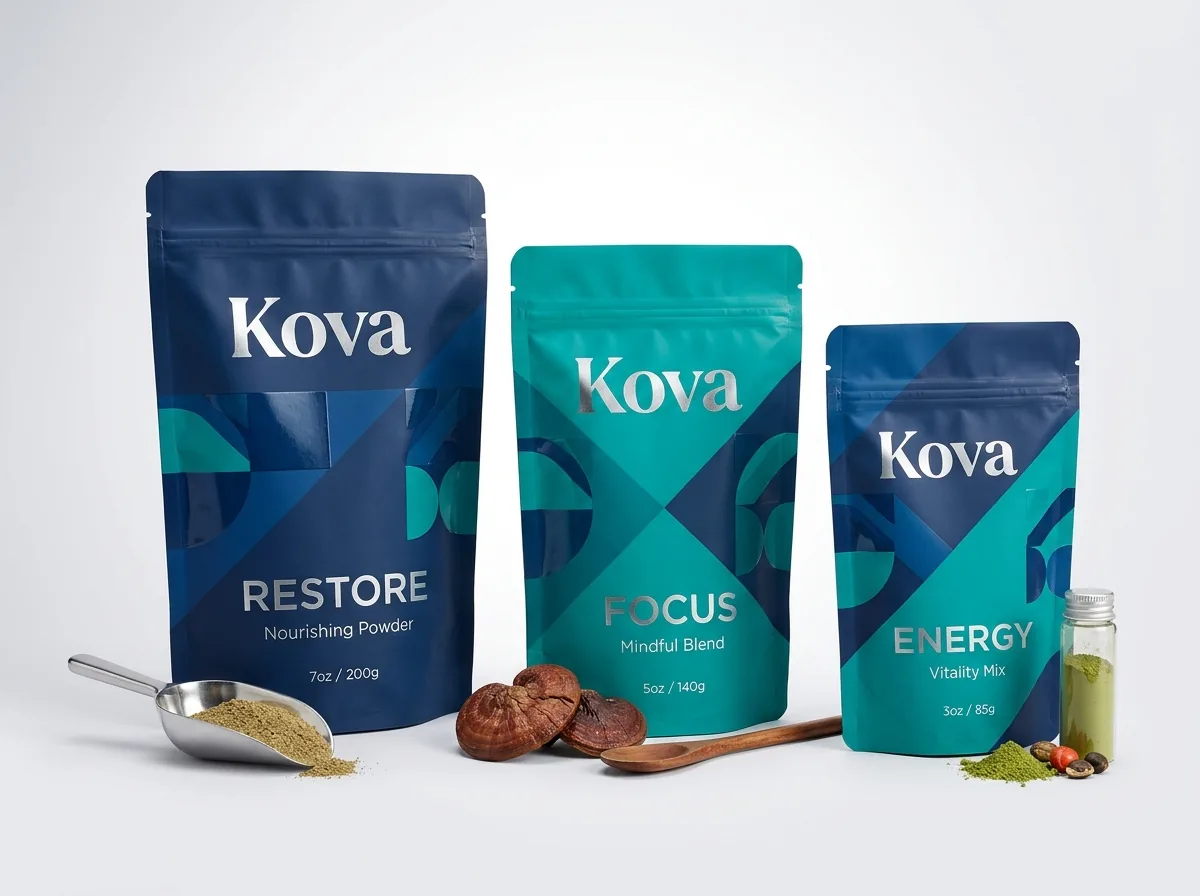
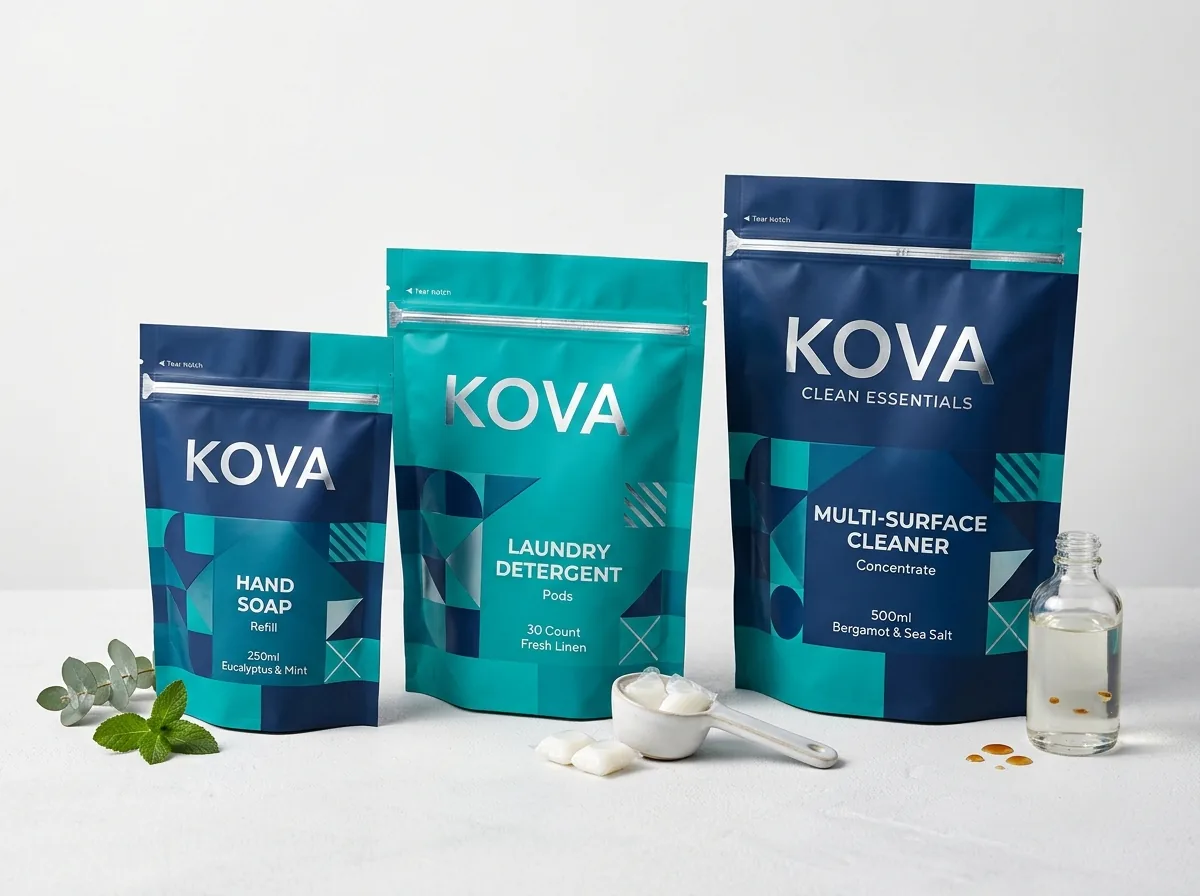
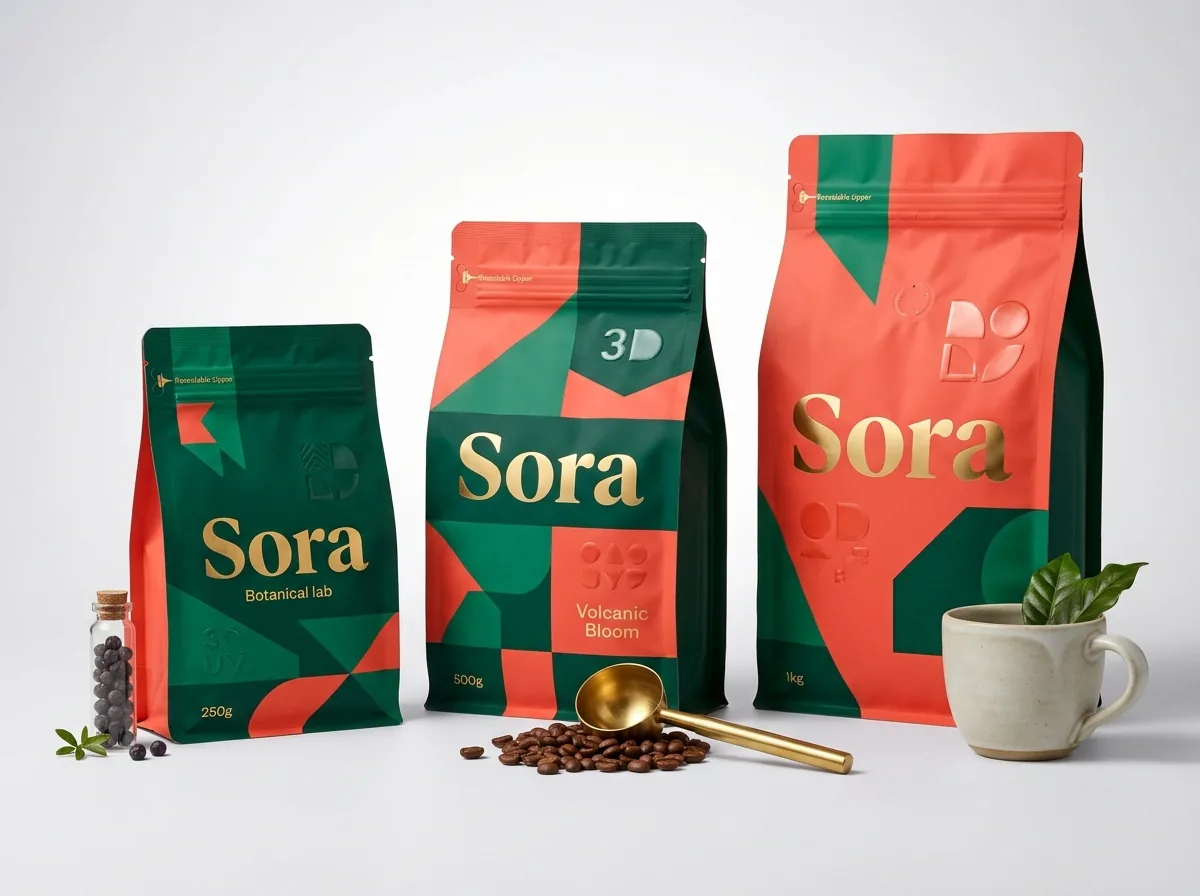
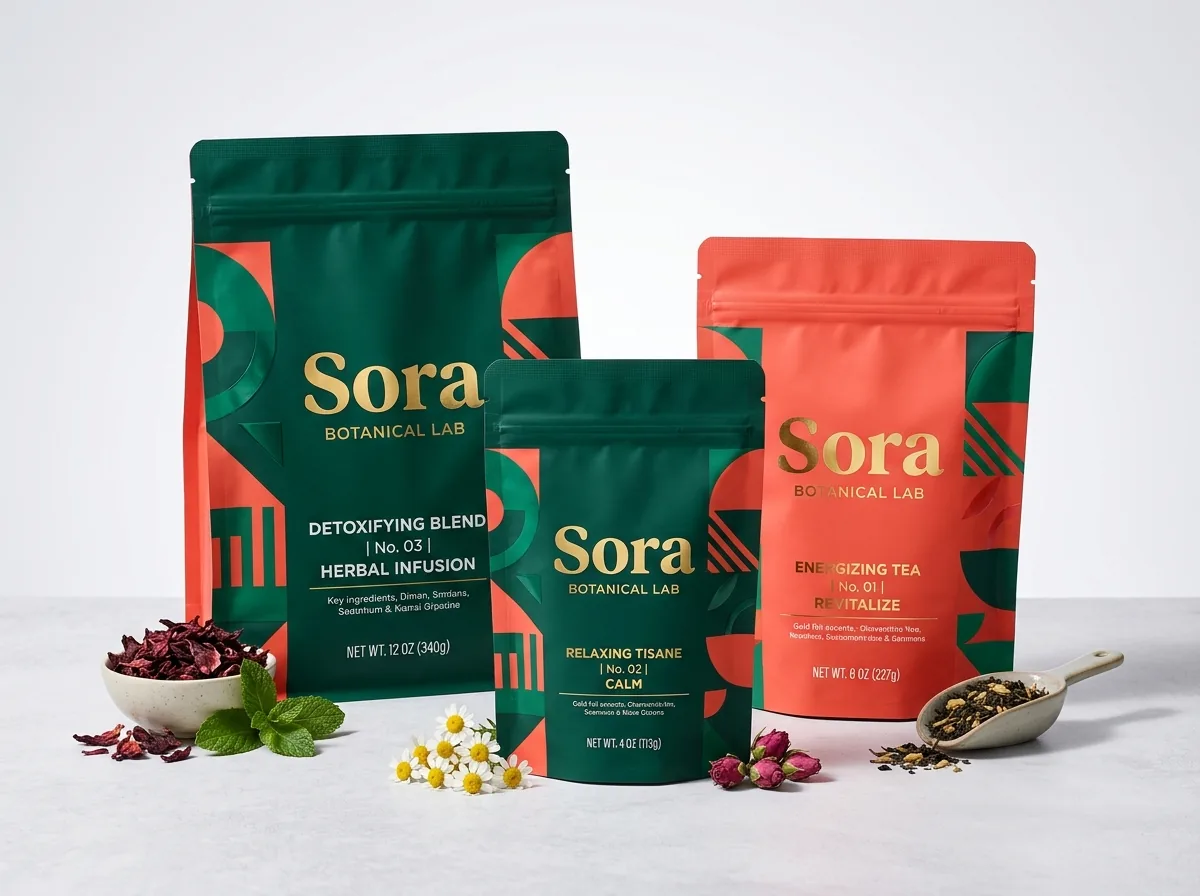
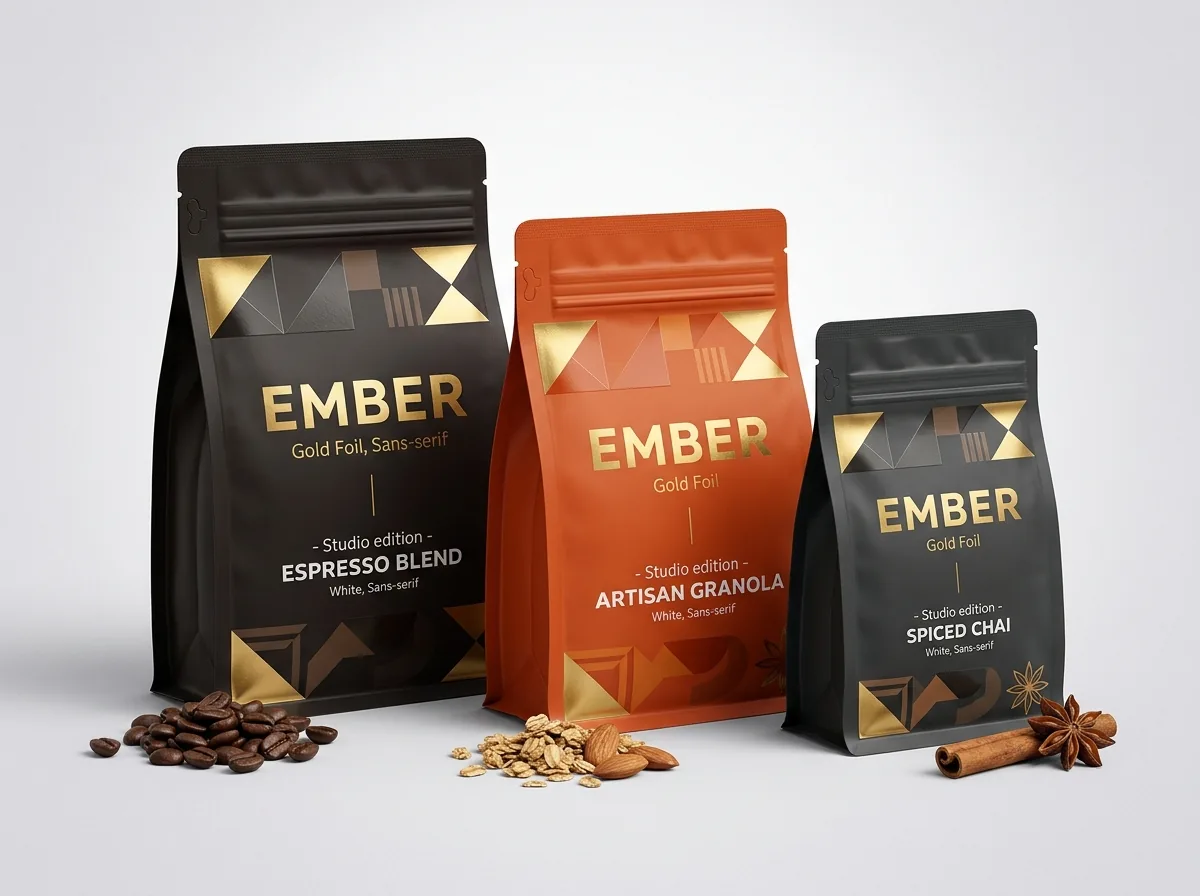
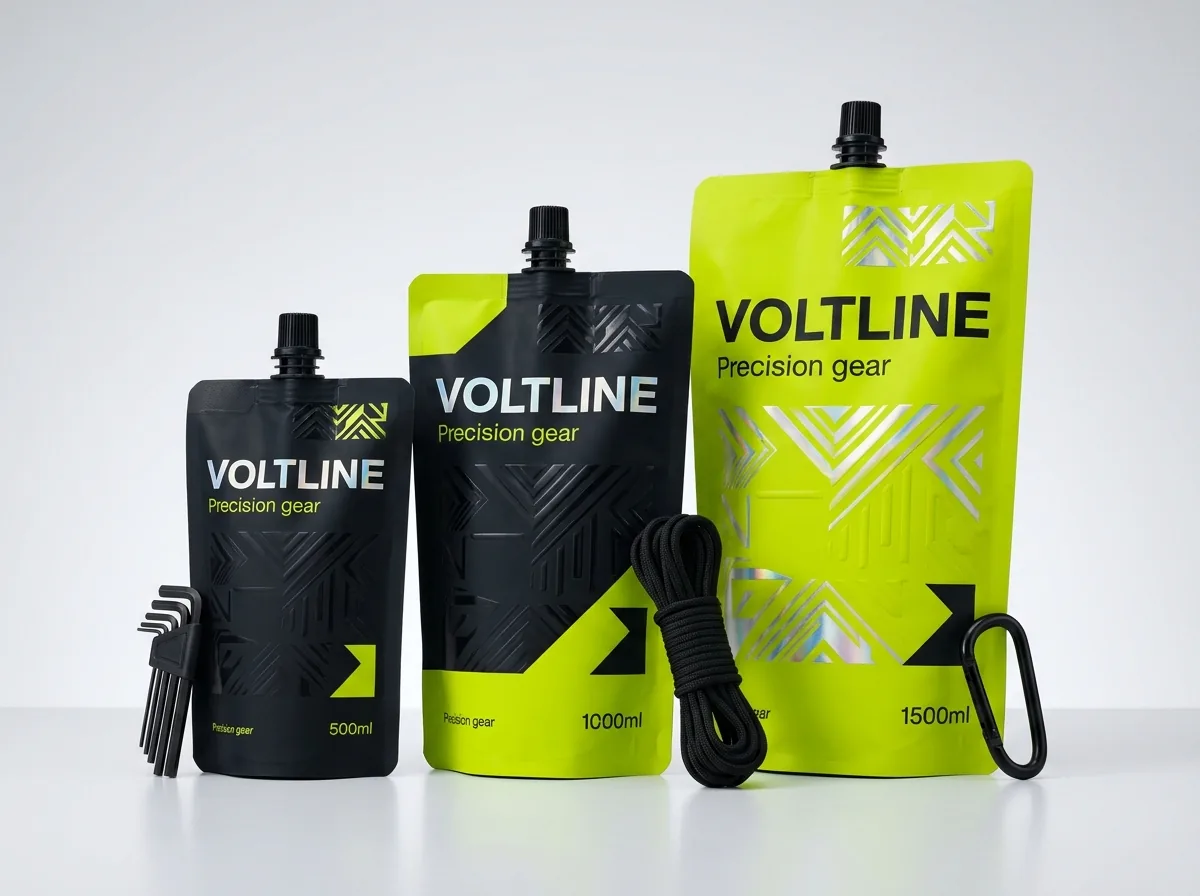
Ready to order stand up pouches? Compare up to 3 quantities with a free 3D mockup.
Request a Quote →Questions about stand up pouches
In what order are stand up pouch dimensions written?
Stand up pouch dimensions are always written as Width × Height × Bottom Gusset (W × H × G) in inches. Width is the horizontal measurement across the front face, Height is the vertical measurement from bottom edge to top lip, and Bottom Gusset is the full unfolded depth of the base.
How can I estimate stand up pouch size at home using a Ziploc bag?
Pour your exact target weight of product into a plain sandwich or quart freezer bag, shake it to settle, and measure the width, height and thickness of the filled mound with a ruler. Add 0.75 inches to the width for side seals and 2 inches to the height for zipper headspace.
What size stand up pouch fits 8 oz of granola, cookies or nuts?
A 6 × 9 × 3 inch stand up pouch is the standard retail size for 8 oz to 12 oz of granola clusters, bite-size cookies, trail mix or roasted nuts. It gives a wide 6 inch front billboard and a stable 3 inch oval bottom footprint.
Do custom stand up pouch sizes cost extra for cutting dies?
No. CubitPack never charges die or plate fees. You can order one of the standard benchmark dimensions from our chart or specify a custom Width × Height × Bottom Gusset tailored to your exact scoop and shipping carton.
How much wider does a stand up pouch get when the bottom gusset opens?
The left-to-right width across the bottom corners narrows slightly as the base pulls open into a 3D oval, while the front-to-back depth expands to match the bottom gusset measurement. Always check case-pack carton fit using filled bags rather than flat empty ones.
Can I test-fill real stand up pouches before placing my custom print order?
Yes. You can order our $50 sample kit to test-fill physical pouches on your packing table, or order a paid custom-printed sample of your exact dimensions, both credited back when you place your full order.
Still have a question? Ask a packaging specialist.
Request a Quote →Request your stand up pouches quote
Tell us your size and quantities, and one dedicated account manager prepares pricing for each tier.
- Free design & AI-to-print studio + 3D mockup
- No die or plate charges · 4–5 day rush available
- Free shipping to all 50 states
- 10% off your first order
The dimension rules in this guide reflect standard outer W × H × Bottom Gusset flexible packaging conventions, including ¼ to ⅜ inch side seals, 1.5 inch zipper headers and bulk density variance across dry foods and powders. Checked by a CubitPack packaging specialist. Spot an error? Tell us and we will fix it.
Sources
What changed
- October 22, 2026: First published.
- October 22, 2026: Updated specifications, terminology, and verified source links.
More guides
New packaging guides by email
Sizes, materials and design tips. Unsubscribe anytime.