
Center spout vs corner spout pouches vs rigid bottles: which fits your liquid?
Short answer: Choose top-center spouts for 2–12 fl oz single-serve purees, gels and drinks squeezed straight into the mouth or onto a spoon. Choose 45-degree corner spouts for 16–64 fl oz soaps, sauces and refills poured into narrow bottle necks in custom spout pouches.
On this page
- How do top-center spout pouches, corner spout pouches and rigid bottles compare
- When should I choose a top-center spout pouch
- When does a 45-degree corner spout pouch perform better
- Why do DTC and retail brands pair rigid bottles with refill spout pouches
- How do I choose the right spout format in 5 steps
- Common mistakes
- FAQs
Request a custom quoteFree dieline & 3D mockup
Top-center spout pouches, 45-degree corner spout pouches and rigid bottles each solve a different liquid dispensing challenge. A top-center spout sits on the vertical centerline of the bag so 2 oz to 12 oz baby food purees, smoothies, energy gels and squeeze sauces dispense evenly with one hand and hang straight on high-speed rotary filling rails. A 45-degree corner spout angles across the upper corner like a pitcher spout, allowing air to vent above the liquid stream so 16 oz to 64 oz hand soap, shampoo, detergent and cooking oil refills pour into narrow pump bottles without glugging. Compared with rigid glass or plastic bottles, flat unfilled spout pouches cut inbound warehouse storage space by roughly 80 percent, prevent broken lotion pumps in e-commerce mailers, and evacuate up to 98 percent of viscous liquids.
How do top-center spout pouches, corner spout pouches and rigid bottles compare?
When launching a beverage, baby puree, culinary sauce or personal-care refill, brands typically evaluate three primary formats: top-center custom printed spout pouches, 45-degree corner spout pouches, and rigid glass or HDPE plastic bottles. While both pouch styles use the same multi-layer barrier laminates and standing bottom gussets, moving the heat-welded canoe fitment from the top center to a 45-degree upper corner completely changes pouring ergonomics, air-venting behavior and filling-line rail geometry. Rigid bottles remain useful as permanent countertop dispensers with lotion pumps or spray triggers, whereas flexible spout pouches dominate single-serve on-the-go portions and e-commerce refill subscriptions. Because empty spout pouches ship completely flat on pallets, a single pallet of unfilled pouches replaces five to seven pallets of empty rigid jugs in your warehouse. Use the head-to-head comparison below to match your fluid volume, viscosity and fulfillment channel to the right container
| Comparison factor | Top-center spout pouch | 45° corner spout pouch | Rigid glass / HDPE bottle |
|---|---|---|---|
| Ideal fill capacity | 2 fl oz to 12 fl oz | 16 fl oz to 64 fl oz+ | 4 fl oz to 32 fl oz |
| Dispensing motion | Vertical squeeze into mouth or spoon | Tilted 35° pitcher pour into bottle neck | Pour, pump or trigger spray |
| Glug & splash control | Moderate when tilted sideways | High (air vents above liquid stream) | Moderate to low on thick liquids |
| Product evacuation | Up to 98% squeezed out flat | Up to 97% squeezed out flat | 88% to 92% (trapped on rigid walls) |
| Unfilled warehouse cube | Ships flat (~80% less space) | Ships flat (~80% less space) | Ships 90% empty air on pallets |
| Parcel drop durability | High (flexible seams absorb shock) | High (K-seal base supports weight) | Glass shatters; lotion pumps snap |
When should I choose a top-center spout pouch?
A top-center spout pouch places the canoe boat fitment symmetrically along the horizontal top seal. Because the nozzle aligns with the center of gravity of the bag, the front and back walls flex evenly when squeezed with one hand and the pouch stands upright without leaning to either side on retail shelves or refrigerated display cases. That symmetrical geometry makes top-center fitments the standard choice for custom baby food spout pouches, custom drink spout pouches and culinary squeeze condiments under 12 to 16 fluid ounces. From a co-packing standpoint, top-center spouts also fit the widest range of straight-rail rotary filling and capping machines because the pouch hangs vertically from the spout flange as it travels smoothly from the liquid dosing nozzle to the automatic torque capper.
- Baby and toddler purees (3.5 to 4 fl oz): 8.6 mm center spout with a ventilated choke-safe screw cap for two-handed toddler sipping.
- Athletic energy gels and wellness shots (2 to 3 fl oz): Narrow center spout that runners twist open and squeeze on the move.
- Frozen slush cocktails and smoothies (8 to 12 fl oz): Center tamper-evident spout for massaging slush ice and sipping straight from the pouch.
- Squeeze culinary sauces and cake frostings (8 to 16 fl oz): Wide 15–22 mm center spout that acts like a reclosable piping bag.
When does a 45-degree corner spout pouch perform better?
If you try to pour 32 fluid ounces of liquid hand soap from a heavy top-center spout pouch into a narrow 1-inch glass pump bottle neck, you have to tilt the bag past 90 degrees. At that steep angle, the flexible body folds in half in the middle and liquid chugs and splashes as air fights to bubble back up the center throat against the outgoing stream. Welding the fitment at a 45-degree angle across the upper corner turns custom refill spout pouches into a flexible pitcher. You only tilt the pouch 30 to 45 degrees to aim the nozzle straight into a dispenser bottle while holding the opposite side margin (or a reinforced die-cut carry handle punched into the upper seal zone). The upper half of the angled 15 mm to 22 mm throat lets air vent smoothly into the headspace while soap, shampoo, laundry detergent, cold-brew coffee concentrate or cooking oil pours below in a steady, drip-free laminar stream. Because manufacturing a corner-spout pouch trims off a triangular upper corner of film before welding the canoe fitment diagonally, corner spouts use a dedicated welding station on the converting line.
Know your size? Compare pricing across up to 3 quantities.
Request a Quote →Why do DTC and retail brands pair rigid bottles with refill spout pouches?
Smart personal-care, home-cleaning and culinary brands rarely treat rigid bottles and spout pouches as mutually exclusive. Instead, they sell a durable glass or aluminum countertop pump bottle once in a starter kit, and ship all repeat subscription orders in 16 oz, 32 oz or 64 oz corner-spout refill pouches. Replacing repeat bottle shipments with custom printed spout pouches eliminates broken pump triggers and leaking induction liners in e-commerce parcels, cuts single-use plastic weight by up to 75 percent, and reduces inbound empty packaging freight from five pallet spaces down to one. Because flexible walls flatten and roll from the bottom up as the customer pours, refill pouches also evacuate up to 97 to 98 percent of thick hair conditioner, body lotion or culinary glaze that would otherwise remain trapped inside rigid bottle shoulders and bottoms. In addition, multi-layer pouch films accept full-bleed CMYK and Pantone graphics across the front, back and bottom gusset without paper labels wrinkling in wet showers.
| Factor | Top-center spout pouch | 45° corner spout pouch | Rigid bottle |
|---|---|---|---|
| Best volume | 2 to 12 fl oz | 16 to 64 fl oz+ | 4 to 32 fl oz |
| Primary action | Squeeze & sip / spoon | Pitcher pour into bottle | Pump / spray / pour |
| Evacuation rate | Up to 98% | Up to 97% | 88% to 92% |
| Warehouse cube | Ships flat (-80% space) | Ships flat (-80% space) | Ships 90% air |
How do I choose the right spout format in 5 steps?
Locking in your spout placement before artwork layout begins prevents dieline rework and ensures smooth co-packer onboarding. Whether you need a compact 4 oz puree pouch or a 64 oz detergent refill with a K-seal base, our design team review your liquid viscosity, filling temperature, carrier rail slot width and cap style before drawing your custom dieline. At CubitPack, minimums depend on the product and are confirmed with your quote. Standard production takes 10 to 14 business days (with 4 to 5 business day rush available), and every order includes free design help, zero die or plate charges, a free 2D dieline proof and interactive 3D mockup before payment, and free shipping to all 50 US states. Walk through these five practical steps with your team
- Define how the customer dispenses the liquid: direct sipping or spoon squeezing favors a top-center spout; pouring into a narrow bottle favors a 45-degree corner spout.
- Check your target fluid volume: 2 fl oz to 12 fl oz packages work best with top-center spouts, while 16 fl oz to 64 fl oz refills pour cleaner with a corner spout and K-seal base.
- Confirm your co-packer's filling line: check whether their spout rail and capper accept angled corner welds or require vertical top-center spouts.
- Select throat inner diameter and cap style: pair 8.6–10 mm throats (or choke-safe caps) with drinks and baby purees, and 15–22 mm tamper-evident caps with sauces and soap refills.
- Compare up to 3 quantities on your quote: order our $50 sample kit or a custom pre-production sample (credited to your order) and compare unit price breaks.
What are the most common mistakes when choosing between center spouts, corner spouts and bottles?
Avoid these five packaging mismatches when moving liquids into custom spout pouches
- Putting a narrow top-center spout on a heavy 32 oz or 64 oz refill pouch, which causes the bag to fold in half and glug when pouring into a narrow pump bottle.
- Ordering 45-degree corner spout pouches before checking whether your co-packer's automated filler can index angled corner fitments.
- Shipping heavy 32 oz liquid pump bottles in e-commerce mailers where pump necks snap off, instead of shipping a starter pump bottle with screw-cap refill pouches.
- Choosing a flat bottom seal instead of a reinforced K-seal bottom gusset on 16 oz to 64 oz corner-spout refill pouches.
- Forgetting to add a die-cut two-finger carry handle on the upper seal margin opposite the corner spout on 32 oz and 64 oz pouches.
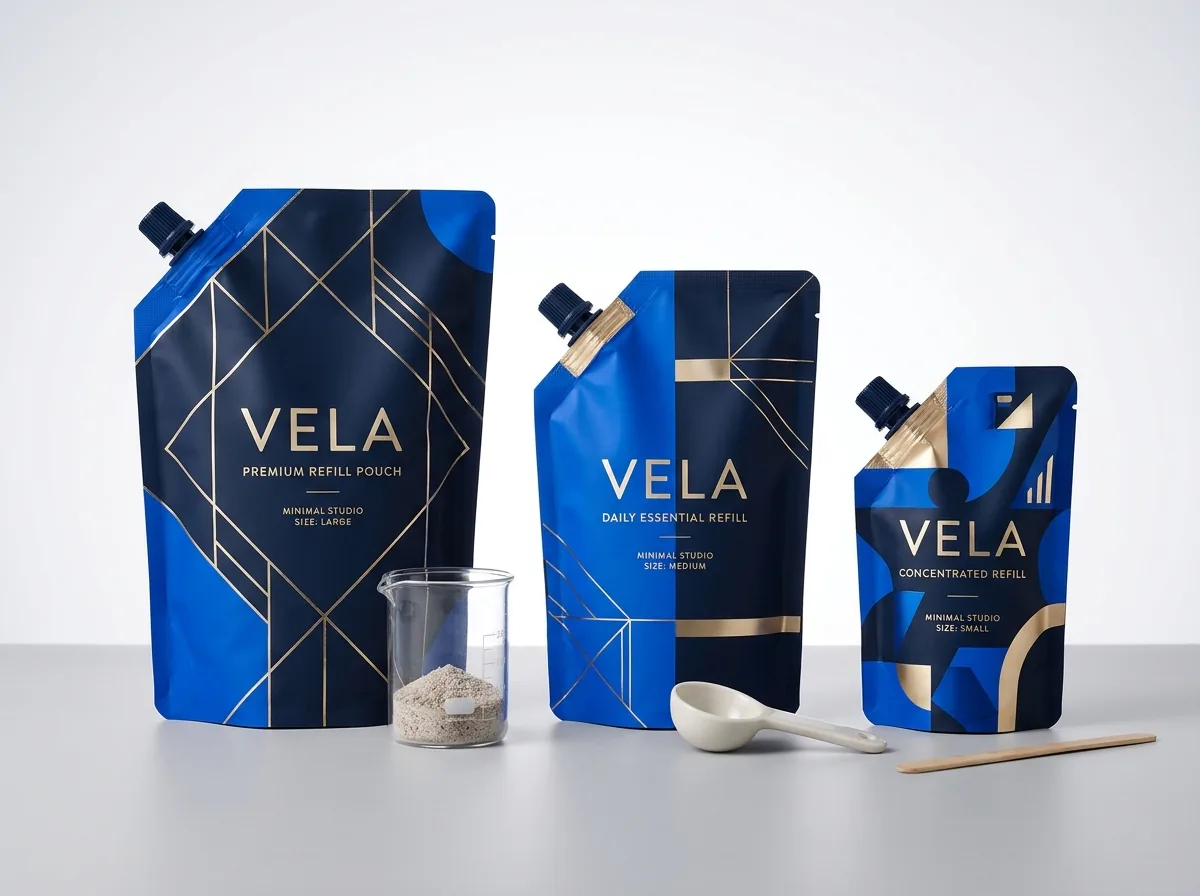
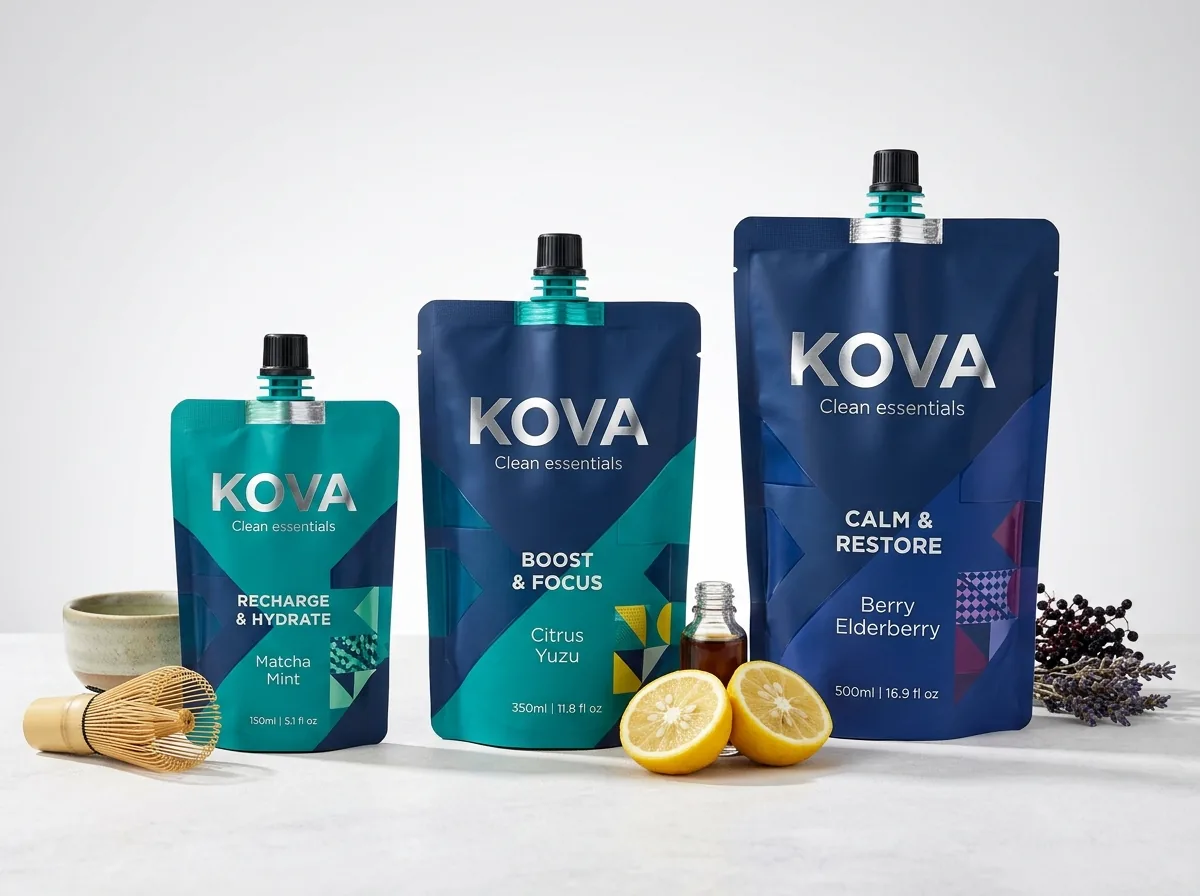
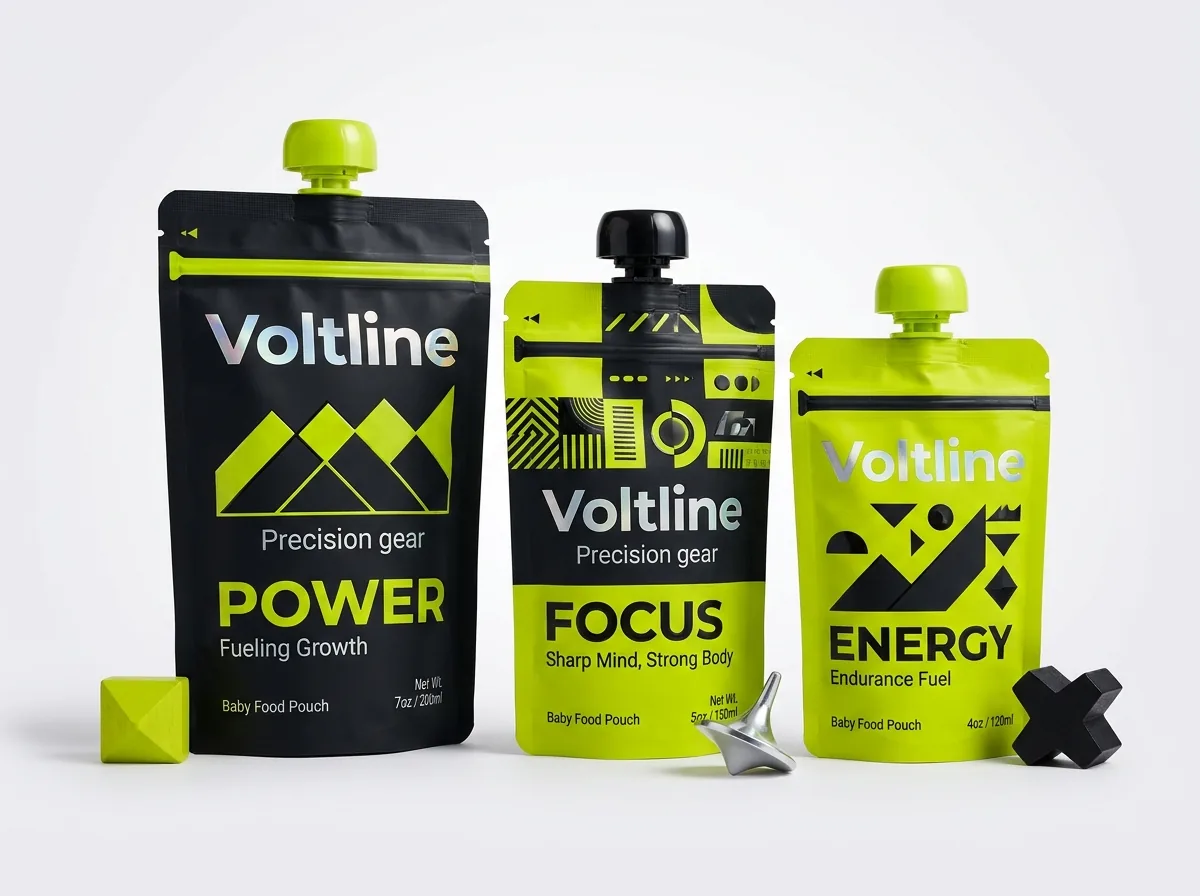
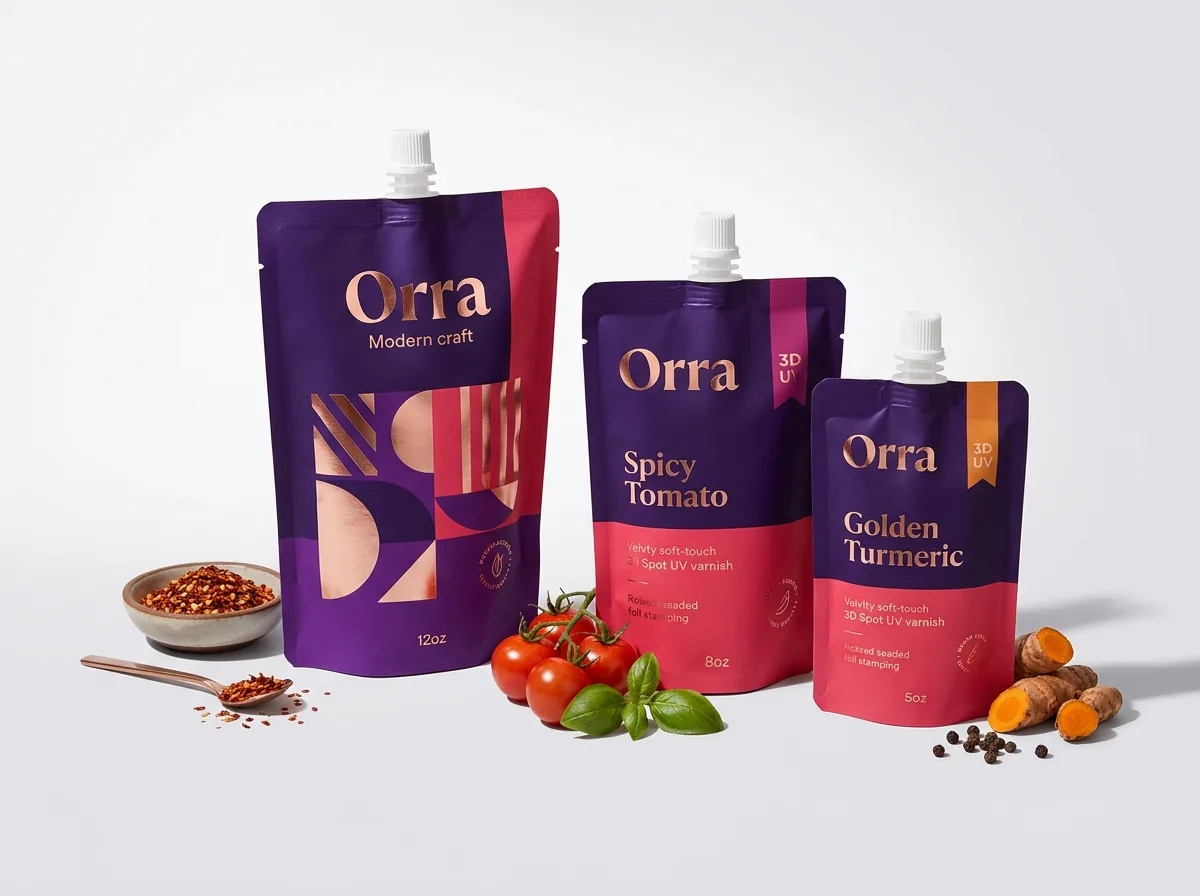
Packaging for this
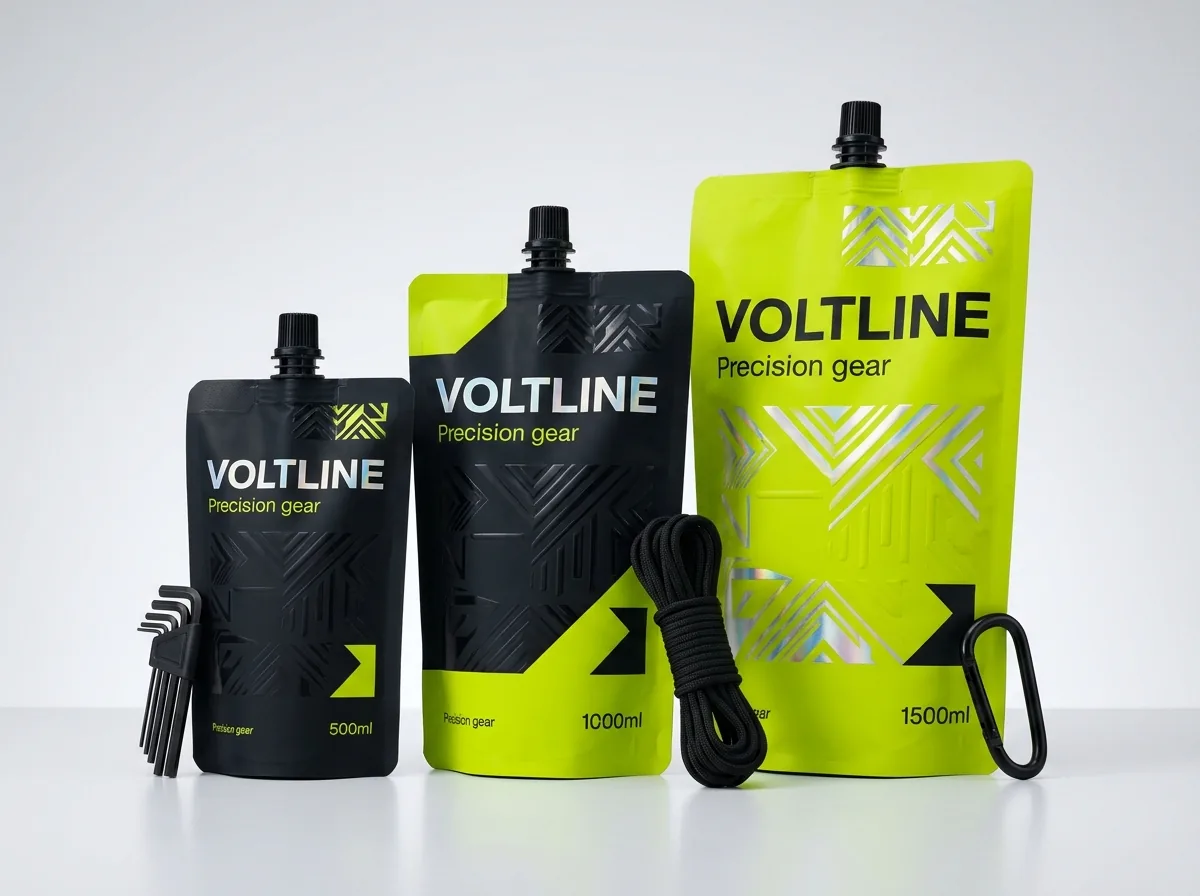
Ready to order spout pouches? Compare up to 3 quantities with a free 3D mockup.
Request a Quote →Questions about spout pouches
Do 45-degree corner spout pouches cost more than top-center spout pouches?
Corner-spout pouches can carry a slightly higher unit cost than top-center spout pouches of the same volume because cutting the 45-degree shoulder angle and welding the canoe fitment diagonally requires a dedicated corner-welding station. Enter your specs in our quote form to compare both options.
Can a top-center spout pouch still be used for 16 oz or 32 oz liquid refills?
Yes. If your co-packer's automated filling line only accepts vertical top-center spouts on straight carrier rails, you can use a wide 15 mm to 22 mm top-center spout on a 16 oz or 32 oz pouch. Adding an ergonomic side grip waist helps customers tilt and pour.
How much warehouse space do custom spout pouches save compared to rigid bottles?
Unfilled custom spout pouches ship and store completely flat with only the small plastic spout neck adding thickness, reducing inbound freight and empty packaging storage space by roughly 75 to 85 percent compared with rigid HDPE jugs or glass bottles.
Are both center and corner spout pouches available with food-safe barrier liners?
Yes. Both top-center and 45-degree corner spout pouches can be produced with food-safe inner sealant films and low-odor inks on request via our certified partner facility, with lab reports and compliance certificates shared on request.
Can I combine multiple scents or flavors in one custom spout pouch order?
Yes. As long as your SKUs share the exact same outer pouch dimensions (Width × Height × Bottom Gusset), film laminate and spout fitment, you can group multiple artwork designs in one order with zero die or plate charges.
Still have a question? Ask a packaging specialist.
Request a Quote →Request your spout pouches quote
Tell us your size and quantities, and one dedicated account manager prepares pricing for each tier.
- Free design & AI-to-print studio + 3D mockup
- No die or plate charges · 4–5 day rush available
- Free shipping to all 50 states
- 10% off your first order
This comparison draws on flexible spouted pouch pouring geometry, co-packer rotary rail specifications, warehouse pallet density ratios and residual liquid evacuation benchmarks. Checked by a CubitPack packaging specialist. Spot an error? Tell us and we will fix it.
Sources
What changed
- October 22, 2026: First published.
- October 22, 2026: Updated specifications, terminology, and verified source links.
More guides
New packaging guides by email
Sizes, materials and design tips. Unsubscribe anytime.