
What size spout pouch and fitment do I need?
Short answer: Spout pouches are measured flat by outer Width × Height (to top shoulder seam) × Bottom Gusset in inches. Common sizes are 3.5 × 5.5 × 1.75 in for 4 fl oz baby purees, 4.75 × 7.5 × 2.5 in for 8 fl oz drinks, and 6.75 × 10.5 × 3.5 in for 32 fl oz refills in custom spout pouches.
On this page
- How do I measure outer Width, Height and Bottom Gusset on a spout pouch
- What spout pouch dimensions fit 2 oz, 4 oz, 8 oz, 16 oz, 32 oz and 64 oz
- What spout throat inner diameter (ID) do I need for my liquid viscosity
- Why do liquid spout pouches need 10% to 20% headspace and K-seal gussets
- How do I test spout pouch volume and filler fitment before production
- Common mistakes
- FAQs
Request a custom quoteFree dieline & 3D mockup
To size a custom spout pouch accurately, always start with your liquid fill volume in fluid ounces (fl oz) or milliliters (ml) rather than net weight in ounces, because thick syrups, fruit purees and cooking oils have very different densities. Add 10 to 15 percent unfilled headspace (or 15 to 20 percent if the pouch will be frozen) so liquid stays clear of the heat-welded canoe fitment and the expanding bottom gusset forms a stable footprint. Specify outer flat film dimensions as Width × Height (measured from the bottom fold to the top film shoulder seam below the cap) × Bottom Gusset in inches. Finally, pair your pouch with an 8.6 to 10 mm spout throat for thin drinks and baby purees, or a 15 to 22 mm wide throat for thick culinary sauces, lotions and household refills.
How do I measure outer Width, Height and Bottom Gusset on a spout pouch?
When you request a quote for custom printed spout pouches, dimensions are specified flat from outer edge to outer edge as Width (W) × Height (H) × Bottom Gusset (G) in inches. Because flexible barrier bags are converted from flat multi-layer film webs, outer dimensions include the 0.25 to 0.375 inch side heat seals along the left and right edges. Subtracting 0.5 to 0.75 inches from the outer width gives you the usable internal width once the side seams are sealed. Height (H) is always measured from the bottom edge of the pouch to the top horizontal shoulder seal where the canoe-shaped plastic spout base welds between the front and back panels. Do not include the protruding plastic spout threads or screw cap in your pouch film height; co-packers and master-case designers track the film shoulder height separately from the cap protrusion (typically 0.85 to 1.25 inches depending on cap style). Bottom Gusset (G) is the total folded depth of the bottom panel, which opens into an oval standing base once filled with liquid.
- Outer Width (W): left edge to right edge including side heat seals (subtract 0.5 to 0.75 in total to estimate usable internal width).
- Shoulder Height (H): bottom fold to top horizontal film seam, excluding the protruding plastic spout neck and screw cap.
- Bottom Gusset (G): full folded depth of the bottom panel; choose a K-seal bottom gusset on 16 oz to 64 oz pouches to support liquid weight.
- Liquid Headspace: reserve 10 to 15 percent unfilled space at the top (15 to 20 percent for frozen cocktail slush pouches) so seams never strain.
What spout pouch dimensions fit 2 oz, 4 oz, 8 oz, 16 oz, 32 oz and 64 oz?
Because water, juice, fruit puree, culinary glaze and liquid hand soap have different specific gravities (ranging from 0.92 g/ml for cooking oils up to 1.35 g/ml for honey-based sauces), always size your pouch by fluid volume in fluid ounces (fl oz) or milliliters (ml). At CubitPack, custom Width × Height × Bottom Gusset dimensions carry zero die or plate charges, and you can combine multiple flavors or scents that share the same pouch size and fitment. Use the benchmark capacity chart below as your starting reference, which already accounts for a standard 12 percent liquid headspace allowance
| Fluid capacity | Outer flat size (W × H × Gusset) | Spout placement & ID · Typical uses |
|---|---|---|
| 2 fl oz (60 ml) | 3.25 × 4.75 × 1.5 in | Top-center · 8.6 mm ID · Athletic energy gels, wellness shots, travel lotions |
| 3.5 to 4 fl oz (100–120 ml) | 3.5 × 5.5 × 1.75 in | Top-center · 8.6 mm choke-safe · Baby food purees, applesauce, toddler yogurt |
| 8 fl oz (240 ml) | 4.75 × 7.5 × 2.5 in | Center or corner · 10–15 mm ID · Frozen cocktails, smoothies, kid drinks |
| 16 fl oz / 1 pt (500 ml) | 5.5 × 8.75 × 3 in | 45° corner or center · 15–16 mm ID · Hand soap refills, cold brew, marinades |
| 32 fl oz / 1 qt (1,000 ml) | 6.75 × 10.5 × 3.5 in | 45° corner · 16–22 mm ID · Shampoo, body wash, dish soap, bulk condiments |
| 64 fl oz / 0.5 gal (2,000 ml) | 8.5 × 12.5 × 4.5 in | 45° corner + handle · 22–33 mm ID · Laundry detergent, cleaners, foodservice syrups |
What spout throat inner diameter (ID) do I need for my liquid viscosity?
Every plastic spout fitment has two critical dimensions: the canoe-shaped base that welds between the pouch films and the throat inner diameter (ID) in millimeters through which your liquid is filled and dispensed. Picking a throat that is too narrow for a thick puree or conditioner forces customers to squeeze with two hands and creates high back-pressure on your co-packer's filling nozzle. For single-serve custom baby food spout pouches and custom drink spout pouches, an 8.6 mm to 10 mm top-center throat prevents thin liquids from gushing out too fast when sipped. For thicker custom sauce spout pouches and custom refill spout pouches, stepping up to a 15 mm, 22 mm or 33 mm throat lets viscous liquids flow smoothly without air glugging.
- 8.6 mm to 10 mm ID: Water-thin juices, cocktails, energy gels and finely homogenized Stage 1–2 baby fruit purees.
- 13 mm to 16 mm ID: Smoothies, cold-brew concentrates, liquid hand soap refills, body wash and light lotions.
- 18 mm to 22 mm ID: Thick culinary glazes, BBQ sauces with spice particulates, cake frosting, hair conditioners and 32 oz refills.
- 26 mm to 33 mm ID: Bulk 64 oz to 128 oz household detergents, surface cleaners and high-flow foodservice syrups.
Know your size? Compare pricing across up to 3 quantities.
Request a Quote →Why do liquid spout pouches need 10% to 20% headspace and K-seal gussets?
When a flexible pouch is filled to 100 percent of its geometric volume, hydraulic pressure balloons the front and back walls into a tight cylinder. That ballooning pulls the bottom gusset off the counter so the pouch tips over, and it pushes liquid right up into the top canoe weld zone where droplets can interfere with heat sealing. Reserving 10 to 15 percent headspace on ambient and chilled liquids keeps the upper 1.0 to 1.5 inches of film slack, allowing the lower two-thirds of the pouch to settle into a wide, low-center-of-gravity base on retail shelves. If your product is frozen solid before use, such as margarita slush pouches or smoothie packs, increase headspace to 15 to 20 percent so water expansion during freezing never stresses the side heat seals. On heavier 16 oz, 32 oz and 64 oz pouches, pairing that headspace with a K-seal bottom gusset (angled 45-degree corner welds at the base) distributes liquid weight away from the lower corners during e-commerce drop shocks.
How do I test spout pouch volume and filler fitment before production?
Even a 1.5-millimeter difference in spout neck flange width matters when your co-packer runs an automated rotary spout filler and torque capper. Verifying both liquid capacity at filling temperature and rail compatibility before full production prevents costly line stops. At CubitPack, minimums depend on the product and are confirmed with your quote. Every order includes free design help, a free 2D dieline proof and 3D mockup before payment, and 10 to 14 business day turnaround (4 to 5 business days rush) with free shipping across all 50 US states. You can also order our $50 sample kit or a custom pre-production sample credited toward your order.
- Measure your exact fluid fill volume in milliliters at actual filling temperature (warm sauces and aerated smoothies take up more room before cooling).
- Pick outer Width × Height × Bottom Gusset dimensions from our chart that leave 10 to 15 percent headspace (or 15 to 20 percent for freezer pouches).
- Confirm whether your filler pumps liquid through the uncapped spout neck or through an open top film seam, and check their carrier rail slot width.
- Test-fill a physical sample pouch with your real product, torque the tamper-evident screw cap closed, and verify upright shelf stability.
- Perform an inverted squeeze check and a 3-foot parcel drop check before signing off on your 2D dieline proof.
What are the most common spout pouch sizing mistakes?
Most liquid pouch sizing issues happen when a brand sizes by weight instead of fluid volume or forgets filling headspace. Avoid these five mistakes
- Sizing the pouch from net weight in ounces instead of fluid ounces (fl oz) or milliliters (ml), which under-sizes pouches for light oils or over-sizes them for dense syrups.
- Filling the pouch to 100 percent geometric capacity with zero headspace, causing the bottom gusset to balloon and tip over on retail shelves.
- Forgetting to add 15 to 20 percent expansion headspace on frozen cocktail slush and smoothie pouches, which can crack side seams in the freezer.
- Selecting a narrow 8.6 mm drink spout for a thick culinary glaze, nut butter or conditioner that requires a 15 mm to 22 mm throat.
- Measuring total shipping case height from the pouch film shoulder seam and forgetting to add 0.85 to 1.25 inches for the protruding screw cap.
Packaging for this
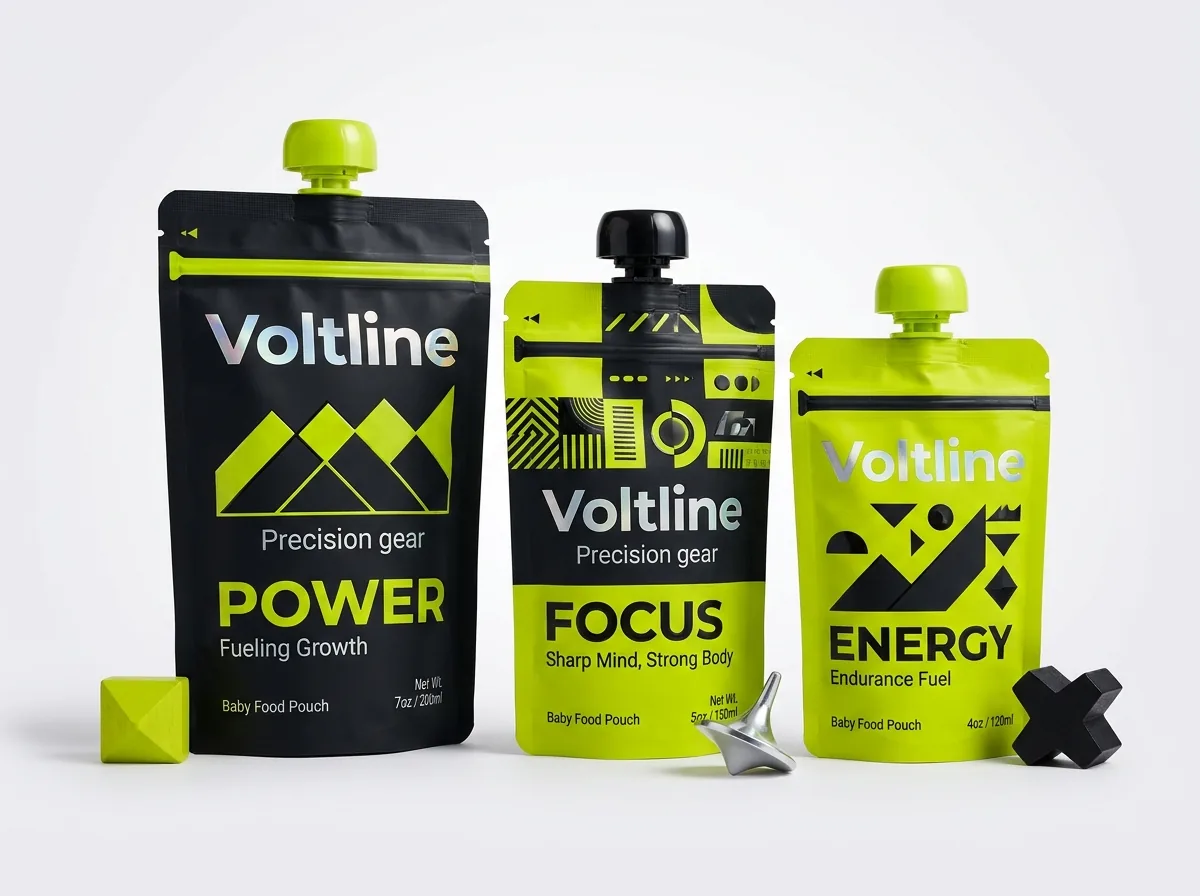
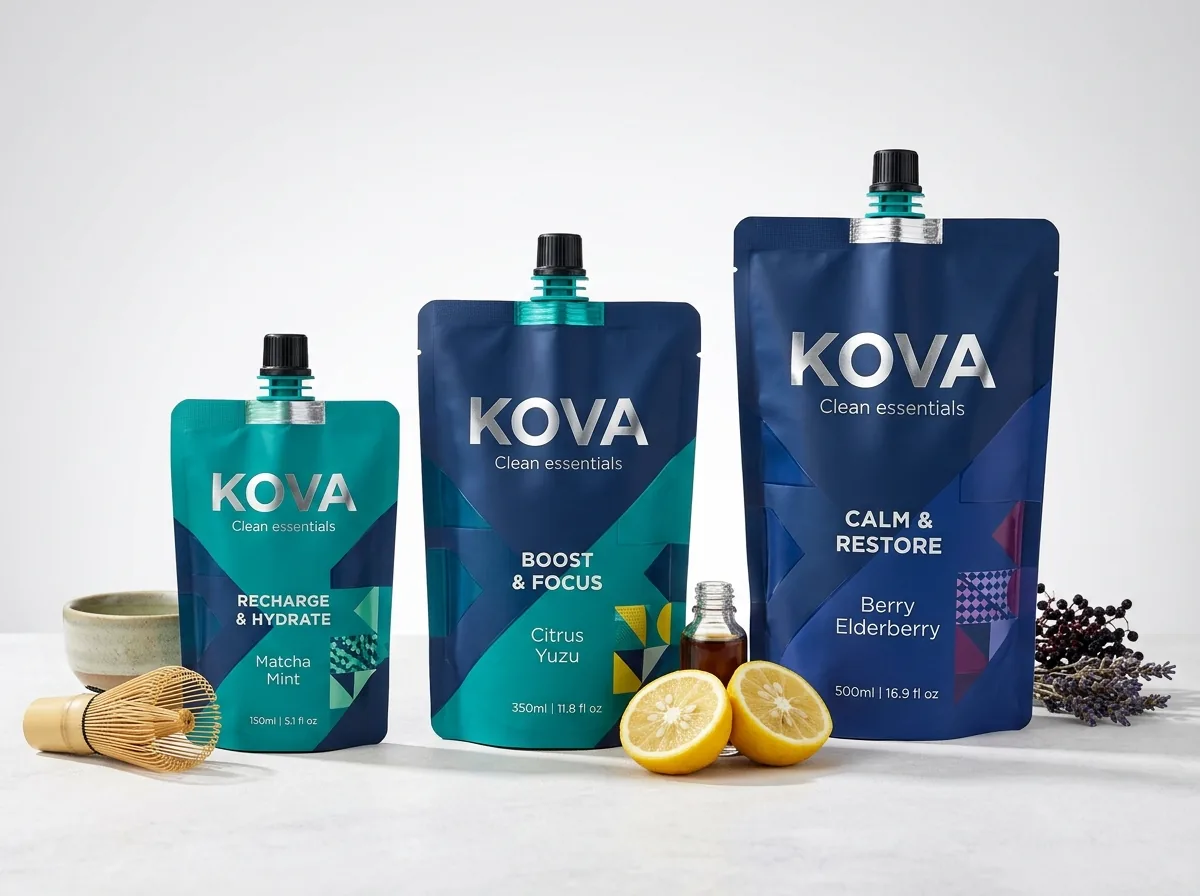
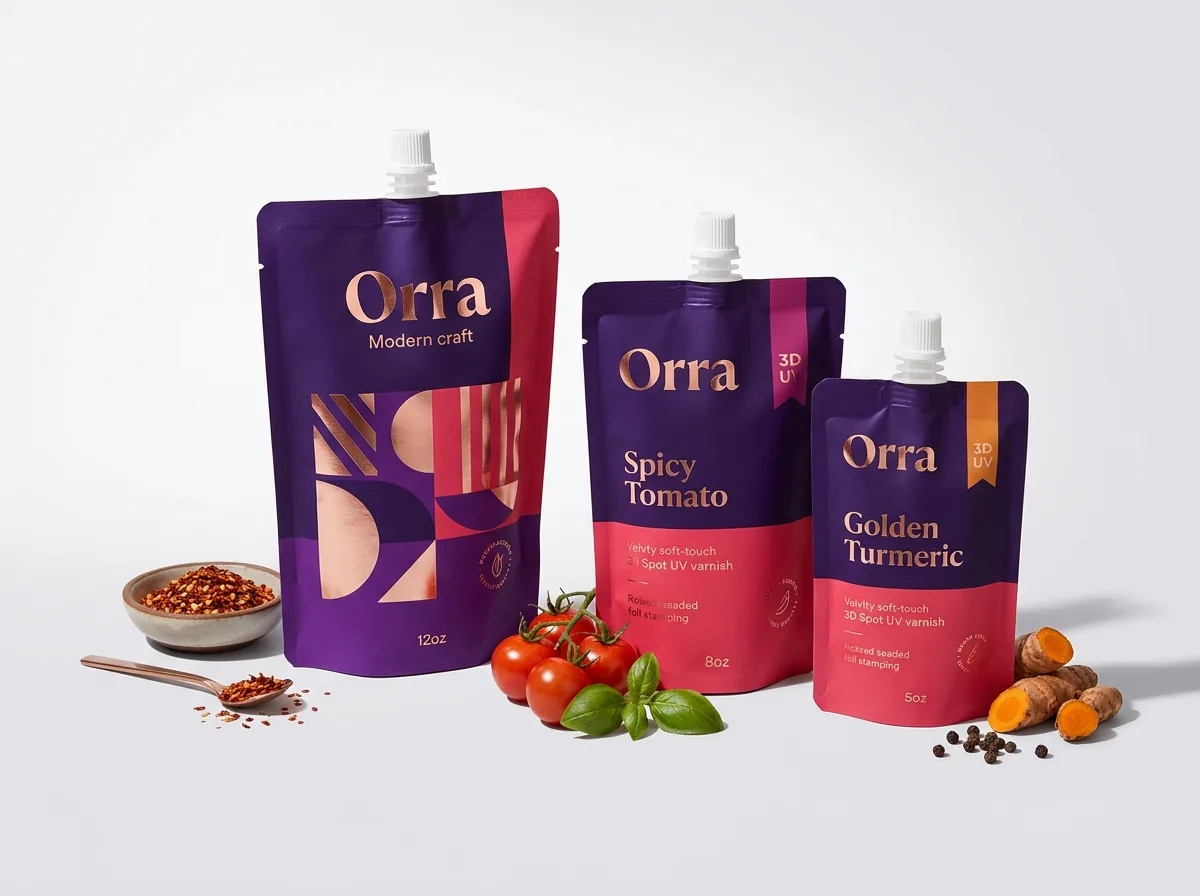
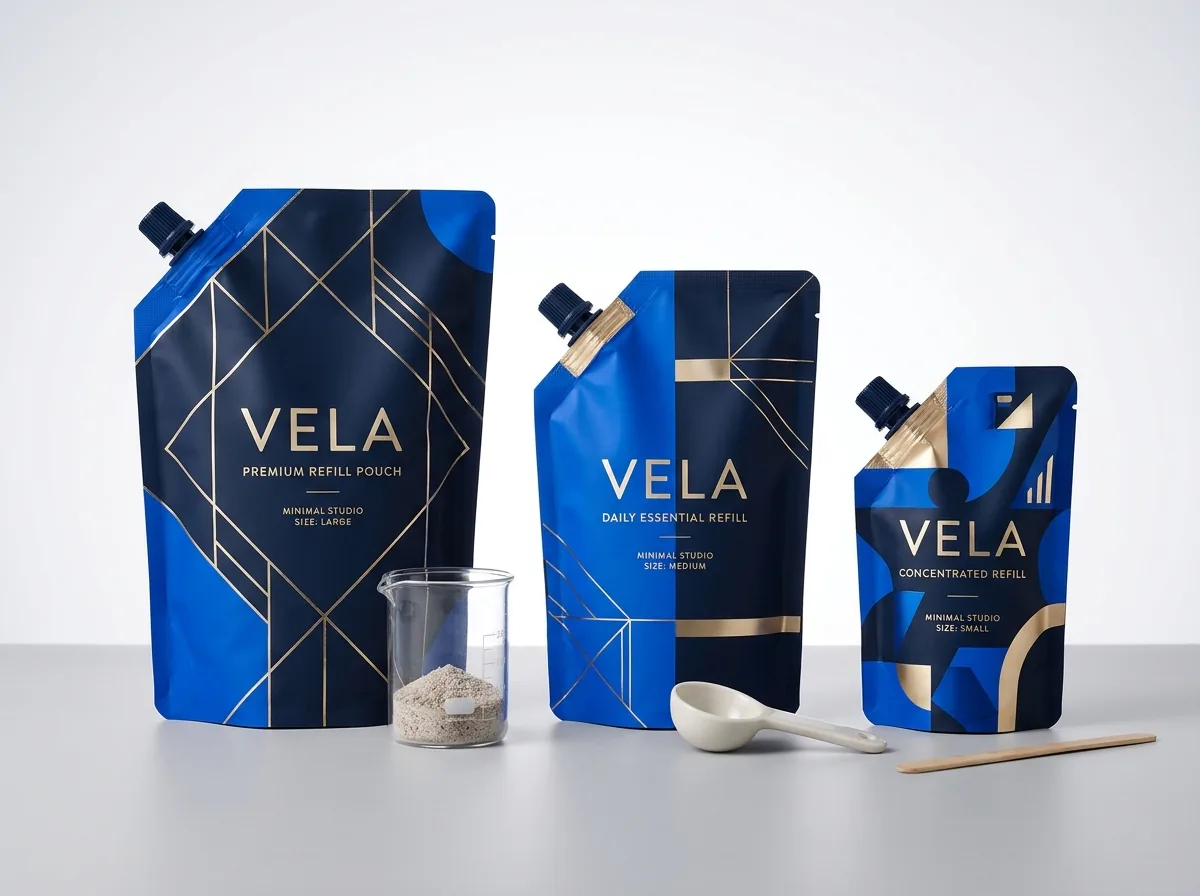
Ready to order spout pouches? Compare up to 3 quantities with a free 3D mockup.
Request a Quote →Questions about spout pouches
Does the Height of a custom spout pouch include the plastic spout and cap?
No. In flexible packaging dielines, Height (H) is measured from the bottom edge of the pouch film to the top horizontal shoulder seam. The plastic spout neck and screw cap protrude roughly 0.85 to 1.25 inches above the top shoulder seam depending on the fitment style.
Why are custom spout pouches sized by fluid ounces (fl oz) instead of net weight?
Fluid ounces and milliliters measure physical volume, whereas net weight in ounces or grams changes with product density. For example, 16 fluid ounces of olive oil weighs about 14.6 oz by weight, while 16 fluid ounces of thick honey glaze weighs over 22 oz.
What size custom spout pouch is standard for baby food purees?
Most retail baby and toddler fruit or vegetable puree pouches hold 3.5 fl oz to 4 fl oz (100 ml to 120 ml) and measure approximately 3.5 × 5.5 × 1.75 inches with an 8.6 mm top-center spout and a ventilated choke-safe screw cap.
Can I order a custom spout pouch size without paying for a cutting die?
Yes. CubitPack never charges die or plate fees on custom spout pouches. Whether you choose one of the six standard capacities in our chart or need a custom Width × Height × Bottom Gusset to fit an existing shipping box, tooling is free.
What is the minimum order quantity for custom sized spout pouches?
Minimums depend on the product, pouch size and spout fitment; we confirm yours with your quote. Standard production takes 10 to 14 business days (with 4 to 5 business day rush available) and includes free shipping to all 50 US states.
Still have a question? Ask a packaging specialist.
Request a Quote →Request your spout pouches quote
Tell us your size and quantities, and one dedicated account manager prepares pricing for each tier.
- Free design & AI-to-print studio + 3D mockup
- No die or plate charges · 4–5 day rush available
- Free shipping to all 50 states
- 10% off your first order
The sizing benchmarks in this guide combine flexible stand-up pouch fluid capacity geometry, 10–20% headspace allowances, K-seal gusset load rules and spout inner diameter viscosity pairings. Checked by a CubitPack packaging specialist. Spot an error? Tell us and we will fix it.
Sources
What changed
- October 22, 2026: First published.
- October 22, 2026: Updated specifications, terminology, and verified source links.
More guides
New packaging guides by email
Sizes, materials and design tips. Unsubscribe anytime.