
Twisted vs flat vs ribbon paper bag handles: which should you choose?
Short answer: Choose twisted paper cord handles for everyday apparel and gift boutiques, wide flat folded paper handles for heavy restaurant takeout and grocery carry, and knotted satin ribbon or cotton rope handles with a turnover cuff for luxury retail on custom paper shopping bags.
On this page
- How do twisted, flat, ribbon, rope and die-cut bag handles compare
- Twisted paper handles vs flat paper handles: which is better for high-volume retail and takeout
- When should you choose satin ribbon, grosgrain ribbon or knotted cotton rope handles
- Why do heavy shopping bags need a turnover top cuff and cardboard bottom insert
- When does a die-cut handle or handle-free merchandise bag make sense
- Common mistakes
- FAQs
Request a custom quoteFree dieline & 3D mockup
The right handle for a paper shopping bag depends on how heavy your product is, how long your customer carries the bag, and whether the bag is formed on high-speed kraft machinery or hand-finished on laminated art board. Twisted paper cord handles stand upright above the rim for quick grabbing at apparel and gift registers. Flat folded paper handles spread heavy foodservice loads across a wider palm surface and fold inward for compact carton storage. Knotted cotton rope, satin ribbon and grosgrain ribbon handles thread through a folded double-thick upper cuff and pair with a rigid bottom baseboard insert to carry heavy glass jars, fragrance boxes or footwear without tearing the paper rim. Die-cut handles eliminate external loops entirely by punching a reinforced oval grip directly into the upper wall of the bag so nothing snags during packing.
How do twisted, flat, ribbon, rope and die-cut bag handles compare?
When you configure custom printed paper shopping bags, the handle mechanism dictates both the top edge construction of the bag and its safe carry weight. Machine-made kraft bags attach twisted or flat paper loops to the inside wall using a wide rectangular kraft reinforcement patch and high-tack adhesive. Hand-finished Euro totes fold the top 1.5 to 2 inches of the paper wall inward into a smooth turnover cuff, then punch holes through the double layer for rope or ribbon cords. Use the comparison matrix below to evaluate all five handle styles across top lip finish, hand feel, flat storage behavior and ideal retail applications.
| Handle style | Top lip & attachment method | Best carry weight & typical retail uses |
|---|---|---|
| Twisted paper cord | Serrated or hemmed top with glued interior kraft patch | Up to 6–8 lb · Apparel boutiques, bookstores, gift shops |
| Flat folded paper | Wide folded kraft strap glued inside or folded over rim | Up to 7–9 lb · Restaurant takeout, bakeries, grocery |
| Cotton or polypropylene rope | Threaded through folded turnover cuff (knotted or T-bar ends) | Up to 10–12 lb · Footwear, wine & spirits, heavy gift sets |
| Satin or grosgrain ribbon | Threaded through cuff holes or glued neatly inside a double cuff | Up to 8–10 lb · Cosmetics, jewelry, bridal, luxury PR kits |
| Die-cut patch handle | Oval hand cutout reinforced with an interior glued card patch | Up to 4–5 lb · Vinyl records, catalogs,pharmacy & pastry sleeves |
Twisted paper handles vs flat paper handles: which is better for high-volume retail and takeout?
Both twisted paper cord and flat folded paper handles are made from 100 percent paper fibers and glued inside the upper bag wall on automated bag-making lines, making them the most economical choices for daily retail and foodservice. Twisted handles are spun from tightly wound kraft paper into a round cord that stands permanently upright above the bag rim. That rigid loop lets cashiers open the bag with one hand and hand it across the counter without fishing inside for the straps. Flat handles are cut from wide strips of multi-ply kraft paper (usually 0.5 to 0.75 inches wide). Because the strap is flat rather than round, it spreads the weight of heavy soup containers and beverage carriers comfortably across the fingers without digging into the palm. Flat handles can also fold down inside the mouth of the bag while packed in master cartons, allowing more bags to fit in a single shipping box under a busy restaurant counter. See our custom kraft paper bags and custom paper bags with handles pages for stock and handle combinations.
- Twisted paper handles: stand upright at all times, look tailored for fashion and gifts, and can be dyed to match dark or bright brand colors.
- Flat folded paper handles: fold down flat inside cartons to save storage space, and feel wider and softer in the hand when carrying heavy takeout meals.
- Interior patch bond: both rely on a heavy glued kraft reinforcement strip inside the upper wall; never pull the handles outward at a 90-degree horizontal angle.
When should you choose satin ribbon, grosgrain ribbon or knotted cotton rope handles?
When a customer buys fine jewelry, luxury skincare, designer shoes or a holiday gift bundle, they often keep and reuse the shopping bag. Upgrading from glued paper handles to textile handles on custom luxury shopping bags changes how the bag feels the moment the customer lifts it off the counter. Braided cotton or polypropylene macrame rope handles offer thick, cylindrical cushioning and high tensile strength, making them the standard for heavy shoe boxes, outerwear and candle bundles. Satin ribbon gives a smooth, high-luster sheen that pairs with foil-stamped logos on cosmetics and bridal bags, while ribbed grosgrain ribbon provides a matte, structured texture that resists slipping off the shoulder. Textile handles can be anchored either by tying visible knots inside four punched grommet holes or by gluing the ribbon ends invisibly inside a slot-locked double turnover cuff.
Know your size? Compare pricing across up to 3 quantities.
Request a Quote →Why do heavy shopping bags need a turnover top cuff and cardboard bottom insert?
A handle is only as strong as the paper wall it pulls against. If you thread a strong cotton rope through a single unreinforced sheet of paper and load a 3 pound glass candle jar inside, the narrow rope will slice straight upward through the top edge of the bag like a wire cutter. Simultaneously, the concentrated weight of the glass base will push the folded bottom seam downward into a sagging V-shape. To prevent both failure modes, turn-top bags fold the upper 1.5 to 2 inches of the bag inward over a horizontal strip of rigid chipboard (gray board) or heavy card, creating a reinforced collar that distributes upward pull across the entire width of the bag. At the base, a separate die-cut paperboard rectangle sits flat over the diamond bottom fold, acting like a solid shelf floor so heavy jars, bottles and boxes ride completely level.
When does a die-cut handle or handle-free merchandise bag make sense?
Not every retail bag needs protruding loops. Die-cut handle bags punch an oval or kidney-shaped hand grip directly through the upper 2 inches of the front and back walls, backed by a folded-over top cuff or an interior glued card patch. Because there are no external cords to tangle, die-cut bags pack rapidly at trade show booths, vinyl record stores and bookstores, and encourage shoppers to hold the bag securely near its center of gravity. For flat items under 2 pounds like greeting cards, calendars, pastries, T-shirts or pharmacy prescriptions, a flat or narrow-gusset custom merchandise bag with no handles at all lets cashiers fold the top lip over twice and seal it with a branded sticker. When you compare handle styles during your quote, think about both how the bag sits in master shipping cartons behind your register and how the grip feels after a customer walks three city blocks carrying your product.
- Die-cut patch handles: stack completely flat with zero handle protrusion and prevent cords from catching on display hooks.
- Fold-over merchandise sleeves: lowest unit cost for light cards, books, bakery cookies and small counter pickups.
- Custom sample check: test your heaviest box combination inside a sample bag before locking in handle construction.

What are the most common paper bag handle mistakes?
Avoid these five structural mismatches when selecting handles and paper weights for your shopping bags
- Packing heavy glass jars or beverage bottles in a thin unreinforced paper bag without a rigid bottom board insert, causing the base seam to bow and split.
- Ordering threaded rope or ribbon handles without a folded turnover top cuff, allowing the cord to tear through the upper paper edge.
- Placing key front logo text at the exact height of the interior glued handle patch on twisted-handle bags, which creates a visible rectangular impression.
- Choosing glossy satin ribbon handles with small hand-tied knots on heavy bags without metal eyelets or T-bar aglets, letting the knot slip through the hole.
- Using narrow die-cut hand slots on wide, deep takeout bags where the front and back rims cannot reach each other without tilting the food inside.
Packaging for this



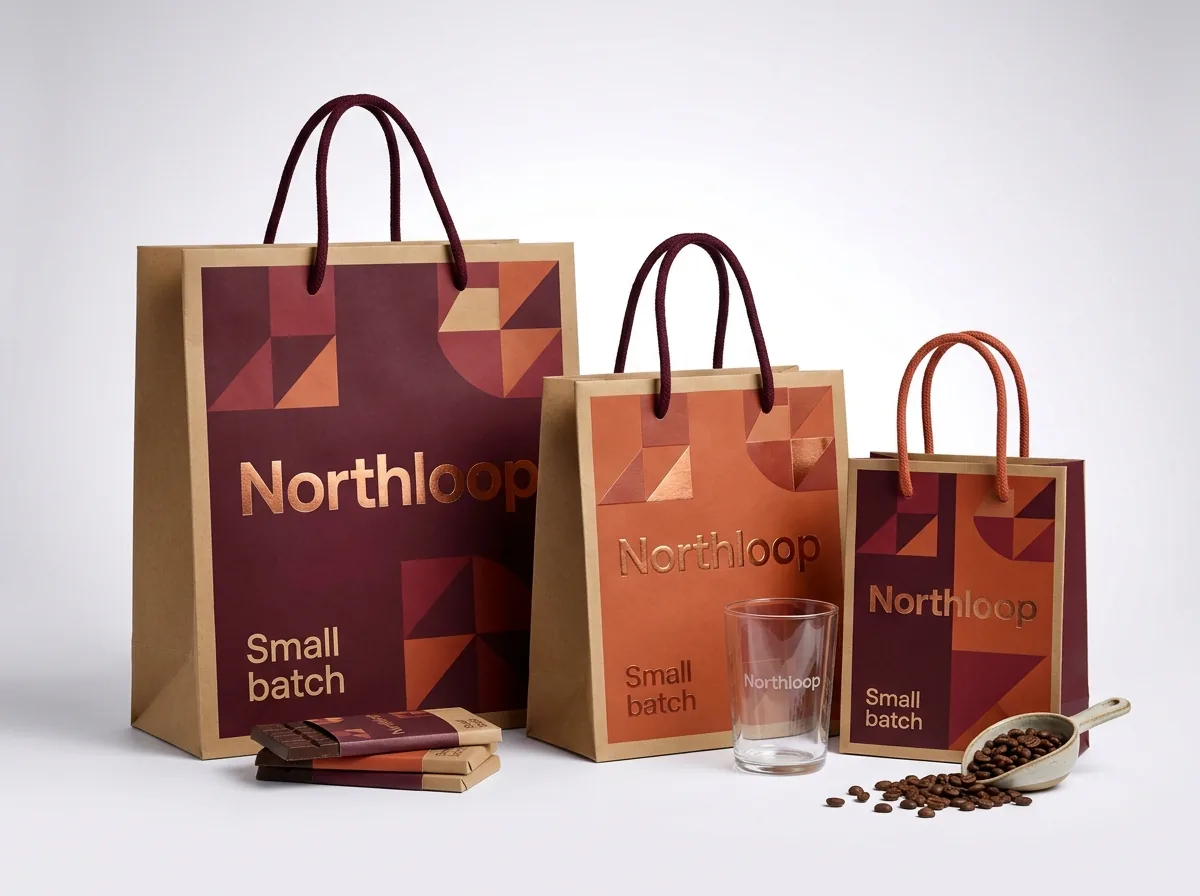

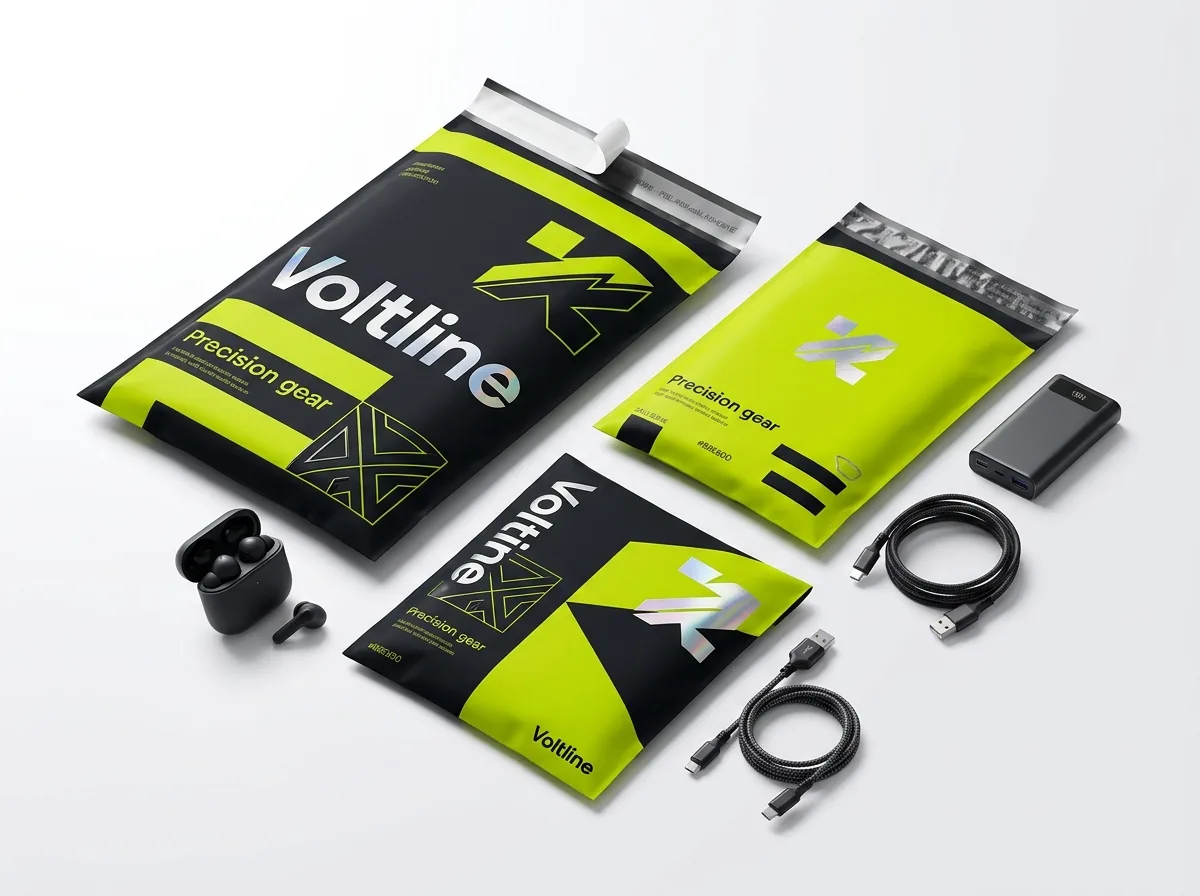
Ready to order paper shopping bags? Compare up to 3 quantities with a free 3D mockup.
Request a Quote →Questions about paper shopping bags
Which paper bag handle is the most economical for everyday retail and takeout?
Twisted paper cord handles and flat folded paper handles are the most economical options because they are formed and glued automatically on high-speed bag machines. Both deliver reliable carry strength for everyday apparel, gift shops, bakeries and restaurant takeout.
How much weight can a twisted-handle kraft shopping bag safely hold?
A standard twisted-handle kraft shopping bag with an interior glued reinforcement patch typically holds 5 to 8 pounds when weight is distributed evenly across the flat bottom floor. Adding a rigid cardboard bottom insert increases stability for heavier boxed items.
What is the difference between knotted ribbon handles and slot-locked (glued-in) ribbon handles?
Knotted ribbon handles pass through four punched holes in the upper cuff and finish with visible hand-tied knots or plastic T-bar clips on the inside. Slot-locked ribbons tuck invisibly into the folded top cuff with adhesive, leaving the outside of the bag completely smooth.
Can twisted paper handles be dyed to match my brand colors?
Yes. Beyond standard natural brown and bleached white twisted paper cords, you can order black, navy, forest green, burgundy or custom-dyed paper cords, as well as twisted striped cords, to match your bag's ink palette.
Do metal eyelets (grommets) strengthen rope and ribbon handle holes?
Metal eyelets prevent heavy rope or ribbon cords from fraying the paper hole edge and add a metallic accent in gold, silver, brass or matte black, though a folded turnover cuff with an internal card strip already provides strong tear resistance on its own.
Can I feel the different paper bag handle styles before placing a full order?
Yes. Order our $50 sample kit to compare twisted paper cords, flat paper straps, cotton ropes and satin ribbons in person, or request a paid custom sample built to your exact bag dimensions, both credited back when you place your production order.
Still have a question? Ask a packaging specialist.
Request a Quote →Request your paper shopping bags quote
Tell us your size and quantities, and one dedicated account manager prepares pricing for each tier.
- Free design & AI-to-print studio + 3D mockup
- No die or plate charges · 4–5 day rush available
- Free shipping to all 50 states
- 10% off your first order
This comparison draws on carrier bag tensile load testing, machine-applied handle patch mechanics and turn-top cuff construction standards. Reviewed by a CubitPack packaging specialist. Spot something wrong? Tell us and we will fix it.
Sources
What changed
- October 22, 2026: First published.
- October 22, 2026: Updated specifications, terminology, and verified source links.
More guides
New packaging guides by email
Sizes, materials and design tips. Unsubscribe anytime.