
What size square label fits jars, candle tumblers and boxes?
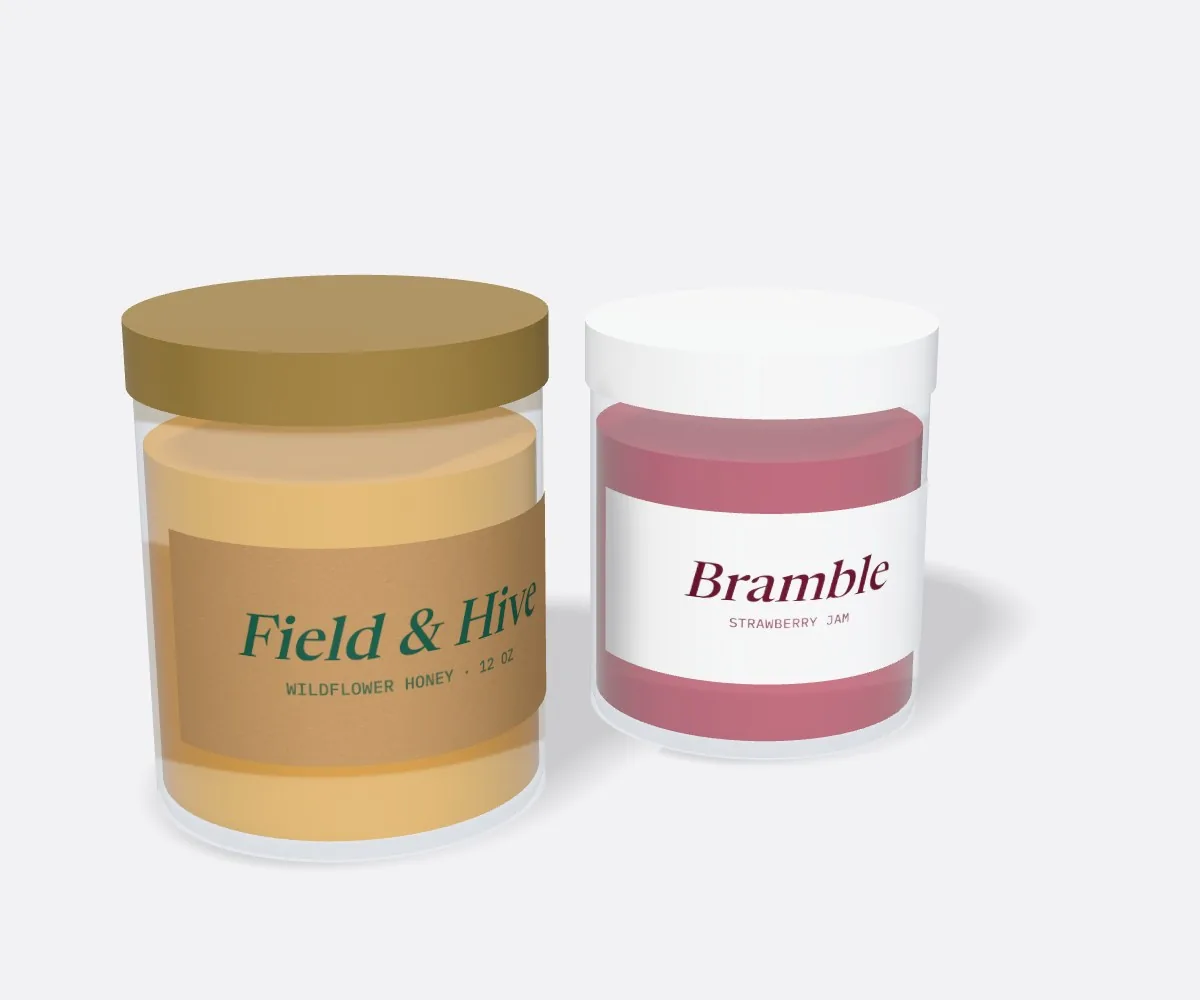
Short answer: On flat-sided jars and tins, measure the flat face inside the corner curves and subtract ¼ inch. On round candle tumblers, keep your custom square labels at or below one-third of the jar circumference (2.5 × 2.5 in for a 9 oz tumbler; 3 × 3 in for a 12 oz bag).
On this page
- How do I measure flat-sided cube jars vs round candle tumblers
- What are the most popular custom square label sizes by container
- What size square label fits a 9 oz or 12 oz straight-sided candle jar
- What size square label works best on coffee bags, pouches and boxes
- How do I size small 1 × 1 inch and 1.5 × 1.5 inch squares for QR codes and corner seals
- Common mistakes
- FAQs
Request a custom quoteFree dieline & 3D mockup
Because a square label has an equal 1:1 width-to-height ratio, the tighter of your container's two dimensions always sets the maximum size. On four-sided French square glass jars, spice tins and cube cartons, measure both the flat horizontal width between the vertical corner radii and the flat vertical height between the top shoulder and bottom heel, take the smaller number, and subtract ¼ inch. On round straight-sided candle tumblers and cylindrical jars, the horizontal width is limited by the curve of the cylinder: keep your square width at or below one-third of the circumference (roughly equal to the jar diameter) so shoppers can read all four corners from the front without turning the vessel. When you order printed square labels from CubitPack, we cut any exact 1:1 dimension starting at 500 pieces with no die charge and send a free 3D mockup.
How do I measure flat-sided cube jars vs round candle tumblers?
Measuring for a 1:1 square decal works differently depending on whether your container wall is flat or cylindrical. On a four-sided French square jar, hexagon honey jar or metal spice tin, the outside caliper width of the jar includes the thick rounded glass corners on the left and right edges. If you cut a square sticker to that full outside width, the left and right edges of the label try to bend around the stiff corner radius and pop loose within hours. Always lay a flat ruler across the middle of the panel and measure only where the glass or metal is completely flat. On a round straight-sided candle tumbler or apothecary jar, the vertical wall is straight from top to bottom while the horizontal wall curves continuously. Here, you measure the straight vertical height between the top lip and the thick glass base heel, then compare that number against one-third of the tumbler's circumference (π × diameter ÷ 3). Pick whichever number is smaller so your custom square label sits flat vertically while staying completely visible across the front arc.
- Four-sided jars and tins: measure the flat face between the left and right corner bevels, then subtract ¼ inch.
- Round candle tumblers: calculate π (3.14) × diameter ÷ 3 to find the widest square that reads in one glance.
- Vertical height check: confirm that your straight vertical wall between shoulder and base is at least ¼ inch taller than the square.
- L-wrap corner seals: if folding a square 90 degrees over a lid edge, allow at least ¾ inch to 1 inch of length on each panel.
What are the most popular custom square label sizes by container?
While CubitPack cuts any fractional 1:1 size (such as 1.875 × 1.875 inches or 2.625 × 2.625 inches) with zero cutting die fees, six standard square footprints cover almost every candle vessel, spice jar, coffee pouch and e-commerce box. Use the chart below as a starting benchmark before testing a paper cutout on your own container. Pay close attention to how quickly surface area grows as you step up in size: moving from a 2 × 2 inch square (4.0 sq in) to a 3 × 3 inch square (9.0 sq in) more than doubles the room available for typography, scent descriptors and barcodes.
| Square size (W × H) | Surface area | Containers it typically fits |
|---|---|---|
| 1 × 1 in | 1.00 sq in | QR code stickers, 10 ml rollerball tags, cosmetic sample cubes |
| 1.5 × 1.5 in | 2.25 sq in | 2 oz spice tins, 2 oz hexagon honey jars, L-wrap carton corner seals |
| 2 × 2 in | 4.00 sq in | 4 oz French square jars, 4 oz candle tins, 8 oz mason jar fronts |
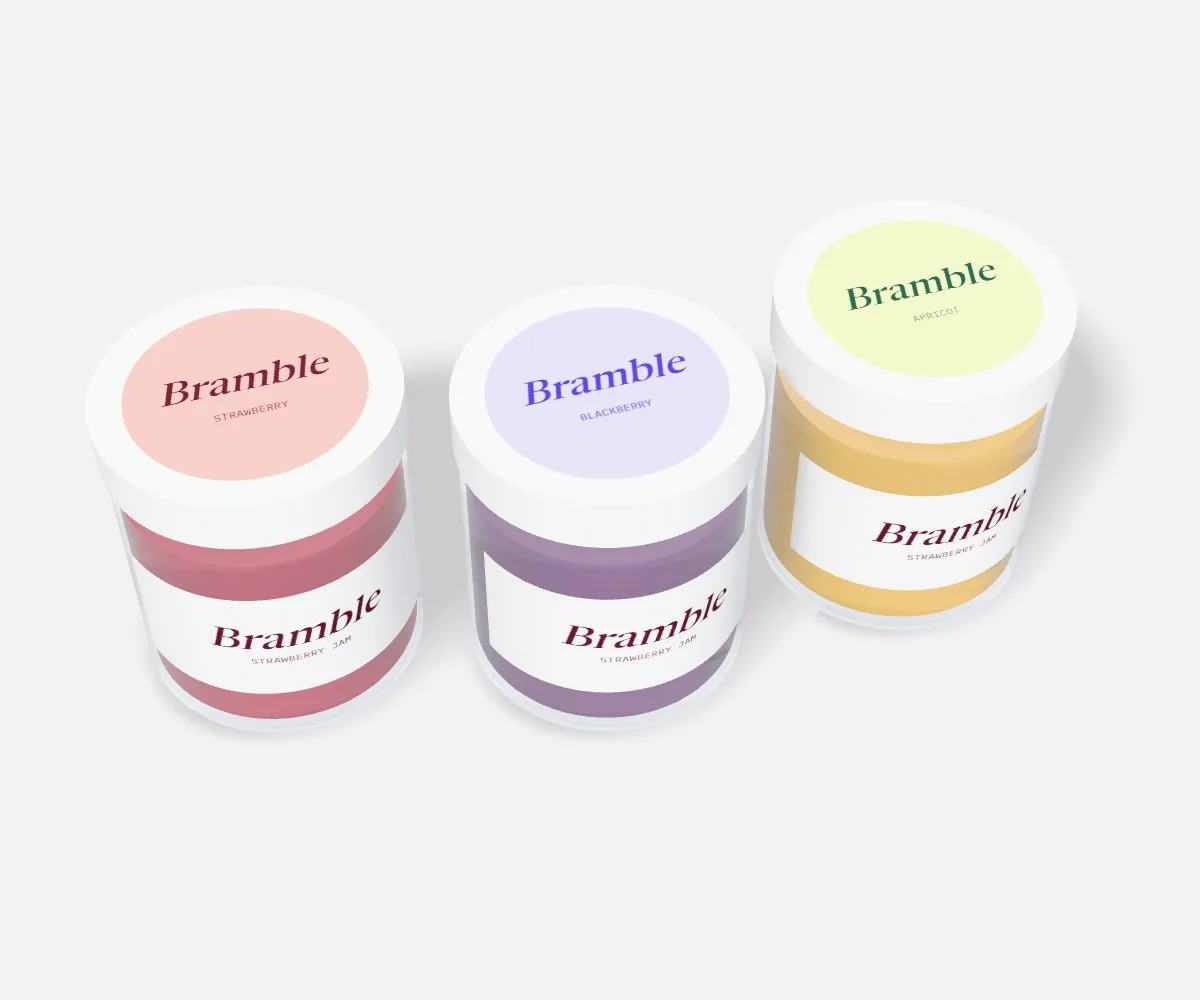
| 2.5 × 2.5 in | 6.25 sq in | 9 oz straight-sided candle tumblers, 8 oz apothecary jars, tea tins |
| 3 × 3 in | 9.00 sq in | 12 oz candle vessels, 12 oz coffee bags, stand-up pouches, small mailers |
| 4 × 4 in | 16.00 sq in | Gallon jars, 2 lb supplement tubs, corrugated mailer lids, gift boxes |
What size square label fits a 9 oz or 12 oz straight-sided candle jar?
The 9 oz straight-sided glass tumbler (often sold as a 7.5 oz or 8 oz fill weight) is the workhorse vessel of the home fragrance industry. It typically measures 2.9 to 3.06 inches in outside diameter and 3.5 inches in overall height, with a thick 0.375 inch glass base at the bottom. Once you subtract that thick glass base and a ¼ inch breathing margin below the top rim, you have about 2.75 inches of usable vertical height. Because one-third of a 3 inch tumbler's circumference is roughly 3.14 inches, vertical height is the limiting factor on a 9 oz jar. That makes a 2.5 × 2.5 inch square the gold-standard front label for a 9 oz tumbler, or a 2.75 × 2.75 inch square if you want a tighter floor-to-rim studio look. On larger 12 oz and 13.5 oz double-wick tumblers (roughly 3.25 inches wide by 4 inches tall), step up to a 3 × 3 inch square on the front face. See our custom candle labels and custom jar labels pages for full-wrap and bottom warning label options.
Know your size? Compare pricing across up to 3 quantities.
Request a Quote →What size square label works best on coffee bags, pouches and boxes?
Specialty coffee roasters, loose-leaf tea blenders and bath-salt brands frequently buy blank matte black, white or brown kraft stand-up pouches in bulk, then apply a printed square card label for each origin or scent. On a standard 8 oz to 12 oz stand-up pouch (typically 5 to 6 inches wide by 8 to 9 inches tall), the flat printable zone sits below the zipper track and above the bottom gusset fold. A 3 × 3 inch square sits right in the visual sweet spot of the pouch face, leaving a clean 1 inch frame of pouch material around all four sides. On flat paperboard packaging, such as custom mailer boxes, rigid gift lids and tuck-end cartons, size your square label to cover roughly 35% to 50% of the shorter panel dimension. For example, on a 6 × 6 × 2 inch mailer lid, a 2.5 × 2.5 inch or 3 × 3 inch center square looks intentional and leaves clean margin around the edges.
How do I size small 1 × 1 inch and 1.5 × 1.5 inch squares for QR codes and corner seals?
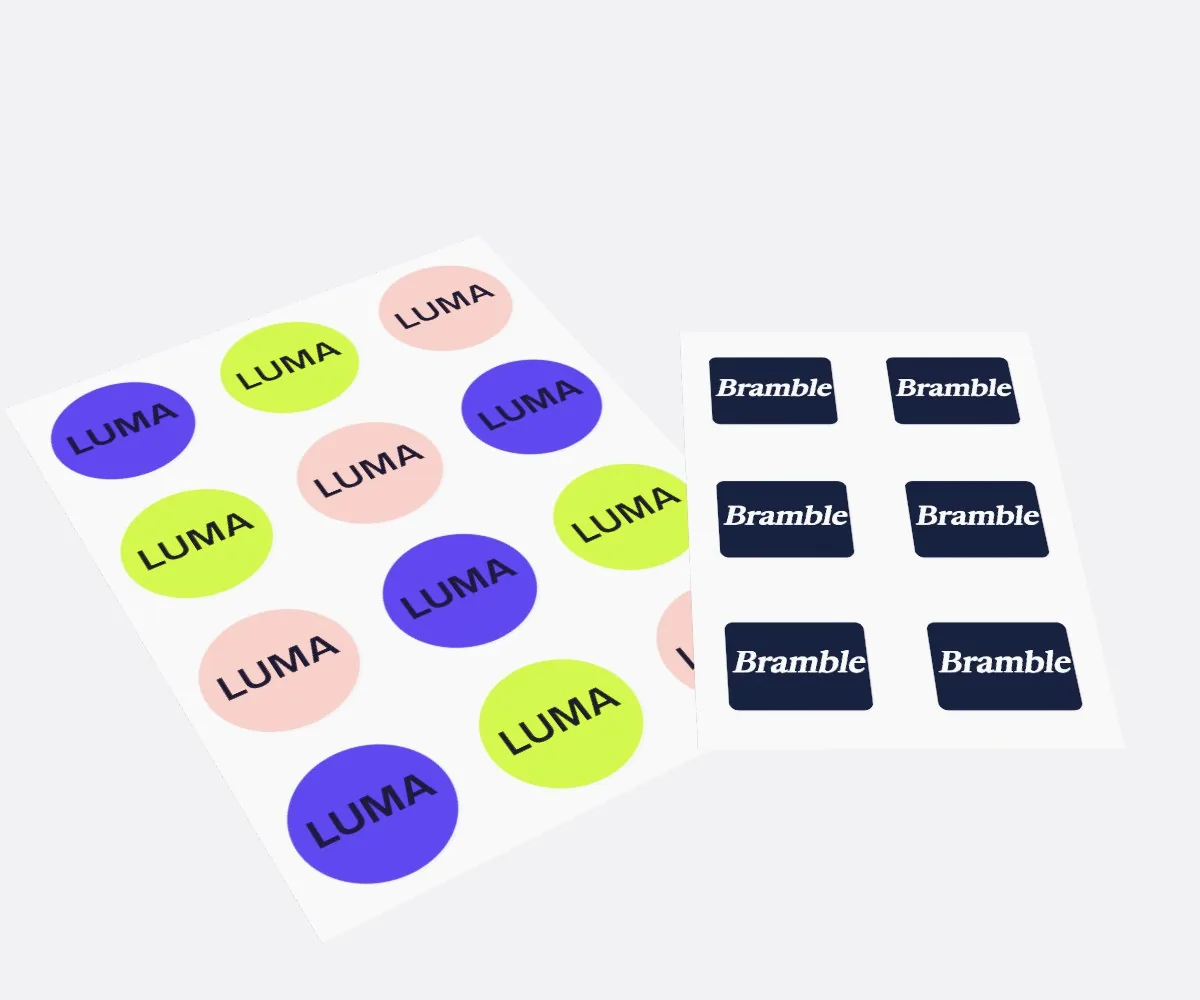
At the small end of the size chart, 1 × 1 inch and 1.5 × 1.5 inch squares serve two technical roles: scannable QR code decals and 90-degree L-wrap tamper tabs. Because a QR code is a 1:1 square matrix of dark and light modules surrounded by a four-sided white quiet zone, a 1 × 1 inch square sticker frames a 0.75 × 0.75 inch QR code with zero wasted space, scanning effortlessly from 6 to 10 inches away on a smartphone camera. If you want a square sticker to fold 90 degrees over the opening edge of a cosmetic carton or across the rim of a jar lid as a security seal, avoid going smaller than 1.5 × 1.5 inches. Folding a 1.5 × 1.5 inch square in half gives each panel a 0.75 × 1.5 inch adhesive footprint, which is wide enough to resist popping open when cardboard or glass flexes during shipping. On larger gift cartons or rigid lids, step up to a 2 × 2 inch corner seal so each panel gets a full 1 × 2 inch grip.
- 1 × 1 in square: dedicated QR code stickers, batch lot decals and tester bottle caps.
- 1.5 × 1.5 in square: 90-degree L-wrap carton flap seals and 2 oz spice tin front panels.
- 2 × 2 in square: wide L-wrap jar lid security tabs and 4 oz French square jar faces.
What are the most common square label sizing mistakes?
Because a square refuses to stretch along just one axis, missing either the width or height limit on your container causes immediate fit problems. Check these five mistakes before ordering
- Measuring the full outside caliper width of a four-sided French square jar instead of the flat panel inside the rounded glass corners.
- Putting a 3 × 3 inch square on a 9 oz candle tumbler whose straight glass wall above the heavy base is only 2.875 inches tall.
- Ordering a wide 3.5 × 3.5 inch square for a narrow round bottle, forcing the left and right edges to wrap out of sight around the sides.
- Sizing a pouch square on an empty flat bag without accounting for the zipper track at the top and the gusset bulge at the bottom.
- Using a tiny 0.75 × 0.75 inch square as a 90-degree fold-over box flap seal, which leaves only 3/8 inch of adhesive on each panel.
Find your label size
Suggested label size: 9⅛ × 2¾ in (width × height)
A typical starting point. Your account manager confirms the size on the proof.
Quote this size →Packaging for this
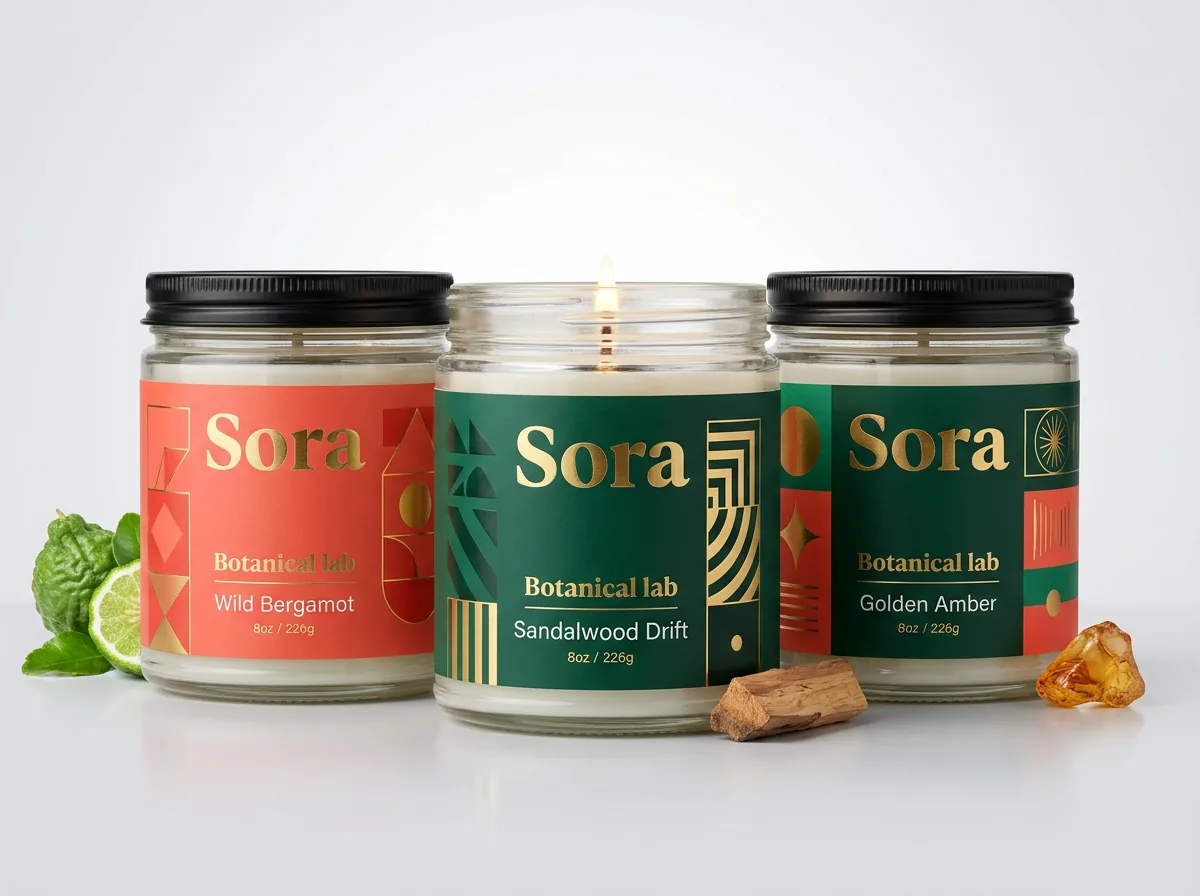
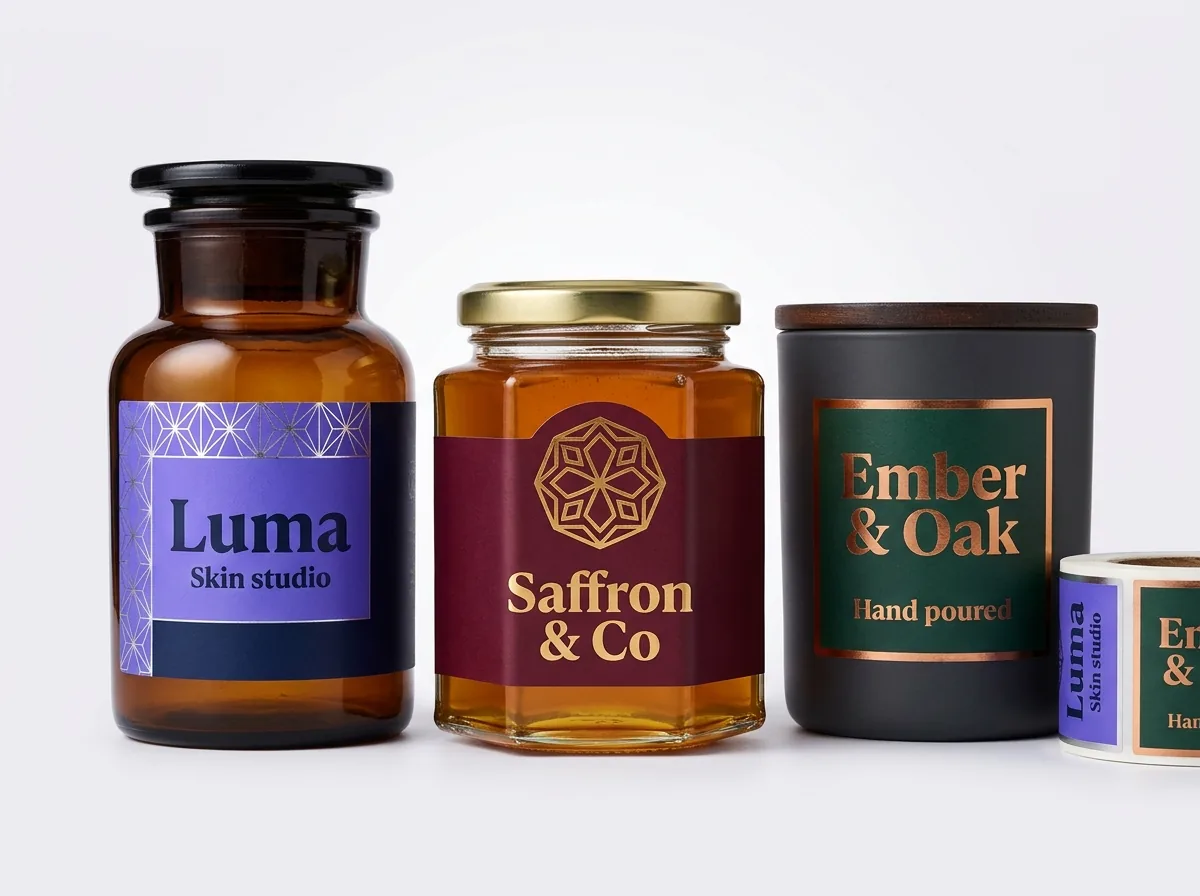
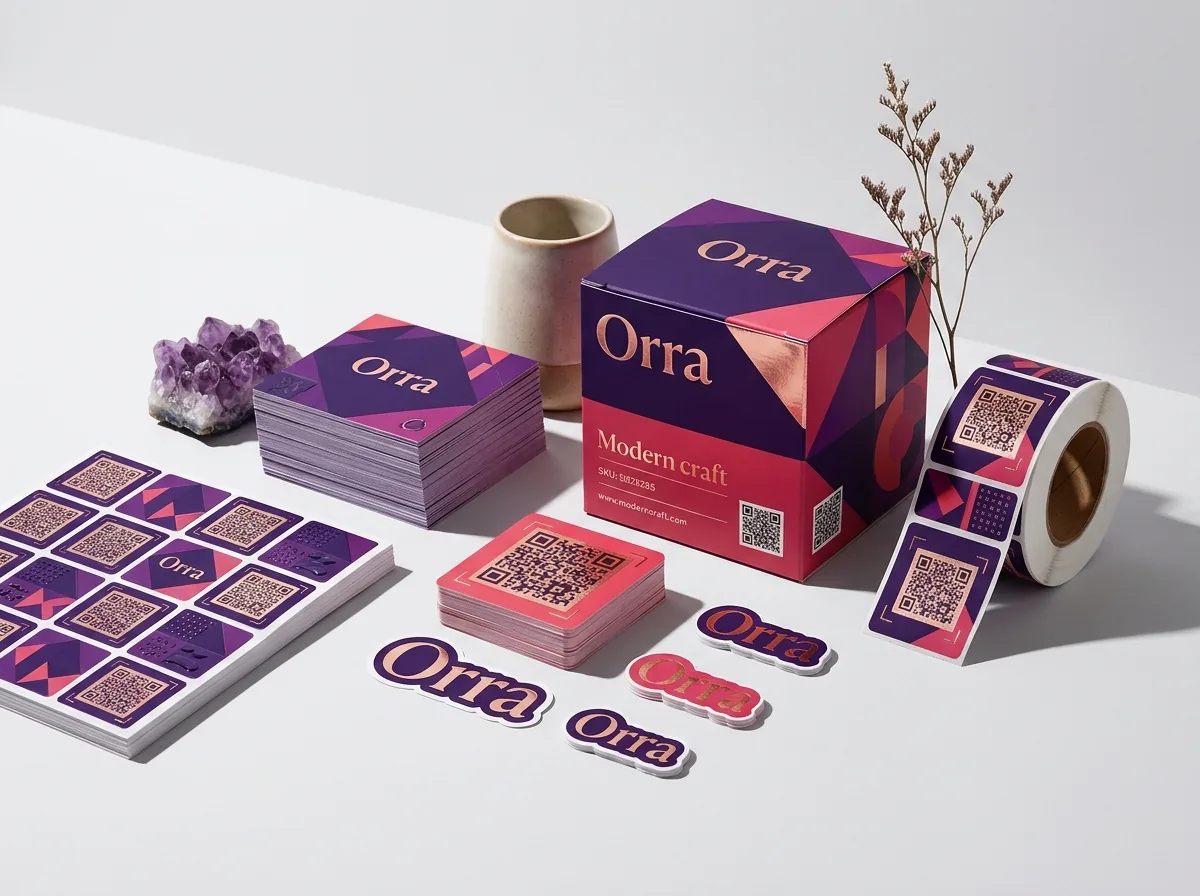
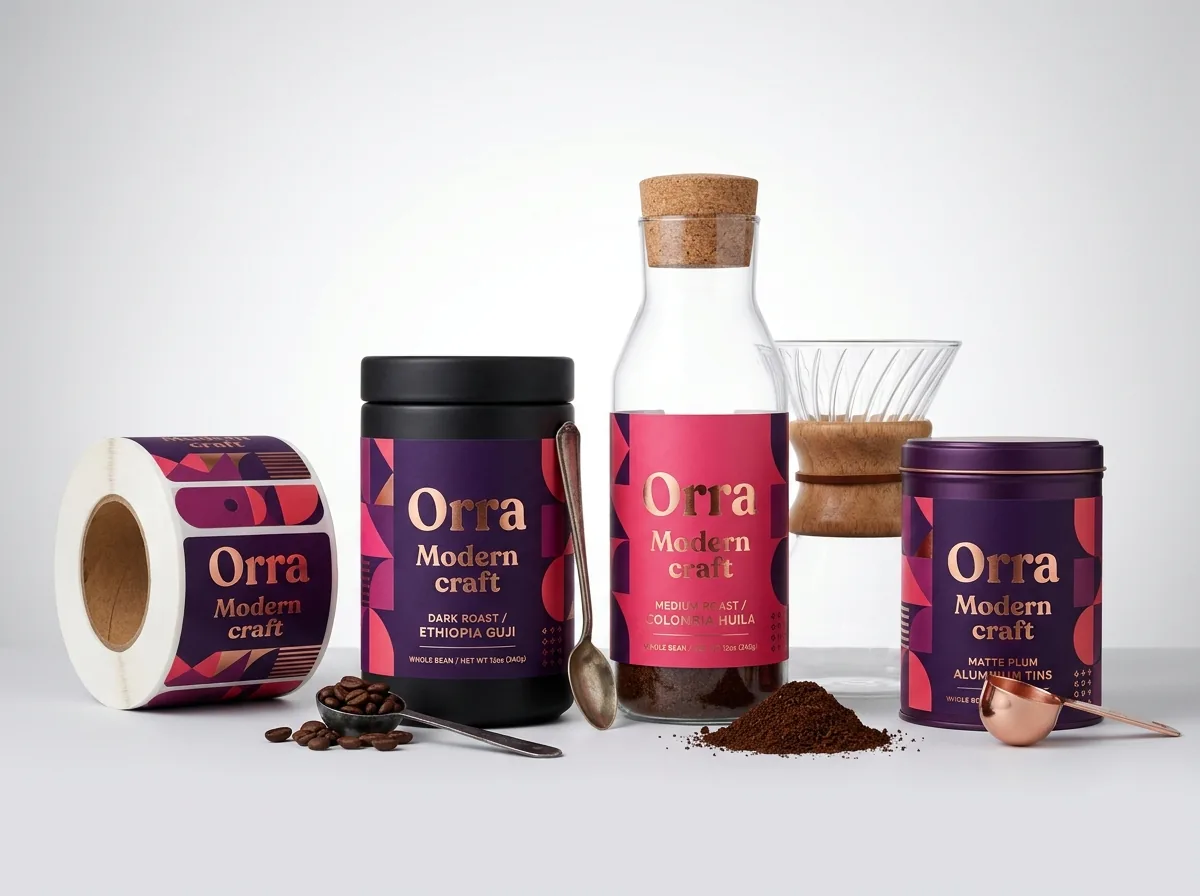
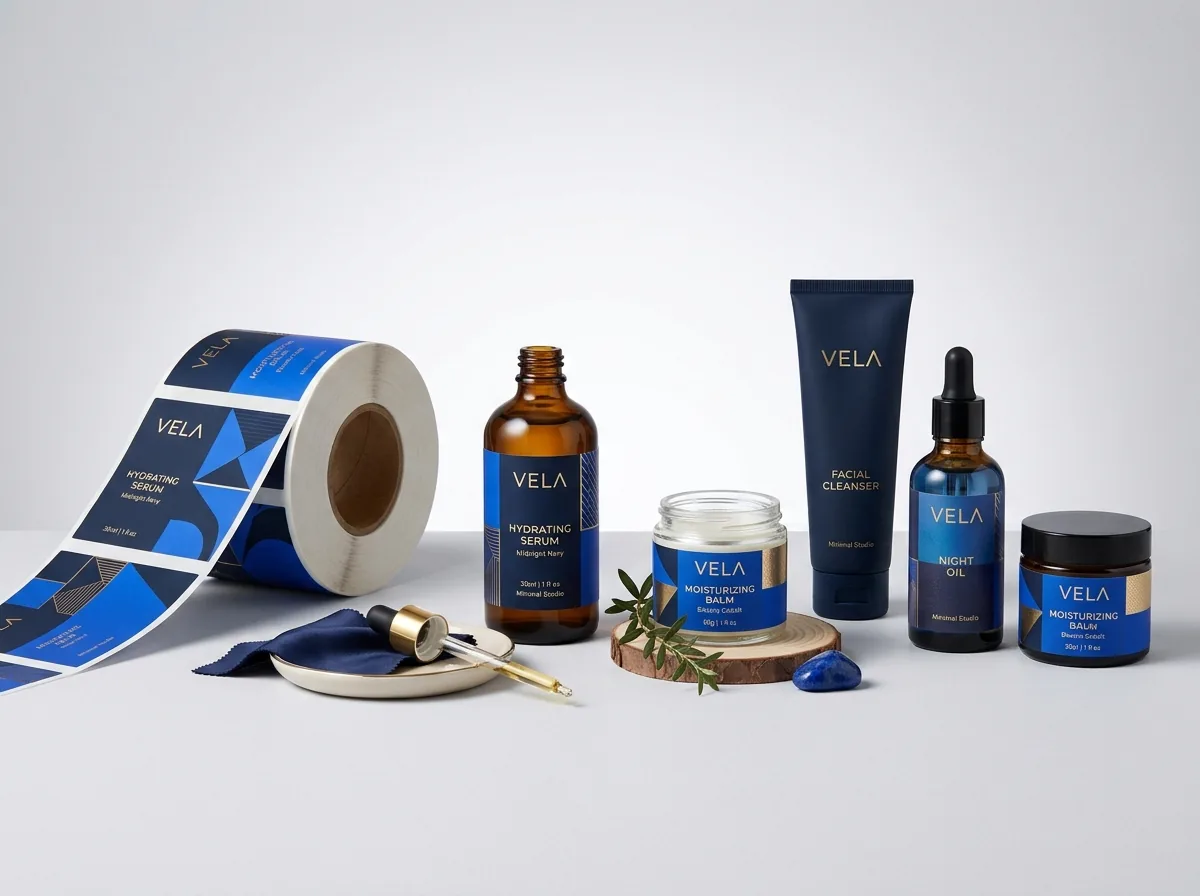
Ready to order square labels? Compare up to 3 quantities with a free 3D mockup.
Request a Quote →Questions about square labels
What size square label fits a standard 9 oz straight-sided candle jar?
A 2.5 × 2.5 inch square label is the most popular fit for a 9 oz straight-sided candle tumbler, leaving a clean glass margin above the thick bottom base and below the top lip. A 2.75 × 2.75 inch square works if you prefer a taller, fuller front panel.
What size square label fits a 4 oz vs 8 oz French square glass jar?
A 4 oz French square jar typically takes a 1.75 × 1.75 inch or 2 × 2 inch square label on its flat face, while an 8 oz French square jar typically takes a 2.25 × 2.25 inch or 2.5 × 2.5 inch square label inside the corner bevels.
Can I order a custom half-inch or eighth-inch square like 2.25 × 2.25 in?
Yes. CubitPack cuts every order to your exact dimensions with no die or plate charges. Whether you need 1.625 × 1.625 inches for a spice tin or 2.625 × 2.625 inches for an imported candle vessel, there is zero tooling fee.
How do I know if a square label is too wide for my round jar or bottle?
Multiply your round container's diameter by 3.14 (π) and divide by 3. If your square label width is larger than that number, the left and right vertical edges will wrap around the curve where shoppers cannot read them from the front.
What size square sticker should I order for a scannable QR code?
Order at least a 1 × 1 inch square sticker (or 1.25 × 1.25 inches if you want a short call-to-action line like 'Scan for lab results' underneath the code). That keeps the QR matrix large enough for phone cameras to focus instantly.
Can I combine a 2.5 × 2.5 in front square and a 2 in bottom circle in one order?
Yes. Choose 2 designs or 3+ designs in Step 2 of the quote form and write both sizes and quantities in the project notes so your account manager can quote your front squares and bottom circles together.
Still have a question? Ask a packaging specialist.
Request a Quote →Request your square labels quote
Tell us your size and quantities, and one dedicated account manager prepares pricing for each tier.
- Free design & AI-to-print studio + 3D mockup
- No die or plate charges · 4–5 day rush available
- Free shipping to all 50 states
- 10% off your first order
The square sizing formulas in this guide combine flat-panel corner-bevel deductions (−0.25 in) with the one-third circumference front-visibility rule (π × D ÷ 3) for cylindrical tumblers. Checked by a CubitPack packaging specialist. Spot something wrong? Tell us and we will fix it.
Sources
What changed
- October 22, 2026: First published.
- October 22, 2026: Updated specifications, terminology, and verified source links.
More guides
New packaging guides by email
Sizes, materials and design tips. Unsubscribe anytime.