
What size food label do I need for jars, pouches and containers?
Short answer: Common starting sizes are 2 × 3.5 inches for 5 oz hot sauce bottles, 2.5 × 7.5 inches for full wraps on 8 oz mason jars, 3 × 4 inches for snack pouches, and 1 × 4 inch strips for tamper seals. Order custom food labels cut to your container with no die fees.
On this page
- What are the standard food label sizes by container type
- How do I calculate full-wrap vs front-and-back sizes on glass jars and sauce bottles
- How do I size C-wrap bands and labels for clamshells, deli tubs and meal trays
- What size tamper-evident seal works best for jars, bottles and takeout boxes
- How do I size food labels for stand-up snack pouches and bakery boxes
- Common mistakes
- FAQs
Request a custom quoteFree dieline & 3D mockup
Sizing a food label starts with the flat or straight zone of your physical container rather than the fluid-ounce volume printed on a supplier box. Because every food package has to carry a brand block, net weight, Nutrition Facts panel, ingredient list and barcode, choosing between a single full wrap, a front-and-back pair, a clamshell C-wrap band or a lid-and-body combo changes your dimensions completely. On round glass jars and bottles, measure the straight vertical wall between the top shoulder curve and the bottom heel, then multiply the diameter by π (3.14) and subtract ¼ inch to find your full-wrap width. On stand-up snack pouches, stay ½ inch inside the heat-sealed edges and zipper track. On plastic deli tubs and meal-prep trays, measure inside the recessed lip. At CubitPack, every size is cut to order from 500 labels with no die charges.
What are the standard food label sizes by container type?
Whether you are bottling hot sauce in a commercial kitchen, packing granola into barrier pouches or sealing grab-and-go salads for grocery cold cases, most retail food containers fall into nine proven starting dimensions. Standardizing your flavor lineup onto one shared width × height lets you group spicy, mild and seasonal recipes into a single multi-design run. Use the benchmark chart below to compare typical container dimensions against recommended label widths and heights. Remember that width is always listed first (horizontal left-to-right around the jar or across the pouch) and height is listed second (vertical top-to-bottom).
| Food container | Typical straight/flat area | Recommended label size (W × H) |
|---|---|---|
| 5 oz hot sauce woozy bottle | 1.85 in dia × 3.75 in straight wall | 5.5 × 3.5 in wrap or 1.75 × 3.5 in front |
| 8 oz regular mason or salsa jar | 2.5 in dia × 2.75 in straight wall | 7.5 × 2.5 in wrap or 2.5 × 2.5 in front |
| 12 oz honey bear or squeeze bottle | Flat front belly panel | 1.75 × 2.5 in rectangle or oval |
| 16 oz (pint) wide-mouth glass jar | 3.15 in dia × 3.5 in straight wall | 9.5 × 3.25 in wrap or 3 × 3.25 in front |
| 8 oz to 12 oz stand-up snack pouch | 4.5 × 5 in inside heat seals | 3 × 4 in front and back rectangles |
| 16 oz round plastic deli or soup tub | 4.5 in lid / gently tapered wall | 3.5 in lid circle + 1 × 4 in tamper strip |
| Grab-and-go bakery or salad clamshell | Top lid, front wall and bottom base | 2.5 × 9 in or 3 × 10 in C-wrap band |
| Jar lid & neck tamper-evident seal | 2 in cap top + 1.75 in neck drop | 2 × 3.75 in custom lollipop seal |
How do I calculate full-wrap vs front-and-back sizes on glass jars and sauce bottles?
Round glass jars and beverage or condiment bottles give you a choice between wrapping one long label almost all the way around the cylinder or applying separate front and back panels. A single full wrap is the fastest option to apply by hand or on a tabletop roller because you only position one piece per jar, and it gives you uninterrupted horizontal width for your Principal Display Panel in the center, your Nutrition Facts box on the right flank, and your brand story and barcode on the left flank. To calculate a full wrap, measure the jar diameter across the bottom, multiply by 3.14, and subtract ¼ inch (0.25 in). That ¼ inch gap prevents the two ends from overlapping if the glass thickness varies slightly between production lots. If you sell a visually vibrant food like whole-berry jam, pickled peppers, layered honey or cold-pressed juice, switch to a front panel covering roughly one-third of the circumference (diameter × 1.05) and put your nutrition and ingredient text on a matching back label. See our custom jar labels and custom bottle labels pages for more glass-specific layouts.
- Straight wall height: hold a rigid ruler flat against the side of the jar and measure only where the glass is completely vertical.
- Vertical safety margin: subtract ¼ inch from the straight wall height so the label stops ⅛ inch away from the top shoulder curve and bottom heel.
- Full-wrap width formula: (Diameter × 3.14) − 0.25 inches.
- Front-only width formula: roughly (Diameter × 3.14) ÷ 3 so the brand name reads cleanly without turning the jar.
- Lid circle formula: measure the flat center ring of the metal lug or continuous-thread cap inside the raised rim and subtract ⅛ inch.
How do I size C-wrap bands and labels for clamshells, deli tubs and meal trays?
Clear plastic bakery clamshells, berry punnets, sushi trays and prepared-meal containers rarely have a tall vertical wall for a standard jar wrap. Instead, grocery delis and commissary kitchens use a C-wrap band (also called a belly band label): a long rectangular label, such as 2.5 × 9 inches or 3 × 10 inches, that starts on the top lid, folds down over the front opening seam, and tucks onto the underside of the container. In one quick motion, the C-wrap displays your brand and net weight on top, positions the Nutrition Facts and barcode on the bottom, and locks the hinged lid shut so shoppers cannot open the tray in the aisle. Round plastic deli tubs (8 oz, 16 oz and 32 oz polypropylene containers used for hummus, salsa, soup and cookie dough) have tapered walls that are wider at the rim than at the base. Wrapping a tall rectangular label around a tapered deli tub causes the label to spiral upward and crease. Instead, put a large 3 inch or 3.5 inch circle label on the flat snap-on lid and bridge a narrow 1 × 3.5 inch or 1 × 4 inch rectangular strip down the side wall.
Know your size? Compare pricing across up to 3 quantities.
Request a Quote →What size tamper-evident seal works best for jars, bottles and takeout boxes?
Retail grocers and third-party meal delivery platforms increasingly expect tamper-evident closures on packaged food. You do not need shrink-sleeve heat tunnels to make a jar or container tamper-evident; a well-sized adhesive seal on your printed food labels order handles the job cleanly. There are two standard shapes. First is the L-strip or security strip (typically 0.75 × 3.5 inches or 1 × 4 inches): half of the strip sticks to the side of the cap or clamshell rim and the other half sticks to the glass neck or lower tray lip, tearing visibly when twisted open. Second is the lollipop seal: a custom keyhole shape combining a 1.5 inch or 2 inch round lid label with a 0.75 × 2 inch rectangular tail that folds down over the jar neck. Because CubitPack never charges die fees, lollipop seals cost the same as standard rectangles.
How do I size food labels for stand-up snack pouches and bakery boxes?
For dry goods like nuts, jerky, cookies, spice blends and candy packed in custom stand up pouches, measure the flat interior face below the resealable zipper track and inside the left, right and bottom heat-seal borders. Subtract ½ inch from both width and height, and always test a paper cutout on a pouch filled with product so the expanded bottom gusset does not bend the lower edge of the sticker. On unprinted kraft or white custom bakery boxes and custom food boxes, a 3 × 3 inch square or 3 × 4 inch rectangle on the top lid pairs well with a 2 inch round front-flap seal that holds the tuck lid closed during transport. Before approving your print proof for any jar, bottle, pouch or clamshell, print your label outline at 100% scale on plain copy paper, cut it out with scissors and tape it onto a filled container from your kitchen batch. You will see immediately whether the corners clear the shoulder curve, whether the C-wrap band locks the base cleanly, and whether your Nutrition Facts text is easy to read in hand.
What are the most common food label sizing mistakes?
Most food label sizing issues happen when curved shoulders, tapered deli tubs or clamshell hinges are measured like flat boxes. Avoid these five mistakes
- Measuring the total height of a glass sauce bottle or mason jar instead of stopping before the top shoulder curve and bottom heel.
- Wrapping a tall flat rectangle around a tapered plastic deli or yogurt tub, which forces the ends to angle upward and wrinkle.
- Designing a full-wrap jar label to the exact circumference with zero gap instead of leaving ¼ inch for glass mold tolerances.
- Making the neck tab on a lollipop tamper seal wider than ¾ inch, causing it to crease as it bends over the round cap rim.
- Sizing a stand-up snack pouch label on an empty flat bag without testing how the bottom gusset curves once filled with food.
Find your label size
Suggested label size: 9⅛ × 2¾ in (width × height)
A typical starting point. Your account manager confirms the size on the proof.
Quote this size →Packaging for this
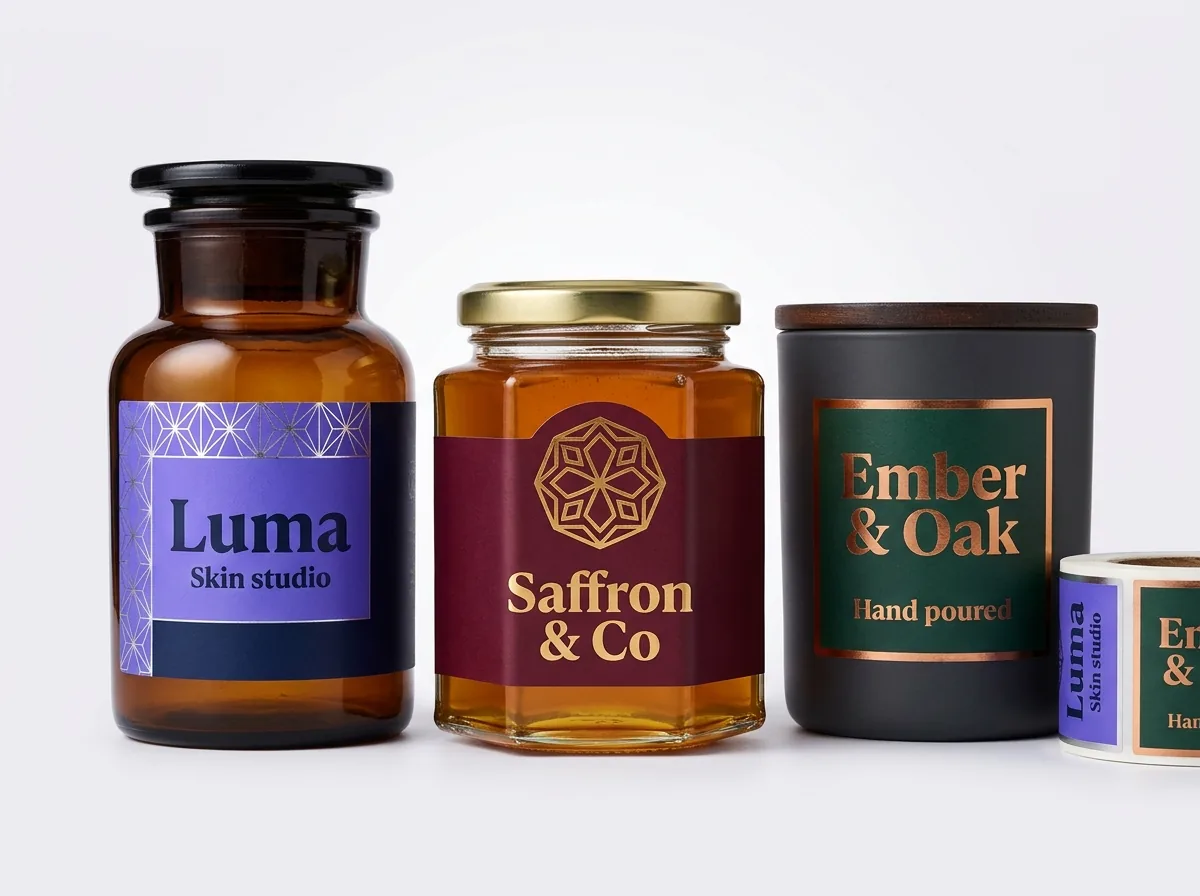
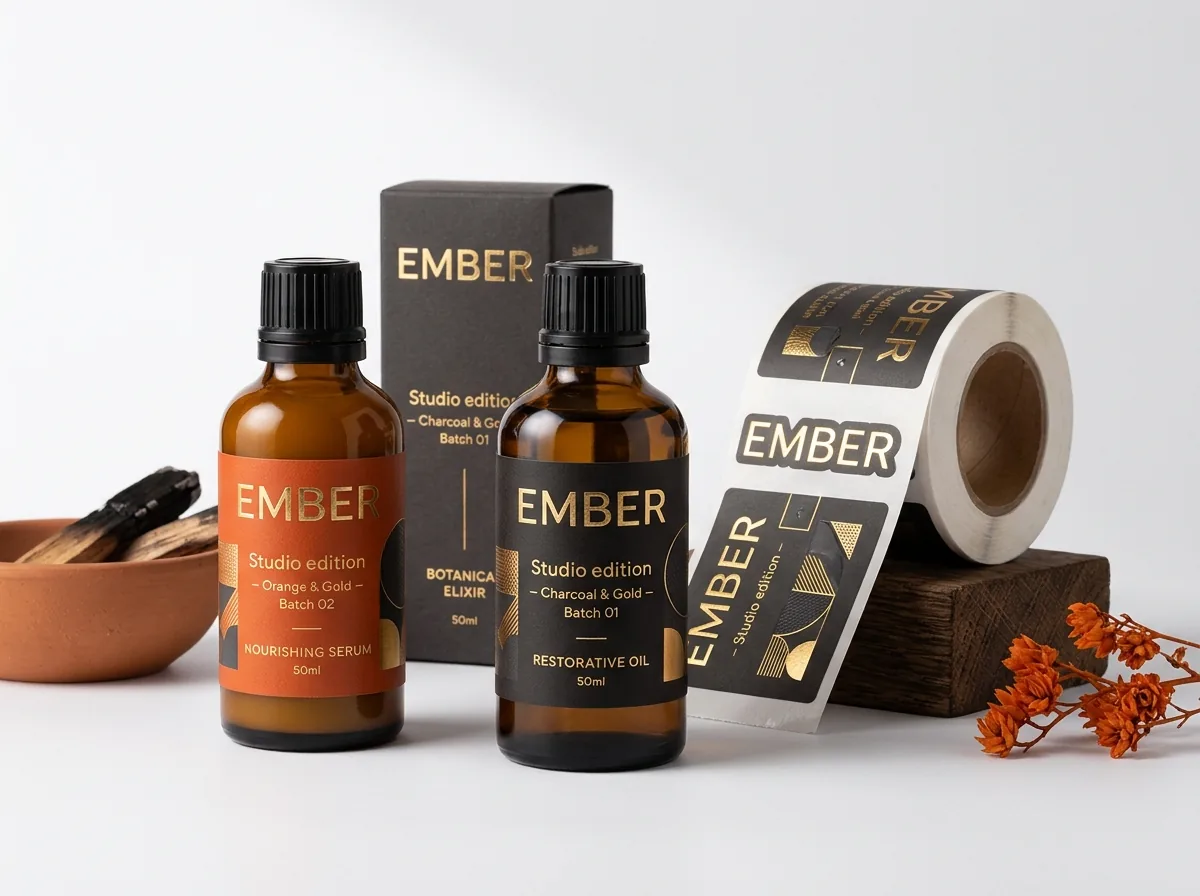
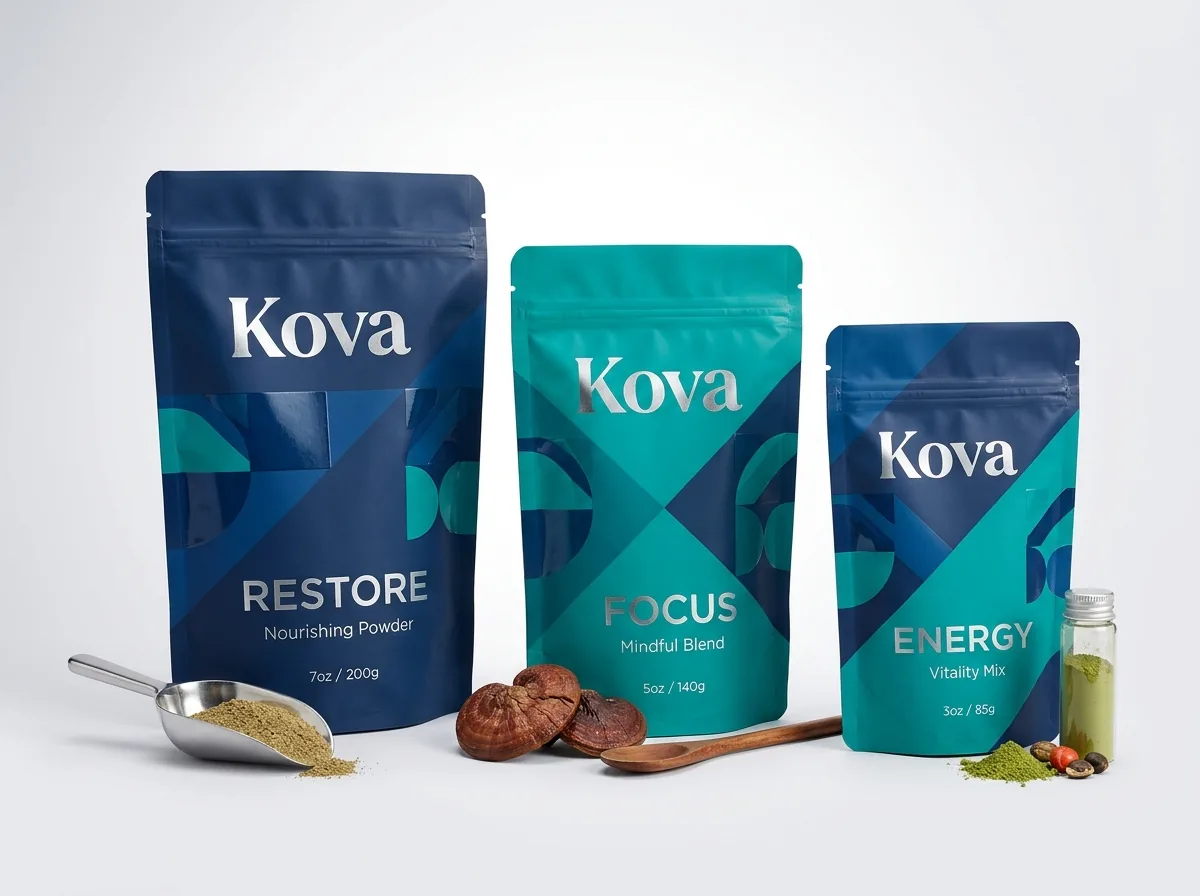
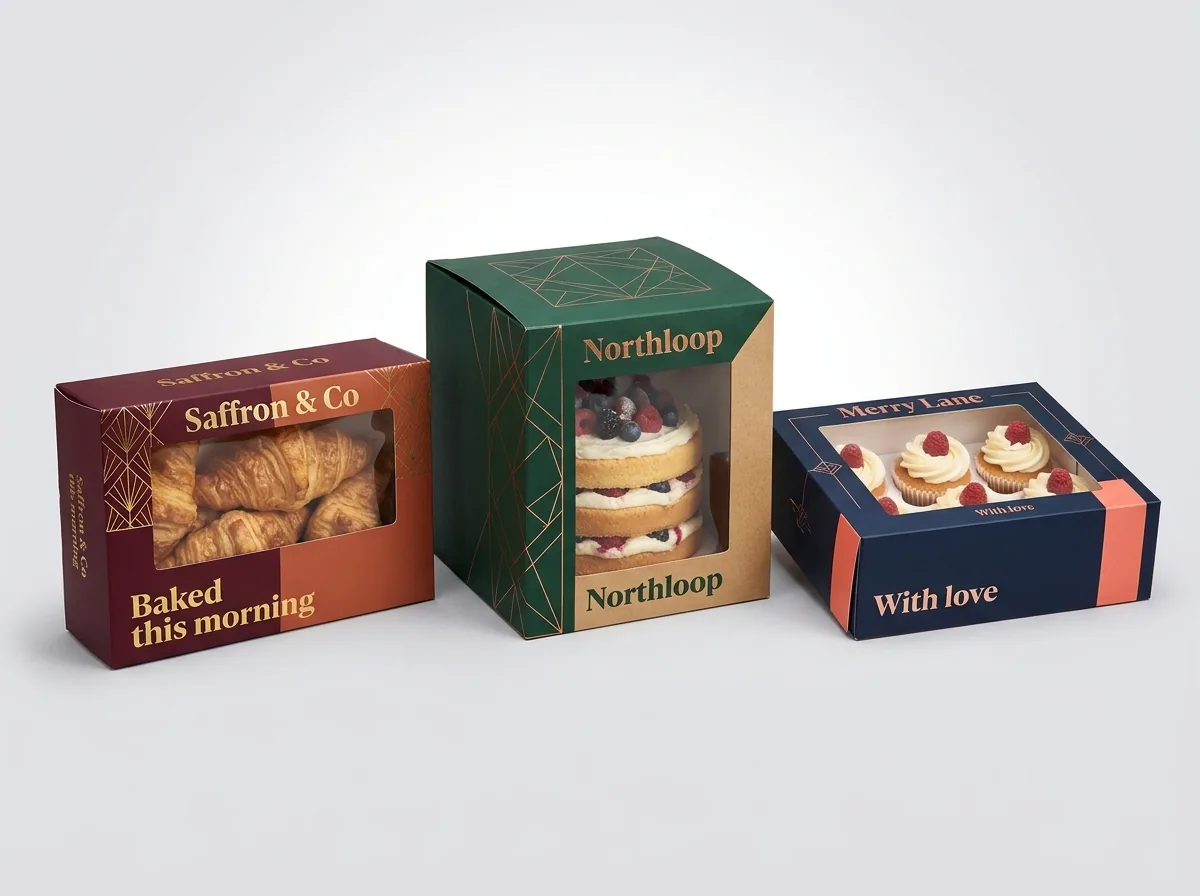
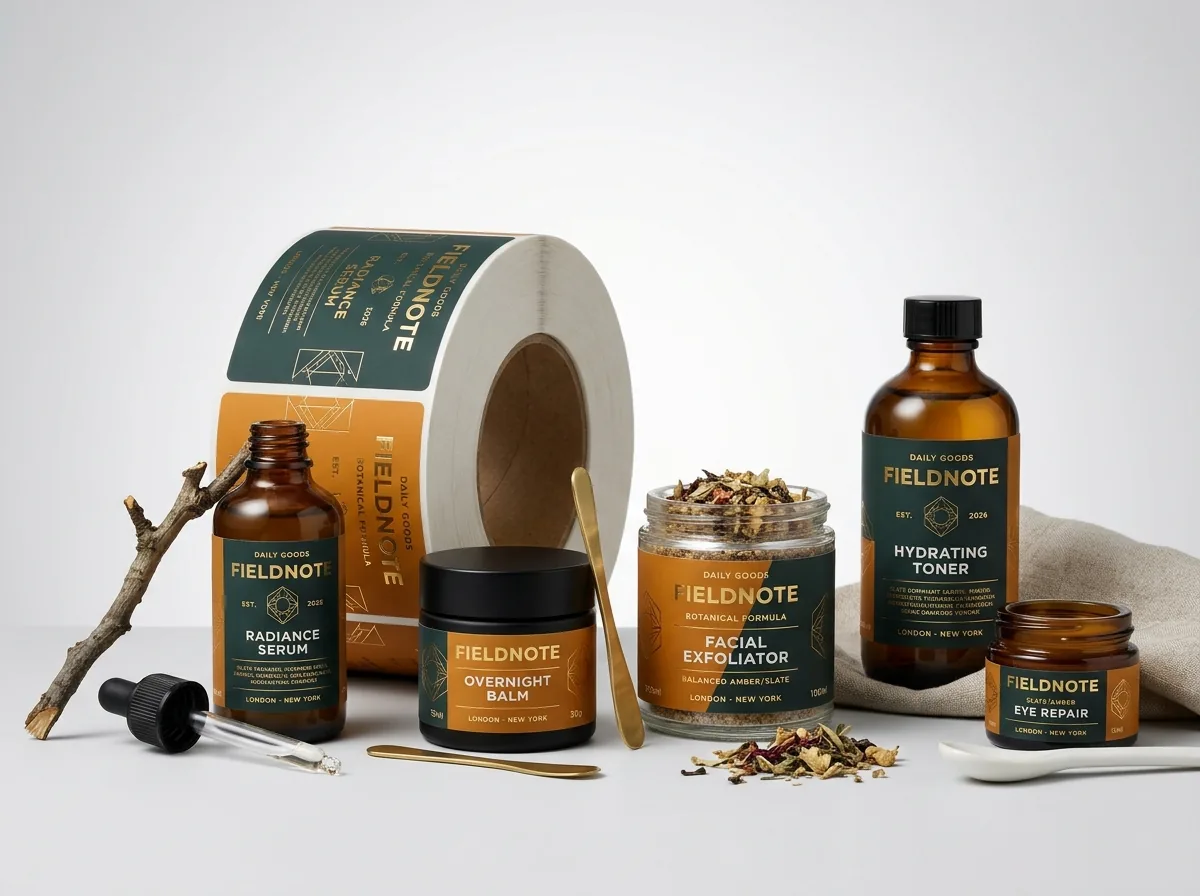
Ready to order food labels? Compare up to 3 quantities with a free 3D mockup.
Request a Quote →Questions about food labels
What size label fits a standard 5 oz hot sauce woozy bottle?
A 5 oz glass woozy bottle typically takes a 3.5 inch tall × 5.5 inch wide wrap label (written as 5.5 × 3.5 inches W × H), which leaves a clean ¼ inch gap at the back. For a front-only panel, use 1.75 × 3.5 inches.
What size label fits an 8 oz or 16 oz mason jar?
A straight-sided 8 oz mason jar typically takes a 7.5 × 2.5 inch full wrap or a 2.5 × 2.5 inch front label. A 16 oz pint mason jar typically takes a 9.5 × 3.25 inch full wrap or a 3 × 3.25 inch front label, plus a 2 inch or 2.5 inch lid circle.
How do I measure a clamshell container for a C-wrap band label?
Use a flexible sewing tape to measure from the center of the top lid, down the front vertical wall across the opening seam, and 2 inches onto the bottom base. Choose a band width of 2 to 3 inches that fits inside any molded lid ribs.
Why do rectangular labels wrinkle on plastic deli and soup containers?
Standard 8 oz, 16 oz and 32 oz deli tubs are tapered cones rather than straight cylinders. A flat rectangle cannot wrap around a cone without angling upward; use a large round lid label plus a short side tamper strip, or ask us for a curved arc dieline.
Do lollipop tamper-evident shapes cost extra for cutting dies?
No. CubitPack never charges die or plate fees. Whether you order standard rectangles, circles, C-wrap bands or custom keyhole lollipop seals that bridge across a jar lid and neck, custom shapes are included at no extra tooling cost.
Can I order lid labels and body wrap labels together in one order?
Yes. Select 2 designs or 3+ designs in Step 2 of the quote form and note your body wrap size and lid circle diameter in the comments. Your account manager will quote the complete container set together in 5-7 minutes.
Still have a question? Ask a packaging specialist.
Request a Quote →Request your food labels quote
Tell us your size and quantities, and one dedicated account manager prepares pricing for each tier.
- Free design & AI-to-print studio + 3D mockup
- No die or plate charges · 4–5 day rush available
- Free shipping to all 50 states
- 10% off your first order
The container dimensions and wrap formulas in this guide use standard cylinder geometry (π × diameter minus ¼ inch gap) and flat-panel clearance checks across glass jars, woozy bottles, deli tubs, clamshells and pouches. A CubitPack packaging specialist verified every row. Spot something wrong? Tell us and we will fix it.
Sources
What changed
- October 22, 2026: First published.
- October 22, 2026: Updated specifications, terminology, and verified source links.
More guides
New packaging guides by email
Sizes, materials and design tips. Unsubscribe anytime.