
What size box fits 5-pack and 10-pack sheet mask sachets, clay jars and eye patch tubs?
Short answer: A standard 5-pack of 4.5 × 6.25 inch foil sheet mask sachets fits a 4.75 × 1.375 × 6.5 inch carton, a 10-pack fits 4.75 × 2.5 × 6.5 inches, and a 50 ml clay mask jar fits 2.875 × 2.875 × 2.625 inches. Order exact-fit custom face mask boxes with no die fees.
On this page
- How do I measure a stack of 5 or 10 foil sheet mask sachets without front-panel bowing
- What are the typical box dimensions for sheet mask multipacks, clay jars and eye patch tubs
- How do I size boxes for 50 ml and 100 ml clay mask jars and hydrogel eye-patch tubs
- What box dimensions fit under-eye hydrogel blister trays and squeeze-tube masks
- How do I size a pop-up counter display (PDQ) box for single sheet masks
- Common mistakes
- FAQs
Request a custom quoteFree dieline & 3D mockup
Sizing facial mask packaging requires measuring two very different geometries: tall, flexible foil sachets filled with liquid essence, and squat cylindrical jars of wash-off clay, mud or hydrogel eye patches. On a foil sheet mask pouch holding 25 ml to 30 ml of liquid serum, gravity pulls the folded wet fabric and excess serum into the bottom third of the sachet. That means a stack of 5 or 10 upright sachets is nearly twice as thick near the bottom edge as it is at the top heat seal. On wide-mouth 50 ml and 100 ml glass clay mask jars, the carton width must account for an internal corrugated shock collar while the height must leave 1/4 inch to 3/8 inch above the cap for a die-cut spatula or tweezer loop. At CubitPack, our design team calculates both your outer carton and inner collar dimensions free.
How do I measure a stack of 5 or 10 foil sheet mask sachets without front-panel bowing?
The number-one sizing mistake in sheet mask packaging is measuring one empty flat foil pouch, multiplying its thickness by five or ten, and ordering a carton to that depth. Once a foil sachet is filled with a folded cotton, microfiber, hydrogel or bio-cellulose mask plus 25 ml (0.85 fl oz) of viscous serum, the pouch forms a teardrop profile when standing upright. If the front-to-back carton depth (W) is too tight, the bottom third of the front panel bulges outward like a pillow and pops the bottom tuck flap open. Before requesting a quote for custom printed face mask boxes, stand 5 or 10 filled sachets upright in a row between two flat books on your table, just as they will stand inside the retail box. Measure three numbers: the pouch width from left seal to right seal, the combined front-to-back depth across the thickest lower belly of the standing stack, and the pouch height from bottom seal to top tear-notch edge.
- Carton Length (L): take your flat sachet width (usually 4.375 to 4.5 in) and add 3/16 to 1/4 inch so the side heat seals never scrape or curl.
- Carton Width / Depth (W): measure the standing stack of 5 or 10 filled pouches across the bottom serum bulge and add 1/8 inch.
- Carton Height (H): take your sachet height (usually 6.0 to 6.25 in) and add 1/4 inch so the top tuck flap closes cleanly without folding the top seal.
- Alternating stack trick: if your serum pouches are extra plump (30 ml+), pack every second pouch upside down or add 3/16 inch extra depth.
- Single-mask envelopes: for 1-mask retail sleeves or hang-tab folders, allow a 3/8 inch (0.375 in) spine gusset so the envelope lies flat.
What are the typical box dimensions for sheet mask multipacks, clay jars and eye patch tubs?
While CubitPack cuts every order to your exact inside Length × Width × Height with zero die charges, most facial sheet masks, under-eye hydrogel patches, wash-off clay jars and squeeze tubes follow eight standard retail footprints. Use the chart below to benchmark your product line before measuring your physical samples. Notice how sachet cartons keep Length and Height constant (for example 4.75 × 6.5 inches for a standard 4.5 × 6.25 inch pouch) and only scale the front-to-back Width (W) as you move from a single mask envelope (0.375 in) to a 5-pack (1.375 in), a 10-pack dispenser (2.5 in) or a 15-pouch counter display tray (4.25 in).
| Facial mask product format | Typical inside box size (L × W × H) | Recommended carton & insert structure |
|---|---|---|
| Single bio-cellulose or hydrogel mask pouch (25–30 ml) | 4.75 × 0.375 × 6.5 in | Slim straight tuck envelope or hang-tab folder |
| 5-pack facial sheet mask sachets (4.5 × 6.25 in pouches) | 4.75 × 1.375 × 6.5 in | Straight tuck end carton |
| 7-pack weekly sheet mask routine set | 4.75 × 1.875 × 6.5 in | Straight tuck end or lower tear-slot dispenser |
| 10-pack facial sheet mask sachets | 4.75 × 2.5 × 6.5 in | Gravity-feed dispenser box or auto lock bottom |
| 15-to-20 sachet checkout counter display (PDQ) | 5.0 × 4.5 × 6.75 in | Pop-up header PDQ counter display tray |
| 5-pair under-eye hydrogel patch blister trays | 4.5 × 1.25 × 5.5 in | Straight tuck carton or slide-out drawer box |
| 50 mlclay mask jar or 60-count eye patch tub + tweezers | 2.875 × 2.875 × 2.625 in | Auto lock bottom + top spatula/tweezer collar |
| 100 ml (3.4 oz) glass mud mask jar + corrugated liner | 3.375 × 3.375 × 3.25 in | Auto lock bottom carton + E-flute inner sleeve |
How do I size boxes for 50 ml and 100 ml clay mask jars and hydrogel eye-patch tubs?
Wash-off kaolin clay masks, charcoal mud treatments, overnight sleeping masks and 60-count under-eye hydrogel patch tubs are packed in wide-mouth glass or thick double-wall acrylic jars. When sizing a square custom auto lock bottom box for a round jar, measure the outside diameter across the widest part of the jar base or cap, then add your insert allowance. If your mask jar is molded from heavy frosted glass, adding an internal E-flute corrugated liner sleeve requires an extra 3/16 inch (0.1875 in) on both Length and Width. On Height, measure from the bottom of the jar to the top of the screw lid, and add 1/4 inch to 3/8 inch of head clearance if you want a die-cut paperboard neck collar with a retaining loop to hold a mini silicone brush, cosmetic scoop or plastic eye-patch tweezers above the cap.
Know your size? Compare pricing across up to 3 quantities.
Request a Quote →What box dimensions fit under-eye hydrogel blister trays and squeeze-tube masks?
Individual pairs of gold or collagen under-eye hydrogel patches and hydrogel lip masks are usually thermoformed inside rigid plastic blister trays sealed inside a flat foil pouch (typically 4.25 × 5.25 inches). Because the inner plastic tray prevents the liquid from pooling at the bottom, eye-mask pouches stack much flatter than full-face sheet masks: five pairs fit neatly inside a 4.5 × 1.25 × 5.5 inch straight tuck carton or custom drawer box. For peel-off charcoal masks, enzyme gel masks and hydrating sleeping masks packed in 50 ml to 100 ml (1.7 to 3.4 fl oz) squeeze tubes, measure the width of the flattened top crimp seal (which is always wider than the round tube cap) for your carton Length (L), measure the round cap diameter for your carton Width (W), and add 1/8 inch to the total tube height.
How do I size a pop-up counter display (PDQ) box for single sheet masks?
Beauty boutiques, med-spas and apothecaries love selling single sheet masks as impulse add-ons by the register alongside 5-pack boxes on the main shelf. A custom counter display box ships as a closed rectangular carton with a perforated front apron and a scored top lid that folds backward to lock into a vertical billboard header. To hold 15 to 20 standard 4.5 × 6.25 inch sheet mask sachets upright in a single front-facing file, size the display tray interior to 5.0 × 4.5 × 6.75 inches, with the front cut-down lip sitting at 2.25 inches high so the top two-thirds of the front sachet artwork stays completely visible to shoppers. If you want a two-column counter display that holds two different mask formulas side by side (15 hydrating masks on the left and 15 brightening masks on the right), widen the interior tray Length to 9.75 inches and add a central vertical paperboard divider wall.
What are the most common custom face mask box sizing mistakes?
Foil serum pouches, wide-mouth glass jars and mini applicator tools each have a specific clearance rule. Avoid these five sizing errors
- Measuring the thin top edge of a foil sheet mask sachet instead of the thicker bottom third where 25 ml of liquid serum settles.
- Making the carton Length equal to the exact flat width of the foil pouch, which bends and crinkles the left and right heat seals when packed.
- Forgetting to add 1/4 to 3/8 inch of top head clearance above a clay mask jar lid to hold the mini spatula or hydrogel tweezers.
- Sizing a squeeze-tube mask box to the round cap diameter on both sides while forgetting that the flattened top crimp seal is 1/2 inch wider.
- Using an unlined single-wall carton for a heavy 100 ml glass clay mask jar without adding 3/16 inch for an internal corrugated collar.
Find your size
Suggested inside size: 4.75 × 0.375 × 6.5 in
A starting point. Your account manager confirms the size with you before the proof.
Quote this size →Packaging for this
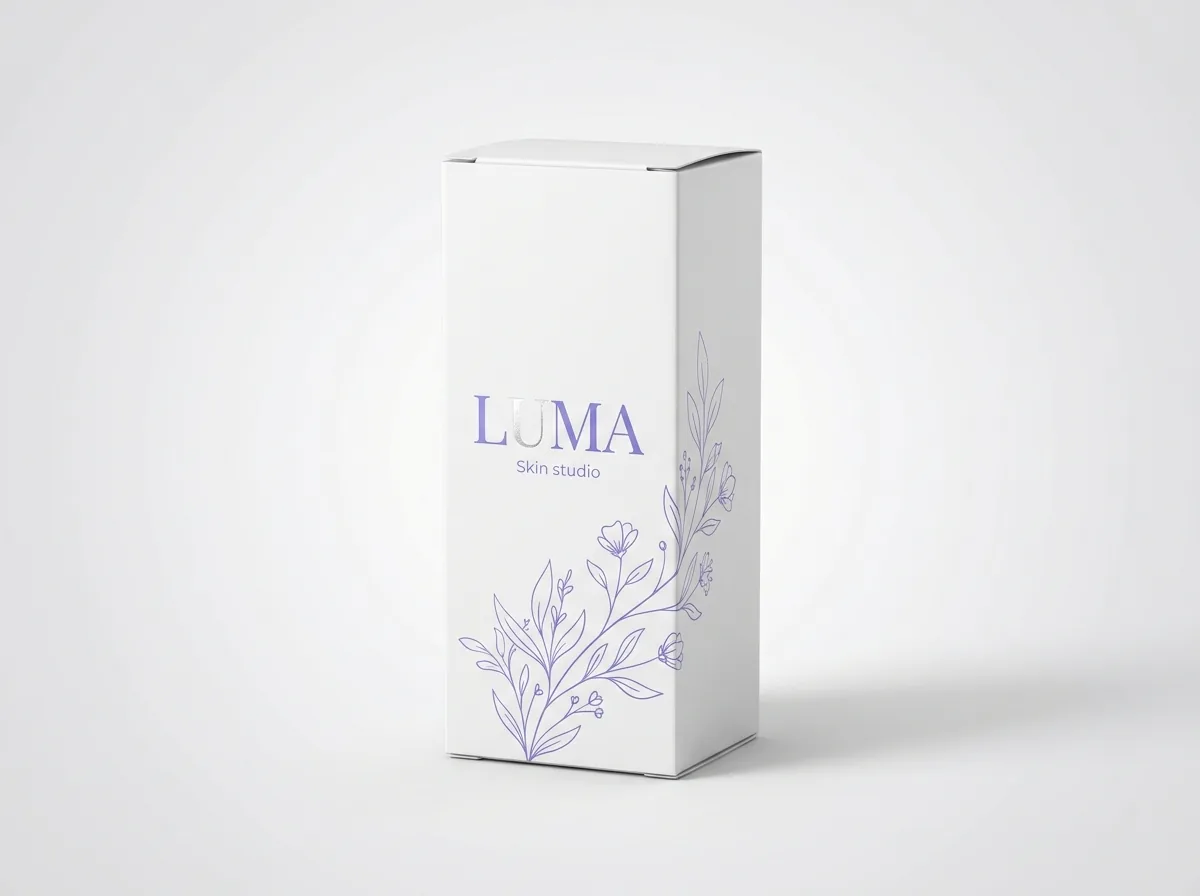
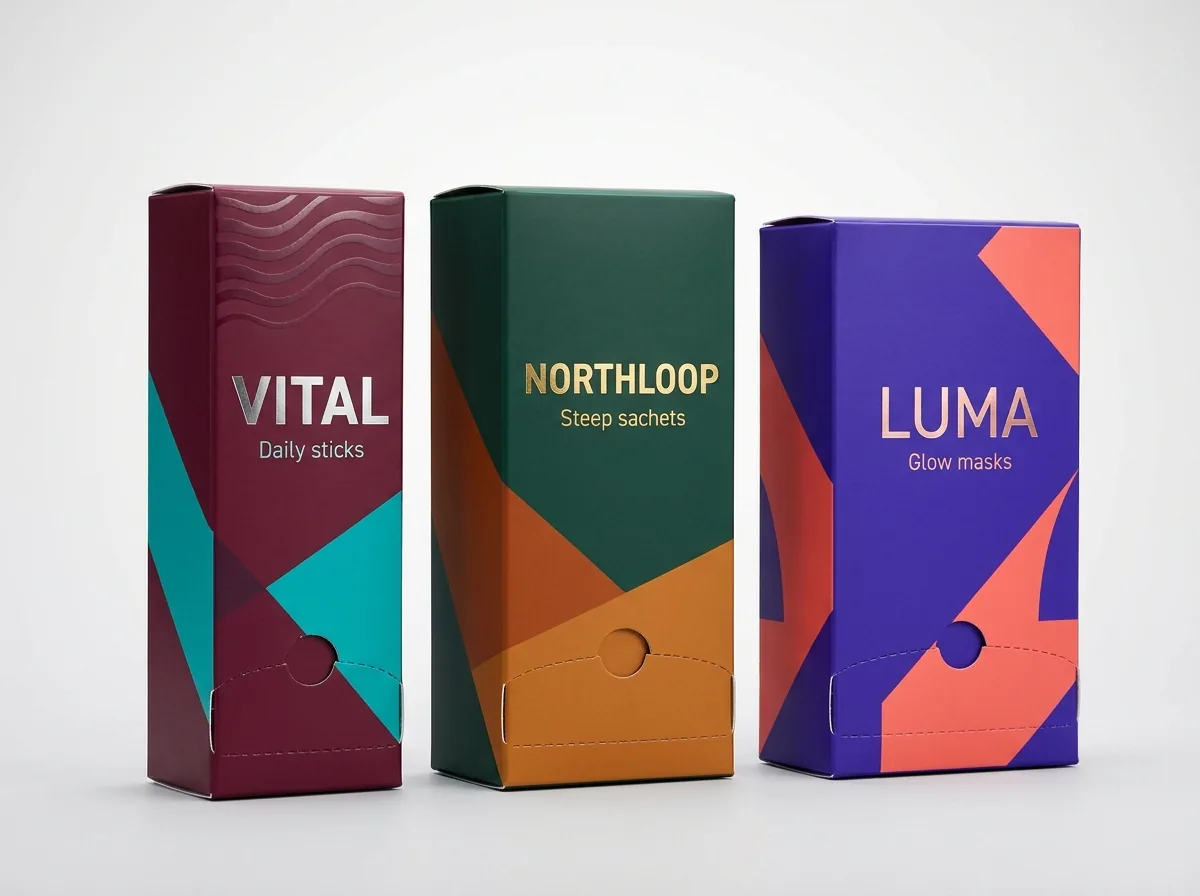
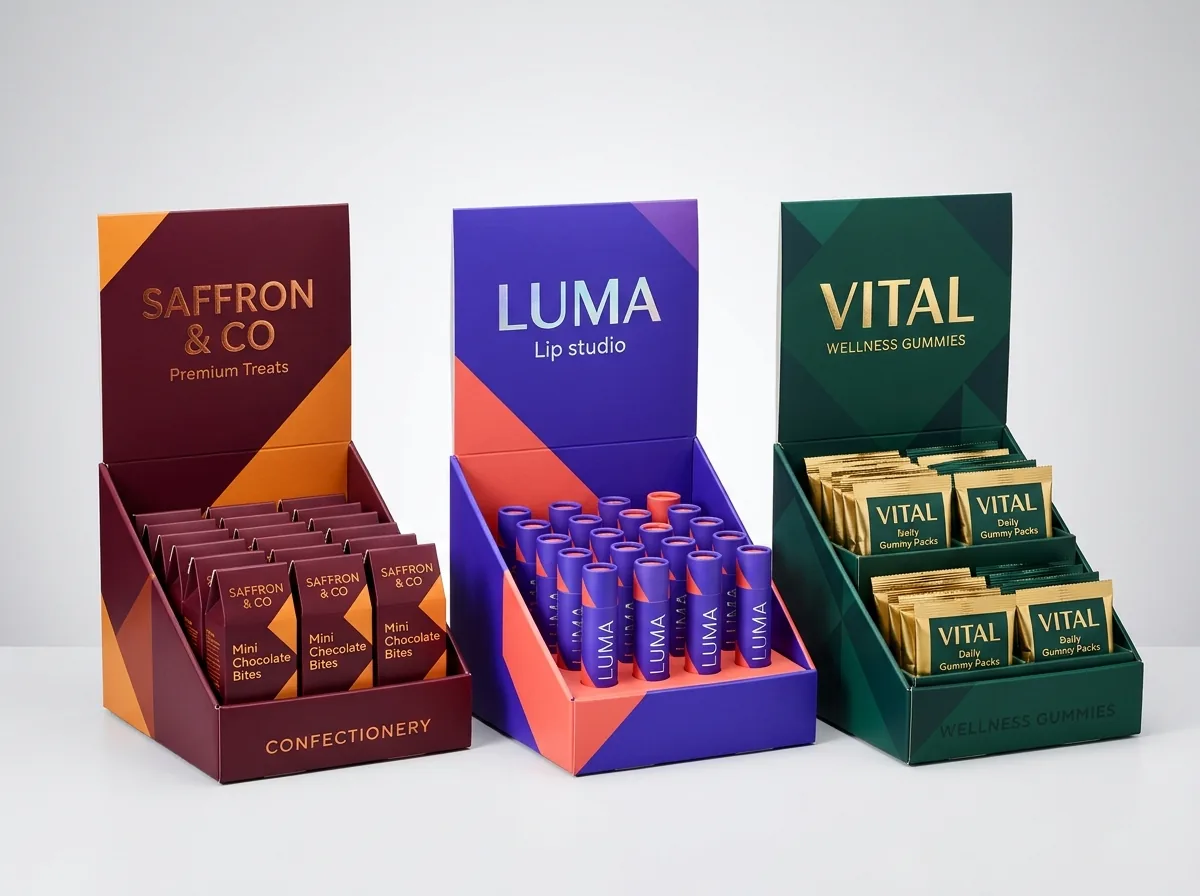
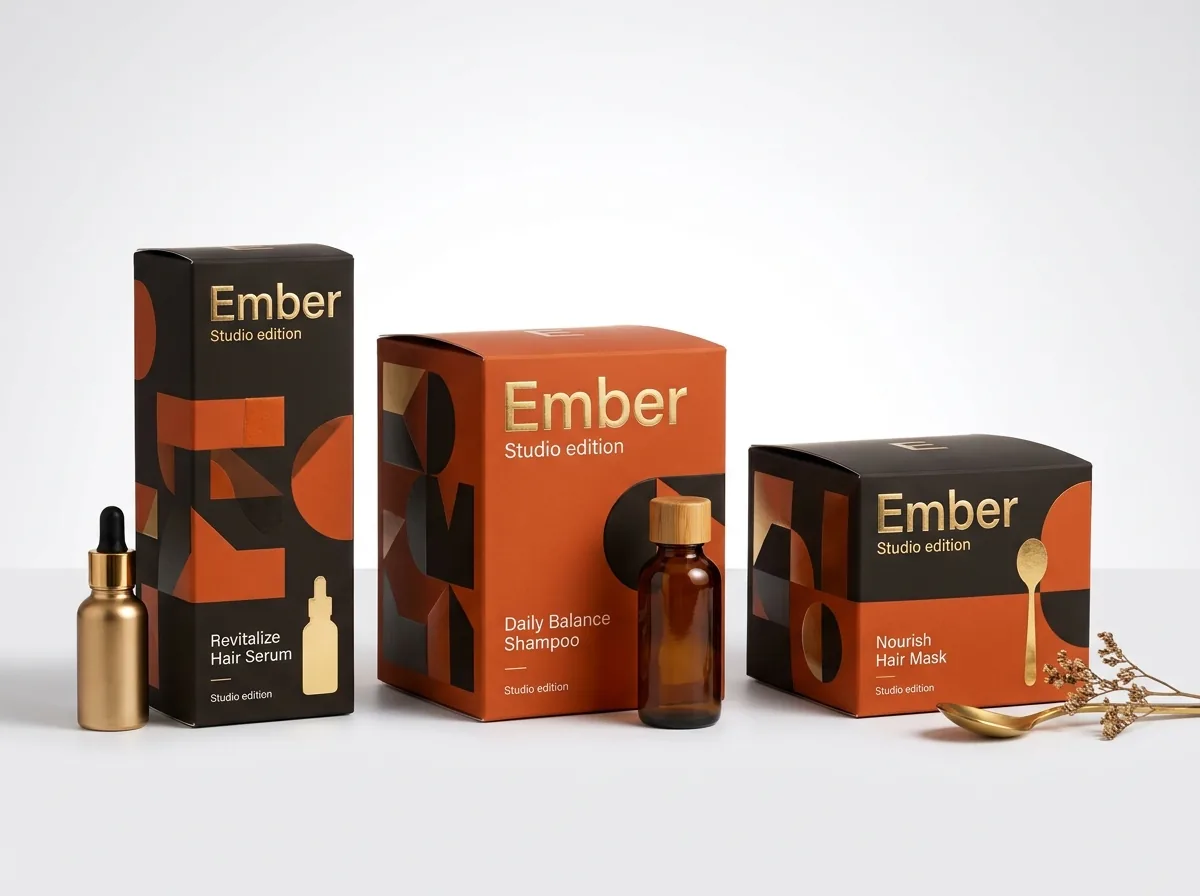
Ready to order face mask boxes? Compare up to 3 quantities with a free 3D mockup.
Request a Quote →Questions about face mask boxes
How much wider and taller than my foil sachet should a 5-pack sheet mask box be?
Add 3/16 to 1/4 inch (0.1875 to 0.25 in) to your flat sachet width for the carton Length (L) and add 1/4 inch to your sachet height for the carton Height (H). That prevents the heat-sealed foil edges from catching on the carton walls during packing.
How do I find the exact front-to-back depth (W) for a 5-pack or 10-pack sheet mask box?
Stand 5 or 10 filled sachets upright between two flat blocks and measure across the widest bottom bulge where the liquid serum settles, then add 1/8 inch. For standard 25 ml pouches, a 5-pack is typically 1.375 inches deep and a 10-pack is 2.5 inches deep.
What size box fits a 60-count under-eye hydrogel patch jar with tweezers?
Most 60-patch round hydrogel tubs measure about 2.65 inches in diameter and 2.1 inches tall. A 2.875 × 2.875 × 2.625 inch auto-lock bottom box gives you a snug fit plus head clearance for a die-cut top collar holding the plastic tweezers.
How do you fit a long mask brush or spatula inside a square jar carton?
Because the diagonal across a square is 1.4 times longer than its side wall, we orient the die-cut spatula or brush slot corner-to-corner across the top paperboard collar, or stand a short scoop vertically beside the jar neck.
Do you charge extra die fees for custom sachet sizes or spatula-slot inserts?
No. CubitPack never charges die or plate fees. Whether your sheet mask pouch is a custom rectangle, a die-cut bottle-shaped sachet or a jar box with a diagonal spatula collar, tooling is included free.
Can I test my filled sheet mask pouches or clay jars in a sample box before full production?
Yes. You receive a free flat dieline proof and 3D mockup before payment. You can also order our $50 sample kit to inspect boards and laminations, or request a paid custom prototype built to your exact sachet or jar measurements and credited to your order.
Still have a question? Ask a packaging specialist.
Request a Quote →Request your face mask boxes quote
Tell us your size and quantities, and one dedicated account manager prepares pricing for each tier.
- Free design & AI-to-print studio + 3D mockup
- No die or plate charges · 4–5 day rush available
- Free shipping to all 50 states
- 10% off your first order
The sachet stack clearances, bottom-bulge measurements and glass jar insert allowances in this guide were verified against standard 25–30 ml foil sheet mask pouches, 60-count hydrogel tubs and 50–100 ml glass clay mask jars by a CubitPack packaging specialist. Reviewed. Spot an error? Tell us and we will fix it.
Sources
What changed
- October 22, 2026: First published.
- October 22, 2026: Updated specifications, terminology, and verified source links.
More guides
New packaging guides by email
Sizes, materials and design tips. Unsubscribe anytime.