
What size box fits shampoo bottles, pumps, and solid bars?
Short answer: Measure the widest base diameter and full cap height of your container, then add 1/16 to 1/8 inch on width and depth plus 1/8 inch on height. Common inside sizes for custom shampoo boxes are 2.75 × 2.75 × 1.25 in for solid bars and 2.75 × 2.75 × 7.75 in for 12 oz pump bottles.
On this page
- How do I measure a shampoo bottle or solid bar for a box
- What are standard inside dimensions for shampoo boxes
- How do I size a box for round, square, or bevelled shampoo bars
- How do pump heads and neck collar inserts affect bottle box height
- How do I calculate dimensions for a shampoo and conditioner duo box
- Common mistakes
- FAQs
Request a custom quoteFree dieline & 3D mockup
Sizing a shampoo carton starts with the physical container in its shipping state, whether that is a cured waterless syndet puck or a tall PET bottle topped with a lotion pump. For solid shampoo bars, wait until the bar has finished curing and shrinking, measure its length, width, and thickness with calipers, and add 1/16 to 1/8 inch on each dimension so the bar slides in without scraping its edges on the paperboard. For cylindrical or square liquid bottles, measure the widest body diameter and the total height to the tip of the disc cap or pump actuator, then add 1/8 inch to length, width, and height. If your bottle uses a narrow pump neck that needs a top cardboard stabilizer collar, add another 1/4 inch to the box height for the folded collar ledge. All CubitPack cartons are quoted by inside Length × Width × Height in inches with zero die charges.
How do I measure a shampoo bottle or solid bar for a box?
Never rely on nominal fluid ounces alone when ordering hair care cartons. An 8 oz Boston round bottle, an 8 oz bullet cylinder, and an 8 oz wide-shoulder apothecary bottle have completely different diameters and heights. Place your filled, capped bottle on a flat table and measure across the widest part of the base with calipers or a rigid ruler. Even on a round bottle, both the inside Length (left-to-right front panel) and Width (front-to-back side depth) of a square carton equal the bottle diameter plus 1/8 inch of clearance. Next, measure the vertical height from the table surface to the highest point of the closure. If your co-packer ships lotion pumps locked down, measure the locked height; if the pump ships extended with a clip around the neck, measure the full extended height plus the clip. When you submit your dimensions for printed hair care bottle cartons, always list them in the standard folding carton order: Length × Width × Height in inches.
- Length (L): left-to-right width across the front display face of the carton.
- Width (W): front-to-back depth of the side panel.
- Height (H): bottom-to-top vertical distance from the base fold to the top score line.
- Solid bar clearance: add 1/16 in to 1/8 in on L, W, and H after the bar is fully cured.
- Liquid bottle clearance: add 1/8 in on L, W, and H, plus 1/4 in extra height if adding a top neck collar.
What are standard inside dimensions for shampoo boxes?
Because CubitPack cuts every order to your exact dieline with no die or plate fees, you are never forced into an ill-fitting stock box. Still, most hair care containers fall into six proven size brackets. Use the reference chart below to compare typical inside dimensions across solid pucks, travel tubes, single salon bottles, and twin wash-day sets. Notice how the recommended structure shifts as container weight climbs. Lightweight 3 oz and 4 oz solid shampoo bars need only a straight tuck end carton, whereas 8 oz, 12 oz, and 16 oz liquid bottles require a pre-glued auto lock bottom so the base cannot give way when lifted from a retail shelf.
| Hair care container | Typical inside size (L × W × H) | Recommended box structure |
|---|---|---|
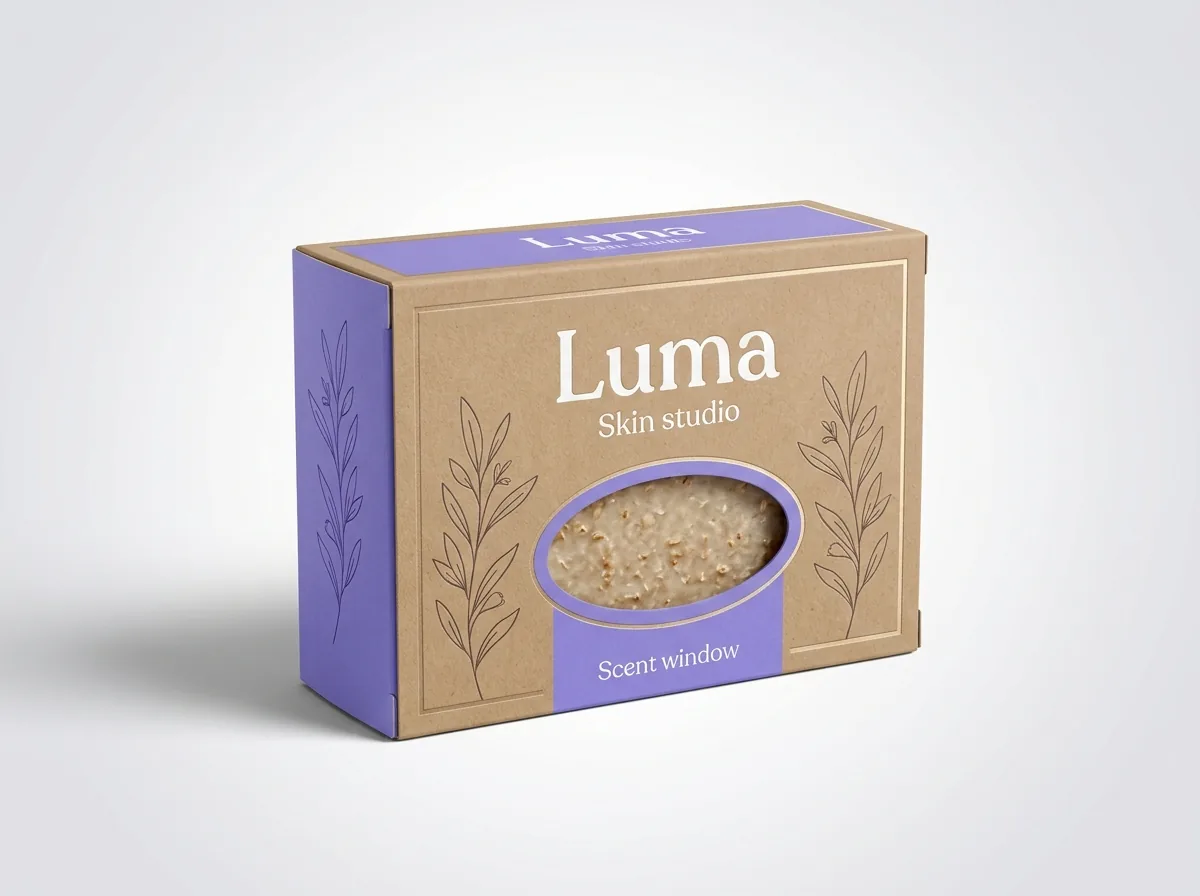
| Round 3 oz to 3.5 oz solid shampoo puck | 2.75 × 2.75 × 1.25 in | Straight tuck end with sniff window |
| Rectangular 4 oz shampoo or conditioner bar | 3.25 × 2.5 × 1.25 in | Straight tuck end, kraft or white card |
| 2 oz travel bottle or scalp treatment tube | 1.625 × 1.625 × 4.5 in | Reverse tuck end |
| 8 oz (240 ml) cylinder bottle with disc cap | 2.25 × 2.25 × 6.5 in | Auto lock bottom |
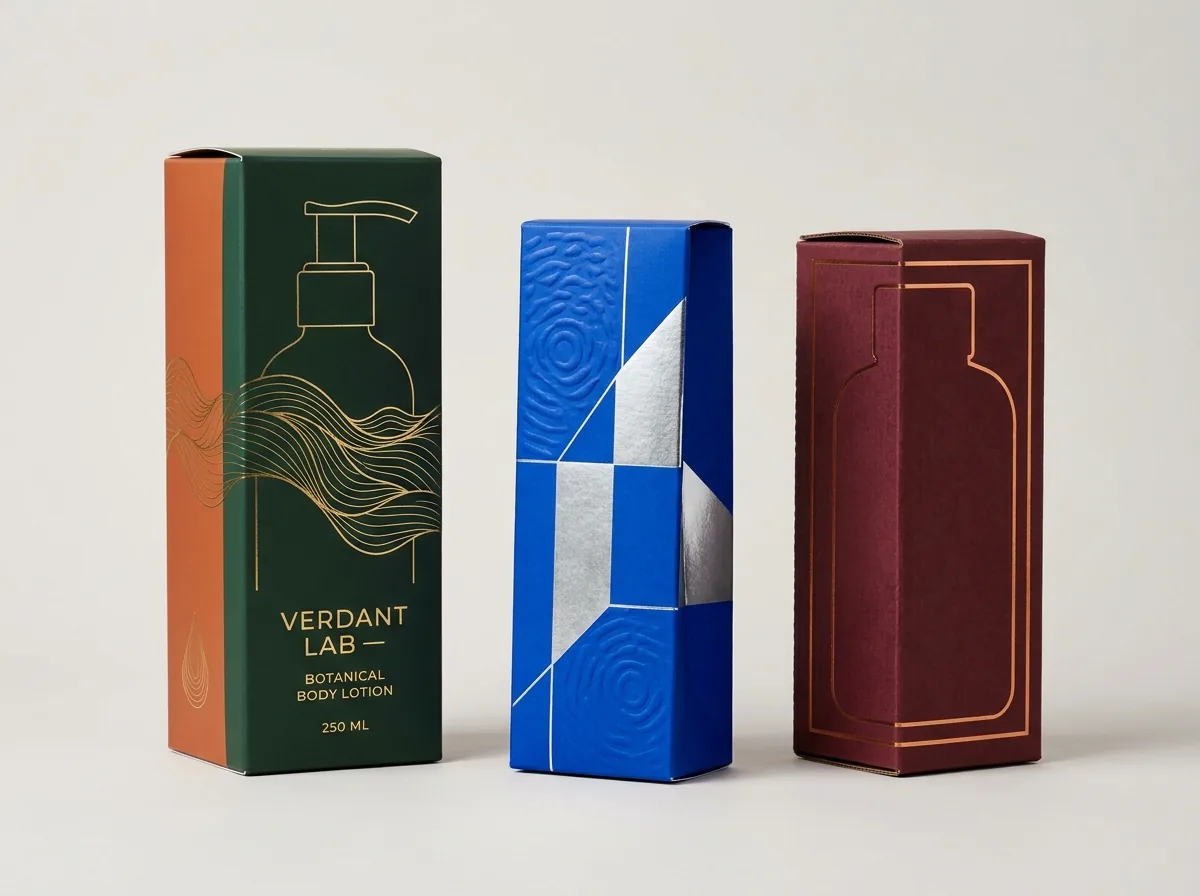
| 10 oz to 12 oz bottle with lotion pump | 2.75 × 2.75 × 7.75 in | Auto lock bottom + top neck collar |
| 16 oz (500 ml) salon pump bottle | 3.25 × 3.25 × 8.5 in | Auto lock bottom, heavy card or E-flute |
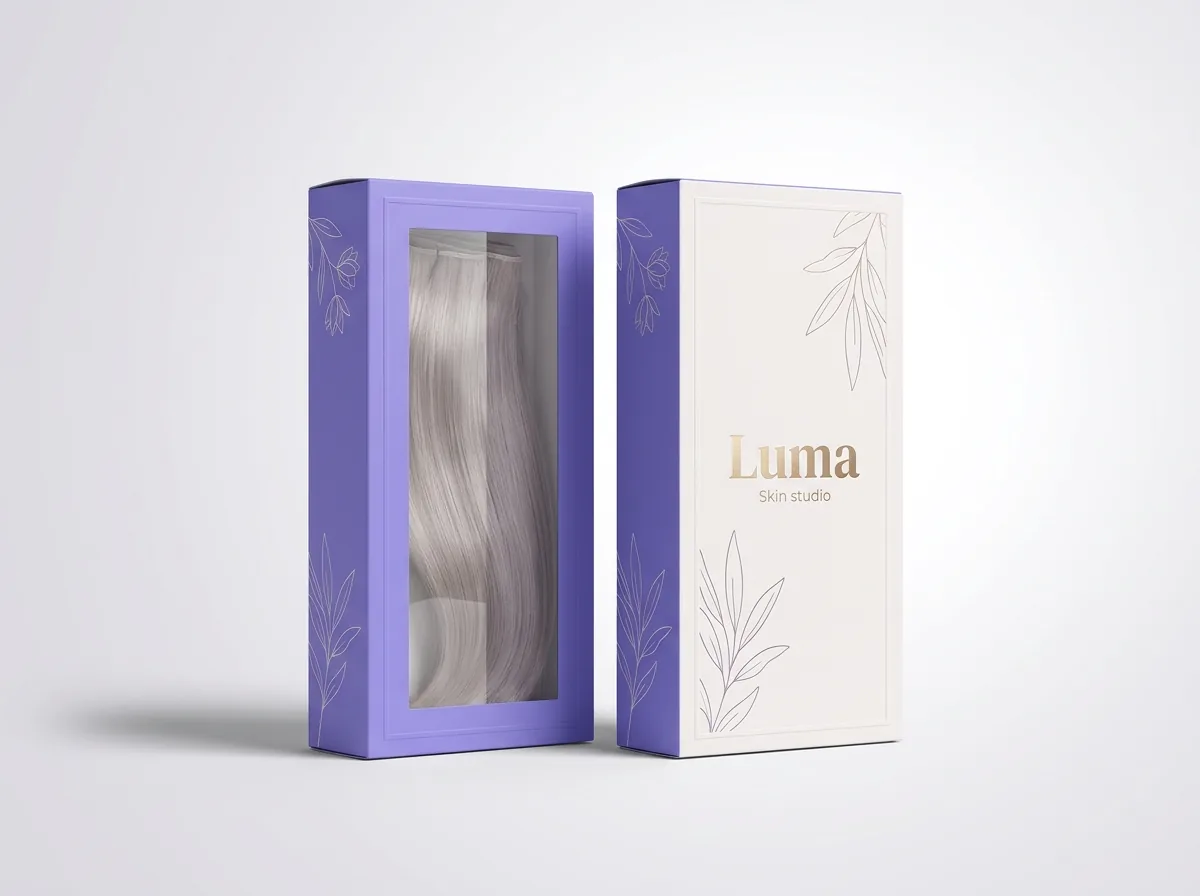
| Twin 10 oz shampoo & conditioner duo kit | 6.25 × 3.25 × 8.0 in | Auto lock or mailer with divider |
How do I size a box for round, square, or bevelled shampoo bars?
Solid syndet shampoo bars and cold-process hair soaps lose water weight as they cure on drying racks. A freshly pressed or poured bar can shrink by 3% to 6% over three to four weeks. If you size your dieline from a fresh bar, the cured bar will rattle inside the carton; if you guess the shrinkage wrong, a hand-cut bar with a slightly flared bottom edge will jam at the opening. Measure three to five fully cured bars from different mold cavities and take the largest measurement as your baseline. For a round 2.625 inch puck that is 1.125 inches thick, a 2.75 × 2.75 × 1.25 inch square carton gives 1/8 inch of breathing room so the bar drops in smoothly on the packing table. If you wrap the bar in wax or custom butter paper before boxing, measure the wrapped bar so the folded paper pleats do not bulge the side panels outward. Brands that sell both bath soaps and hair bars often pair these sizes with matching custom soap boxes.
Know your size? Compare pricing across up to 3 quantities.
Request a Quote →How do pump heads and neck collar inserts affect bottle box height?
Liquid shampoo bottles with dispensing pumps are wide at the bottom and narrow at the threaded neck. Without internal support, the heavy base stays put while the top of the bottle swings back and forth inside the carton during parcel transit, often snapping the pump spout or creasing the carton face. A die-cut cardboard neck collar solves this by bridging across the upper third of the box with a circular hole that hugs the bottle neck. When we engineer a built-in flap collar or a separate drop-in cardboard insert, we need three vertical measurements from your bottle: total height from base to pump tip, shoulder height where the body narrows into the neck, and the diameter of the neck ring. We also add 1/4 inch to overall box height so the folded collar sits cleanly under the top dust flaps without pushing the lid open.
How do I calculate dimensions for a shampoo and conditioner duo box?
Bundling a shampoo bottle and a conditioner bottle into one wash-day carton requires more than simply doubling the single bottle width. You must account for the thickness of the partition wall between the two bottles so the glass or thick HDPE walls cannot scuff each other's labels. Start by multiplying your single bottle diameter by two, then add 1/8 inch for the left and right outer clearance, and add another 1/8 inch (for folding paperboard) or 3/16 inch (for E-flute corrugated) for the center divider partition. For example, two 10 oz bottles that each measure 2.875 inches wide need an inside box Length of about 6.0 to 6.25 inches, an inside Width of 3.125 to 3.25 inches, and an inside Height of 8.0 inches. If you add a third compartment for a hair oil dropper or wide-tooth comb, send all three items' dimensions and our structural team will lay out the multi-cell insert in your free 3D mockup.
- Two-bottle Length formula: (Bottle 1 width + Bottle 2 width) + 1/8 in outer clearance + 1/8 to 3/16 in divider thickness.
- Single-row Width formula: widest bottle diameter + 1/8 in clearance (plus insert wall thickness if using a full tray).
- Kit Height formula: tallest bottle (usually the pump bottle) + 1/8 in top clearance + base pad thickness.
- Corrugated mailer kits: allow an extra 1/4 in across the front locking flaps on custom mailer boxes.
What are the most common shampoo box sizing mistakes?
A millimeter or two in the wrong place can make a packing crew fight every box or let a pump leak in transit. Check these five sizing pitfalls before signing off on your dieline
- Measuring a lotion pump locked down when your filling line caps bottles with an unlocked pop-up pump.
- Sizing a solid shampoo bar carton before the bars finish curing, leaving excessive rattle room once water evaporates.
- Forgetting to add 3/16 inch of width for the center corrugated partition in a two-bottle shampoo and conditioner set.
- Ordering by outside carton dimensions instead of inside dimensions, which eats up 1/16 to 1/8 inch of usable interior space on heavy boards.
- Skipping a paper or 3D mockup check when switching from a flat disc cap to a wider flip-top or trigger sprayer.
Find your size
Suggested inside size: 2.75 × 2.75 × 1.25 in
A starting point. Your account manager confirms the size with you before the proof.
Quote this size →Packaging for this

Ready to order shampoo boxes? Compare up to 3 quantities with a free 3D mockup.
Request a Quote →Questions about shampoo boxes
Are custom shampoo box dimensions listed as inside or outside measurements?
Always inside measurements, written as Length × Width × Height in inches. Inside dimensions determine whether your bottle or bar fits into the cavity. If your boxed product also needs to fit a specific salon display shelf or master shipping case, share that outer limit with your account manager.
How much extra space should I leave around a round shampoo bottle?
Add 1/8 inch (0.125 in) to the bottle's widest diameter for both the inside Length and inside Width of the carton, and add 1/8 inch above the cap for Height. That gives enough clearance to slide the bottle in quickly without letting it lean.
What size box fits a standard 3.5 oz round shampoo bar?
Most 3 oz to 3.5 oz round syndet shampoo pucks measure roughly 2.5 to 2.625 inches across and 1 inch thick, fitting neatly into a 2.75 × 2.75 × 1.25 inch straight tuck end box. Always measure a cured bar from your own mold first.
Can I use the same box size for both shampoo and conditioner?
Yes, if both products use the exact same bottle and cap style. Ordering one shared dieline size across both formulas lets you combine your production volume and keep a uniform skyline on salon and retail shelves.
Do squeeze tubes need a different box shape than cylindrical bottles?
Yes. Crimped plastic or aluminum hair mask tubes are wider at the top crimp seal than at the round cap base. Measure the flat width of the top crimp plus 1/8 inch for the carton Length, and measure the cap diameter plus 1/8 inch for the carton Width.
Can I test my shampoo box size before paying for the full 1,000-box run?
Yes. Every order includes a free custom dieline proof and a 3D mockup before payment. You can also print the flat dieline at 100% scale on card stock to test-fit your bottle, or order a paid physical sample credited toward your production run.
Still have a question? Ask a packaging specialist.
Request a Quote →Request your shampoo boxes quote
Tell us your size and quantities, and one dedicated account manager prepares pricing for each tier.
- Free design & AI-to-print studio + 3D mockup
- No die or plate charges · 4–5 day rush available
- Free shipping to all 50 states
- 10% off your first order
The inside dimension clearances in this guide follow standard folding carton and E-flute tolerances for cylindrical PET bottles, lotion pumps, and cured syndet bars. A CubitPack packaging specialist reviewed every measurement and table row. Spot something off? Let us know and we will fix it.
Sources
What changed
- October 22, 2026: First published.
- October 22, 2026: Updated specifications, terminology, and verified source links.
More guides
New packaging guides by email
Sizes, materials and design tips. Unsubscribe anytime.