
Tuck end vs tray and sleeve vs hexagon incense boxes: which should you choose?
Short answer: Choose a one-piece tuck-end carton for everyday 11-inch bamboo sticks when you want fast packing and the lowest unit cost. Pick a two-piece tray and sleeve drawer box for brittle coreless Japanese rods or burner sets, and choose six-sided hexagon custom incense boxes for upright counter caddy displays.
On this page
- How do tuck end, tray and sleeve, and hexagon incense boxes compare
- When is a straight or reverse tuck end carton the smartest choice
- Why do coreless Japanese incense sticks and gift sets use tray and sleeve boxes
- When should you choose a six-sided hexagon incense box
- How do windows, smell vents and hang tabs fit each box style
- Common mistakes
- FAQs
Request a custom quoteFree dieline & 3D mockup
The three classic structures for incense sticks solve very different handling and merchandising problems. One-piece straight tuck end and reverse tuck end cartons fold from a single flat sheet with one glued side seam, making them the most economical choice for 15 to 20 bamboo-core sticks that flex slightly without breaking. Two-piece tray and sleeve boxes slide open horizontally like a matchbox drawer, doubling the paperboard wall thickness along the long sides so fragile coreless Japanese sticks and ceramic ash boats never bend in transit. Six-sided hexagon tubes form a rigid geometric column that resists crushing from all directions and stands upright in circular retail counter caddies. Every style at CubitPack starts at 1,000 units with free custom dielines, no die charges, Pantone color matching and free US shipping across all 50 states after you approve a digital proof and 3D mockup.
How do tuck end, tray and sleeve, and hexagon incense boxes compare?
Choosing between a flat rectangular tuck carton, a sliding matchbox drawer and a six-sided hexagonal tube comes down to three practical variables: whether your sticks have a bamboo splint core, how shoppers re-close the box between daily burns, and whether your retail accounts display packs flat on shelves or upright in counter cups. A structure that works effortlessly for flexible 11-inch bamboo sticks can snap extruded coreless rods on the very first opening. Review the comparison table below to see how each structure performs across board usage, crush resistance, hand-packing speed and tabletop storage when you order printed incense packaging. You can also mix two structures in one combined brand family, using flat tuck cartons for single scents and sliding drawer sleeves for multi-scent discovery kits.
| Feature | Tuck end carton (STE / RTE) | Tray and sleeve drawer | Hexagon tube box |
|---|---|---|---|
| Pieces of board | 1 piece (glued side seam) | 2 pieces (inner tray + outer sleeve) | 1 piece (6 panels + end tucks) |
| Ideal incense type | 10.5–11 in bamboo-core sticks & cones | 5.5–8 in coreless sticks & gift sets | 20-stick cylindrical foil pouches |
| Bending & crush strength | Good with long-grain board | High (double-wall side rails) | High (6-corner column geometry) |
| How customers remove 1 stick | Open end flap and slide 1 stick out | Slide drawer out and lift from top | Pop top hexagonal tuck flap |
| Fulfillment packing speed | Fastest (pinch open, slide pouch, tuck) | Moderate (fold tray, load, slide sleeve) | Fast (pinch 6 walls open, load tube) |
| Retail shelf presentation | Wide flat front face for artwork | Thick book-like spine and drawer pull | 360-degree facets in upright caddies |
| Relative unit cost | Lowest board area per carton | Higher (two dies and extra board) | Moderate (wider flat layout) |
When is a straight or reverse tuck end carton the smartest choice?
If you sell 10.5 or 11 inch bamboo-core sticks or boxed incense cones at everyday retail price points, a one-piece tuck carton gives you the widest flat billboard for botanical illustrations and typography while using the least paperboard per unit. You have two flap configurations to choose from: straight tuck end boxes hinge both the top and bottom flaps off the back panel so raw cut board edges never show on the front face, whereas reverse tuck end boxes hinge the top and bottom flaps on opposite panels so flat blanks interlock tightly on the press sheet. Because a slim 11.25 × 1.25 × 0.625 inch carton is nine times longer than it is wide, we orient the paperboard grain parallel to the 11.25-inch length. That lengthwise fiber alignment keeps the carton from bowing when customers pick it up off a boutique table. On the fulfillment bench, your team simply pinches the pre-glued tube open, slides the sealed stick pouch inside and tucks both ends shut in under five seconds per box.
Why do coreless Japanese incense sticks and gift sets use tray and sleeve boxes?
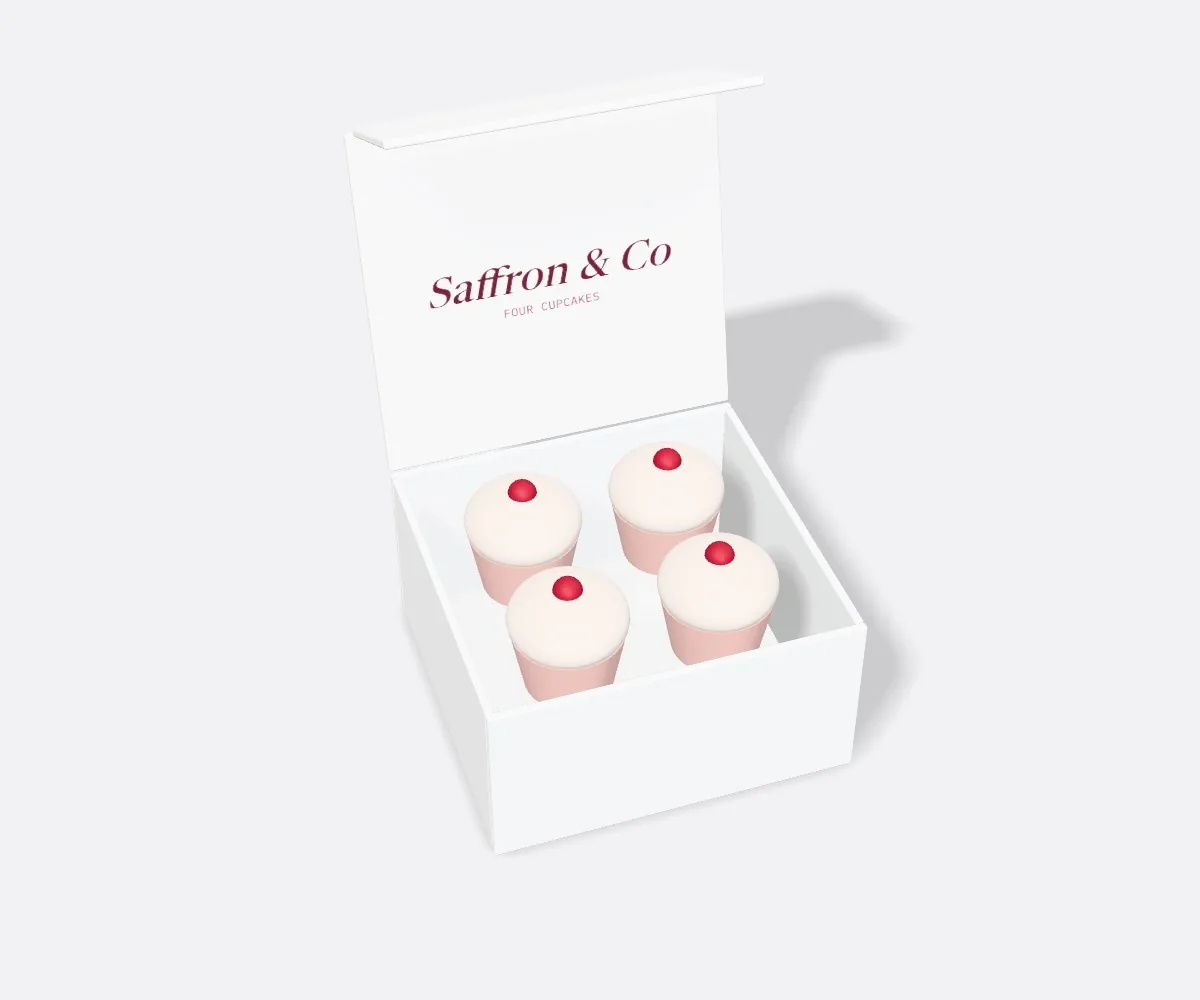
Extruded coreless incense sticks from Japan, Tibet and Korea have no bamboo splint running down the center. If a customer tries to pinch and pull a single brittle coreless rod out of a narrow 1.125-inch end flap, finger pressure frequently snaps two or three neighboring sticks inside the bundle. A tray and sleeve box eliminates end-pulling altogether: the customer slides the inner drawer tray out horizontally and lifts one stick straight up from the open bed. Structurally, when the inner tray sits inside the outer sleeve, the long side walls overlap to create a double-thick paperboard beam. That extra rigidity also makes drawer boxes the go-to format when you bundle fragile sticks alongside a ceramic ash boat, brass pebble holder or glass match vial separated by a folded card divider. Many lifestyle brands add a grosgrain ribbon pull tab or a half-moon thumb cutout on the tray end wall for effortless opening.
- Zero end-pinch breakage: sticks lift straight up from the open drawer bed instead of sliding through a tight end opening.
- Double-wall side rails: overlapping tray and sleeve walls resist parcel flex during e-commerce shipping.
- Tabletop ritual storage: customers keep the decorative drawer box on a coffee table or altar until the last stick is burned.
- Interior storytelling: print burn instructions or scent notes along the inside floor or side rails of the sliding tray.
Know your size? Compare pricing across up to 3 quantities.
Request a Quote →When should you choose a six-sided hexagon incense box?
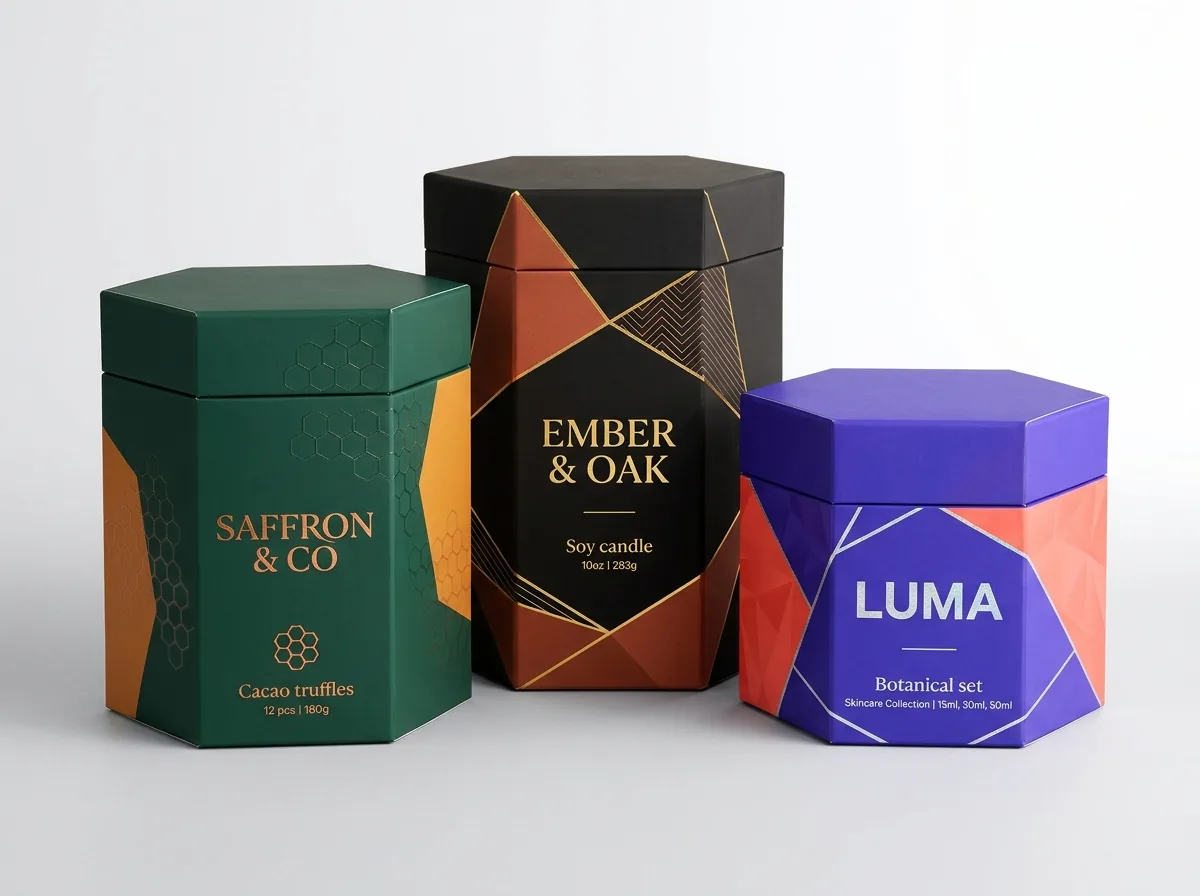
Six-sided hexagon boxes are an iconic silhouette in traditional masala and temple incense packaging. Because six crease lines distribute compression forces around a circle, a hexagonal paperboard tube resists thumb squeezing and vertical stacking pressure far better than a flat 0.5-inch rectangular sleeve. It also matches the natural round cross-section of a 20-stick bundle rolled inside a foil or cellophane pouch, preventing empty corner voids inside the carton. On the graphic side, a hexagon tube divides your artwork into six narrow vertical facets, typically around 0.75 to 0.875 inches wide per panel. Instead of one wide hero illustration, hexagonal cartons work best with repeating geometric patterns, vertical scent typography printed on alternating panels so the name is visible from any angle, and a counter display box that holds 12 or 24 hexagonal tubes standing upright like pencils at boutique checkout counters.
How do windows, smell vents and hang tabs fit each box style?
Whichever structure you choose, retail shoppers almost always want to smell the fragrance before buying. On a flat straight tuck or reverse tuck carton, we can die-cut a small ¼-inch round breather hole, a botanical leaf silhouette or a wider window box opening on the front panel at zero extra die cost. On a tray and sleeve drawer box, placing a thumb notch or smell cutout on the outer sleeve lets the aroma escape while the inner tray wall blocks dust. If you sell into grocery co-ops, apothecaries or gift stores that hang small items on pegboard hooks, add a fold-up sombrero hang tab to the back panel of a tuck-end carton or hexagon tube. Avoid putting hang tabs on sliding drawer sleeves unless the bottom of the sleeve has a tuck flap or friction stop, or the weighted inner tray can slide downward while hanging on the peg.
- Tuck-end cartons: support front die-cut smell holes, clear film-patched windows and integrated top hang tabs for retail hooks.
- Tray and sleeve drawers: pair an outer sleeve breather cutout with a ribbon tab or end-seal sticker.
- Hexagon tubes: stand upright in counter caddies or use an extended top panel with a pegboard hang slot.
- Multi-SKU gang runs: keep the same window or vent position across all scents so every carton shares one cutting die.
What are the most common mistakes when choosing an incense box style?
Picking a box structure without testing how your sticks load and dispense can slow down fulfillment or increase transit breakage. Watch out for these five mistakes
- Packing brittle coreless Japanese sticks into a tight end-opening tuck carton where customers snap rods trying to pull one out.
- Hanging an open-ended tray and sleeve box from a retail peg hook without a bottom stopper, allowing the inner drawer to slide out onto the floor.
- Placing wide horizontal text across the crease lines of a six-sided hexagon tube instead of running typography vertically down each facet.
- Ordering a glued two-piece tray and sleeve when you need the fastest possible hand-packing speed for thousands of low-priced bamboo stick packs.
- Skipping long-grain paperboard orientation on a 1-piece tuck carton, which leaves the 11.25-inch tube floppy in the middle.
Find your size
Suggested inside size: 8.5 × 1.125 × 0.5 in
A starting point. Your account manager confirms the size with you before the proof.
Quote this size →Packaging for this
Ready to order incense boxes? Compare up to 3 quantities with a free 3D mockup.
Request a Quote →Questions about incense boxes
Is a reverse tuck end incense box cheaper than a straight tuck end box?
Reverse tuck end cartons nest slightly closer together on the parent press sheet because the top and bottom flaps alternate, which can save a small amount of paperboard on large runs. Both styles start at 1,000 units with no die charges.
Do tray and sleeve incense boxes ship flat or pre-glued?
Both the outer sleeve and the inner drawer tray ship flat in moisture-wrapped cartons to save storage space and qualify for free US shipping. The outer sleeve is pre-glued along its seam so it pops open in one squeeze.
How do the ends of a hexagon incense box close?
Hexagon incense tubes typically close with a six-sided tuck flap on the top and either a matching tuck flap or six interlocking star tabs on the bottom. Both closures lock securely without needing glue or tape during hand packing.
Can I combine tuck-end stick cartons and cone cube boxes in one order?
Yes. Because stick cartons and cone cubes use different dielines, your account manager quotes each structure clearly in one combined proposal and matches your Pantone ink colors across both boxes so your retail shelf display looks unified.
How do I keep the inner tray of a drawer box from sliding out in transit?
We engineer the inside width and height of the outer sleeve with a calibrated friction fit against the double-folded walls of the inner tray, and you can also add a small round tamper seal sticker across the drawer seam.
Can I test a tuck carton against a drawer sleeve before ordering 1,000 boxes?
Yes. Every quote includes a free 2D dieline and 3D mockup before payment, and you can order our $50 sample kit or a custom physical prototype of your exact stick bundle to test fit and stiffness in person.
Still have a question? Ask a packaging specialist.
Request a Quote →Request your incense boxes quote
Tell us your size and quantities, and one dedicated account manager prepares pricing for each tier.
- Free design & AI-to-print studio + 3D mockup
- No die or plate charges · 4–5 day rush available
- Free shipping to all 50 states
- 10% off your first order
This comparison draws on structural dieline layouts for straight tuck, reverse tuck, sliding drawer sleeves and six-sided hexagon tubes tested across 8 inch coreless and 11 inch bamboo-core incense bundles. A CubitPack packaging specialist reviewed all specifications. Spot an error? Let us know and we will fix it.
Sources
What changed
- October 22, 2026: First published.
- October 22, 2026: Updated specifications, terminology, and verified source links.
More guides
New packaging guides by email
Sizes, materials and design tips. Unsubscribe anytime.