
How do you prevent fragrance oil stains and scent loss on custom incense boxes?
Short answer: Cure freshly dipped sticks for 24 to 48 hours on non-porous racks, seal the bundle inside a polypropylene (BOPP) or foil-lined inner sleeve, and add exterior lamination to your custom incense boxes. Never pack wet dipped sticks against raw paperboard, which wicks carrier oils and dulls your scent.
On this page
- Why do hand-dipped incense sticks and cones stain paperboard cartons
- Which inner wraps and carton coatings block fragrance oil migration
- How do you pair inner barrier pouches with custom incense cartons
- Which exterior finishes and dark ink choices hide oil fingerprints at retail
- What drives the cost of custom incense boxes across multiple scent SKUs
- Common mistakes
- FAQs
Request a custom quoteFree dieline & 3D mockup
Fragrance oils, resin extracts and carrier solvents such as dipropylene glycol (DPG) behave like liquid grease when they touch uncoated paperboard. If freshly hand-dipped charcoal sticks or oil-rich dhoop cones sit directly against raw cardstock, capillary action pulls the liquid out of the incense and spreads dark translucent blotches across your printed box within days. Worse, once the paperboard absorbs the oil, the volatile top notes evaporate into the air before your customer ever lights a stick. Preventing oil stains and scent fade takes a three-part barrier system: curing sticks until surface tack disappears, sealing each bundle inside a non-absorbent BOPP, cellophane or foil pouch, and choosing protective exterior coatings and gang-run artwork setups that keep your retail cartons clean on the shelf from 1,000 units upward with free design help, zero die fees and free US shipping.
Why do hand-dipped incense sticks and cones stain paperboard cartons?
Whether you dip unscented charcoal punk sticks into a fragrance oil and DPG bath or roll masala paste blended with essential oils and natural gums, the finished incense holds a high load of liquid aromatics. Uncoated paperboard and brown kraft are networks of porous cellulose fibers. Wherever a stick tip or cone base presses against raw board inside a warm warehouse or shipping box, capillary action draws carrier oil out of the stick and into the paper. Within 48 to 72 hours, that wicked oil turns opaque white card translucent and leaves dark wet-looking halos on natural kraft. Even if you print dark ink on the outside of your printed incense boxes, heavy essential oils such as patchouli, sandalwood, cinnamon and citrus terpenes can soften standard printing inks unless a reliable moisture and grease barrier layer stands between the freshly cured incense and the paperboard walls.
- Capillary wicking: raw cellulose fibers pull liquid carrier oils (DPG, IPM, essential oils) out of the stick paste.
- Scent evaporation: once oils spread across a wide paperboard surface, top notes oxidize and fade rapidly.
- Ink softening: citrus and pine terpenes act as mild solvents that can smudge unlaminated exterior ink when handled.
- Heat acceleration: summer parcel trucks reach 120°F, thinning carrier oils and speeding up migration into raw card.
Which inner wraps and carton coatings block fragrance oil migration?
Most incense makers combine a flexible inner wrap around the stick bundle with a protective finish on the folding carton itself. That way, the inner sleeve locks volatile fragrance oils against the sticks while the outer carton delivers rigid crush protection, shelf graphics and barcode scanning. Use the table below to match your incense formulation (from dry coreless herbal rods to heavily soaked charcoal dip sticks) with the right inner wrap and carton coating. Matching your barrier layer to the carrier solvent prevents both ugly shelf blotches and weak aroma throw.
| Incense type & oil load | Recommended inner wrap | Carton board & finish setup |
|---|---|---|
| Heavily dipped charcoal sticks (DPG + fragrance oil) | Heat-sealed BOPP or metallized foil pouch | White card or kraft + exterior matte/gloss lamination |
| Hand-rolled masala sticks (essential oils + floral powder) | Butter paper / glassine wrap or clear cello bag | White card, kraft or hexagon tube + protective varnish |
| Oily dhoop cones and backflow cones | Zipper barrier pouch or foil packet inside box | Cube carton with card divider + laminated exterior |
| Dry Japanese / Tibetan coreless herbal sticks | Acid-free tissue paper fold or belly band | Uncoated kraft or soft-touch tray and sleeve box |
| Palo santo wood sticks and dried white sage | No inner bag needed (dry botanical wood/herb) | Uncoated kraft window box with open breather cutout |
How do you pair inner barrier pouches with custom incense cartons?
For dipped charcoal sticks and oil-rich masala blends, a thin heat-sealed biaxially oriented polypropylene (BOPP) sleeve or foil-lined inner pouch is the most reliable barrier against oil spotting and scent evaporation. Unlike polyethylene (PE) sandwich bags, which are permeable to fragrance molecules and gradually let essential oils sweat through the plastic film, BOPP and foil laminates block both liquid carrier oils and aromatic vapor. When sizing your folding carton around an inner pouch, choose a pouch width that is ⅛ inch narrower than your carton's inside width so the bag slides in without wrinkling. If you also want a die-cut smell hole on the front of your carton so boutique shoppers can sample the scent, punch a tiny 1/16-inch pinhole near the top header seal of the inner bag (above the oil-dipped charcoal zone) so aroma escapes without liquid oil touching the paperboard.
- Cure before bagging: let freshly dipped sticks rest 24 to 48 hours on stainless steel trays until surface shine subsides.
- Pick BOPP or foil over LDPE: polypropylene and foil sleeves block terpene and DPG migration far better than soft poly bags.
- Size the bag ⅛ inch narrower than the carton: prevents the heat-sealed side seams from catching on carton glue flaps.
- Align smell holes over the bamboo tail: keep breather cutouts near the dry wood end so oil never touches the cutout edge.
Know your size? Compare pricing across up to 3 quantities.
Request a Quote →Which exterior finishes and dark ink choices hide oil fingerprints at retail?
Even when your sticks sit safely inside an inner barrier pouch, retail testers, store clerks and makers handling essential oils all day often leave oily fingerprints on the outside of the box. Raw uncoated paperboard and unlaminated matte ink absorb skin oils and fragrance residue on contact. Adding matte lamination, gloss lamination or soft-touch lamination over the exterior of your carton creates a wipe-clean polypropylene film barrier that shrugs off oily fingers and prevents dark charcoal, navy or forest green backgrounds from scuffing at the edges. If you prefer the raw tactile look of natural brown kraft board or recycled board without plastic film lamination, keep heavy ink coverage away from the thumb-tuck flap where oily hands pinch the carton open, and use foil stamping or opaque white ink for crisp contrast.
What drives the cost of custom incense boxes across multiple scent SKUs?
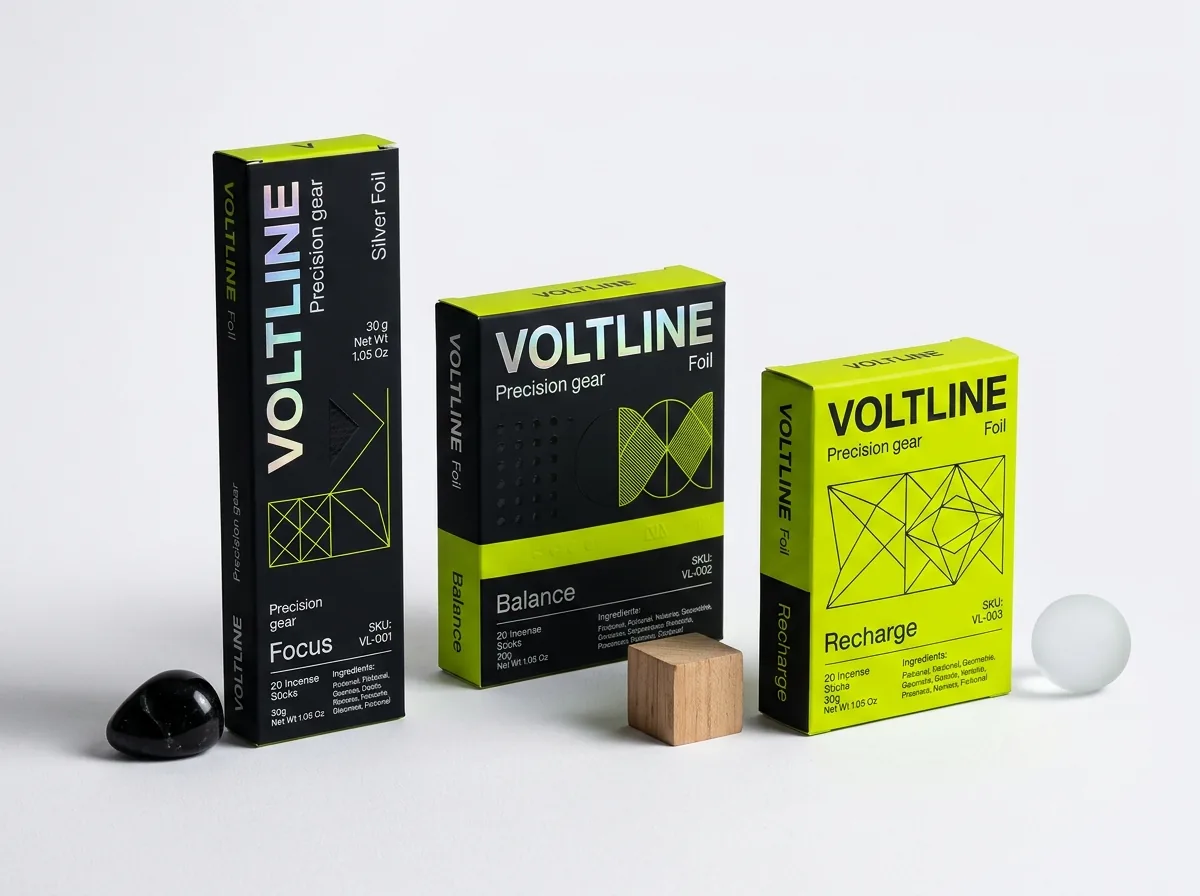
Home fragrance brands rarely launch with a single scent; most collections span four to twelve fragrances. Instead of ordering separate box sizes or paying setup fees for every scent, keep one identical carton dimension and dieline across your entire lineup. When every scent uses the exact same flat blank (for example, an 11.25 × 1.25 × 0.625 inch straight tuck carton), we can gang-run your sandalwood, cedarwood, lavender, rose and frankincense artworks together in one combined production run. To lower your unit cost even further on a multi-scent order, design a shared master background and back-panel fire warning layout across all sleeves, then change only the front scent title and a single color-coded Pantone band per SKU. You can also skip pre-printed scent names on small seasonal batches by printing one master branded carton and applying custom candle labels or color-coded custom seal stickers over the end flap.
- Standardize one dieline: run all 11-inch stick scents on the exact same L × W × D blank so they share one press setup.
- Color-code by Pantone band: swap one spot color and scent name per SKU while keeping back-panel warnings identical.
- Use end-flap seal stickers for micro-batches: seal limited-edition scents with printed wrap stickers on a master box.
- Order 3 quantity tiers on your quote: compare 1,000, 2,500 and 5,000 total boxes to see how rapidly unit cost drops.
What are the most common mistakes with oily incense packaging?
Most stained cartons and faded scents trace back to rushing sticks off the dipping rack or picking the wrong inner bag. Avoid these five mistakes
- Boxing hand-dipped sticks before they finish a full 24 to 48 hour cure on non-porous metal or glass drying trays, trapping excess carrier oil inside the carton.
- Using low-density polyethylene (LDPE) zip bags instead of BOPP or foil-lined sleeves. Essential oils slowly permeate LDPE and stain the surrounding paperboard.
- Wrapping freshly dipped charcoal sticks in plain tissue paper alone, which acts like a wick and transfers oil straight into the carton walls.
- Punching a front smell hole directly over the oily middle of an unwrapped stick bundle instead of over the dry bamboo tail end.
- Printing solid unlaminated black ink on slim incense cartons, which shows both oily fingerprints and white corner rub marks in transit.
Find your size
Suggested inside size: 8.5 × 1.125 × 0.5 in
A starting point. Your account manager confirms the size with you before the proof.
Quote this size →Packaging for this
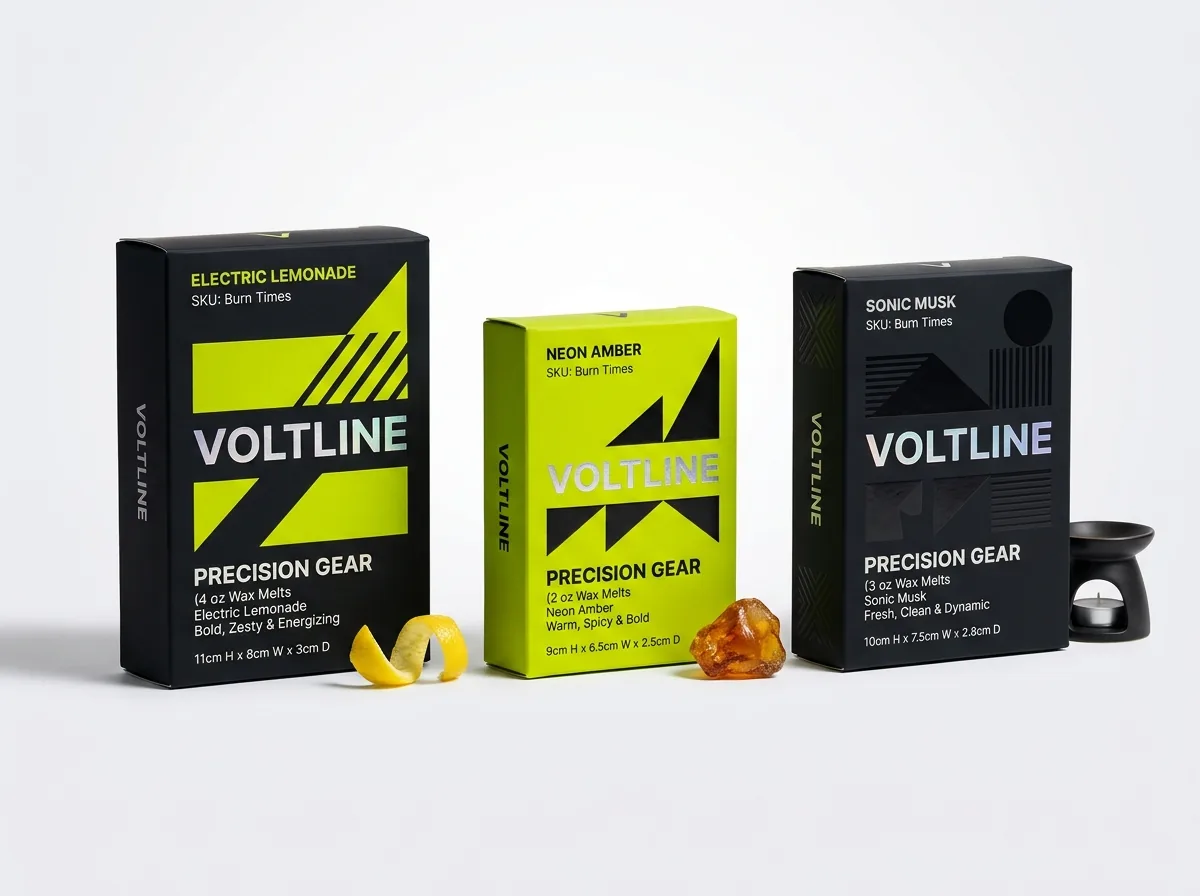
Ready to order incense boxes? Compare up to 3 quantities with a free 3D mockup.
Request a Quote →Questions about incense boxes
Can I pack hand-dipped incense sticks directly into a paperboard box without a bag?
We do not recommend packing freshly dipped charcoal or oil-rich sticks bare against paperboard. Carrier solvents like DPG and essential oils wick into raw cellulose fibers, leaving grease spots and letting the scent evaporate early.
Do dry palo santo sticks or white sage smudge bundles need an inner barrier bag?
No. Naturally dried palo santo wood sticks and cured herbal smudge wands do not contain liquid dip solvents, so they can sit directly inside an uncoated kraft window box or open paperboard sleeve without staining.
Does interior lamination allow me to skip the inner plastic or foil pouch?
Interior gloss or matte lamination prevents oil from soaking through the flat faces of the paperboard, which stops exterior staining, though raw cut board edges and tuck flaps still allow more scent vapor loss than a sealed BOPP pouch.
How do I let retail customers smell the incense if the sticks are sealed inside a pouch?
Many brands punch a tiny pinhole near the top bamboo-tail end of the inner BOPP pouch aligned with a die-cut smell vent on the carton, or infuse a small scent strip inside the tuck flap.
How many scent designs can I split across a 1,000-box minimum order?
As long as all your fragrances share the exact same box dimensions, board stock and dieline, you can split a 1,000-box order across multiple scent artworks. Select 2 designs or 3+ designs in the quote form.
Can I test my oily incense sticks inside a sample carton before placing my full order?
Yes. Order our $50 sample kit (credited toward your first order) or request a custom prototype of your box so you can run a 72-hour oil migration and scent retention check in your own studio.
Still have a question? Ask a packaging specialist.
Request a Quote →Request your incense boxes quote
Tell us your size and quantities, and one dedicated account manager prepares pricing for each tier.
- Free design & AI-to-print studio + 3D mockup
- No die or plate charges · 4–5 day rush available
- Free shipping to all 50 states
- 10% off your first order
The barrier recommendations in this guide follow standard paperboard grease-resistance principles and flexible film permeability comparisons (BOPP and foil vs LDPE) for essential oils and dipropylene glycol carriers. A CubitPack packaging specialist verified every step. Spot something wrong? Tell us and we will fix it.
Sources
What changed
- October 22, 2026: First published.
- October 22, 2026: Updated specifications, terminology, and verified source links.
More guides
New packaging guides by email
Sizes, materials and design tips. Unsubscribe anytime.