
How do I design custom wax melt boxes and prevent oil staining?
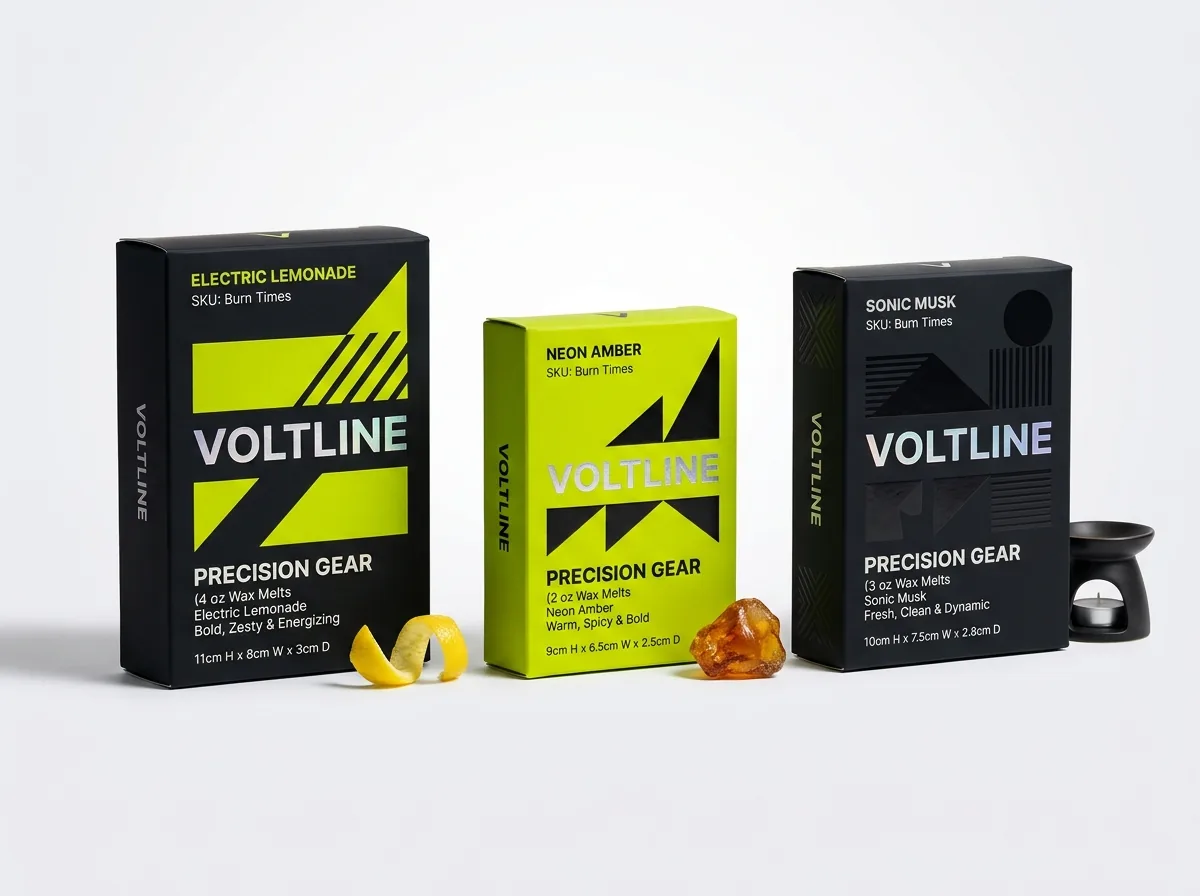
Short answer: Block fragrance oil migration on plastic-free packs by adding interior lamination or a glassine wrap, punch a die-cut scent hole on the front face for cold-throw sampling, and print warmer safety icons on the back. Share one master dieline on custom wax melt boxes to gang-run all your scents.
On this page
- Why do wax melts stain raw paperboard (and which barriers stop it)
- What warmer safety warnings and scent details belong on each panel
- How do you size a cold-throw smell hole or window without weakening the box
- How do you design a 10-scent wax melt collection to gang-run on one dieline
- What drives the cost of custom printed wax melt boxes (and how do you save)
- Common mistakes
- FAQs
Request a custom quoteFree dieline & 3D mockup
Designing custom wax melt packaging requires solving two practical challenges that standard retail boxes never encounter: high fragrance-oil loads that wick into raw paperboard, and large scent catalogs that need clear visual color coding on crowded boutique counters. Because soy, coconut-apricot and paraffin wax tarts typically hold 8% to 12% liquid fragrance oil and soften at warm summer shipping temperatures, bare wax touching unlined paperboard will leave translucent grease blotches within days unless you specify interior lamination or an inner glassine wrap. On the outside, use a consistent typography grid with a color-coded Pantone wrap band for each scent, add a small die-cut smell aperture so shoppers can test the aroma without opening the box, and print standard warmer safety instructions and IFRA allergen disclosures on the back panel. At CubitPack, every dieline and 3D mockup is free before you pay.
Why do wax melts stain raw paperboard (and which barriers stop it)?
Candles sit inside glass jars, so their outer carton never touches the wax. Wax snap bars and plastic-free botanical tarts, by contrast, have broad flat surfaces loaded with up to 12% essential or fragrance oil. Even when a soy or para-soy tart feels completely hard to the touch at room temperature, capillary action slowly pulls unbonded fragrance oil out of the wax surface and into raw, uncoated paper fibers, creating dark grease rings that bleed through to the front artwork. You can stop oil migration completely using one of three barrier setups depending on how you pack your melts. Review the table below before choosing the board and coating for your custom printed wax melt boxes.
| Wax packing method | Oil migration risk | Recommended carton & barrier setup |
|---|---|---|
| 6-cavity PET or PVC plastic clamshell | None (plastic shell contains oil) | Standard white card or kraft slide-on sleeve |
| Snap bar in glassine or BOPP inner bag | Low (inner bag blocks direct contact) | White card or kraft box with exterior matte/soft-touch |
| Bare loose tarts in partitioned card grid | High (direct wax-to-paperboard contact) | Interior gloss or matte lamination on tray & dividers |
| Botanical tarts wrapped in butter paper | Moderate (edges may touch tray walls) | Grease-resistant wrap + interior-coated tray |
| High-oil melts shipped in summer heat | High (wax sweats above 85°F / 29°C) | Dual-sided lamination (inside + outside) + E-flute shipper |
| Counter display caddy holding 12 packs | Low (holds already-packaged melts) | Heavy white card or E-flute with exterior lamination |
What warmer safety warnings and scent details belong on each panel?
Because a wax melt sleeve or snap-bar carton measures roughly 3 × 4.5 inches or 2.875 × 5.75 inches, every square inch of printable real estate has a job to do. On the front panel, keep the hierarchy simple: brand logo at the top, scent name and three primary fragrance notes in the center, and net weight in both ounces and grams (for example, 'Net Wt 2.75 oz / 78 g') along the bottom edge. Turn the back panel into your safety and instruction hub. Because wax melts are heated in electric or tea-light warmers without a wick, print standard ASTM-aligned warmer precautions alongside your IFRA fragrance allergen disclosure and UPC barcode: remove wax from all packaging before melting, use only in tea-light warmers or UL-listed electric warmers approved for wax melts, do not leave warmer unattended while in use, do not add water, and keep out of reach of children and pets.
- Front face: Brand logo, scent title, 3 scent notes, die-cut smell hole or window, and net weight (oz / g).
- Top or end flap: Print the scent name on at least one end flap so customers can read it when boxes are stacked flat.
- Back panel: Warmer safety icons and text, wax blend callout (e.g., soy/coconut blend), IFRA sensitizers and barcode.
- Inside lid or sleeve: How many cubes to use per warmer dish, how long the scent lasts, and how to swap cooled wax.
How do you size a cold-throw smell hole or window without weakening the box?
Shoppers buy wax melts with their noses first. If your snap bar or tart tray is sealed inside a solid carton, customers at craft markets and gift shops will constantly pop open your tuck flaps to smell the wax, leaving frayed flaps on the display table. Because CubitPack charges zero cutting die fees, we can punch a dedicated cold-throw scent hole or window box aperture on the front face at no extra cost. For a smell vent on a bagged snap bar or partitioned tart box, keep the cutout between 0.5 and 0.75 inches wide (such as a circle, hexagon, crescent moon or heart) and position it at least 3/8 inch away from any fold score line so the front panel stays rigid. If you want a larger window to show off dried flower petals or mica swirls on a 10-cell snap bar, use a 1.5 × 3.5 inch centered window with a clear film patch - or leave the window open if the bar is already sealed inside a clear cello bag.
Know your size? Compare pricing across up to 3 quantities.
Request a Quote →How do you design a 10-scent wax melt collection to gang-run on one dieline?
Most wax melt brands carry at least 6 to 15 active fragrances - from year-round staples like Linen and Vanilla Bean to autumn pumpkin and holiday pine drops. Designing a completely different box size or custom cutout shape for every scent would multiply your setup work and prevent you from combining quantities. Instead, build one master structural dieline (for example, a 4.375 × 3 × 1.125 inch sleeve box or a 5.75 × 2.875 × 0.625 inch snap-bar box) where the logo placement, window cutout, back warning block and interior lamination stay locked in the exact same position. Differentiate each fragrance by swapping the background Pantone color band, the scent title and the botanical illustration. That allows us to gang-run your entire multi-scent collection in a single 1,000-box order.
What drives the cost of custom printed wax melt boxes (and how do you save)?
Four main variables determine your per-box cost: structure (a four-panel slide-on clamshell sleeve uses the least paperboard, a straight tuck snap-bar carton sits in the middle, and a two-piece tray and sleeve box with an interlocking 6-cell divider uses the most board), total quantity ordered across your combined scents, interior oil-barrier lamination for bare wax contact, and decorative finishes like metallic foil stamping or embossing. To get a luxury look on an everyday budget, print full-color CMYK with a soft-touch or matte lamination on the outside, use one shared gold foil brand logo at the top of every box, and gang-run all your scents together. Every first order at CubitPack receives 10% off, and we beat written quotes from US competitors on matching specs. Before your order goes to production, our prepress team sends you a flat 2D dieline proof and an interactive 3D mockup showing the exact position of your front scent title, die-cut smell hole, top end-flap label and back warmer warnings. If you want to test how your poured soy or coconut-wax formula behaves against our interior matte or gloss lamination over a 7-day warm-room cure test, you can also request our $50 sample kit or order a custom physical prototype credited toward your full production run.
What are the most common custom wax melt box design mistakes?
Oil rings, unreadable scent names in counter displays, and torn tuck flaps are easy to prevent at the proof stage. Check these five design mistakes
- Packing bare scented soy or paraffin tarts directly against unlined paperboard, allowing fragrance oils to leave dark grease stains.
- Leaving the top end flap blank, so shoppers browsing a 12-pack counter display caddy cannot tell which scent is which.
- Placing a die-cut window or smell hole within 1/8 inch of a fold crease, which causes the front frame to buckle when folded.
- Forgetting to include warmer safety warnings (do not add water, remove packaging before melting) on the back panel.
- Changing window shapes between scents, which requires separate cutting dies instead of gang-running one universal dieline.
Find your size
Suggested inside size: 4.375 × 3 × 1.125 in
A starting point. Your account manager confirms the size with you before the proof.
Quote this size →Packaging for this
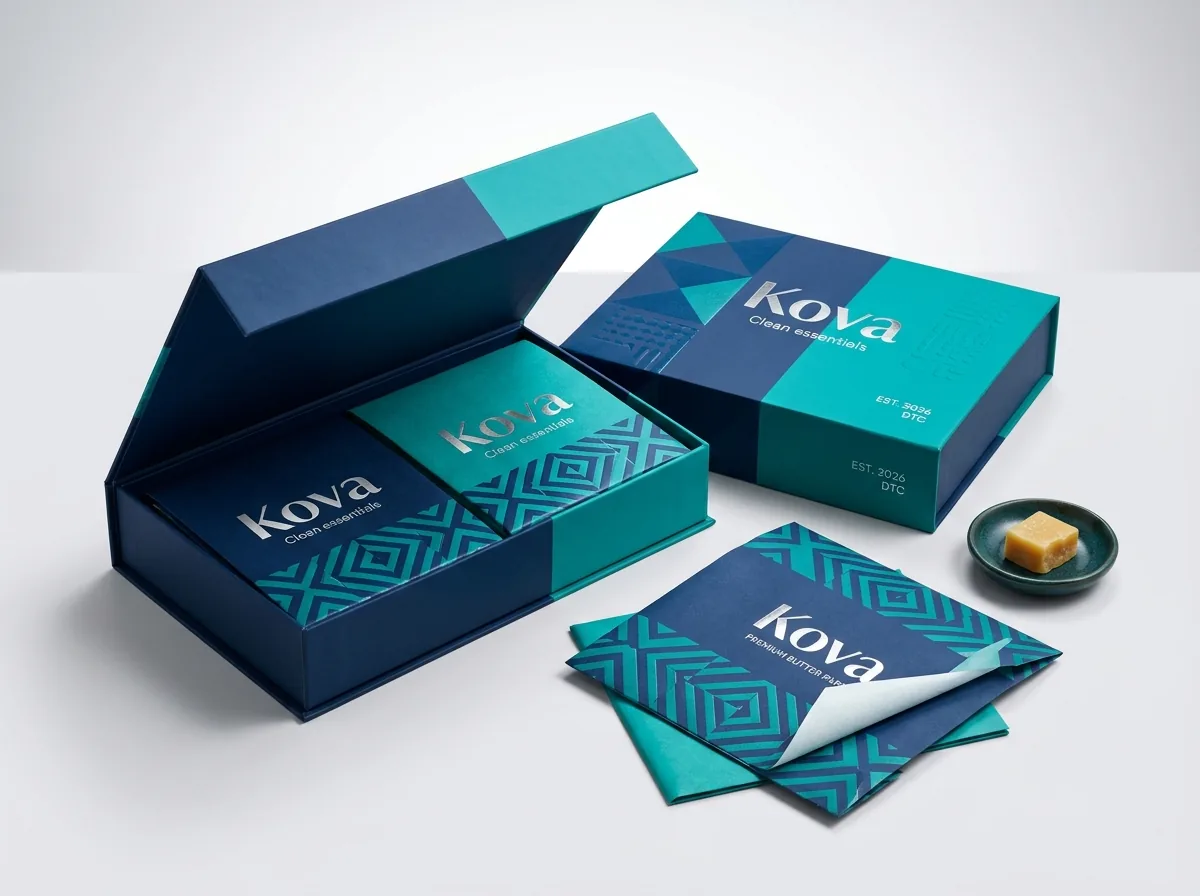
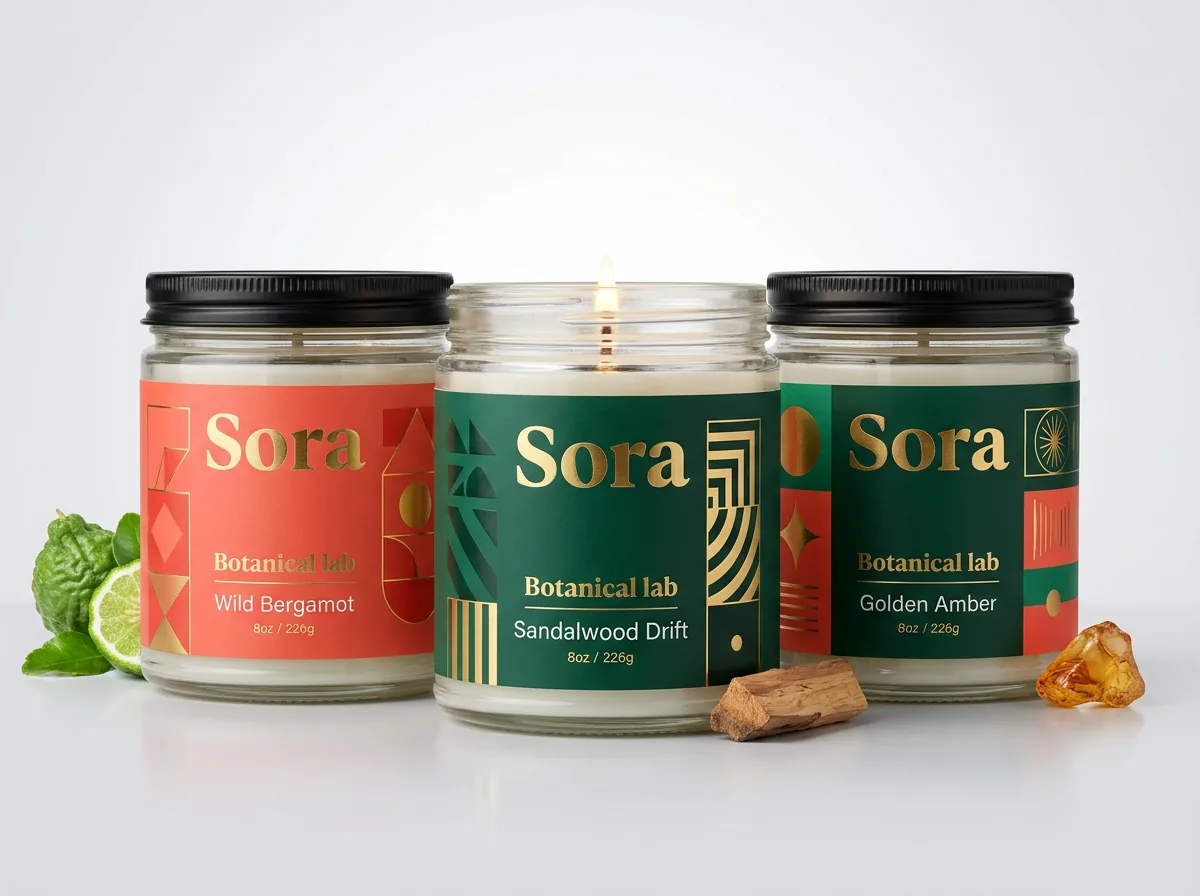
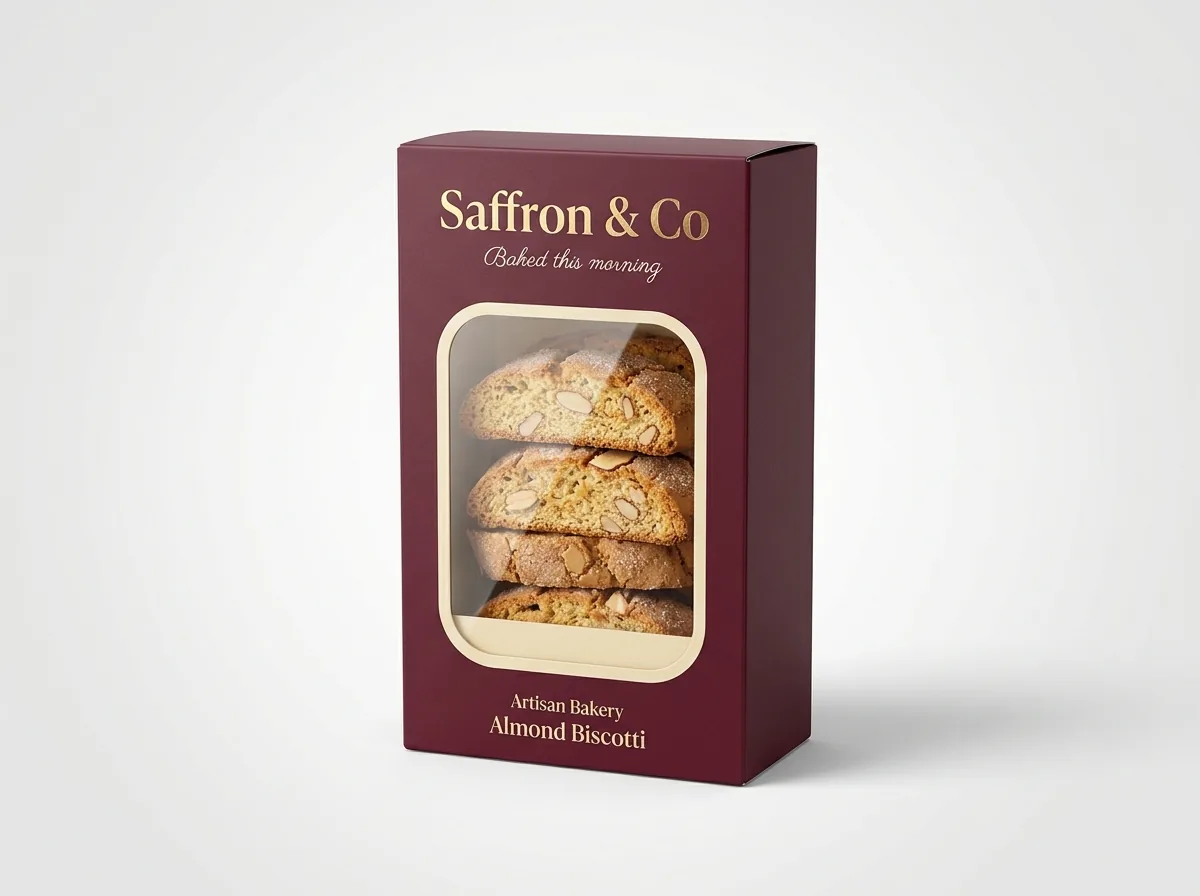
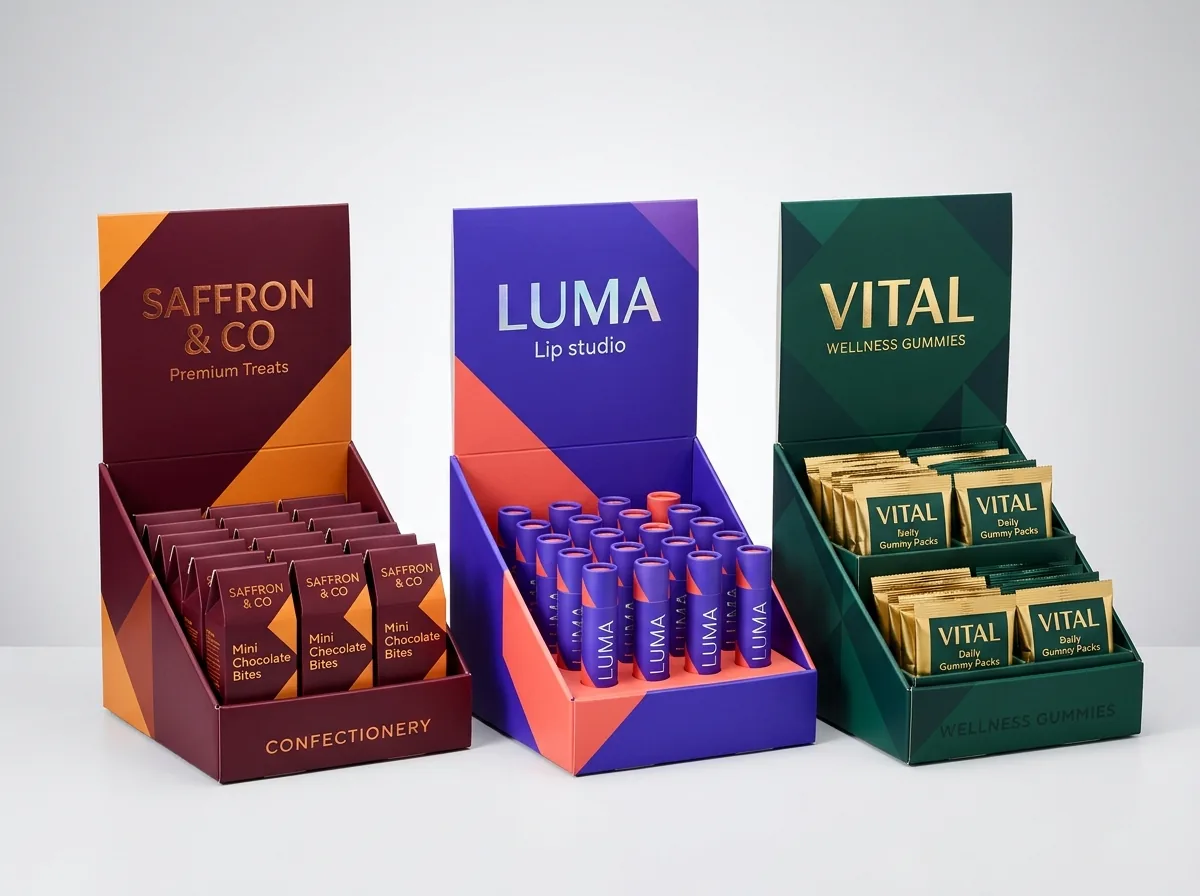
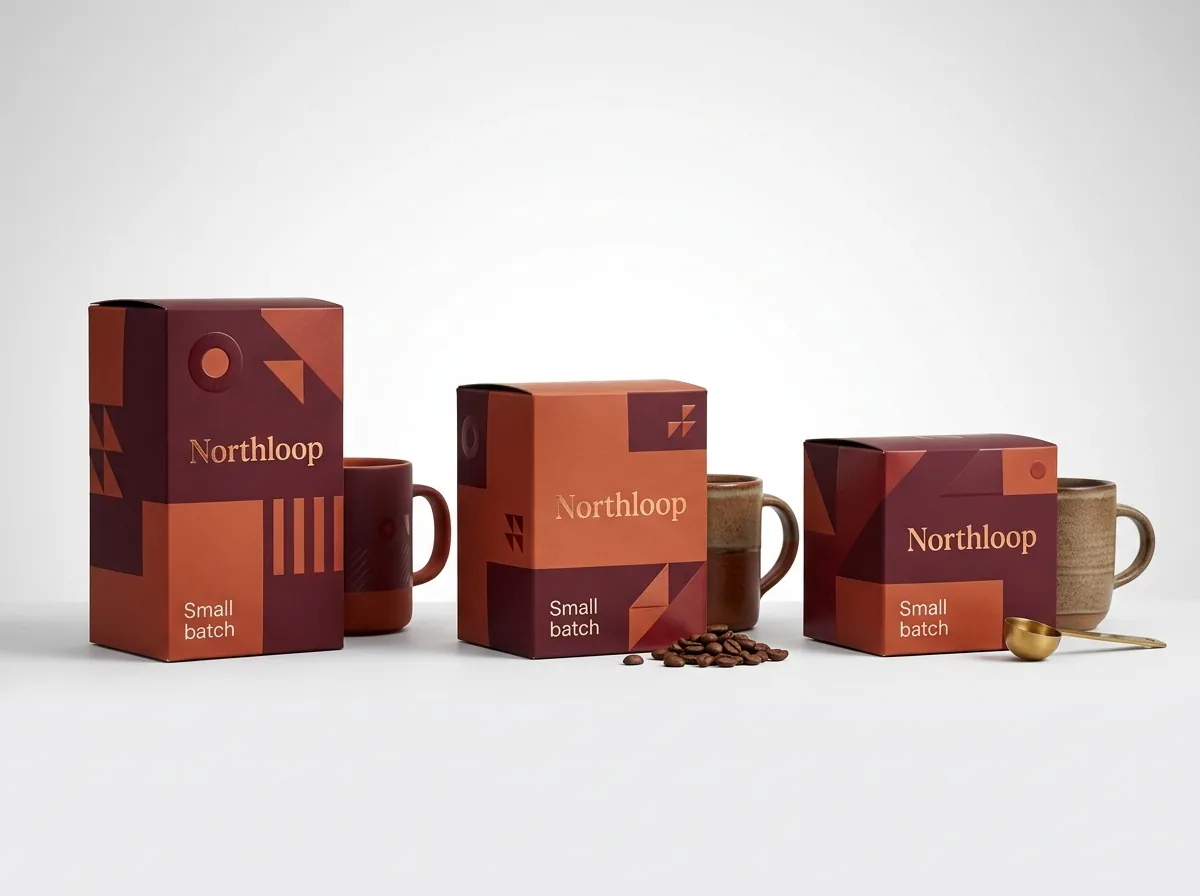
Ready to order wax melt boxes? Compare up to 3 quantities with a free 3D mockup.
Request a Quote →Questions about wax melt boxes
Do I need interior lamination if my wax melts are inside a plastic clamshell?
No. Because the PET or PVC plastic clamshell completely seals the scented wax, the outer paperboard sleeve or carton never touches the fragrance oil. Standard white card or brown kraft with an exterior matte or soft-touch finish works cleanly.
What interior coating should I request for bare loose wax tarts or unbagged snap bars?
Ask for interior gloss or matte film lamination on the inside of the paperboard tray and cell dividers, or wrap the bare wax in a grease-resistant butter or glassine paper liner so fragrance oils cannot soak into raw paper fibers.
Can I split a 1,000-box order across 5 or 10 different wax melt fragrances?
Yes. So long as every fragrance uses the exact same box or sleeve dimensions, cutout window and board stock, we gang-run your multiple scent designs together in one 1,000-box production run with zero die or plate charges.
Does a die-cut cold-throw smell hole add extra tooling fees to my order?
No. CubitPack never charges cutting die fees. Whether you want a small 0.5-inch round breather hole, a hexagon scent vent or a front window cutout, it is included in your custom dieline at no extra tooling cost.
Can your designers help me lay out my scent lineup and back warmer warnings?
Yes. Every order includes free design support. Send us your logo, scent names, fragrance notes and any inspiration or AI artwork, and our prepress team will lay out your front panels, end flaps and back safety icons for free.
Will I see a digital proof and 3D mockup of every scent before paying?
Yes. You receive a free 2D dieline proof and an interactive 3D mockup before you pay so you can check every scent name, Pantone color band, smell hole placement and barcode.
Still have a question? Ask a packaging specialist.
Request a Quote →Request your wax melt boxes quote
Tell us your size and quantities, and one dedicated account manager prepares pricing for each tier.
- Free design & AI-to-print studio + 3D mockup
- No die or plate charges · 4–5 day rush available
- Free shipping to all 50 states
- 10% off your first order
This design guide combines paperboard oil-barrier principles (interior film lamination and glassine wraps for 8–12% fragrance-load waxes) with home fragrance warmer safety disclosures and CubitPack policies from our published product specifications. Verified by a packaging specialist.
Sources
What changed
- October 22, 2026: First published.
- October 22, 2026: Updated specifications, terminology, and verified source links.
More guides
New packaging guides by email
Sizes, materials and design tips. Unsubscribe anytime.