
What size wax melt box do I need?
Short answer: Measure the widest outer flange of your clamshell, wrapped snap bar or tart grid and add 1/16 to 1/8 inch. Standard 2.75 oz 6-cavity clamshells fit a 4.375 × 3 × 1.125 inch carton, while 10-cell snap bars fit 5.75 × 2.875 × 0.625 inch custom wax melt boxes.
On this page
- How do I measure clamshells, snap bars and loose wax tarts for a box
- What are standard wax melt box and sleeve dimensions by format
- How do you size sleeves for 6-cavity clamshells vs cartons for wax snap bars
- How do I calculate dimensions for plastic-free partitioned wax tart boxes
- How do I size a retail counter display box or wax warmer starter kit
- Common mistakes
- FAQs
Request a custom quoteFree dieline & 3D mockup
The right wax melt box size depends on which of the three main wax formats you pour: standard 6-cavity plastic clamshells, flat breakaway snap bars, or loose botanical wax tarts packed in a divided grid. For a standard 2.5 to 2.75 oz 6-cavity clamshell, always measure across the flat outer rim flange rather than just the six cube wells; a 3.0 × 1.125 inch opening by 3.75 inches long creates a snug slide-on sleeve that leaves the top hang tab exposed, whereas a 5.375 × 3.0 × 1.125 inch tuck carton encloses the entire blister pack. For chocolate-style wax snap bars wrapped in glassine or polypropylene bags, a 5-segment bar fits a 5.625 × 1.75 × 0.625 inch box and a 10-cell slab fits a 5.75 × 2.875 × 0.625 inch carton. CubitPack cuts every box, sleeve and divider to order with zero die fees.
How do I measure clamshells, snap bars and loose wax tarts for a box?
Wax melt makers run into sizing trouble when they measure the poured wax cavity instead of the outer packaging rim. On a thermoformed PET or PVC clamshell, the hinged plastic rim extends 1/8 to 3/16 inch beyond the six wax cubes on every side, and the top hang-hole header adds nearly a full inch to the vertical height. On a hand-poured wax snap bar sealed inside a cello or glassine bag, the crimped side seams and folded top flap add width and length that must fit inside the carton without buckling. Place your finished, cooled wax product on a flat table inside whatever inner sleeve or clamshell you use, and measure its maximum length, width and thickness with a metal ruler. When you enter those inside dimensions on our custom printed wax melt cartons quote form, our prepress engineers add the exact paperboard crease allowance so your sleeve glides on smoothly without binding or slipping off on the shelf.
- Plastic clamshells (slide-on sleeve): measure full flange width and blister depth, then add 1/16 inch so the sleeve grips by friction.
- Plastic clamshells (full box): measure from the bottom hinge to the top of the hang tab and add 1/8 inch to length, width and depth.
- Bagged wax snap bars: fold the top bag seal flat against the back of the bar before measuring length, width and thickness.
- Loose wax tarts (grid box): measure the diameter and height of one tart, multiply by your row/column count, and add 1/8 inch per divider wall.
- Always list dimensions as inside Length × Width × Depth (Height) in inches.
What are standard wax melt box and sleeve dimensions by format?
Although every CubitPack carton is cut to your custom dieline with no tooling fees, most home fragrance brands pour into industry-standard silicone snap-bar molds, 2.75 oz 6-cavity clamshells, 5 oz jumbo clamshells or 1.5 inch botanical tart molds. Use the reference table below to benchmark your layout before measuring your own molds. Notice how the standard 6-cavity clamshell is listed in two ways: a 3.75 inch tall open-ended sleeve box that covers the six wax cubes while letting the plastic hang tab protrude from the top for retail pegboards, and a taller enclosed carton that hides the entire blister pack inside a printed paperboard box.
| Wax melt format & weight | Typical inside size (L × W × D) | Recommended box or sleeve style |
|---|---|---|
| 6-cavity clamshell body sleeve (2.5–2.75 oz) | 3.75 × 3.0 × 1.125 in | Open-ended slide-on sleeve |
| 6-cavity clamshell full carton (with hang lip) | 5.375 × 3.0 × 1.125 in | Reverse or straight tuck end |
| 5-cell slim breakaway wax snap bar (1 oz) | 5.625 × 1.75 × 0.625 in | Straight tuck end or window box |
| 10-cell chocolate-style wax snap bar (2 oz) | 5.75 × 2.875 × 0.625 in | Straight tuck end or sleeve |
| 4 loose round/fluted tarts (2×2 grid) | 3.75 × 3.75 × 1.25 in | Tray and sleeve with 4-cell divider |
| 6 loose botanical soy tarts (3×2 grid) | 5.25 × 3.625 × 1.25 in | Tray and sleeve with 6-cell divider |
| Jumbo 12-cavity or 5 oz clamshell pack | 6.25 × 3.75 × 1.25 in | Auto lock or reverse tuck end |
| 12-pack clamshell retail counter caddy | 6.25 × 7.0 × 4.5 in | Counter display box with header |
How do you size sleeves for 6-cavity clamshells vs cartons for wax snap bars?
A standard 6-cavity plastic clamshell has two distinct sections: the lower 3.75-inch body containing the six wax cubes, and the upper 1.5-inch flat plastic flange containing the snap closure and hang hole. When you order an open-ended paperboard sleeve, you want the vertical length of the sleeve to match the 3.75-inch cube body so the sleeve stops right below the top snap lip. That way, retail stores can still hang the clamshell on a peg hook while your paperboard sleeve wraps all four sides of the wax cubes with full-color branding and scent notes. Breakaway wax snap bars poured in silicone molds have no rigid plastic shell around them, which makes them prone to snapping in half during parcel shipping if packed in a flimsy bag. Sliding a glassine-wrapped 10-cell snap bar into a snug 5.75 × 2.875 × 0.625 inch straight tuck end box or window box acts like a splint along the length of the wax slab so it arrives in one piece.
Know your size? Compare pricing across up to 3 quantities.
Request a Quote →How do I calculate dimensions for plastic-free partitioned wax tart boxes?
More home fragrance brands are ditching single-use PVC and PET clamshells in favor of loose fluted tarts, botanical wax coins or stamped wax medallions packed inside a 100% paperboard tray and sleeve box or two-piece box with an interlocking card grid. To calculate the inside length and width of a partitioned tart box, start with the diameter of a single poured wax tart and add 1/8 inch of clearance per cell. Next, add 1/16 inch for each internal paperboard divider strip and 1/8 inch for the double-wall folded tray perimeter. For example, six round botanical tarts that each measure 1.5 inches across arranged in a 3 × 2 grid need three 1.625-inch cells across the length and two 1.625-inch cells across the width, plus the interlocking cardboard insert walls, landing at an inside tray dimension of 5.25 × 3.625 × 1.25 inches. Always ask for matte or gloss lamination inside the tray and divider strips so fragrance oils never stain the paperboard.
How do I size a retail counter display box or wax warmer starter kit?
Because individual wax melt packs are compact impulse items, wholesale stockists love when a brand ships 12, 18 or 24 packs inside a ready-to-sell counter display box. To size a display caddy for 12 sleeved clamshells (each 3.0 inches wide × 1.125 inches deep), arrange them in 2 columns of 6 packs front-to-back. Multiply 3.0 inches by 2 columns plus 1/4 inch clearance for a 6.25-inch inside width, and multiply 1.125 inches by 6 deep plus 1/4 inch clearance for a 7.0-inch inside depth. If you are building a starter kit that pairs a ceramic electric or tealight wax warmer with three or four wax melt packs, use an E-flute corrugated mailer or auto lock carton with a two-compartment insert. Size the warmer compartment to the ceramic dish diameter plus 3/8 inch of corrugated cushioning on all sides, and size the adjacent slot to hold your stacked clamshells or snap-bar boxes snugly so the heavy ceramic base can never crush the wax.
What are the most common wax melt box sizing mistakes?
Almost every misfitting clamshell sleeve or cracked snap bar traces back to ignoring plastic flange overhang or leaving too much vertical play. Avoid these five sizing pitfalls
- Measuring only the six wax cube wells on a plastic clamshell and forgetting the 1/8 inch heat-sealed rim flange around the outside.
- Making a slide-on clamshell sleeve 1/4 inch too wide, which lets the plastic blister slide right out the bottom when picked up.
- Packing a 0.5-inch thick breakaway wax snap bar inside a 1-inch deep carton where it bounces and snaps along the score lines.
- Putting loose scented wax tarts in a partitioned box without accounting for the thickness of the interlocking card divider walls.
- Sizing a retail counter display front lip taller than 2.5 inches, which hides the scent names printed on the lower half of your melt packs.
Find your size
Suggested inside size: 4.375 × 3 × 1.125 in
A starting point. Your account manager confirms the size with you before the proof.
Quote this size →Packaging for this
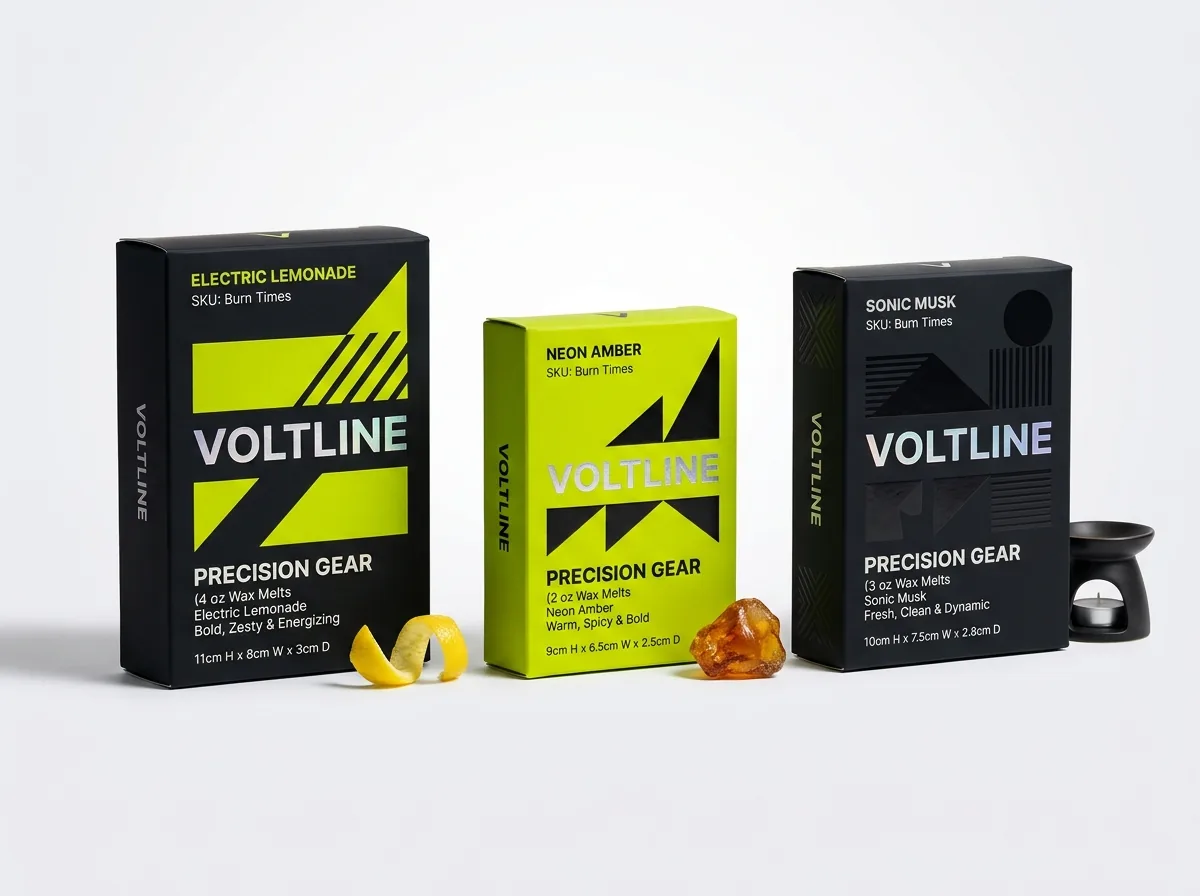
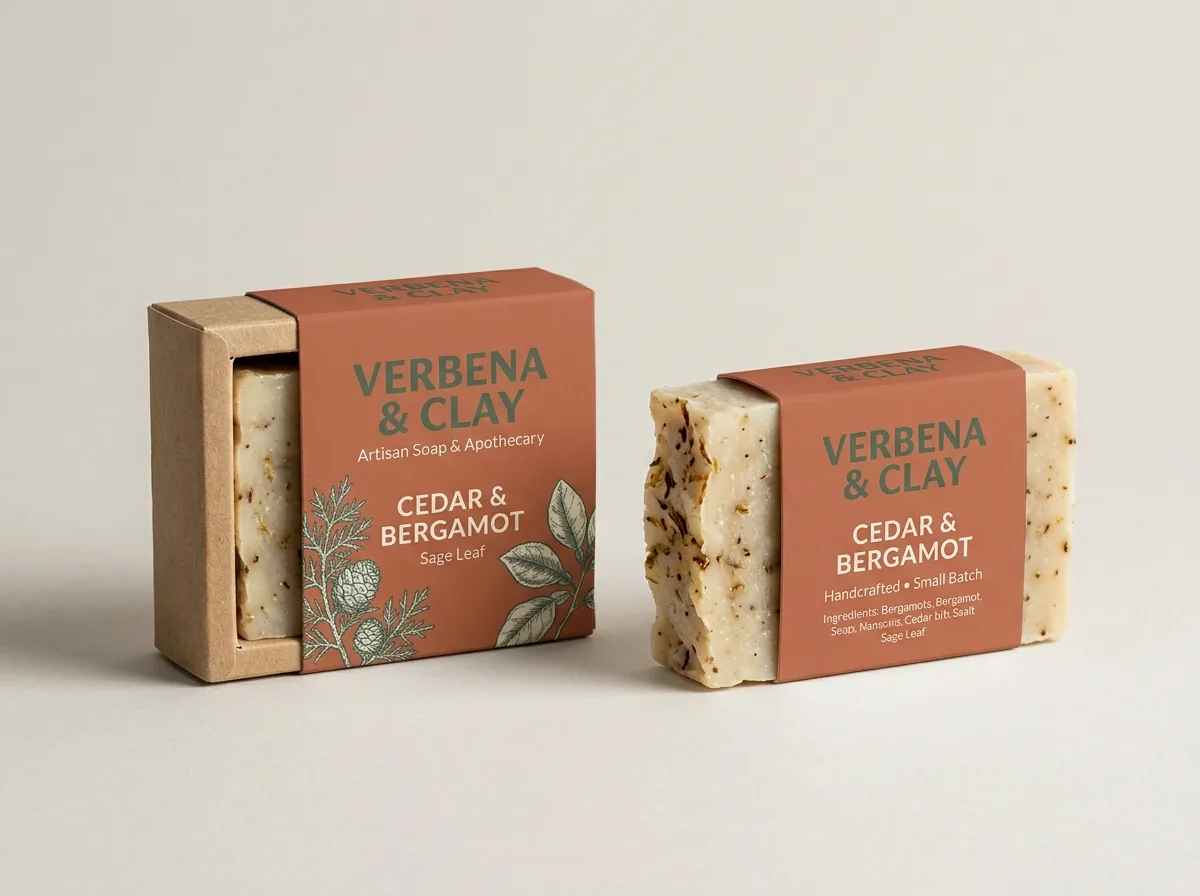
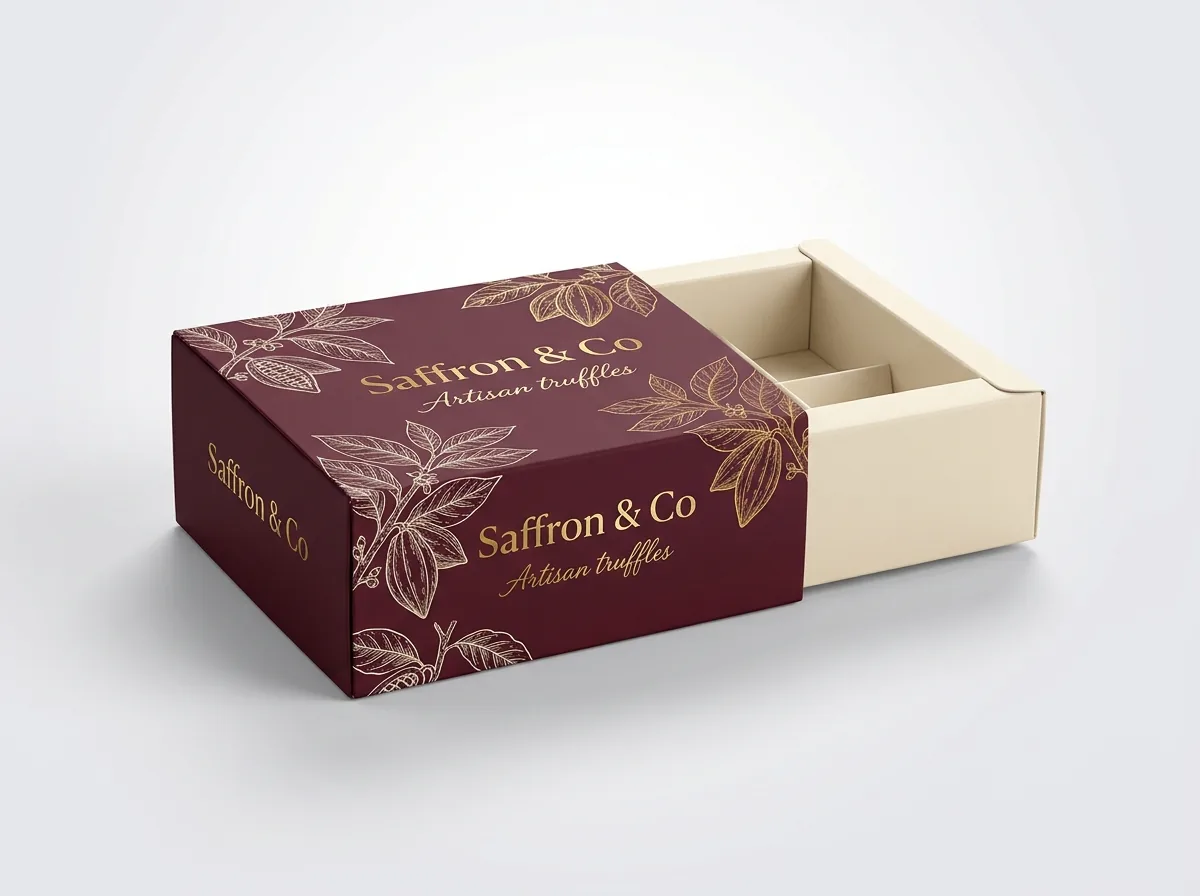



Ready to order wax melt boxes? Compare up to 3 quantities with a free 3D mockup.
Request a Quote →Questions about wax melt boxes
Are custom wax melt box and sleeve dimensions listed as inside or outside sizes?
All CubitPack box and sleeve dimensions are quoted as usable inside measurements in the order of Length × Width × Depth (Height) in inches. That ensures your plastic clamshell, wrapped snap bar or tart grid fits without pinching.
What size paperboard sleeve fits a standard 2.75 oz 6-cavity wax melt clamshell?
A standard 6-cavity clamshell body measures roughly 2.9 inches wide by 1.05 inches deep across the outer rim flange. An inside sleeve opening of 3.0 × 1.125 inches by 3.75 inches tall slides on with a snug friction fit while leaving the top hang tab exposed.
What size box fits a 10-cell chocolate-style wax snap bar?
Most 10-cell silicone snap-bar molds produce a bar around 5.5 × 2.625 × 0.45 inches. Once sealed inside a glassine or cello bag, it fits cleanly inside a 5.75 × 2.875 × 0.625 inch straight tuck end or window carton.
Can I use one sleeve or box size across all my wax melt scents?
Yes. Standardizing on one clamshell or snap-bar size across your entire fragrance line lets us gang-run 4, 8 or 12 scent artworks together in a single 1,000-unit order with zero cutting die or plate charges.
Will CubitPack engineer the interlocking 4-cell or 6-cell tart divider for free?
Yes. Tell us the diameter and height of a single poured wax tart and how many pieces go in each box, and our design team will size both the outer drawer box and the interlocking paperboard grid divider on your free proof.
How can I test the friction fit of a clamshell sleeve before full production?
Every order includes a free 2D dieline proof (which you can print at 100% scale to wrap around your clamshell) and a 3D mockup before payment, or you can order a paid physical prototype credited toward your full order.
Still have a question? Ask a packaging specialist.
Request a Quote →Request your wax melt boxes quote
Tell us your size and quantities, and one dedicated account manager prepares pricing for each tier.
- Free design & AI-to-print studio + 3D mockup
- No die or plate charges · 4–5 day rush available
- Free shipping to all 50 states
- 10% off your first order
The inside dimensions in this guide were measured against standard North American 2.5 to 2.75 oz 6-cavity PET clamshells, 5-cell and 10-cell silicone snap-bar molds, and 1.5 inch botanical tart molds. A CubitPack packaging specialist verified every row. Spot an error? Tell us and we will fix it.
Sources
What changed
- October 22, 2026: First published.
- October 22, 2026: Updated specifications, terminology, and verified source links.
More guides
New packaging guides by email
Sizes, materials and design tips. Unsubscribe anytime.