
How do I design custom mug boxes and handle-lock inserts?
Short answer: Align your front window or artwork with the internal handle-lock slot so the mug's print zone always faces forward, place dishwasher and microwave care icons on the side or bottom panel, and add matte lamination on E-flute folds. Share one dieline on custom mug boxes across all your designs.
On this page
- What belongs on each panel of a custom printed mug box
- How do you align a front window with the internal handle-lock slot
- What care icons and material disclosures should you print on drinkware boxes
- How do you design one universal mug box for 10 different mug graphics
- What drives the cost of custom printed mug boxes (and which finishes hold up)
- Common mistakes
- FAQs
Request a custom quoteFree dieline & 3D mockup
Designing a custom mug box is a three-dimensional coordination exercise between the artwork on your ceramic cup and the structural insert inside the carton. Because a coffee mug has a protruding C-handle that must sit in one of the four diagonal corners of the box, the position of that internal handle-lock slot dictates which part of the ceramic bowl faces the front panel. When our design team aligns the handle slot at a 45-degree angle to the back-right or back-left corner, the center of your mug's artwork stays locked directly behind the front die-cut window without ever spinning in transit. Combine that structural lock with clear dishwasher and microwave care icons on the side panel, scuff-resistant lamination over dark ink creases, and a universal window layout that lets you pack multiple mug graphics inside one shared 1,000-box production run at CubitPack.
What belongs on each panel of a custom printed mug box?
Whether you are designing a 4.5 × 4.0 × 4.25 inch auto lock retail carton or a 5.0 × 4.5 × 4.75 inch E-flute corrugated shipping box, organizing your graphics across the six faces of the cube keeps the front clean while giving buyers every care detail they need. Use the panel-by-panel checklist below to plan your window cutout, brand story, care pictograms and barcode placement before sending your files for custom printed mug cartons. Always request the exact 2D PDF dieline that matches both your outer carton and internal handle-lock collar so your artwork panels align cleanly with the mug inside.
| Mug carton panel | What to place on this panel | Prepress & structural tip |
|---|---|---|
| Front panel | Brand logo, mug collection name, or die-cut display window | Keep window edges 1/2 in inside vertical fold scores |
| Right or left side panel | Dishwasher/microwave care icons, capacity (11 oz / 325 ml), material | Optional side handle-cutout slot on retail sleeves |
| Back panel | Roaster, artist or studio story, full-wrap illustration, UPC barcode | Print barcode black on white (min 1.5 × 1 in) |
| Top tuck lid or mailer flap | Monogram seal, gift to/from badge, or 'Open Here' pull tab | Great spot for metallic foil stamping or embossing |
| Inside top lid / inner collar | Unboxing welcome message, brewing guide or artist bio | Included with inside printing; no extra card needed |
| Bottom auto lock flaps | Recycling symbol, city/state distributor line and batch code | Keep text off the glued diagonal overlap seams |
How do you align a front window with the internal handle-lock slot?
Nothing ruins a retail display faster than a row of window boxes where half the mugs have spun around so shoppers are staring at the blank back of the cup or the side of the ceramic handle. That happens when a brand orders a window carton without a top or bottom handle-locating collar. To lock your mug's illustration dead-center in the window, tell our design team where the artwork sits on the mug relative to the C-handle. Most mugs are printed either on both sides (double-sided), facing out when held in the right hand (handle on the right), or centered opposite the handle. We die-cut a folded top cardboard insert ring that drops over the mug rim and traps the top of the C-handle at the exact angle required to keep your mug graphic facing straight through the front window.
What care icons and material disclosures should you print on drinkware boxes?
Customers almost always check the box before putting a new mug into the dishwasher or microwave, especially when buying hand-glazed pottery, gold-lustre ceramic mugs or enameled steel camp mugs. Printing clear care pictograms right on the side or bottom panel prevents ruined metallic decals and customer refund requests. Include four quick-read specifications on your side or back panel: (1) Capacity in both US fluid ounces and milliliters (such as '11 fl oz / 325 ml'), (2) Vessel material (stoneware, porcelain, new bone china, or enameled steel), (3) Dishwasher safety (top-rack dishwasher safe vs hand-wash only to preserve gold foil or reactive glazes), and (4) Microwave safety (microwave safe vs do not microwave for metal-rimmed camp mugs and metallic-ink decals), plus food-contact lead-free and cadmium-free glaze assurances if provided by your ceramic manufacturer.
- Standard sublimated ceramic mugs: Dishwasher safe and microwave safe icons.
- Gold, silver or copper lustre mugs: Bold 'Do Not Microwave' and 'Hand Wash Only' icons.
- 12 oz enameled steel camp mugs: 'Do Not Microwave · Hand Wash Recommended' steel rim notice.
- Handmade studio pottery: Note natural variations in reactive glaze color and speckle.
Know your size? Compare pricing across up to 3 quantities.
Request a Quote →How do you design one universal mug box for 10 different mug graphics?
Coffee roasters, museum gift shops, national park stores and print-on-demand merch brands often sell 6, 12 or 30 different graphic mugs that all use the exact same 11 oz ceramic blank. You have two smart ways to package a multi-design mug catalog at CubitPack without ordering 1,000 boxes per individual mug design. The first approach is the 'universal window box': design one timeless outer carton in your core brand colors with a generous front die-cut window. Because the mug's own illustration or glaze color shows right through the window, one single 1,000-box run works for every 11 oz mug in your store, and you can apply a small barcode or title custom label on the back or bottom per SKU. The second approach is multi-SKU gang-running: keep the exact same 4.5 × 4.0 × 4.25 inch box and insert dieline across your line and split the 1,000-box printing run across multiple exterior box artworks. When laying out a universal window box, keep your front panel typography focused on your brand name, roastery origin or collection tagline rather than a specific illustration name. Place a clean 2.0 × 1.25 inch unvarnished white or kraft rectangle on the back or bottom panel so your fulfillment team can quickly stick the SKU barcode label or stamp the edition name without covering any decorative artwork.
What drives the cost of custom printed mug boxes (and which finishes hold up)?
Four main factors shape your unit price: board stock (standard folding white card or brown kraft costs less than E-flute corrugated or 2 mm rigid board), whether you add a separate die-cut corrugated handle-lock insert for e-commerce shipping, your total order volume (with major price breaks at 2,500 and 5,000 boxes), and specialty surface finishes. When printing dark espresso brown, navy or matte black flood coats on an E-flute corrugated mug mailer or auto lock carton, always include matte or soft-touch lamination. Lamination keeps the paper fibers flexible along the heavy 90-degree fold creases so dark ink never cracks white at the corners, and it prevents warehouse rub marks during pallet transit. Every first order at CubitPack gets 10% off, and we beat written US competitor quotes. Before committing to your full production run, you can request a free 3D digital proof and PDF dieline with any quote, or order our $50 sample kit (credited back on your production order) to inspect our paperboard weights, E-flute corrugated strength and foil finishes in person. If you do not have a graphic designer on staff, our free structural and artwork team can also lay out your mug box from your logo and brand colors.
What are the most common custom mug box design mistakes?
Rotated mugs in windows, cracked fold scores and missing microwave warnings are simple to avoid before going to press. Check these five details
- Cutting a front display window without an internal handle-locking collar, allowing the mug to spin so the blank back faces out.
- Making the vertical side pillars around a front window narrower than 1/2 inch, which weakens stacking strength under heavy ceramic.
- Printing dark solid colors on E-flute corrugated or heavy card without exterior lamination, causing white cracks along the folds.
- Forgetting 'Do Not Microwave' warnings on boxes for enamel camp mugs or ceramic mugs with real metallic gold lustre.
- Placing important bottom text across the diagonal glue seams of an auto lock bottom floor.
Find your size
Suggested inside size: 3.5 × 3.25 × 3.25 in
A starting point. Your account manager confirms the size with you before the proof.
Quote this size →Packaging for this
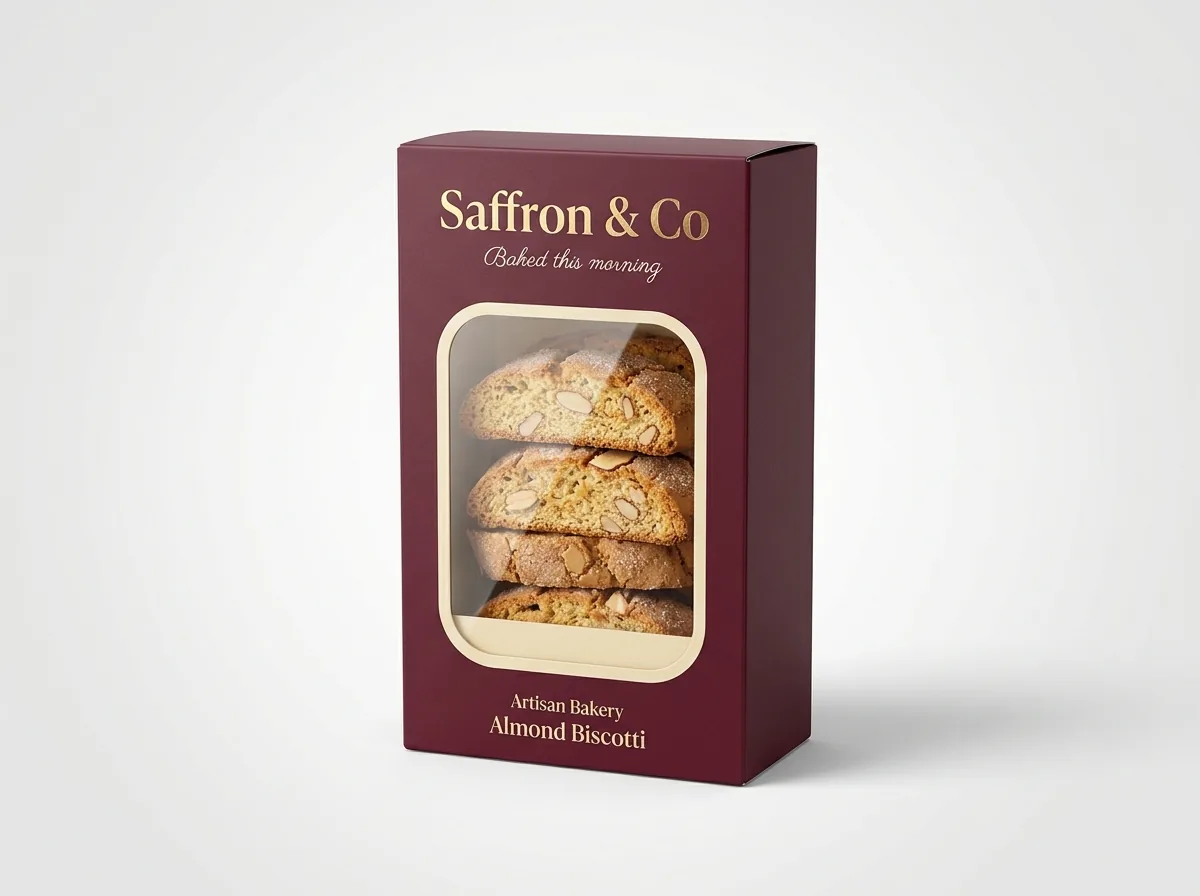
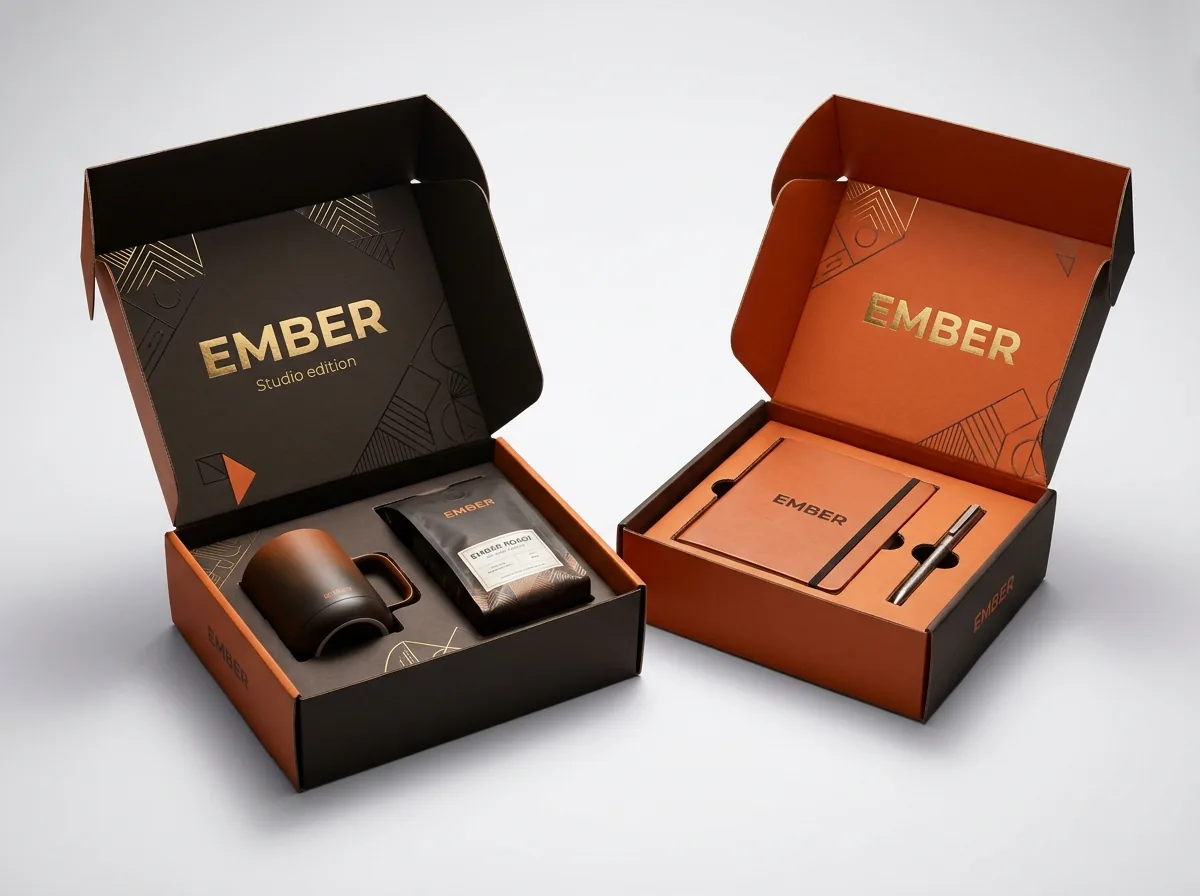
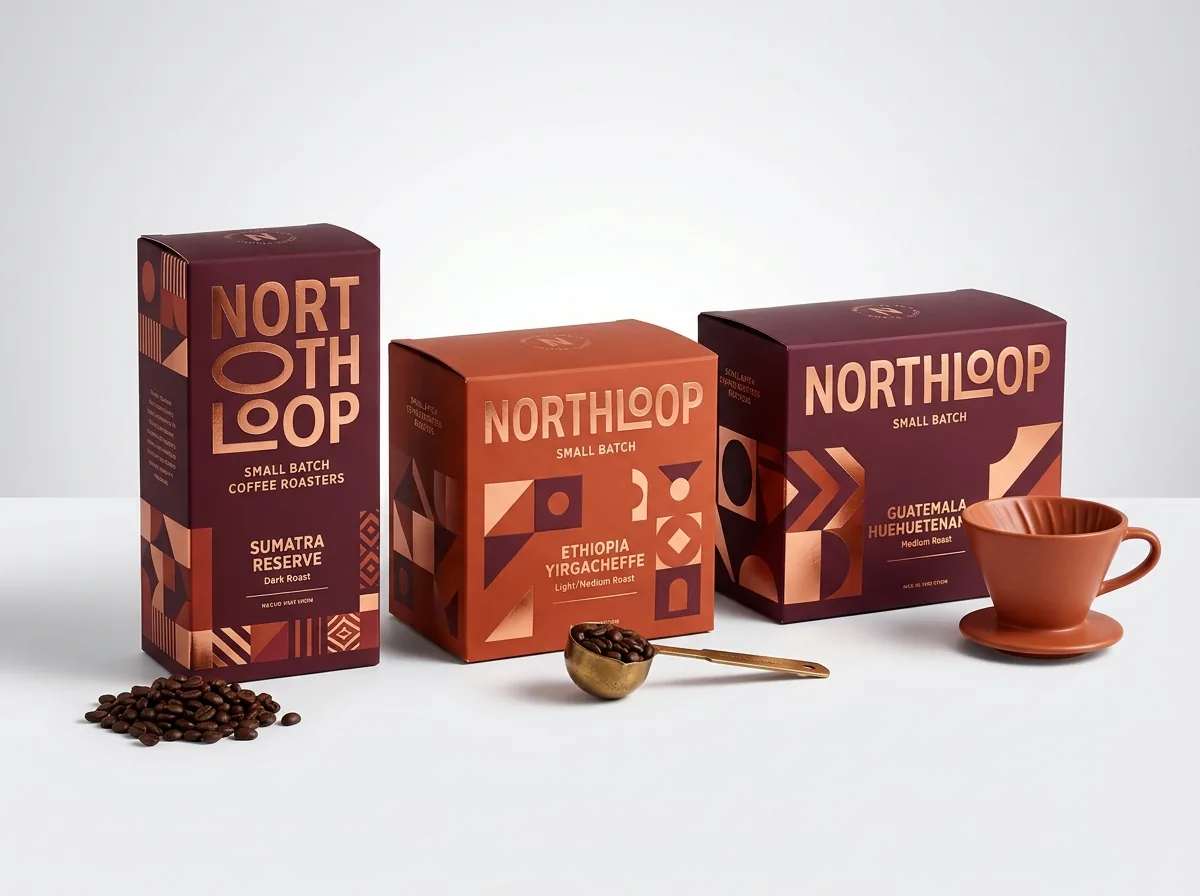
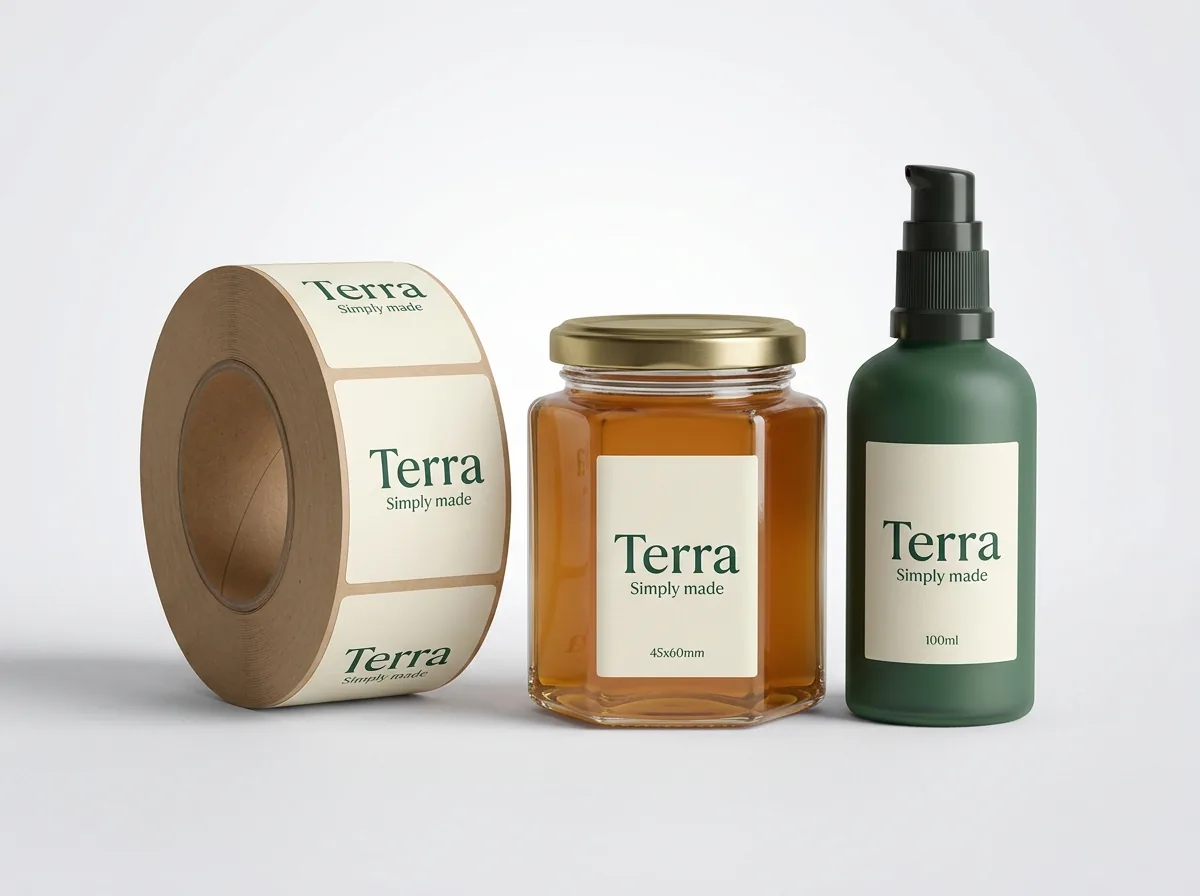
Ready to order mug boxes? Compare up to 3 quantities with a free 3D mockup.
Request a Quote →Questions about mug boxes
Will CubitPack design both the outer mug box dieline and the handle-lock insert for free?
Yes. Send us your mug's bowl diameter, full width across the C-handle, height and artwork position, and our design team will create both the outer box dieline and the slotted handle-lock insert dieline at no cost.
Can I split a 1,000-box order across multiple mug box artwork designs?
Yes. So long as all your mugs use the same box dimensions, window cutout and board stock, you can split a single 1,000-box production run across multiple exterior artwork designs with zero die or plate charges.
How do I make sure my mug graphic faces straight out of the front window?
Tell your account manager whether your mug graphic is centered opposite the handle or angled for a right-handed or left-handed drinker. We angle the internal handle-lock slot to match so the graphic always faces the window.
What bleed and safe zone should I use on a custom mug box dieline?
Extend background colors and artwork 1/8 inch (0.125 in) past all outer cut lines and window cutouts for bleed, and keep text, care icons, logos and barcodes at least 1/8 inch inside all fold score lines.
Can I print on the inside of an E-flute corrugated mug mailer?
Yes. Inside printing on a corrugated mug mailer or auto lock box lets you add a welcome headline, brewing tips or a brand pattern that frames the mug as soon as the customer lifts the lid.
Do I see a 3D mockup of my mug box and window before paying?
Yes. Every order includes a free 2D dieline proof and an interactive 3D mockup before payment so you can verify window proportions, side care icons, inside lid print and insert orientation.
Still have a question? Ask a packaging specialist.
Request a Quote →Request your mug boxes quote
Tell us your size and quantities, and one dedicated account manager prepares pricing for each tier.
- Free design & AI-to-print studio + 3D mockup
- No die or plate charges · 4–5 day rush available
- Free shipping to all 50 states
- 10% off your first order
This design guide combines structural window-to-handle alignment geometry, E-flute lamination prepress rules, ceramic/enamel care icon standards and CubitPack policies from our published product specifications. Verified by a packaging specialist.
Sources
What changed
- October 22, 2026: First published.
- October 22, 2026: Updated specifications, terminology, and verified source links.
More guides
New packaging guides by email
Sizes, materials and design tips. Unsubscribe anytime.