
What size kitchenware box do I need?
Short answer: Measure the full length including any protruding pan handle, helper loop or pouring spout, plus width and height, then add clearance for internal collars or lid trays. Common custom kitchenware boxes measure 18 × 11 × 2.75 inches for a 10-inch skillet and 4.5 × 3 × 12.5 inches for utensil sets.
On this page
- How do I measure skillets, pots, knives and utensils for a custom box
- What are standard kitchenware box dimensions for cookware, knives and tools
- How do pan-handle neck bridges and lid trays change cookware box sizes
- How do I size a rigid box and EVA foam insert for chef knives and cutlery
- How do you size cartons for hanging kitchen gadgets and nesting bowl sets
- Common mistakes
- FAQs
Request a custom quoteFree dieline & 3D mockup
Sizing a kitchenware carton requires measuring the entire silhouette of the tool rather than its nominal cooking diameter. In the cookware industry, a '10-inch skillet' refers only to the round pan rim, while the riveted stainless or cast-iron handle adds another 7.5 to 8.5 inches of length and tilts upward at a 15-degree angle. Similarly, a 5.5-quart enameled Dutch oven measures 10.25 inches across the pot bowl, becomes 13 inches wide across the side loop handles, and requires an extra 1.25 inches of vertical height so an inverted corrugated tray can separate the heavy lid from the pot rim. For forged cutlery, size the rigid case around the combined blade and handle length plus a 0.75-inch EVA foam border on all four sides. CubitPack engineers every carton and insert to order with zero cutting die fees.
How do I measure skillets, pots, knives and utensils for a custom box?
Never pull dimensions from the catalog title of a kitchen product. A '12-inch frying pan', an '8-inch chef knife' and a '5-quart mixing bowl' all omit handles, spouts, bolsters and lids from their marketing names. Set the physical piece on a flat worktable and measure the three outer extremes - total length from tip to handle end, maximum width across spouts or side loops, and standing height to the highest knob or upturned handle tip. Next, decide whether the carton hangs on a retail pegboard, sits on a department-store shelf, or ships directly via parcel carrier. When you enter your target inside Length × Width × Height on our custom printed kitchenware cartons quote form and include your vessel weight and handle length in the notes, our design team builds both the outer carton and the internal bracing on a single proof.
- Total length (L): measure from the far outer rim or helper loop to the tip of the long handle (or blade tip to pommel on knives).
- Maximum width (W): measure across the widest belly, dual pouring spouts, or side loop handles.
- Standing height (H): measure from the table to the top of the upturned handle end or inverted lid knob, not just the pan wall.
- Retail folding or window carton clearance: add 0.25 in to length, width and height for smooth hand loading.
- Corrugated cookware or lid-tray clearance: add 0.5 to 0.75 in per axis for E-flute or B-flute crush buffers and neck collars.
What are standard kitchenware box dimensions for cookware, knives and tools?
Although CubitPack cuts every dieline to your exact tool geometry with zero cutting die charges, most culinary, bakeware and cutlery lines cluster around eight proven carton footprints. Use the benchmark table below to estimate your starting inside dimensions before measuring your physical sample. Notice how long-handled skillets and chef knives use horizontal low-profile footprints (where Length is the longest horizontal axis), while utensil sets, French presses and spice grinders use vertical tower cartons (where Height is the tallest vertical axis).
| Kitchenware item | Typical inside size (L × W × H) | Recommended box & insert style |
|---|---|---|
| Single peeler, zester or folding thermometer | 2.5 × 1.5 × 7.5 in | Straight tuck end with Euro hang tab |
| 5-piece silicone spatula, spoon & whisk set | 4.5 × 3.0 × 12.5 in | Auto lock bottom with front window |
| 8-inch forged chef knife or santoku blade | 14.5 × 3.5 × 1.5 in | Two-piece rigid box + EVA foam bed |
| 4-piece steak knife set (side by side) | 10.5 × 6.5 × 1.75 in | Magnetic or two-piece rigid case |
| 34 oz glass French press or pour-over carafe | 6.0 × 5.5 × 9.25 in | E-flute auto lock + top/bottom rings |
| 10-inch skillet / frying pan with long handle | 18.0 × 11.0 × 2.75 in | E-flute mailer + slotted neck bridge |
| 12-inch skillet with helper loop handle | 20.5 × 13.0 × 3.25 in | B-flute mailer + bowl & neck cradle |
| 5.5-quart enameled cast-iron Dutch oven | 13.5 × 13.0 × 7.5 in | B-flute corrugated + inverted lid tray |
How do pan-handle neck bridges and lid trays change cookware box sizes?
Heavy cookware fails in transit when metal hits metal or when an off-center handle acts like a battering ram. On a 10-inch or 12-inch frying pan, 85% of the mass sits in the round pan bowl while the narrow handle projects 8 inches to one side. To keep the pan from slewing sideways inside a rectangular mailer box, we add a folded corrugated neck bridge that straddles the handle right where it joins the pan wall, plus a 0.5-inch buffer between the handle tip and the end panel. On Dutch ovens, stockpots and saucepans with lids, never ship the lid sitting right-side up on the pot rim. A single vertical drop will chip enameled cast iron or shatter a tempered glass lid ring. Instead, place a protective cardboard insert tray over the open pot rim and rest the lid upside-down (with its knob pointing down into a center cutout) inside the tray. That inverted lid setup adds 1.0 to 1.5 inches to total box height while keeping the overall carton compact.
Know your size? Compare pricing across up to 3 quantities.
Request a Quote →How do I size a rigid box and EVA foam insert for chef knives and cutlery?
An 8-inch chef knife has an 8-inch blade and a 5-inch handle, giving a 13-inch overall tool length. Because a forged culinary blade is razor-sharp and heavy at the heel, placing it loose inside a thin folding carton invites the tip to slice straight through the end flap. High-end cutlery brands package single knives and steak sets inside 50-minimum two-piece rigid boxes or magnetic closure boxes lined with dense routed EVA foam inserts. To calculate the inside dimensions of a single-knife rigid box, add 1.5 inches to the total knife length (0.75 inches of foam at both the tip and butt end) and add 1.5 inches to the blade heel height. That turns a 13.0 × 2.0 × 0.85 inch chef knife into a sleek 14.5 × 3.5 × 1.5 inch presentation case. For a 4-piece steak knife set or a 3-piece paring, utility and chef trio, leave 0.625 inches of foam bridge between adjacent handles so fingers can lift each knife easily without touching neighboring blades. Always include an extra 0.125 inches of vertical head clearance inside the lid for a velvet cover pad or care card.
How do you size cartons for hanging kitchen gadgets and nesting bowl sets?
Countertop gadgets and prep tools split into two retail display formats: individual pegboard tools and bundled gift sets. Single peelers, microplane zesters, garlic presses and folding digital thermometers typically hang on retail peg hooks inside hang tab boxes or window boxes. When sizing a hang-tab carton, remember that the sombrero or Euro slot sits in a double-glued top extension panel above the main box cavity, so your usable inside height is measured below the top score line. For 3-piece or 4-piece nesting ceramic mixing bowls, stoneware baking dishes and stainless colanders, measure the widest diameter of the largest outer bowl plus 0.5 inches for corner crush pads. Then, stack the bowls with a 0.125-inch corrugated separator pad between each base and measure the total nested stack height from the table to the top rim. Because nested ceramics are bottom-heavy, always pair them with a pre-glued auto lock bottom box or B-flute corrugated carton so the floor never bows when lifted.
What are the most common kitchenware box sizing mistakes?
Almost every crushed skillet mailer or split utensil carton comes from overlooking handle angles, lid knobs or nested stack growth. Check these five sizing pitfalls before locking your dieline
- Sizing a frying pan box from the 10-inch cooking diameter and forgetting the 8-inch handle and 0.5-inch helper loop.
- Measuring pan height at the 2-inch sidewall instead of the upturned handle tip, which rises 2.75 to 3.25 inches off the table.
- Packing an enameled Dutch oven lid right-side up directly on the pot rim instead of adding 1.25 inches for an inverted lid tray.
- Leaving less than 0.75 inches of EVA foam between a sharp chef knife tip and the end wall of a rigid cutlery box.
- Measuring the height of a nesting mixing bowl set without the corrugated separator pads placed between each bowl.
Find your size
Suggested inside size: 2.5 × 1.5 × 7.5 in
A starting point. Your account manager confirms the size with you before the proof.
Quote this size →Packaging for this
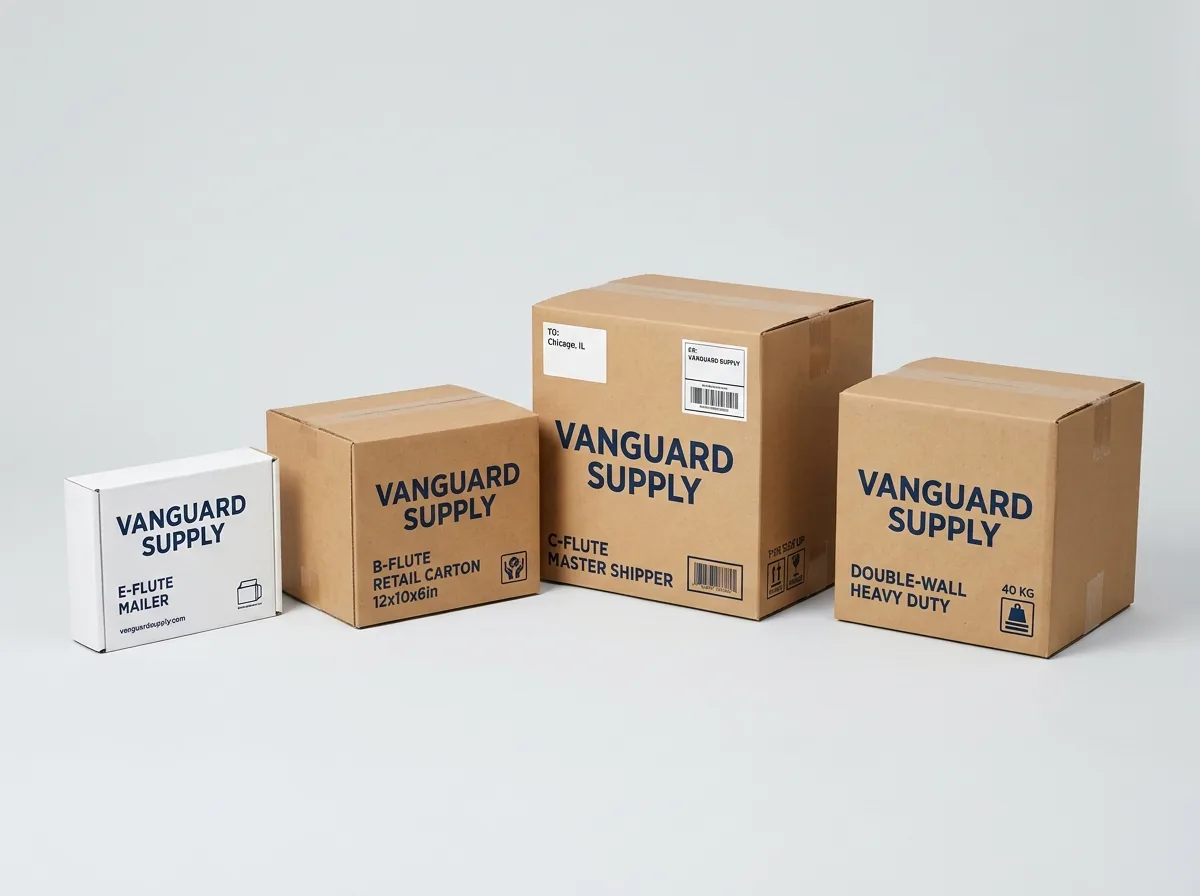

Ready to order kitchenware boxes? Compare up to 3 quantities with a free 3D mockup.
Request a Quote →Questions about kitchenware boxes
Are custom kitchenware box dimensions quoted as inside or outside measurements?
All CubitPack kitchenware and cookware boxes are quoted and engineered using usable inside dimensions in the order of Length × Width × Height in inches. That guarantees your skillet handle, inverted lid tray or EVA knife foam fits without bowing the outer walls.
What size box fits a standard 10-inch or 12-inch frying pan?
A 10-inch frying pan with a standard long handle typically fits an 18.0 × 11.0 × 2.75 inch low-profile E-flute or B-flute corrugated mailer with an internal neck collar. A 12-inch skillet with a front helper loop typically fits a 20.5 × 13.0 × 3.25 inch carton.
What size rigid box do I need for an 8-inch forged chef knife?
An 8-inch chef knife (roughly 13 inches total length from blade tip to handle butt) fits a 14.5 × 3.5 × 1.5 inch two-piece or magnetic rigid box, which leaves a 0.75-inch protective EVA foam perimeter around the tip, heel and handle.
How much extra box height does an inverted Dutch oven lid tray require?
An inverted corrugated lid tray typically adds 1.0 to 1.5 inches to the pot's base height because the lid knob points downward into the open pot cavity while the corrugated tray separates the two enameled rims.
Does CubitPack charge die fees for custom pan collars, lid trays or window cutouts?
No. CubitPack never charges cutting die or printing plate fees. Whether your cookware needs a slotted handle bridge, an inverted lid cradle or a front utensil display window, we build the structural dielines for free.
Can I test my skillet, ceramic bowls or knife in a physical sample box before printing 1,000 units?
Yes. Every order includes a free 2D dieline proof and 3D mockup before payment, and you can order a paid physical prototype cut to your exact cookware and insert dimensions (with its cost credited toward your full order) for drop testing.
Still have a question? Ask a packaging specialist.
Request a Quote →Request your kitchenware boxes quote
Tell us your size and quantities, and one dedicated account manager prepares pricing for each tier.
- Free design & AI-to-print studio + 3D mockup
- No die or plate charges · 4–5 day rush available
- Free shipping to all 50 states
- 10% off your first order
The inside dimensions in this guide were calculated from standard North American 10-inch and 12-inch skillets, 5.5-quart Dutch ovens, 8-inch chef knives, 34 oz French presses and 5-piece silicone utensil sets, including corrugated collar and EVA foam clearances. Verified by a CubitPack packaging specialist.
Sources
What changed
- October 22, 2026: First published.
- October 22, 2026: Updated specifications, terminology, and verified source links.
More guides
New packaging guides by email
Sizes, materials and design tips. Unsubscribe anytime.