
Slide sleeve vs tuck box vs mylar bag for cannabis edibles: which should you choose?
Short answer: Use a two-piece push-tab slide sleeve for 10-cavity gummy blisters and truffles, a straight tuck carton with an inner foil wrapper for 100 mg chocolate bars, or a 'pouch-in-box' carton around a sealed bag so gummies never slump in cases. Compare all options on our custom cannabis edible boxes page.
On this page
- How do slide sleeves, tuck cartons, pouch-in-box setups and mylar bags compare
- When is a two-piece push-tab drawer sleeve worth the upgrade
- Why is the 'pouch-in-box' setup so popular for dispensary gummies and bars
- When should you use auto-lock bottom cartons or sleeves for jars and mint tins
- How do child-resistant lock tabs and tamper-evident closures work across styles
- Common mistakes
- FAQs
Request a custom quoteFree dieline & 3D mockup
Cannabis edible packaging has to solve two problems that no single material handles alone: airtight freshness for terpene-rich gummies or chocolate, and rigid upright posture inside glass dispensary display cases. A standalone mylar pouch seals in moisture and aroma, but flat pouches slump backward on dispensary shelves, hide their front branding under glass-counter glare, and allow soft gummies or chocolate bars to squash in master cases. Conversely, an unlined paperboard box stands tall and prints with crisp foil, embossing and soft-touch finishes, but paperboard alone cannot block oxygen or humidity. That is why dispensary confectioners pair an inner barrier (heat-sealed foil pouch, blister tray or jar) with a custom outer paperboard box. At CubitPack, custom printed cannabis edible boxes start at 1,000 units, with child-resistant lock tabs, inner foil barrier pouches, and state warning spaces available on request.
How do slide sleeves, tuck cartons, pouch-in-box setups and mylar bags compare?
Choosing between a two-piece drawer sleeve, a one-piece tuck or auto-lock carton, and a standalone pouch depends on how fragile your confection is, how budtenders display it inside lit glass cases, and how your state regulates child-resistant and tamper-evident closures. While a single flexible pouch works for value-tier bulk gummies hung on peg hooks, chocolate bars, multi-cavity gummy blisters, truffles and glass jars need rigid structural walls so they never snap, melt together or slump backward on dispensary shelves. Use the side-by-side matrix below to compare the four main dispensary edible formats before requesting a quote for custom edible cartons or inner barrier pouches.
| Packaging factor | Push-tab tray & sleeve | Tuck / auto-lock carton (+ inner wrap) | Standalone mylar bag |
|---|---|---|---|
| Best edible products | 10-pc gummy blister, truffles, premium bars | Foil-wrapped chocolate bars, gummy pouches, jars | Value bulk gummies, chews, baked bites |
| Crush & snap protection | High (double-wall tray + outer sleeve) | Moderate to High (rigid box walls) | Low (soft gummies flatten if stacked) |
| Dispensary display posture | Stands upright or stacks flat like a book | Stands upright in PDQ trays or on shelves | Slumps or tips unless hung on peg hooks |
| Moisture & terpene barrier | Provided by inner blister or foil sachet | Provided by inner foil pouch, flow-wrap or jar | Built-in multi-layer foil laminate |
| Child-resistant options | Side push-tab release locks on request | Paired with CR inner pouch or CR jar cap | Press-to-close CR zipper on request |
| Inside dosing guide space | Full inner sleeve wall + tray rails | Inside top lid and inner back panel | None (interior is food-contact film) |
| Unit packaging cost | Higher (two-piece glued assembly) | Economical at 1,000+ units | Economical for single-piece bag runs |
When is a two-piece push-tab drawer sleeve worth the upgrade?
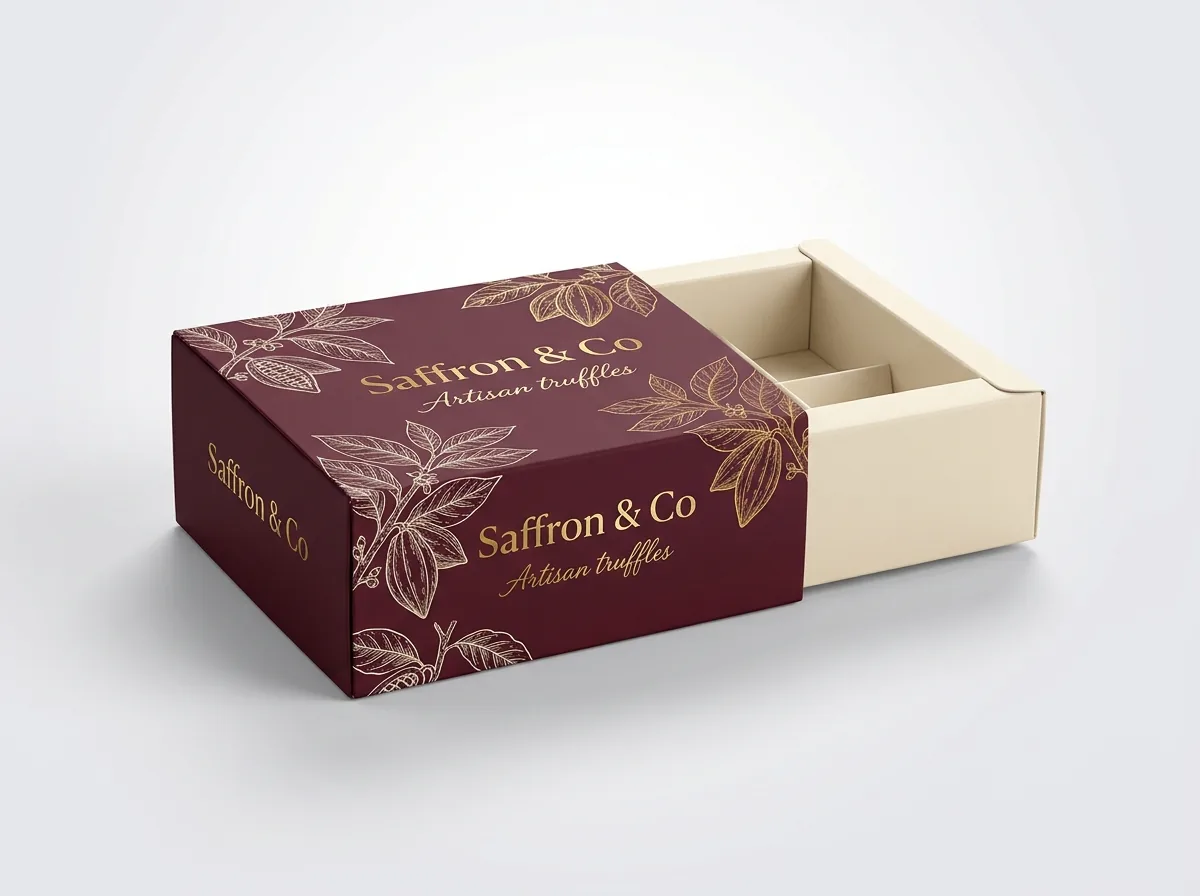
A two-piece tray and sleeve box (often built with side push-tab release locks on request) acts like a miniature dresser drawer for infused confections. Instead of flipping open a thin top flap, the customer presses the side release tabs and slides the inner paperboard tray out of the rigid outer sleeve, revealing a 10-cavity gummy blister sheet, a row of cannabis truffles, a flight of baked brownie bites or a scored chocolate bar. Beyond the tactile unboxing experience, the drawer structure gives you double-walled crush resistance along the long sides where outer sleeve walls overlap the folded inner tray rails. It also provides a massive hidden canvas: you can print a complete cannabinoid terpene wheel, onset-time timeline, and per-piece milligram dosing chart across the inside of the sleeve and along the side rails of the tray without cluttering your front shelf design. Because the inner drawer keeps a 10-cavity thermoformed blister card or partitioned truffle divider horizontal as the customer slides it open, individual fruit chews and ganache centers never tumble out into the buyer's lap or stick together during warm warehouse transit.
Why is the 'pouch-in-box' setup so popular for dispensary gummies and bars?
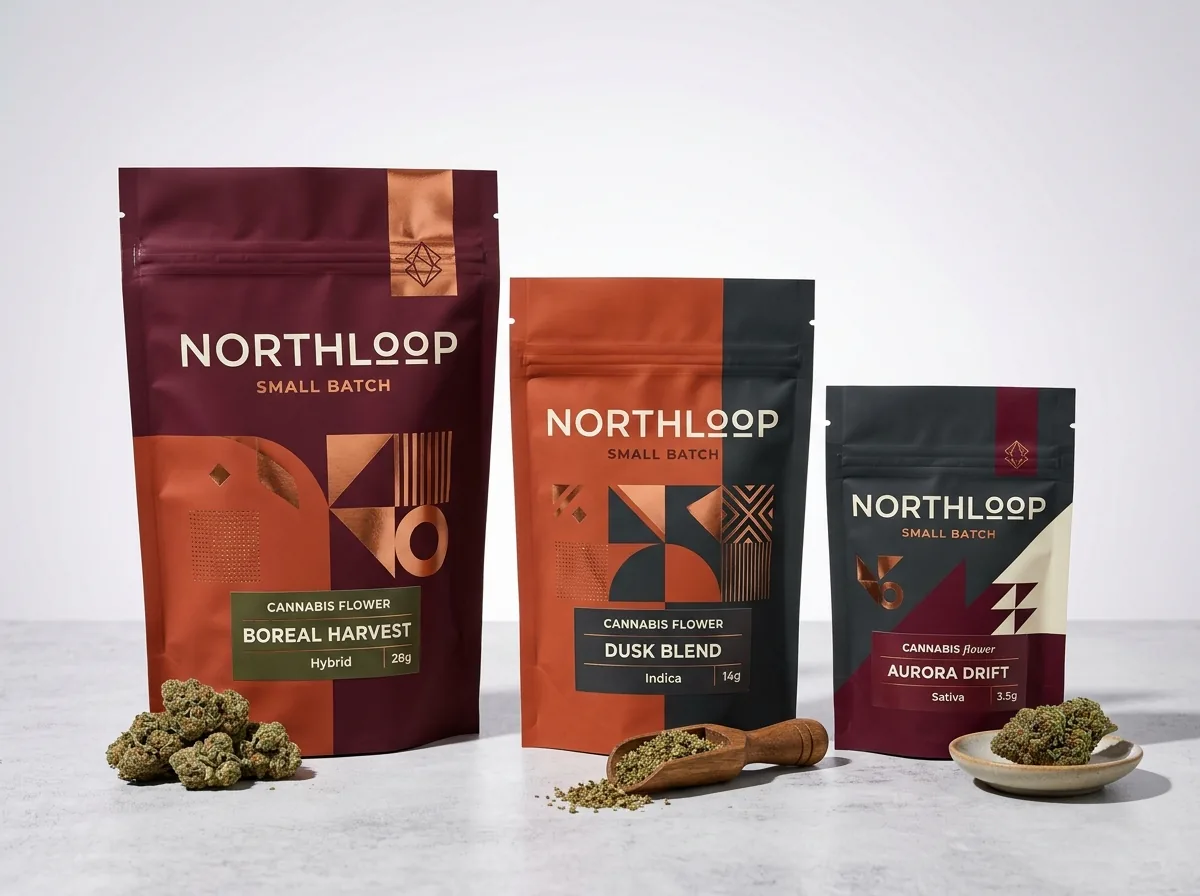
Walk into any multi-state dispensary and you will notice that top-selling gummy and chocolate brands rarely put bare mylar bags on the shelf. Instead, they heat-seal their 10-pack of gummies or 100 mg chocolate bar inside a compact, unprinted or one-color inner foil barrier pouch (available on request; see our custom cannabis mylar bags), then slip that sealed pouch inside a custom printed straight tuck end or reverse tuck end paperboard carton. This hybrid setup gives you the best of both worlds. First, you can buy one standardized unprinted inner foil barrier pouch in high volume and run all your strain, flavor and cannabinoid ratio graphics on low-minimum (1,000-unit) folding cartons with zero plate or die charges. Second, the rectangular paperboard box stands straight up in glass display cases, accepts soft-touch lamination, gold foil stamping and embossing, and gives dispensary intake staff a flat back panel for track-and-trace stickers.
- Standardize the inner barrier: use one shared foil pouch size across 10 gummy flavors to slash barrier bag inventory costs.
- Differentiate on the outer carton: swap Pantone colors, foil badges and strain names across 1,000-box folding carton runs.
- Stop gummy compression: the rigid paperboard walls prevent master shipping cartons from squashing pectin cubes into a clump.
- Stand tall in counter PDQs: rectangular cartons line up neatly inside a 12-count dispensary counter display tray.
Know your size? Compare pricing across up to 3 quantities.
Request a Quote →When should you use auto-lock bottom cartons or sleeves for jars and mint tins?
Not every edible comes in a flat pouch or bar. 20-count and 30-count gummy packs, infused honey pots and fast-acting beverage syrups are frequently packed in thick glass or PET jars with push-and-turn child-resistant caps, while micro-dosed 2.5 mg sublingual mints and pastilles use pocket metal slider or click tins. Because curved jar walls and tiny 2.5 × 3.75 inch metal tins barely have enough flat surface area for a brand logo - let alone 6-point state warnings, Nutrition Facts, ingredient lists, universal symbols and a 2 × 1 inch track-and-trace barcode - placing the jar inside a pre-glued auto lock bottom box (or sliding a paperboard sleeve over the mint tin) solves compliance overcrowding immediately while protecting glass jars in transit. On glass gummy jars and 2 oz cannabis beverage shots, we also die-cut an internal paperboard neck collar or bottom riser inside the auto-lock carton so the jar sits centered and cannot rattle against the outer walls during regional distributor delivery.
How do child-resistant lock tabs and tamper-evident closures work across styles?
Child-resistant needs depend on your state and on your inner container. Check your state's rules and tell your account manager what your primary pouch, jar or blister already covers. Child-resistant lock tabs, inner foil barrier pouches, and state warning spaces are available on request. Whether your primary container uses a push-and-turn gummy jar cap, a zipper pouch, a foil wrapper or a blister tray, we can pair it with a standard tuck carton with custom seal stickers over the tuck ends or a two-piece push-tab slide-lock sleeve on request. By matching your outer paperboard style to your primary inner wrapper instead of over-engineering both layers, your kitchen team packs orders faster and your customers enjoy a smooth adult opening experience. When you request a quote from CubitPack, share your inner wrapper dimensions and state rules so our structural designers can build a free custom dieline, set up a digital proof and 3D mockup before you pay, and produce your cartons in 10 to 14 business days (with 4 to 5 day rush available and free shipping across all 50 US states).
What are the most common mistakes when choosing an edible package format?
Picking an outer box without planning how it works with your inner moisture barrier leads to stale edibles or crushed dispensary displays. Avoid these five mistakes
- Putting unwrapped gummies or chocolate directly inside a paperboard tuck box without an inner foil barrier pouch or blister tray to block air and humidity.
- Packing soft pectin gummies in a standalone flexible bag with no outer box or blister tray, allowing master case stacking to mash the gummies together.
- Paying for two child-resistant mechanisms without first checking what your state's rules ask for.
- Using a standard friction tuck bottom under a heavy glass gummy jar or syrup bottle instead of a pre-glued auto-lock crash base.
- Trying to cram Nutrition Facts, ingredients, state warnings and a track-and-trace barcode onto a tiny mint tin instead of adding an outer paperboard sleeve.
Find your size
Suggested inside size: 3.0 × 0.5 × 6.25 in
A starting point. Your account manager confirms the size with you before the proof.
Quote this size →Packaging for this
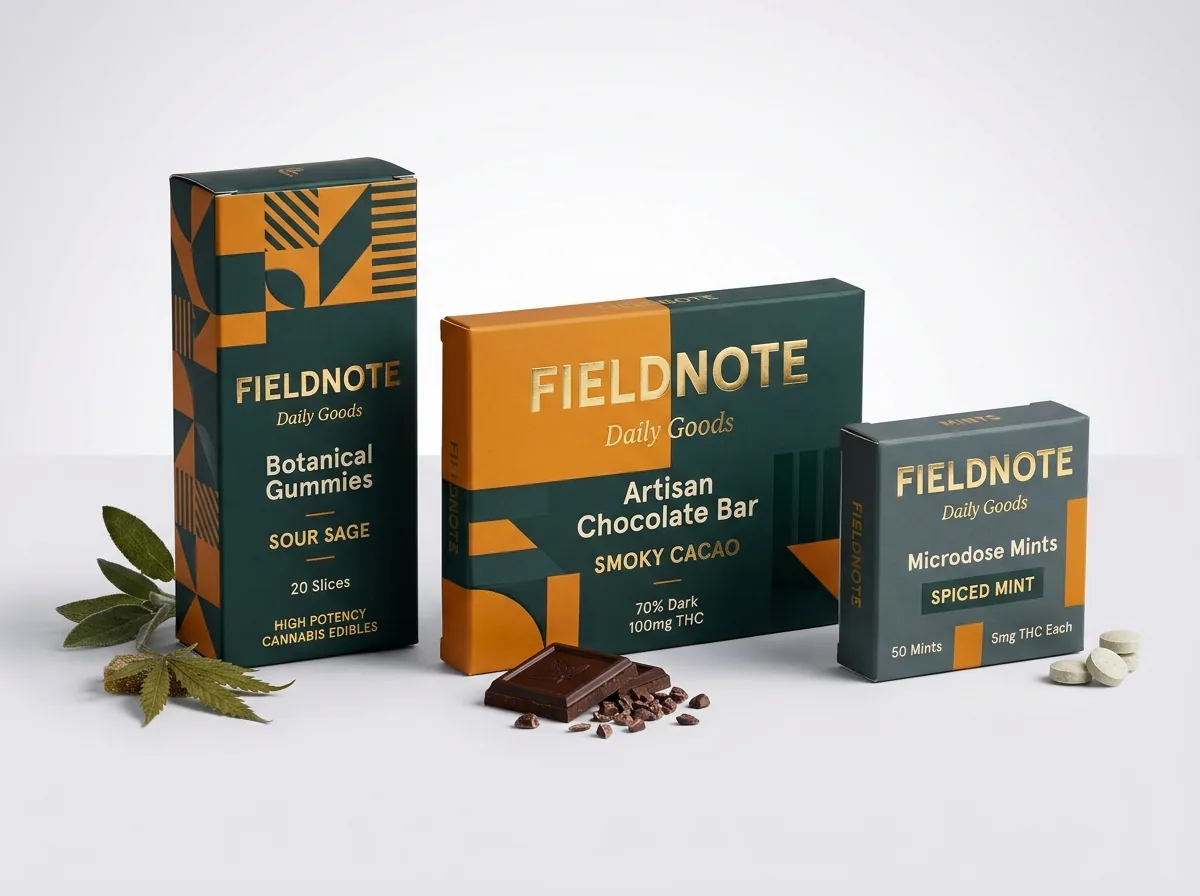
Ready to order cannabis edible boxes? Compare up to 3 quantities with a free 3D mockup.
Request a Quote →Questions about cannabis edible boxes
Should I put my cannabis gummies in a mylar bag, a blister pack or a box?
Most dispensary brands combine them: either heat-seal the gummies inside a compact inner foil barrier pouch and place that pouch inside a 4.0 × 1.5 × 5.5 inch paperboard box, or seal individual gummies into a 10-cavity blister tray inside a 3.5 × 1.0 × 5.25 inch push-tab drawer sleeve.
What is the minimum order quantity for custom cannabis edible boxes?
Custom printed cannabis edible folding cartons and slide sleeves start at 1,000 boxes. If you have multiple gummy flavors or chocolate bar ratios that share the exact same box size, you can gang-run multiple designs in one production order.
Can you make push-tab child-resistant style drawer boxes and inner foil pouches?
Child-resistant lock tabs, inner foil barrier pouches, and state warning spaces are available on request. Share your state and primary wrapper format on your quote so we configure the right setup.
How do you make a standard straight-tuck edible box tamper-evident?
We can add a zipper-perforated tear-off strip along the top flap (glue-sealed shut after filling), or supply matching custom tamper-evident seal stickers applied across both the top and bottom tuck flaps.
Why do dispensaries prefer boxes over standalone mylar bags in glass display cases?
Inside lit glass counter cases, flat mylar bags slump backward and reflect harsh overhead LED glare off their plastic film. A soft-touch or matte-laminated rectangular paperboard box stands upright at 90 degrees so shoppers can read your strain and milligram callouts clearly.
Can I order a sample kit to compare slide sleeves, tuck cartons and pouches?
Yes. Order our $50 sample kit (credited toward your production order) to compare paperboard weights, soft-touch and foil finishes, drawer sleeves, tuck cartons and barrier pouches in person.
Still have a question? Ask a packaging specialist.
Request a Quote →Request your cannabis edible boxes quote
Tell us your size and quantities, and one dedicated account manager prepares pricing for each tier.
- Free design & AI-to-print studio + 3D mockup
- No die or plate charges · 4–5 day rush available
- Free shipping to all 50 states
- 10% off your first order
The structural comparisons across push-tab drawer sleeves, straight-tuck cartons, auto-lock jar boxes and inner foil barrier pouches come from CubitPack's decided capabilities and standard confectionery packaging practices. A CubitPack packaging specialist checked every section. Spot an error? Tell us and we will fix it.
Sources
What changed
- October 22, 2026: First published.
- October 22, 2026: Updated specifications, terminology, and verified source links.
More guides
New packaging guides by email
Sizes, materials and design tips. Unsubscribe anytime.