
What size cannabis edible box do I need for chocolate bars, gummies and tins?
Short answer: Always measure the sealed primary wrapper (foil pouch, blister sheet, tin or jar) rather than the bare confection, and add 1/8 to 1/4 inch of clearance. Common custom cannabis edible boxes are 3.0 × 0.5 × 6.25 in for 100 mg bars and 3.5 × 1.0 × 5.25 in for gummy blisters.
On this page
- How do I measure wrapped chocolate bars, foil gummy pouches and jars for a box
- What are standard inside sizes for dispensary chocolate bar, gummy and tin boxes
- How do you size slim cartons and slide sleeves for 100 mg chocolate bars and blisters
- How do you size pouch-in-box cartons and auto-lock boxes for gummy jars
- How do state warning blocks, track-and-trace stickers and PDQ trays affect your box size
- Common mistakes
- FAQs
Request a custom quoteFree dieline & 3D mockup
Sizing a cannabis edible box accurately means measuring the primary moisture- and odor-barrier container that holds the confection - never the bare chocolate square or loose pectin gummy. Almost every dispensary edible is sealed inside an inner heat-sealed foil pouch, a thermoformed 10-cavity blister tray, a metal slider tin or a child-resistant glass or PET jar before sliding into its outer paperboard carton. On flat foil wrappers and pouches, the heat-sealed side and top fins add 0.25 to 0.375 inch of stiff width beyond the filled center cavity. On round gummy jars, the push-and-turn cap collar is often 0.125 inch wider than the jar base. Measuring over those outer edges and adding 1/16 to 1/8 inch of slip clearance ensures smooth packing-line loading. Every order of printed cannabis edible boxes from CubitPack is cut to your exact inside dimensions with zero die fees.
How do I measure wrapped chocolate bars, foil gummy pouches and jars for a box?
Fill and heat-seal your actual inner foil wrapper, mylar sachet, blister card or jar with 100% of its target piece count before picking up a ruler or caliper. An empty flat pouch is wider and thinner than a filled pouch, whereas a filled gummy pouch bulges outward in the center while its heat-sealed side fins stay rigid. Record the widest horizontal span (Length), thickest front-to-back depth (Width), and tallest top-to-bottom height including the tear notch header or cap (Height) in inches. When you enter those inside Length × Width × Height measurements on our custom edible packaging quote form, our design team builds your outer carton or slide sleeve dieline to match.
- Foil-wrapped chocolate bar (+1/8 in L & H, +1/16 in W): leaves enough room for folded foil corners and inner heat-seal fins to slide in smoothly.
- Heat-sealed inner gummy pouch (+1/4 in L & H): prevents the rigid 3/8-inch side and top heat-seal seams from buckling against the carton walls.
- Thermoformed 10-cavity blister tray (+1/8 in L & H): allows the PVC/PET blister flange to ride cleanly inside a push-tab paperboard drawer tray.
- Round glass or PET gummy jar (+1/8 in L, W & H over cap): always measure across the wider push-and-turn child-resistant cap ring, not the glass base.
- Pocket metal mint tin (+1/16 in L, W & H): keeps a snug friction fit around rolled tin hinges and raised lid embossing.
What are standard inside sizes for dispensary chocolate bar, gummy and tin boxes?
While CubitPack cuts every carton, push-tab sleeve and counter display to your exact sixteenth of an inch with zero die charges, most state-regulated 10-piece (100 mg) edibles, micro-dosed mint tins and 20-count gummy jars fall into nine standard dispensary footprints. Use the chart below as a starting benchmark. Notice how chocolate bar and blister-pack sleeves use a tall, wide front face (Length × Height) and a slim front-to-back depth (Width of 0.50 to 1.0 inch) so budtenders can stand them upright in rows inside glass display cases while shoppers read the strain name, cannabinoid ratio and milligram badge at a glance.
| Edible format & typical pack | Typical inside size (L × W × H) | Usual carton & inner barrier setup |
|---|---|---|
| Single-serve 10 mg chocolate square or mini bar | 2.25 × 0.375 × 2.25 in | Mini straight tuck + inner foil wrap |
| Standard 10-square (100 mg) scored chocolate bar | 3.0 × 0.5 × 6.25 in | Slim straight tuck or push-tab sleeve |
| Artisanal 20-piece (100 mg or 200 mg) wide chocolate bar | 3.5 × 0.625 × 6.75 in | Book-style or push-tab drawer sleeve |
| 10-cavity gummy or fruit-chew blister sheet (10 × 10 mg) | 3.5 × 1.0 × 5.25 in | Two-piece push-tab tray and sleeve |
| Pouch-in-box carton for heat-sealed 10-20 ct gummy bag | 4.0 × 1.5 × 5.5 in | Auto-lock or reverse tuck + foil pouch |
| Pocket metal slider or click tin of 20-40 micro-dose mints | 2.5 × 0.875 × 3.75 in | Snug straight tuck or wrap-around sleeve |
| 20-to-30 ct round glass or PET gummy jar (2 oz - 4 oz) | 2.625 × 2.625 × 3.25 in | Pre-glued auto-lock bottom + neck collar |
| 4-pack infused brownie bites, cookies or truffle flight | 4.5 × 4.5 × 1.75 in | 4-cell partitioned tray and sleeve box |
| Dispensary 12-bar upright counter display tray (PDQ) | 6.5 × 5.0 × 6.25 in | Pop-up header tray holding 12 bar boxes |
How do you size slim cartons and slide sleeves for 100 mg chocolate bars and blisters?
Scored cannabis chocolate bars (typically 10 squares × 10 mg THC or 20 squares × 5 mg THC) are molded to thin tolerances so consumers can snap off a single dose cleanly. However, once the bar is sealed inside an inner metallized foil pouch to prevent cocoa-butter bloom and terpene loss, the heat-sealed top, bottom and back fins add roughly 0.50 inch to the overall length and 0.25 inch to the width. For a molded bar measuring 2.5 × 0.3125 × 5.5 inches bare, sealing it in a foil flow-wrap or flat pouch brings the overall wrapper to roughly 2.875 × 0.4375 × 6.0 inches, which fits a 3.0 × 0.50 × 6.25 inch straight tuck end box or tray and sleeve box. On 10-cavity thermoformed gummy blister sheets, measure the outer plastic flange of the blister card and add 0.125 inch so the sheet drops into the paperboard inner drawer without bowing.
Know your size? Compare pricing across up to 3 quantities.
Request a Quote →How do you size pouch-in-box cartons and auto-lock boxes for gummy jars?
Many multi-state edible brands seal their pectin gummies, sour belts or baked bites inside a child-resistant or heat-sealed custom cannabis mylar bag on request, then place that sealed pouch inside a rectangular paperboard folding carton. This 'pouch-in-box' setup solves the biggest merchandising complaint in dispensaries: standalone flat pouches slump over on glass shelves, whereas a 4.0 × 1.5 × 5.5 inch carton stands straight up and gives you four flat billboards for strain graphics, Nutrition Facts and track-and-trace stickers. When sizing an outer box for a round glass or PET gummy jar, always measure the diameter of the push-and-turn child-resistant cap rather than the jar body, add 0.125 inch to both Length and Width, and specify an auto lock bottom box so the heavy jar cannot push the bottom flap open.
How do state warning blocks, track-and-trace stickers and PDQ trays affect your box size?
Before locking your smallest mint-tin or single-serve edible box dimensions, check the minimum physical square inches required for your state's mandatory elements: the universal cannabis symbol (often at least 0.5 × 0.5 in or 1.0 × 1.0 in), per-serving and total-package THC/CBD milligram callouts, mandatory warning paragraphs in 6 pt+ type, Nutrition Facts, ingredient and allergen lists, COA QR code, and the dispensary's track-and-trace sticker (check its size with your dispensary or state). If a tiny 2.0 × 0.5 × 2.5 inch box forces your designer to shrink warning text below state minimum font rules or leaves nowhere to stick the track-and-trace barcode without covering your logo, stepping up by just 0.50 inch in height (or adding a sleek outer paperboard sleeve around a tin) gives you clean, compliant panel real estate and fits neatly into a 12-unit counter display box.
- Universal THC symbol zone: reserve at least 0.75 × 0.75 in to 1.0 × 1.0 in on the front principal display panel with clear margin.
- track-and-trace UID sticker frame: reserve a flat 2.0 × 1.0 in or 3.0 × 1.5 in box on the back or side panel away from fold scores.
- COA lab-test QR code square: keep a 0.75 × 0.75 in matte white square with a 1/16 in quiet border for instant phone scanning.
- 12-unit dispensary PDQ tray: multiply your single bar box Width (depth) by 12 plus 0.25 in of clearance to size the display tray depth.
What are the most common cannabis edible box sizing mistakes?
Almost every edible carton fit issue comes from measuring the bare candy instead of the sealed inner barrier pouch or cap. Check these five sizing mistakes before approving your dieline
- Measuring a bare molded chocolate bar and forgetting the extra 0.50 inch of length and 0.25 inch of width added by the inner heat-sealed foil wrapper fins.
- Sizing a pouch-in-box gummy carton to the flat empty pouch thickness instead of the 1.25-to-1.50-inch belly bulge of a filled 10-piece gummy bag.
- Measuring the glass base of a gummy jar and ignoring the wider push-and-turn child-resistant cap collar at the top.
- Making a mint-tin or mini-bar carton so small that the dispensary's 2 × 1 inch track-and-trace barcode sticker wraps over the corner and covers the universal symbol.
- Forgetting to add outer sleeve paperboard thickness when sizing a 12-count dispensary counter display tray to hold two-piece drawer boxes.
Find your size
Suggested inside size: 3.0 × 0.5 × 6.25 in
A starting point. Your account manager confirms the size with you before the proof.
Quote this size →Packaging for this
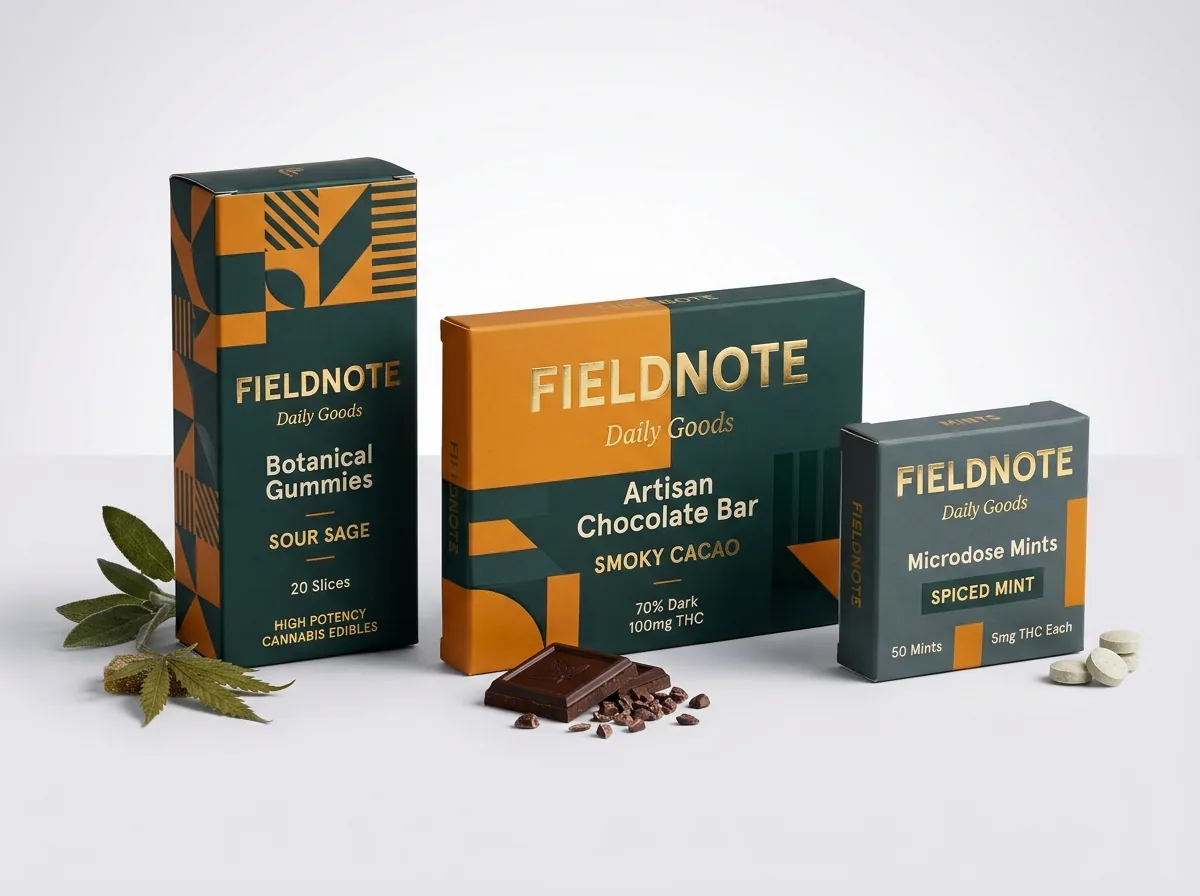
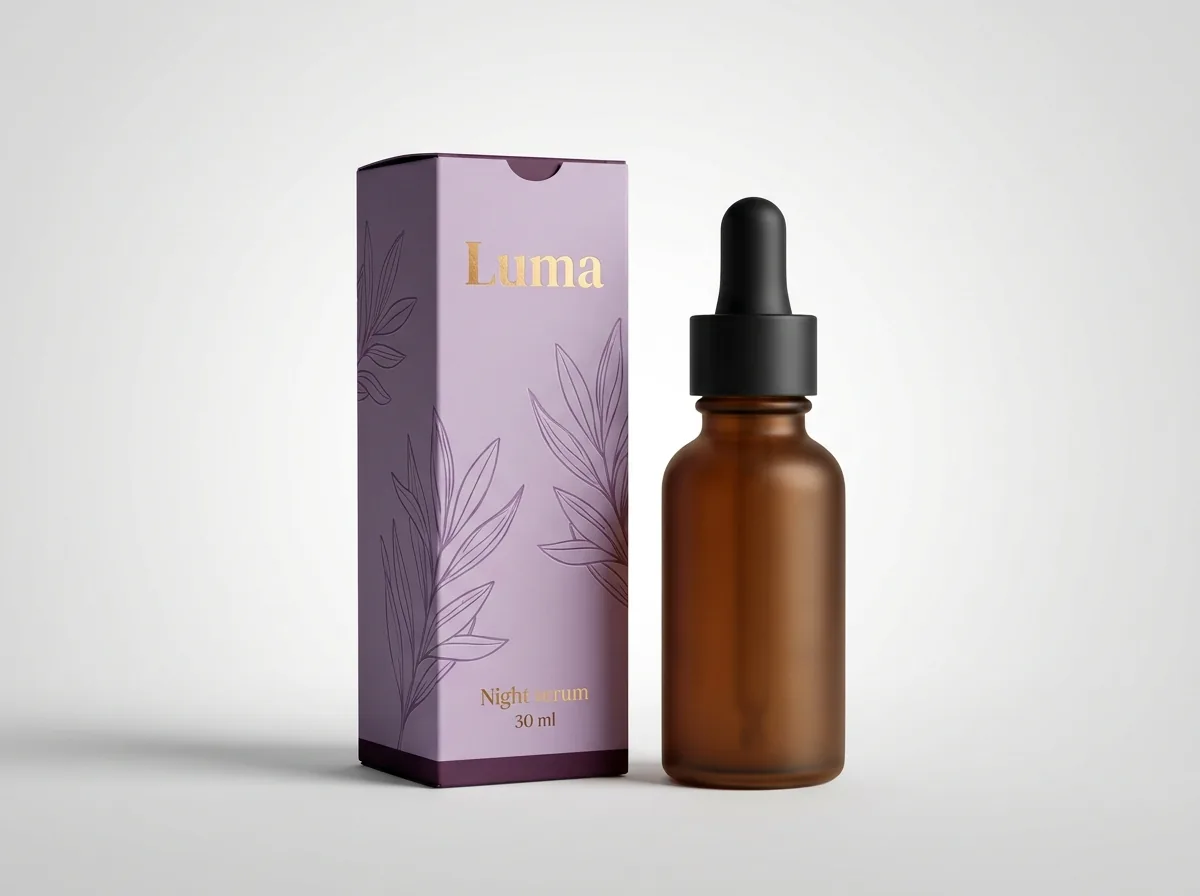
Ready to order cannabis edible boxes? Compare up to 3 quantities with a free 3D mockup.
Request a Quote →Questions about cannabis edible boxes
What size box fits a standard 100 mg (10-square) cannabis chocolate bar?
Most 10-square (100 mg) scored cannabis chocolate bars sealed inside an inner foil wrapper fit a 3.0 × 0.5 × 6.25 inch straight-tuck carton or push-tab sleeve. Always measure your actual sealed inner foil wrapper tip-to-tip before locking the dieline.
What size box holds a 10-piece gummy blister tray or inner foil pouch?
A 10-cavity thermoformed gummy blister sheet typically fits a 3.5 × 1.0 × 5.25 inch two-piece slide-sleeve box. If your gummies are sealed inside a flexible inner foil barrier pouch, a 4.0 × 1.5 × 5.5 inch carton gives the filled pouch room to stand upright.
Can you supply both the inner foil barrier pouch and the outer edible box?
Yes. Child-resistant lock tabs, inner foil barrier pouches, and state warning spaces are available on request. We size the inner pouch and outer carton together so they fit together cleanly.
How do I measure a round gummy jar with a child-resistant cap for a carton?
Measure the diameter across the widest part of the push-and-turn cap collar (which is usually 1/16 to 1/8 inch wider than the jar base), add 1/8 inch to both Length and Width, and add 1/8 inch to the total jar height.
Do you charge extra die fees for custom edible box dimensions or slide sleeves?
No. CubitPack never charges die or plate fees. Your custom carton dimensions, push-tab drawer sleeve cutouts, internal blister cradles and dispensary counter display trays are cut to order with zero tooling fees.
Can I test my wrapped bar, pouch or jar inside a physical sample box before production?
Yes. Every quote includes a free vector dieline, 2D digital proof and 3D mockup before payment, and you can request a physical prototype carton to test-fit your sealed foil pouch, blister card or jar on your packing line.
Still have a question? Ask a packaging specialist.
Request a Quote →Request your cannabis edible boxes quote
Tell us your size and quantities, and one dedicated account manager prepares pricing for each tier.
- Free design & AI-to-print studio + 3D mockup
- No die or plate charges · 4–5 day rush available
- Free shipping to all 50 states
- 10% off your first order
The inside carton dimensions, foil heat-seal fin allowances and dispensary display footprints in this guide are based on standard 10-piece (100 mg) cannabis chocolate bar molds, 10-cavity gummy blister sheets, and child-resistant jar dimensions. A CubitPack packaging specialist checked every row. Spot an error? Tell us and we will fix it.
Sources
What changed
- October 22, 2026: First published.
- October 22, 2026: Updated specifications, terminology, and verified source links.
More guides
New packaging guides by email
Sizes, materials and design tips. Unsubscribe anytime.