
Window Lip Gloss Boxes vs Solid Shade-Band Cartons: Which Works Better?
Short answer: Choose a die-cut window box when your lip gloss uses a clear PETG or glass vial filled with visible shimmer, pearl or swirl pigment; choose a solid Pantone shade-band carton when you want to hide top air headspace, shield botanical oils from light or print full-height foil on custom lip gloss boxes.
On this page
- How do window lip gloss boxes and solid shade-band cartons compare side by side
- Open die-cut cutout vs clear film window patching: which does a lip gloss vial need
- What structural rules keep a narrow window lip gloss box from bowing
- When does a solid carton with Pantone and spot UV outperform a window box
- Common mistakes
- FAQs
Request a custom quoteFree dieline & 3D mockup
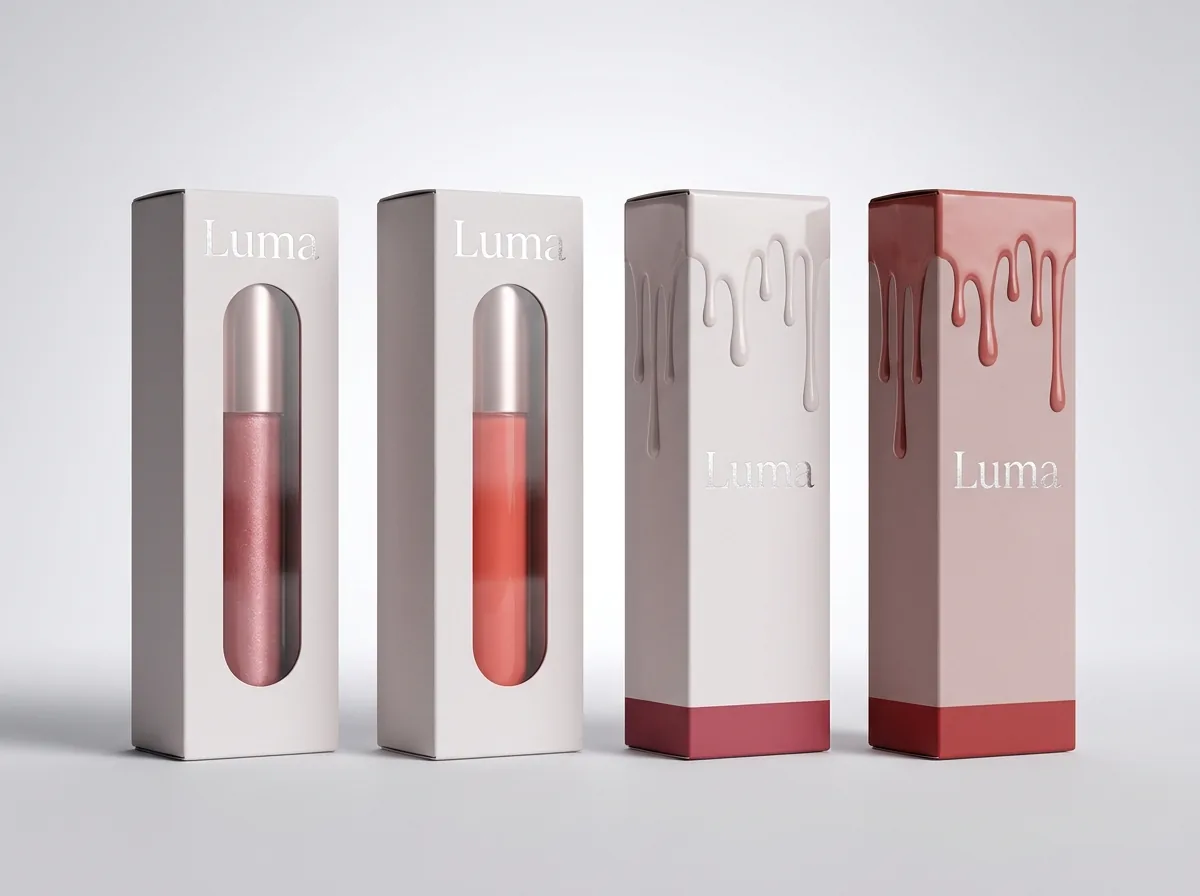
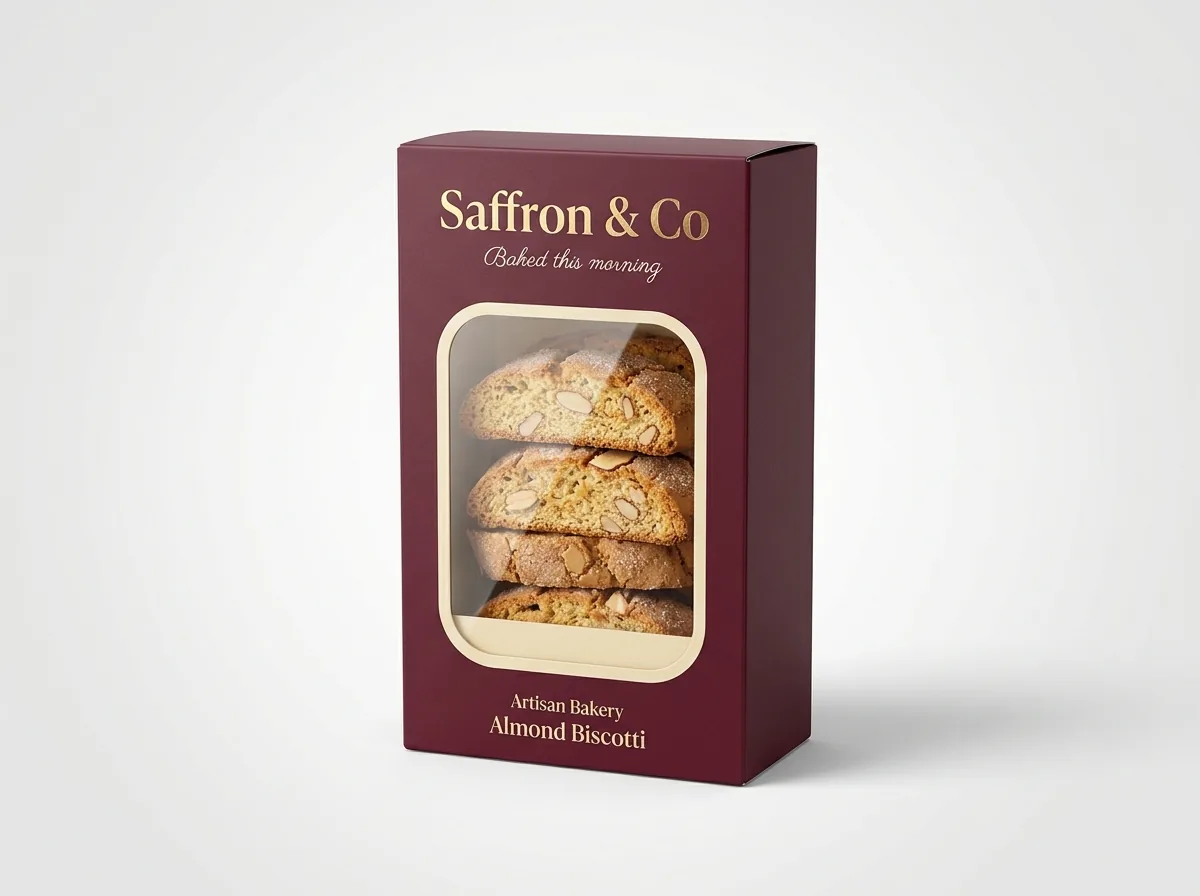
The choice between a die-cut window lip gloss box and a solid shade-band carton comes down to what your primary vial looks like from the outside. Because most doe-foot lip gloss vials are molded from crystal-clear PETG or glass, a vertical pill-shaped or rectangular die-cut window on the front face turns the liquid formula itself into the hero graphic, showing off suspended gold flake, iridescent pearl or sheer berry tint on crowded retail shelves. However, clear vials also have a mandatory fill headspace (an air bubble near the neck threads) and can settle or separate slightly during warm shipping. A solid four-wall carton hides that air gap completely, blocks store lighting from fading natural plant oils, and gives you an unbroken front wall for foil stamping, embossing and high-gloss spot UV drip motifs. At CubitPack, both styles start at 1,000 boxes with zero die or plate charges.
How do window lip gloss boxes and solid shade-band cartons compare side by side?
Unlike bullet lipsticks, which are hidden inside opaque twist-up metal or plastic sleeves, lip glosses and lip oils live inside transparent barrels roughly 80% of the time. That transparency gives beauty founders two distinct ways to communicate color on printed lip gloss packaging: cut an aperture in the front paperboard wall so shoppers see the physical bottle, or leave all four walls solid and print a color-matched Pantone band paired with high-gloss spot UV. Each approach changes how your carton performs in boutique counter displays, pegboard beauty supply aisles and direct-to-consumer mailers. In self-serve retail environments where shoppers are not allowed to open sealed cartons, seeing the actual pearl particle size or jelly translucency through a front window reduces hesitation and cuts down on torn top flaps. Conversely, if your lip gloss is packed into an opaque plastic squeeze tube, a frosted bottle or a heavily screen-printed vial, a window cutout only shows plastic rather than pigment, making a solid carton with a bold Pantone color wrap the smarter choice.
| Comparison factor | Open die-cut window box | Film-patched window box | Solid Pantone shade-band carton |
|---|---|---|---|
| How shoppers see the shade | Direct view of the clear vial with zero film glare | View of the clear vial behind a clear plastic window patch | Printed Pantone color band, top-flap swatch & gloss spot UV |
| Best formula match | Glitter, shimmer, pearl, marbled swirl or clear jelly gloss | High-end clear vials sold on dusty open pegboards | Botanical lip oils, opaque squeeze tubes, solid cream tints |
| Hides top air headspace bubble? | Yes, if top window edge stops 1/4 in below cap skirt | Yes, if top window edge stops 1/4 in below cap skirt | Yes, 100% of the vial neck and air gap is enclosed |
| Light & UV protection | Exposed across the window opening | Exposed across the window opening | Full 360-degree paperboard shade protection |
| Front-panel branding area | Logo sits above or below the window cutout | Logo sits above or below the window cutout | Full vertical height available for foil, emboss & spot UV |
| Unit cost & tooling impact | No die charge; same pass as standard cutting die | No die charge; adds window-patching film step | No die or plate charge; lowest base carton cost |
Open die-cut cutout vs clear film window patching: which does a lip gloss vial need?
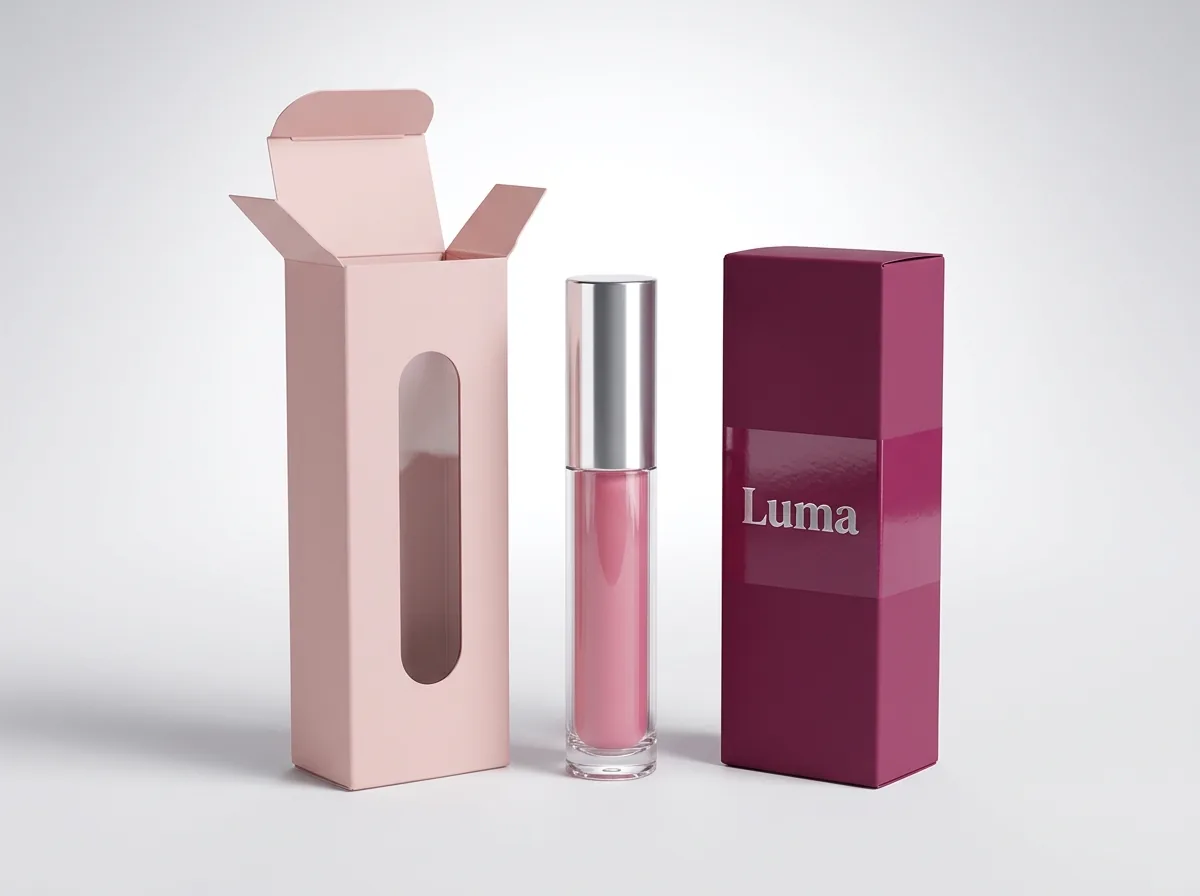
When brands ask for custom window boxes for bakery pastries or loose tea pouches, a glued clear plastic film patch is mandatory to keep crumbs in and dust out. Lip gloss vials work differently because the liquid formula is already sealed inside a thick, rigid PETG or glass cylinder. If your lip gloss box measures 0.8125 inches wide and your die-cut front window is 0.4375 inches wide, a 0.75 inch diameter lip gloss vial physically cannot pass through the 0.4375 inch slot. Leaving the window as an open die-cut cutout (with no glued plastic film) gives you three practical advantages: First, there is zero plastic glare under harsh overhead store LEDs, so shoppers see the true glossy depth and micro-shimmer of your formula. Second, customers can touch the smooth glass or acrylic barrel with a fingertip without being able to slide the vial out of the box. Third, an open cutout is punched by the exact same steel-rule cutting die that cuts the outer perimeter of the carton, meaning you pay zero die charges and skip the separate window-patching machine step. When should you add a glued clear film patch over a lip gloss window? Choose film patching when your window wraps around two adjacent corners of the box (an L-shaped window where a narrow vial could otherwise slip sideways), when you are packaging a duo kit where a thin 0.35 inch lip liner pencil sits behind a wide window, or when your retail buyers specifically request a sealed dust barrier over the primary container.
- Open die-cut window: Best for single rigid wand vials where the window width (e.g., 7/16 in) is narrower than the vial diameter (3/4 in).
- Film-patched window: Best for corner-wrap windows, wide multi-product duo windows or dusty open-bin retail displays.
- Custom window shapes: Pill slots, rounded rectangles, teardrop cutouts and lip-silhouette apertures all carry zero die charges at CubitPack.
What structural rules keep a narrow window lip gloss box from bowing?
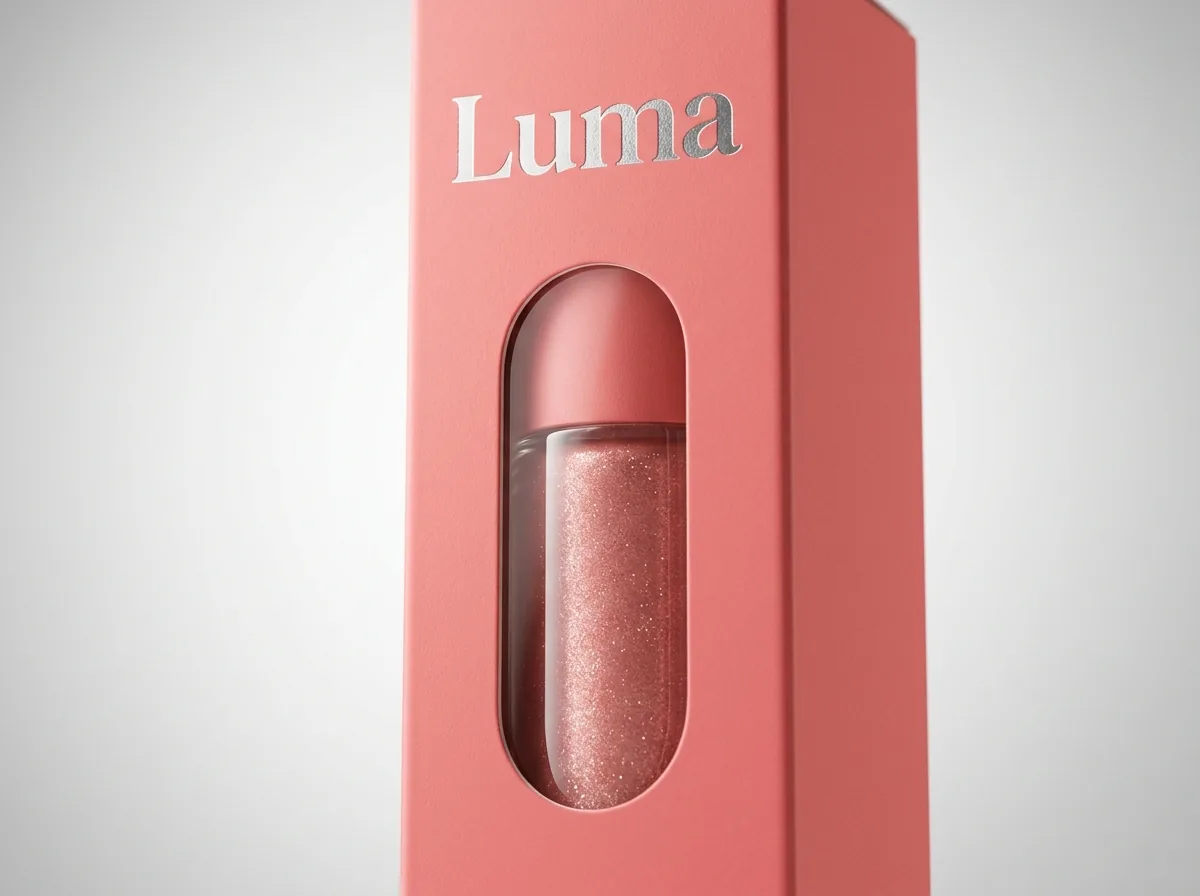
A lip gloss carton is one of the narrowest folding cartons in cosmetics, often just 0.75 to 0.875 inches wide across the front panel. Cutting a large hole out of the middle of an 0.8125 inch wide strip of paperboard removes most of the front wall's column strength. If the two vertical strips of paperboard left on either side of the window (called the window pillars) are too skinny, they buckle outward into curved ”bananas” the moment a fulfillment worker squeezes the top tuck flap shut. To keep a slender lip gloss box crisp and square, follow three engineering rules on your dieline (which you can pair with our sizing rules in what size lip gloss box fits wand vials and squeeze tubes): 1. Maintain at least 3/16 inch (0.1875 inches) for each side window pillar: On a 0.8125 inch wide front panel, leaving 3/16 inch on the left score and 3/16 inch on the right score gives you a clean 0.4375 inch (7/16 inch) wide window in the center. On a wider 1.0 inch chubby lip oil box, leaving 3/16 inch side pillars allows a generous 0.625 inch wide window. 2. Stop the top of the window 1/4 inch below the cap skirt: Every filled lip gloss vial has a threaded plastic neck and a small air headspace bubble at the top of the clear barrel so the liquid does not overflow when the doe-foot wand displaces volume. Stopping the top window edge 1/4 inch below the bottom of the cap hides both the neck threads and that air bubble. 3. Radius all four window corners: Sharp 90-degree cutout corners concentrate stress and can tear if a shopper's fingernail catches the edge. Rounding the window into a vertical pill or adding a 1/8 inch corner radius distributes folding forces smoothly into the side walls.
Know your size? Compare pricing across up to 3 quantities.
Request a Quote →When does a solid carton with Pantone and spot UV outperform a window box?
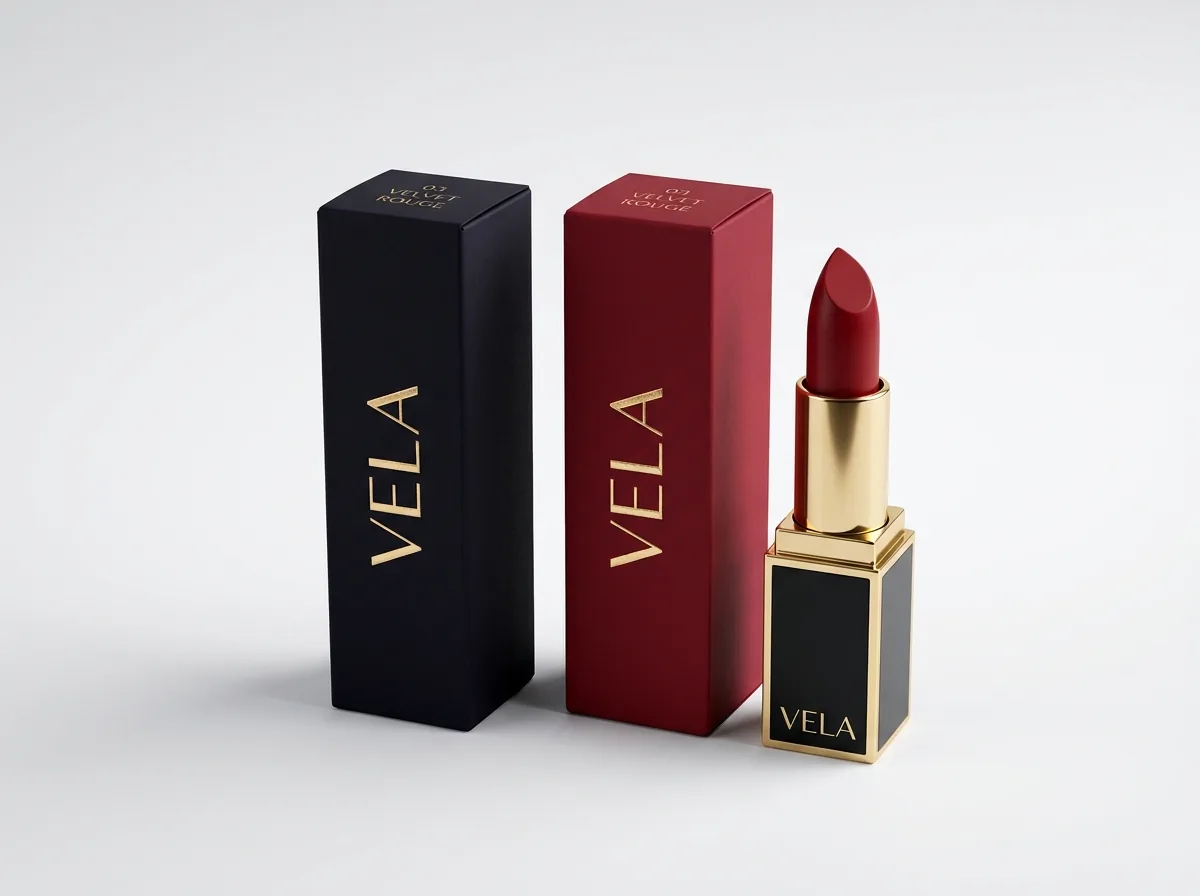
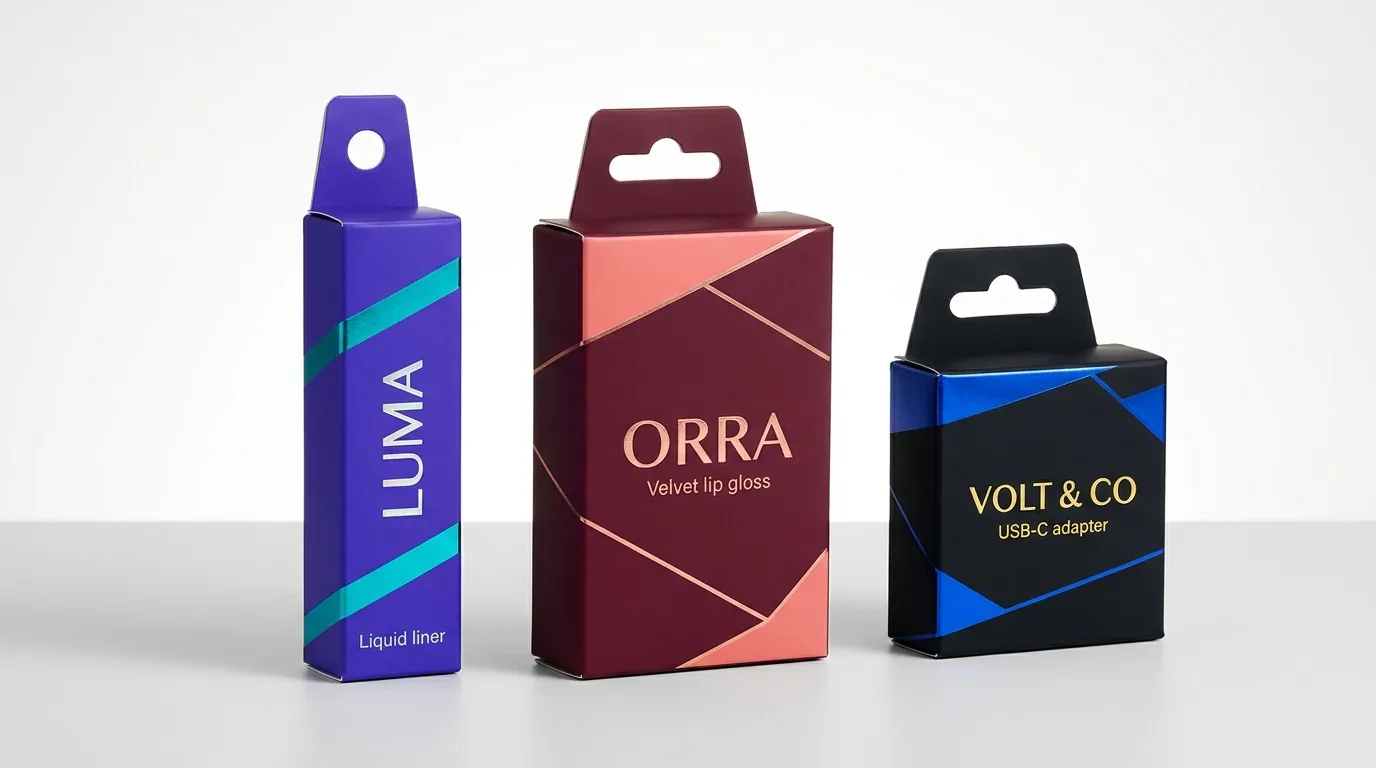
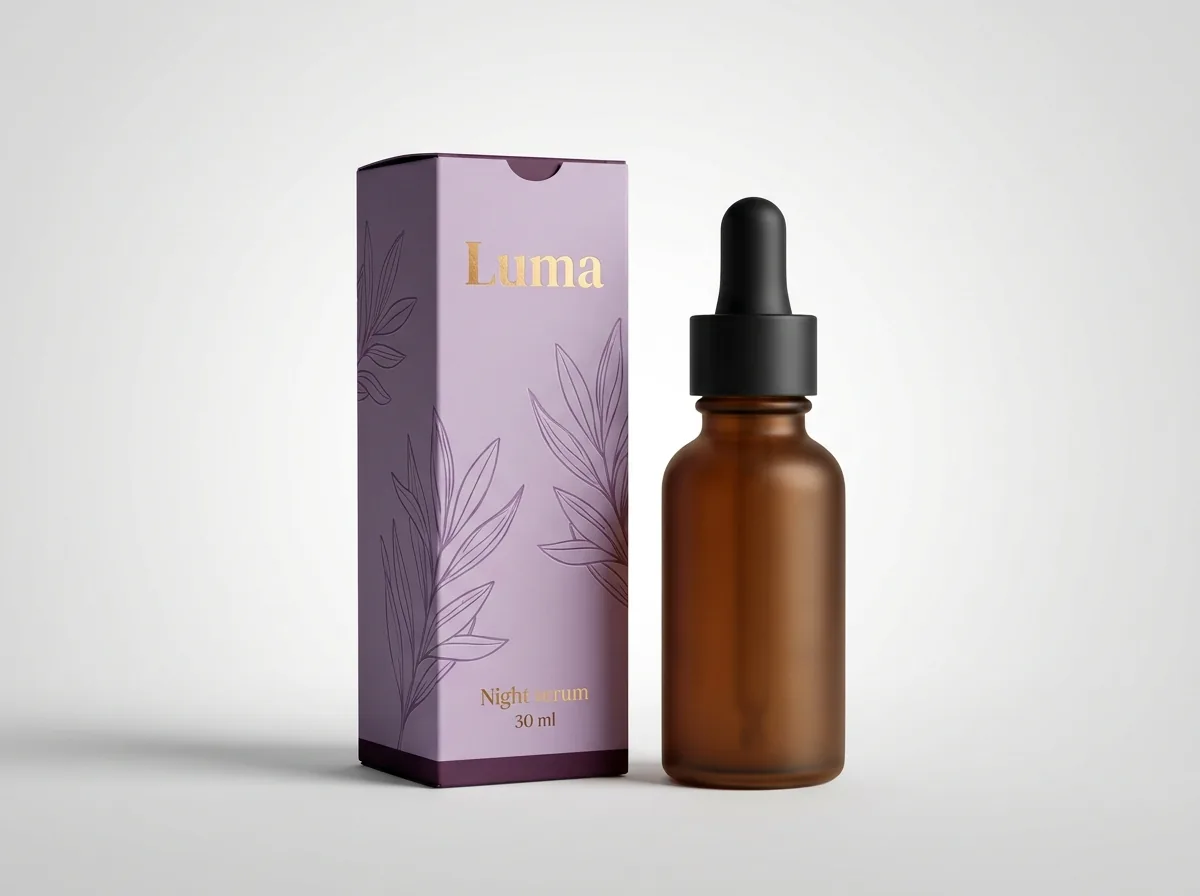
Many luxury and clean-beauty brands intentionally skip the front window and house their lip glosses or lip oils in solid four-wall folding cartons. A solid carton outperforms a window box in four common scenarios: First, botanical lip oils formulated with sea buckthorn, rosehip, bakuchiol or natural fruit carotenoids can oxidize or shift color when exposed to 12 hours a day of bright retail halogen or LED lighting. A solid paperboard carton acts as a 360-degree light shield until the customer takes the product home. Second, if your primary container is an opaque plastic squeeze tube, a solid color-drenched acrylic barrel or a slender vial wrapped in a dense label, a window cutout reveals nothing new. Instead, keeping the front wall solid gives you space for oversized metallic foil typography, 3D embossing and a tactile finish combination: wrapping the box in velvety soft-touch lamination and printing high-gloss spot UV liquid ”drips” or ”swatches” down the top half of the carton. Third, solid cartons make multi-SKU line architecture effortless. By printing a guaranteed Pantone color band around the lower third of the box and repeating that exact Pantone swatch with the shade number on the top tuck flap, staff and shoppers can spot every shade in deep acrylic counter trays at a glance. See our step-by-step artwork walkthrough in how to prepare custom lip gloss box dielines and shade names and explore our Dieline templates tool to plan your layout.
- Soft-touch + gloss spot UV drips: Creates a tactile contrast between a velvety carton body and a wet-look gloss swatch.
- Guaranteed Pantone shade bands: Matches your liquid gloss tint across every reorder without window cutouts.
- Full-bleed inside printing: Surprises online buyers with a flood of fruit color or brand pattern when they flip open the top flap.
What mistakes ruin window and shade-band lip gloss cartons?
Avoid these five structural and visual pitfalls when choosing between a window box and a solid lip gloss carton
- Cutting the top of a front window too high so shoppers see the plastic bottle threads and empty air headspace bubble instead of the gloss.
- Leaving less than 3/16 inch of paperboard on the left and right sides of a window cutout on a narrow 0.8125 inch carton, causing the pillars to bow.
- Using an open die-cut window on a wide duo box where a slender 0.35 inch lip liner pencil can slip out through the opening.
- Printing a solid lip gloss carton in matte lamination only without a gloss spot UV swatch or top-flap color badge to signal the shine and shade inside.
- Putting a die-cut window on a box for a heat-crimped plastic squeeze tube where the window shows the unprinted side seam of the tube.
Find your size
Suggested inside size: 0.75 × 0.75 × 3.5 in
A starting point. Your account manager confirms the size with you before the proof.
Quote this size →Packaging for this
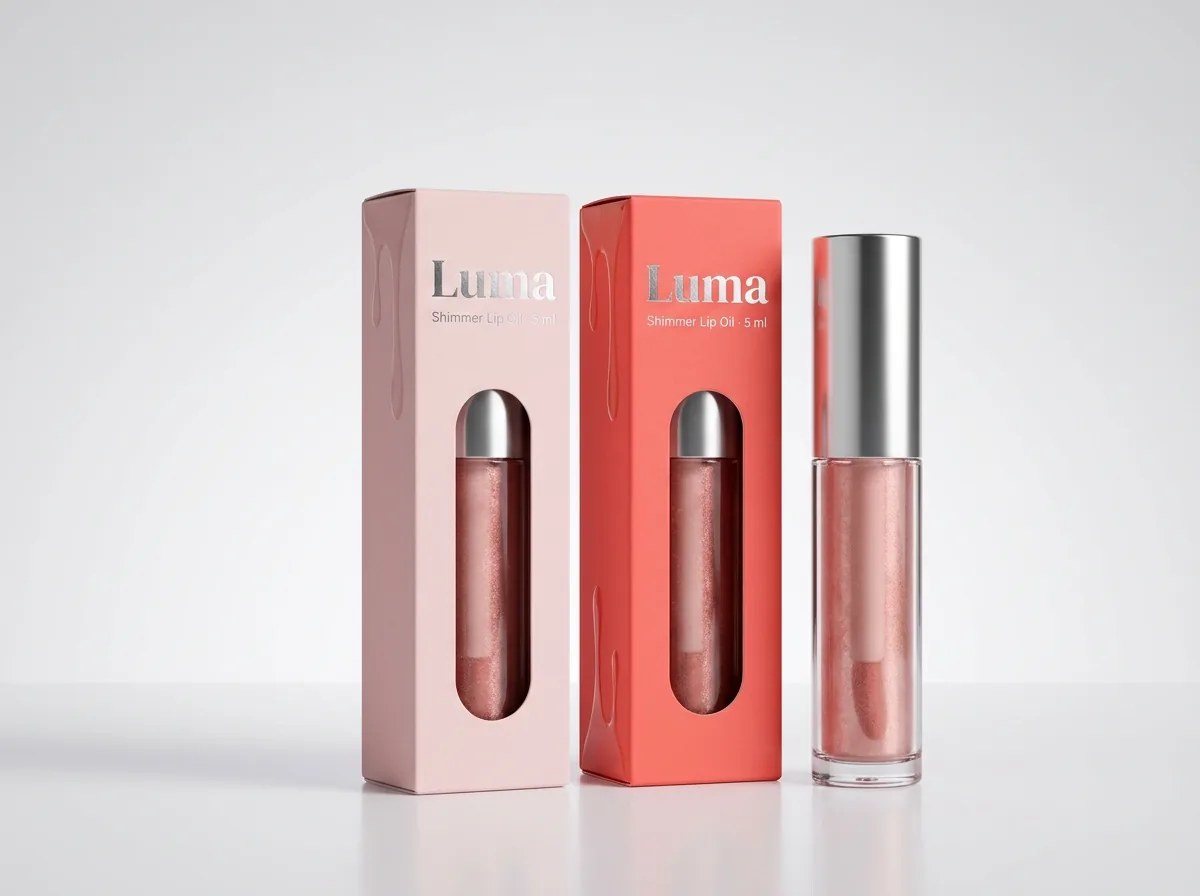
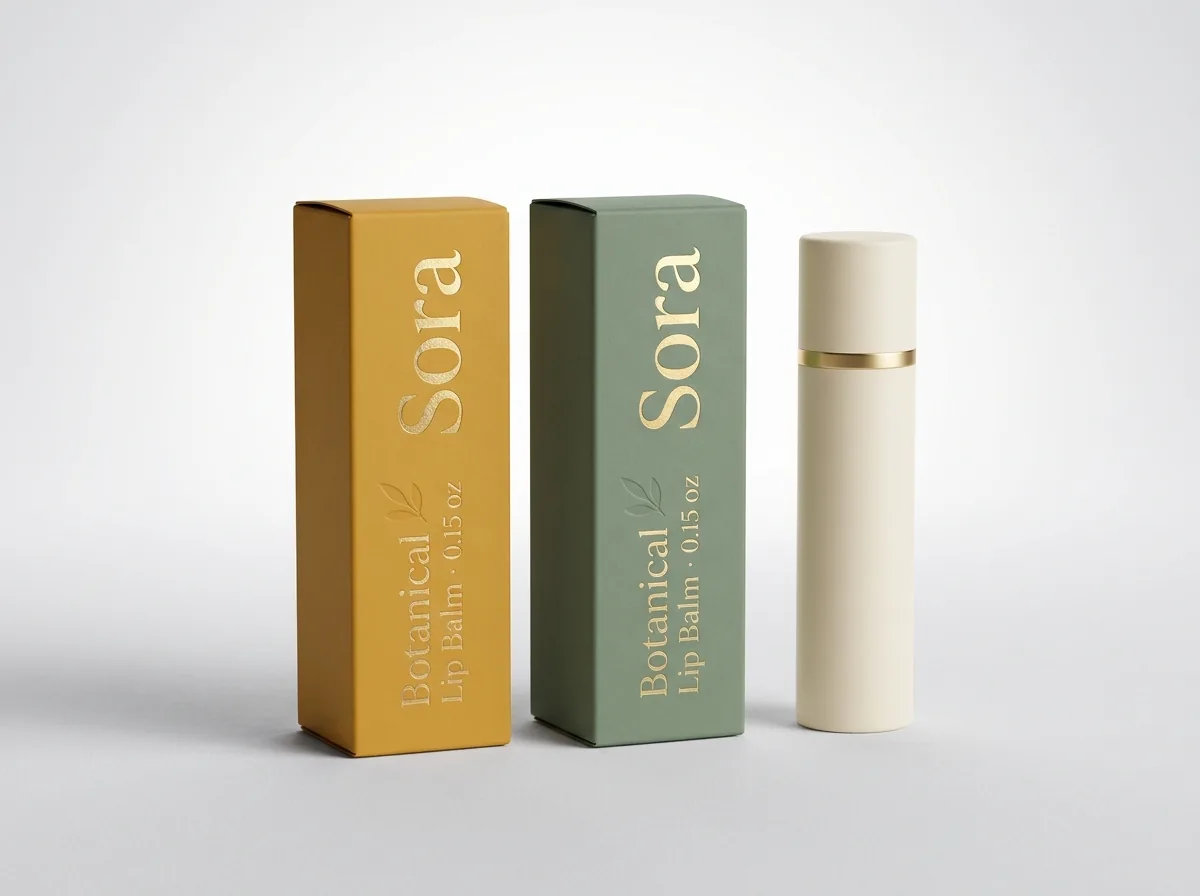
Ready to order lip gloss boxes? Compare up to 3 quantities with a free 3D mockup.
Request a Quote →Questions about lip gloss boxes
Does adding a die-cut window to a custom lip gloss box cost extra for the cutting die?
No. At CubitPack, there are never any die or plate charges. An open die-cut window is punched during the standard die-cutting pass at no extra tooling cost; adding a glued clear plastic film patch adds only a minor per-unit window-patching cost.
What is the minimum side margin around a window on a narrow lip gloss box?
Leave at least 3/16 inch (0.1875 inches) of solid paperboard between the vertical edges of your window cutout and the left and right fold score lines so the narrow carton walls stay rigid.
How do I hide the air bubble at the top of my clear lip gloss vial in a window box?
Measure where the bottom of the cap meets the clear barrel, then position the top edge of your die-cut window at least 1/4 inch lower. That keeps the neck threads and the fill headspace hidden behind printed paperboard.
Can I combine foil stamping and spot UV on a windowed lip gloss carton?
Yes. You can place metallic foil stamping or raised embossing on the solid header panel above the window and run gloss spot UV borders around the window cutout.
Can I test a windowed lip gloss box and a solid carton before placing a full order?
Yes. Every order includes a free digital proof and 3D mockup before payment, and you can request our $50 sample kit or a paid custom-printed sample (credited toward your full production run).
Does an open die-cut window weaken a tall, narrow lip gloss carton?
Not when sized properly. Keeping at least 3/16 inch of solid paperboard along both vertical window pillars and rounding the four corners of the cutout preserves the column strength of a 0.8125 inch or 1.0 inch lip gloss box.
Still have a question? Ask a packaging specialist.
Request a Quote →Request your lip gloss boxes quote
Tell us your size and quantities, and one dedicated account manager prepares pricing for each tier.
- Free design & AI-to-print studio + 3D mockup
- No die or plate charges · 4–5 day rush available
- Free shipping to all 50 states
- 10% off your first order
All CubitPack service facts come from our published product specifications and were reviewed by a packaging specialist. Window pillar margins are verified on your free custom dieline proof and 3D mockup before payment. Spot something wrong? Tell us and we will fix it.
What changed
- October 22, 2026: First published.
- October 22, 2026: Updated specifications, terminology, and verified source links.
More guides
New packaging guides by email
Sizes, materials and design tips. Unsubscribe anytime.