
How do I design custom mascara boxes that showcase the brush wand?
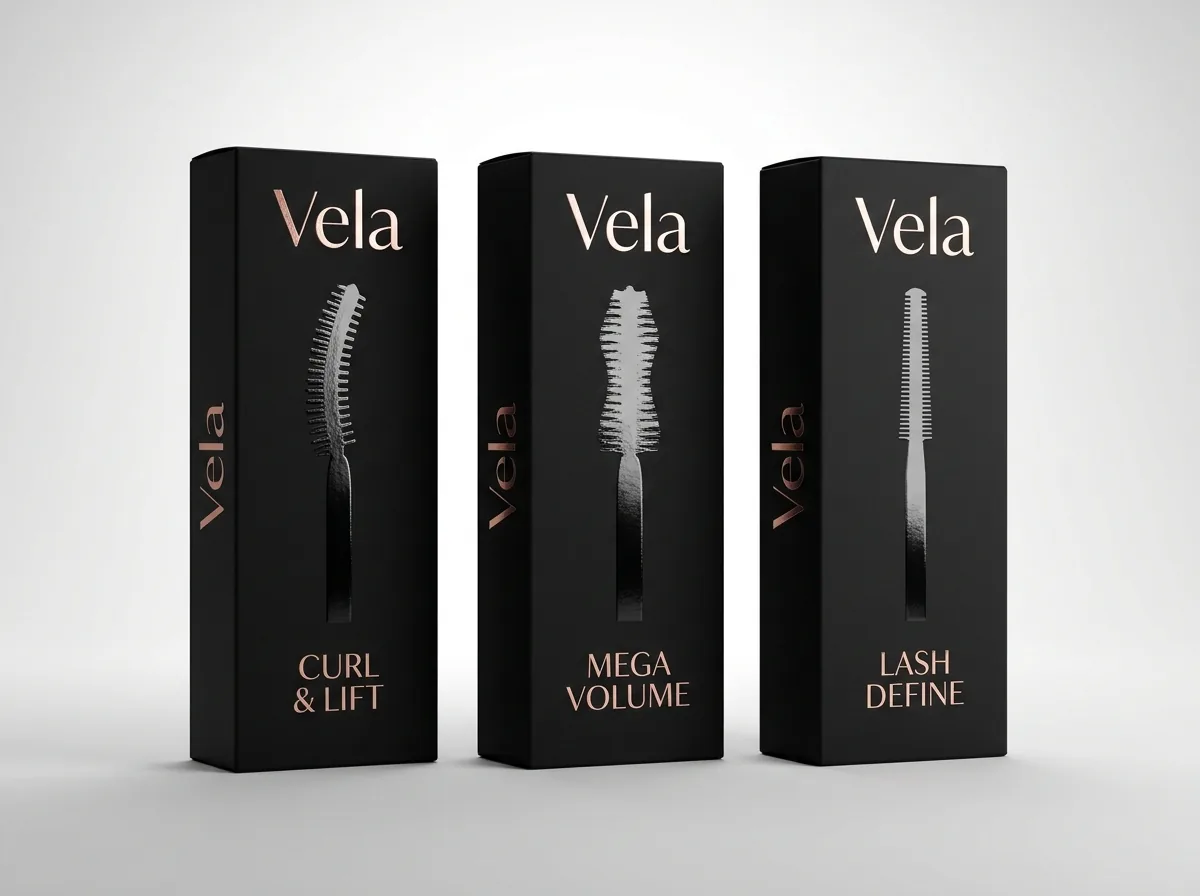
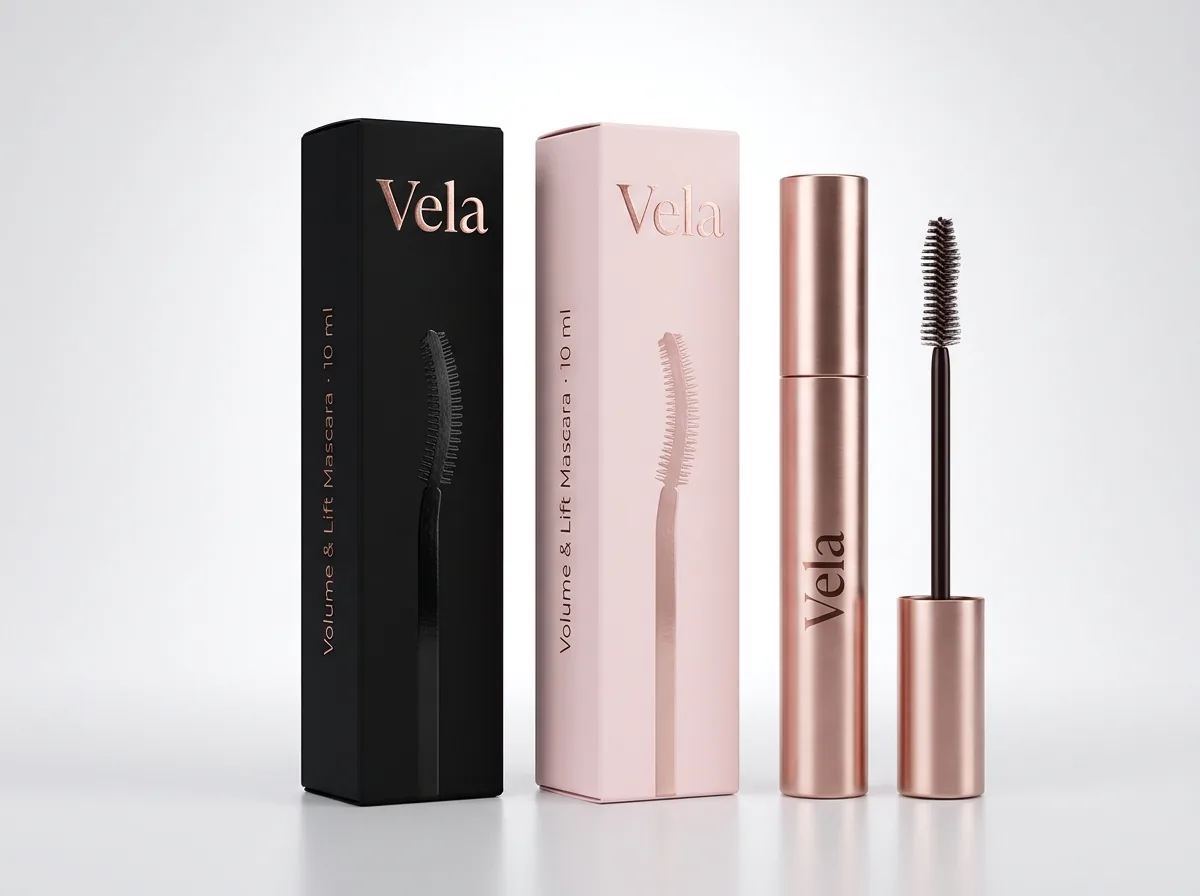
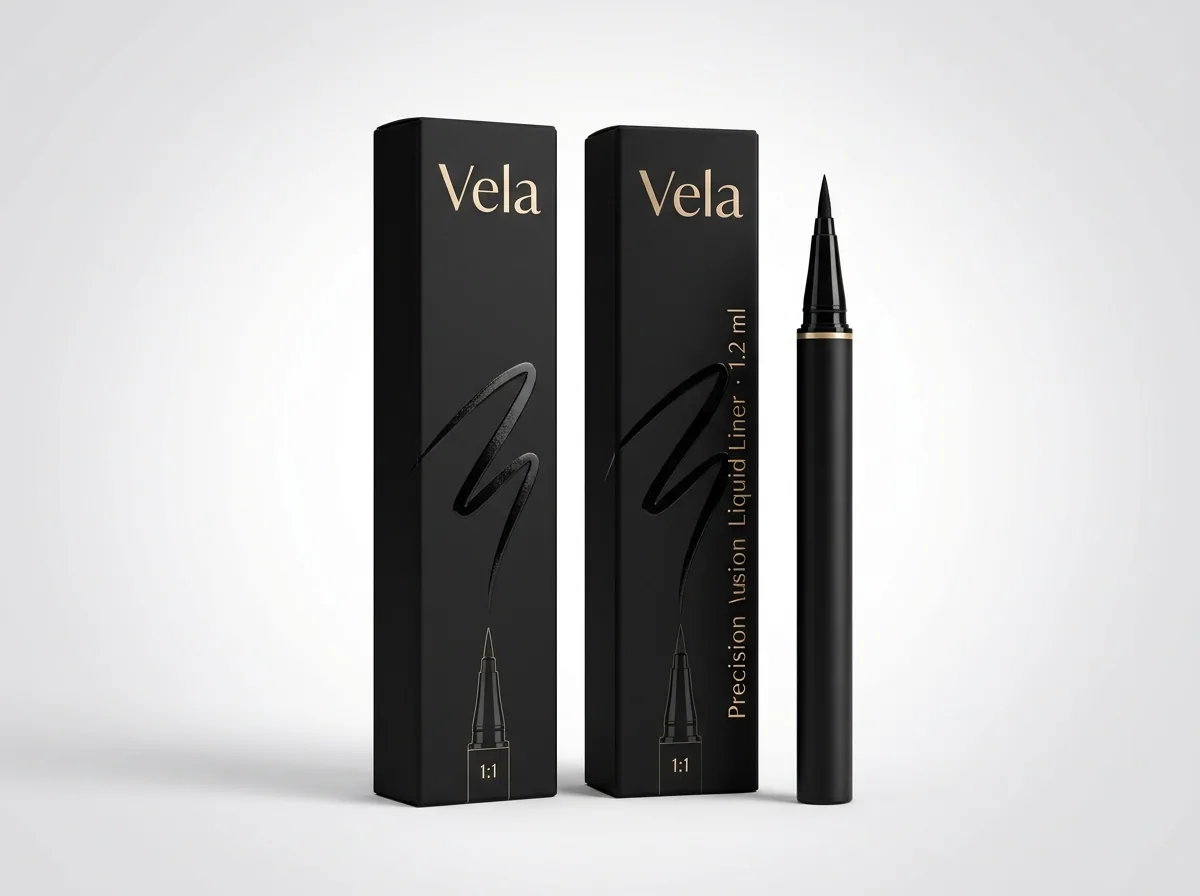
Short answer: Print a 1:1 actual-size silhouette of your mascara wand on the front or side panel and highlight the bristles with glossy Spot UV over a matte or soft-touch background. That way shoppers see the exact brush geometry on your custom mascara boxes without opening the sealed tube.
On this page
- How should I organize the four tall panels of a 5-inch mascara box
- How do I draw a 1:1 actual-size mascara brush diagram on the carton
- Which board stocks and finishes prevent fingerprints on dark mascara boxes
- Why should shade names appear on both the top lid and bottom flap
- What regulatory details and icons belong on an eye-area cosmetic box
- How do I set up the barcode and check my 3D mockup before printing
- Common mistakes
- FAQs
Request a custom quoteFree dieline & 3D mockup
Mascara has a unique merchandising challenge in the beauty aisle: the brush head is the single biggest reason a shopper picks one mascara over another, yet the wand is locked inside an opaque tube that cannot be opened in the store without drying out the wax emulsion or introducing bacteria. Your outer carton has to make the hidden wand visible and tactile. By printing a 1:1 life-size vector silhouette or high-resolution render of the brush on the front panel, calling out what the bristles do (such as curved silicone comb or hourglass fiber volume), and coating the brush graphic in glossy Spot UV against a velvety soft-touch carton, shoppers can see and feel the wand shape right on the box. When you order custom printed mascara boxes at CubitPack, our designers help lay out your four panels, finishes, and dieline for free.
How should I organize the four tall panels of a 5-inch mascara box?
A standard 0.875 × 0.875 × 5.0 inch mascara carton gives you four tall vertical columns plus a square top lid and bottom flap. Because the panels are five inches tall and just under an inch wide, vertical hierarchy is everything when designing mascara packaging boxes. If you crowd claims, brush diagrams, and ingredients onto the front face, the box loses its prestige appeal. Use the four-panel map below to give each wall a clear job. Shoppers should understand the brand, the formula effect, and the brush shape from the front and right panels in three seconds, while regulatory text and the retail barcode live cleanly on the left and back panels.
| Carton panel | Dimensions (10 ml box) | Recommended design content |
|---|---|---|
| Front panel | 0.875 × 5.0 in | Brand logo, product name, primary claim (Volumizing / Tubing), 1:1 brush graphic, net weight (e.g., 10 mL / 0.34 fl. oz.) |
| Right side panel | 0.875 × 5.0 in | 3 bristle callouts (tip, curve, core), wear claims (smudge-proof, flake-free), ophthalmologist-tested note |
| Back panel | 0.875 × 5.0 in | Application directions, removal instructions (warm water or remover), distributor address, PAO jar icon (6M) |
| Left side panel | 0.875 × 5.0 in | Full INCI cosmetic ingredient list in 5.5 pt – 6 pt type + vertical ladder UPC barcode at the base |
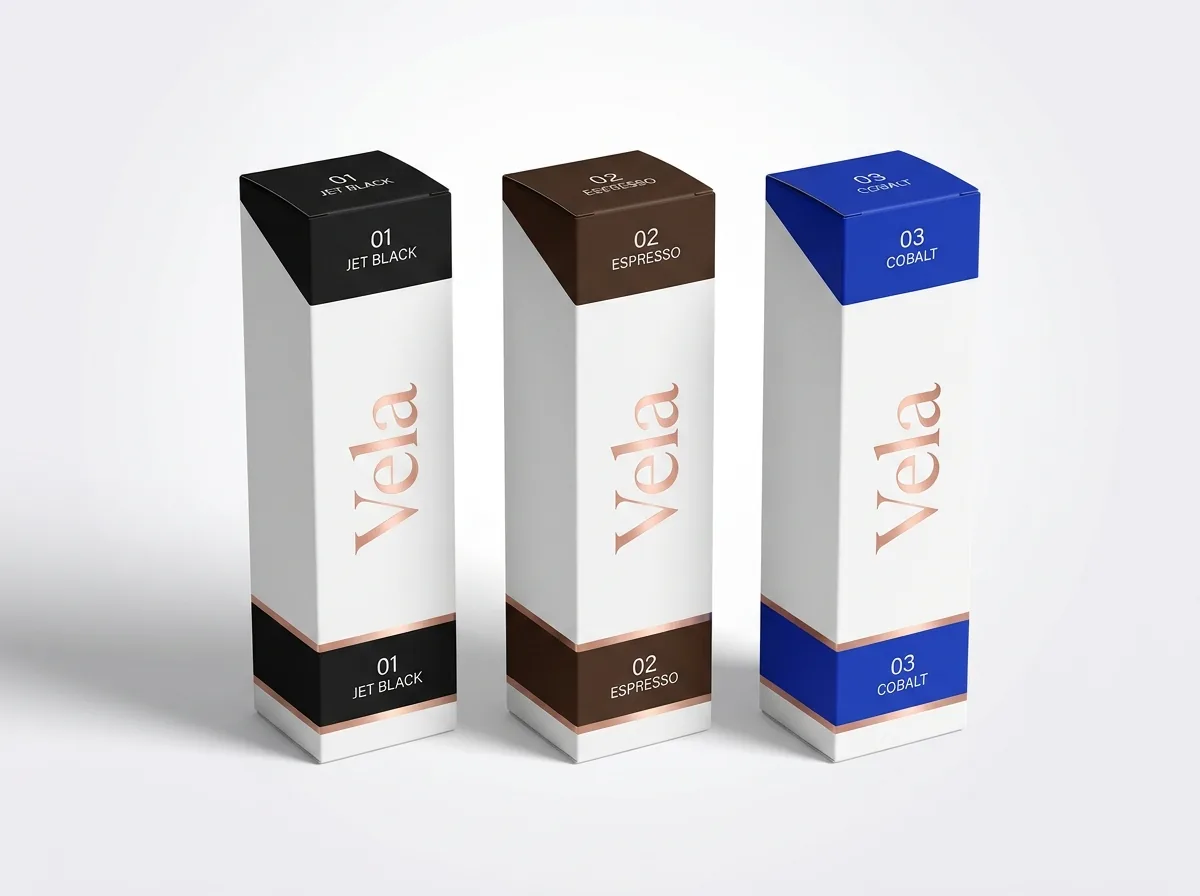
| Top tuck lid | 0.875 × 0.875 in | Shade name (Jet Black, Espresso, Cobalt) and color band for top-down drawer reading |
| Bottom tuck flap | 0.875 × 0.875 in | Shade name repeated + unvarnished area for batch/lot code stamping |
How do I draw a 1:1 actual-size mascara brush diagram on the carton?
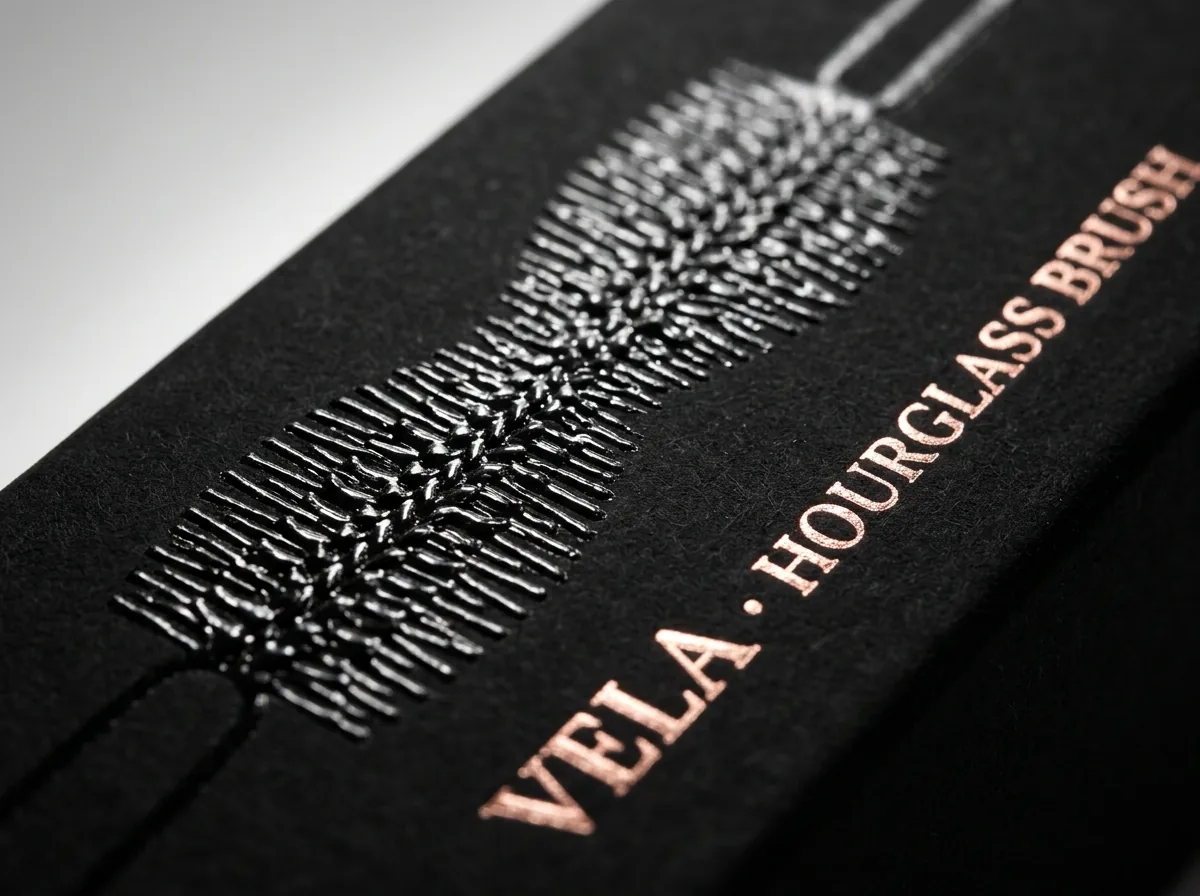
Shoppers are skeptical of exaggerated cartoon brush drawings. Printing the wand head at true 1:1 scale (usually 1.0 to 1.25 inches long for the bristle head, emerging vertically from the bottom edge or descending from the top edge of the front panel) builds instant trust because the buyer can see the exact bristle spacing, taper, and curve. To make a dark black brush stand out on a dark mascara box, frame the wand inside a contrasting shade badge, outline the stem in metallic foil stamping, or hit the entire brush head with glossy spot UV over a matte background. When a customer tilts the box under store lights or runs their thumb across the front panel, the glossy bristles catch the light and feel raised against the matte board.
- Measure your physical wand head with calipers and size the vector illustration at exact 1:1 (100%) scale.
- Add a short label next to the brush (such as 'Actual brush size · 320 micro-bristles' or 'Tapered silicone comb').
- Create a separate vector Spot UV mask layer in your artwork file that covers only the stem and bristles.
- Pair the glossy Spot UV brush with soft-touch or matte lamination over the rest of the carton for maximum contrast.
Which board stocks and finishes prevent fingerprints on dark mascara boxes?
More than half of all mascara cartons use deep black, espresso brown, navy, or burgundy backgrounds to echo the pigment inside the tube. On press, large areas of solid black printed on standard glossy board show every fingerprint, nail scratch, and scuff mark in the beauty aisle. Applying soft-touch lamination or matte lamination over white card solves both problems: it locks the dark ink beneath a scuff-resistant film and eliminates harsh spotlight glare so shoppers can read your 6 pt ingredient list without squinting. If your brand focuses on botanical lash oils or refillable packaging, natural brown kraft board printed with black and opaque white ink delivers an earthy, modern look.
Know your size? Compare pricing across up to 3 quantities.
Request a Quote →Why should shade names appear on both the top lid and bottom flap?
Even if 80% of your sales are Jet Black, most lash lines also include Black-Brown, Espresso, Clear Brow/Lash Gel, or a White Lash Primer. In retail stores and makeup artist kits, mascara boxes are stored two different ways: standing upright in counter trays where shoppers look straight down at the top lid, or lying horizontally in shallow beauty gondola drawers where only the end flaps or one side face up. Printing the shade name and a distinct Pantone color band on both the 0.875 × 0.875 inch top tuck flap and the bottom flap ensures that customers and store clerks grab the right shade on the first try without pulling five boxes out of the display.
What regulatory details and icons belong on an eye-area cosmetic box?
Under US FDA cosmetic labeling regulations (21 CFR Part 701), outer mascara cartons must display the product identity and net quantity of contents on the bottom 30% of the principal display panel (in both fluid ounces/ounces and metric milliliters/grams), the full ingredient declaration in descending order of predominance, and the name and address of the manufacturer, packer, or distributor. Because mascara is used directly on the eyelashes and replaced every 3 to 6 months for eye hygiene, most brands also print the open-jar Period After Opening (PAO) symbol, typically '6M' for mascara, on the back panel, along with any iron oxide color additive listings (May Contain / +/- CI 77499) at the end of the ingredient deck. Keeping that regulatory text in crisp 5.5 pt or 6 pt contrast makes your brand look trustworthy to both retail buyers and consumers.
- Principal display panel (front): product identity ('Volumizing Mascara') and dual net weight ('10 mL / 0.34 fl. oz.') in the lower 30%.
- Ingredient panel (left side): full INCI ingredient list in 5.5 pt to 6 pt high-contrast type, ending with May Contain color additives.
- Back panel: usage and removal directions, Period After Opening (6M jar icon), and distributor city, state, and ZIP code.
- Bottom flap: unvarnished knock-out window for stamping batch or lot numbers on the filling line.
How do I set up the barcode and check my 3D mockup before printing?
Just like other narrow cosmetic cartons, a 0.875 inch wide mascara panel is narrower than a standard horizontal UPC-A barcode. Rotate your barcode 90 degrees into vertical ladder orientation at the bottom of the left or back panel so the black bars stack up the height of the box with clean white quiet zones above and below. When you upload your file, or ask our team for free design help, we check your bleed (1/8 inch outside cut lines), safe margins (1/16 inch inside fold scores), Spot UV mask registration, and barcode orientation, then send you a flat 2D digital proof and an interactive 3D mockup before you pay.
What are the most common custom mascara box design mistakes?
A few small prepress oversights can dull a dark mascara carton or force a reprint. Check these five details on your proof
- Leaving the wand brush off the box artwork, forcing curious shoppers to break the seal in the store just to see what the bristles look like.
- Printing solid black in 100% K only instead of rich black (or a deep charcoal Pantone) under soft-touch lamination, which can make the black look washed out.
- Applying Spot UV or gloss lamination over the entire bottom flap, leaving no porous surface for your filling facility to stamp the batch or lot code.
- Forgetting to print the shade name (Black vs Brown-Black) on the top tuck lid when boxes stand upright in a counter display tray.
- Placing a horizontal barcode across a 0.875 inch panel so the quiet zones wrap over the vertical fold scores and fail retail checkout scanners.
Find your size
Suggested inside size: 0.75 × 0.75 × 3.5 in
A starting point. Your account manager confirms the size with you before the proof.
Quote this size →Packaging for this
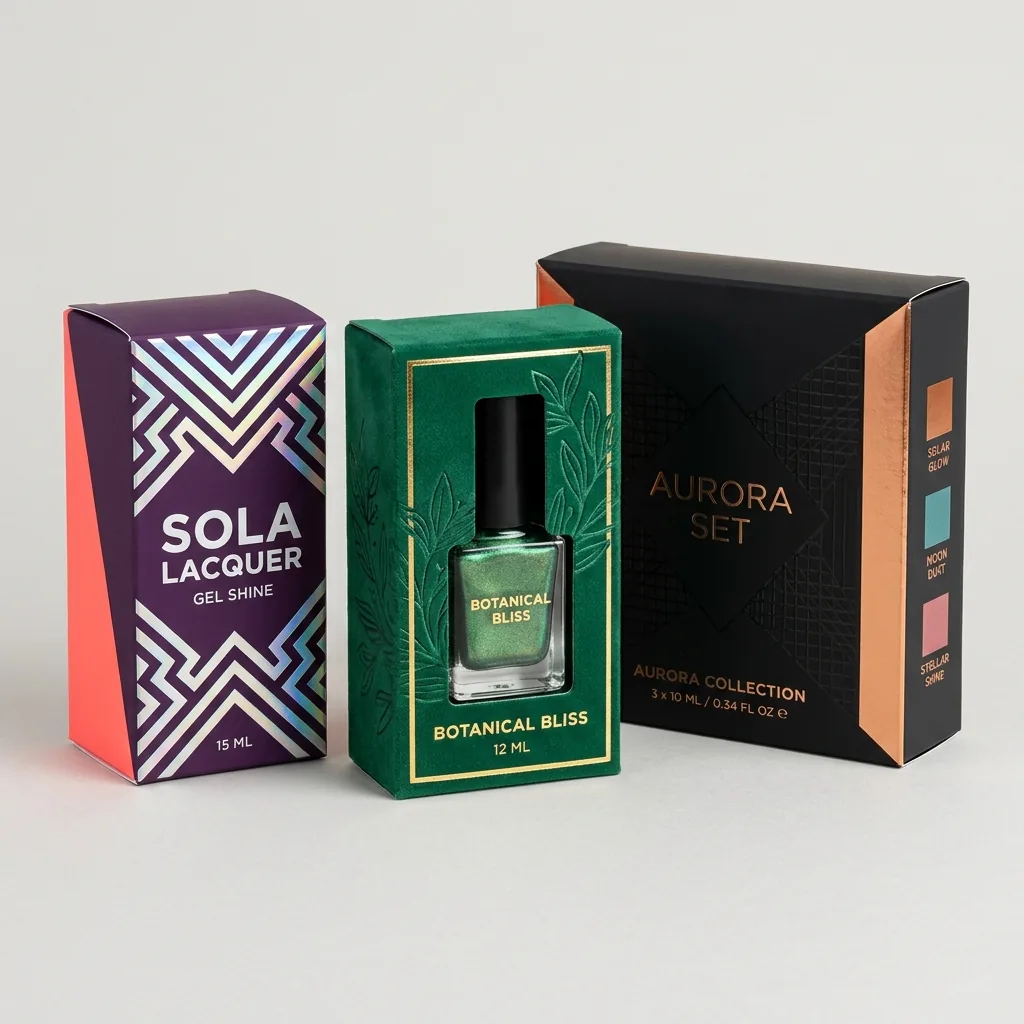
Ready to order mascara boxes? Compare up to 3 quantities with a free 3D mockup.
Request a Quote →Questions about mascara boxes
How do I set up a Spot UV layer for the mascara brush in my artwork file?
Create a separate vector layer in Adobe Illustrator named 'Spot UV' positioned in the exact same coordinates as your printed brush graphic, and fill the Spot UV shape with a 100% spot color swatch. If you don't have Illustrator, our designers will create the Spot UV mask for you for free.
Can I combine Spot UV and metallic foil stamping on the same mascara box?
Yes. Pairing soft-touch matte lamination with metallic gold or silver foil stamping on the brand logo and raised glossy Spot UV on the 1:1 mascara brush illustration is the most popular prestige finish combination we produce.
How should I format rich black on a custom mascara carton?
For large solid black background panels on white card, use a balanced rich black mix (such as C: 40, M: 30, Y: 30, K: 100) so the black prints deep and velvety. For small 5.5 pt or 6 pt text, use 100% K (single-plate black) on a light panel so the letters stay razor-sharp.
Can I use a window cutout instead of a printed brush diagram?
A die-cut window shows off a metallic or colored mascara tube barrel, which is great for shelf appeal, but the bristles themselves are still hidden inside the opaque tube. Even on a window box, we recommend printing a 1:1 brush silhouette beside or below the window.
Can I print inside my custom mascara boxes?
Yes. Inside printing lets you flood the interior walls in your brand's signature accent color or print lash application tips and a QR code for a video tutorial that customers see as soon as they open the top flap.
What if I only have a logo and need help designing the brush graphic?
Design help is free on every CubitPack order. Send us your logo, ingredient text, and a clear photo or spec sheet of your mascara wand, and our packaging designers will lay out the entire four-panel dieline and send you a 3D mockup before payment.
Still have a question? Ask a packaging specialist.
Request a Quote →Request your mascara boxes quote
Tell us your size and quantities, and one dedicated account manager prepares pricing for each tier.
- Free design & AI-to-print studio + 3D mockup
- No die or plate charges · 4–5 day rush available
- Free shipping to all 50 states
- 10% off your first order
The panel hierarchy, Spot UV prepress tips, and cosmetic labeling notes in this guide follow US FDA cosmetic labeling guidelines (21 CFR Part 701), GS1 barcode rules, and CubitPack's decided printing and finishing specifications. Checked by a packaging specialist. Spot something wrong? Tell us and we will fix it.
Sources
What changed
- October 22, 2026: First published.
- October 22, 2026: Updated specifications, terminology, and verified source links.
More guides
New packaging guides by email
Sizes, materials and design tips. Unsubscribe anytime.