
How do I design custom lip balm boxes for multiple flavors?
Short answer: Build one master dieline for your tube size and lock your logo, ingredient deck position, and vertical barcode in the same spot across every SKU. Then swap only the flavor name, icon, and Pantone color band across your custom lip balm boxes so all flavors print together.
On this page
- How should I assign the four panels on a 0.75 inch lip balm box
- How do I color-code multiple lip balm flavors on one shared dieline
- How do I make 5 pt to 6 pt ingredient text readable on a narrow panel
- Why must UPC barcodes be rotated into a vertical ladder on lip balm boxes
- Should I print multi-flavor lip balm boxes on kraft board or white card
- What should I check on my 2D dieline and 3D mockup before printing
- Common mistakes
- FAQs
Request a custom quoteFree dieline & 3D mockup
Designing lip balm packaging is different from designing a larger skincare box because every panel on a standard 0.15 oz lip balm carton is only 0.75 inches wide, and most brands sell three to eight flavors at once. The smartest way to build your line is a modular master template: keep the structural dieline, board stock, brand logo position, net weight line, and barcode layout identical on every box, and change only the flavor color band, scent title, and specific ingredient line for each SKU. On a 0.75 × 0.75 × 2.75 inch carton, assign each of the four vertical panels a single job: front branding, ingredient declaration, directions and company address, and a 90-degree rotated ladder barcode. When you order custom printed lip balm boxes at CubitPack, our designers set up multi-flavor dielines for free with zero die or plate charges.
How should I assign the four panels on a 0.75 inch lip balm box?
A standard 0.75 × 0.75 × 2.75 inch lip balm carton has four long vertical walls, a tiny 0.75 × 0.75 inch top tuck flap, and a matching 0.75 × 0.75 inch bottom flap. Trying to squeeze your logo, flavor illustration, ingredient list, and barcode onto two panels makes the box look cluttered and unreadable. Instead, treat each of the four vertical faces as a dedicated column when laying out your custom lip balm packaging. Use the panel assignment table below as your starting blueprint. Keeping a 1/16 inch (0.0625 in) safe margin inside every vertical fold score ensures that your text never wraps around a corner if the paperboard shifts slightly during folding.
| Carton panel | Dimensions (0.15 oz box) | What to put on this panel |
|---|---|---|
| Front panel | 0.75 × 2.75 in | Brand logo, flavor name, key callout (e.g., Beeswax + Mint), net weight |
| Left side panel | 0.75 × 2.75 in | Full cosmetic ingredient declaration in 5 pt – 6 pt high-contrast type |
| Back panel | 0.75 × 2.75 in | Short brand story, directions for use, distributor city/state/zip, website |
| Right side panel | 0.75 × 2.75 in | Vertical ladder-orientation UPC barcode, batch/lot area, recycling icon |
| Top tuck flap | 0.75 × 0.75 in | Flavor color swatch or short flavor initial so clerks can read top-down in trays |
| Bottom tuck flap | 0.75 × 0.75 in | Unprinted or solid color background (avoid critical text on bottom seam) |
How do I color-code multiple lip balm flavors on one shared dieline?
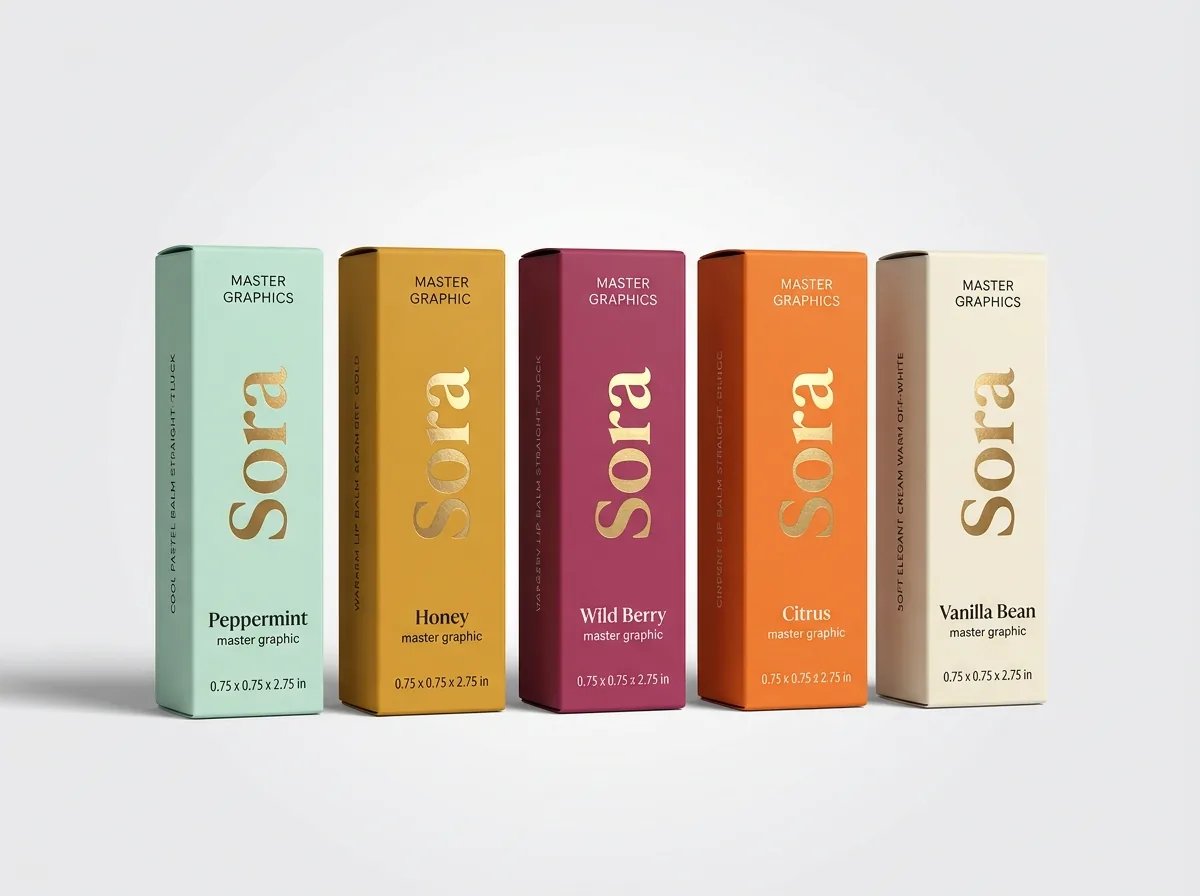
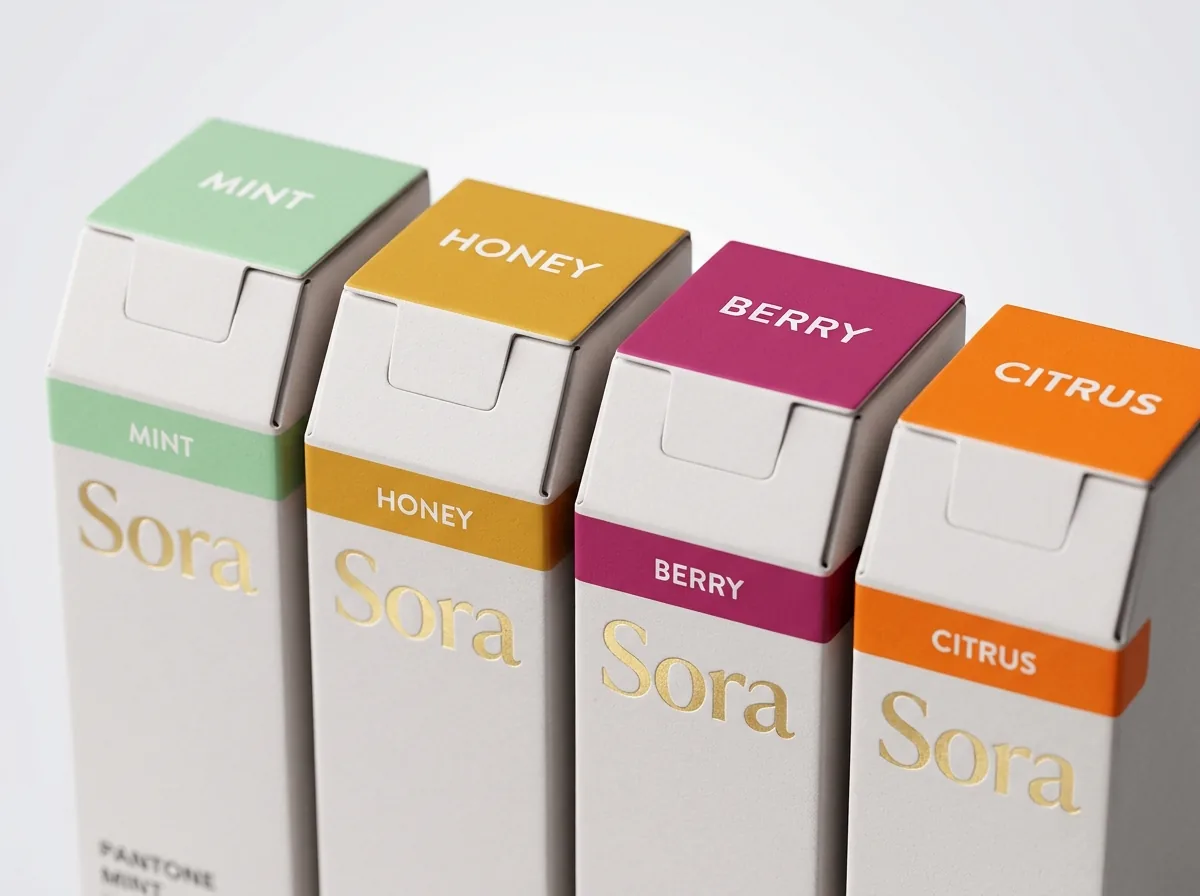
Whether you offer Peppermint, Vanilla Bean, Wild Berry, and Unscented, or a six-shade line of tinted balms, keeping every SKU on the exact same box size and board stock saves money and speeds up prepress. Because all flavors share one physical cut line, we can gang multiple flavor designs across the same production run. For strong shelf blocking, pick one of two color-coding systems: either keep a clean neutral background (such as warm cream or unbleached kraft) across the whole line and change a bold wrap-around color band at the top and bottom of each box, or flood the entire carton in each flavor's signature Pantone color while keeping a consistent white or foil brand badge on the front.
- Color-band system: 70% neutral background + 30% flavor color band on the lower third and top lid flap.
- Full-flood system: each flavor has its own full-bleed background color with an identical logo lockup.
- Top-lid coding: always print the flavor color or name on the 0.75 × 0.75 in top flap so shoppers looking down into a counter display tray can spot each flavor.
- Shared foil plate: if you use gold foil stamping on your logo, keep the foil logo in the exact same coordinates on every flavor.
How do I make 5 pt to 6 pt ingredient text readable on a narrow panel?
Under US cosmetic labeling rules, outer retail cartons carry the ingredient declaration in descending order of predominance, along with the net quantity of contents on the principal display panel. On a 0.75 inch wide wall, subtracting 1/16 inch of safe margin on the left and right leaves a live text column that is 0.625 inches wide, holding about 20 to 26 characters per line. To keep 5 pt or 6 pt type razor-sharp at that width, choose a clean humanist or grotesque sans-serif font with an open x-height, set the text in 100% single-color black (or dark charcoal) rather than four-color CMYK rich black, and avoid knocking small white text out of a dark four-color background where tiny ink registration shifts can fill in the letters. If your formula includes botanical extracts with long Latin names, setting the ingredient panel vertically along the 2.75 inch height gives you a much wider 2.625 inch column so the text wraps cleanly in four or five lines.
Know your size? Compare pricing across up to 3 quantities.
Request a Quote →Why must UPC barcodes be rotated into a vertical ladder on lip balm boxes?
A standard retail UPC-A barcode at 80% magnification is about 1.18 inches wide including its required left and right white quiet zones. Obviously, a 1.18 inch wide horizontal barcode will not fit flat across a 0.75 inch wide lip balm box panel without wrapping around the fold creases, and a barcode that bends over a box corner will not scan at checkout. The solution is ladder orientation: rotate the entire barcode 90 degrees so the black bars stack vertically up the 2.75 inch height of the panel like the rungs of a ladder. In ladder orientation, the quiet zones run vertically up and down the panel where you have plenty of room, and the bar width easily fits inside the 0.625 inch safe zone. Always print barcode bars in solid black or a dark navy/forest Pantone shade on a white panel, and never print bars in red, orange, or metallic gold ink because red-laser checkout scanners treat warm colors as invisible white background.
- Rotate the UPC-A barcode 90 degrees into vertical ladder orientation so the bars sit flat inside the 0.75 in panel.
- Keep at least 1/8 inch of unprinted white quiet zone above the first bar and below the last bar.
- Assign a distinct UPC number to each flavor SKU if retail stores track flavors individually at checkout.
- Print bars in 100% black ink on a white box panel; avoid red, yellow, or metallic foil bars that fail laser scanners.
Should I print multi-flavor lip balm boxes on kraft board or white card?
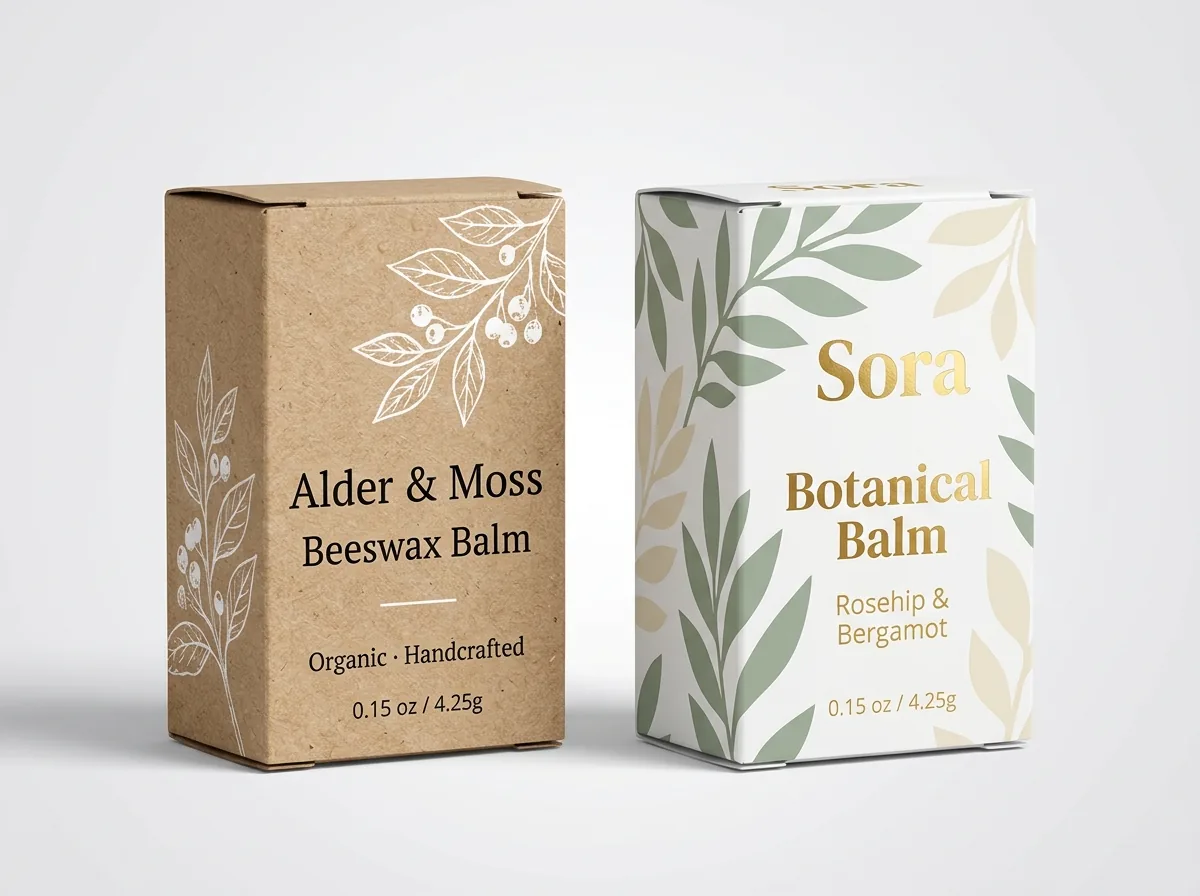
Your choice of paperboard sets the tone before a customer reads a single word. Natural brown kraft board has visible wood fibers that signal beeswax, honey, tallow, and herbal formulas right away. Because brown kraft absorbs ink and darkens pastel colors, pair kraft with deep forest green, burgundy, black, or opaque white ink on kraft so your flavor accents stay crisp. Bright white card is the right canvas when your flavors rely on vivid fruit colors, soft pastel gradients, or photographic botanical illustrations. White card also pairs cleanly with soft-touch lamination and metallic foil stamping, giving a small lip balm carton a high-end cosmetic counter feel.
What should I check on my 2D dieline and 3D mockup before printing?
Before your order goes to press, CubitPack sends you a flat 2D digital proof and an interactive 3D mockup of every flavor SKU. Even if you start with a rough sketch or use our print your AI design service, our prepress specialists place your artwork onto the exact vector dieline for free. When reviewing your proof, spin the 3D mockup to check four details: verify that the front and back panels are right-side up when the box stands on its base, confirm that the top tuck flap text reads facing the shopper from the front, check that all ingredient text sits at least 1/16 inch inside the purple fold lines, and confirm that each flavor SKU has its own unique UPC barcode number if stores scan flavors separately.
What are the most common lip balm box design and prepress mistakes?
Most printing delays on miniature cosmetic cartons come from treating a 0.75 inch panel like a wide skincare box. Catch these five errors on your proof
- Placing a horizontal UPC barcode across a 0.75 inch panel so the bars or white quiet zones wrap around the fold crease.
- Using the exact same UPC barcode number across Peppermint, Vanilla, and Berry SKUs when retail stores need to track inventory by flavor.
- Printing 5 pt white ingredient text knocked out of a four-color dark background instead of dark single-color text on a light panel.
- Leaving the 0.75 × 0.75 inch top lid flap blank when the boxes will sit upright inside a checkout counter display tray.
- Putting critical text closer than 1/16 inch to a vertical fold score or glue tab.
Find your size
Suggested inside size: 0.75 × 0.75 × 2.75 in
A starting point. Your account manager confirms the size with you before the proof.
Quote this size →Packaging for this
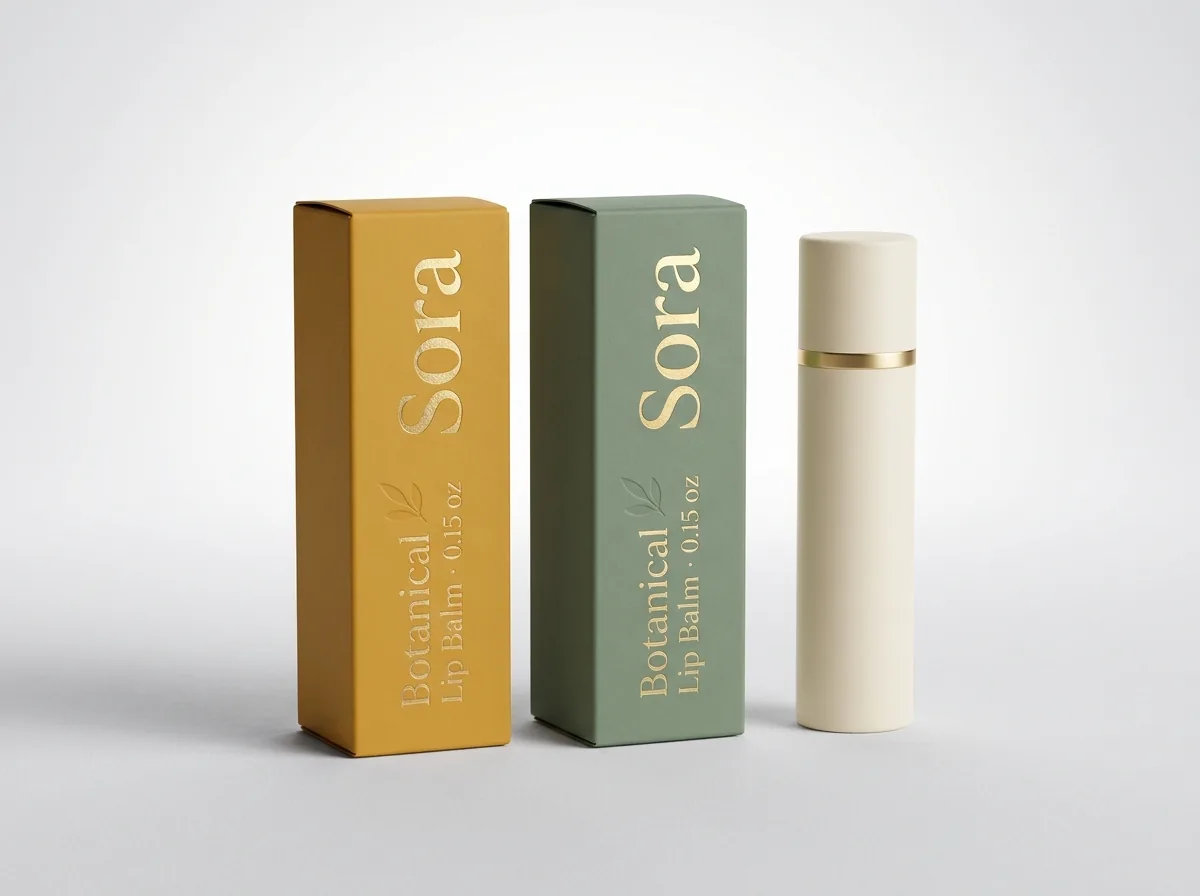
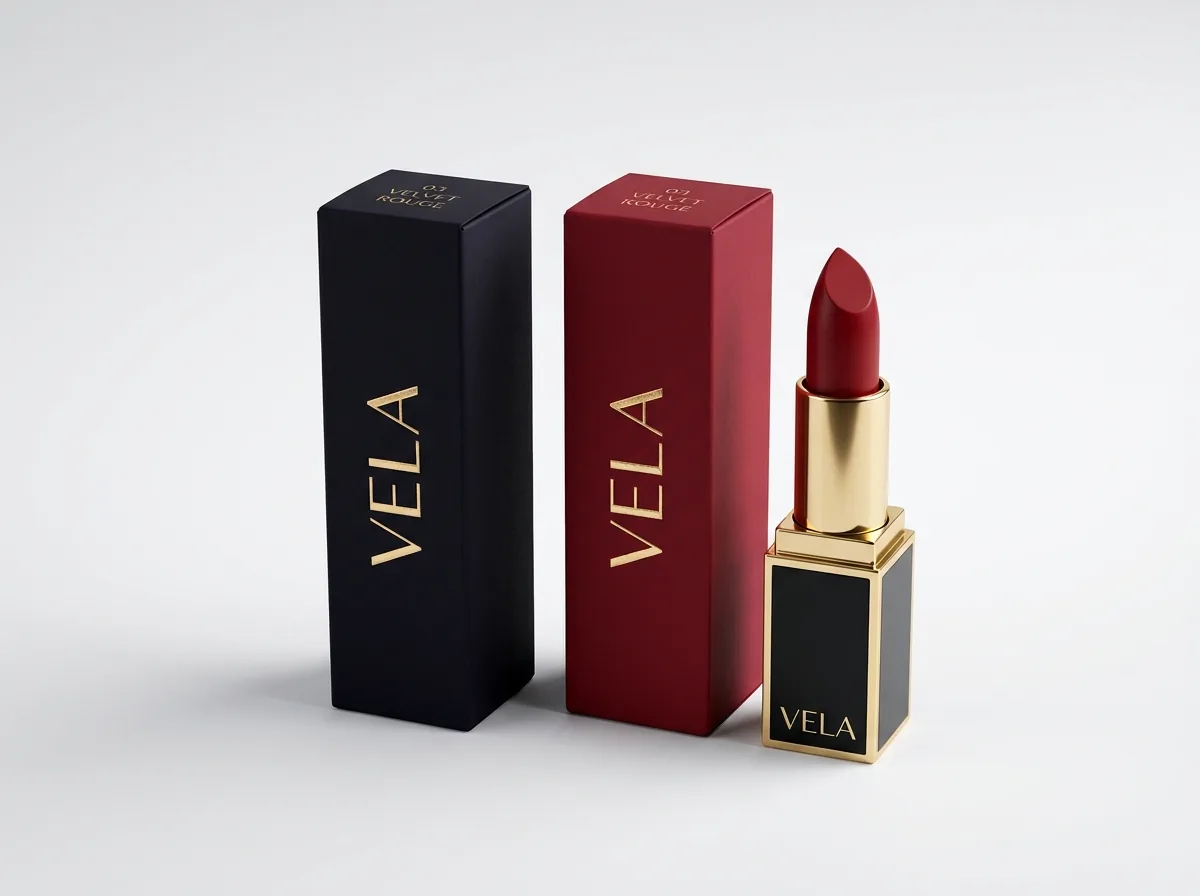
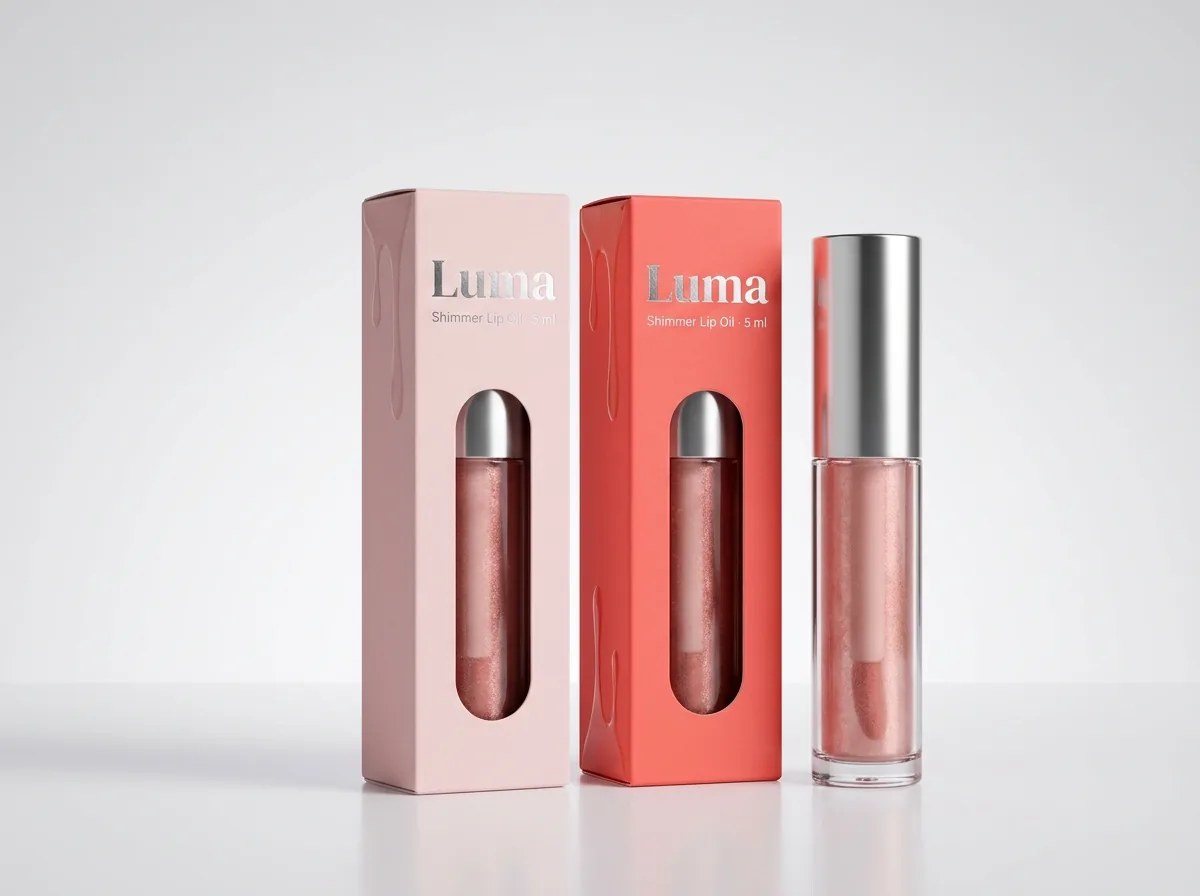
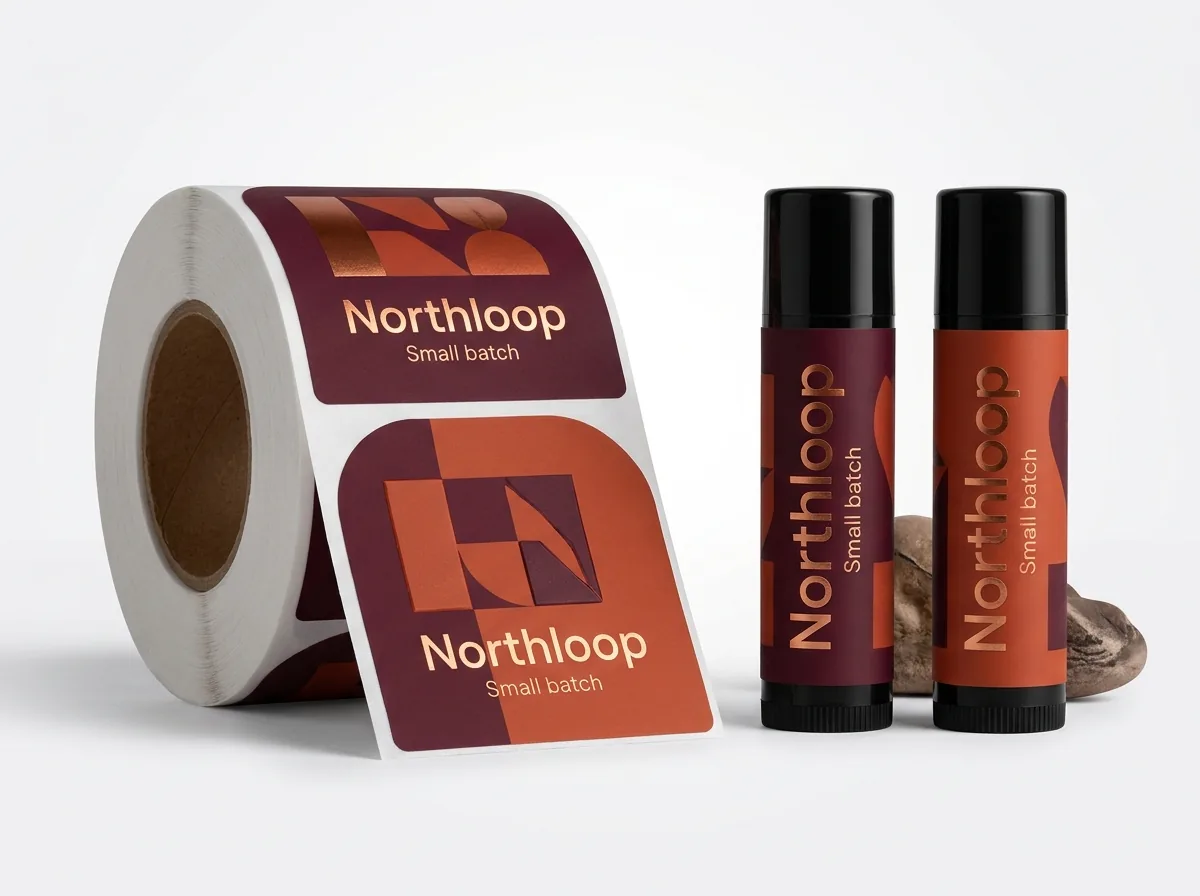
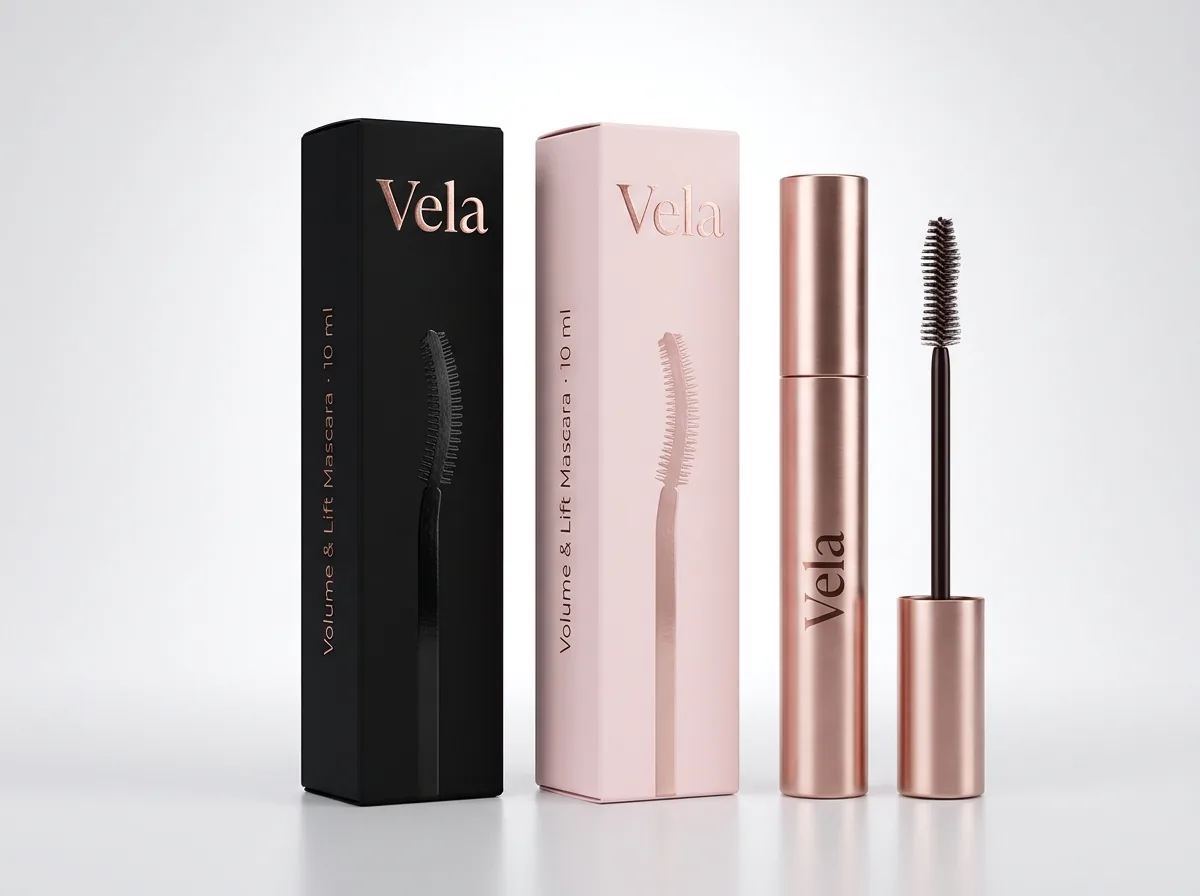
Ready to order lip balm boxes? Compare up to 3 quantities with a free 3D mockup.
Request a Quote →Questions about lip balm boxes
Can I combine four or five lip balm flavors in one 1,000-box order?
Yes. As long as all flavors use the exact same box dimensions and paperboard stock, they share a single dieline. Select 2 designs or 3+ designs in the quote form and list how many flavors you have so your account manager can quote the combined run.
What is the smallest font size that prints clearly on a lip balm box?
For dark text printed on a light background, 5 pt to 5.5 pt in a clean sans-serif font prints sharply on smooth white card. If you are printing on textured brown kraft board or knocking light text out of a dark background, stay at 6 pt or larger.
Do I need a different UPC barcode for each lip balm flavor?
If you sell individual flavors into retail stores, grocers, or pharmacies, yes: each flavor SKU needs its own unique 12-digit UPC-A number so the store's point-of-sale system tracks inventory and reorders accurately. If you only sell a bundled variety pack, only the outer bundle box needs a barcode.
How much bleed do I need on a custom lip balm box dieline?
Extend all background colors and patterns 1/8 inch (0.125 in) past the outer cut lines of the dieline, and keep all text, logos, and barcode bars at least 1/16 inch (0.0625 in) inside the fold and cut lines.
Can CubitPack lay out my lip balm flavors if I only have tube labels?
Yes. Design help is free on every order. Send us your existing tube wrap labels or brand assets along with your flavor names and ingredient lists, and our designers will adapt them onto the four-panel box dieline and send you a 3D mockup.
How do pastel flavor colors look when printed on brown kraft board?
Standard CMYK inks are translucent, so pastel pink, mint, or yellow printed directly on brown kraft board will look muted and earthy. To make light flavor colors pop on kraft, we print a layer of opaque white ink underneath your colored ink.
Still have a question? Ask a packaging specialist.
Request a Quote →Request your lip balm boxes quote
Tell us your size and quantities, and one dedicated account manager prepares pricing for each tier.
- Free design & AI-to-print studio + 3D mockup
- No die or plate charges · 4–5 day rush available
- Free shipping to all 50 states
- 10% off your first order
The panel layout, typography minimums, and ladder barcode guidelines in this article follow US cosmetic labeling rules (21 CFR Part 701), GS1 barcode orientation standards, and CubitPack's prepress specifications. Checked by a packaging specialist. Spot something wrong? Tell us and we will fix it.
Sources
What changed
- October 22, 2026: First published.
- October 22, 2026: Updated specifications, terminology, and verified source links.
More guides
New packaging guides by email
Sizes, materials and design tips. Unsubscribe anytime.