
Should I choose tuck boxes or sleeves for custom eyeshadow boxes?
Short answer: Choose a six-sided straight tuck end box for molded plastic single compacts, 4-pan quads, and palettes that need tamper-evident flap seals or shock inserts. Choose an open-ended paperboard sleeve for book-style magnetic palettes or 26 mm refill blisters to lower board usage on your custom eyeshadow boxes.
On this page
- How do tuck cartons, open sleeves, and drawer boxes compare for eyeshadow
- Why are straight tuck end boxes the standard for single compacts and quads
- When does an open-ended slipcase sleeve make sense for a magnetic palette
- How do thumb-notch card sleeves work for 26 mm magnetic refill pans
- When should I upgrade to a tray-and-sleeve drawer box for eyeshadows
- How do I pick the right structure for each SKU in my eye collection
- Common mistakes
- FAQs
Request a custom quoteFree dieline & 3D mockup
The choice between a full tuck-end carton and a slide-on sleeve comes down to how much structural protection your primary eyeshadow container already provides. An injection-molded plastic single compact or 4-pan quad has brittle acrylic hinges and a snap clasp that can pop open or crack on impact, so it belongs inside a fully enclosed six-sided straight tuck end box. By contrast, a 9-pan or 12-pan magnetic eyeshadow palette is already built from heavy rigid chipboard (gray board) with a magnetic book cover; sliding an open-ended paperboard slipcase sleeve over that palette keeps the lid shut, protects the outer lamination from warehouse scuffs, and carries your barcode and shade map using less paperboard. We manufacture every style of custom printed eyeshadow boxes and custom palette sleeves at CubitPack starting at 1,000 units with free design help, zero die charges, and free US shipping.
How do tuck cartons, open sleeves, and drawer boxes compare for eyeshadow?
Color cosmetics lines rarely use a single carton structure across every SKU. A brand might pack its 26 mm build-your-own refill pans in thin thumb-notch card sleeves, its 36 mm single pots in straight tuck window cartons, and its seasonal 12-pan artistry palette inside a custom slipcase sleeve. Use the side-by-side table below to compare the four primary structures across product compatibility, drop protection, tamper sealing, and packing speed before selecting your style in the quote form.
| Feature | Straight tuck end box | Open-ended palette sleeve | Thumb-notch refill sleeve | Tray and sleeve (drawer) |
|---|---|---|---|---|
| Ideal eyeshadow format | Single compacts, 4-pan quads, liquid wands, retail palettes | Book-style 6-pan, 9-pan, and 12-pan magnetic palettes | 26 mm & 36 mm magnetic tin refill pans in blisters | Baked dome shadows, multichromes, luxury quads |
| Sides enclosed | All 6 sides (top and bottom tuck flaps) | 4 panels wrapped around; 2 ends open | 5 sides enclosed (1 open end with thumb notch) | 6 sides double-walled around perimeter |
| Drop & corner protection | High (especially when paired with an inner frame) | Moderate (protects faces; two ends remain exposed) | Light (relies on inner PET blister clamshell) | Highest (double-wall tray + sleeve buffers drops) |
| Tamper-evident sealing | Easy (clear wafer seal over both tuck flaps) | Requires shrink band or side bridge label | Wafer sticker over open top edge | Requires ribbon pull or outer seal sticker |
| Relative board usage | Standard 1-piece carton | Lowest (no tuck flaps or dust flaps) | Very low (compact 1.5 × 1.5 in footprint) | Highest (2 separate die-cut pieces) |
Why are straight tuck end boxes the standard for single compacts and quads?
When you pack a 2.0 × 2.0 inch single eyeshadow compact or a 2.75 × 2.75 inch 4-pan quad, all six faces of the plastic case need protection. Plastic compacts scratch easily against corrugated master cartons, and a corner drop can snap the pin hinge on an acrylic lid. A custom straight tuck end box wraps all six sides and folds both the top and bottom flaps toward the rear panel, leaving the front face completely smooth with no raw paperboard edge interrupting your typography. Fully enclosed tuck boxes also solve two major retail requirements: hygiene sealing and shade sorting. You can apply a clear tamper-evident wafer seal over the top and bottom tuck lids so shoppers know the pan inside is untouched, and you can print a full-bleed Pantone shade band across the top flap so stock clerks can read shades in vertical beauty counter drawers. If you prefer alternating flaps for automated carton erecting, compare our custom reverse tuck end boxes.
- Six-sided enclosure protects clear acrylic compact lids from scuffing before purchase.
- Flat top and bottom tuck flaps accept standard clear cosmetic tamper-evident seals.
- Accepts a die-cut front window (round, square, or custom pan silhouette) to show the real pigment.
- Leaves room inside for a folded paperboard perimeter frame if your pressed formula is fragile.
- Works cleanly in tiered point-of-sale counter display trays.
When does an open-ended slipcase sleeve make sense for a magnetic palette?
Most 9-pan, 12-pan, and 18-pan eyeshadow palettes are manufactured as rigid book-style cases made from 1.5 mm to 2.0 mm chipboard (gray board) wrapped in printed art paper with a hidden magnetic flap. Because that rigid book case is already strong enough to protect the pans on store shelves, putting it inside a second full tuck box often feels redundant, yet shipping an unboxed magnetic palette creates two problems: the magnetic lid can flip open during parcel sorting, and the outer cover gets scuffed. An open-ended paperboard slipcase sleeve solves both problems with minimal board weight. The four-panel sleeve slides snugly over the closed palette, locking the magnetic cover shut while keeping the two narrow side spines visible for a layered two-tone contrast. You can print your artistic cover illustration on the palette itself while putting the barcode, net weight, and FDA color additive list on the back of the removable sleeve.
Know your size? Compare pricing across up to 3 quantities.
Request a Quote →How do thumb-notch card sleeves work for 26 mm magnetic refill pans?
Brands that sell customizable magnetic palettes need an economical, plastic-light way to package individual 26 mm or 36 mm tin refill pans. A full six-sided tuck box with dust flaps can be fussy to fold at a 0.25 inch depth because four overlapping paperboard flaps become nearly as thick as the pan itself. Instead, most indie and professional makeup lines use a five-sided pinch-bottom or glued-bottom card sleeve (often 1.5 × 1.5 × 0.25 inches) with a die-cut half-circle thumb notch on the open top edge. The 26 mm metal pan sits inside a thin clear PET clamshell blister that slides into the card sleeve with a gentle friction fit. A centered round window on the front of the sleeve lets customers inspect the exact shimmer or matte pan shade, while the back panel holds the shade name, batch number, and ingredient list.
When should I upgrade to a tray-and-sleeve drawer box for eyeshadows?
Baked mineral domes, loose pigment pots, and high-pearl multichrome shadows command higher retail prices and shatter more easily than standard matte talc-based shadows. For these hero SKUs, a two-piece custom tray and sleeve box delivers both a drawer-style unboxing reveal and double-wall perimeter protection. When the inner paperboard tray slides inside the outer sleeve, all four side walls have two layers of board. We can build the inner tray with a folded hollow rim and a die-cut center well that suspends your compact or glass pot away from the outer corners, absorbing edge drops during e-commerce delivery without needing plastic bubble wrap. You can also explore die-cut apertures on our custom window boxes page.
How do I pick the right structure for each SKU in my eye collection?
Before requesting your quote, match each product in your launch to the structure that fits its container rigidity and sales channel. If you are selling in multi-brand beauty stores where shoppers handle boxes all day, prioritize sealed straight tuck end cartons so compacts cannot be opened or swapped between boxes. If you sell primarily direct-to-consumer on your own website, an open-ended palette sleeve over a rigid magnetic palette (shipped inside a padded mailer) or a thumb-notch refill sleeve gives customers a faster, lower-waste unboxing experience. Our engineering team can send free dielines for both a tuck box and a sleeve so you can compare them on a 3D mockup before paying.
What are the most common mistakes when choosing between tuck boxes and sleeves?
Mismatched carton styles lead to scuffed compacts, stuck sleeves, or broken pans in transit. Watch out for these five structural mistakes
- Putting an unsealed open-ended sleeve on a loose single plastic compact with no friction stop, letting the compact fall right out the bottom when a shopper picks it up.
- Using soft-touch lamination on both the outside of a magnetic palette and the inside of its slipcase sleeve, creating rubbery friction that makes the sleeve stick.
- Designing a 0.20 inch ultra-thin refill pan box with standard tuck and dust flaps that bulge open because the folded board is thicker than the depth.
- Skipping tamper-evident flap seals on retail single eyeshadow tuck boxes, allowing shoppers to open compacts and swatch pans with their fingers in the aisle.
- Shipping a heavy 12-pan mirrored palette in a thin open-ended sleeve inside an unpadded poly mailer with no corner protection.
Find your size
Suggested inside size: 1.5 × 1.5 × 0.25 in
A starting point. Your account manager confirms the size with you before the proof.
Quote this size →Packaging for this
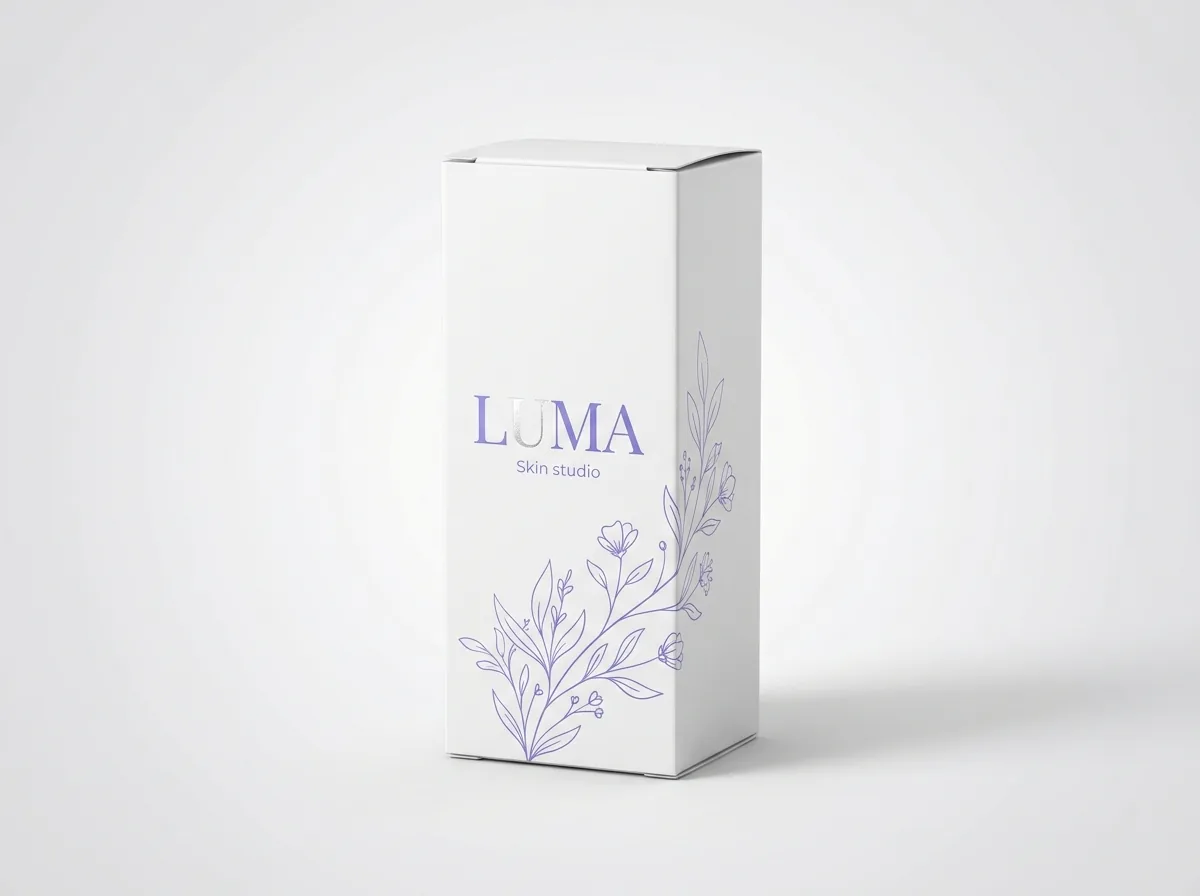
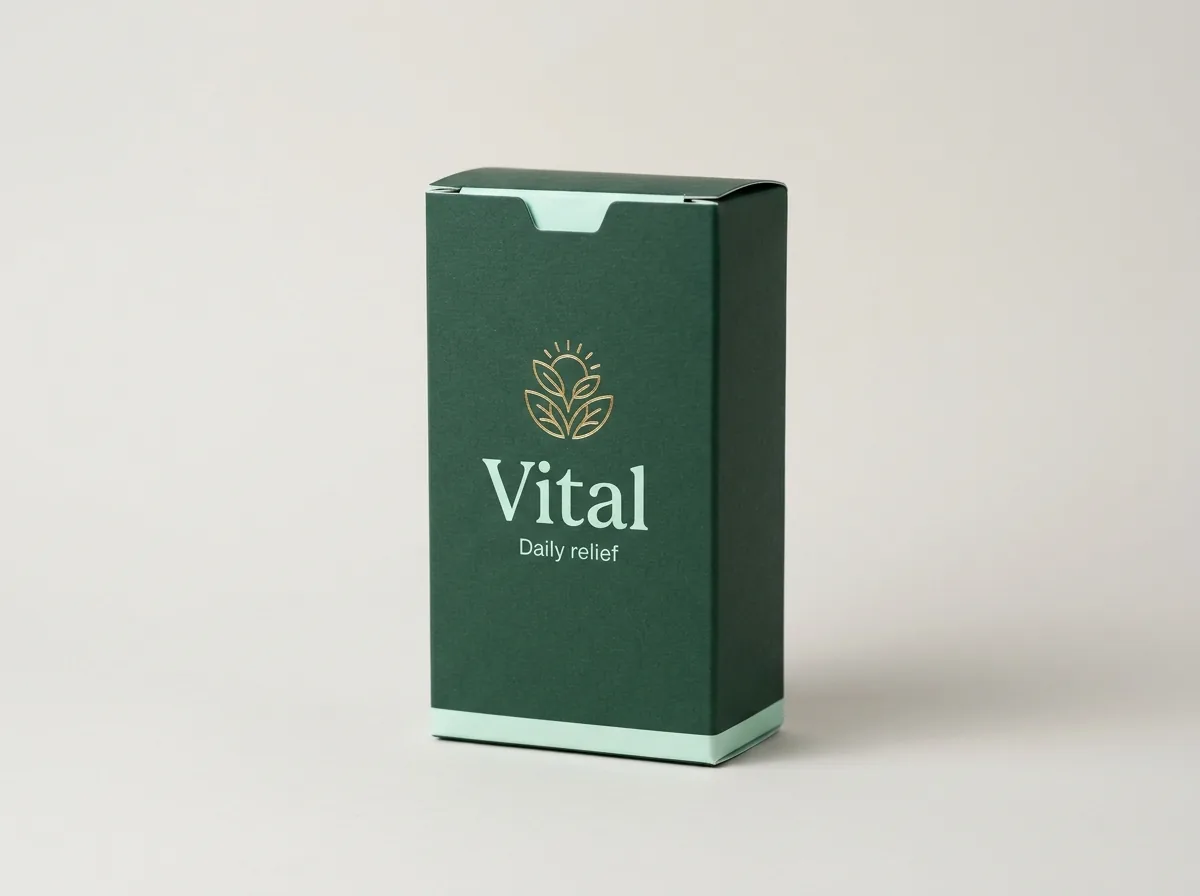
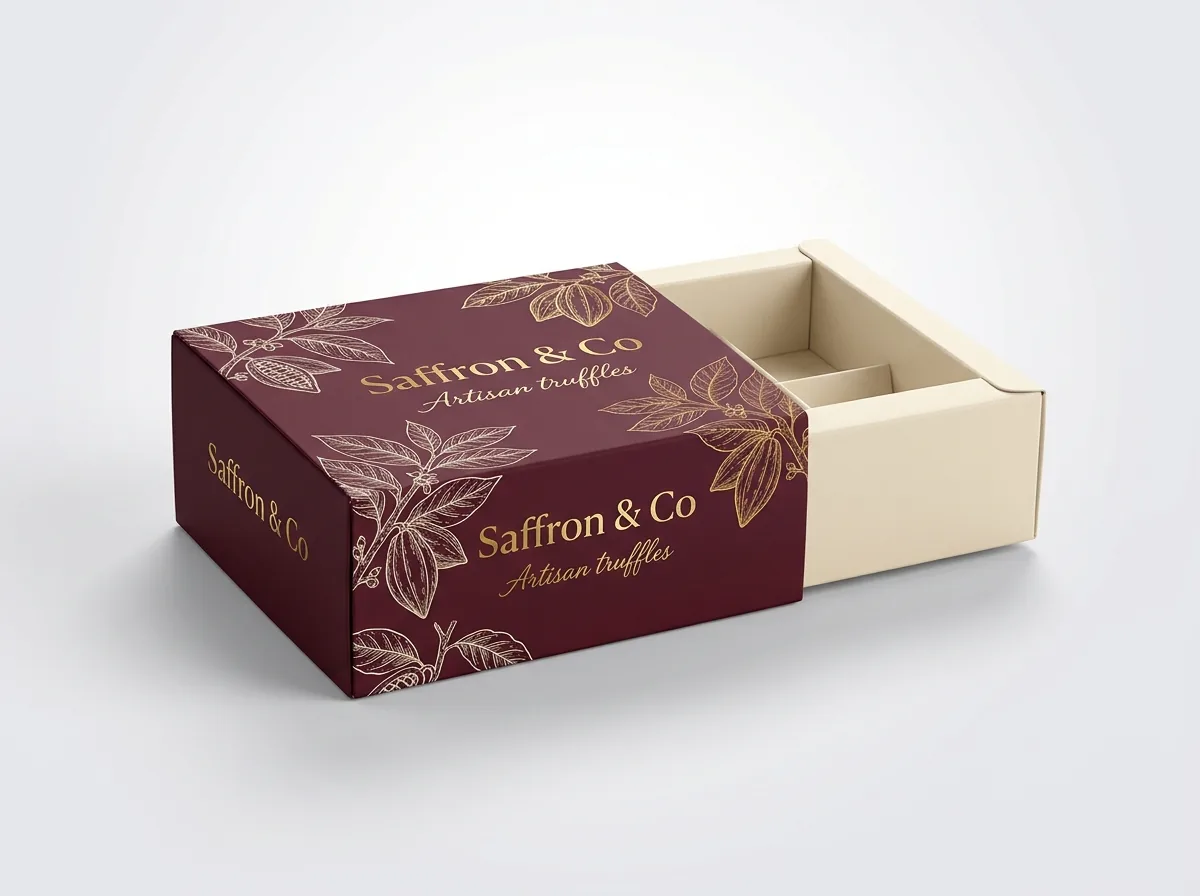
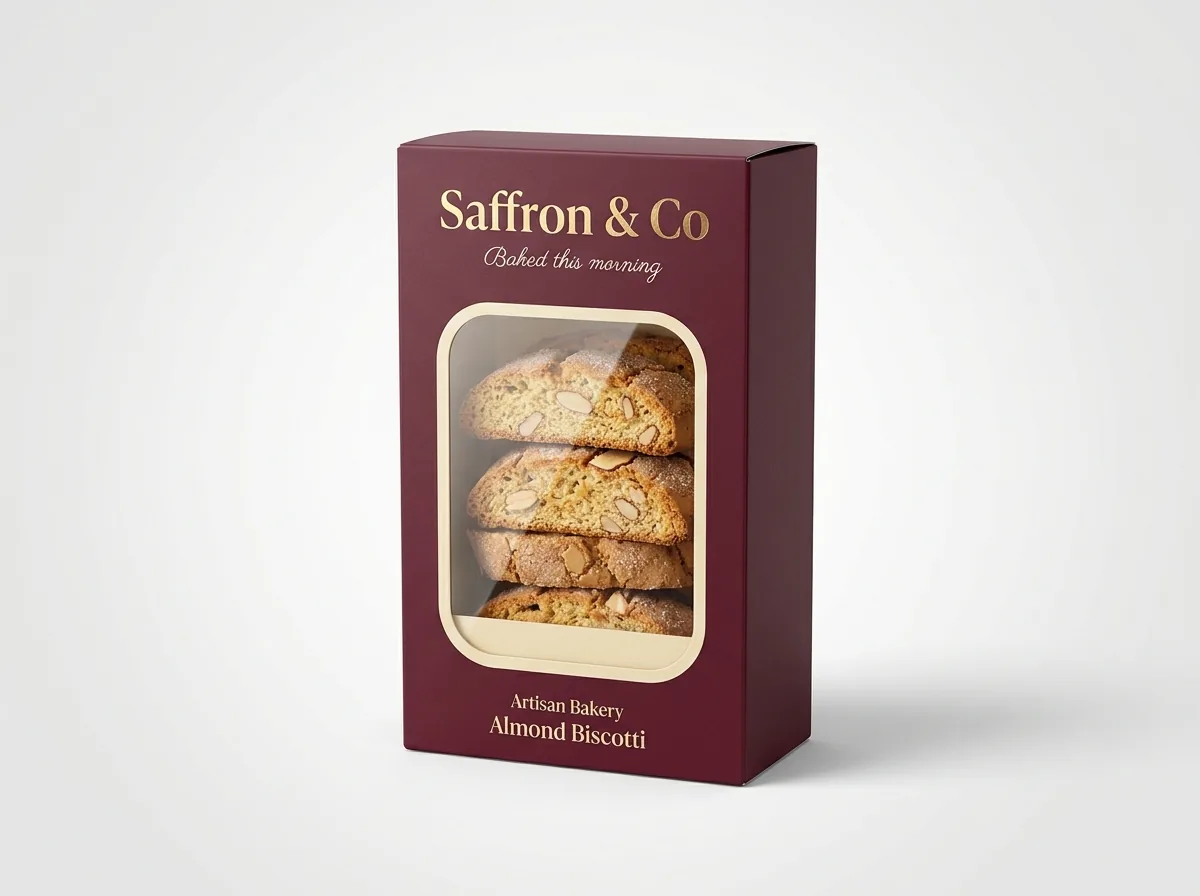
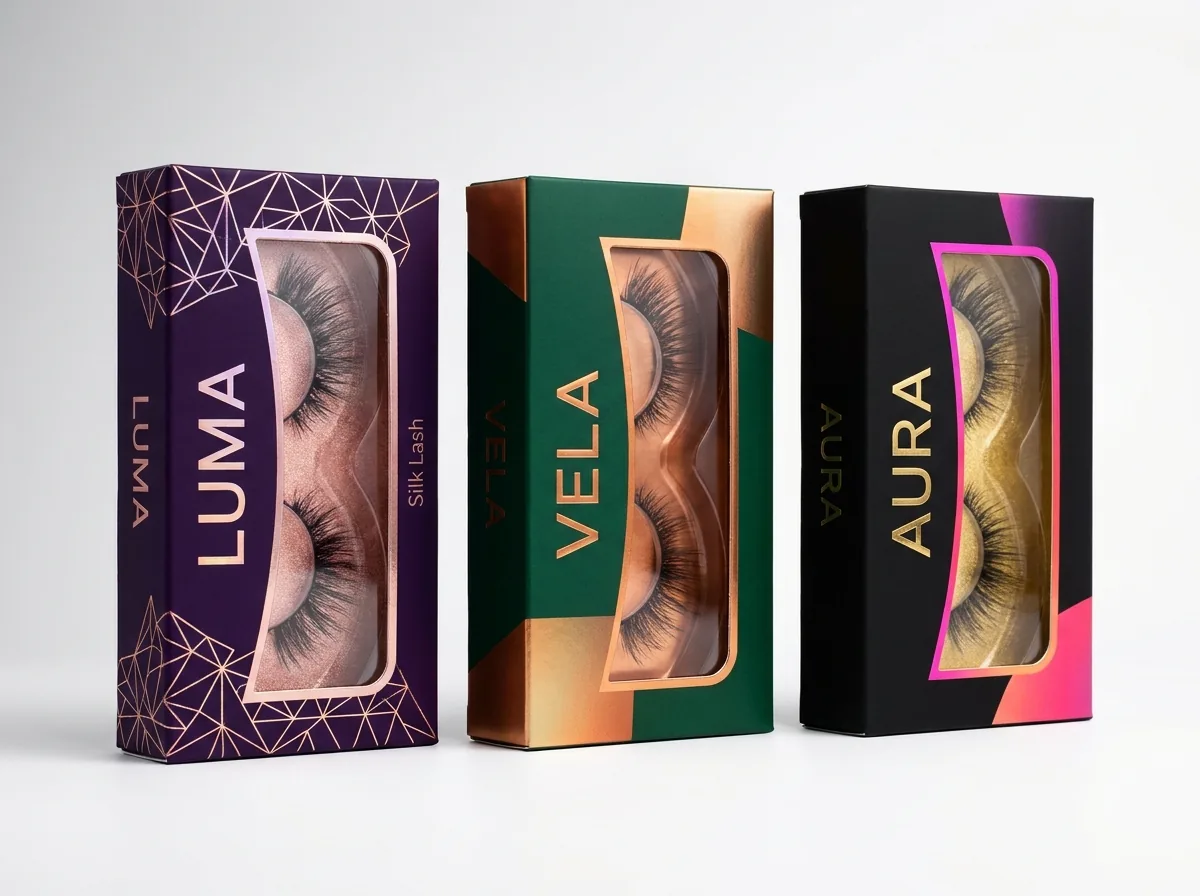
Ready to order eyeshadow boxes? Compare up to 3 quantities with a free 3D mockup.
Request a Quote →Questions about eyeshadow boxes
Are open-ended palette sleeves more economical than full straight tuck end boxes?
Yes. Because an open-ended slipcase sleeve has only four flat panels and one glue seam, with no top tuck flaps, bottom tuck flaps, or side dust flaps, it uses less paperboard per unit than a full six-sided carton of the same size.
How do you keep a magnetic eyeshadow palette from sliding out of an open-ended sleeve?
We size the inside of the paperboard sleeve to within 1/16 inch (0.0625 in) of your closed palette's width and thickness. That calibrated friction fit lets the customer slide the sleeve off smoothly with two hands while preventing it from slipping off on its own.
Can I add a die-cut window to both a straight tuck box and a refill pan sleeve?
Yes. Both straight tuck end cartons and thumb-notch refill sleeves can feature a centered round, square, or custom-shaped window cutout, either left open to touch the blister or patched with clear film, at zero extra die cost.
Which box style is ideal if my retail buyer requires tamper-evident packaging?
A six-sided straight tuck end or reverse tuck end box is the easiest style to make tamper-evident. You simply apply a clear perforated wafer sticker over the top and bottom tuck flap seams after inserting the compact.
Can I order single eyeshadow tuck boxes and 9-pan palette sleeves in the same production run?
Yes. While a 2.0 × 2.0 inch single box and a 4.5 × 4.5 inch palette sleeve use two different dielines, we never charge die or plate fees and can produce and ship both items together.
Can I test a physical sample of both a tuck box and a palette sleeve before ordering?
Yes. Every order includes a free 2D dieline and 3D mockup before payment, and you can request a paid printed sample of your exact box or sleeve (credited toward your production order) to test the fit on your palette.
Still have a question? Ask a packaging specialist.
Request a Quote →Request your eyeshadow boxes quote
Tell us your size and quantities, and one dedicated account manager prepares pricing for each tier.
- Free design & AI-to-print studio + 3D mockup
- No die or plate charges · 4–5 day rush available
- Free shipping to all 50 states
- 10% off your first order
This comparison evaluates straight tuck end cartons, open-ended palette slipcase sleeves, thumb-notch refill pan envelopes, and tray-and-sleeve drawer boxes across board geometry, tamper sealing, and drop-test performance on pressed powder pans. Checked by a CubitPack packaging specialist. Spot an error? Tell us and we will fix it.
Sources
What changed
- October 22, 2026: First published.
- October 22, 2026: Updated specifications, terminology, and verified source links.
More guides
New packaging guides by email
Sizes, materials and design tips. Unsubscribe anytime.