
How do I keep pressed eyeshadow pans from cracking in transit?
Short answer: To keep pressed eyeshadow pans from cracking in transit, size your outer carton within 1/16 inch of the compact so it cannot rattle, suspend fragile shimmer or multichrome palettes inside a 0.25 inch hollow-wall paperboard perimeter frame, and pack mail-order palettes in corrugated mailers alongside your custom eyeshadow boxes.
On this page
- Why do pressed shimmer, duochrome, and baked eyeshadows crack during shipping
- Which box and insert setup matches my eyeshadow formula and shipping channel
- How does a hollow-wall paperboard perimeter frame absorb corner drops
- How do I design the outer box so shoppers never open the compact in the store
- What FDA color additive and warning rules apply to custom eyeshadow boxes
- How can I drop-test my eyeshadow box before running 1,000+ units
- Common mistakes
- FAQs
Request a custom quoteFree dieline & 3D mockup
Pressed powder eyeshadows shatter when a sudden corner drop transfers deceleration shock straight through the rigid compact shell into the thin metal pan, causing the pressed mica and talc cake to shear loose from the pan walls. Eliminating transit breakage requires three layers of structural defense inside your unit carton. First, lock out internal movement by cutting the carton within 1/16 inch (0.0625 in) of your closed compact or palette so it cannot gain momentum inside the box. Second, for fragile high-pearl, duochrome, or baked formulas, surround the compact with a folded paperboard perimeter buffer frame or EVA foam cradle that creates a 0.25 inch crush zone on all four edges. Third, use exterior finishes like Spot UV and foil swatch maps on your custom printed eyeshadow boxes so retail staff and customers never need to open the box to check shades.
Why do pressed shimmer, duochrome, and baked eyeshadows crack during shipping?
Not every eyeshadow pan reacts the same way to a 3-foot parcel drop. Traditional matte eyeshadows rely on finely milled talc, kaolin clay, and dry metallic stearates pressed under high hydraulic psi, creating a dense, interlocking cake. By contrast, high-impact metallic, duochrome, multichrome, and baked shadows are formulated with large flat platelets of synthetic fluorphlogopite, borosilicate glass flakes, and higher ratios of liquid silicone or ester binders. Because those large pearl platelets slide past one another like wet leaves, the pan must be pressed at lower pressure so the surface does not glaze over or harden into an unusable stone. That softer press gives the shadow its buttery finger swatch, but it also leaves the cake vulnerable to edge shock. When a courier drops a parcel on its corner, the rigid metal pan flexes for a millisecond and rebounds, cracking the soft shimmer cake down the center unless the outer eyeshadow packaging box absorbs the impact first.
- Corner shock transfer: A direct impact on the corner of a snug single-wall carton sends shockwaves straight into the corner pans of a palette.
- Internal rattle: Even 1/8 inch (0.125 in) of extra slack lets a heavy acrylic compact accelerate and slap against the carton wall.
- Pan-to-lid gap: If a pressed cake domes slightly or separates as a solid puck, it can slam upward against the inside mirror or clear lid.
- Torsional flex: Long rectangular 12-pan or 18-pan palettes can twist slightly inside unpadded poly mailers, popping glued tin pans out of their wells.
Which box and insert setup matches my eyeshadow formula and shipping channel?
You do not need an expensive foam-lined vault for every SKU in your collection. A dense matte single shadow sold on boutique shelves needs a very different setup than a 12-pan multichrome artistry palette shipped individually through parcel carriers. Use the engineering matrix below to match your pigment fragility and distribution channel to the right carton and insert combination before requesting your dieline.
| Eyeshadow formula & format | Breakage risk | Recommended unit carton | Internal shock buffer |
|---|---|---|---|
| Matte or satin single compact (retail shelf) | Low | Snug straight tuck end box (1/16 in clearance) | None needed if clearance is kept to 1/16 in |
| 26 mm magnetic refill pan (retail or mail) | Moderate | 1.5 × 1.5 × 0.25 in thumb-notch card sleeve | Clear PET clamshell blister with raised rim |
| Shimmer, metallic, or baked single pot (mail) | High | Straight tuck end or tray-and-sleeve drawer box | Folded paperboard collar or E-flute cradle |
| 4-pan quad or 9-pan palette (parcel shipping) | High | Straight tuck box stepped up +0.5 in L × W | 0.25 in hollow-wall paperboard perimeter frame |
| 12-pan mirrored multichrome palette (DTC mail) | Very high | Corrugated mailer box or rigid presentation box | Die-cut EVA foam cavity or double-wall paperboard tray |
How does a hollow-wall paperboard perimeter frame absorb corner drops?
The most effective plastic-free shock absorber for a 4-pan quad or 9-pan eyeshadow palette is a folded paperboard perimeter buffer frame. Instead of placing the palette directly against the thin outer walls of the folding carton, our structural designers add a die-cut inner tray with four hollow, tubular side rails that measure 0.25 inches wide all the way around the compact. When a parcel drops onto its corner or edge, the outer carton wall and the hollow paperboard rail fold inward by a fraction of an inch like a car bumper's crumple zone. That tiny deformation stretches out the deceleration time of the impact, preventing the sharp spike in g-force that shatters pressed mica cakes. You can combine unit cartons and custom inserts in one order through our custom cardboard inserts and custom box inserts pages.
Know your size? Compare pricing across up to 3 quantities.
Request a Quote →How do I design the outer box so shoppers never open the compact in the store?
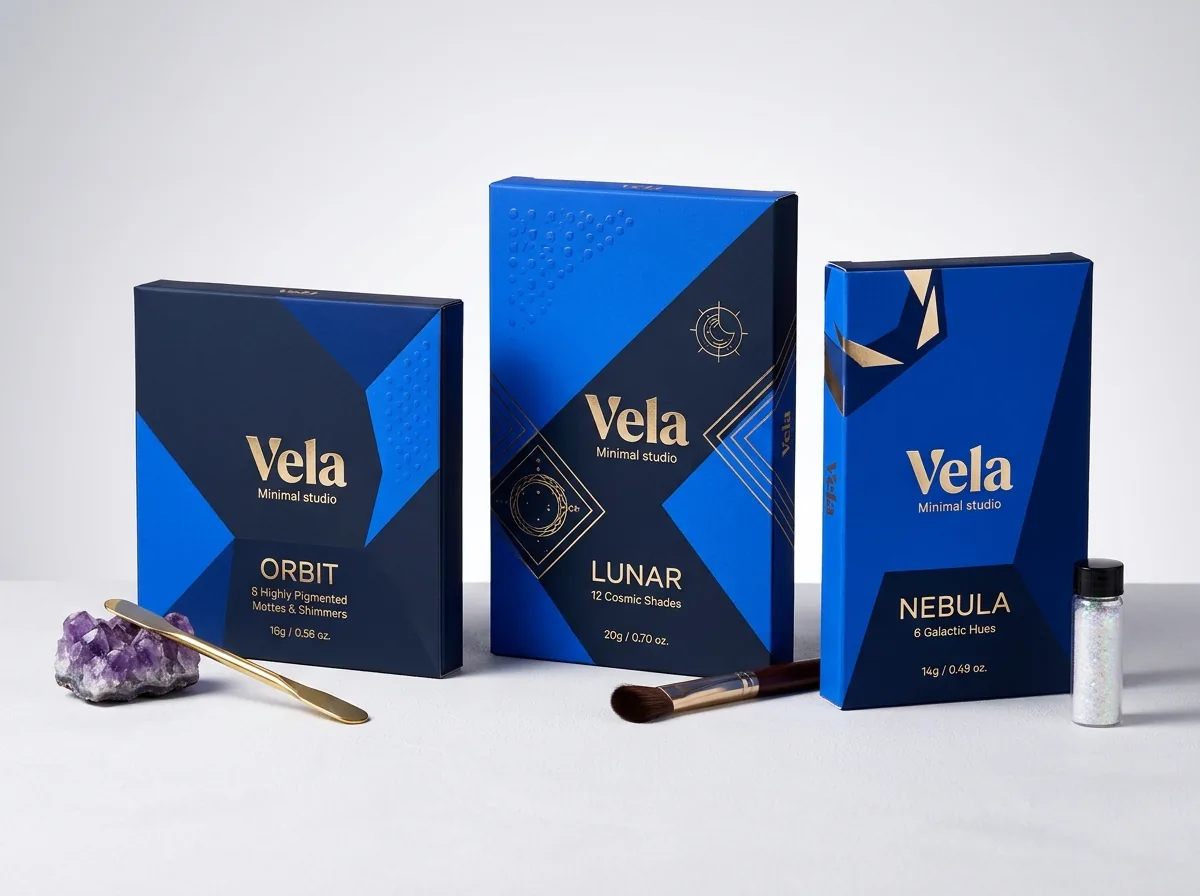
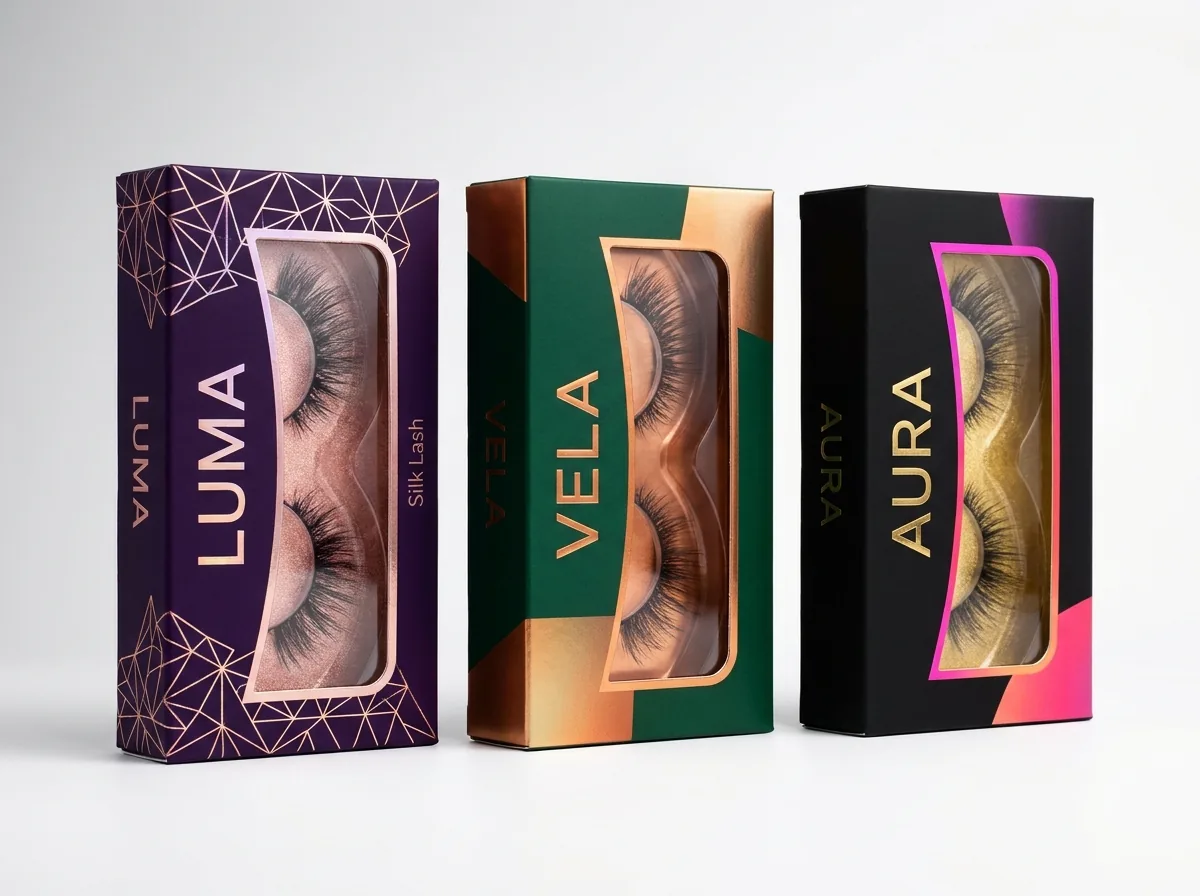
A huge percentage of retail eyeshadow damage happens not on delivery trucks, but on beauty store shelves when curious shoppers open unsealed cartons to check the real color or shimmer level of the pans, accidentally dropping the compact or gouging the powder with a fingernail. Your outer box design has to make opening the package unnecessary. On single eyeshadow cartons, print a full-bleed Pantone-matched color band across the top tuck flap and pair it with either a die-cut front window (for clear-lid compacts) or a realistic swatch illustration on the front panel. On 4-pan quads and 9-to-12 pan palettes, print a 1:1 back-panel shade map that mirrors the exact pan grid inside. By coating the whole carton in velvety soft-touch lamination, then applying glossy Spot UV over satin swatches and metallic foil stamping over shimmer swatches, you show the exact finish of every pan while keeping the carton sealed.
What FDA color additive and warning rules apply to custom eyeshadow boxes?
Under US FDA cosmetic regulations, the eye area is the most strictly regulated zone on the face for color additives. A color additive that is approved for general cosmetic or lip use is not permitted in an eyeshadow unless the FDA regulation specifically authorizes it for use in the area of the eye. In addition, certain neon or pressed pigment palettes include shades that the brand designates as non-eye cheek or artistry pigments, which require a clear cautionary statement on the back panel. When laying out the back of a multi-pan palette carton or sleeve, group shared base ingredients (like mica, talc, dimethicone, and magnesium stearate) at the top of the ingredient block, followed by a clear 'May Contain (+/-)' list or shade-by-shade color additive breakdown, plus the net weight in both ounces and grams (for example, 'Net Wt. 9 × 0.05 oz / 9 × 1.5 g'). Keep ingredient text at 5.5 pt or larger in high-contrast ink so it never blurs during printing.
How can I drop-test my eyeshadow box before running 1,000+ units?
Before committing to a full production run, run a simple six-point drop test using a printed sample carton and your actual filled eyeshadow compact or palette. Place the boxed compact inside the exact bubble mailer or corrugated shipping box you use for customer orders, then drop it from waist height (36 inches) onto a hard floor across six orientations: flat front, flat back, top edge, bottom edge, left corner, and right corner. Open the carton and inspect both the pressed powder cakes and the interior mirror. If you see hairline separation around the rim of the metal pan or powder dusting on the mirror cover sheet, step up from a single-wall tuck carton to a carton with a 0.25 inch hollow-wall paperboard frame or a corrugated mailer from our custom pr boxes collection.
What are the most common eyeshadow packaging mistakes that cause broken pans?
Most shattered eyeshadow returns trace back to one of five preventable packaging choices. Check your setup against this list before production
- Using a generic stock carton that is 1/8 inch to 1/4 inch thicker than the compact, turning the box into a maraca where the compact slams back and forth.
- Packing a heavy 9-pan or 12-pan mirrored palette in a single-wall paperboard sleeve with zero corner buffer when shipping in soft poly mailers.
- Forgetting to design finger lift notches into a snug inner insert tray, forcing the customer to shake the palette upside down to get it out.
- Printing shimmer and metallic shade swatches in flat CMYK ink on the back of the box, which tempts retail shoppers to rip open the seal to see the real sparkle.
- Setting shade-by-shade FDA color additive lists in tiny 4 pt metallic gold type on a dark background where compliance text becomes illegible.
Find your size
Suggested inside size: 1.5 × 1.5 × 0.25 in
A starting point. Your account manager confirms the size with you before the proof.
Quote this size →Packaging for this

Ready to order eyeshadow boxes? Compare up to 3 quantities with a free 3D mockup.
Request a Quote →Questions about eyeshadow boxes
Why do my shimmer and multichrome eyeshadows break in shipping while my matte shades arrive fine?
Shimmer, metallic, and multichrome eyeshadows contain large flat mica or glass pearl platelets and more liquid binder, so they must be pressed at lower hydraulic pressure than dry talc-based mattes. That softer press makes them much more sensitive to corner impact shock unless buffered by a snug carton and perimeter frame.
Does a paperboard perimeter frame protect eyeshadow palettes as well as plastic bubble wrap?
Yes. A folded 0.25 inch hollow-wall paperboard perimeter frame suspends the palette away from all four edges and corners of the outer carton, acting like a mechanical crumple zone while staying 100% curbside recyclable and looking far cleaner on unboxing.
Should I put a foam or paper sheet over the pans inside the palette too?
A thin clear acetate or paper dust sheet inside the compact keeps loose pigment specks off the mirror, while the outer carton's 1/16 inch snug fit and hollow-wall perimeter frame absorb the external drop shock that actually cracks the cakes.
How do I show both matte and metallic eyeshadow finishes on the back of my palette box?
Laminate the entire carton in soft-touch or matte film so the matte shade swatches look authentically flat. Then apply a Spot UV mask over satin or shimmer swatches and hot foil stamping on high-shine metallic swatches.
Can I gang multiple eyeshadow shades or palette variations in one 1,000-box order?
Yes. Whenever your compacts or palettes share the exact same outside dimensions and dieline, you can split your 1,000-box minimum across multiple shade designs by selecting 2 designs or 3+ designs in the quote form.
Can I order a printed sample box with an insert to drop-test my palette first?
Yes. We provide a free 2D dieline and 3D mockup before payment, and you can order a paid printed sample of your exact eyeshadow box and perimeter insert (credited toward your production order) to run real parcel drop tests.
Still have a question? Ask a packaging specialist.
Request a Quote →Request your eyeshadow boxes quote
Tell us your size and quantities, and one dedicated account manager prepares pricing for each tier.
- Free design & AI-to-print studio + 3D mockup
- No die or plate charges · 4–5 day rush available
- Free shipping to all 50 states
- 10% off your first order
This guide combines cosmetic formulation mechanics (talc vs synthetic fluorphlogopite press density), structural crumple-zone design (1/16 inch carton clearance + 0.25 inch hollow-wall perimeter frames), and FDA eye-area color additive rules. Checked by a CubitPack packaging specialist. Spot something off? Tell us and we will fix it.
Sources
What changed
- October 22, 2026: First published.
- October 22, 2026: Updated specifications, terminology, and verified source links.
More guides
New packaging guides by email
Sizes, materials and design tips. Unsubscribe anytime.