
Roll labels vs sticker sheets for jars: which should you choose?
Short answer: Choose roll labels when you label more than 200 to 300 jars at a time or use a tabletop roller, because pulling from a continuous liner is twice as fast. Choose sticker sheets for custom jar labels when you pack small seasonal batches, split one order across multiple flavors, or apply round lid seals.
On this page
- How do roll labels, sticker sheets and die-cut singles compare for jars
- Why are roll labels faster when labeling round jars by hand
- When do sticker sheets make more sense for cottage food and candle makers
- Can I use roll labels for the jar body and sticker sheets for the lid
- What do I need to check if I use a jar labeling machine
- Common mistakes
- FAQs
Request a custom quoteFree dieline & 3D mockup
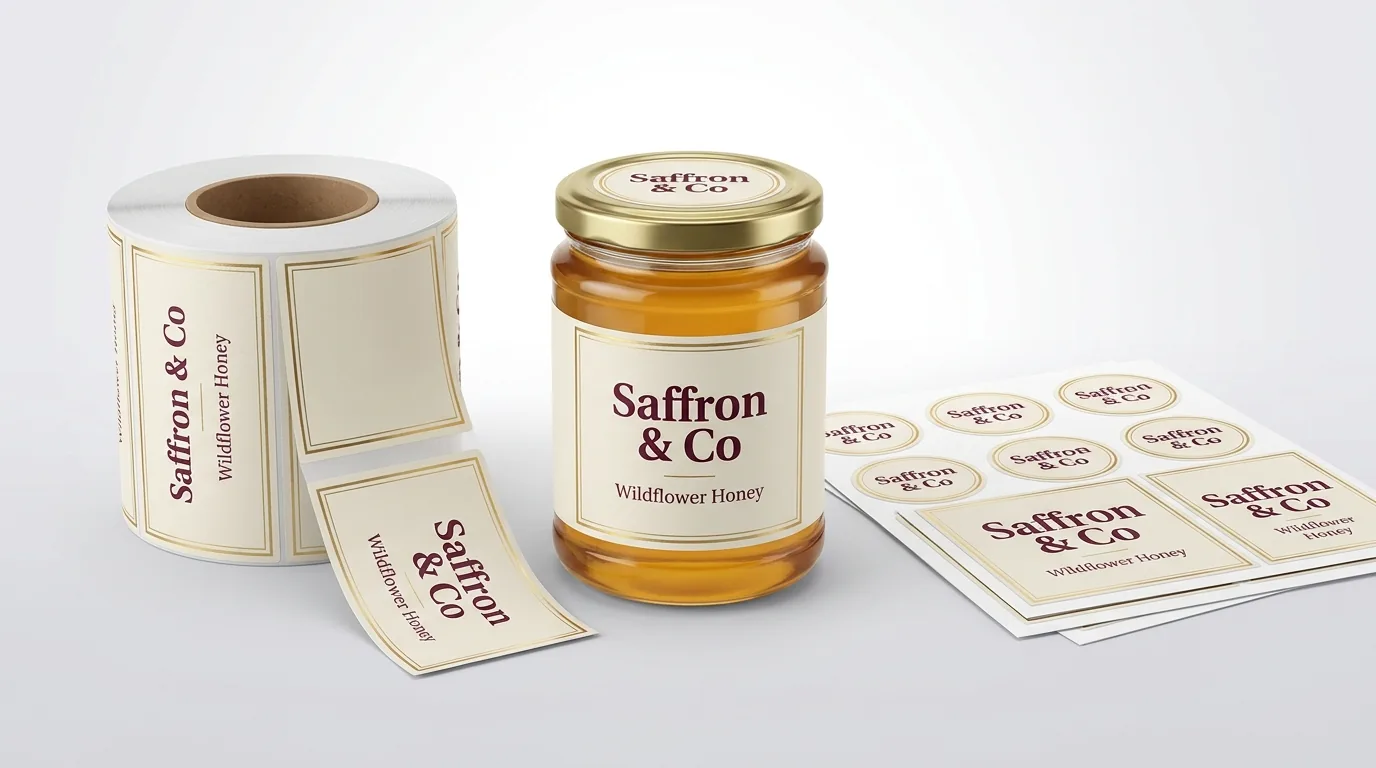
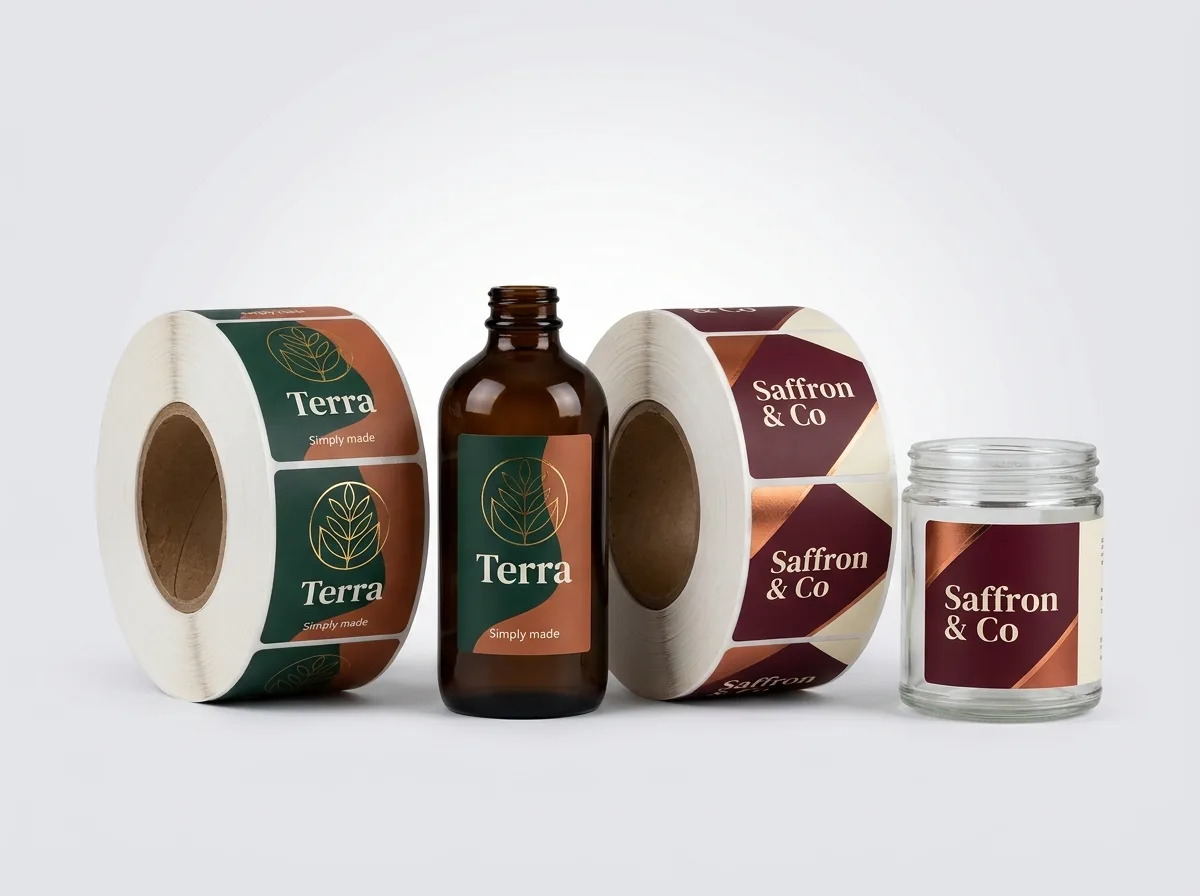
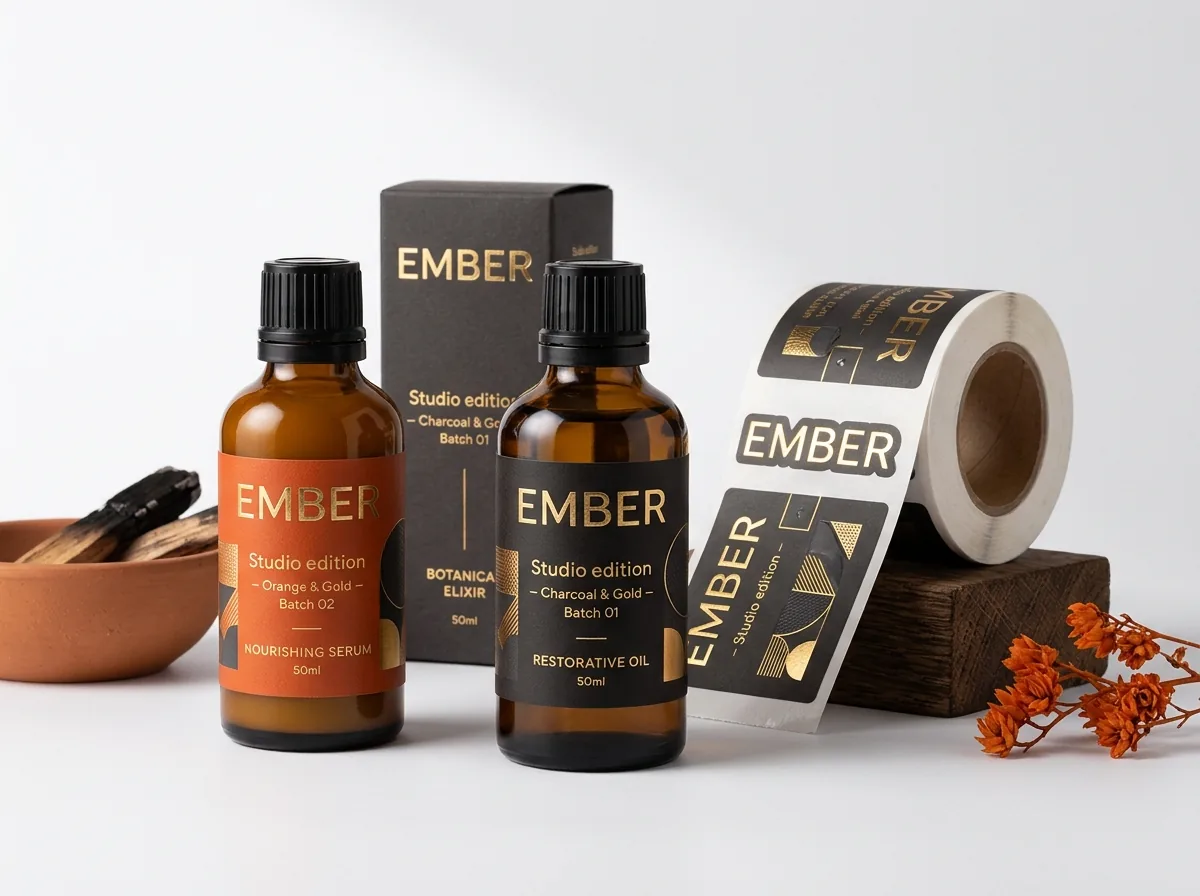
Whether your jar labels should arrive wound on cardboard cores or laid out flat on kiss-cut sticker sheets depends on how your filling table is set up and how many jars you pack in a single session. On a continuous roll, pulling the backing liner over a sharp edge automatically lifts the leading edge of the next label, freeing both hands to hold a round honey, candle or jam jar steady in a cradle. On flat sticker sheets, multiple labels sit side by side on a letter-sized or custom card backing that stacks neatly in a kitchen drawer, spice bin or farmers market tote. Both formats use the exact same inks, clear or foil stocks, matte or gloss finishes, and 500-piece minimum at CubitPack. Only the backing presentation changes, and many makers combine both: rolls for the main cylinder wrap and flat sheets for color-coded lid circles.
How do roll labels, sticker sheets and die-cut singles compare for jars?
When you request a quote for printed jar labels, you can pick between three delivery formats: continuous rolls, multi-up sticker sheets or individually trimmed die-cut stickers. Because the face stock, adhesive and printing presses are identical across all three options, your jar will look the same on a retail shelf regardless of which format you pick. What changes is your packing speed on filling day. The table below compares how each format behaves when you are labeling 4 oz spice jars, 8 oz mason jars, 9 oz candle tumblers or 12 oz honey jars by hand or with a tabletop applicator.
| Comparison point | Roll labels | Sticker sheets & die-cut singles |
|---|---|---|
| How labels arrive | Single-file stream wound around a core | Several kiss-cut labels per flat sheet (or cut singles) |
| Sweet-spot batch size | 250 to 50,000+ jars per production run | 50 to 500 jars per flavor or small test batches |
| Peeling workflow | Pull liner over a bar; leading edge pops up | Bend sheet corner by hand to lift each sticker |
| Tabletop & machine rollers | Works with manual cradles and powered applicators | Hand application only (cannot feed into rollers) |
| Multi-flavor sorting | One roll per SKU or flavor | Easy to stack 6–10 flavor sheets in one folder |
| Best jar location | Full-wrap bands and front/back cylinder panels | Round lid circles, bottom warning stickers, gift packs |
| CubitPack minimum | From 500 labels (10–14 business days) | From 500 labels (10–14 business days) |
Why are roll labels faster when labeling round jars by hand?
Putting a rectangular label straight onto a curved glass jar takes two hands: one hand holds the glass cylinder so it cannot roll away, while the other hand lines up the vertical edge against the glass seam. If you have to stop before every single jar to pick at the corner of a flat sheet with your fingernail, your rhythm breaks and your wrists tire out after the first 100 jars. With custom roll labels, even if you do not own an electric labeling machine, you can drop the roll into a simple tabletop dispenser or pull the backing strip across the edge of your workbench. As the siliconized liner bends sharply around a 90-degree edge, the stiffer label stock detaches and projects outward by 0.5 inches, ready for you to press onto the jar resting in your cradle.
- Under 150 jars per week: flat sticker sheets are quick to grab from a folder with zero setup time.
- 150 to 500 jars per batch: roll labels paired with a manual tabletop dispenser cut hand-peeling time roughly in half.
- 500+ jars per batch: roll labels mounted on a hand-cranked or motorized bottle/jar roller keep every wrap seam dead level.
- Long full-wrap bands (7.5 to 11 inches wide): rolls keep long rectangles curled in the same direction as the jar body.
- Two-piece front-and-back jar sets: alternating front and back labels on the same roll lets you apply both in one spin.
When do sticker sheets make more sense for cottage food and candle makers?
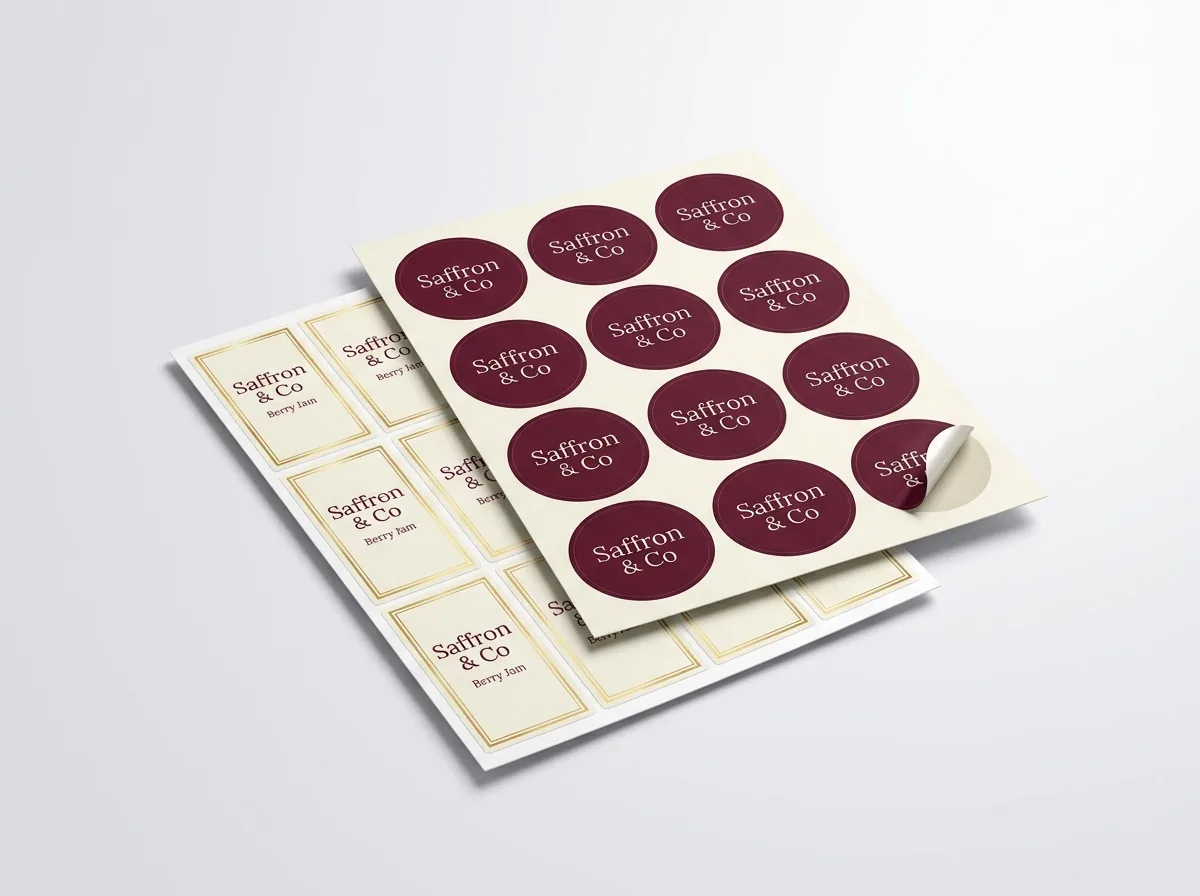
Flat custom sticker sheets shine whenever variety and compact storage matter more than assembly-line speed. Suppose a jam maker brings eight seasonal berry flavors in 8 oz jars to a Saturday farmers market and labels uncommitted jars on the spot based on what sells out first, or a candle studio pours 60 vessels each across ten holiday scents in 9 oz tumblers. Carrying ten bulky 3-inch rolls in a market crate takes up valuable space, whereas ten stacks of flat 8.5 × 11 inch sheets slip neatly into a single binder or drawer. Sheets are also a favorite for small custom circle labels that go on top of metal lug caps, 2 inch mason jar discs or 2.5 inch candle dust covers, as well as 1.5 inch bottom caution stickers. When 12 or 20 small circles sit on one flat sheet, a team of two or three people can sit around a table, pass sheets back and forth, and cap-label a case of 24 jars in seconds without sharing a single roll dispenser. Flat sheets also let you slip a bonus brand sticker inside retail gift boxes without cutting apart a continuous roll liner.
Know your size? Compare pricing across up to 3 quantities.
Request a Quote →Can I use roll labels for the jar body and sticker sheets for the lid?
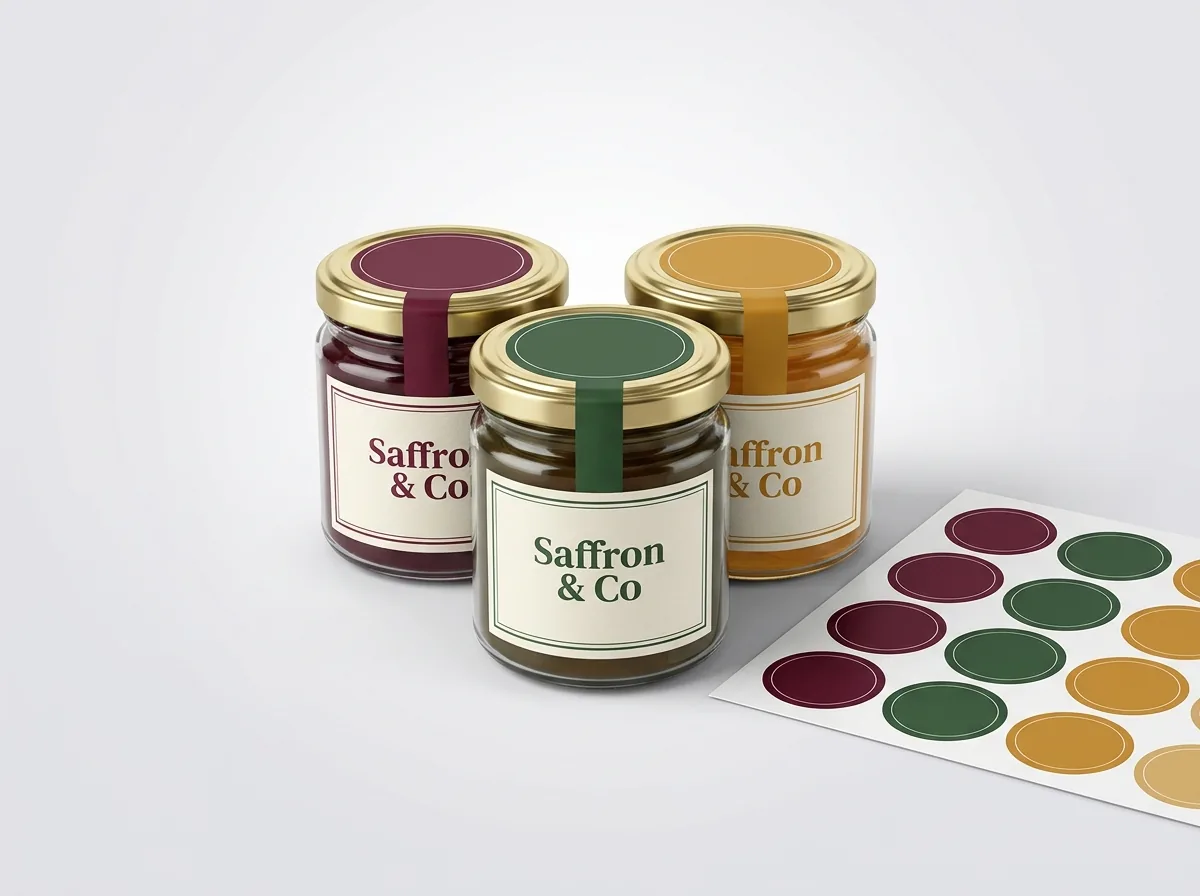
Yes, and this hybrid setup is one of the smartest ways to keep unit costs down across a multi-flavor product line. Many honey, jam, spice and skincare brands print one universal body wrap on rolls (for example, 2,000 or 5,000 wraps at 7.75 × 2.25 inches carrying the brand logo, nutrition facts, barcode and company address) and then order smaller batches of color-coded 2 inch lid or flavor stickers on flat sheets. On packing day, you run every jar through your tabletop roller to apply the main body wrap at high speed, then press a round flavor sticker onto the lid or front recess from a flat sheet as each flavor batch is filled. That way you never get stuck with 900 leftover full-wrap labels for a limited-edition peach or lavender batch. If you also include a free brand sticker inside your ecommerce shipping boxes, you can add custom die-cut stickers cut right through the backing paper so customers can peel and keep them.
What do I need to check if I use a jar labeling machine?
If you apply jar labels by hand from a roll or a sheet, roll core diameter and unwind direction do not restrict you at all. Once you step up to a manual crank roller or a motorized tabletop jar applicator, the machine expects the roll to fit its spindle and feed the artwork facing the right way. Most commercial tabletop applicators use a 3 inch inside cardboard core with a maximum outer roll diameter of 8 to 10 inches, while compact desktop dispensers sometimes take a 1 inch or 1.5 inch core (). Unwind direction (numbered 1 through 8 on standard FINAT industry charts) simply tells the press rewinders whether the labels sit on the outside or inside of the roll and whether the top edge, bottom edge, right edge or left edge comes off the roll first. For round jars rotating horizontally on two rubber rollers, left-edge-first or right-edge-first (unwind position 3 or position 4) is the most common setup so the wrap feeds straight around the spinning glass cylinder. Add your machine model or unwind position number in the quote notes and we will match it on your proof.
What are the most common mistakes when choosing roll vs sheet jar labels?
Picking the wrong format will not hurt how your jar looks, but it can slow down your packing table. Avoid these five mistakes
- Ordering 2,000 full-wrap jar labels on flat sheets when you pack 300+ jars per session, which doubles hand-peeling time.
- Ordering roll labels for a motorized jar roller without checking whether the machine requires top-off or side-edge-off unwind direction.
- Confusing kiss-cut sticker sheets (easy to peel off a shared liner) with individually cut-through die-cut singles, which take longer to peel for production jars.
- Swapping Width and Height when ordering roll labels for a machine, which rotates the artwork 90 degrees on the liner web.
- Printing 10 separate small runs of full-wrap labels instead of one universal roll wrap paired with flavor lid stickers on sheets.
Find your label size
Suggested label size: 9⅛ × 2¾ in (width × height)
A typical starting point. Your account manager confirms the size on the proof.
Quote this size →Packaging for this
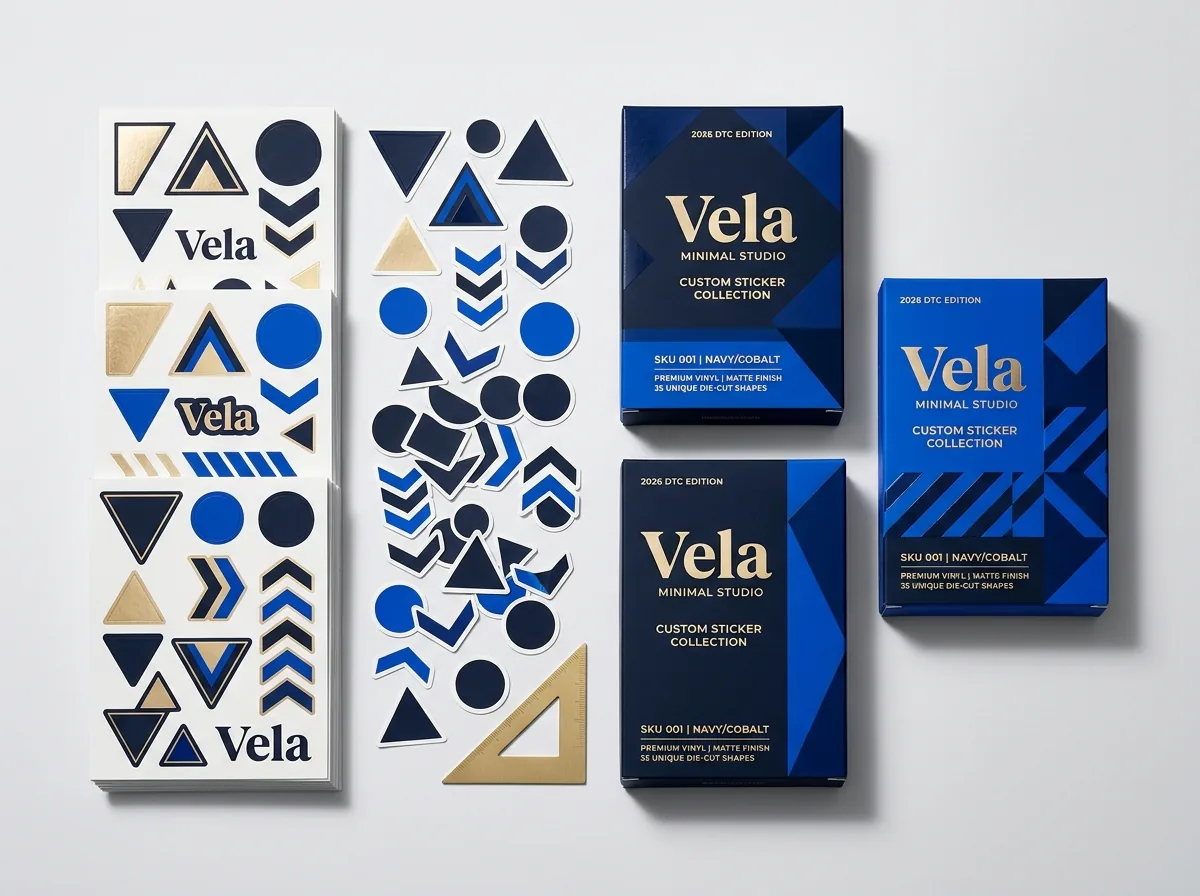
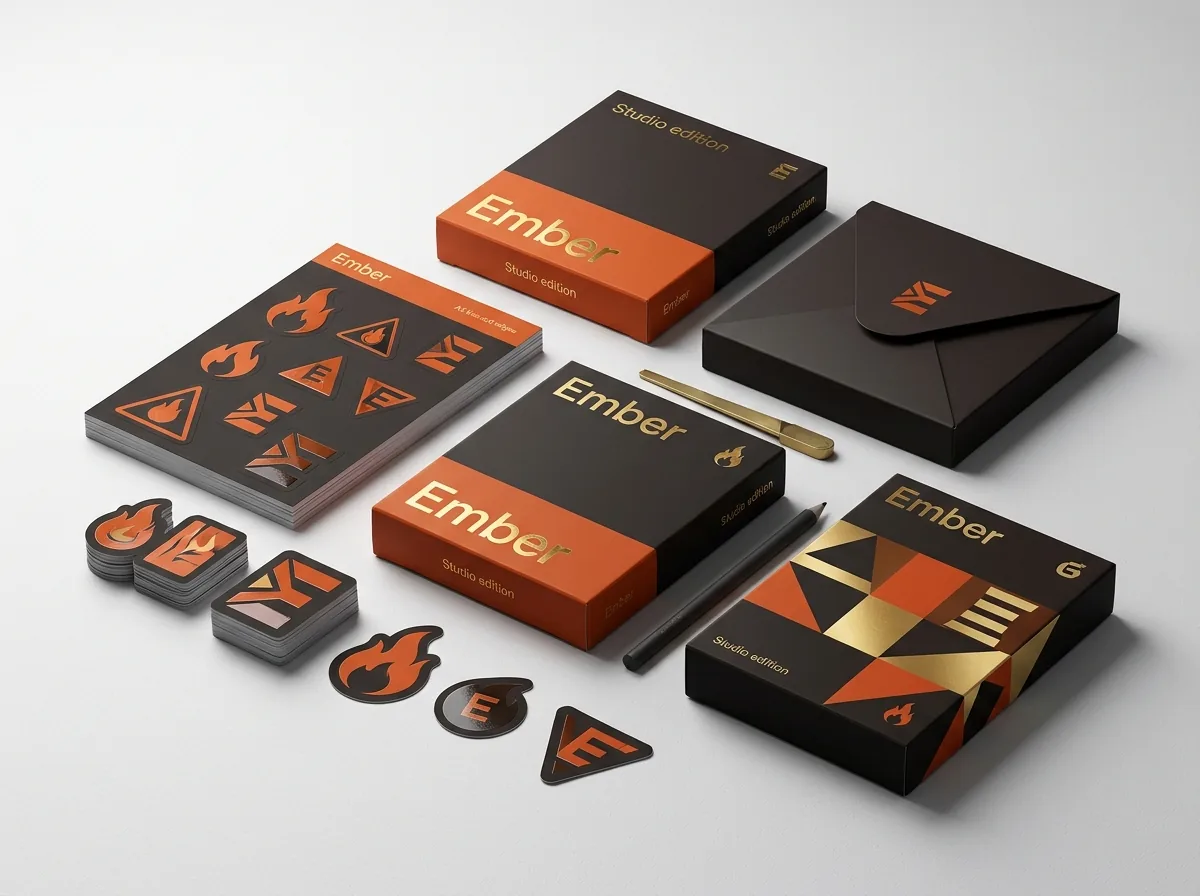
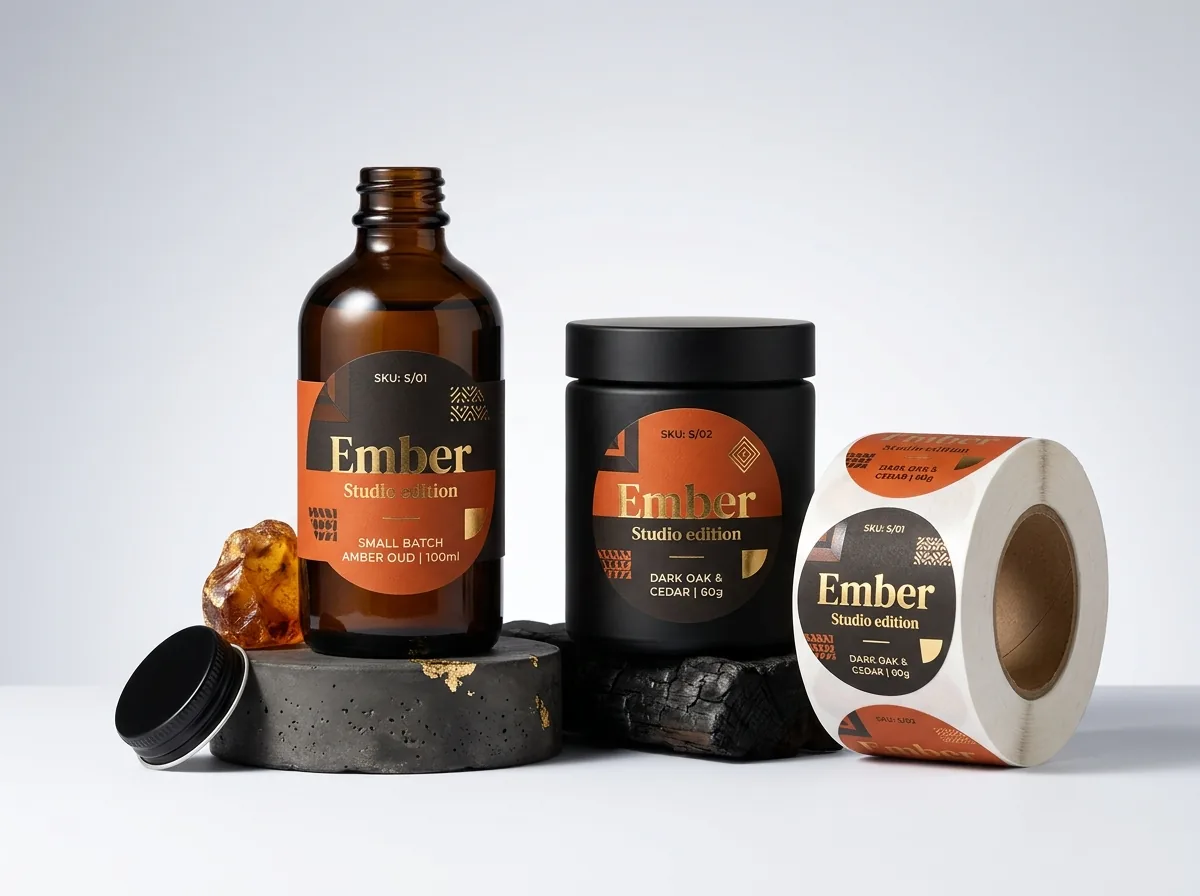
Ready to order jar labels? Compare up to 3 quantities with a free 3D mockup.
Request a Quote →Questions about jar labels
Do roll labels and sticker sheets use the same materials and finishes for jars?
Yes. Both roll labels and sticker sheets are printed with the same CMYK or Pantone inks on the same clear, foil or paper stocks, and both can include matte or gloss finishes, metallic foil stamping or spot UV.
At what quantity should a jar brand switch from sticker sheets to roll labels?
Most honey, jam, candle and skincare brands switch to roll labels once they label more than 200 to 300 jars in a single packing session, or as soon as they buy a tabletop dispenser or hand-cranked jar roller.
Can I order multiple jar flavors on sticker sheets or rolls in one 500-label order?
Yes. Select 2 designs or 3+ designs in the shared quote form and list your flavor breakdown in the notes. Your account manager will quote the combined run in 5-7 minutes.
What is the difference between sticker sheets and die-cut stickers for jars?
Sticker sheets hold multiple kiss-cut labels on one flat backing sheet so you can peel them off quickly during jar filling. Die-cut stickers are cut completely through both the vinyl and the paper backing into individual handout pieces.
How do I know which roll unwind direction my jar applicator needs?
Check whether your machine feeds the jar horizontally on rollers (usually left-edge or right-edge leading, unwind position 3 or 4) or vertically (usually top-edge or bottom-edge leading, unwind position 1 or 2). Tell us your applicator model in the quote notes.
Can I see a proof of my jar label before choosing rolls or sheets?
Yes. Every CubitPack quote includes free design help, a flat digital proof and a 3D mockup on your jar before you pay, and you can confirm whether you want rolls or sheets right before production.
Still have a question? Ask a packaging specialist.
Request a Quote →Request your jar labels quote
Tell us your size and quantities, and one dedicated account manager prepares pricing for each tier.
- Free design & AI-to-print studio + 3D mockup
- No die or plate charges · 4–5 day rush available
- Free shipping to all 50 states
- 10% off your first order
This guide compares roll labels, kiss-cut sticker sheets and die-cut singles using standard pressure-sensitive label converting practices and CubitPack's decided specifications (500-label minimum, 10–14 business day turnaround). A packaging specialist checked every section. Spot something wrong? Tell us and we will fix it.
Sources
What changed
- October 22, 2026: First published.
- October 22, 2026: Updated specifications, terminology, and verified source links.
More guides
New packaging guides by email
Sizes, materials and design tips. Unsubscribe anytime.