
Rigid earring boxes vs folding paperboard earring boxes: which fits your jewelry line?
Short answer: Choose rigid chipboard boxes (from 50 units) with velvet-flocked EVA pads for fine studs, gold vermeil hoops and gift-ready vanity keepsakes. Choose folding paperboard custom earring boxes (from 1,000 units) with removable pierced hang cards when you need flat storage, lower unit cost or retail pegboard display.
On this page
- How do rigid earring boxes and folding card earring boxes compare
- When should you choose 50-unit rigid two-piece, shoulder neck or drawer boxes
- When does a 1,000-unit folding carton or window earring box make more sense
- How do removable pierced earring cards bridge online shipping and retail racks
- How do rigid vs folding earring boxes perform in e-commerce parcel mail
- Common mistakes
- FAQs
Request a custom quoteFree dieline & 3D mockup
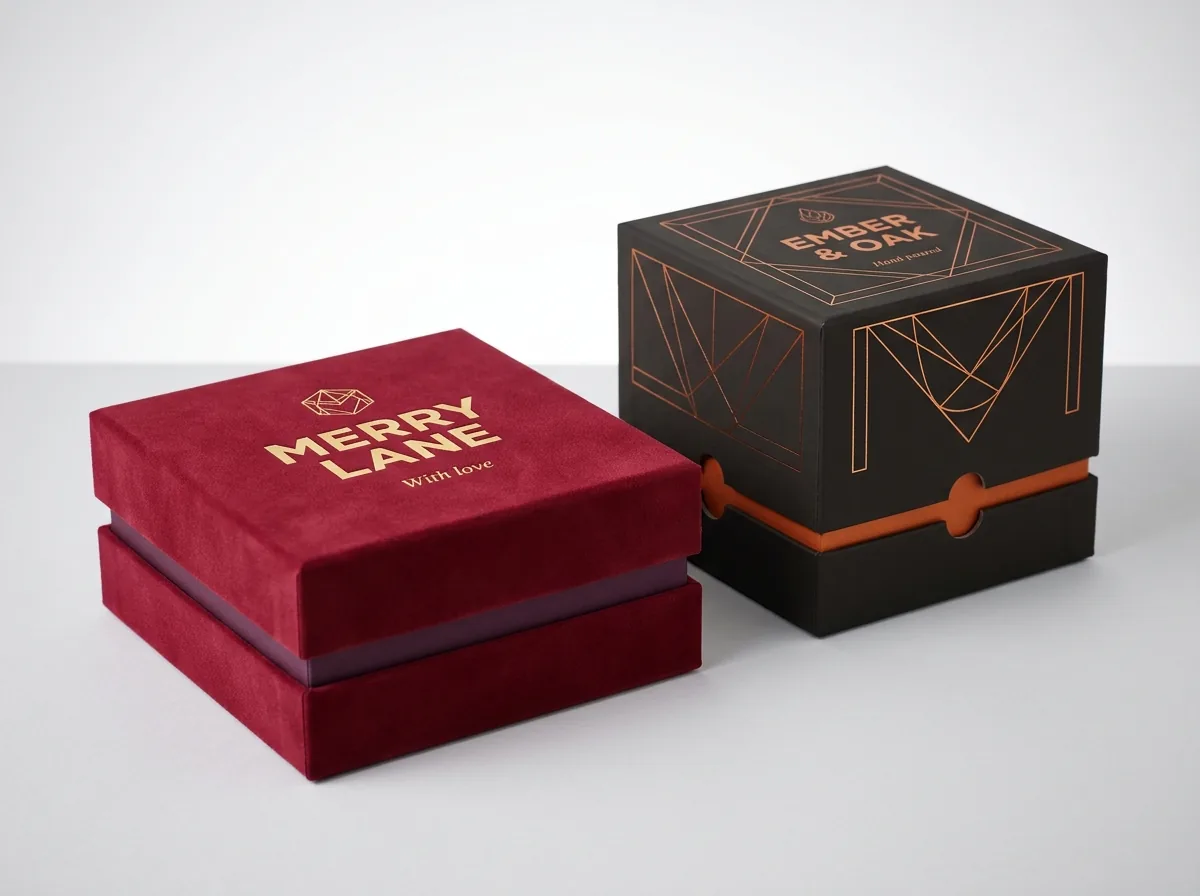
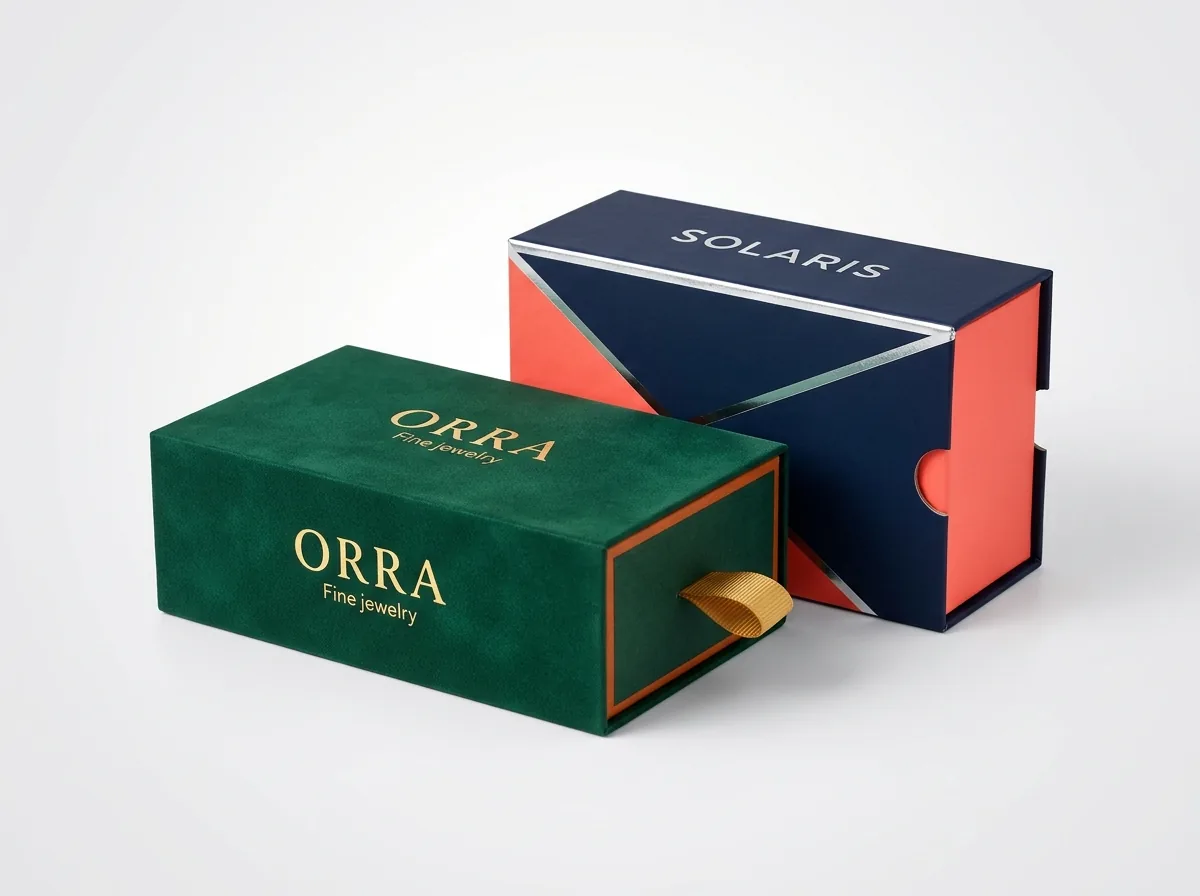
Earring brands choose between two distinct construction families at CubitPack: pre-assembled rigid chipboard boxes starting at 50 units, and flat-folding paperboard cartons starting at 1,000 units. Rigid earring boxes (including two-piece lift-off lids, ribbon-pull drawers and shoulder neck cases) wrap thick non-bending chipboard (gray board) in soft-touch, linen or metallic foil-stamped paper and hold the pair in an elevated EVA foam pad with a 12 mm hollow post cavity underneath. They feel substantial in the hand, resist parcel compression, and double as permanent vanity storage. Folding paperboard earring boxes (such as straight tuck cartons, window boxes and card tray-and-sleeve boxes) ship 100% flat to your studio and pair with a die-cut paperboard earring card that boutiques can lift out and hang on a counter spinner. Both constructions include free design help, zero die fees and free US shipping across all 50 states.
How do rigid earring boxes and folding card earring boxes compare?
When jewelry founders evaluate structures for custom printed earring boxes, the decision balances five practical factors: minimum order quantity (50 vs 1,000 units), studio storage space before packing, crush resistance in parcel mail, whether wholesale retail accounts need a removable hang card or window, and per-unit packaging cost. Many growing brands use both: a 50-to-250 unit run of rigid drawer or shoulder-neck boxes for their fine 14k gold and sterling silver studs, alongside a 1,000-unit run of windowed folding cartons for their wholesale boutique and market drop earrings. Compare the options side by side below.
| Comparison factor | Rigid two-piece or shoulder neck | Rigid slide-out ribbon drawer | Folding tuck or window card box |
|---|---|---|---|
| Minimum order at CubitPack | 50 rigid boxes | 50 rigid boxes | 1,000 folding card boxes |
| Wall material & feel | Thick non-bending rigid chipboard | Rigid outer sleeve + rigid inner tray | Folded paperboard or kraft card |
| Inbound studio storage | Arrives set up, ready to pack | Arrives set up with ribbon tab | Ships 100% flat in compact cartons |
| Usual interior insert | Elevated velvet-flocked EVA pad | Recessed EVA pad or removable card | Die-cut paperboard earring card |
| Retail counter / peg display | Displays open on velvet counter trays | Slides open for table try-ons | Window view or removable hang card |
| Best earring line | Fine diamond/pearl studs & huggies | Demi-fine hoops, drops & ear stacks | Statement clay/beaded drops & retail |
When should you choose 50-unit rigid two-piece, shoulder neck or drawer boxes?
When a customer buys solitaire diamond studs, 14k gold huggies, pearl drops or a curated 3-pair ear stack, the tiny physical size of the jewelry means the box carries most of the tactile weight in their hand. A custom two-piece rigid box, custom shoulder neck box or ribbon-pull drawer box gives a 2-gram pair of earrings an immediate sense of permanence. Because rigid boxes start at just 50 units at CubitPack, independent jewelers and piercing studios can launch custom foil-stamped packaging without tying up cash or closet space in thousands of cartons. Rigid chipboard walls also act like a miniature vault in parcel transit: even if a courier bag is stepped on, the rigid walls protect delicate gemstone prongs and straight posts inside.
- Starts at 50 boxes: test seasonal colors, bridal editions or piercing studio kits with low inventory risk.
- Zero folding labor: rigid boxes arrive pre-assembled with the elevated EVA foam pad seated inside.
- Vanity retention: buyers keep ribbon-pull drawers and soft-touch two-piece boxes on their dressers for years.
- Two-piece vs drawer: choose a lift-off or shoulder-neck lid for tall stud settings, or a ribbon drawer for hoops and ear stacks.
When does a 1,000-unit folding carton or window earring box make more sense?
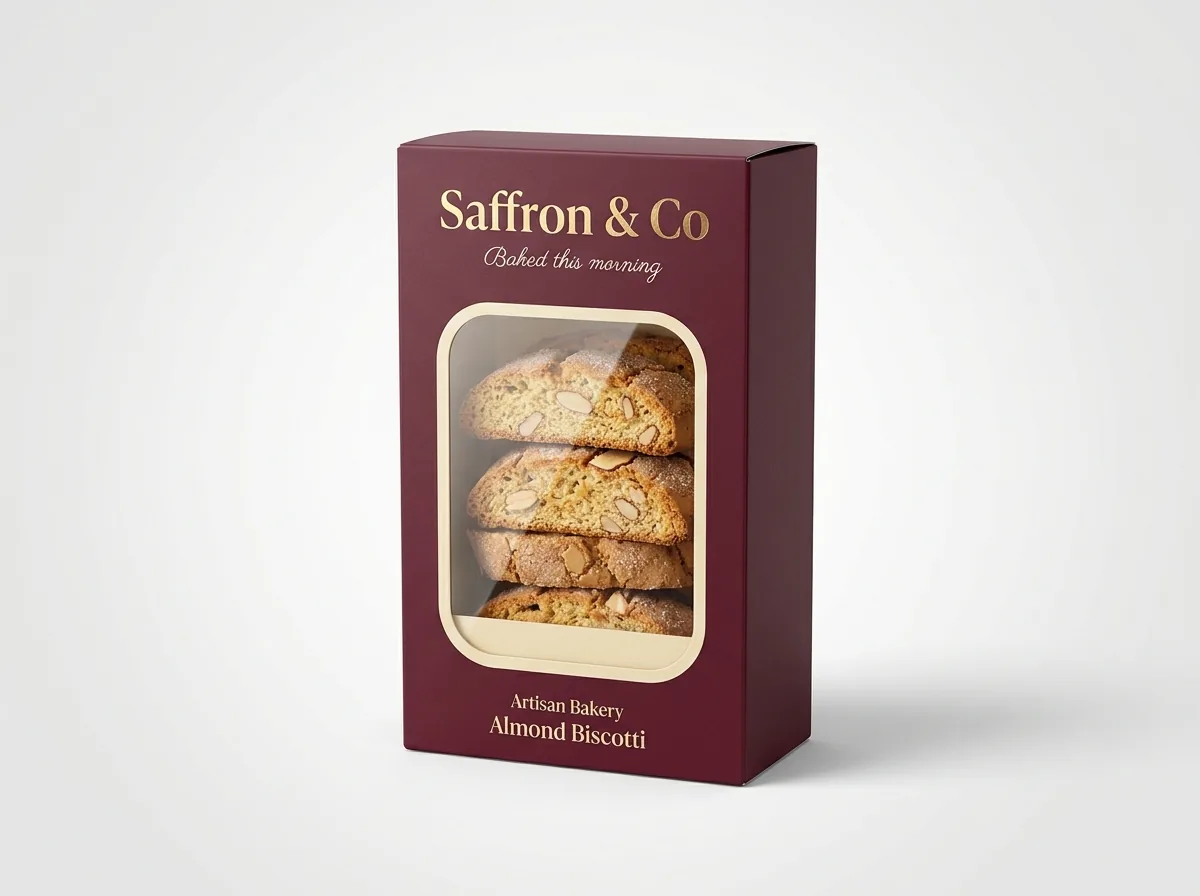
If you sell handmade polymer-clay dangles, brass geometric drops, beaded statement earrings or fashion multi-packs at 1,000+ units per run, pre-assembled rigid boxes can take up too much shelf space in a home studio or 3PL bin. A folding paperboard custom straight tuck end box or tray-and-sleeve box ships flat, stores 1,000 units in a couple of master cartons, and lowers your per-box cost significantly. Folding boxes also excel in brick-and-mortar wholesale gift shops and craft markets when you add a clear custom window box cutout on the front panel. Shoppers can admire the exact clay marbling, beadwork or hoop texture without opening the box or touching the sanitized earring posts.
- Starts at 1,000 boxes: lowest unit cost for high-volume fashion, museum gift shop and wholesale earring lines.
- 80% less storage volume: flat-packed dielines fold up in seconds only as you pack orders.
- Clear window option: shows off colorful statement drops while keeping dust and fingers off the posts.
- 100% paperboard build: pairs a kraft or white folding carton with a matching paperboard insert card.
Know your size? Compare pricing across up to 3 quantities.
Request a Quote →How do removable pierced earring cards bridge online shipping and retail racks?
Many earring brands sell the exact same SKU both online (where the pair needs a protective box for the mail) and through wholesale boutiques or pop-up markets (where the pair hangs on a counter display rack). Instead of maintaining two separate packaging workflows, we engineer a removable die-cut custom cardboard insert card that locks into either a rigid drawer or a folding box. The interior card is die-cut with two post pinholes, horizontal hook T-slits, and either a fold-back top lip (for hanging over an acrylic display bar) or a sombrero hang hole (for retail peg hooks). For online orders, you slide the card into its fitted box; for wholesale orders, the boutique lifts the card right out of the box and hangs it on their counter stand with your foil logo front and center.
- Fold-back top lip: hooks over horizontal acrylic T-bars and tiered market stands.
- Sombrero / euro hang slot: slides onto standard retail pegboard hooks at gift boutiques.
- Integrated standoffs: fold-under top and bottom flaps on the card create the 12 mm post cavity inside a folding box.
- Zero die charges: custom hole positions, notch shapes and hang tabs carry no tooling fees at CubitPack.
How do rigid vs folding earring boxes perform in e-commerce parcel mail?
Whether you ship a single pair of studs or a three-box gift order, parcel sorting machines apply real compression load. A rigid earring box has thick chipboard walls that resist crushing even inside a padded poly mailer, though we still recommend a small corrugated mailer box if you want the outer wrap paper to arrive spotless. A folding paperboard earring carton is lighter and thinner than rigid chipboard, so it should always travel inside a small corrugated shipping mailer rather than a soft poly bag, and its interior earring card must have folded standoff flaps (or an EVA foam collar) so courier pressure cannot flatten the card against the straight earring posts. Many brands also order a hybrid setup: a 50-to-250 unit run of rigid boxes for fine solid gold and bridal gift sets alongside a 1,000-unit run of flat-folding card boxes for everyday fashion and market drops.
- Rigid earring boxes: high built-in crush strength; ship in a small corrugated mailer or padded envelope.
- Folding card earring boxes: pair with a folded standoff card inside and ship inside a corrugated outer mailer box.
- Hybrid catalog strategy: use 50-unit rigid boxes for fine jewelry tiers and 1,000-unit folding boxes for wholesale and everyday drops.
- Both options take 10 to 14 business days (rush 4 to 5 days) with free shipping across all 50 US states.
What are the most common mistakes when choosing between rigid and folding earring boxes?
Mismatching your box wall strength or interior card setup to how you sell and ship leads to bent posts or wasted storage space. Avoid these five mistakes
- Sliding a flat paperboard earring card into a thin folding carton without fold-under standoff flaps, letting the box crush the posts in the mail.
- Shipping unboxed earrings on a bare hang card inside a soft bubble mailer where sorting rollers snap 925 silver and gold posts.
- Ordering 2,000 pre-assembled rigid boxes for a tiny home studio without measuring how many closet shelves the set-up cartons will occupy.
- Adding a clear film window to an earring box without locking the interior card into a recessed frame, allowing the card to crookedly slide.
- Using thin 10 pt card stock for heavy polymer-clay or brass drop earrings so the card bows forward inside the box.
Find your size
Suggested inside size: 2 × 2 × 1.25 in
A starting point. Your account manager confirms the size with you before the proof.
Quote this size →Packaging for this
Ready to order earring boxes? Compare up to 3 quantities with a free 3D mockup.
Request a Quote →Questions about earring boxes
What is the minimum order quantity for rigid vs folding paperboard earring boxes?
At CubitPack, custom rigid earring boxes (two-piece lift-off lids, slide-out ribbon drawers, shoulder neck boxes and magnetic cases) start at 50 boxes. Folding paperboard earring boxes (tuck cartons, window boxes and sleeves) start at 1,000 boxes.
Can I order a rigid drawer earring box with a removable paperboard card instead of foam?
Yes. Many demi-fine and boutique jewelry brands use a 50-unit rigid slide-out drawer box with a heavy die-cut paperboard earring card resting on an inner paperboard ledge, giving you a 100% foam-free luxury presentation.
How do you keep a removable earring card from rattling inside a folding window box?
We die-cut a stepped paperboard frame (or fold-under standoff flaps on the top and bottom of the earring card) that locks the card snugly against the side walls while holding the posts 12 mm off the back wall.
Can I compare the price of 250 rigid earring boxes vs 1,000 folding earring boxes?
Yes. Enter up to three quantities in Step 1 of the quote form and note that you want to compare rigid two-piece/drawer construction against folding card construction. Your free quote arrives in 5-7 minutes.
Do custom window cutouts or hang-card holes add die charges?
No. CubitPack never charges cutting die or printing plate fees. Custom front window cutouts, earring post pinholes, T-slits and retail hang tabs are all included with zero tooling cost.
Can I get physical samples of both rigid and folding earring boxes before deciding?
Yes. Every order includes a free 2D dieline proof and 3D mockup before payment, and you can order our $50 sample kit to compare rigid board, kraft and white folding card in your hands.
Still have a question? Ask a packaging specialist.
Request a Quote →Request your earring boxes quote
Tell us your size and quantities, and one dedicated account manager prepares pricing for each tier.
- Free design & AI-to-print studio + 3D mockup
- No die or plate charges · 4–5 day rush available
- Free shipping to all 50 states
- 10% off your first order
This structural comparison combines CubitPack's decided minimums, materials and turnaround policies in our published product specifications with ASTM box compression standards and retail earring card engineering. A CubitPack packaging specialist reviewed every section. Spot something wrong? Tell us and we will fix it.
Sources
What changed
- October 22, 2026: First published.
- October 22, 2026: Updated specifications, terminology, and verified source links.
More guides
New packaging guides by email
Sizes, materials and design tips. Unsubscribe anytime.