
Slide-out drawer vs two-piece lift-off lid necklace boxes: which should you choose?
Short answer: Choose slide-out ribbon drawer boxes (from 50 rigid units) for direct-to-consumer pendant brands that want a vanity keepsake drawer and social unboxing reveal. Choose two-piece lift-off lid custom necklace boxes (from 50 rigid units) when you want vertical lid clearance that never brushes across raised gemstones or chains.
On this page
- How do drawer, two-piece, magnetic and sleeve necklace boxes compare
- Why do direct-to-consumer jewelry brands favor slide-out drawer boxes
- When is a two-piece lift-off lid or shoulder neck box the better choice
- When should you choose a magnetic book-style case or a 1,000-unit card sleeve
- How do drawer and two-piece necklace boxes hold up in parcel shipping
- Common mistakes
- FAQs
Request a custom quoteFree dieline & 3D mockup
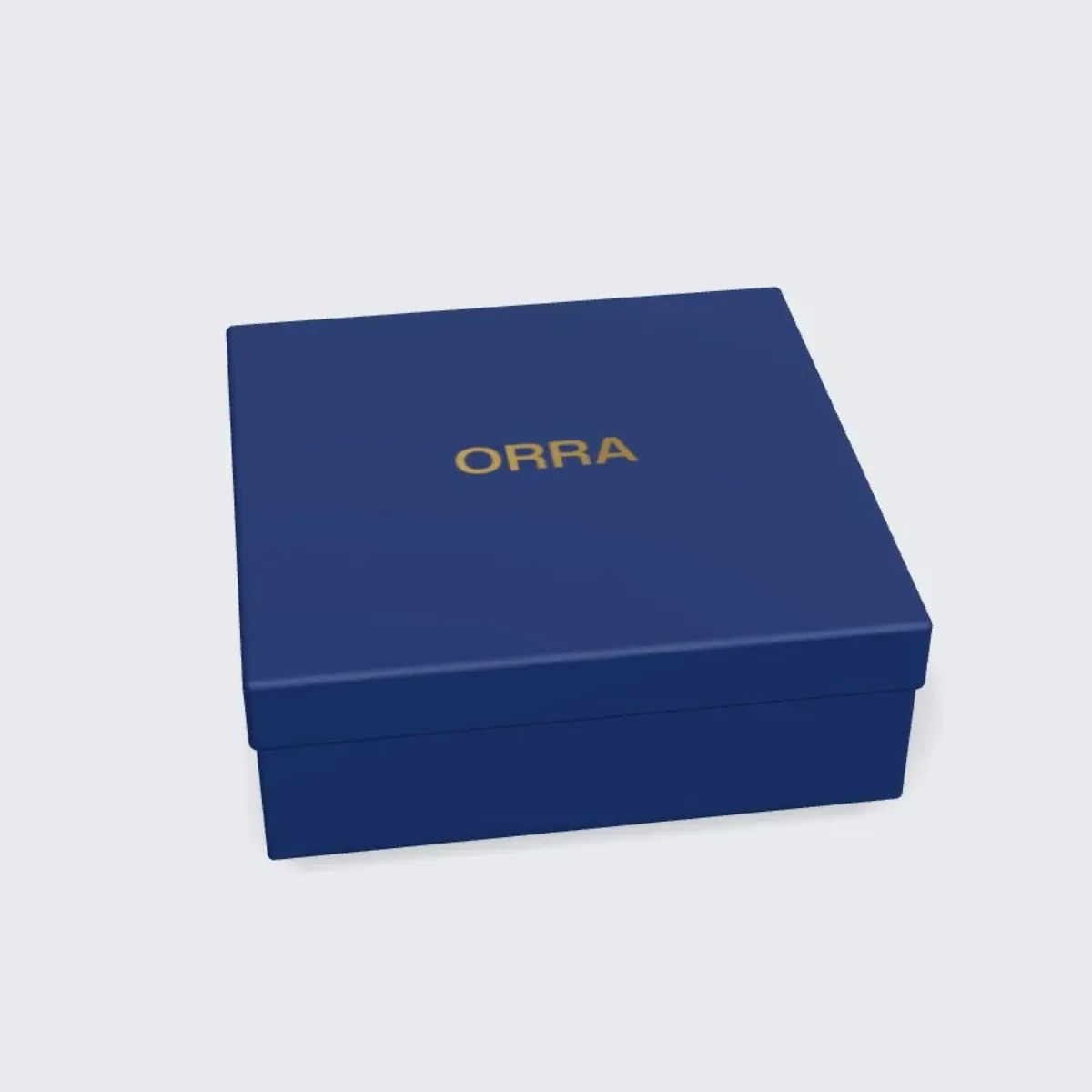
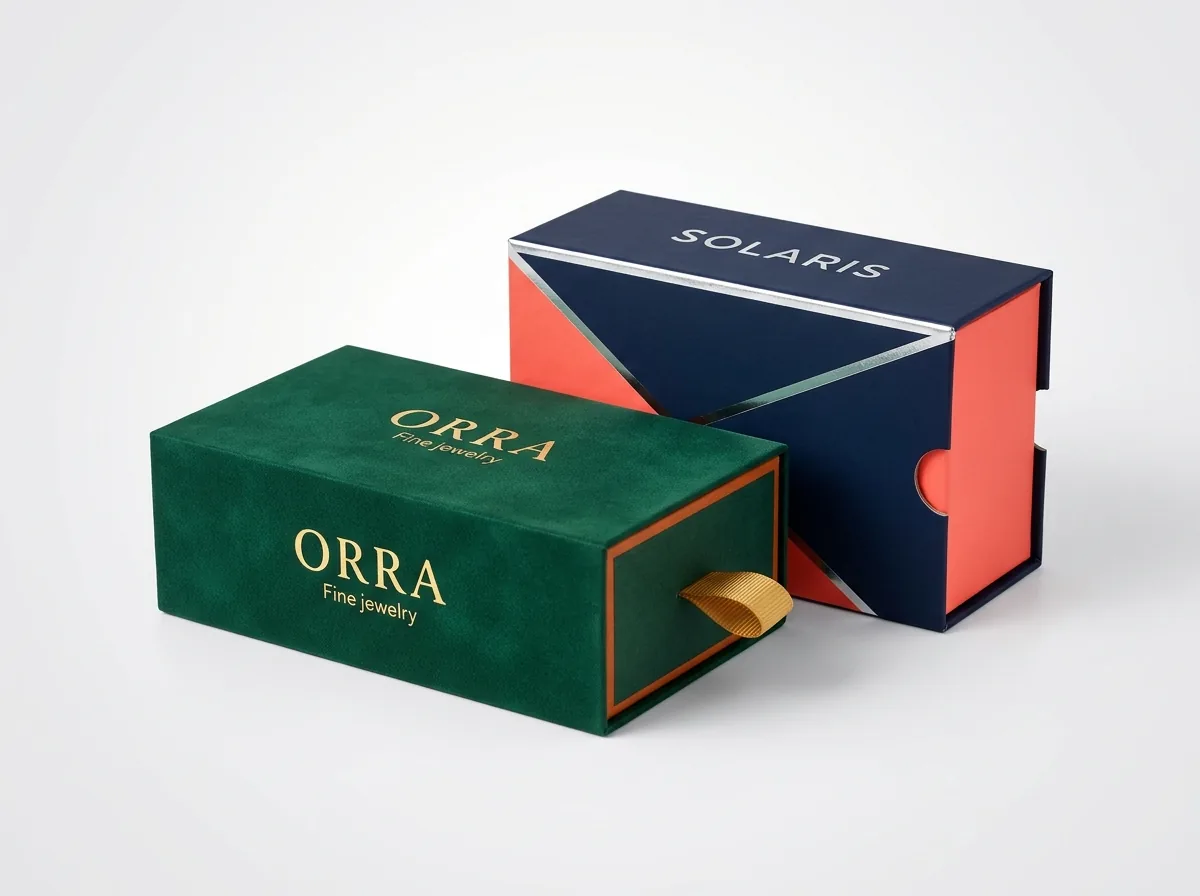
Both slide-out drawer boxes and two-piece lift-off lid boxes start at 50 units in rigid chipboard (or 1,000 units in folding paperboard) at CubitPack, so your choice comes down to how the box opens and how the pendant sits on the insert pad. A slide-out drawer necklace box pairs a rigid outer sleeve with an inner tray pulled by a satin or grosgrain ribbon tab; customers love stacking them on a dresser like miniature jewelry chest drawers. A two-piece lift-off lid necklace box lifts straight up vertically off the base tray, which eliminates any horizontal sliding friction across high-profile gemstone settings, thick Cuban link chains or delicate pearl knots. For wide collar necklaces and bridal suites, a third option, the hinged magnetic book-style case, opens flat like a presentation folder. Every structure includes free design help and free shipping across all 50 states.
How do drawer, two-piece, magnetic and sleeve necklace boxes compare?
When jewelry founders compare structures for custom printed necklace boxes, five practical details separate the options: how the lid clears the pendant during opening, how well the closed box traps the chain during parcel transit, whether the customer reuses the box on their vanity, whether inside-lid branding is visible at the same moment as the jewelry, and the minimum order quantity. Use the side-by-side table below to compare slide-out ribbon drawers, two-piece lift-off lid boxes, magnetic hinged collar cases, and folding paperboard tray-and-sleeve boxes.
| Comparison factor | Slide-out ribbon drawer | Two-piece lift-off lid | Magnetic case / Card sleeve |
|---|---|---|---|
| Minimum order at CubitPack | 50 rigid / 1,000 card | 50 rigid / 1,000 card | 50 magnetic rigid / 1,000 sleeve |
| Opening motion | Slides out horizontally via ribbon | Lifts straight up vertically | Hinges open flat (magnetic) |
| High-profile pendant clearance | Requires 3–4 mm recessed pad well | Best for tall bezels & thick links | Best for wide collars & pearl strands |
| Inside-lid logo visibility | Sleeve roof stays hidden inside | Visible when lid is set beside base | Stays framed right above the necklace |
| Dresser & travel reuse | Stacks like a mini vanity drawer | Classic stackable closet box | Keepsake vault case for fine suites |
| Best jewelry category | DTC demi-fine pendants & charms | Fine diamond solitaires & lockets | Bridal sets (magnetic) / Fashion (card) |
Why do direct-to-consumer jewelry brands favor slide-out drawer boxes?
Pulling a satin or grosgrain ribbon tab to glide a velvet-lined tray out of a matte sleeve is one of the most photogenic motions in e-commerce unboxing videos. Beyond social media appeal, custom drawer boxes solve a real storage habit: when a customer owns three or four necklaces from your brand, they can stack the drawer boxes on their nightstand and slide out the bottom tray without unstacking the boxes above. The one engineering detail you must get right on a drawer necklace box is top edge clearance. Because the tray slides horizontally under the lip of the outer sleeve, any chain loop or tall gemstone setting that sticks up above the rim of the inner tray will catch on the sleeve roof. We prevent that by sinking the EVA foam pad 3 to 4 mm below the top rim of the drawer tray.
- Recessed pad depth: sit the top face of the EVA foam pad 3 to 4 mm below the drawer tray wall so chains never rub the sleeve.
- Snug sleeve tolerance: calibrated so the drawer stays shut in a purse or mailer without sliding open on its own.
- Ribbon pull options: choose satin, grosgrain or cotton twill ribbon tabs matched to your foil or wrap color.
- Rear clasp pocket: loose chain links stay trapped underneath the foam pad inside the drawer base.
When is a two-piece lift-off lid or shoulder neck box the better choice?
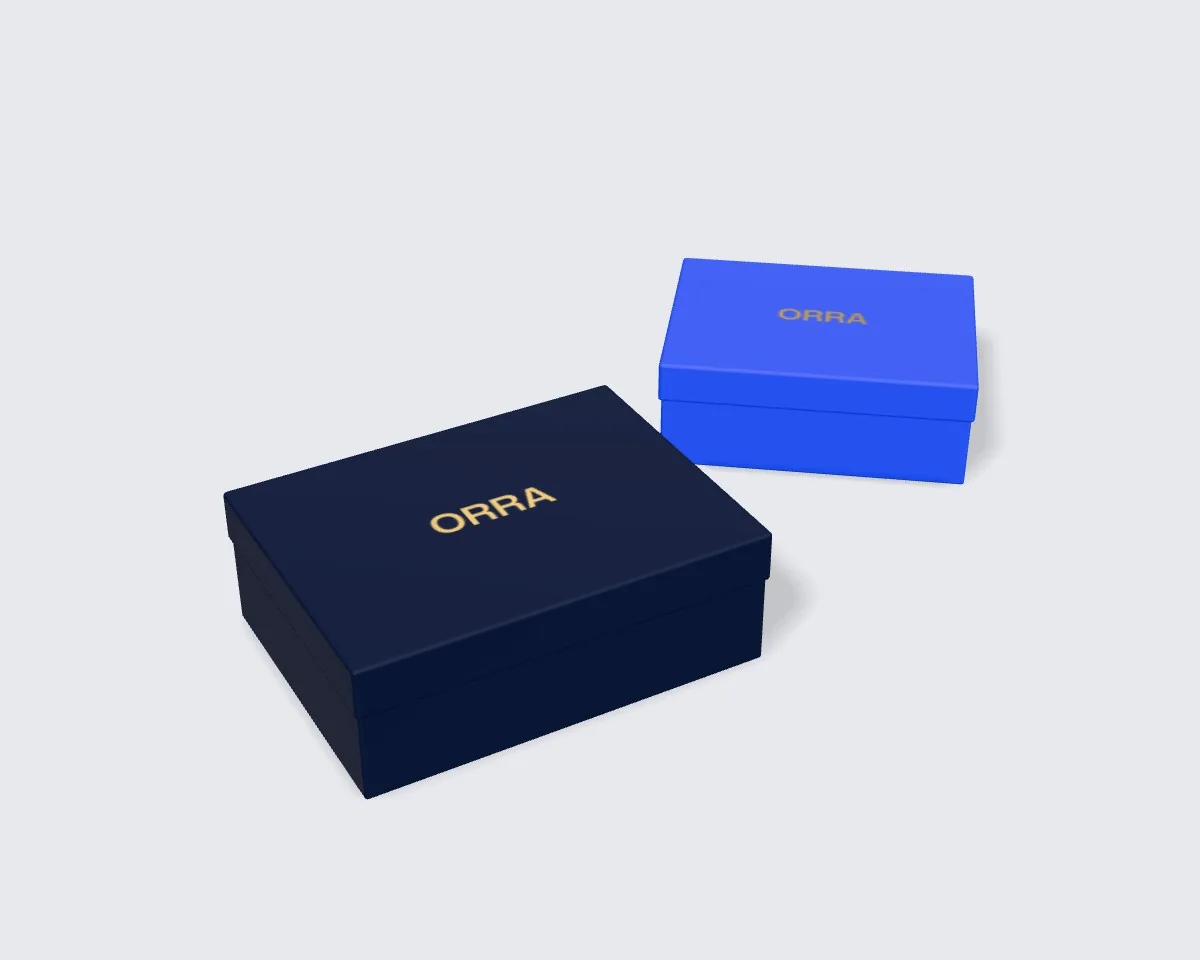
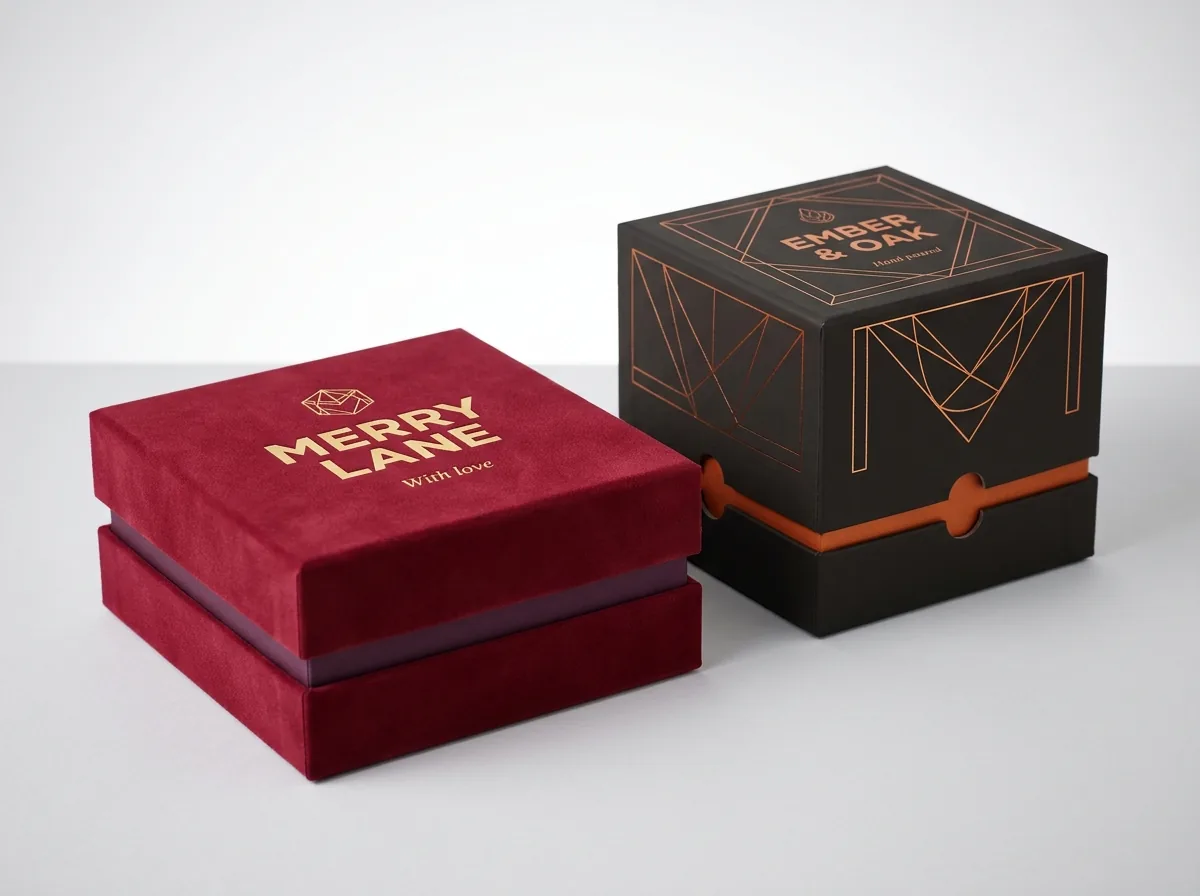
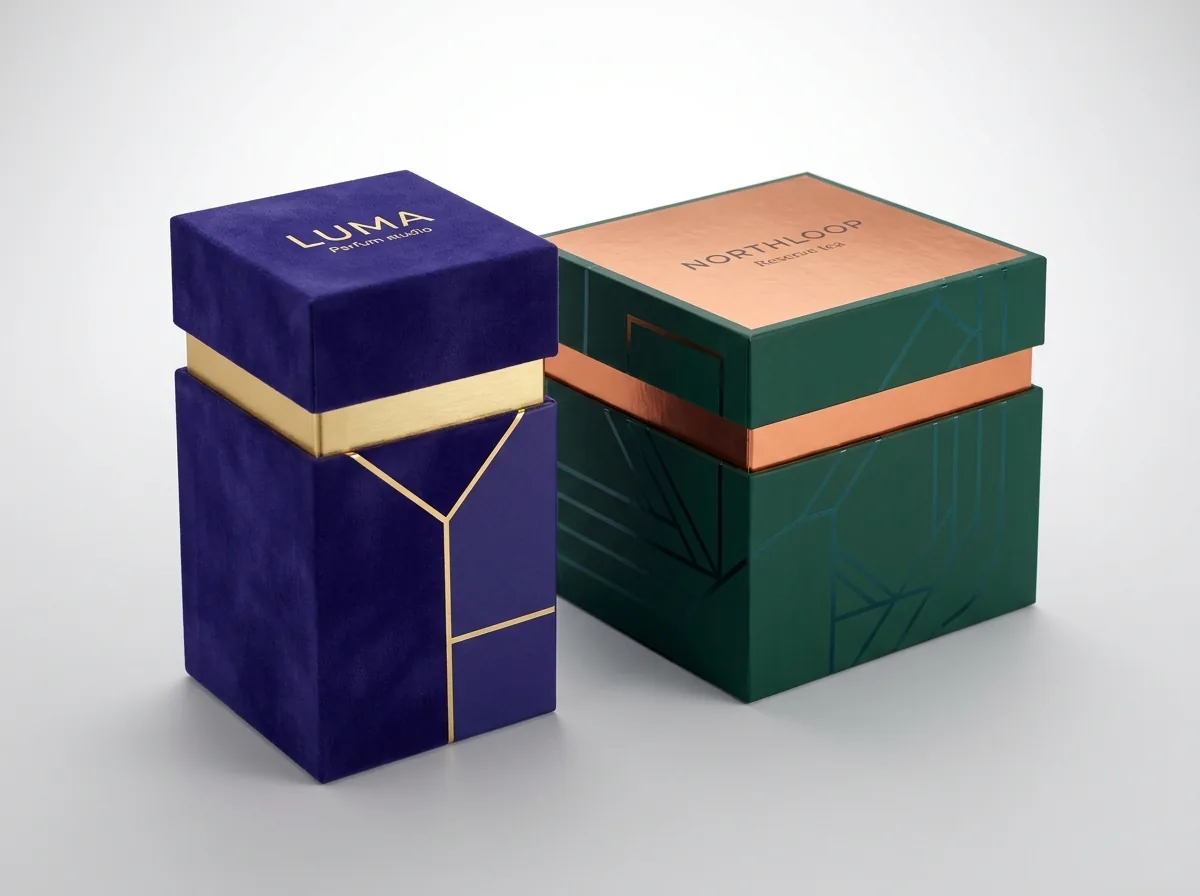
If you sell high-profile gemstone pendants, thick vintage lockets, chunky Cuban link chains or multi-tier charms, custom two-piece rigid boxes and custom shoulder neck boxes eliminate horizontal sliding altogether. Because the lid lifts straight up off the base, nothing ever scrapes across the face of the jewelry. Two-piece boxes also let you use the underside of the lid as a primary branding canvas. When a shopper lifts the lid or a jeweler places the lid upright beside the base tray on a velvet counter pad, a foil-stamped or printed logo inside the lid frames the necklace. On a shoulder neck rigid box, an extra stepped inner neck protrudes above the base tray in a contrasting color, giving you a two-tone reveal and a physical stop that prevents the lid from pressing down onto the pendant.
- Zero horizontal shear: vertical lift-off motion never catches on raised prongs, bails or layered chains.
- Inside-lid storytelling: foil stamp your brand crest or care message on the inside roof of the lid.
- Shoulder neck stop: the stepped inner neck controls exact vertical clearance above the display pad.
- Full-telescope option: a lid that slides all the way to the base bottom doubles wall strength for parcel shipping.
Know your size? Compare pricing across up to 3 quantities.
Request a Quote →When should you choose a magnetic book-style case or a 1,000-unit card sleeve?
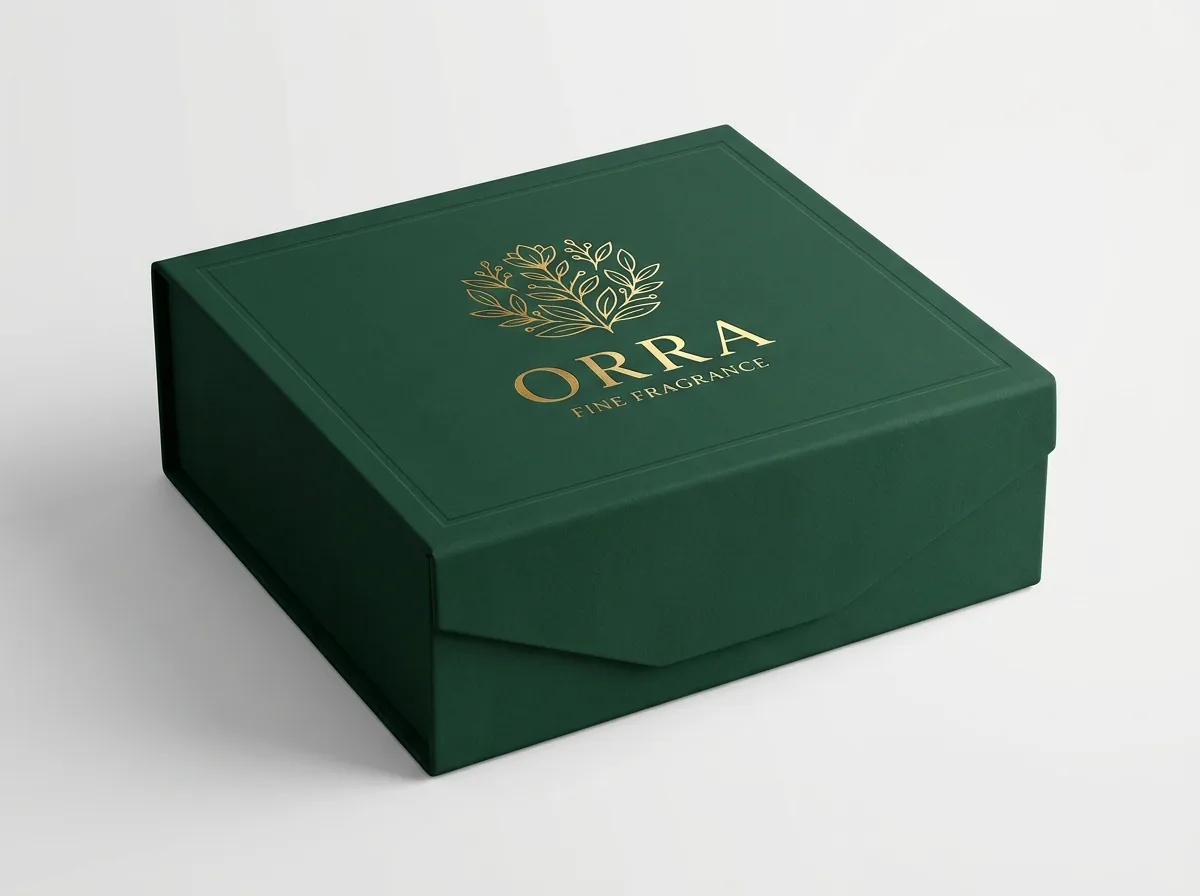
At the two ends of the necklace spectrum sit bridal statement pieces and high-volume fashion jewelry. For 7 × 5 inch pearl strands, diamond tennis necklaces and bridal parures, a hinged magnetic closure box (or book-style rigid box) opens like a hardcover case. Because the lid remains hinged to the spine, the inside-lid logo stays permanently framed at a 95-degree angle above the necklace while the concealed magnets click shut cleanly. At the other end, if you ship 1,000 to 10,000 charm necklaces, festival chains or birthstone pendants per run and want the lowest unit cost and flat warehouse storage, a folding paperboard tray-and-sleeve box or straight tuck carton paired with a die-cut paperboard necklace card starts at 1,000 units and ships completely flat.
- Magnetic book-style rigid case (from 50 units): ideal for pearl strands, collar chokers and high-value anniversary gifts.
- Collapsible magnetic rigid box (from 50 units): ships flat to your studio and folds into a rigid gift case for multi-piece sets.
- Folding card tray-and-sleeve box (from 1,000 units): ships 100% flat and pairs with a die-cut paperboard necklace card for fashion lines.
- Window display carton (from 1,000 card or 50 rigid units): shows the pendant centered through a clear film window on retail pegs.
How do drawer and two-piece necklace boxes hold up in parcel shipping?
During a four-day parcel journey with USPS, UPS or FedEx, a small jewelry package experiences thousands of high-frequency vibrations and sorting drops. In a two-piece lift-off lid box, the lid stays seated when packed inside a fitted outer mailer box, or you can add a satin ribbon tie or branded belly band around the outside. In a slide-out drawer box, friction between the inner tray and outer sleeve holds the box closed, and placing the drawer box inside a snug corrugated shipping mailer prevents the tray from sliding outward. Whichever structure you choose, pairing the notched bottom EVA pad with a soft top compression pillow ensures the necklace chain cannot bounce out of its 45-degree corner slits even if the parcel travels upside down.
- Top compression pillow: bridges the air gap between the pendant face and the closed lid or drawer roof.
- Snug outer mailer: keeps two-piece lids seated and drawer trays closed during courier sorting.
- Free structural prototyping: test your heaviest pendant and thinnest chain in the box before full production.
What are the most common mistakes when choosing a necklace box style?
Picking a box silhouette without checking how the lid interacts with the pendant or chain leads to snagged links and scuffed stones. Avoid these five mistakes
- Mounting the EVA foam pad flush with the top edge of a slide-out drawer tray, where the chain catches on the outer sleeve roof.
- Printing a logo inside the roof of a drawer sleeve where no customer will ever see it unless they peer into the empty shell.
- Making a drawer sleeve fit too loosely so the inner tray slides open on its own when lifted out of a gift bag.
- Using a shallow two-piece lid without a shoulder stop or top pillow, letting the pendant bounce out of its slits in the mail.
- Ordering pre-assembled rigid boxes for a high-volume fashion chain line when a 1,000-unit folding tray-and-sleeve box would ship flat.
Find your size
Suggested inside size: 3 × 3 × 1.25 in
A starting point. Your account manager confirms the size with you before the proof.
Quote this size →Packaging for this
Ready to order necklace boxes? Compare up to 3 quantities with a free 3D mockup.
Request a Quote →Questions about necklace boxes
Does a slide-out drawer necklace box cost more than a two-piece lift-off lid box?
Both structures use a two-part rigid chipboard assembly (an outer sleeve or lid plus an inner base tray) and start at 50 units. A drawer box with a ribbon pull tab is very close in unit cost to a two-piece lift-off lid box of the same size.
How do you stop a necklace chain from catching when sliding a drawer box open?
We make the inner drawer tray 3 to 4 mm deeper than the EVA foam display pad and place a soft top pillow over the pendant. That keeps the chain and pendant recessed safely below the sliding lip of the outer sleeve.
Where does the logo go on a drawer necklace box vs a two-piece box?
On a drawer box, stamp your primary logo on the top outside face of the sleeve and print a secondary mark on the face of the inner EVA display pad. On a two-piece box, you can stamp both the outside lid and the inside lid roof.
Can I get a ribbon pull on a 1,000-unit folding paperboard drawer box?
Yes. Folding paperboard tray-and-sleeve boxes can include a satin or grosgrain ribbon pull tab or a die-cut half-moon finger notch on the tray wall, giving you the drawer experience while shipping flat.
What is the minimum order quantity for magnetic closure necklace boxes?
Custom magnetic closure necklace boxes (including hinged book-style cases and collapsible magnetic rigid boxes for collar necklaces and bridal sets) start at 50 boxes at CubitPack, with no die or plate charges.
How long does production take for custom drawer or two-piece necklace boxes?
Standard production takes 10 to 14 business days after you approve your free 2D dieline proof and 3D mockup and complete payment. Rush production in 4 to 5 business days is available when you have a tight launch date.
Still have a question? Ask a packaging specialist.
Request a Quote →Request your necklace boxes quote
Tell us your size and quantities, and one dedicated account manager prepares pricing for each tier.
- Free design & AI-to-print studio + 3D mockup
- No die or plate charges · 4–5 day rush available
- Free shipping to all 50 states
- 10% off your first order
This structural comparison draws on CubitPack's decided minimums, materials and turnaround policies in our published product specifications along with ISTA parcel vibration practices and rigid tray-clearance rules. A CubitPack packaging specialist reviewed every section. Spot something wrong? Tell us and we will fix it.
Sources
What changed
- October 22, 2026: First published.
- October 22, 2026: Updated specifications, terminology, and verified source links.
More guides
New packaging guides by email
Sizes, materials and design tips. Unsubscribe anytime.