
Should you choose pre-packed counter displays, flat-ship trays, peg cartons, or shelf caddies?
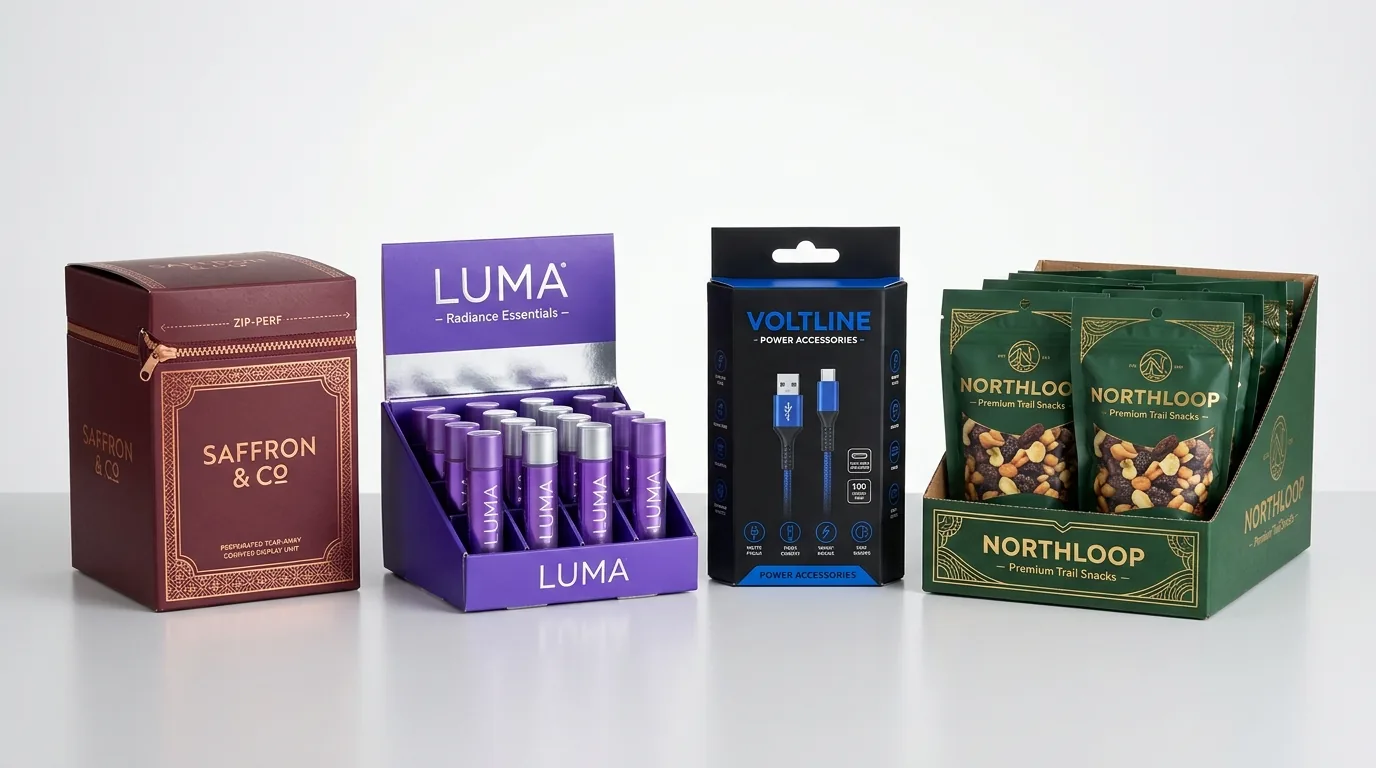
Short answer: Choose pre-packed tear-away counter displays (packed inside an outer corrugated shipper) for convenience and pharmacy chains that demand 5-second clerk setup. Pick flat-shipped pop-up counter trays for independent cafes, salons, and boutiques where cutting inbound freight volume and refilling trays matters most.
On this page
- How do pre-packed CDUs, flat-ship counter trays, peg cartons, and shelf caddies compare
- Which retail store channel calls for each display or hanging format
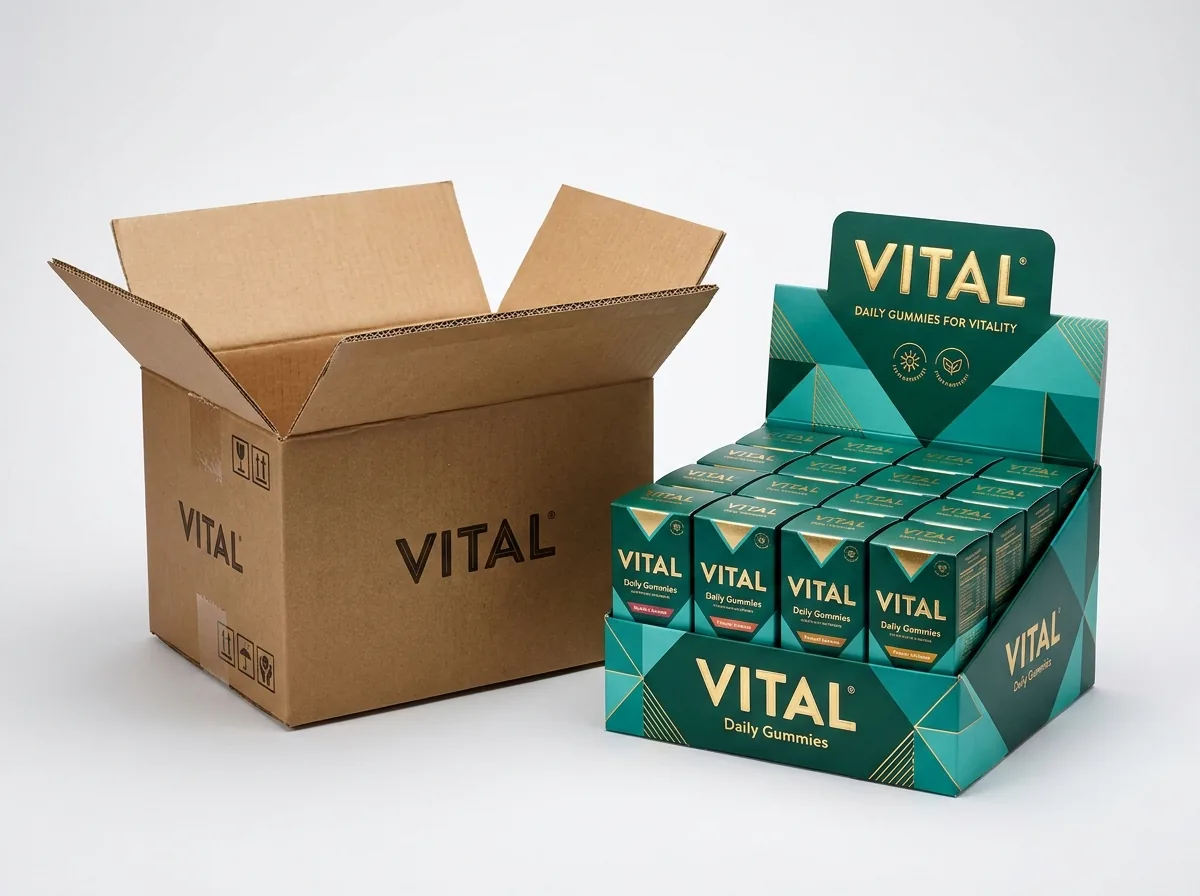
- How do you protect pre-packed counter displays during parcel and pallet transit
- What is the 4-step plan to choose your wholesale counter display workflow
- Common mistakes
- FAQs
Request a custom quoteFree dieline & 3D mockup
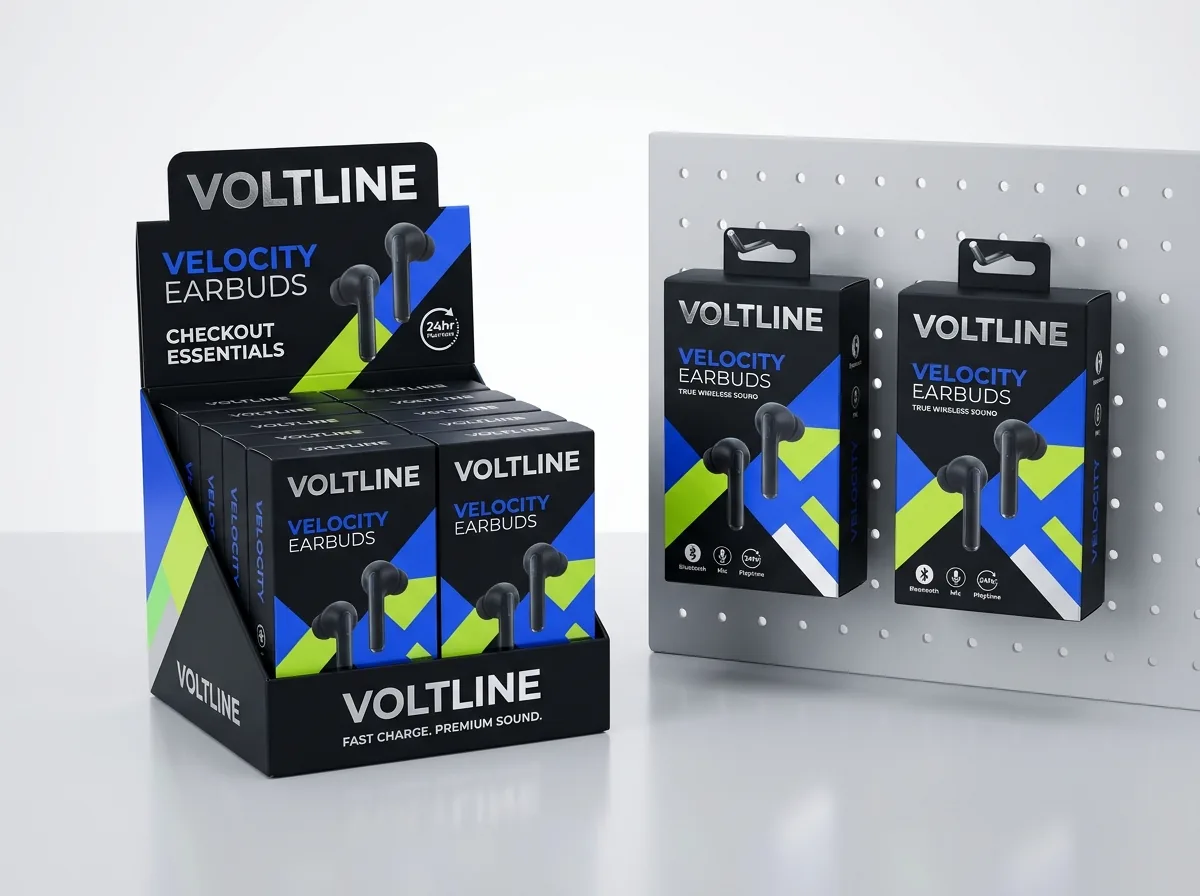
Wholesale brands pitching impulse items to brick-and-mortar stores face two intertwined packaging choices: first, whether to merchandise right next to the cash register in custom counter display boxes versus hanging on vertical hooks with custom hang tab boxes or stocking inline grocery shelves with custom display boxes; and second, whether that counter tray should ship pre-loaded with inventory inside a protective shipper or travel flat alongside bulk product cases. National convenience and drug chains rarely let cashiers hand-load 24 lip balms at the register, whereas independent salons, gift shops, and coffee roasters prefer low-freight flat starter trays they can refill all year. CubitPack produces every folding-carton retail format from 1,000 units in 10–14 business days (4–5 business days rush), with zero die or plate setup fees, free 3D proofs, and free shipping across all 50 US states.
How do pre-packed CDUs, flat-ship counter trays, peg cartons, and shelf caddies compare?
Every retail chain assigns distinct fixture rules to checkout counters, pegboard endcaps, and inline gondola shelves. Sending a wide 14-inch grocery case pack to a boutique salon desk guarantees the tray stays in the back room, while sending loose un-trayed tubes to a convenience store distributor slows down route drivers and leads to misplaced inventory behind counter clutter. Understanding whether your wholesale accounts rely on unionized store clerks, busy baristas, or route merchandisers lets you select the exact setup speed and inbound shipping density each buyer expects. Compare how the two checkout CDU fulfillment workflows stack up against vertical pegboard cartons and inline aisle display boxes across setup speed, freight cube, and reorder behavior
- Why national chains mandate pre-packed CDUs: Multi-store distributors want one scanable master SKU where the cashier lifts out a pre-filled tray, pulls a perforated zipper strip, locks the header, and starts selling immediately without counting loose individual tubes across dozens of checkout lanes.
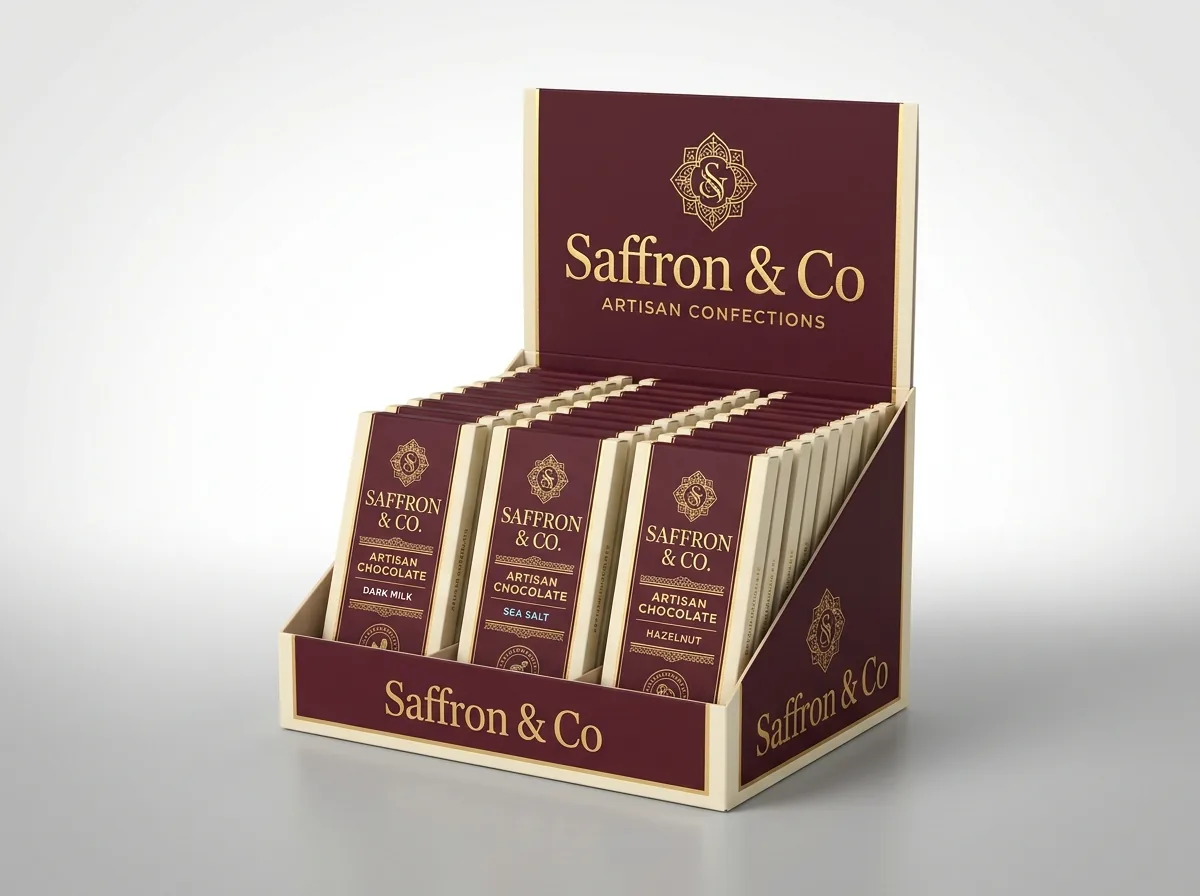
- Why indie wholesale accounts love flat-shipped pop-up trays: Including two free flat-packed counter display trays inside a wholesale starter carton adds almost zero dimensional weight while giving boutiques, yoga studios, and espresso bars a polished countertop home they refill repeatedly from 12-pack cartons.
- Why checkout counters convert higher impulse attachment than back aisles: Shoppers waiting 45 seconds for a barista or receipt scan examine items within arm's reach without comparison-shopping five rival shelves, turning idle queue seconds into effortless add-on basket revenue for both the retailer and your brand.
| Comparison factor | Pre-Packed Tear-Away CDU | Flat-Ship Pop-Up CDU | Hang-Tab Peg Carton | Aisle Shelf Display Box |
|---|---|---|---|---|
| Store clerk setup | 5 sec (zip hood & fold header) | 15–25 sec (pop tray & load) | 10 sec (slide onto metal hook) | 5–8 sec (tear front window) |
| Inbound freight cube | Higher (ships 3D filled in shipper) | Lowest (ultra-flat 2-ply stack) | Low (compact unit cartons) | Higher (ships as 3D case pack) |
| Store fixture zone | POS cash-wrap counter | Boutique, cafe & salon counter | Pegboard wall or clip strip | Inline grocery or drug gondola |
| Refill workflow | Swap entire empty CDU for new one | Refill tray from bulk refill packs | Restock rear or front of peg | Replace entire sold-out tray |
| Outer transit box | Mandatory snug corrugated shipper | Ships flat in master carton | Ships in standard master carton | Ships inside master case |
| Top retail buyers | C-stores, pharmacies, big-box POS | Salons, spas, indie gift & coffee | Hardware, tech & beauty walls | Supermarkets, health stores |
Which retail store channel calls for each display or hanging format?
Many fast-growing CPG, beauty, confectionery, and electronics brands run two complementary structures simultaneously once they expand past 1,000 units per SKU: a compact checkout CDU for counter accounts and either a hang-tab carton or wider aisle caddy for stores with strict clear-counter policies. Because individual tuck cartons or pouches inside your counter tray can share the exact same unit size across channels, adding a second outer merchandising format lets sales reps say yes to both independent cash-wrap boutiques and regional grocery chains without changing primary product packaging. Match your wholesale buyers' store fixtures directly to the winning structural format below
| Retail channel & buyer rule | Winning packaging format | Operational reason |
|---|---|---|
| Convenience stores, gas marts & pharmacy checkouts | Pre-Packed Tear-Away CDU (with E-flute or 24 pt) | Zero clerk loading labor; swaps cleanly when sold through |
| Hair salons, nail studios, spas & indie boutiques | Flat-Shipped Pop-Up CDU + Hole/Step Insert | Ships flat in starter kits; refilled repeatedly on reception desk |
| Specialty coffee shops & bakery cash wraps | Compact 6-inch-wide 2-Tier Counter Display | Fits tight espresso-bar counters beside pastry cases |
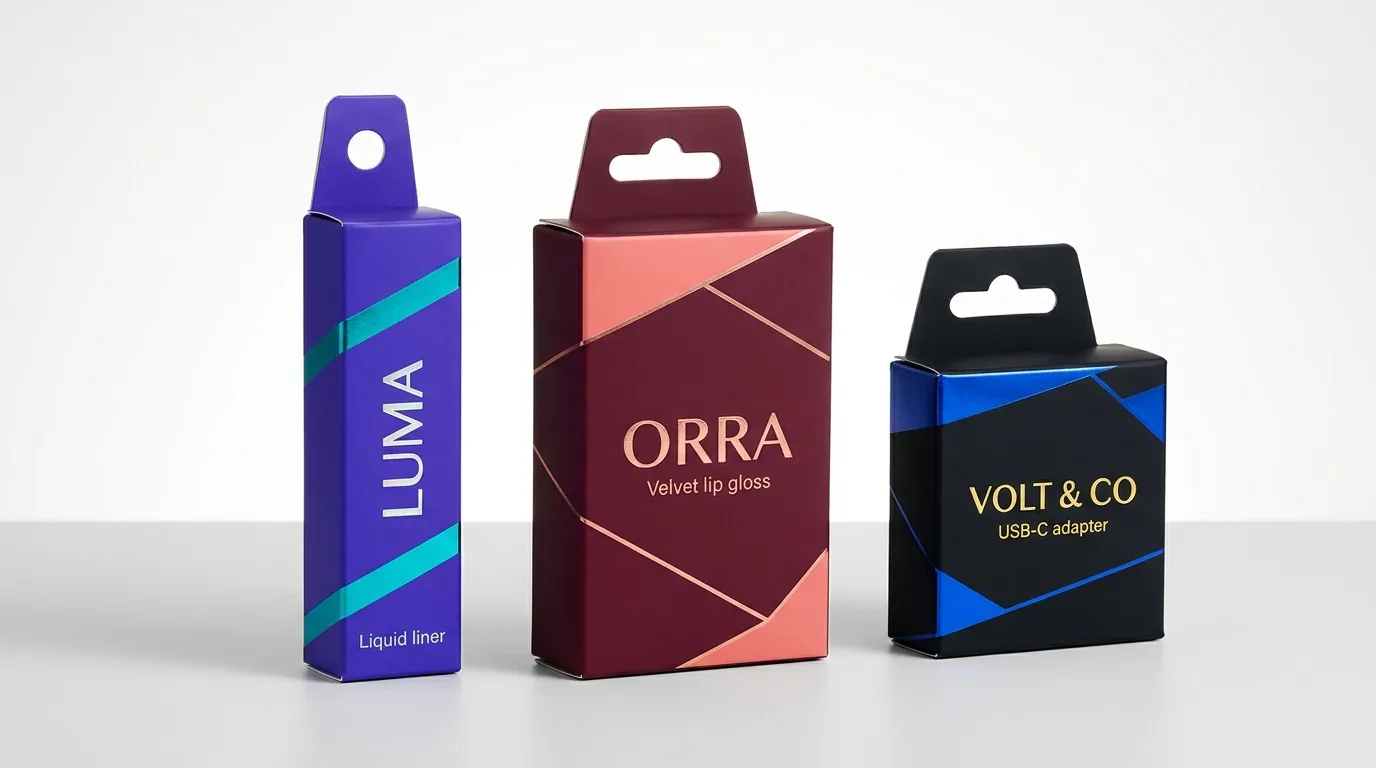
| Checkout lanes with zero flat counter surface | Hang-Tab Carton (on clip strip or peg rack) | Captures vertical impulse space without touching counter |
| Natural grocery inline snack & supplement aisles | Wider Aisle Shelf Display Box | Sized to 12–16 inch gondola shelf depth for full case velocity |
How do you protect pre-packed counter displays during parcel and pallet transit?
When shipping custom printed counter display units already loaded with custom candy boxes, custom tea boxes, custom earbud boxes, or custom lip balm boxes, internal product movement is the primary cause of scuffed labels and popped perforations. During small-parcel sortation, conveyor drops subject filled trays to vertical and sideways vibration that tests every perforation tie and corner lock before the box ever reaches a store counter. Designing the inner tray, removable dust hood, and outer shipping carton as one nested protective system eliminates transit wear. Follow these five fulfillment engineering rules so every display lands on the counter ready to sell
- Lock cylindrical items with both a lower grid collar and top hood contact: When pre-shipping lip balms, pens, or nail polish bottles, size the closed perforated hood height so it kisses the tops of the caps (or add a thin top corrugated pad), preventing tubes from bouncing out of their grid holes when a parcel flips upside down.
- Use calibrated 2:1 or 3:1 mm cut-tie perforations: Over-perforating the tear hood causes vibration blowouts in transit, while under-perforating leaves ragged edges when store staff pull the strip.
- Pack 2, 4, or 6 filled CDUs snugly inside a master shipping box: Grouping filled counter displays inside custom shipping boxes eliminates dead air void and cuts parcel damage claims dramatically.
- Print a 3-icon setup diagram right on the removable tear hood: Store clerks rarely read instruction sheets; three bold icons showing '1. Pull strip, 2. Fold header back, 3. Tuck side ears' ensure proper header locking every time.
- Keep reorder QR and distributor case barcodes on the tray bottom or back spine: Retailers can scan a depleted tray immediately with a handheld store gun or smartphone camera to reorder another 12-count or 24-count display without hunting through wholesale catalogs.
Know your size? Compare pricing across up to 3 quantities.
Request a Quote →What is the 4-step plan to choose your wholesale counter display workflow?
Combine this four-step rollout check with our companion guides on checkout counter display footprints, hole grids, and stadium tiers and counter display header hinges, front lips, and insert dielines, plus our snack packaging walkthrough on tear-away display caddies vs tuck cartons vs snack mailer boxes. Matching your carton mechanics to how your wholesale accounts actually receive, stage, and restock inventory prevents friction with store buyers. When wholesale buyers see that your display sets up in seconds, leaves generous space next to the credit-card reader, and arrives uncrushed inside a fitted outer shipper, reorders become routine
- Step 1: Poll 3 to 5 target retail accounts on whether they require pre-filled tear-away shippers (distributors & chains) or prefer flat refillable starter displays (indie boutiques, cafes, and salons).
- Step 2: Confirm whether checkout counters have 6 to 9 inches of flat space next to the POS terminal; for zero-counter lanes, pair your CDU run with a matching 1,000-unit run of hang-tab peg cartons.
- Step 3: If shipping pre-packed, add a perforated transit hood plus a snug corrugated outer master carton so units stay locked inside their hole grid or stepped tiers.
- Step 4: Request your free vector CAD dieline and 3D digital proof from CubitPack (from 1,000 boxes, zero die or plate charges, free US shipping), or order our $50 sample kit (credited toward your first order) to test board rigidity first.
What fulfillment mistakes happen with pre-packed and flat-ship counter displays?
Avoid these five wholesale distribution mistakes before launching your retail display program
- Mailing a filled paperboard counter display box bare through parcel carriers without an outer corrugated shipping carton, crushing the header and tearing perforations.
- Leaving 1.5 inches of empty headspace above pre-packed lip balm tubes so parcel inversions shake every tube loose from its die-cut grid holes.
- Sending flat-packed 30-piece puzzle-fold trays without pre-glued auto-lock bases to busy convenience stores where clerks toss un-built displays aside.
- Pitching wide 15-inch grocery shelf trays as checkout displays to coffee shops and salons that only have 7 inches of open counter width.
- Forgetting to print a reorder SKU and wholesale QR code on the inside floor or back spine so stores forget to restock once the tray sells out.
Packaging for this



Ready to order counter display boxes? Compare up to 3 quantities with a free 3D mockup.
Request a Quote →Questions about counter display boxes
Do CubitPack's counter display boxes arrive pre-assembled or flat?
All custom counter display boxes (and any matching grid or step inserts) arrive factory-glued along the side seam and auto-lock base, stacked flat in protective master cartons with free US shipping. Your team or co-packer pops each tray open in seconds to load inventory or include flat in boutique starter kits.
Can one counter display dieline work both as a pre-packed shipper and a boutique refill tray?
Yes. By engineering a clean perforated tear-away hood and double-ply fold-back header on 24 pt SBS or E-flute board, you can co-pack displays inside outer shippers for chain accounts while sending the exact same display popped open to local boutiques.
Can you also make the outer corrugated shipping box that protects our pre-packed CDU?
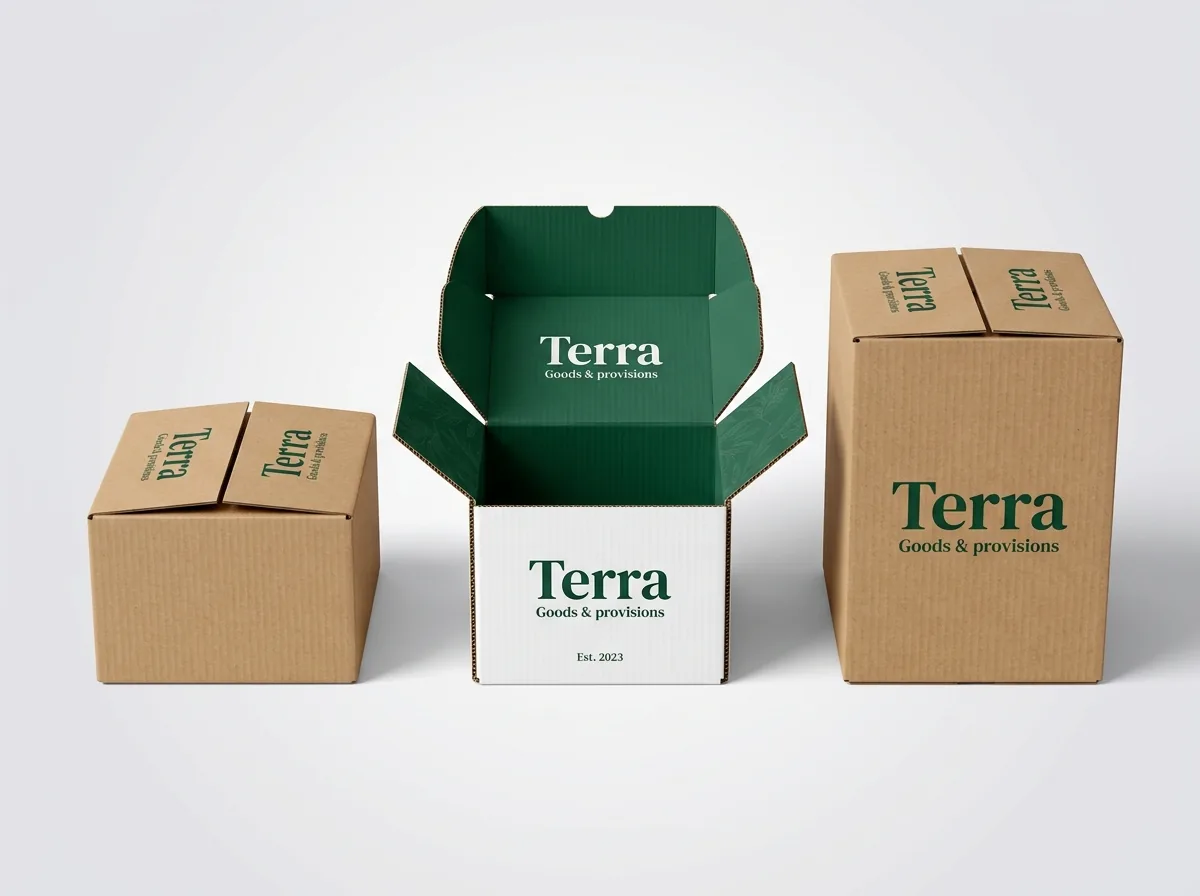
Yes. CubitPack produces both custom folding-carton counter displays and custom corrugated shipping boxes, sized with 3 to 5 mm of snug clearance around 1, 2, 4, or 6 filled CDUs so displays arrive uncrushed.
When is a hang-tab carton better than a counter display box?
Choose a hang-tab carton when retail stores hang impulse accessories on vertical pegboard hooks, checkout clip strips, or endcap prongs where zero horizontal counter surface is available.
What is the minimum order for custom counter displays and matching unit boxes?
Custom paperboard counter display boxes and individual unit cartons (such as tuck-end, seal-end, or hang-tab boxes) each start at 1,000 units per size, with zero die or plate setup charges and 10–14 business day turnaround.
Still have a question? Ask a packaging specialist.
Request a Quote →Request your counter display boxes quote
Tell us your size and quantities, and one dedicated account manager prepares pricing for each tier.
- Free design & AI-to-print studio + 3D mockup
- No die or plate charges · 4–5 day rush available
- Free shipping to all 50 states
- 10% off your first order
We compared pre-packed perforated CDUs, flat-shipped pop-up trays, hang-tab pegboard cartons, and aisle shelf display caddies against ECMA X35 display conversion codes, Shop! Association (POPAI) retail fixture guidelines, and Paperboard Packaging Council (PPC) co-packing manuals. Spot something wrong? Tell us and we fix it.
Sources
What changed
- November 6, 2026: First published with 4-format retail impulse matrix, store-channel matchup table, and pre-packed transit protection checklist.
More guides
New packaging guides by email
Sizes, materials and design tips. Unsubscribe anytime.