
Oil-resistant film vs paper labels for essential oil bottles: which stays clean?
Short answer: Unlaminated paper labels absorb essential oil drips within seconds, turning dark and smearing ink. For 5 ml to 30 ml dropper and roller bottles, pair custom essential oil labels with a protective matte or gloss laminated finish, or choose clear or metallic foil stocks that wipe clean.
On this page
- How do film, clear, foil and paper essential oil labels compare
- Why do citrus, mint and resin oils dissolve unlaminated label ink
- Should you choose matte or gloss lamination, foil stamping or spot UV
- When do clear labels or foil labels beat standard white wraps
- Why do labels wing up on narrow 5 ml and 10 ml vials, and how do you stop it
- Common mistakes
- FAQs
Request a custom quoteFree dieline & 3D mockup
Pure essential oils, especially citrus oils rich in d-limonene like sweet orange, lemon, grapefruit, and bergamot, act as natural organic solvents. When a single drop runs down an orifice reducer onto an unlaminated paper label, the oil wicks into the wood-pulp fibers, leaves a permanent translucent grease halo, and dissolves unprotected toner. Choosing the right material and finish for your 5 ml, 10 ml rollerball, 15 ml, or 30 ml bottles prevents both staining and edge lifting. Adding a matte or gloss lamination seals printed CMYK and Pantone inks under a clear protective film barrier so drips wipe away with a cloth. Clear label stock creates a no-label look on frosted glass rollerballs and gem-infused carrier oils, while metallic foil stock and hot foil stamping elevate rare absolutes like rose, jasmine, and oud. Exact oil-resistant film and paper stock pairings are confirmed with your quote.
How do film, clear, foil and paper essential oil labels compare?
Every time a customer tilts a 15 ml euro-dropper bottle or rolls a 10 ml steel-ball vial across their wrist, a microscopic film of essential oil or carrier oil collects around the neck thread and travels down the glass wall. Selecting the right stock and finish for your custom printed essential oil bottle labels determines whether your bottle still looks apothecary-fresh three months after opening. While our full list of oil-resistant film (BOPP) and specialty apothecary paper stocks is being finalized, clear and foil stocks alongside matte, gloss, foil stamping, and spot UV finishes are confirmed and available from 500 pieces. Use the comparison table below to match your oil formula and bottle type to the right label construction.
| Label stock & finish | Resistance to essential oil drips | Conformability on 5-15 ml vials | Best aromatherapy applications |
|---|---|---|---|
| Laminated white film / BOPP | Non-absorbent polymer face; matte or gloss laminate wipes clean of citrus and carrier oils | Thin, flexible face conforms to 0.75 in rollers when sized with a ⅛ in seam gap | Everyday 5 ml, 10 ml, 15 ml and 30 ml single notes, citrus oils and rollerballs |
| Clear label stock + lamination | Synthetic transparent film will not wick or stain from jojoba, almond or essential oils | Flexible on frosted glass rollerballs and smooth cylindrical dropper bottles | Frosted 10 ml perfume rollers, botanical petal infusions and hydrosol mists |
| Metallic foil stock + lamination | Foil barrier blocks oil soaking; top laminate protects dark printed text from rubbing | Slightly stiffer; requires a generous ⅛-3/16 in seam gap on narrow vials | Precious absolutes (rose, neroli, oud), chakra sets and holiday gift blends |
| Laminated paper stock | Top surface wipes clean, but oil can wick into the cut paper edge over repeated spills | Good wrap memory on 15 ml and 30 ml bottles when kept off the shoulder curve | Dry diffuser blends, boxed retail bottles and apothecary starter kits |
| Unlaminated paper or kraft | Low resistance; absorbs oil drips immediately and leaves dark translucent spots | Conforms well, but oil seepage can weaken the adhesive bond underneath | Outer custom essential oil boxes or dry gift tags not touched by oil |
Why do citrus, mint and resin oils dissolve unlaminated label ink?
Aromatherapy oils are far more aggressive on printed packaging than vegetable cooking oils or cosmetic lotions. Cold-pressed citrus oils (lemon, sweet orange, lime, tangerine, bergamot), terpene-heavy conifer oils (pine, cypress, juniper), and spicy phenols (clove bud, cinnamon bark, oregano) contain concentrated volatile compounds such as d-limonene, pinene, and eugenol. In industrial chemistry, d-limonene is literally used as a paint stripper and adhesive remover. When a bottle is labeled with an unlaminated sheet label or desktop printer sticker, the ink or toner sits exposed on top of the surface. The moment a drop of sweet orange or peppermint oil runs down the bottle and a customer wipes it with their thumb, the terpenes soften the exposed ink resin and smear your Latin botanical name and dilution warnings into an illegible blur. Sealing your print layer beneath a matte or gloss lamination places a protective barrier over the ink so terpene drips cannot touch the pigment.
Should you choose matte or gloss lamination, foil stamping or spot UV?
Once you decide to protect your bottle wraps with a laminated finish, your choice between matte, gloss, hot foil stamping, and spot UV shapes how customers read tiny text in dim spa lighting or bright retail shelves. Because a 5 ml or 15 ml label is only 1.0 to 1.625 inches tall, glare and contrast matter just as much as oil resistance.
- Matte finish: Eliminates overhead spotlight glare on curved glass vials, making 5-point Latin binomials (*Lavandula angustifolia*) and topical dilution ratios effortless to read.
- Gloss finish: Creates a slick, glass-like shine that makes botanical watercolor illustrations pop and sheds thick carrier oils like castor, fractionated coconut, and sweet almond oil.
- Hot foil stamping: Presses metallic gold, rose gold, or silver foil onto botanical crests, apothecary borders, or oil-drop icons without needing a full metallic background.
- Spot UV over matte: Coats your brand monogram or sacred geometry pattern in raised glossy varnish against a velvety matte background for tactile grip in oily hands.
Know your size? Compare pricing across up to 3 quantities.
Request a Quote →When do clear labels or foil labels beat standard white wraps?
While opaque white wraps are the workhorse for dark amber and cobalt euro-dropper bottles, two specialty stocks solve distinct design challenges across an aromatherapy line. First, custom clear labels are the top choice whenever the vessel or liquid inside is part of the visual story. If you package pulse-point perfume blends in frosted 10 ml glass rollerballs, infuse calendula petals or amethyst chips into golden jojoba oil, or bottle clear floral hydrosol mists, a transparent wrap lets the contents shine through while resisting oil drips. Second, custom foil labels turn small 5 ml and 10 ml vials of high-value oils (such as Bulgarian rose otto, helichrysum, blue tansy, and sandalwood) into luxury keepsakes. Printing transparent CMYK or Pantone inks over a metallic foil base lets you create shimmering bronze, copper, emerald, and antique gold apothecary bands on a single pass.
Why do labels wing up on narrow 5 ml and 10 ml vials, and how do you stop it?
Even an oil-proof label fails if the edges pop open on the shelf. Small 1 to 2 ml sample drams (0.50 in diameter), 10 ml rollerballs (0.75 in diameter), and 5 ml euro-dropper bottles (0.875 in diameter) have tight radii of curvature. When a thick or stiff label is wrapped around a cylinder under 1 inch in diameter, the facestock tries to straighten itself back out, pulling upward at the two vertical ends. To keep your wraps bonded flat on narrow glass vials, combine three rules. First, tell your account manager your exact vial diameter so we match a tight-mandrel adhesive and flexible facestock. Second, follow our essential oil bottle label size chart and leave a ⅛ inch vertical seam gap so neither edge overlaps onto slick lamination. Third, always wipe filled bottles with 90% isopropyl alcohol before labeling so invisible oil mist from your filling nozzle does not kill adhesive tack. Temperature and dwell time also play a major role when labeling small amber and cobalt vials. Apply labels at room temperature (65 to 75 °F) to clean, dry glass and give the bottles 24 hours of curing time before packing them into warm mailers or steamy spa display rooms. If you apply matching 0.5 inch cap-top stickers from flat sticker sheets, press firmly inside the flat center ring of the 18-400 cap so the adhesive wets out completely before boxing.
- Wipe every filled vial with 90%+ isopropyl alcohol and a lint-free cloth before applying the wrap.
- Leave a ⅛ inch (0.125 in) vertical seam gap so both edges bond directly to bare glass.
- Pinch and roll the vertical edges firmly on a tabletop bottle roller to eliminate trapped air bubbles.
- Allow 24 hours of room-temperature dwell time for the adhesive to reach full bond strength.
What material and finish mistakes ruin essential oil labels?
Avoid these five stock and finish errors before ordering your multi-scent print run
- Using unlaminated paper labels on euro-dropper bottles, where a single citrus or peppermint drip leaves a dark grease stain and smears toner.
- Overlapping the ends of a matte or gloss laminated label on a narrow 10 ml rollerball instead of leaving a ⅛ inch gap to grip bare glass.
- Printing dark text on a clear label for an amber glass bottle without specifying an opaque white ink underbase behind the typography.
- Applying labels to hand-filled vials without wiping the glass exterior with isopropyl alcohol to remove microscopic oil residue.
- Choosing a rigid, heavy cardstock-weight label for a 0.75 inch diameter rollerball where outward memory pops the edges open.
Packaging for this
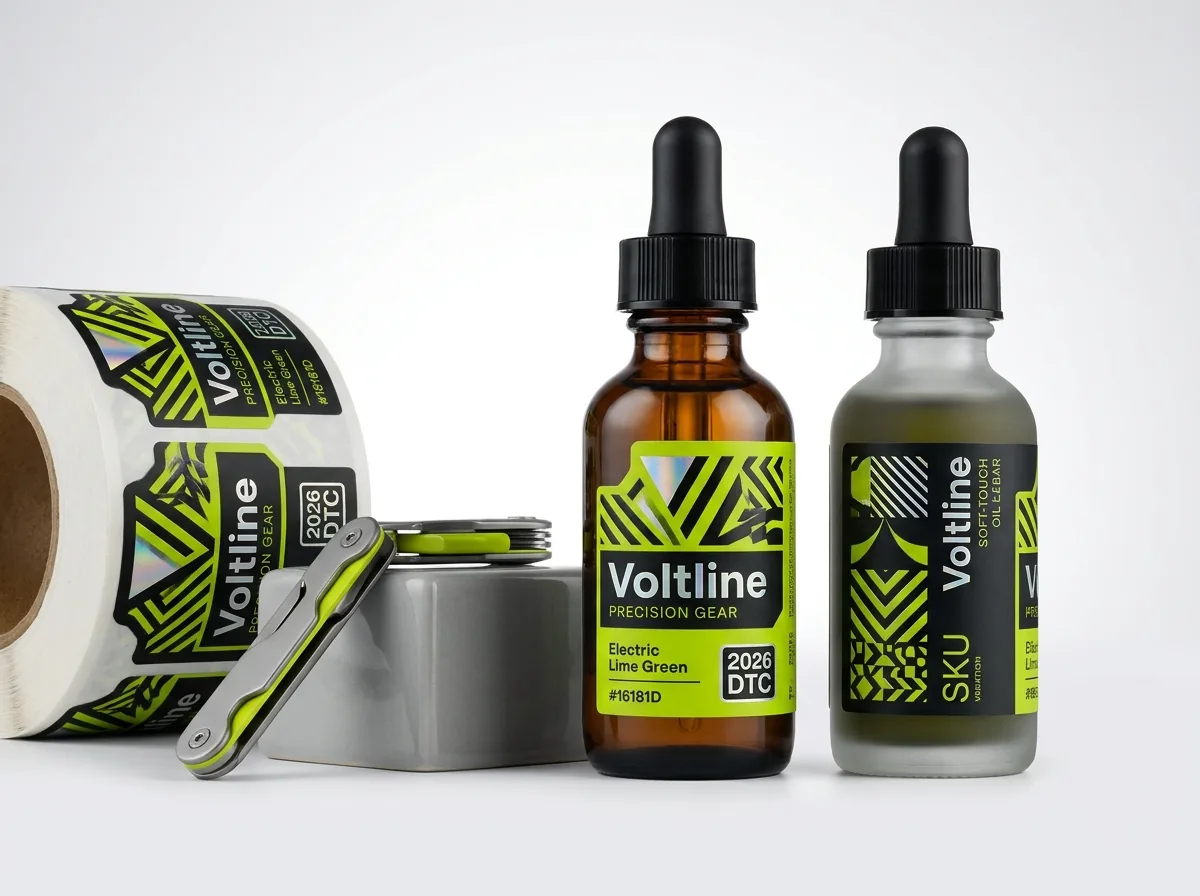
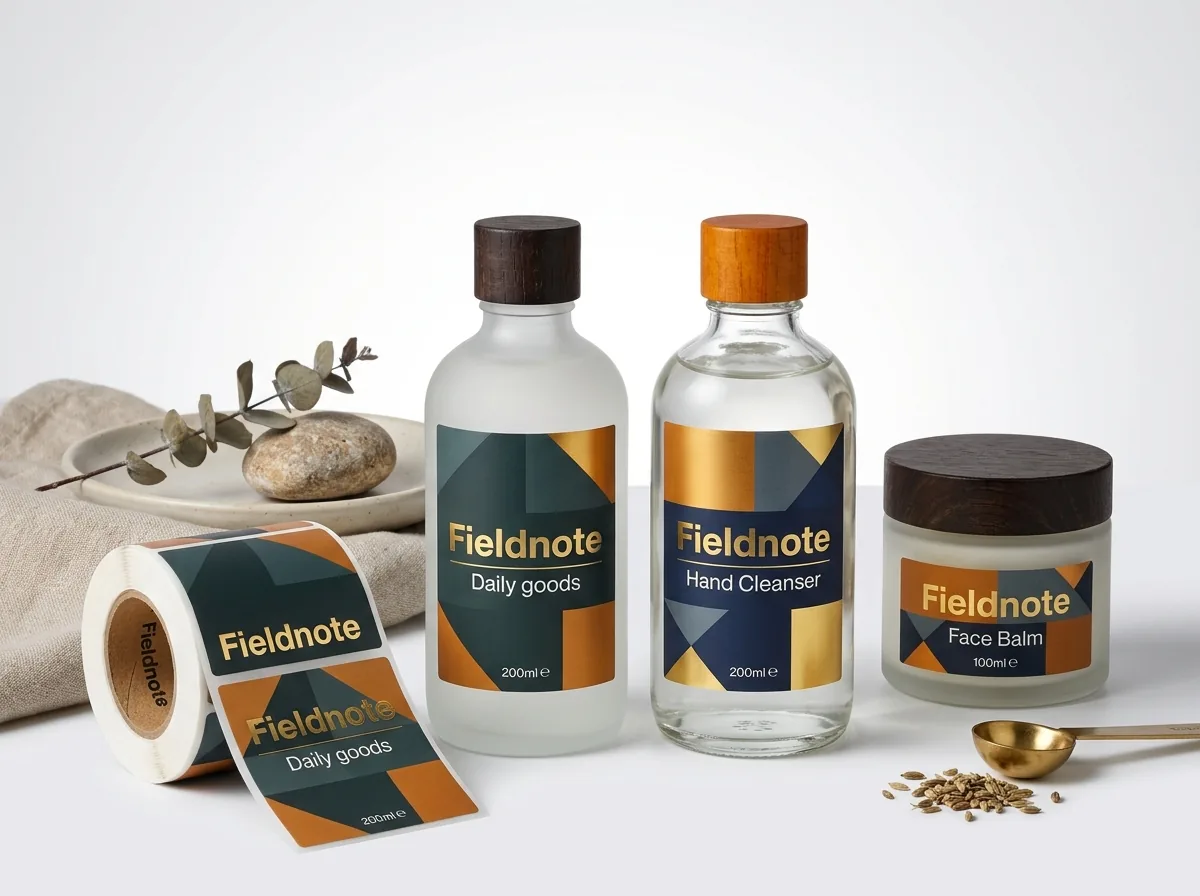
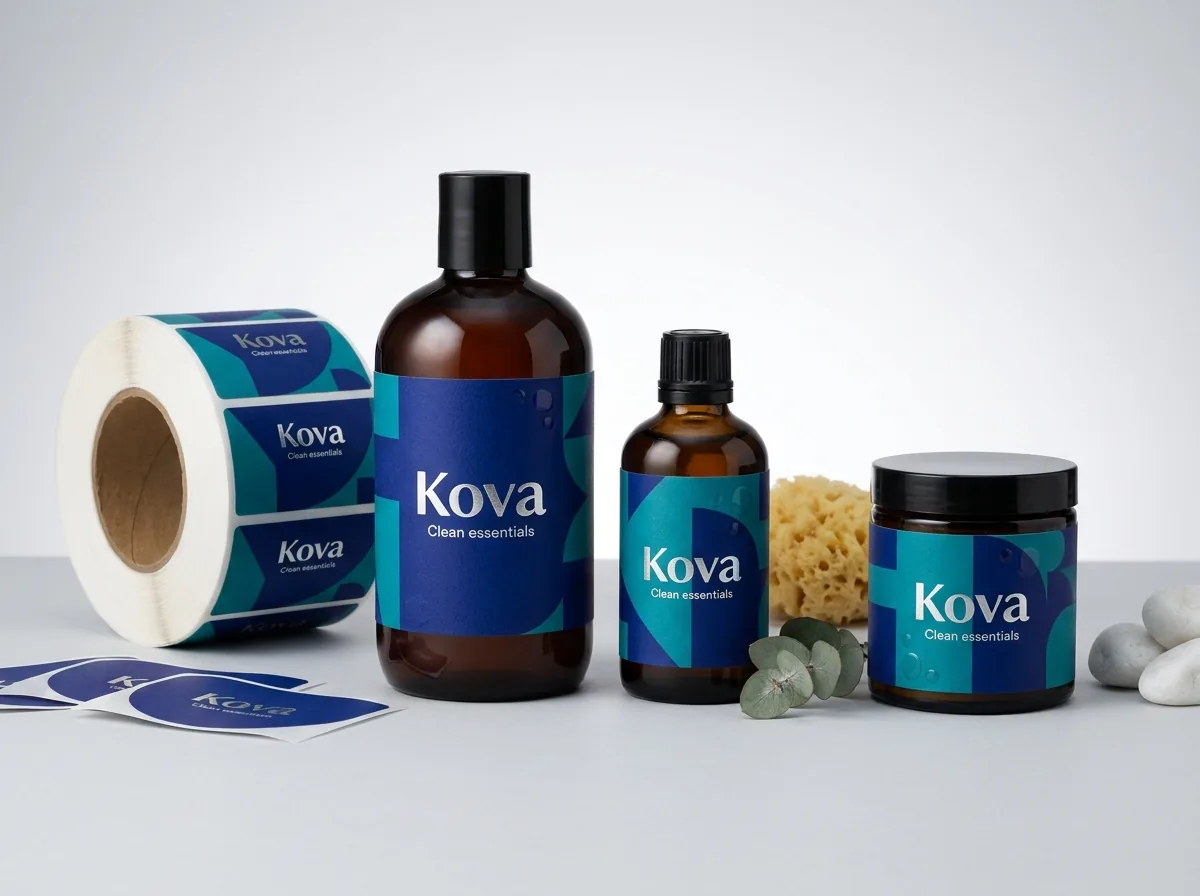
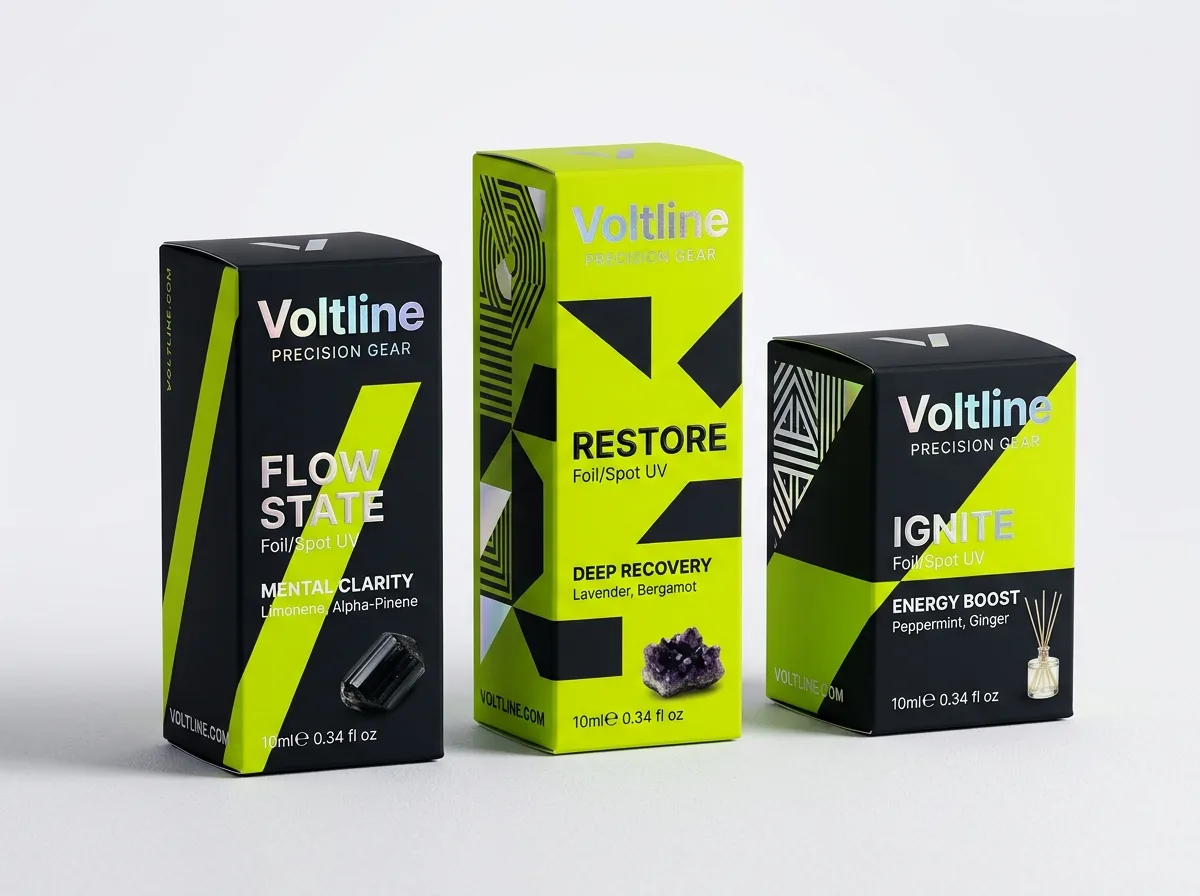
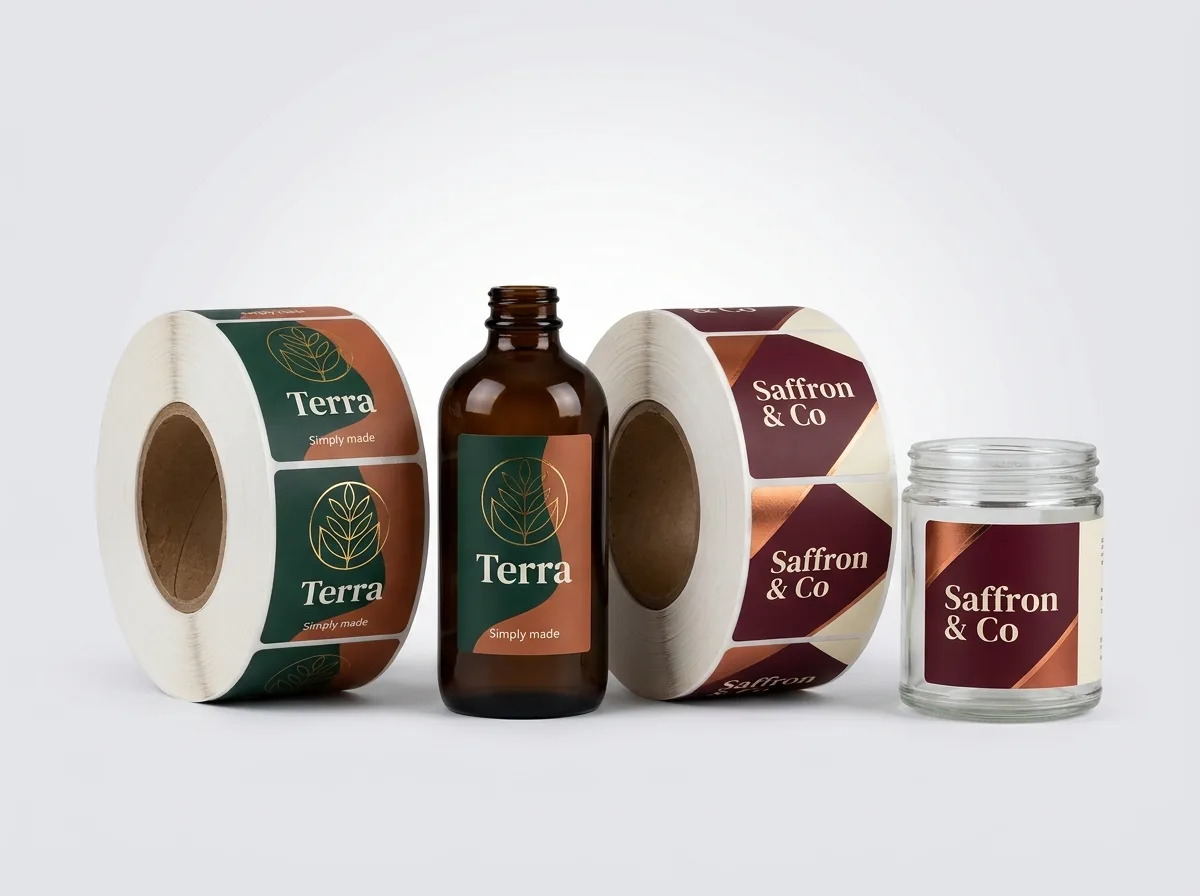
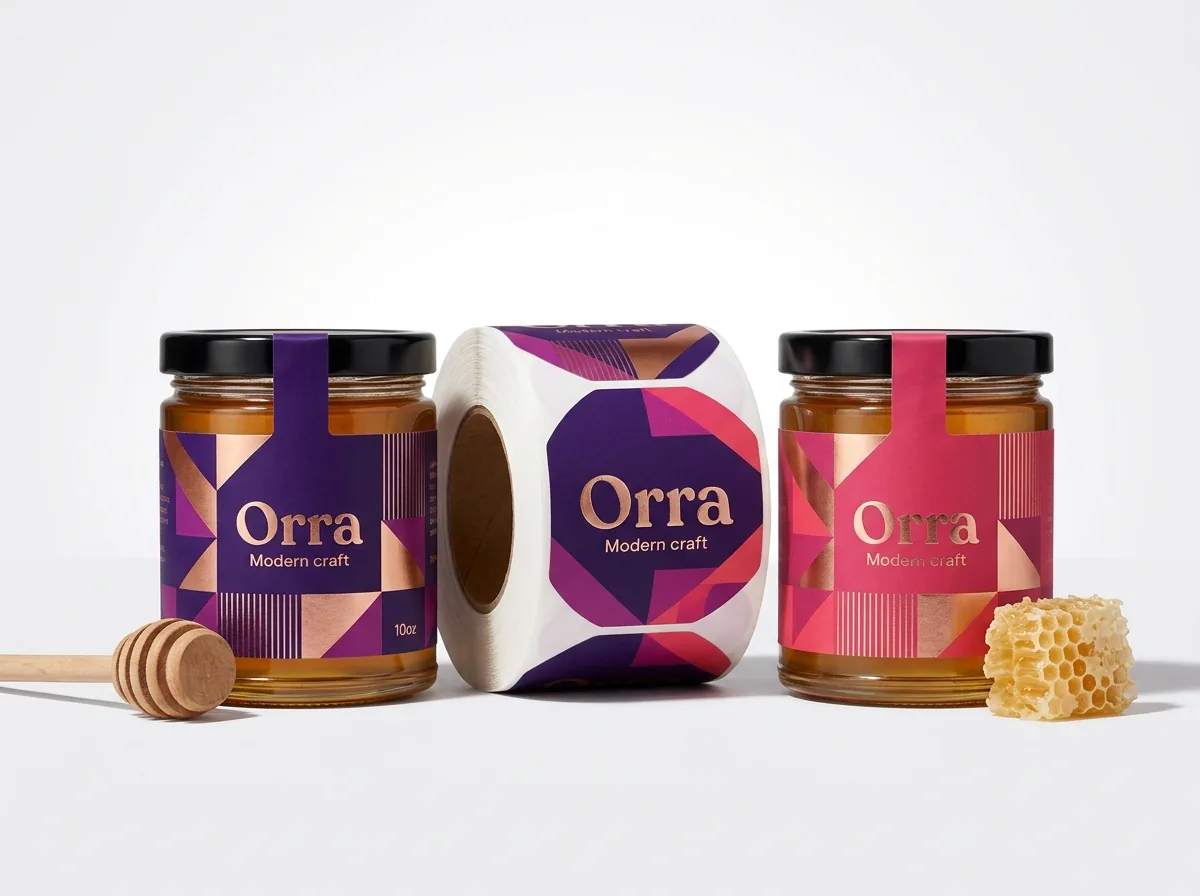
Ready to order essential oil labels? Compare up to 3 quantities with a free 3D mockup.
Request a Quote →Questions about essential oil labels
Why do citrus essential oils smudge and stain bottle labels faster than other oils?
Citrus oils like lemon, sweet orange, lime, and bergamot contain high concentrations of d-limonene, a natural terpene solvent. Unprotected paper absorbs the oil and turns translucent, while exposed toner dissolves on contact unless sealed under a matte or gloss lamination.
Is matte or gloss lamination better for essential oil bottle labels?
Both matte and gloss lamination seal your ink under a protective barrier that wipes clean of oil drips. Matte lamination is more popular for apothecary brands because it eliminates glare on curved glass, making tiny 5-point Latin names and cautions easier to read.
Can I use paper labels on my essential oil bottles if they are laminated?
A matte or gloss laminated paper label resists surface drips on the front face, but repeated oil pooling around the bottle neck can eventually wick into the microscopic cut edge of the paper. Synthetic film, clear, or foil stocks block edge wicking completely.
Will clear labels show up on dark amber or cobalt blue essential oil bottles?
Clear labels work on dark amber or cobalt glass only when printed with a solid white ink underbase or metallic gold/silver foil stamping. Without white ink or foil, CMYK colors look dark and translucent against brown or blue glass.
Can I order a sample kit to test how finishes feel before printing my scent line?
Yes. You can order our $50 sample kit to inspect materials and finishes in person, or request a paid printed sample of your own essential oil label design (credited toward your full production order).
Still have a question? Ask a packaging specialist.
Request a Quote →Request your essential oil labels quote
Tell us your size and quantities, and one dedicated account manager prepares pricing for each tier.
- Free design & AI-to-print studio + 3D mockup
- No die or plate charges · 4–5 day rush available
- Free shipping to all 50 states
- 10% off your first order
This comparison of essential oil label stocks, laminations, and tight-mandrel adhesion principles is based on terpene solvent behavior (d-limonene) and CubitPack's decided product rules in our published product specifications. A CubitPack packaging specialist checked every material recommendation.
Sources
What changed
- October 22, 2026: First published.
- October 22, 2026: Updated specifications, terminology, and verified source links.
More guides
New packaging guides by email
Sizes, materials and design tips. Unsubscribe anytime.