
Clear vs paper honey labels: which looks better on honey jars?
Short answer: Choose clear labels when you want the golden color, clarity or suspended comb of your honey to show through the front of the glass jar. Choose opaque paper, film or foil custom honey labels when you pack dark buckwheat honey, whipped creamed honey, or multiple varietals needing high text contrast.
On this page
- How do clear, opaque and metallic foil honey labels compare
- How does honey color affect ink readability on clear labels
- When should I add foil stamping, matte or gloss finishes
- Which honey label holds up to bottling drips, warm water and squeezing
- What if my apiary customers return or reuse glass honey jars
- Common mistakes
- FAQs
Request a custom quoteFree dieline & 3D mockup
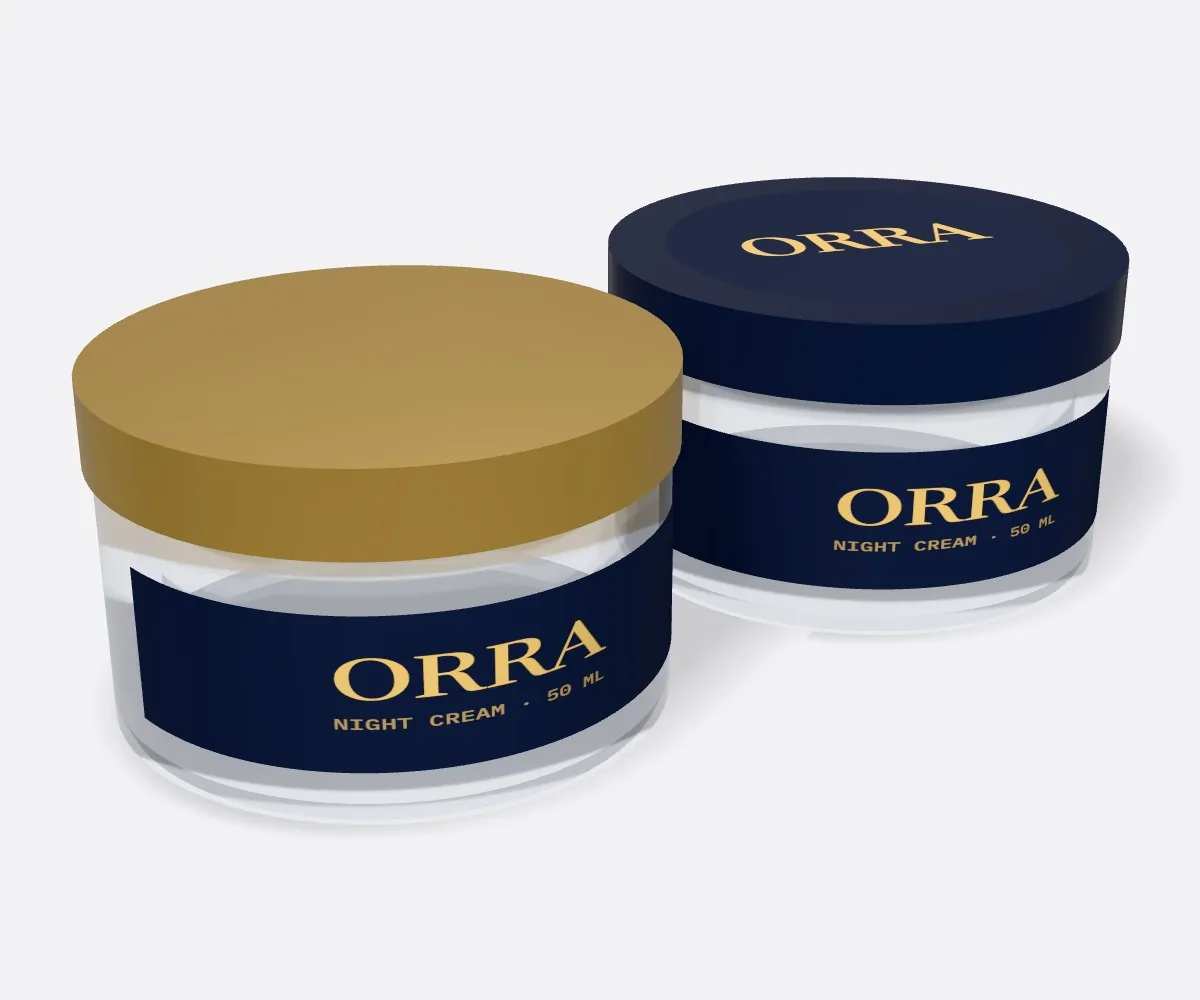
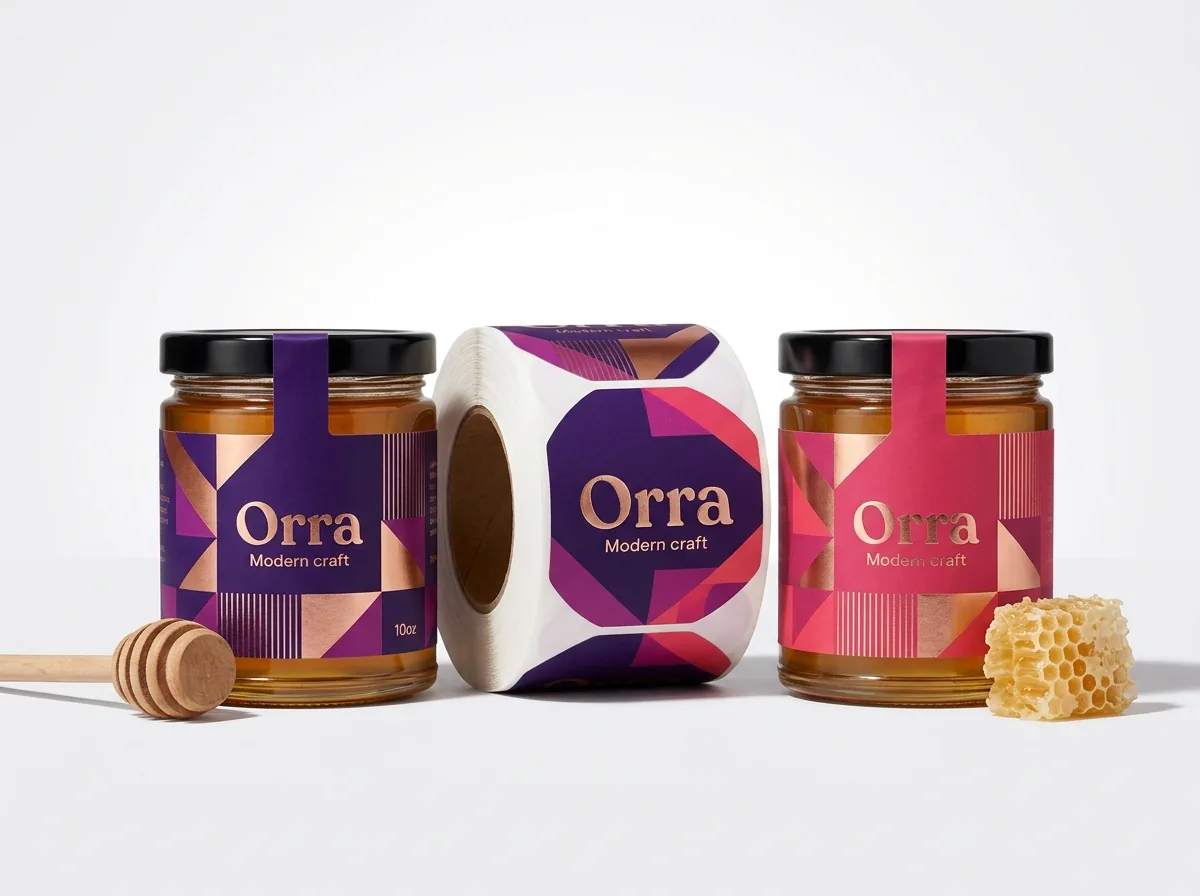
Picking between clear and opaque honey labels comes down to the color of your honey and how your jars are handled during bottling and retail display. Transparent clear labels give glass queenline, hex and round jars a clean no-label look where the liquid honey itself becomes the background color behind your typography. That works beautifully when you pair dark ink with pale clover, acacia or orange blossom honey, or when you print opaque white or metallic gold ink over darker amber wildflower honey. Opaque paper, film and foil stocks provide a solid, predictable backdrop behind small nutrition text, origin notes and barcodes regardless of how dark or crystallized the honey inside looks, and we confirm the exact stock options with your quote. When you order custom printed honey labels from CubitPack, our prepress team sends a free digital proof and 3D mockup on your jar before you pay.
How do clear, opaque and metallic foil honey labels compare?
Shoppers buy honey with their eyes first: they hold the glass jar up to the light to see whether the harvest is pale water-white clover, golden summer wildflower, or rich espresso-colored buckwheat. Your label stock either lets that natural color shine directly through the artwork or frames it with a contrasting paper or metallic border. Use the side-by-side table below to compare our decided clear and foil label options alongside opaque stocks across shelf look, ink contrast, bottling wipe-down and container flexibility. Remember that any stock can be cut to rectangles, ovals, hexagons or lollipop lid seals with zero die charges.
| Label stock type | Shelf look on honey jars | Best honey styles & containers |
|---|---|---|
| Clear labels (decided) | Transparent no-label window showing liquid honey color | Light clover, acacia, orange blossom and cut-comb glass jars |
| Clear + white ink or foil | Crisp white or metallic lettering floating over amber honey | Medium wildflower, sourwood, tupelo and infused hot honey |
| Foil labels (decided) | Full metallic gold, silver or copper sheen | Reserve harvests, mead-ery gift jars, holiday comb honey |
| Opaque white / cream | High-contrast solid panel for fine text and floral art | Dark buckwheat, avocado, forest honey and whipped honey tubs |
| Textured / kraft look | Warm apothecary or farmers market craft aesthetic | Raw unfiltered honey, bail-wire jars and corked muth bottles |
| Squeeze-friendly film | Flexible face that bends without creasing | 8 oz, 12 oz and 24 oz plastic honey bears and squeeze bottles |
How does honey color affect ink readability on clear labels?
Honey spans seven official USDA color grades, from Water White and Extra White all the way to Amber and Dark Amber. If you print a transparent clear label using only black or dark brown ink, that lettering looks razor-sharp against pale spring clover or basswood honey, but it will nearly vanish against dark fall goldenrod, tulip poplar or buckwheat honey. To make a clear label work across darker varietals, you have two clean design options. First, print your lettering and bee illustration in opaque white ink or hot-stamped metallic gold foil so the light typography pops against the dark amber background. Second, add a solid white or warm cream badge behind just the nutrition facts, barcode and net-weight block while leaving the outer honeycomb border transparent. You can explore more transparent applications on our custom clear labels page.
- Pale honeys (Clover, Acacia, Fireweed, Orange Blossom, 0–34 mm Pfund): dark charcoal, espresso brown, navy or forest green ink reads cleanly on clear stock.
- Medium amber honeys (Wildflower, Sourwood, Alfalfa, 35–85 mm Pfund): combine a solid cream center ribbon with clear outer edges, or use bold white + gold ink.
- Dark honeys (Buckwheat, Chestnut, Bamboo, Forest, 86–140 mm Pfund): use opaque white ink, metallic gold foil stamping, or a solid cream/white label stock.
- Creamed or crystallized honey: opaque pale honey makes dark ink pop on clear labels, whereas white ink will blend into the pale crystals.
- Barcodes on clear labels: always place a solid white rectangle behind UPC barcodes so retail scanners can read the contrast.
When should I add foil stamping, matte or gloss finishes?
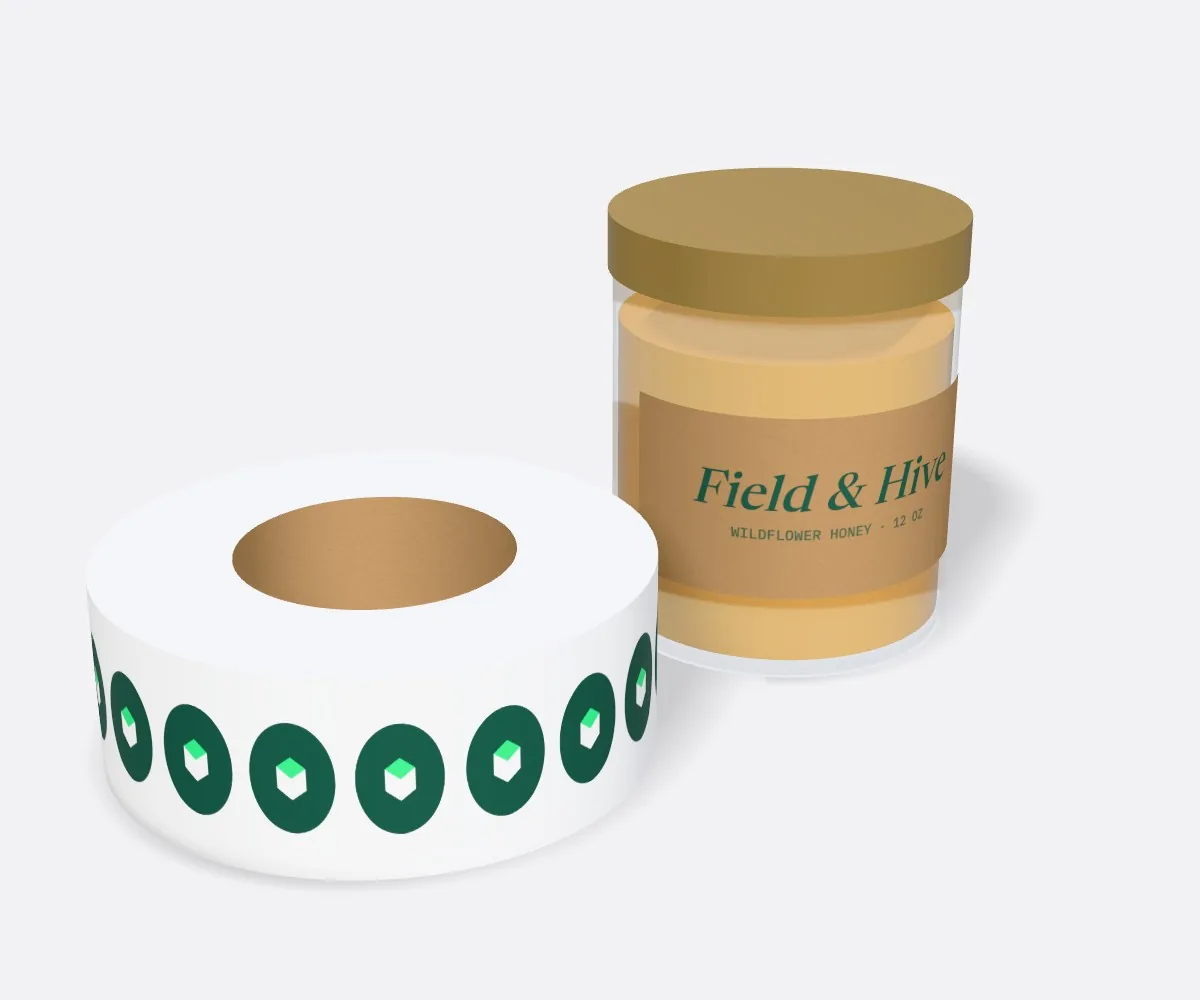
Few grocery products pair as naturally with gold foil as honey. A subtle rim of hot-stamped gold foil around a hexagon border or a metallic gold bee emblem immediately echoes the warm amber glow inside the jar. You can achieve a metallic look in two ways: start with a full custom foil labels base stock and print color over sections of it, or start with a matte or clear label and add hot foil stamping only where you want the metal to catch the light. For surface protection, a matte finish cuts down overhead glare at outdoor farmers markets and gives raw artisanal honey a soft, velvety feel. A gloss finish deepens rich botanical colors and makes liquid honey jars gleam under supermarket shelf lighting. You can even combine a matte background with raised spot UV arranged in a hexagonal comb pattern so customers feel the honeycomb texture when they pick up the jar. Whether you choose matte or gloss, the top finish also helps protect the printed ink from scuffing when glass jars rub against cardboard dividers inside twelve-jar shipping cases.
Know your size? Compare pricing across up to 3 quantities.
Request a Quote →Which honey label holds up to bottling drips, warm water and squeezing?
Filling honey jars is sticky work. Even with a clean bottling gate valve, occasional honey threads land on the outside of the jar and need to be wiped off with a warm, damp rag before packing cases. Similarly, customers who buy chili-infused hot honey or 12 oz plastic honey bears squeeze the bottle with buttery or sticky fingers at the kitchen table week after week. When you request your quote for honey jar and bear labels, tell your account manager whether you pack in rigid glass jars or flexible plastic squeeze bottles and whether you wash or wipe filled jars after labeling. We pair your order with a protective matte or gloss finish and recommend the right stock and adhesive so edges stay flat on curved glass and squeezed PET panels without flagging, bubbling or smearing.
What if my apiary customers return or reuse glass honey jars?
Many local beekeepers and farm stands run a jar-return deposit program or encourage customers to reuse their glass queenline and mason jars once the honey is gone. At the same time, commercial packers selling through grocery stores and gift shops need permanent adhesion so labels never flag in humid summer warehouses or cold winter storage. If easy wash-off removal is important for your apiary, note that in your quote request. Another popular approach for returnable glass jars is to keep the main glass wall bare or use a small front badge, and put the seasonal harvest details on a lollipop lid-and-neck seal that comes off with the disposable metal lug cap when the customer opens the jar at home.
- Retail grocery distribution: use permanent adhesive so labels stay bonded through warehouse temperature swings.
- Farmers market jar-return programs: ask about removable adhesive options or lid-focused labeling.
- Plastic honey bears: pair flexible label stock with squeeze-tested adhesive inside the recessed belly window.
- Sample before committing: order our $50 sample kit or a printed sample run to test adhesion on your exact glass mold.
What are the most common honey label material mistakes?
Choosing the wrong combination of ink color, stock transparency and finish can make fine text unreadable on the shelf. Watch out for these five pitfalls
- Printing dark black or brown text on a clear label over dark buckwheat or fall wildflower honey without a white or cream backing.
- Printing white ink on a clear label over pale creamed honey or spun crystallised honey, where white lettering blends into the pale background.
- Placing a retail UPC barcode directly on transparent clear stock without a solid white rectangle behind the bars.
- Using stiff, un-laminated paper on plastic squeeze bears that flex repeatedly at the table.
- Forgetting to mention warm-water wipe-downs or honey-drip cleaning in the quote notes.
Find your label size
Suggested label size: 9⅛ × 2¾ in (width × height)
A typical starting point. Your account manager confirms the size on the proof.
Quote this size →Packaging for this
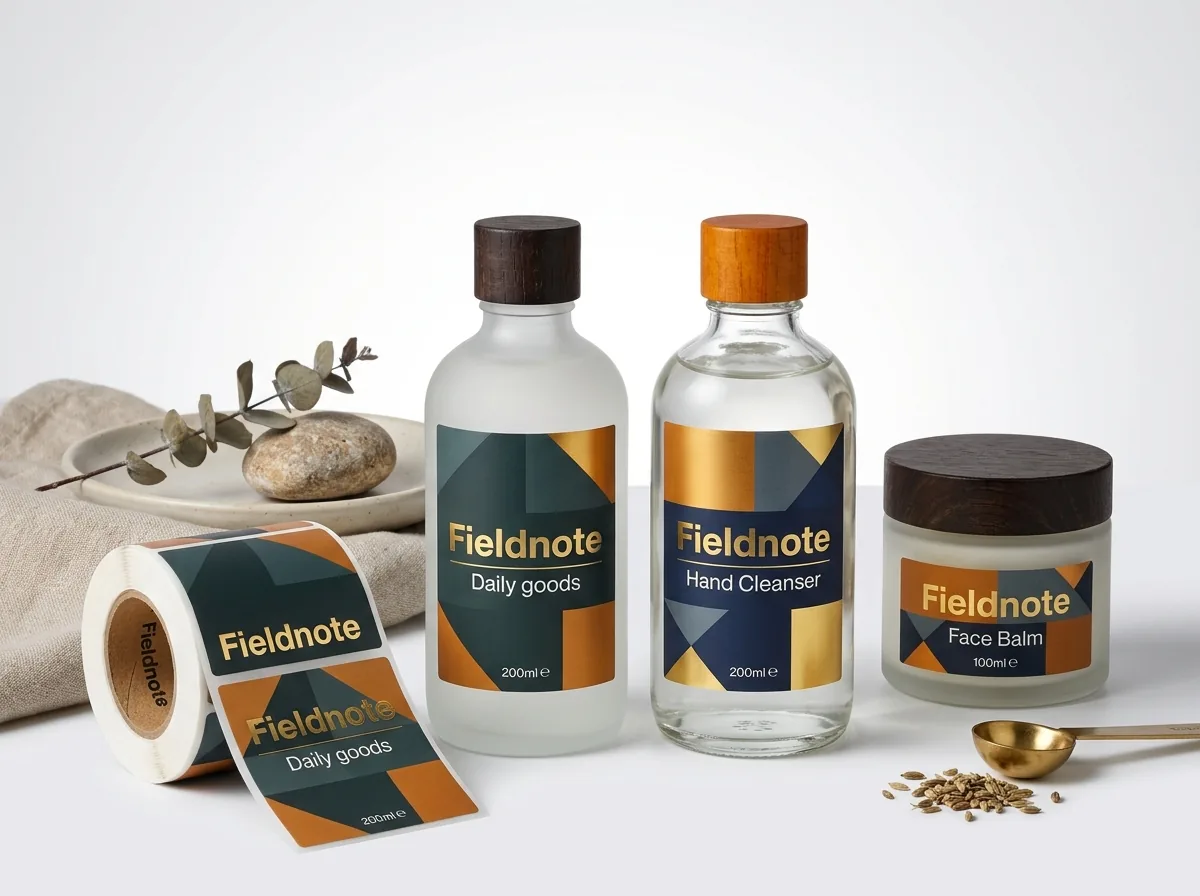
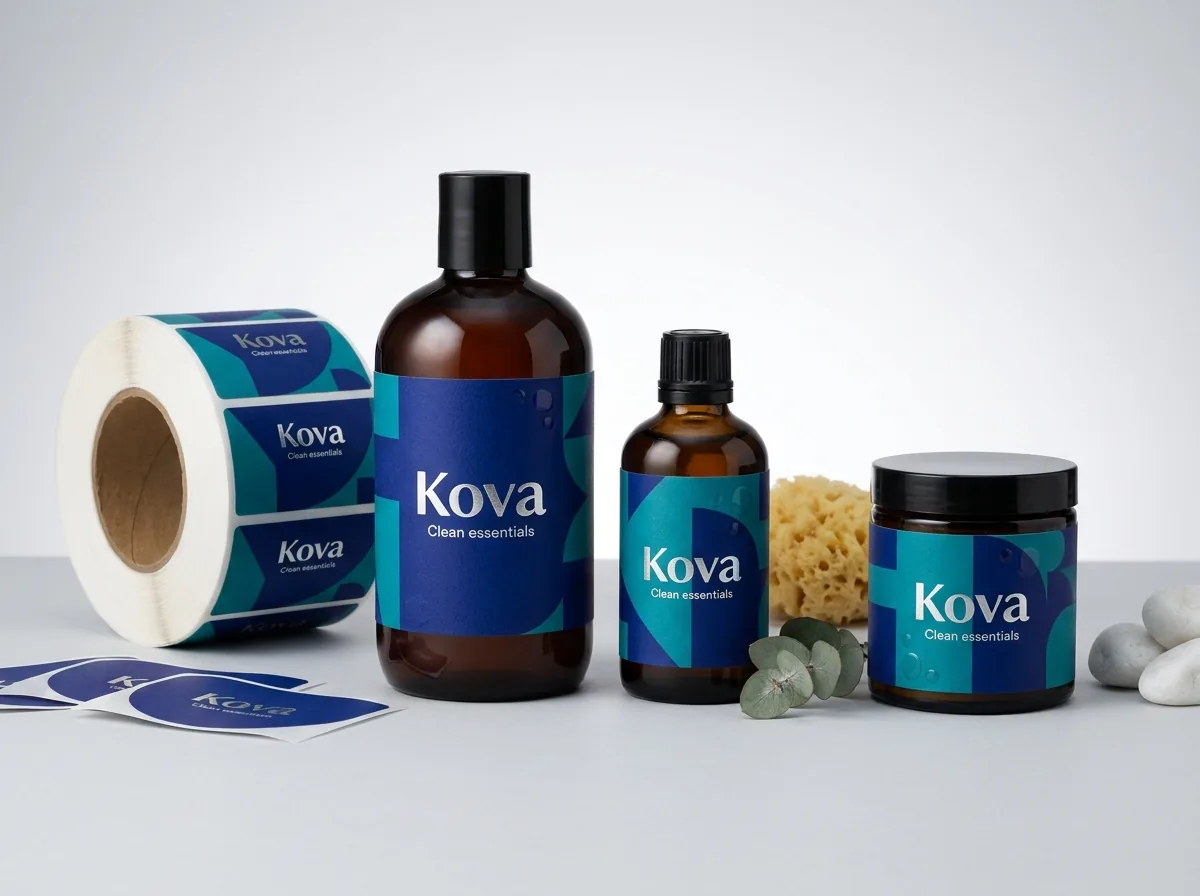
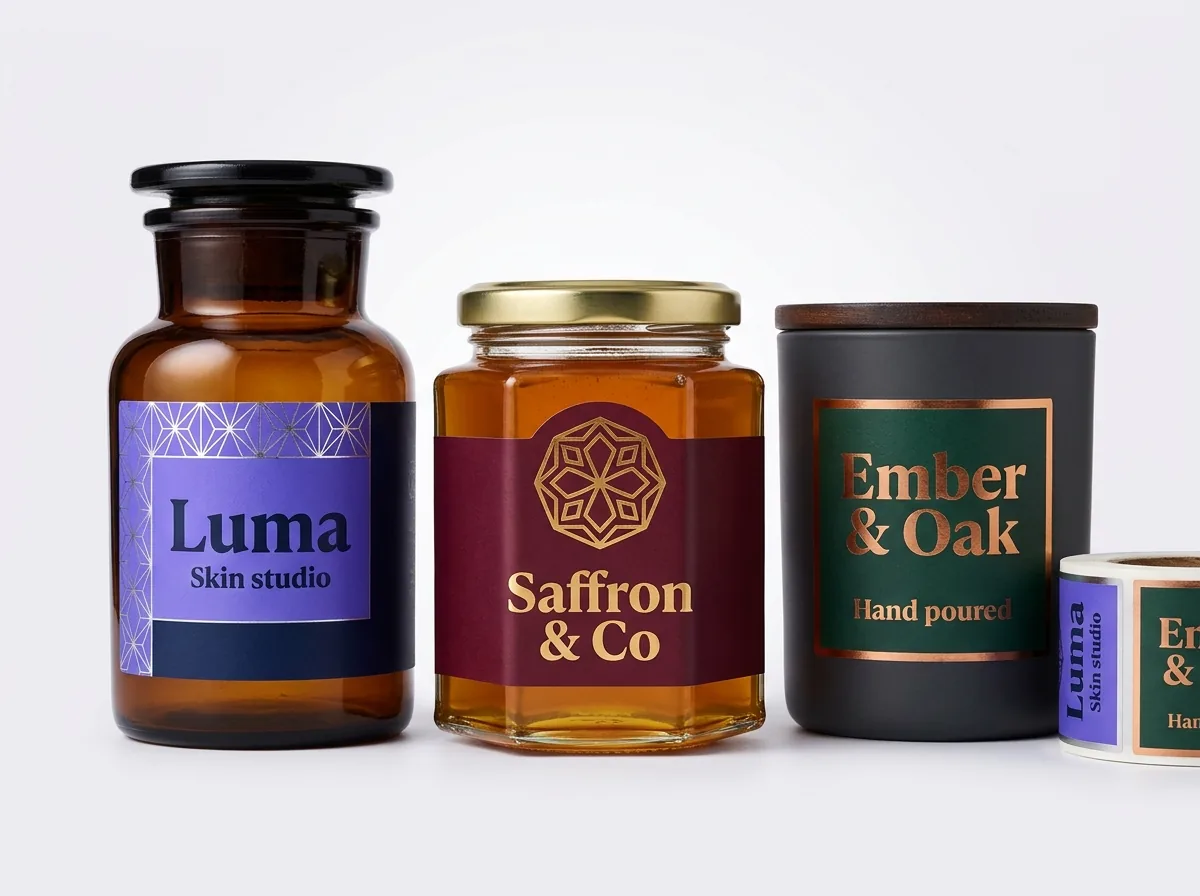
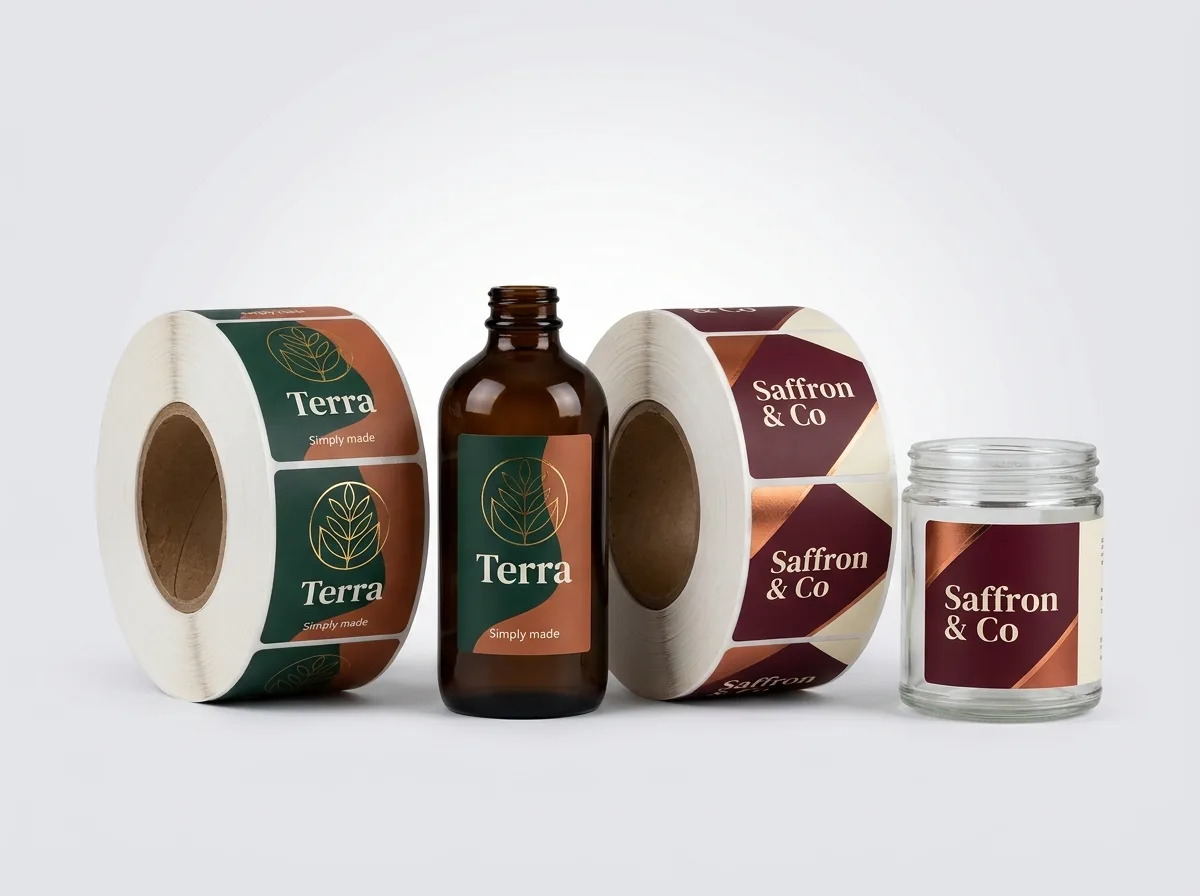
Ready to order honey labels? Compare up to 3 quantities with a free 3D mockup.
Request a Quote →Questions about honey labels
Do clear honey labels cost more than standard opaque labels?
Clear and metallic foil label stocks typically cost slightly more than standard opaque label stock because of the specialty film base and optional white ink layer. In our quote form, you can ask your account manager to price both clear and opaque options side by side.
Can you print opaque white ink on a clear honey label?
Yes. We print crisp white ink on clear labels either as the main text color over medium-to-dark honey or as a solid underbase layer beneath colored illustrations, logos and UPC barcodes so the honey color does not shift your artwork.
Should I choose a matte or gloss finish for my honey jar labels?
Choose a matte finish if you want a warm, non-reflective craft look that stays easy to read in bright sunlight at outdoor farmers markets. Choose a gloss finish if you want maximum shine and deep color saturation on glass retail jars.
Can I combine gold foil stamping with a clear or matte honey label?
Yes. Hot gold foil stamping pairs with both matte labels and clear labels. Many honey brands use a matte charcoal, forest green or cream label with a gold-foiled bee emblem, or a clear label with gold foil and white lettering.
How can I see what a clear label will look like against my honey color?
Before you pay for your order, our design team prepares a free digital proof and a 3D mockup mapped onto your jar with your honey shade inside. You can also order our $50 sample kit to feel our label materials and finishes in person.
What is the minimum order for clear or foil honey labels?
Our standard minimum is 500 labels per order across all formats and finishes, with smaller trial runs considered case by case. Production takes 10–14 business days (with 4–5 day rush available) and includes free shipping to all 50 US states.
Still have a question? Ask a packaging specialist.
Request a Quote →Request your honey labels quote
Tell us your size and quantities, and one dedicated account manager prepares pricing for each tier.
- Free design & AI-to-print studio + 3D mockup
- No die or plate charges · 4–5 day rush available
- Free shipping to all 50 states
- 10% off your first order
This comparison draws on CubitPack's decided label formats and finishes (clear, foil, matte, gloss, foil stamping, spot UV) and USDA honey color grade contrast principles. A packaging specialist reviewed every recommendation. Spot something wrong? Tell us and we will fix it.
Sources
What changed
- October 22, 2026: First published.
- October 22, 2026: Updated specifications, terminology, and verified source links.
More guides
New packaging guides by email
Sizes, materials and design tips. Unsubscribe anytime.