
How do I design custom honey jar labels and tamper-evident lid seals?
Short answer: Put your apiary name, floral source and net weight (in both ounces and grams) on the front panel, and move nutrition facts, packer address and infant safety text to the back or side. Pair a shared front design on your custom honey labels with a color-coded lollipop lid seal for each harvest.
On this page
- What information belongs on the front, back and lid of a honey jar
- How do I design a lollipop tamper-evident lid label for honey jars
- How can I use one master label across multiple floral harvests
- How do I set up bleed, safe margins and AI illustrations for printing
- What affects the price of custom honey labels and how do I save
- Common mistakes
- FAQs
Request a custom quoteFree dieline & 3D mockup
A strong honey label balances warm shelf appeal with clean, uncluttered information hierarchy. Because honey jars are narrow and often curved or faceted, crowding every word onto a single small front sticker makes the jar look busy and hides the golden liquid honey inside. Instead, divide your layout into three distinct zones: a front display panel with your brand mark, floral varietal (such as Raw Wildflower Honey) and net weight in the lower 30%; a back or side panel with your apiary address, nutrition facts, barcode and infant feeding note; and a round lid label or lollipop tamper strip on the cap. At CubitPack, our designers help you set up dielines, ⅛ inch bleed and lollipop tamper contours on custom printed honey labels for free, and you check a digital proof and 3D mockup on your jar before paying.
What information belongs on the front, back and lid of a honey jar?
Whether you sell 500 jars at a regional farmers market or ship cases to specialty grocers, organizing your text into clear zones keeps the front panel clean and readable from five feet away. On US retail food packages, the front Principal Display Panel carries the statement of identity (for example, Pure Honey or Raw Clover Honey) and the net weight expressed in both avoirdupois ounces/pounds and metric grams (such as Net Wt 16 oz (1 lb) 454 g). Secondary details like your apiary name and street address, nutrition panel, barcode, storage tip (that crystallization is natural and reverses in warm water) and the standard warning against feeding honey to infants under one year of age belong on a back label, on the side wing of a wrap label, or on a bottom sticker. Check your state's cottage-food or apiary rules for any local floral-origin or grade wording.
| Label zone | What to include | Design & typography tip |
|---|---|---|
| Front panel (top & center) | Apiary logo, product name (Raw Honey), floral source | Keep 30–40% open space or clear window so honey shows |
| Front panel (bottom 30%) | Net weight in oz/lb and grams (e.g., Net Wt 16 oz (1 lb) 454 g) | Set parallel to the jar base in bold, high-contrast type |
| Back panel or wrap wing | Nutrition facts, packer name & address, infant warning, barcode | Use at least 6 pt type on a solid light or high-contrast panel |
| Lid circle or lollipop top | Floral varietal color badge, harvest season or apiary emblem | Lets shoppers spot Clover vs Wildflower from above in crates |
| Lollipop neck strip | Tamper-evident security tab bridging cap rim and glass neck | Size the strip 0.5–0.75 in wide so it hugs the neck curve |
| Bottom jar sticker (optional) | Batch/lot number, harvest year or crystallization care note | Keeps technical batch codes off your main front display face |
How do I design a lollipop tamper-evident lid label for honey jars?
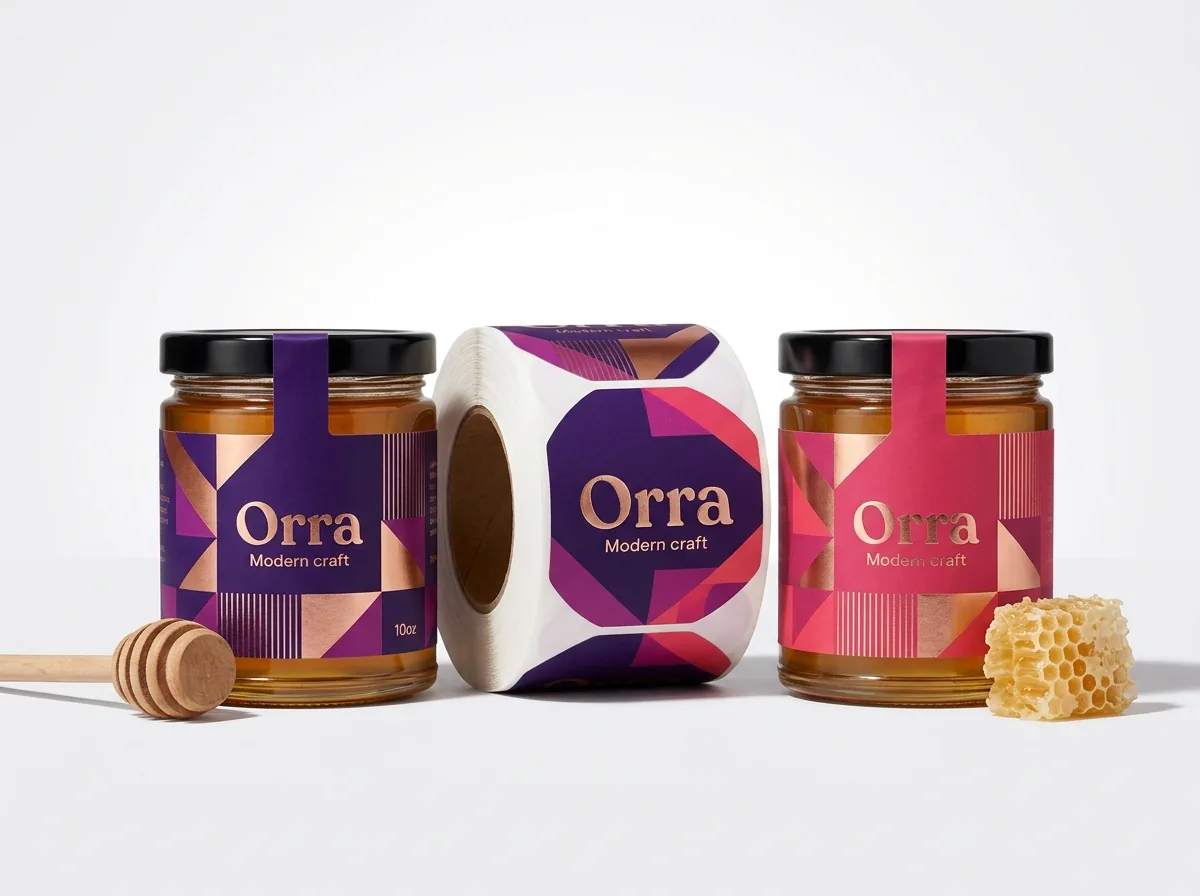
A lollipop label (named for its round head and straight stick) solves two jobs with a single sticker: it brands the top of your metal lug cap and acts as a tamper-evident security seal down the side of the jar neck. Instead of buying shrink bands and running a heat gun over every filled jar, you simply press the circle onto the center of the lid and smooth the attached tail down over the cap edge onto the glass shoulder. To set up a lollipop dieline, measure the flat inner circle of your lid (typically 1.5 in for 58 mm caps or 2 in for 70 mm caps) and connect a 0.5 to 0.75 inch wide rectangular strip extending 1.25 to 1.75 inches from the bottom of the circle. Put your bee icon or floral variety name inside the round top, and place a short line like Sealed for Purity or 100% Raw & Unfiltered vertically along the strip. Because CubitPack charges zero die fees on custom shape labels, a lollipop contour costs no more to tool than a plain circle.
- Round head: keep text and circular borders ⅛ inch inside the circle cut line.
- Bridge zone: avoid tiny text right where the paper bends 90 degrees over the metal cap rim.
- Neck tail: round the bottom corners of the rectangular tail so it does not catch on fingers.
- Two-leg strip option: add a short strip on both the left and right sides of the circle for double-sided tamper security.
How can I use one master label across multiple floral harvests?
Most small and mid-size apiaries harvest different floral nectars from spring through autumn: dandelion and fruit tree blossom in early spring, clover and basswood in summer, and goldenrod, aster or buckwheat in the fall. You might also whip a batch of creamed honey or infuse a batch with chili peppers or lavender. Ordering a completely separate front label run for six micro-lots can stretch your budget. A smarter modular system uses one universal front label across every jar of the same size (printed with your apiary brand, Pure Raw Honey, net weight and back panel info), paired with variety-specific lollipop lid seals or small strip badges. By changing only the color and floral name on the lid sticker (for example, sage green for Basswood, warm gold for Wildflower, burgundy for Buckwheat), you keep one large, low-cost roll of front honey jar labels and swap lid seals per harvest.
Know your size? Compare pricing across up to 3 quantities.
Request a Quote →How do I set up bleed, safe margins and AI illustrations for printing?
Whether you draw your label in Adobe Illustrator, lay it out in Canva, or generate a botanical honeycomb illustration with an AI image tool, three prepress details keep your finished stickers sharp. First, extend any background color, kraft texture or illustration ⅛ inch (0.125 in) past the cut line on all sides as bleed so no white sliver appears at the edge. Second, keep all text, borders and net-weight lines at least ⅛ inch inside the cut line in the safe zone. Third, make sure small ingredient and address text is set as crisp vector type rather than a low-resolution raster image, and convert all fonts to outlines before exporting a PDF. If you generated a vintage engraving or watercolor bee scene with AI, send it through our Print your AI design service or attach it to your quote: our prepress team upscales the artwork, rebuilds blurry AI text in clean vector fonts, and draws the custom cut line at no extra charge.
What affects the price of custom honey labels and how do I save?
Four main factors drive your quote: the square inches of material per label, total quantity ordered, material stock (clear or foil vs standard stock), and decorative finishes like hot foil stamping or spot UV. Because press setup spreads across the run, ordering 1,000 or 2,500 labels drops the unit price substantially compared with a 500-label minimum run. To keep your cost per jar low without sacrificing shelf presence, standardize on one jar size for your core line so all varieties share one dieline, and request three quantity tiers (such as 500, 1,000 and 2,500) in our quote form to see the volume breaks. If you also sell gift sets or ship glass jars by mail, we can match your Pantone label colors to custom honey boxes in the same order.
- Zero tooling fees: custom arches, hexagons and lollipop tamper seals have no die or plate charges.
- Multi-SKU runs: select 2 designs or 3+ designs in the quote form to group your floral varieties together.
- First-order savings: take 10% off your first CubitPack order, plus free shipping across all 50 US states.
- Price beat guarantee: we beat any written quote from a US competitor for the same specifications.
What are the most common honey label design mistakes?
A few avoidable artwork errors can slow down proofing or hurt shelf readability. Check these five items before sending your file
- Listing net weight only in ounces without metric grams (or listing fluid ounces instead of net weight on a honey jar).
- Putting a thin decorative border 1/32 inch from the cut edge, where normal die-cutting tolerance makes one side look narrower.
- Placing critical harvest text right across the 90-degree cap-rim bend of a lollipop tamper seal.
- Leaving AI-generated gibberish or rasterized small text in an illustration instead of replacing the typography with clean vector fonts.
- Crowding the apiary story, recipes, barcode and nutrition panel onto a narrow 2 inch front label instead of splitting front and back.
Find your label size
Suggested label size: 9⅛ × 2¾ in (width × height)
A typical starting point. Your account manager confirms the size on the proof.
Quote this size →Packaging for this
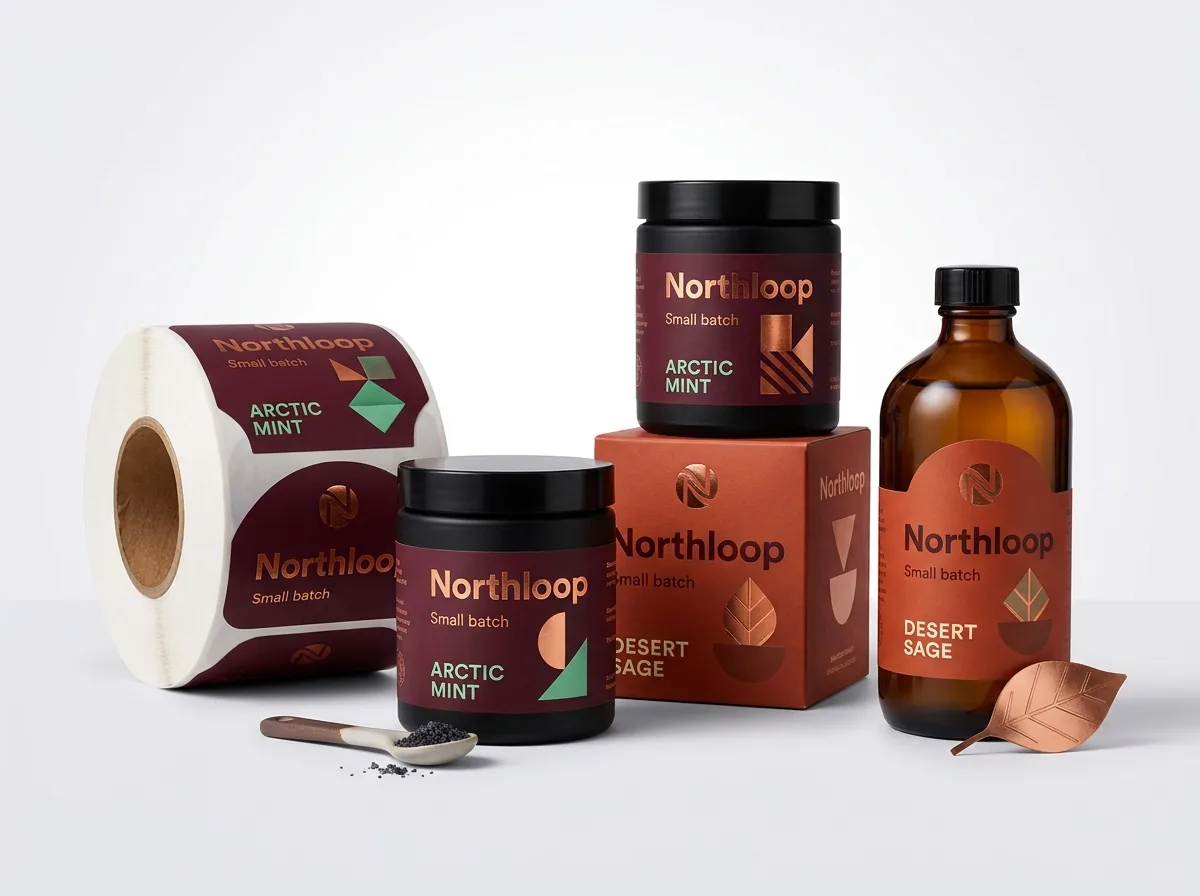
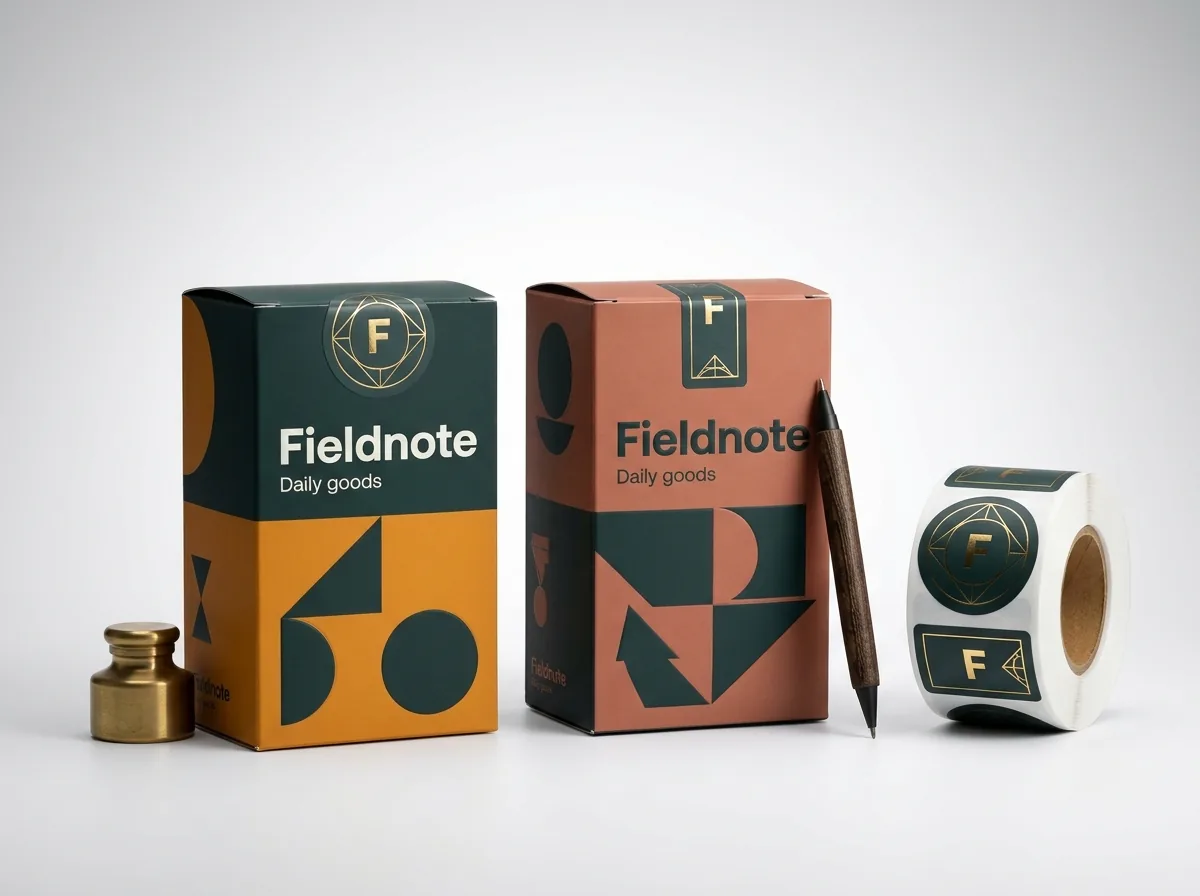
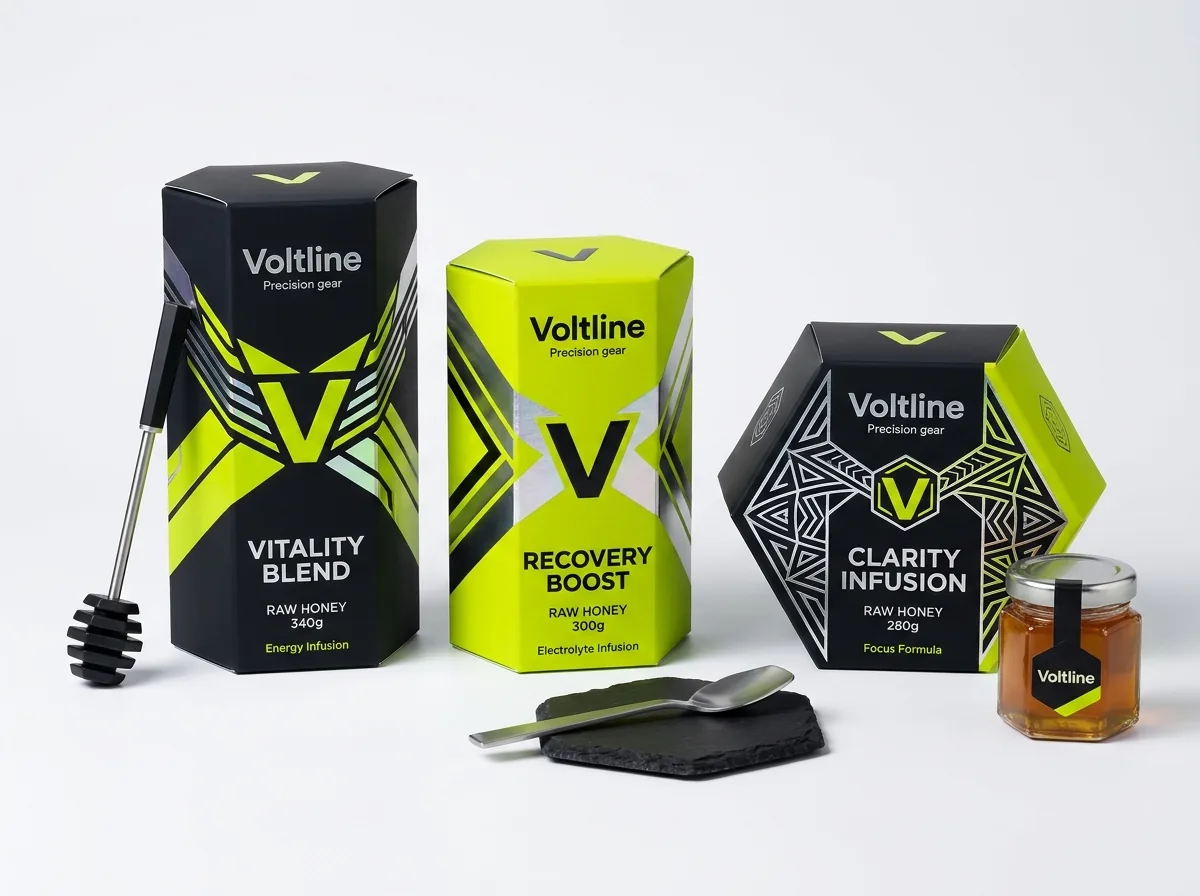
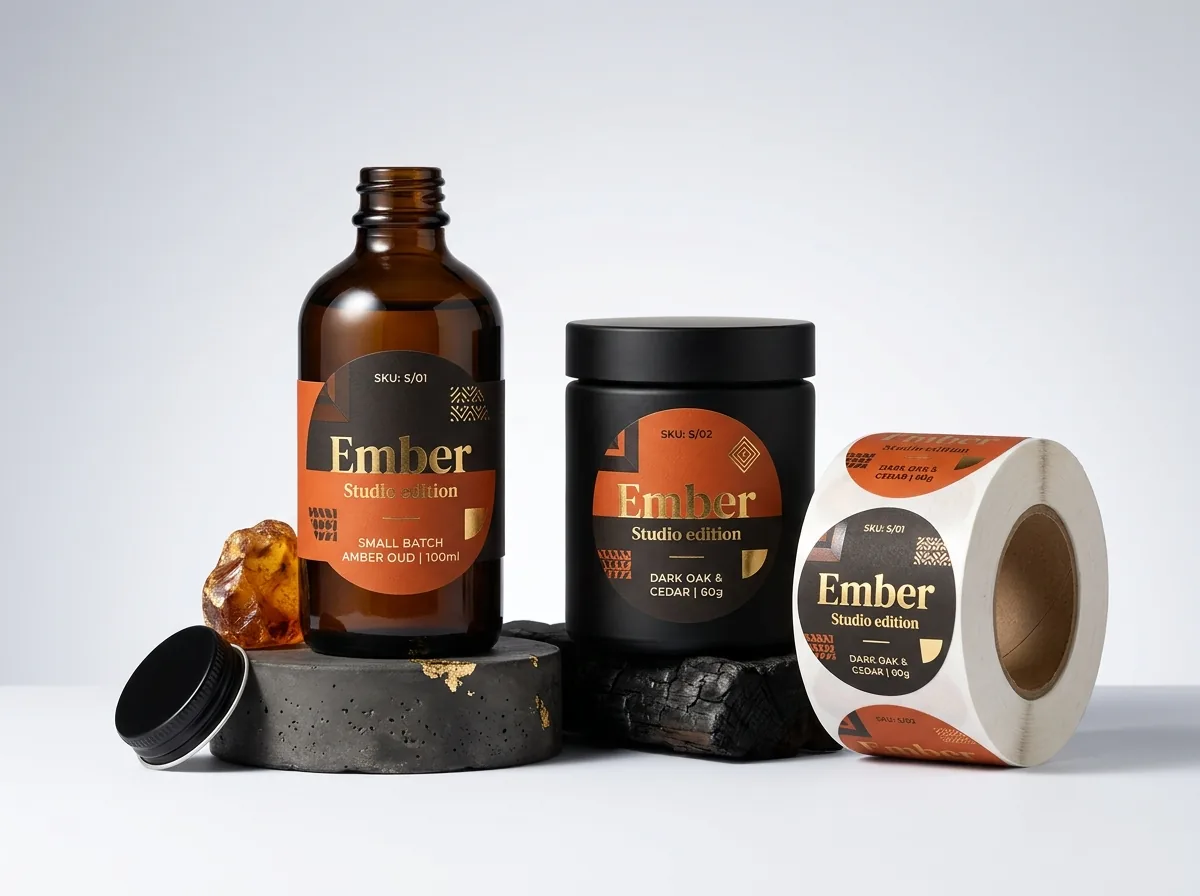
Ready to order honey labels? Compare up to 3 quantities with a free 3D mockup.
Request a Quote →Questions about honey labels
How do I write the net weight on a 1 lb or ½ lb honey jar label?
On US retail honey jars, write the net weight in both avoirdupois ounces (and pounds for 16 oz or more) and metric grams in the bottom 30% of the front panel. For example, write Net Wt 8 oz (227 g) on a half-pound jar and Net Wt 16 oz (1 lb) 454 g on a one-pound jar.
Do I need a separate shrink band if I use a lollipop honey lid label?
In most cases, no. A one-piece lollipop label sticks to the top of the lid and extends down over the cap skirt onto the glass neck, so twisting the cap tears or lifts the paper or film strip. Always verify whether your wholesale buyer prefers a paper tamper strip or a heat-shrink band.
Can CubitPack set up the lollipop dieline if I only have a logo and text?
Yes. Design help and custom dielines are free with every order. Tell us the diameter of your jar lid and how far down the glass neck you want the security tab to reach, and our designers build the cut line and 3D mockup before you pay.
What file format should I upload for custom honey labels?
Vector files such as PDF, AI, EPS or SVG with outlined fonts give the sharpest print results for small nutrition and address text. High-resolution PNG, PSD or TIFF files (300 DPI at full print size) also work, and our team can clean up or vectorize your file for free.
Can you print an AI-generated bee or honeycomb illustration on my label?
Yes. Send us your AI image and our prepress team will upscale the resolution, add the ⅛ inch bleed, draw a smooth custom cut line, and replace any blurry AI lettering with crisp, readable typography on your digital proof.
How many floral varieties can I include in a single honey label order?
You can include as many varieties as you need. Pick 2 designs or 3+ designs in Step 2 of the quote form and list each varietal and quantity in the notes so your account manager quotes the entire set together.
Still have a question? Ask a packaging specialist.
Request a Quote →Request your honey labels quote
Tell us your size and quantities, and one dedicated account manager prepares pricing for each tier.
- Free design & AI-to-print studio + 3D mockup
- No die or plate charges · 4–5 day rush available
- Free shipping to all 50 states
- 10% off your first order
This design guide combines US food package layout conventions (21 CFR 101 net weight placement), CubitPack's ⅛ inch bleed and safe-margin prepress standards, and lollipop tamper-seal dieline geometry. A packaging specialist reviewed every section. Spot something wrong? Tell us and we will fix it.
Sources
What changed
- October 22, 2026: First published.
- October 22, 2026: Updated specifications, terminology, and verified source links.
More guides
New packaging guides by email
Sizes, materials and design tips. Unsubscribe anytime.