
How do I seal heavy shipping boxes: single-strip paper tape vs H-taping?
Short answer: With 2 inch plastic tape, boxes over 20 pounds require H-taping (sealing the center seam plus both open edge seams on top and bottom, using six strips total). With 3 inch fiberglass-reinforced water-activated custom packaging tape, a single center strip on top and bottom securely seals cartons up to 50–65 pounds.
On this page
- How much tape does H-taping consume compared to single-strip sealing
- What carton weight requires reinforced tape, H-taping or double-wall boxes
- How do you apply a single-strip water-activated seal so it never lifts
- When you use plastic tape on heavy boxes, what is the right H-taping sequence
- What drives the total cost per sealed carton at your packing station
- Common mistakes
- FAQs
Request a custom quoteFree dieline & 3D mockup
When a heavy corrugated shipping box drops onto a parcel chute, the contents push outward against both the long center seam and the two shorter outer flap edges. If you seal with narrow 2 inch pressure-sensitive plastic tape, a single strip down the center allows the flaps to slide sideways and shear open, so parcel carriers require H-taping (three strips on top and three on the bottom in the shape of a capital letter H) for heavy cartons. By contrast, a 3 inch strip of fiberglass-reinforced water-activated paper tape bonds directly into the corrugated linerboard across a wide path and locks the major flaps together so they cannot rack sideways. That lets fulfillment teams seal cartons up to 50 or 65 pounds using only two strips per box instead of six, cutting tape yardage and operator wrist motions by more than half.
How much tape does H-taping consume compared to single-strip sealing?
Many brands assume plastic tape is always cheaper per box because a single roll of plastic tape has a lower ticket price than a roll of fiberglass-reinforced paper tape. However, unit price per roll is only half the equation; the real number that governs your packaging budget is total inches of tape consumed per shipped carton. Consider a standard 18 × 12 × 12 inch regular slotted carton (RSC). A single-strip closure with 3 inch water-activated paper tape uses one 24 inch strip on top (18 inches plus two 3 inch overhangs) and one 24 inch strip on the bottom, totaling 48 inches per box. An H-tape closure with plastic tape requires those same two 24 inch center strips plus four edge strips across the 12 inch width (each 12 inches plus 4 inches of corner wrap, or 16 inches × 4 = 64 inches), totaling 112 inches per box, which is more than double the yardage. When ordering custom branded packaging tape, single-strip sealing also keeps your logo centered and clean instead of crisscrossed by side strips.
| Carton size (L × W × H) | Single-strip WAT (2 strips total) | H-taped plastic (6 strips total) |
|---|---|---|
| 12 × 9 × 6 in | 36 in (1.0 yd) per box | 88 in (2.44 yd) per box |
| 16 × 12 × 10 in | 44 in (1.22 yd) per box | 108 in (3.0 yd) per box |
| 18 × 12 × 12 in | 48 in (1.33 yd) per box | 112 in (3.11 yd) per box |
| 20 × 16 × 14 in | 52 in (1.44 yd) per box | 132 in (3.67 yd) per box |
| 24 × 18 × 18 in | 60 in (1.67 yd) per box | 148 in (4.11 yd) per box |
What carton weight requires reinforced tape, H-taping or double-wall boxes?
Matching your closure method to filled carton weight prevents burst seams without over-specifying light parcels. Under 20 pounds, either a single strip of 2.75 inch non-reinforced water-activated paper tape or a single center strip of 2 inch pressure-sensitive plastic tape (with 3 inch end overhangs) holds standard single-wall cartons securely. Between 25 and 50 pounds, switch to 3 inch fiberglass-reinforced water-activated paper tape for single-strip sealing, or apply a full 6-strip H-seal if your warehouse uses handheld plastic tape guns. Above 50 pounds, pair custom double wall boxes and custom box inserts with heavy-duty reinforced water-activated tape, and for dense hardware or liquid jugs over 60 pounds, apply an H-seal even with reinforced paper tape so every edge seam is dust-sealed and reinforced.
How do you apply a single-strip water-activated seal so it never lifts?
A single-strip water-activated closure only reaches full ASTM strength when three bench habits are followed. First, check that the water reservoir and heater (if using an electric dispenser) are clean and full so the moistening brush wets 100 percent of the starch surface from edge to edge. If a brush has dried glue buildup on one side, that edge of the tape will stay dry and curl up in transit. Second, square the four box flaps tightly together before laying the strip centered over the seam. Third, wipe your palms firmly outward from the center of the box toward the ends and press the 3 inch overhangs straight down the vertical end panels. That single wipe forces the wet starch into the corrugated pores before the adhesive sets. Within seconds, the starch forms a fiber-tearing bond that holds even if the carton is stacked at the bottom of a pallet.
- Keep dispenser brushes clean: wash warm water over the moistening bristles weekly so dried starch never leaves dry streaks.
- Center the 3 inch strip: place 1.5 inches of tape width onto each major flap along the seam.
- Wipe once from center to ends: press the tape flat across the top, then fold and rub the 3 inch end tabs down the vertical walls.
- Never stack a second wet strip on top: one properly wetted reinforced strip is stronger than two unbonded layers.

Know your size? Compare pricing across up to 3 quantities.
Request a Quote →When you use plastic tape on heavy boxes, what is the right H-taping sequence?
When packing heavy custom shipping boxes with a handheld pressure-sensitive tape gun, order of application matters. Always apply the long center-seam strip first, folding 3 inches of overhang down both ends. Next, apply the two shorter edge strips perpendicular to the center strip along the open outer flap edges, overlapping the ends of your center strip by 2 to 3 inches down the side walls so the corners are locked in two directions. Press the tape gun's flexible wipe-down blade firmly along all three passes. Because pressure-sensitive acrylic and hot-melt adhesives rely on mechanical pressure to wet out microscopic valleys in the cardboard, rubbing the strip down after cutting doubles peel resistance. If your packers skip the side edge strips on a 40-pound carton sealed with 2 inch plastic tape, the flaps can rack diagonally when dropped on a corner.

What drives the total cost per sealed carton at your packing station?
Evaluating tape cost solely by roll price misses the three factors that actually determine cost per shipped order: inches used per box, operator seconds per box, and transit damage claims. Dispensing two push-button strips of water-activated paper tape takes roughly 4 to 5 seconds per carton, whereas pulling six manual strips with a handheld tape gun takes 12 to 15 seconds. Across 5,000 orders a month, saving 8 seconds per box recovers more than 11 hours of packing bench labor every month. At CubitPack, you can lower your roll cost further by choosing a clean 1-color Pantone print on natural kraft or white tape (with zero plate fees) and requesting three roll quantities (such as 72, 144 and 288 rolls) in the quote form to see volume breaks.
- Yardage per box: single-strip reinforced WAT uses 55 to 60 percent less tape length than a 6-strip H-seal on standard shipping cartons.
- Packing labor: one center strip per side cuts operator motions from six pulls to two and eliminates wrist fatigue from handheld guns.
- Ink & quantity breaks: 1 Pantone ink and higher case counts reduce the cost per yard while keeping every outgoing parcel branded.
- Lower transit damage: fiber-penetrating starch adhesive and three-way fiberglass reinforcement stop seam popping on parcel sorting chutes.
What are the most common mistakes when sealing heavy shipping cartons?
Most burst cartons in parcel networks trace back to improper tape application rather than defective cardboard. Avoid these five mistakes on heavy boxes
- Sealing a 45 lb carton with a single strip of narrow 2 inch plastic tape without H-taping the open outer flap edges.
- Leaving air voids at the top of a heavy box so the flaps cave inward and break the tape bond when another carton is stacked on top.
- Skipping the hand rub-down on water-activated or pressure-sensitive tape, leaving unbonded channels along the flap crease.
- Applying a crisscross 'X' of four strips across the middle of the flaps instead of anchoring the center seam and edge seams.
- Using non-reinforced paper tape on heavy metal hardware or glass bottle cases where fiberglass reinforcement is required.
Packaging for this
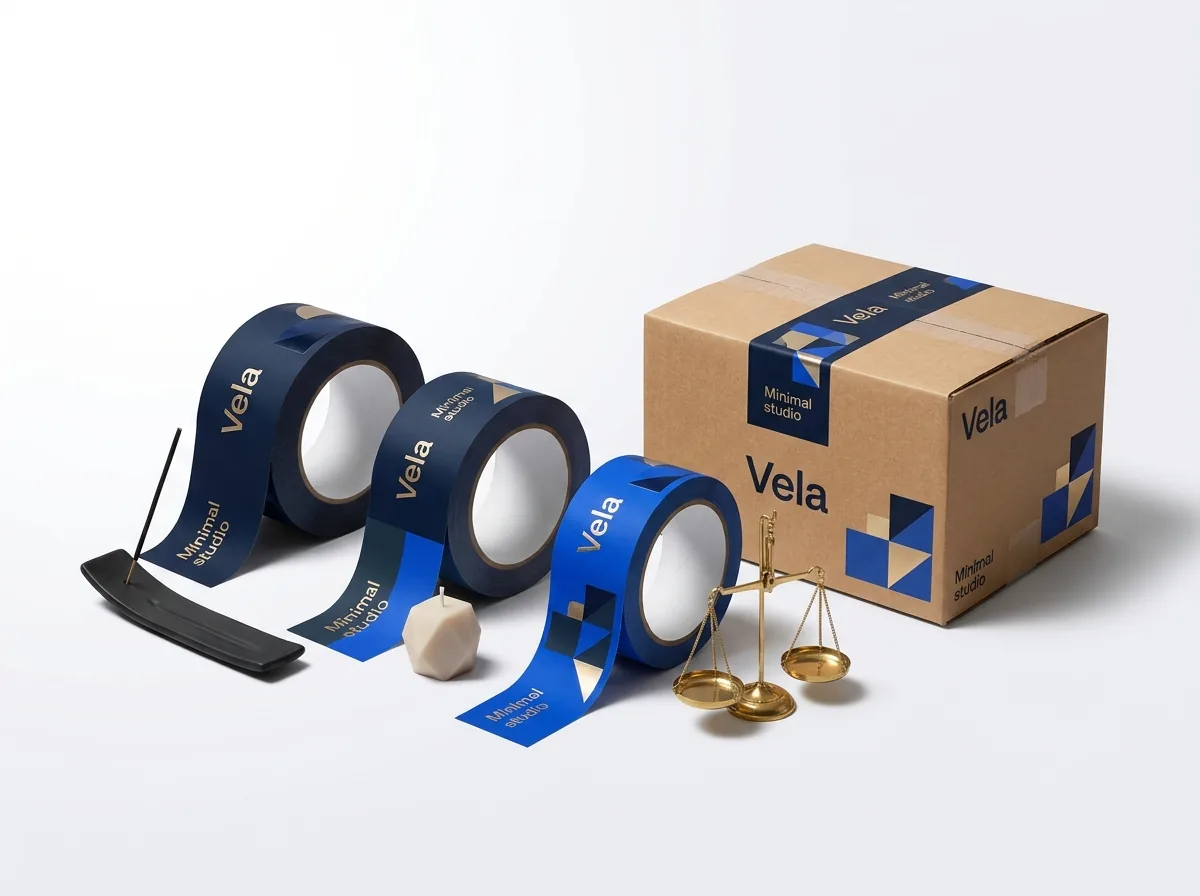
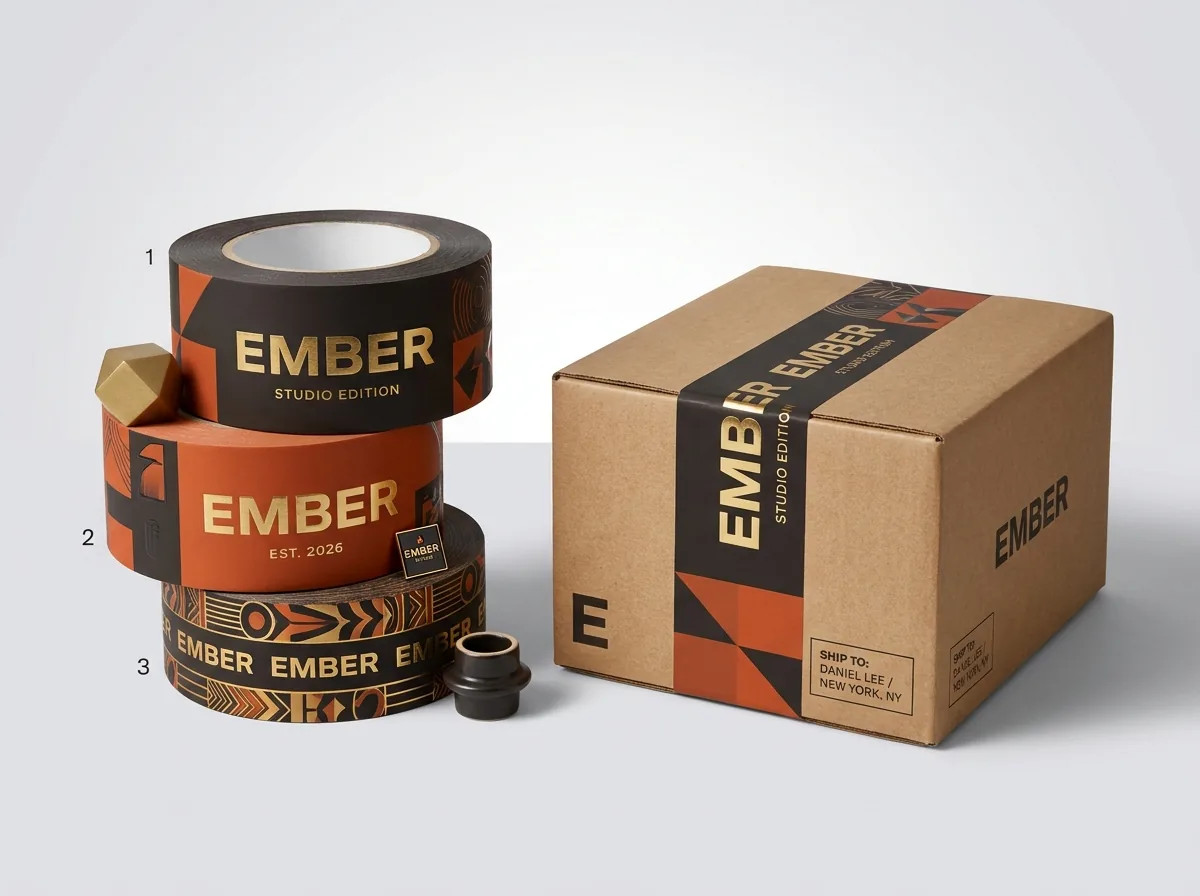



Ready to order packaging tape? Compare up to 3 quantities with a free 3D mockup.
Request a Quote →Questions about packaging tape
What is the H-taping method for shipping boxes?
H-taping is a six-strip carton closure method (three strips on top, three on the bottom) where you seal the long center seam first and then tape both shorter open edge seams along the ends of the box, forming the shape of a capital letter H.
Why doesn't fiberglass-reinforced water-activated tape need H-taping on most boxes?
Because a 3 inch strip of fiberglass-reinforced water-activated paper tape bonds directly into the corrugated fibers across a wide area and contains tear-resistant glass yarns, it locks the two major flaps together so they cannot slide sideways on cartons up to 50–65 pounds.
At what weight should I switch to fiberglass-reinforced packaging tape?
Switch from non-reinforced paper tape or single-strip plastic tape to 3 inch fiberglass-reinforced water-activated tape once your filled shipping cartons exceed 20 to 25 pounds, or whenever you ship dense items like glass jars, beverages, books or hardware.
Should I still H-tape with water-activated paper tape for very heavy or dusty shipments?
For master cartons over 55 to 60 pounds, international air freight, or boxes containing fine powders that must be completely dust-sealed along all flap edges, applying an H-seal with reinforced water-activated tape gives maximum protection.
Why does tape pop off boxes that aren't filled all the way to the top?
When there is empty headspace beneath the top flaps of a corrugated box, stacked parcels crush the flaps downward like a trampoline and peel the tape away from the corners. Add a custom insert or pad, or resize your box height.
Do printing plates cost extra if I switch to 3 inch wide custom tape?
No. CubitPack never charges printing plate or setup fees on any custom packaging tape width. We also provide free design help, a digital proof and a 3D mockup before payment.
Still have a question? Ask a packaging specialist.
Request a Quote →Request your packaging tape quote
Tell us your size and quantities, and one dedicated account manager prepares pricing for each tier.
- Free design & AI-to-print studio + 3D mockup
- No die or plate charges · 4–5 day rush available
- Free shipping to all 50 states
- 10% off your first order
The tape consumption comparisons in this guide apply ASTM D1974 closure geometry (box length + 6 inches for center seams, box width + 4 inches for edge seams) across common RSC dimensions. A CubitPack packaging specialist checked every row. Spot something wrong? Tell us and we will fix it.
Sources
What changed
- October 22, 2026: First published.
- October 22, 2026: Updated specifications, terminology, and verified source links.
More guides
New packaging guides by email
Sizes, materials and design tips. Unsubscribe anytime.