
How do I design custom printed tape artwork with Pantone colors and flood coats?
Short answer: Build your custom printed tape artwork in vector format using 1 or 2 Pantone spot colors (or CMYK for multi-color art), keep positive text at 8 pt or larger (10 pt for reverse flood-coat knockouts), maintain 1 pt minimum stroke weights, and leave ¼ inch quiet margins along the top and bottom edges.
On this page
- Positive print vs reverse flood-coat knockout: which layout fits your brand
- What are the prepress specs for font size, line weight and margins on tape
- Which Pantone colors print sharpest on brown kraft vs white tape
- How do you design scannable QR codes and unboxing messages on tape
- How can I print an AI-generated design or raster logo on custom tape
- Common mistakes
- FAQs
Request a custom quoteFree dieline & 3D mockup
Designing artwork for custom printed tape is different from designing a flat brochure because the ink is transferred from rotary printing plates onto a continuous web of kraft paper, white paper or polypropylene film at high speed. Bold shapes, clean typography and strong contrast between the ink and the base tape always outperform delicate gradients or tiny text. You start by choosing between positive printing (where your ink forms the logo and the natural brown kraft, white or clear tape acts as the background) and reverse flood-coat printing (where solid Pantone ink covers the entire surface and the unprinted base tape shows through to form your lettering). Keep positive fonts at 8 pt or larger, reverse knockout fonts at 10 pt or larger, and line weights at 1 pt minimum. At CubitPack, design help and printing plates are free, and Pantone color matching is guaranteed.
Positive print vs reverse flood-coat knockout: which layout fits your brand?
The first visual decision on custom printed logo tape is whether the ink forms the foreground lettering or the background ribbon. In a positive print layout, 80 to 90 percent of the tape surface remains unprinted natural kraft, bright white or clear film, and the rotary plate deposits ink only where your wordmark, icon or border sits. Positive printing uses less ink, dries rapidly on porous kraft paper, and keeps fine typography crisp. In a reverse flood-coat (or knockout) layout, the printing plate floods 100 percent of the tape width with your signature Pantone shade (for example, deep forest green or rich burgundy) while leaving unprinted openings where the white or kraft base tape shows through as your logo. Flood coating lets you turn a standard white tape roll into a custom-colored brand stripe without manufacturing custom-dyed carrier stock.
- 1 Pantone positive print: cleanest, lowest-cost way to put a dark logo on brown kraft or any Pantone color on white tape with fast ink drying.
- 2 Pantone positive print: pairs a primary brand color with a secondary accent color in tight registration across the web.
- Reverse flood-coat knockout: creates a full-bleed colored ribbon with white or kraft lettering knocked out of the ink for high shelf contrast.
- Full color (CMYK): reproduces shaded mascots, multi-color badges and photographic gradients on white paper or plastic tape without plate charges.
What are the prepress specs for font size, line weight and margins on tape?
Because water-activated paper tape has natural wood fibers (and reinforced paper tape has a subtle diamond grid of fiberglass yarns beneath the top ply), micro-text that looks readable zoomed in on a 27-inch monitor can soften on the actual roll. Following the prepress minimums below ensures every letter, border and barcode prints sharply from the first roll to the last. If your artwork has thinner lines or came from a raster PNG or AI image generator, do not worry: our prepress team thickens hairline strokes and converts your logo to clean vector paths for free before sending your digital proof.
| Artwork element | Positive print minimum | Reverse flood-coat (knockout) minimum |
|---|---|---|
| Minimum font size | 8 pt (bold sans-serif recommended) | 10 pt to 12 pt (avoid thin serifs) |
| Minimum line / stroke thickness | 1.0 pt (0.014 in) | 1.5 pt (0.021 in) open channel |
| Top & bottom quiet margin | ¼ in (0.25 in) inside slit edges | Full bleed ink; keep text ¼ in inside edges |
| Color mode | 1 Pantone, 2 Pantone (PMS Solid) or CMYK | 1 Pantone or 2 Pantone spot flood |
| QR code size & quiet zone | At least 1.0 × 1.0 in with ⅛ in white border | Knock out a 1.25 × 1.25 in white box for QR |
Which Pantone colors print sharpest on brown kraft vs white tape?
Natural brown kraft tape acts like a warm tan filter underneath translucent printing inks. If you print pale yellow, light peach, baby blue or soft lavender directly onto brown kraft paper, the brown fibers mute the pigment and shift the hue toward olive or gray. On brown kraft tape, rich dark Pantone colors (such as black, deep forest green, navy blue, espresso brown, burgundy and crimson red) deliver crisp, high-contrast legibility from across a room. What if your brand palette relies on bright pastels, vibrant coral, electric purple or multi-color CMYK gradients? Either choose a bright white paper or white plastic tape carrier so the white surface reflects true color, or ask your account manager about printing opaque white ink on brown kraft tape as a base or standalone ink.
Know your size? Compare pricing across up to 3 quantities.
Request a Quote →How do you design scannable QR codes and unboxing messages on tape?
Adding a QR code, care icon or short unboxing greeting between your repeating logos turns your outer carton closure into an interactive touchpoint. To make sure smartphone cameras scan a QR code on a corrugated seam in one second, follow three rules. First, size the QR code to at least 1.0 × 1.0 inch (or 1.25 × 1.25 inches on 3 inch wide tape) and use a short URL or redirect so the QR matrix has fewer, larger squares rather than a dense grid of tiny dots. Second, always print the QR squares in a dark high-contrast color (black, dark navy or deep green) on a white or light natural kraft background; never invert a QR code with white squares on a dark background, as many phone readers fail to read inverted codes. Third, place the QR code in the center of the tape width so it sits flat on top of your custom shipping boxes rather than bending over the center flap gap.
How can I print an AI-generated design or raster logo on custom tape?
Many founders use AI tools to generate a mascot, botanical sketch or vintage badge for their packaging, only to discover that AI generators output flat 72 dpi raster PNGs without vector paths or Pantone spot separations. Through our Print your AI design and free design help services, you can upload your raw AI image, Canva export or sketch directly in Step 2 of the quote form. Our prepress designers redraw your artwork into crisp vector outlines, assign official Pantone (PMS) spot colors to match your custom tissue paper and custom logo stickers, set the cylinder repeat spacing, and send you a digital proof and 3D mockup before you pay a cent.
- Vector files (.AI.EPS.PDF.SVG): convert all fonts to outlines and call out Pantone Solid Coated/Uncoated numbers so typography never shifts between systems.
- Raster or AI files (.PNG.JPG): upload at the highest resolution you have; our prepress team vectorizes outlines, cleans up stray background pixels and separates spot colors for free.
- Zero plate charges: we never charge setup or plate fees for 1 Pantone, 2 Pantone or CMYK tape, and you approve a digital proof and 3D mockup before payment.
- Matched brand suite: use the exact same Pantone code across your tape, tissue paper, stickers and boxes for a unified porch-to-table unboxing, backed by our guaranteed Pantone color match and free US shipping across all 50 states.
What are the most common custom printed tape design mistakes?
Catching prepress issues before rotary plates are made keeps your typography and icons sharp on the packing bench. Watch out for these five design mistakes before approving your proof
- Using 5 pt text or delicate 0.25 pt hairline strokes inside a reverse flood coat, where surrounding wet ink will fill in the letters.
- Inverting a QR code (light squares on a dark background) or making a URL so long that the QR modules blur together on kraft paper.
- Specifying a pastel Pantone color directly on brown kraft paper without switching to white tape or checking kraft color shift.
- Forgetting to convert custom display fonts to vector outlines before uploading an Illustrator or PDF file.
- Placing a tall vertical stacked logo on narrow 2 inch tape instead of arranging the icon and wordmark horizontally along the strip.
Packaging for this
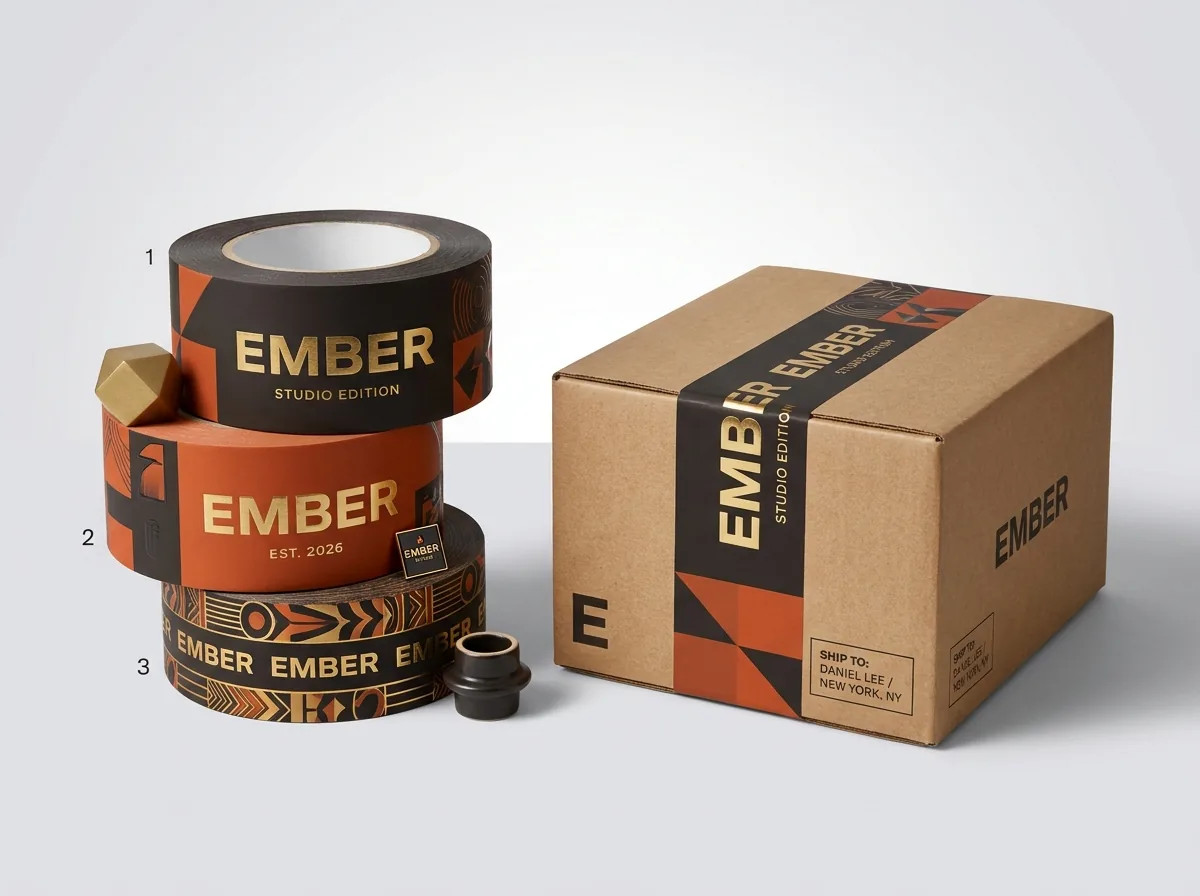
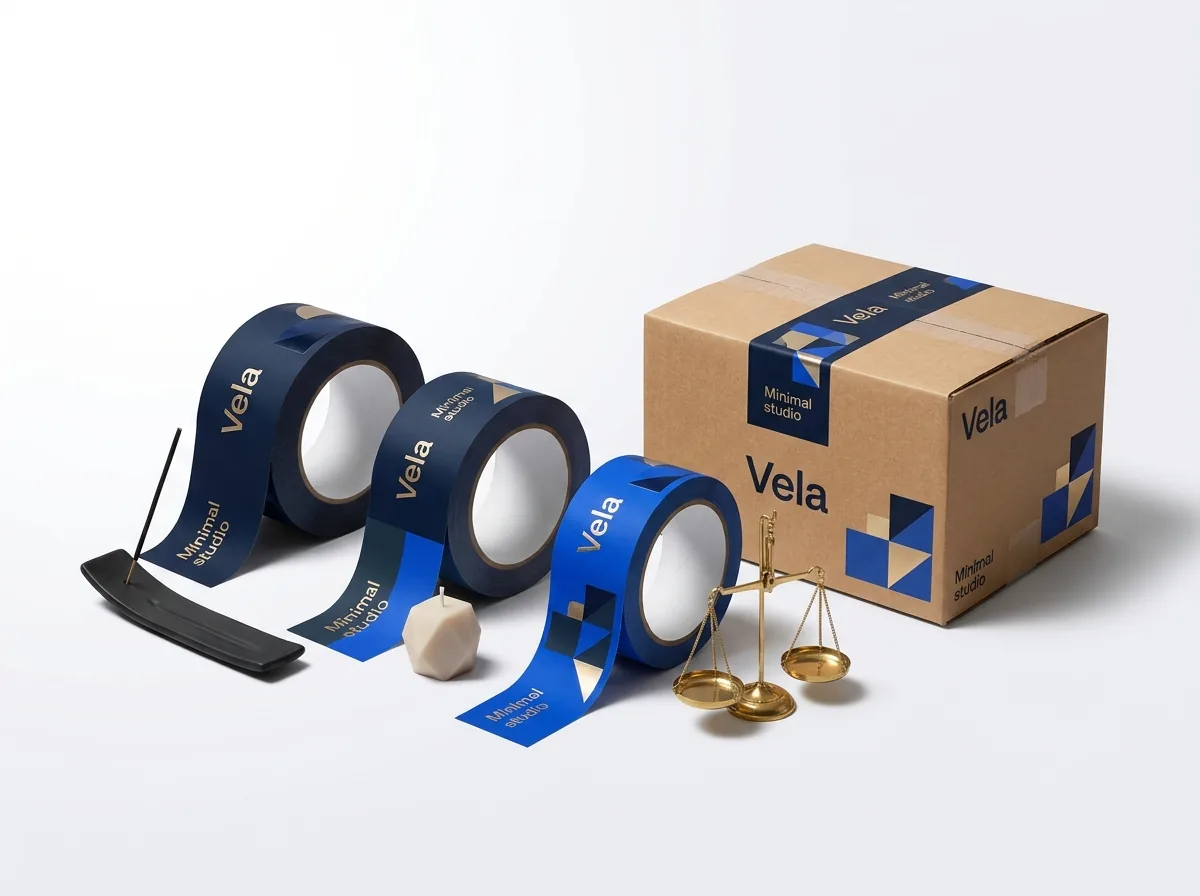
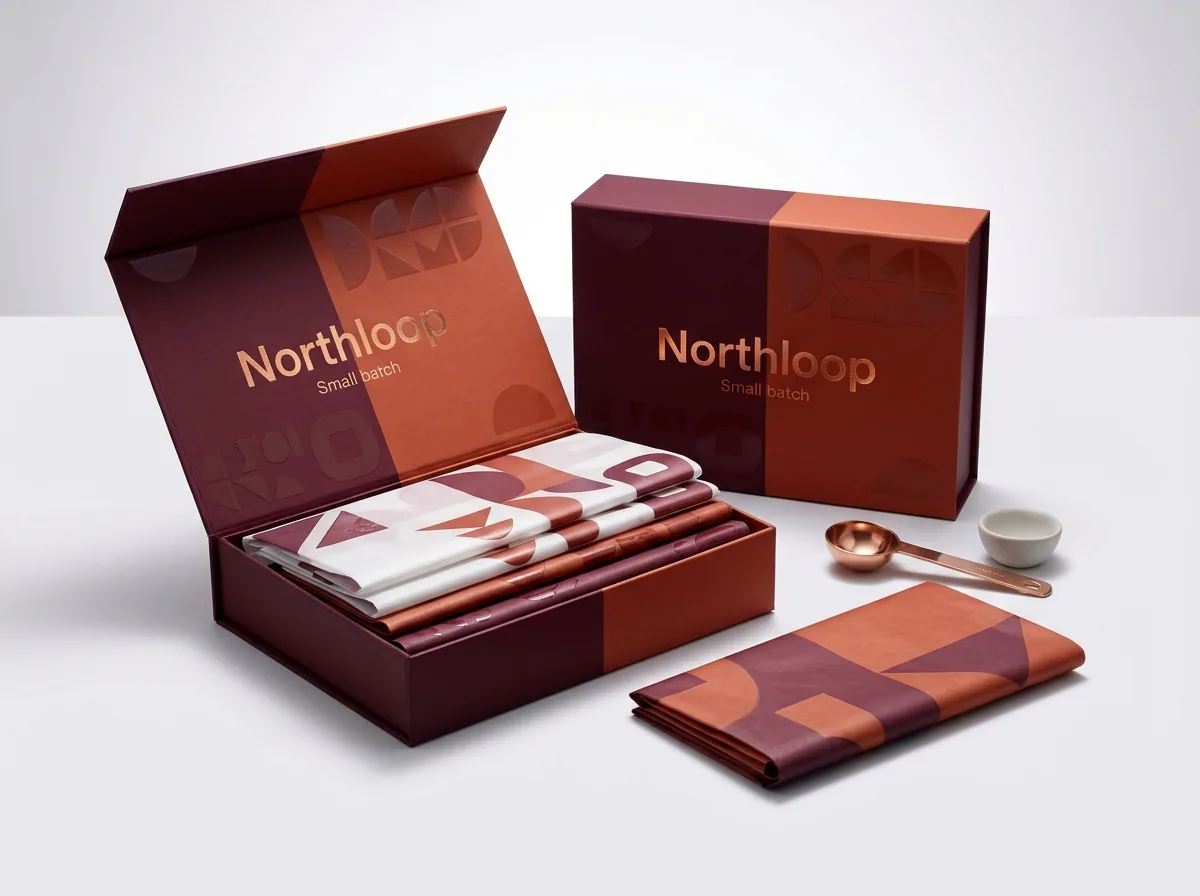
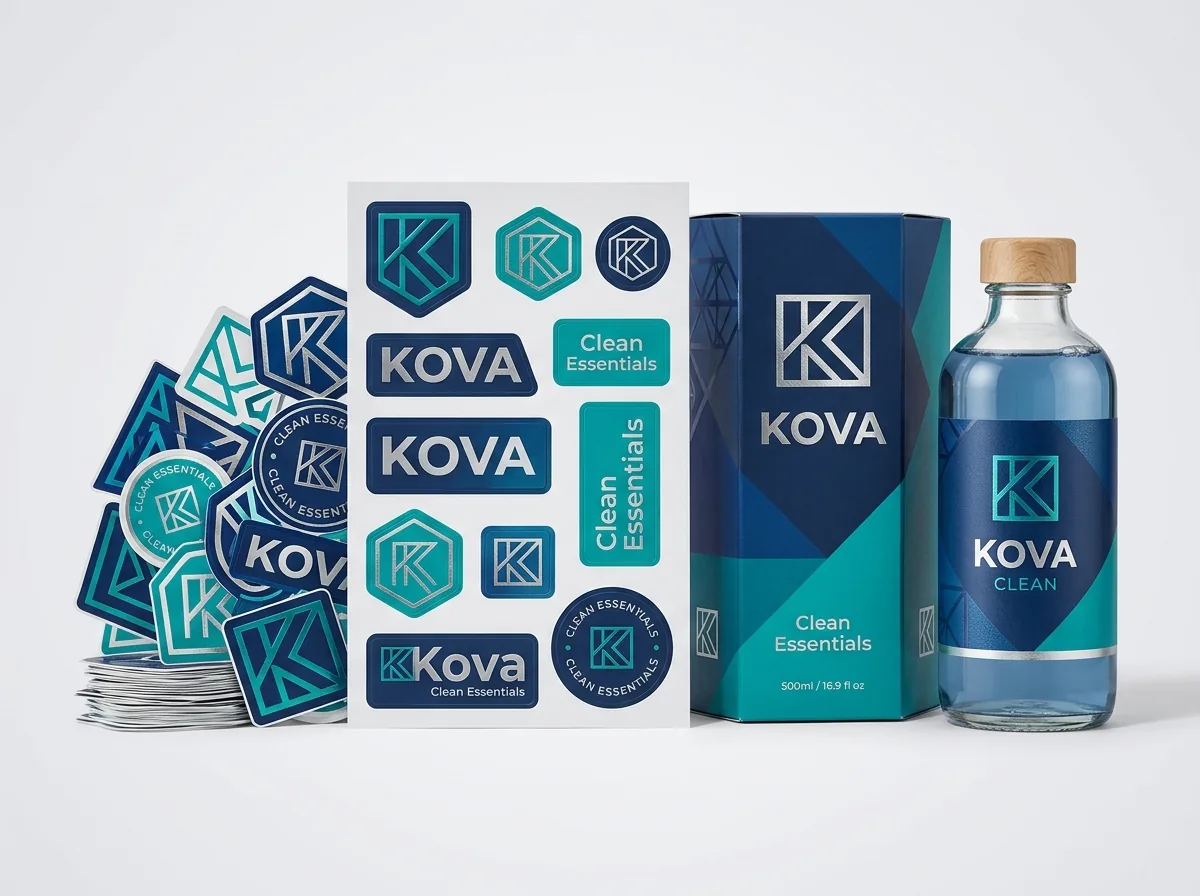
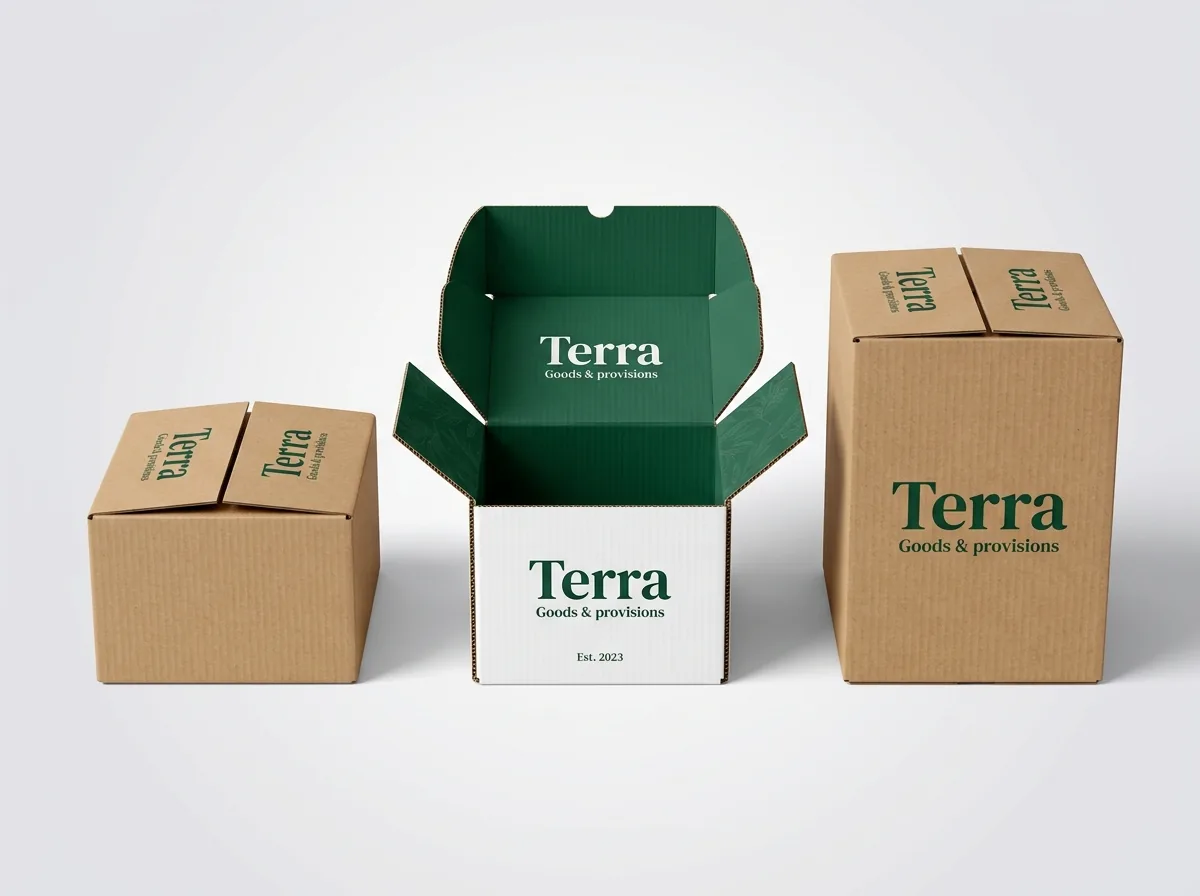
Ready to order printed tape? Compare up to 3 quantities with a free 3D mockup.
Request a Quote →Questions about printed tape
Should I use Pantone (PMS) or CMYK colors for custom printed tape?
Use 1 Pantone or 2 Pantone spot colors when your logo has one or two solid brand shades that need exact color accuracy and the lowest unit cost. Use full color CMYK when your artwork includes three or more colors, shading or photographic gradients.
What is the smallest font size that stays readable on printed packaging tape?
Keep positive printed text at 8 pt or larger and reverse knocked-out text (where solid ink surrounds the letters) at 10 pt to 12 pt or larger. Bold sans-serif typefaces print much cleaner on textured paper and moving film than thin serifs.
Does CubitPack guarantee Pantone color matching on custom printed tape?
Yes. Our Pantone color match is guaranteed: we print to your approved Pantone code, and if a printed Pantone color is clearly off from the approved specification, we reprint the order.
Does reverse flood-coat printing cost more than positive logo printing?
Because a reverse flood coat covers nearly the entire surface of the tape with ink rather than just a 20% logo area, ink usage is higher. Ask your account manager on the quote to compare positive print on white/kraft tape against a full flood coat.
What file format should I upload for custom printed tape?
Vector files (.AI.PDF.EPS or.SVG) with outlined fonts are ideal, but you can also upload a high-resolution PNG, JPG or AI-generated image. Our prepress team sets up the vector repeat layout, digital proof and 3D mockup for free.
Can I see how my artwork looks on brown kraft vs white tape before paying?
Yes. Every CubitPack quote includes a free digital proof and 3D mockup before payment. Simply ask your account manager to show your logo on both natural kraft and white tape so you can pick the sharpest look.
Still have a question? Ask a packaging specialist.
Request a Quote →Request your printed tape quote
Tell us your size and quantities, and one dedicated account manager prepares pricing for each tier.
- Free design & AI-to-print studio + 3D mockup
- No die or plate charges · 4–5 day rush available
- Free shipping to all 50 states
- 10% off your first order
The typography, stroke weight and QR code specifications in this guide follow flexographic rotary tape prepress standards and CubitPack's printing options (1 Pantone, 2 Pantone, Full color CMYK). A packaging specialist checked every rule. Spot something wrong? Tell us and we will fix it.
Sources
What changed
- October 22, 2026: First published.
- October 22, 2026: Updated specifications, terminology, and verified source links.
More guides
New packaging guides by email
Sizes, materials and design tips. Unsubscribe anytime.