
Custom printed tape vs custom printed shipping boxes: when should you use each?
Short answer: Choose custom printed tape on blank boxes when you ship across five or more carton sizes, run seasonal promotions or want to brand every parcel with minimal warehouse storage. Choose custom printed shipping boxes when one or two flagship carton dimensions ship at high volume (1,000+ per size) and need full-panel graphics.
On this page
- How do custom printed tape and custom printed shipping boxes compare
- When is custom printed tape on blank cartons the smarter move
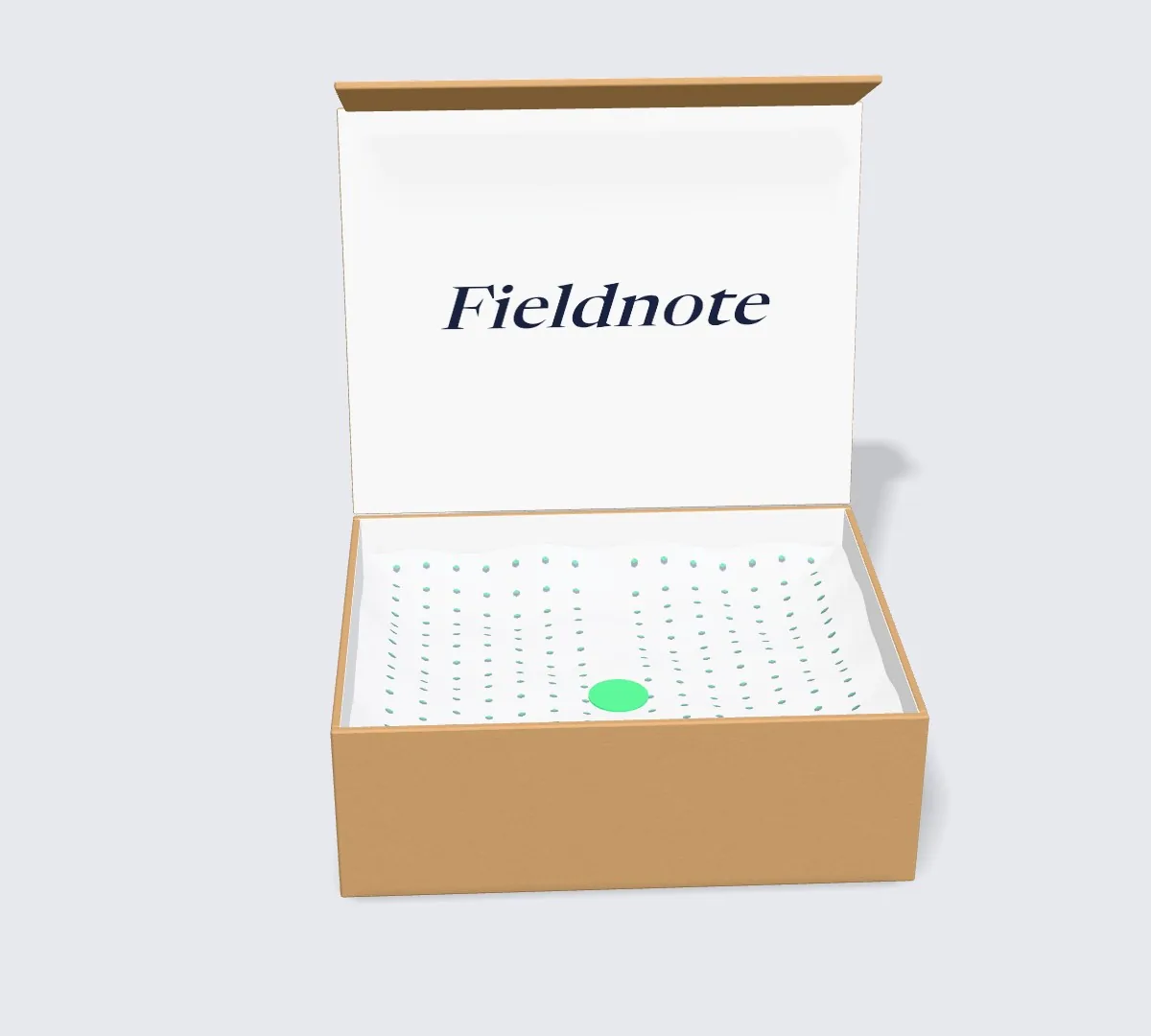
- When should you step up to custom printed shipping or mailer boxes
- How do growing e-commerce brands combine printed tape and printed boxes
- Why do brands use custom printed tape even on custom printed shipping boxes
- Common mistakes
- FAQs
Request a custom quoteFree dieline & 3D mockup
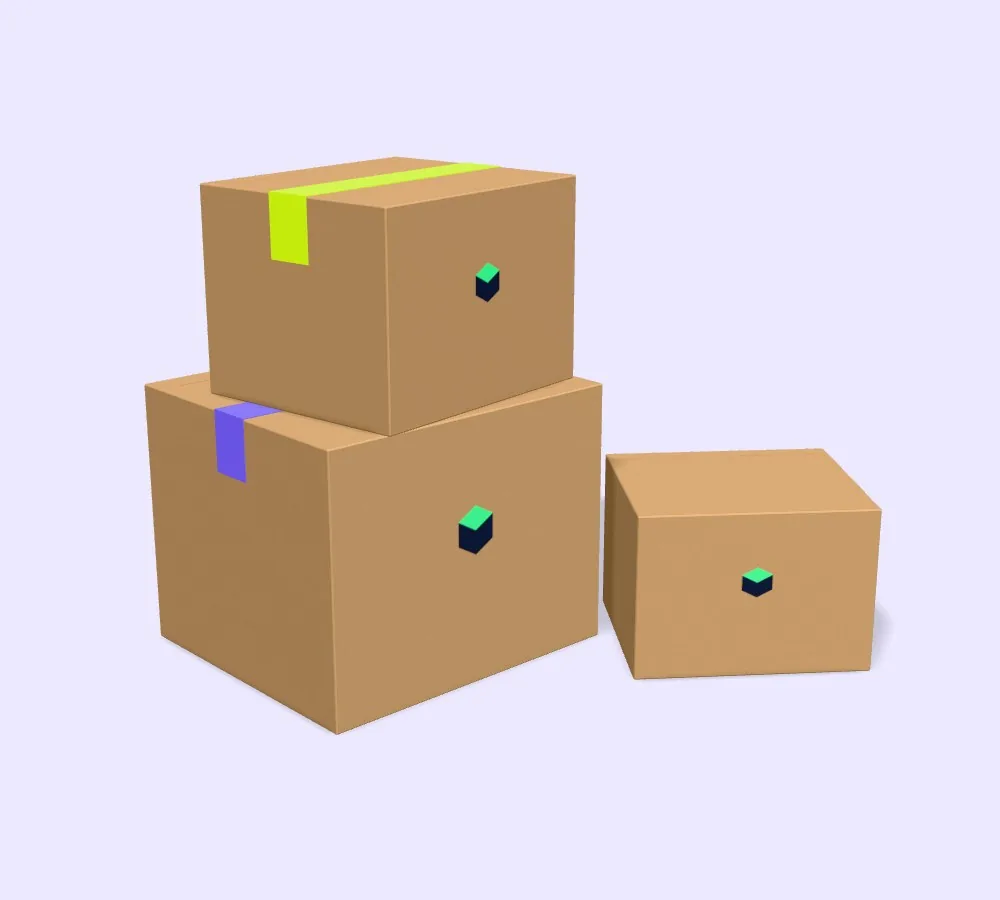
Deciding between custom printed tape on plain corrugated boxes and fully printed shipping cartons is not an all-or-nothing choice; it depends on how many box dimensions you stock and how fast each size turns over. Every custom printed shipping box size requires its own L × W × H dieline and minimum production run (typically 1,000 boxes for corrugated shipping cartons at CubitPack). If your catalog includes tiny jars, medium bundles and oversized wholesale cases that require eight different carton sizes, ordering 1,000 printed boxes of each size means buying and storing 8,000 cartons up front. By contrast, a single order of custom printed tape seals and brands all eight blank carton sizes immediately while taking up two feet of shelf space. Many growing brands use custom printed boxes for their top one or two hero sizes and custom printed tape for every other carton.
How do custom printed tape and custom printed shipping boxes compare?
Because CubitPack makes both custom printed logo tape and custom shipping boxes under one roof with zero die or plate charges, our account managers help brands compare both routes objectively. While a custom box lets you print large logos on the side panels and inside lid, printed tape still has to be applied to seal the flaps of a regular slotted carton anyway, meaning you need tape at the packing bench regardless. Evaluating how many distinct carton footprints you ship each week and how many pallet spaces your warehouse can dedicate to flat corrugated bundles makes the right starting mix clear. Use the comparison table below to see where custom printed tape wins, where custom printed shipping boxes win, and how operations teams combine both.
| Decision factor | Custom printed tape on plain boxes | Custom printed shipping boxes |
|---|---|---|
| Multi-size SKU coverage | 1 tape SKU brands 5 to 15+ blank box sizes at once | Each L × W × H box size is a separate production run |
| Minimum order commitment | Presets from 36 to 288 rolls | From 1,000 shipping boxes (or 250 mailer boxes) |
| Warehouse pallet storage | 1–4 small cases of rolls sit on a single packing shelf | Bundles of flat corrugated cartons require pallet racking |
| Print area & placement | 2 in to 3 in wide ribbon across top and bottom flap seams | All 4 side walls, top flaps, plus optional inside print |
| Seasonal campaign agility | Swap a roll at the dispenser in 30 seconds for holidays | Must forecast and use up seasonal printed box inventory |
| Functional role | Seals the carton flaps and brands the parcel in one step | Holds the product (still requires tape to seal RSC flaps) |
When is custom printed tape on blank cartons the smarter move?
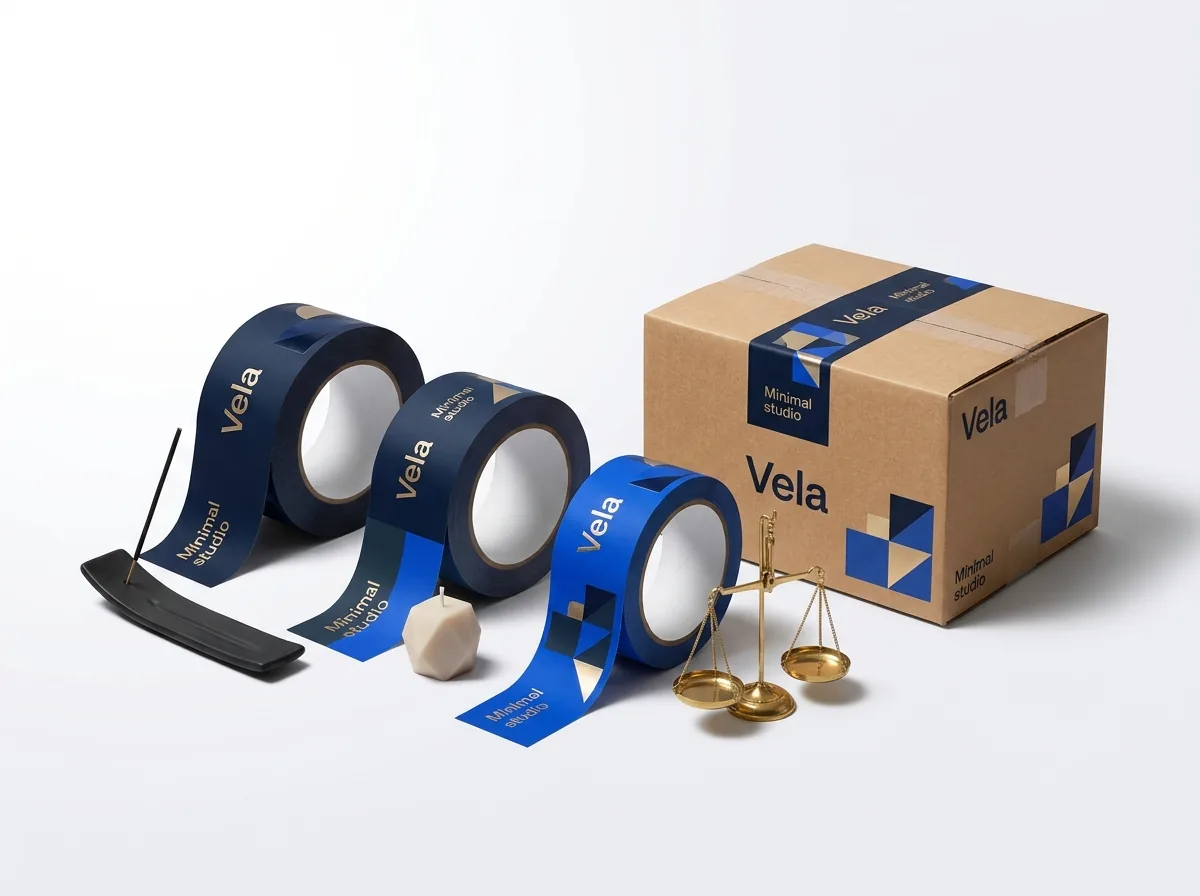
Custom printed tape shines whenever order dimensions vary widely from customer to customer. Home goods shops, auto parts suppliers, gourmet grocers, book retailers and wholesale distributors rarely ship the exact same box size twice in a row. One customer buys a single candle; the next buys a twelve-piece kitchen bundle. If you stock ten sizes of unprinted brown kraft or white RSC cartons and seal them with 3 inch water-activated or pressure-sensitive printed tape, every outgoing box looks cohesive on the porch without tying up working capital or warehouse floor space in slow-moving carton sizes. Even better, because you already have to buy carton-sealing tape to close your boxes, upgrading from plain tape to custom printed tape adds branding without adding a new step to your packing workflow.
- Multi-size catalogs: brand 10 different stock carton footprints with a single 3 inch printed tape roll without holding slow-moving custom box inventory.
- Limited warehouse space: store 10,000 yards of branding in two compact cardboard cases under the packing table instead of dedicating pallet bays to flat cartons.
- Holiday & collab drops: run a burgundy holiday roll or a limited-edition pattern for 30 days without leftover seasonal boxes sitting in storage in January.
- B2B & wholesale master cases: brand heavy outer master cartons that hold smaller retail folding cartons inside so retail receiving docks spot your shipment right away.
When should you step up to custom printed shipping or mailer boxes?
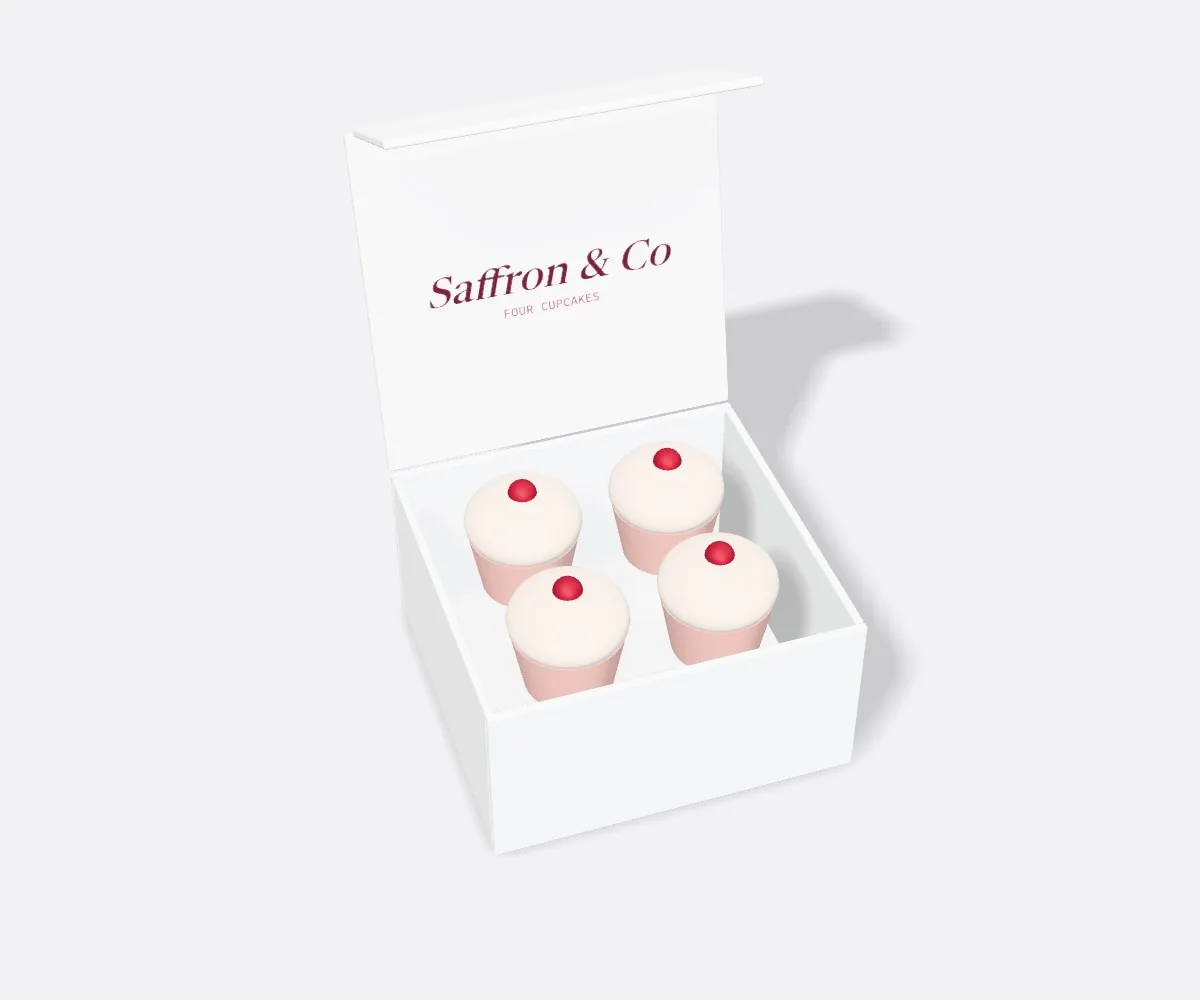
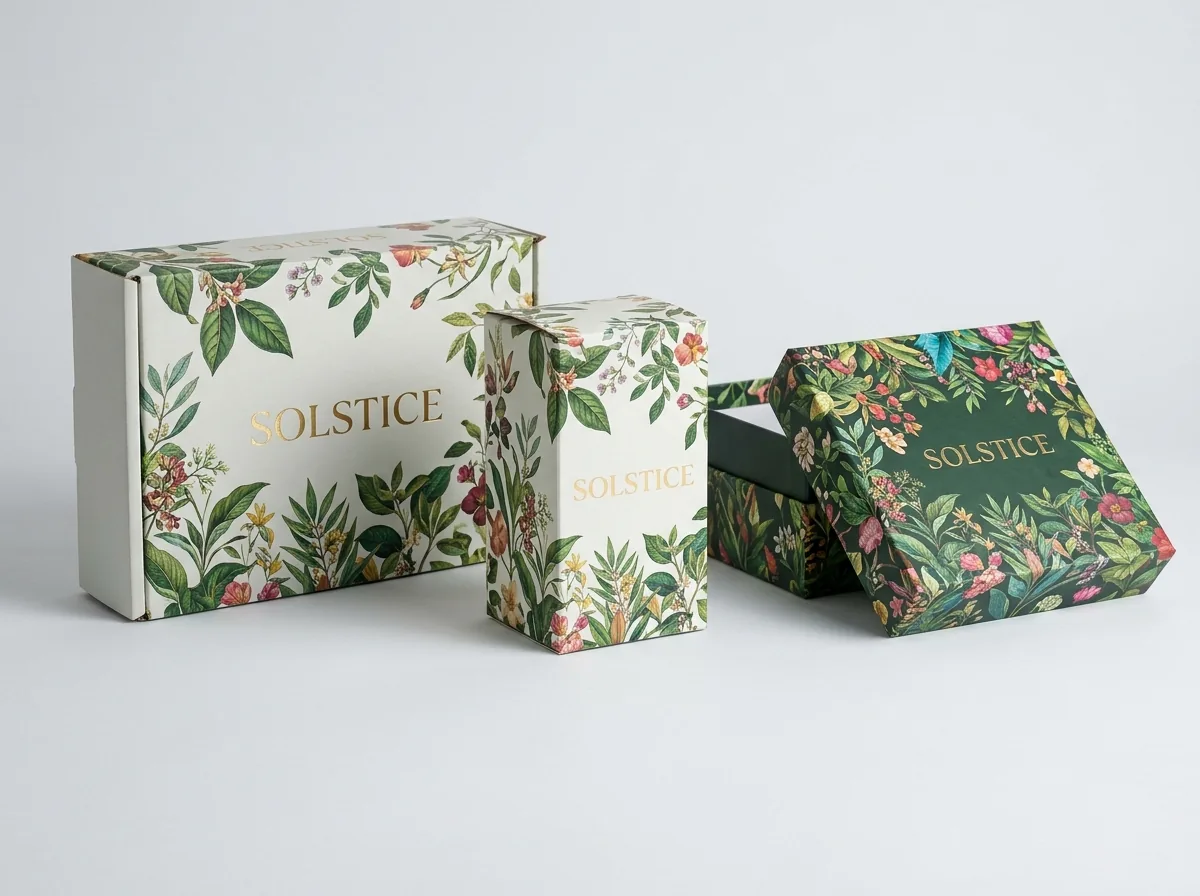
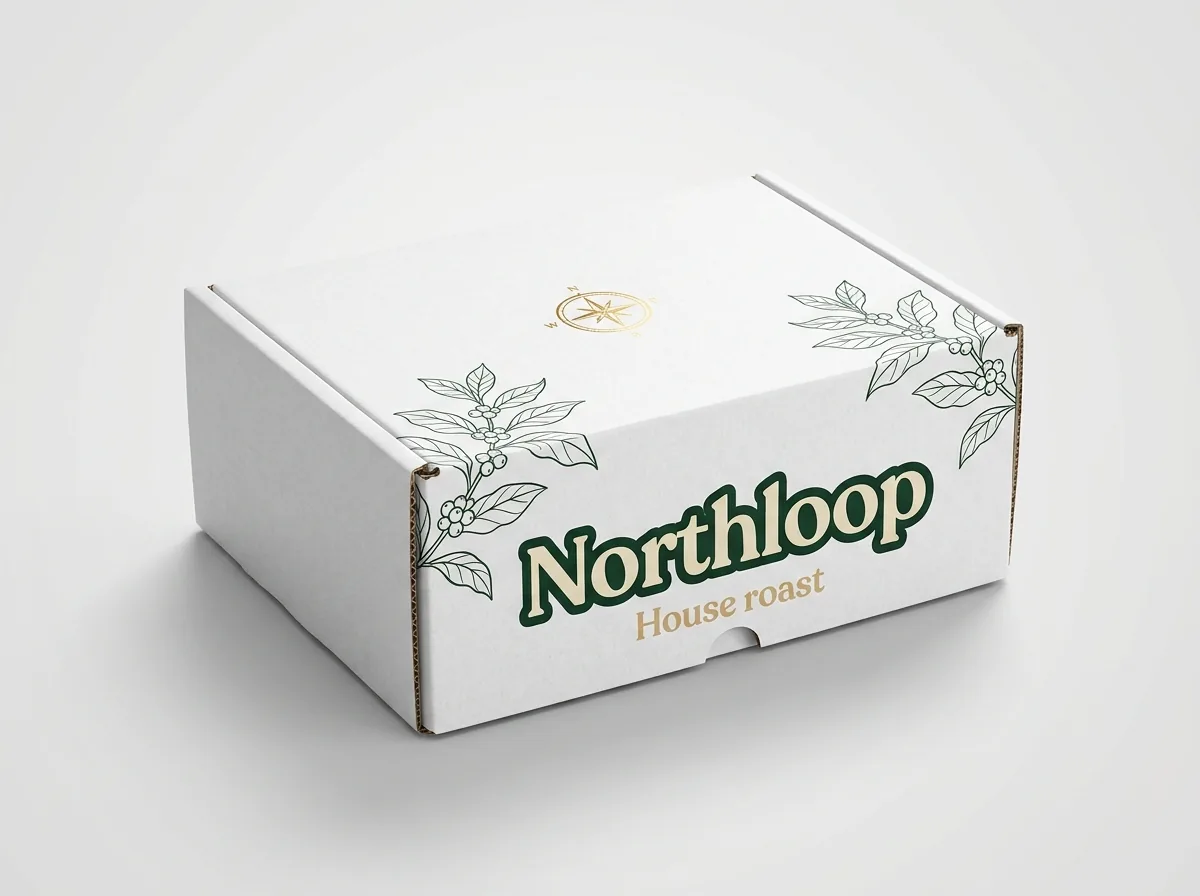
Once a specific product bundle or subscription kit ships hundreds or thousands of times a month in the exact same footprint, ordering custom printed boxes or custom mailer boxes adds branding real estate that tape alone cannot cover. A custom box is die-cut to the exact inside length × width × height of your product so you eliminate void fill, prevent items from sliding around in transit, and lower dimensional weight shipping charges across UPS, FedEx and USPS zones. More importantly, custom boxes let you print inside the lid, so when the customer slices the tape or lifts the front tuck flap, they are greeted by a full-color interior pattern, founder note or step-by-step usage guide. For self-locking roll-end tuck-front mailers (which start at 250 boxes at CubitPack), the box closes with a small custom packaging sticker rather than a full strip of carton tape. Subscription clubs, influencer PR kits and flagship starter sets almost always graduate to custom printed boxes once their monthly order volume stabilizes.
Know your size? Compare pricing across up to 3 quantities.
Request a Quote →How do growing e-commerce brands combine printed tape and printed boxes?
Smart fulfillment lines use a hybrid packaging stack rather than choosing one over the other. First, they identify their highest-volume single-item or starter-kit dimension and order custom mailer boxes or custom shipping boxes sized specifically for that high-runner SKU. That covers 50 to 70 percent of daily outgoing orders with a custom-fitted carton. Second, they stock three to five standard blank corrugated RSC sizes for multi-item cart combinations, wholesale orders and odd-sized bundles, and seal all of those with custom printed tape. Third, they place matching custom tissue paper and custom thank you cards inside every parcel so the interior unboxing experience feels identical whether the outer container was a custom mailer or a taped RSC shipping box. This two-tier approach keeps warehouse shelf space lean while ensuring zero orders ever leave the dock looking unbranded.
Why do brands use custom printed tape even on custom printed shipping boxes?
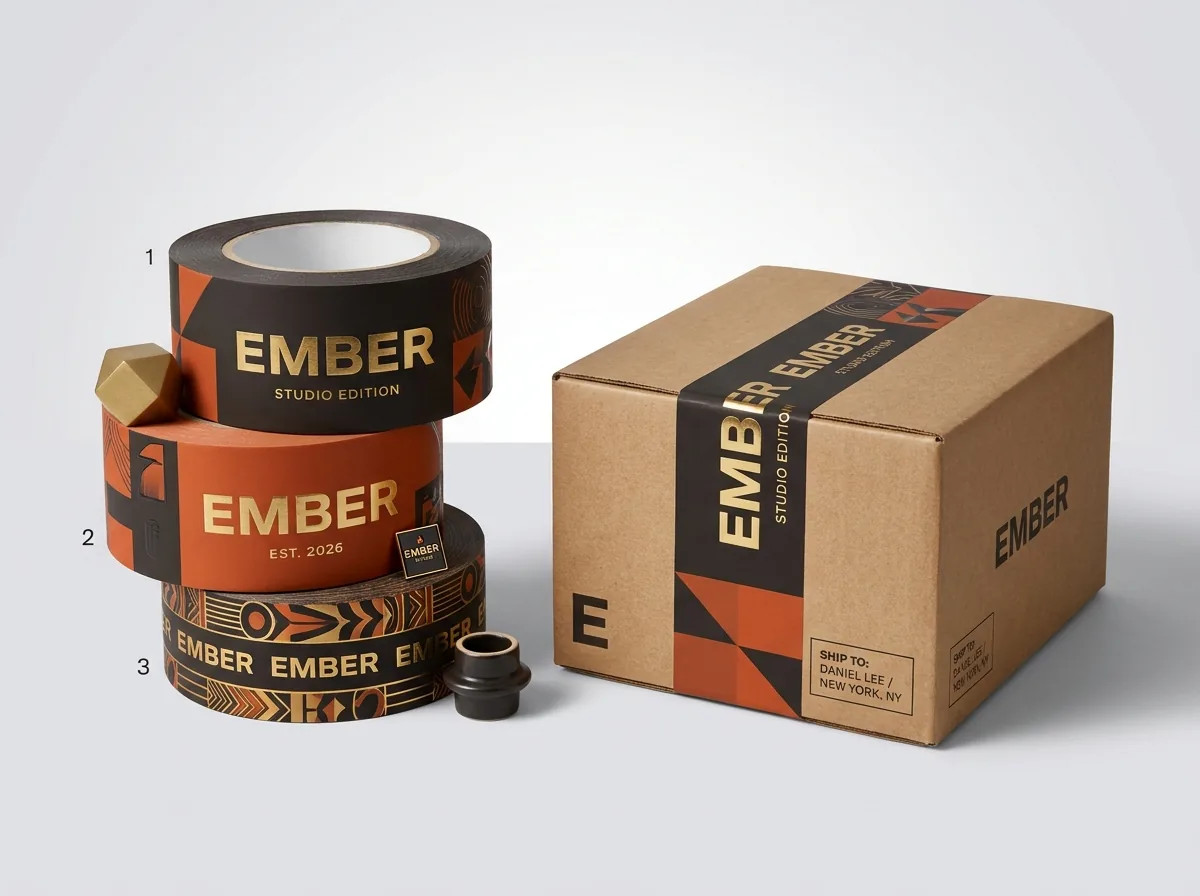
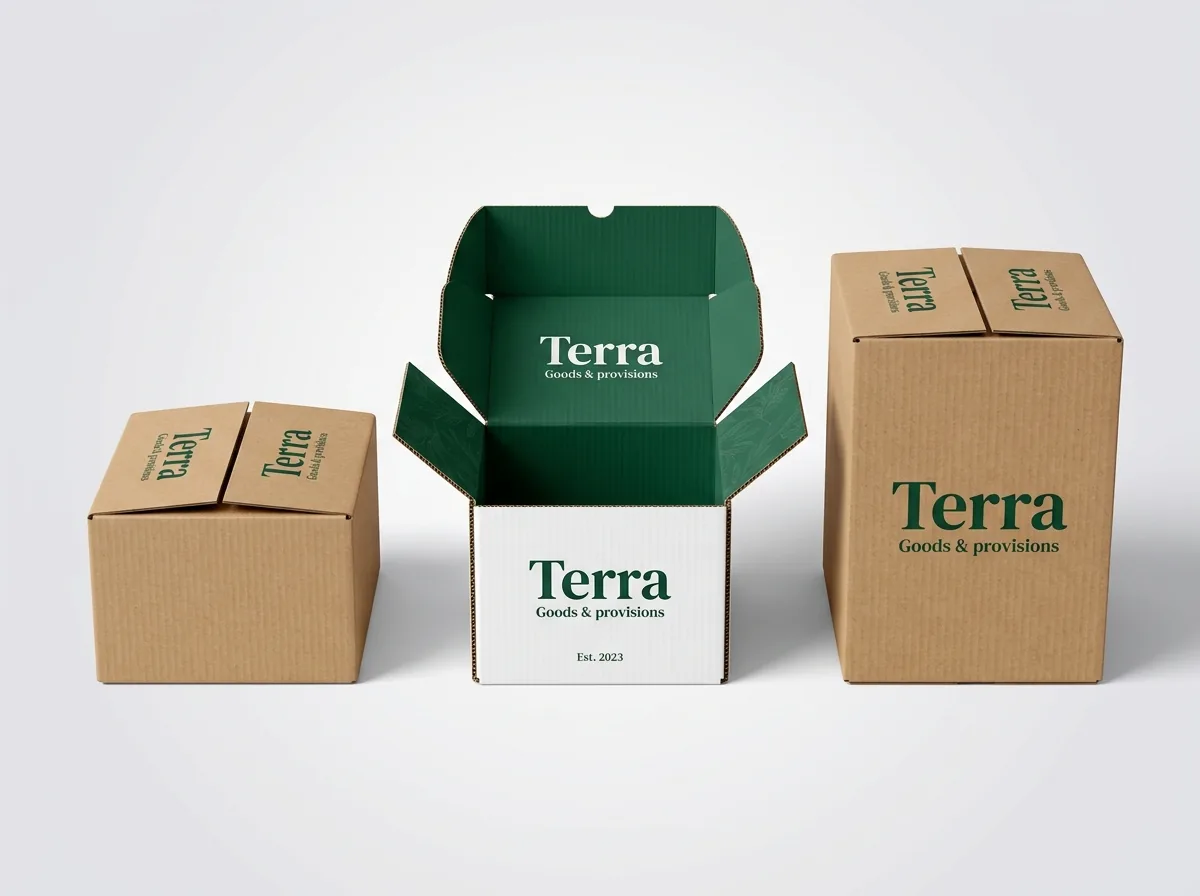
What surprises many first-time buyers is that brands with custom printed RSC shipping boxes often seal them with custom printed tape too. If you seal a custom-printed corrugated box with clear plastic store-bought tape, the shiny plastic strip cuts right across your top flap artwork, yellows under warehouse lights, and can be sliced open and re-taped in transit without leaving a trace. When you seal a printed corrugated carton with color-matched water-activated paper tape printed with your brand mark or a continuous security pattern, the tape blends into the matte paperboard and forms a tamper-evident fiber bond. Nobody can open the carton in a courier hub and reseal it with generic hardware-store tape without the recipient noticing immediately.
- No shiny plastic glare across matte kraft or white printed box flaps during customer unboxing videos.
- Instant tamper evidence: a broken custom-printed strip cannot be replaced with clear tape in transit.
- Continuous center-seam branding that connects the left and right top flaps into one cohesive graphic.
- Single-strip closure strength on heavy corrugated cartons up to 50 or 65 pounds when using reinforced paper tape.
- Zero printing plate or die charges when you order both your custom boxes and your custom printed tape through CubitPack.
What mistakes do brands make when choosing between printed tape and printed boxes?
Balancing packaging inventory across multiple product sizes and seasonal drops takes practical planning. Watch out for these five common warehouse and branding mistakes before placing your order
- Ordering 1,000 custom printed boxes each for six slow-moving carton sizes instead of branding those sizes with one universal roll of custom printed tape.
- Putting a tiny 1 inch logo on a huge 24 inch shipping carton with narrow tape where a 3 inch wide bold repeat is needed to look proportional.
- Ordering custom printed RSC shipping boxes and then sealing the top flaps with cloudy yellow store-bought plastic tape that covers the box logo.
- Printing your main box logo right across the center flap seam of an RSC carton where the 3 inch tape strip will cover it up during sealing.
- Using different CMYK color builds with separate vendors so your tape shade clashes with your tissue paper, stickers and outer box ink.
Packaging for this
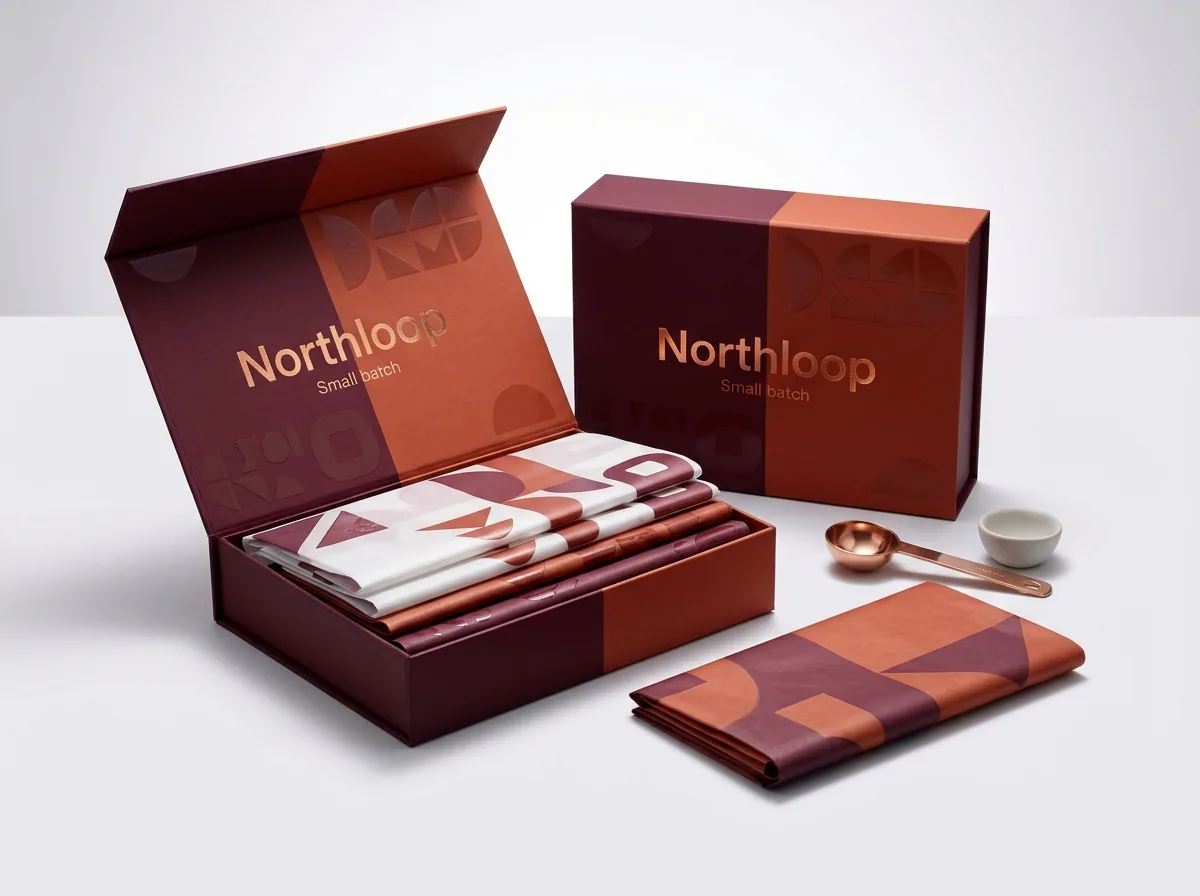
Ready to order printed tape? Compare up to 3 quantities with a free 3D mockup.
Request a Quote →Questions about printed tape
Should a new e-commerce brand start with custom printed tape or custom boxes?
If you ship one hero product in a single compact size, a custom mailer box (from 250 boxes) gives a complete inside-and-out presentation. If you ship many product combinations across several box sizes, starting with custom printed tape on plain cartons brands your whole line at once.
Can CubitPack quote both custom printed tape and custom shipping boxes together?
Yes. Your dedicated account manager can quote custom printed tape Alongside custom mailer boxes, shipping cartons, tissue paper and stickers in a single reply, matched to the exact same Pantone color code.
Where should I place my box logo if I seal my custom boxes with printed tape?
On a regular slotted carton (RSC), place your box printing on the four vertical side walls or centered on each half of the top flaps at least 2 inches away from the center seam so your 3 inch tape strip never covers the box graphic.
Does custom printed tape work on both brown kraft and white shipping boxes?
Yes. Natural brown kraft paper tape blends into brown corrugated boxes so your ink looks printed directly on the board, while white paper or plastic tape creates a high-contrast branded stripe across either brown or white boxes.
Are there printing plate charges if I order both printed tape and printed boxes?
No. CubitPack never charges die or printing plate fees on custom printed tape, boxes, bags or labels. You also get free design help, a digital proof and a 3D mockup before payment.
How fast can I get custom printed tape for a seasonal sale?
Standard production is 10-14 business days after proof approval and payment, and 4-5 business day rush production is available when you need branded rolls quickly for a holiday or promotional launch.
Still have a question? Ask a packaging specialist.
Request a Quote →Request your printed tape quote
Tell us your size and quantities, and one dedicated account manager prepares pricing for each tier.
- Free design & AI-to-print studio + 3D mockup
- No die or plate charges · 4–5 day rush available
- Free shipping to all 50 states
- 10% off your first order
This comparison is based on CubitPack's decided minimums and turnaround times in our published product specifications (1,000 shipping boxes, 250 mailer boxes, 36–288 roll tape presets, 10–14 business days). A packaging specialist reviewed every recommendation. Spot something wrong? Tell us and we will fix it.
Sources
What changed
- October 22, 2026: First published.
- October 22, 2026: Updated specifications, terminology, and verified source links.
More guides
New packaging guides by email
Sizes, materials and design tips. Unsubscribe anytime.