
What width and roll length of packaging tape do I need?
Short answer: Choose 2 inch wide rolls (55 or 110 yards long) for handheld plastic tape guns on cartons under 20 pounds, and 2.75 or 3 inch wide rolls (150 to 200 yards long) for water-activated custom packaging tape on heavier corrugated boxes. Always add 6 inches to your box length for end overhang.

On this page
- Should I choose 2 inch, 2.75 inch or 3 inch wide packaging tape
- How many shipping boxes will one roll of packaging tape seal
- How much tape overhang do I need on each end of a shipping box
- Why do 110 yard and 150 yard rolls save time at the packing bench
- How do I plan roll quantities for customshipping boxes and seasonal peaks
- Common mistakes
- FAQs
Request a custom quoteFree dieline & 3D mockup
Picking the right packaging tape dimensions comes down to two numbers: roll width in inches (which controls how much surface area grips the two meeting box flaps) and roll length in yards (which determines how many cartons a packer can seal before stopping to load a fresh roll). For small e-commerce boxes under 16 inches long and under 20 pounds, a 2 inch wide roll in 55 yards or 110 yards fits standard pistol-grip tape guns. Once cartons exceed 16 inches in length or 25 pounds in filled weight, stepping up to a 2.75 inch or 3 inch width gives 50 percent more adhesive contact across the center seam so flaps cannot bow apart in transit. To calculate strip length per seam, add 6 inches to your carton length so 3 inches of tape folds down each vertical end panel.
Should I choose 2 inch, 2.75 inch or 3 inch wide packaging tape?
Roll width determines how far your adhesive reaches across the gap where the two major flaps of a regular slotted carton (RSC) meet. Because corrugated manufacturing tolerances and slightly out-of-square folding can leave a ⅛ inch to ¼ inch gap down the middle seam, a narrow strip leaves less than an inch of grip on each flap. A 2 inch roll leaves roughly ⅞ inch of contact per side, which works well on small, rigid boxes up to 16 inches long and under 20 pounds. When you pack wider or heavier boxes, or when boxes are stuffed tightly enough that the top flaps push upward, a 2.75 inch or 3 inch wide strip spreads the shear load across nearly 1.5 inches of linerboard on each side of the seam. In tabletop water-activated dispensers, 2.75 inch and 3 inch widths are the industry workhorses because a single wide strip replaces multiple narrow passes. When ordering branded carton sealing tape, moving from 2 inches to 3 inches also gives your logo 50 percent more vertical height for clear readability on the doorstep.
- 2 inch width: standard fit for handheld pressure-sensitive plastic tape guns and small cartons under 20 lb.
- 2.75 inch width: versatile water-activated paper tape width for everyday fulfillment cartons from 15 to 35 lb.
- 3 inch width: heavy-duty standard for reinforced water-activated paper tape on boxes from 25 to 65 lb and master cases.
How many shipping boxes will one roll of packaging tape seal?
Tape rolls are sold by length in yards (1 yard equals 36 inches). To know how many cartons a single roll will close, you first calculate the strip length per seam: take the longest dimension of your box (Length) and add 6 inches so the packer can fold 3 inches of overhang down the front and back vertical panels. If you seal both the top center seam and the bottom center seam with one strip each, double that number to get total inches of tape per box. For example, a 12 × 10 × 8 inch shipping box needs an 18 inch strip on the top seam and an 18 inch strip on the bottom seam, or 36 inches (exactly 1 yard) per carton. That means a 55-yard roll seals 55 cartons, a 110-yard roll seals 110 cartons, and a 150-yard roll seals 150 cartons. Use the reference chart below to compare standard roll sizes and carton yields.
| Roll size (W × L) | Total inches per roll | Boxes sealed (12 in box, top + bottom) |
|---|---|---|
| 2 in × 55 yd | 1,980 in | 55 cartons (110 single strips) |
| 2 in × 110 yd | 3,960 in | 110 cartons (220 single strips) |
| 2.75 in × 150 yd | 5,400 in | 150 cartons (300 single strips) |
| 3 in × 150 yd | 5,400 in | 150 cartons (300 single strips) |
| 3 in × 200 yd | 7,200 in | 200 cartons (400 single strips) |
How much tape overhang do I need on each end of a shipping box?
Cutting a strip of tape right at the top corner of a corrugated box is one of the fastest ways to cause a transit failure. When cartons are stacked in delivery trucks or dropped onto conveyor chutes, the side walls flex outward and pull horizontally against the top flaps. Without vertical anchor tabs folded down the end panels, the seam peels open from the corner inward. Standard ASTM D1974 and ISTA parcel guidelines call for 2.5 to 3 inches of overhang folded firmly down each vertical end wall on regular slotted cartons. On automatic or push-button electric water-activated tape dispensers, you simply program the keypad to your box length plus 6 inches (for instance, setting a 20 inch preset button for a 14 inch long carton) so every strip feeds out to the exact length with zero wasted tape.
Know your size? Compare pricing across up to 3 quantities.
Request a Quote →Why do 110 yard and 150 yard rolls save time at the packing bench?
In a busy fulfillment center, roll changes interrupt packing rhythm. A standard 55-yard handheld plastic roll holds 1,980 inches of tape; if your packers apply H-taping (three strips on top and three strips on the bottom) to a 16 inch box, one 55-yard roll runs out after fewer than 18 boxes. Switching to 110-yard pressure-sensitive rolls cuts handheld reload stops in half while still fitting comfortably on a standard 3 inch core tape gun. For stationary packing benches using water-activated paper tape, 150-yard and 200-yard rolls sit inside an enclosed hopper rather than being held in the operator's wrist. Because the table dispenser supports the weight of the roll and feeds pre-measured single strips, a packer can seal 150 to 200 cartons on a single roll before opening the hopper.

How do I plan roll quantities for customshipping boxes and seasonal peaks?
When pairing tape with custom shipping boxes or custom corrugated boxes, match your tape order to your quarterly carton usage plus a 10 percent buffer for bench setup and multi-strip heavy boxes. Our quote form lets you compare preset case quantities such as 36 rolls, 72 rolls, 144 rolls and 288 rolls at once. Because every roll shares the same continuous repeat cylinder, ordering a single 2.75 inch or 3 inch width works across all of your small, medium and large shipping cartons. You simply cut shorter strips for small boxes and longer strips for master cases, allowing one SKU of tape to brand your entire warehouse line. Store spare cases flat in a dry room between 60°F and 80°F out of direct sun so the roll edges stay flat and ready for the dispenser.
- Count your monthly outgoing cartons and multiply by 2 strips (for single-strip water-activated tape) or 6 strips (for H-taped plastic rolls).
- Multiply by your average strip length (box length + 6 inches) and divide by total inches per roll.
- Add 10 percent extra yardage for operator test pulls and double-strapped heavy shipments.
- Compare three roll quantities on your CubitPack quote to see where the unit cost per roll drops, and standardize on one universal roll width across your primary packing stations so operators never load the wrong core into a dispenser.
What are the most common packaging tape sizing mistakes?
Ordering the wrong roll width or miscalculating strip consumption can leave packers short mid-launch or force extra passes on every box. Avoid these five sizing errors
- Calculating roll yield using only the box length and forgetting to add 6 inches per strip for the two 3 inch vertical end overhangs.
- Forgetting that each flat-shipped RSC carton needs tape on both the bottom seam and the top seam (two strips minimum, or six strips if H-taping).
- Ordering 3 inch wide rolls for a warehouse that only has 2 inch handheld pistol-grip tape guns on the floor.
- Using narrow 2 inch tape on heavy 40 lb cartons where wide flap gaps leave less than ¾ inch of adhesive grip per side.
- Setting a logo repeat interval of 18 inches when your most common shipping box is only 10 inches long.
Packaging for this
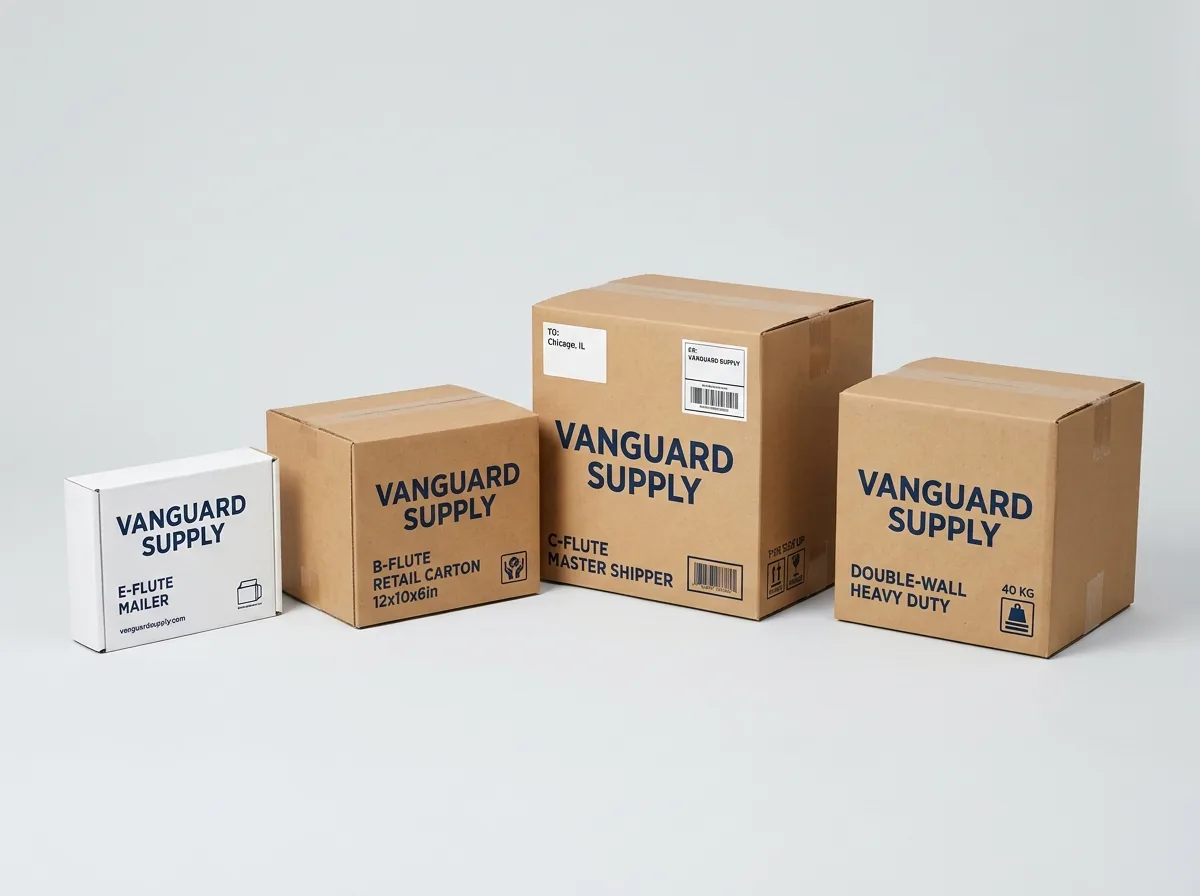


Ready to order packaging tape? Compare up to 3 quantities with a free 3D mockup.
Request a Quote →Questions about packaging tape
Is 2 inch or 3 inch packaging tape better for e-commerce shipping boxes?
Use 2 inch wide tape if your team applies pressure-sensitive plastic tape with handheld tape guns on cartons under 20 pounds. Use 2.75 inch or 3 inch wide tape if you seal boxes over 20 pounds or use a tabletop water-activated paper tape dispenser for single-strip sealing.
How do I calculate how many rolls of tape I need for 1,000 boxes?
Add 6 inches to your box length and multiply by 2 (for one top strip and one bottom strip). Multiply that per-box total by 1,000 boxes, then divide by the inches per roll (5,400 inches for a 150-yard roll). For 1,000 boxes that are 12 inches long, you need 36,000 inches, or about 7 rolls of 150-yard tape.
Why should packaging tape overhang 3 inches down the ends of a box?
The 2.5 to 3 inch vertical tabs folded down the front and back end panels anchor the major flaps against horizontal shear when boxes are stacked or dropped. Without end overhang, internal pressure pushes the center seam upward from the corners.
Does H-taping use three times as much tape as single-strip sealing?
Yes. H-taping requires one center strip plus two side-edge strips on both the top and bottom of the box (six strips total), which typically consumes 2.5 to 3 times more yardage per carton than sealing top and bottom with two strips of reinforced water-activated paper tape.
What core size do custom packaging tape rolls use?
Standard commercial handheld plastic tape guns and tabletop water-activated dispensers typically use a 3 inch inside core diameter, though dispenser core and wind specs are confirmed on your quote.
Can I use one tape width across multiple shipping box sizes?
Yes. Most brands order one universal 2.75 inch or 3 inch roll width with a 6 to 9 inch logo repeat and simply dispense shorter or longer strips to fit every carton size on their packing line.
Still have a question? Ask a packaging specialist.
Request a Quote →Request your packaging tape quote
Tell us your size and quantities, and one dedicated account manager prepares pricing for each tier.
- Free design & AI-to-print studio + 3D mockup
- No die or plate charges · 4–5 day rush available
- Free shipping to all 50 states
- 10% off your first order
The roll yield formulas in this guide convert roll yardage to inches (yards × 36) and apply the standard ASTM D1974 3 inch end-overhang rule for regular slotted cartons. A CubitPack packaging specialist checked every calculation. Spot something wrong? Tell us and we will fix it.
Sources
What changed
- October 22, 2026: First published.
- October 22, 2026: Updated specifications, terminology, and verified source links.
More guides
New packaging guides by email
Sizes, materials and design tips. Unsubscribe anytime.