
How do I measure my item and choose the right board thickness for a product box?
Short answer: To size custom product boxes, measure your item at its widest left-to-right width (Length), front-to-back thickness (Width), and vertical height (Depth). Add 1/16 to 1/8 inch of clearance to each axis, then match unit weight to 16–18 pt card (under 8 oz), 20–24 pt card (8–24 oz), or E-flute board (over 24 oz).
On this page
- What is the 3-step formula for measuring a product box
- How much clearance should I add for bottles, jars, tubes, and pouches
- Which paperboard thickness (16 pt, 18 pt, 24 pt, or E-flute) fits my product weight
- What are standard product box sizes across popular retail categories
- How do I test my product box dimensions and board choice before printing
- Common mistakes
- FAQs
Request a custom quoteFree dieline & 3D mockup
Every custom product box is built from interior dimensions written in Length × Width × Depth (L × W × D) order so you know the exact usable cavity inside the folded walls. Start by placing your bottle, jar, tube, or pouch upright in the position it will face on the store shelf and measuring its maximum width, thickness, and height with calipers, making sure to include pump collars, dropper bulbs, or cap overhangs. Add 1/16 to 1/8 inch (1.5 to 3 mm) of breathing room to L, W, and D so the product slides in smoothly on the packing table without bulging the paperboard panels. Once you have your interior dimensions, pair your unit weight with the right caliper: 16 to 18 pt SBS or kraft card for light tubes and cosmetics under 8 oz, 20 to 24 pt heavy card for glass dropper bottles and supplements up to 24 oz, or 1/16-inch E-flute micro-corrugated board for heavy candle jars and electronics up to 5 lb.
What is the 3-step formula for measuring a product box?
When you enter dimensions on our product boxes quote form, always enter the interior usable cavity in Length × Width × Depth (L × W × D) order. Follow these three steps to convert your physical item measurements into an exact folding carton size
- Step 1, Interior Length (L, left to right across the front panel): Measure your item at its widest horizontal point facing the shopper and add 1/16 to 1/8 inch (1.5 to 3 mm). For cylindrical bottles or round candle jars, L equals the maximum outside diameter plus 1/16 to 1/8 inch.
- Step 2, Interior Width (W, front to back from the front panel to the back panel): Measure your item from front to back at its thickest point and add 1/16 to 1/8 inch. On a round bottle or jar, interior Width (W) is identical to interior Length (L), creating a square carton footprint that prevents rolling.
- Step 3, Interior Depth (D, bottom floor to top closure crease): Measure the full standing height of your item from the bottom base to the top tip of the cap, dropper bulb, or spray actuator, then add 1/8 inch (3 mm) so the top tuck flap folds flat across the top without pressing down on the closure.
- Step 4, Account for interior inserts: If you add a die-cut paperboard neck holder, base pedestal, or perimeter collar to suspend a fragile glass bottle in the center of the box, add the insert wall span (+0.25 to +0.5 inches) to L, W, or D as needed.
How much clearance should I add for bottles, jars, tubes, and pouches?
Different primary containers behave differently during hand packing. A rigid glass bottle needs only a whisper of air space to slide into a paperboard carton, whereas a flexible foil sachet or gusseted tea bag expands slightly at the seams
- Rigid glass dropper bottles, supplement bottles, and cosmetic jars (+1/16 to +1/8 in): Adding 1/16 inch (1.5 mm) to L and W creates a tailored glove fit where the bottle cannot rattle side to side, while +1/8 inch (3 mm) on Depth (D) gives the top tuck flap room to swing past the side dust flaps cleanly.
- Squeeze tubes and bar soaps (+1/8 in on all axes): Crimped plastic cosmetic tubes have a wide top seal fin that is wider than the round cap base; always measure the flat top crimp width for L and add 1/8 inch so the crimp corners never scrape the side panels.
- Flexible tea sachets, coffee bags, and multi-packs (+1/8 to +1/4 in): When packing 15 or 20 wrapped tea envelopes or snack pouches inside one carton, compress the stack gently between two flat books, measure the real stack span, and add 3/16 to 1/4 inch so the last sachet slides in without bowing the front panel.
- Fragile glass items with a paperboard insert (+0.25 to +0.5 in): A folded paperboard cradle or top-and-bottom neck trap creates a protective crumple zone around a serum bottle or candle jar. Our structural team sizes the outer carton and inner insert together from your bottle measurements.
Which paperboard thickness (16 pt, 18 pt, 24 pt, or E-flute) fits my product weight?
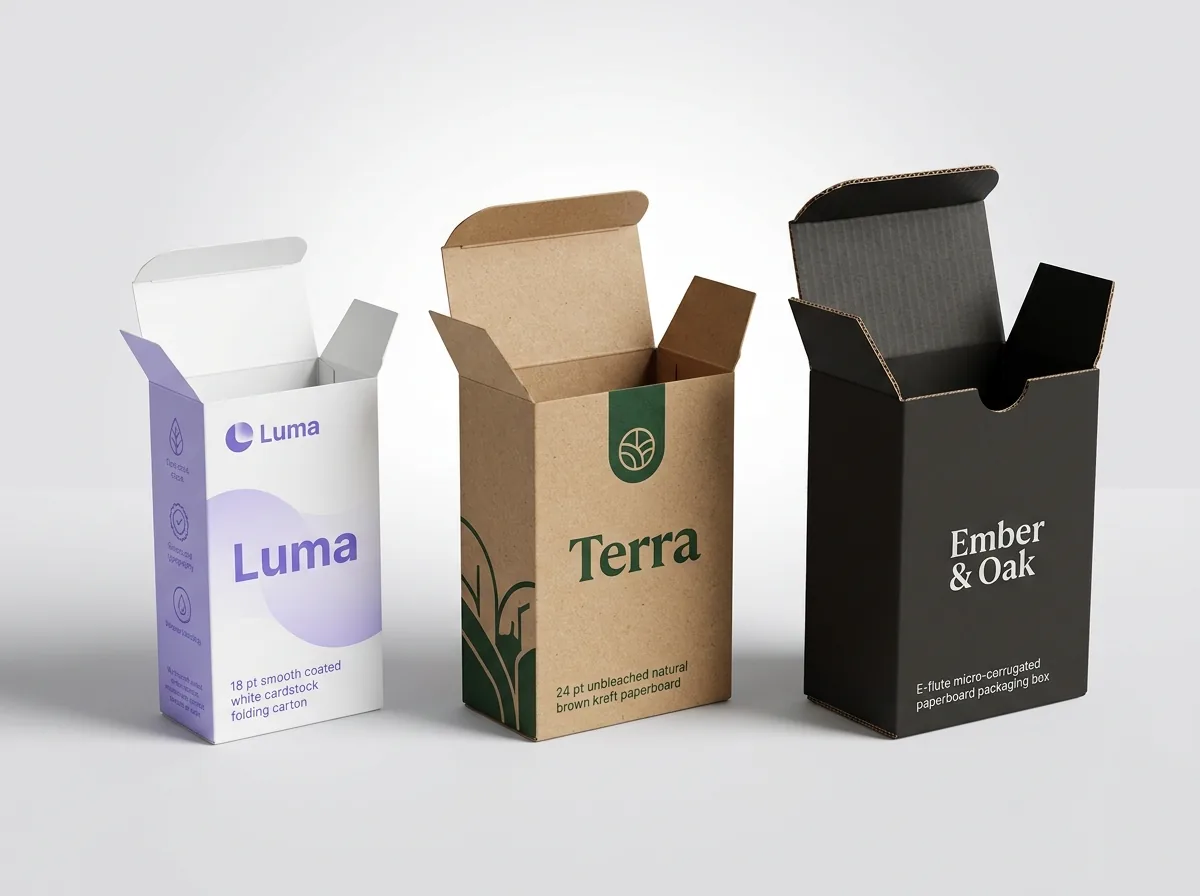
Paperboard thickness is measured in points (pt), where 1 pt equals 1/1000 of an inch (0.001 in). Choosing a board that is too thin for a heavy jar leads to bowed side walls and bottom blowouts, while over-specifying thick corrugated board on a tiny lip balm box looks bulky. Use this engineering chart to match your unit weight and box size to the right stock and bottom closure
| Board thickness & stock | Caliper (in / mm) & GSM | Safe unit weight range | Recommended box style & common products |
|---|---|---|---|
| 16 pt C1S white or natural kraft | 0.016 in (0.41 mm) · ~300 gsm | Up to 6 oz (170 g) | Straight or reverse tuck end · Lip balms, eye creams, blister packs, single soap bars |
| 18 pt C1S white or natural kraft | 0.018 in (0.46 mm) · ~350 gsm | 4 oz to 14 oz (115–400 g) | Straight tuck, reverse tuck, or window · 30 ml serums, tea boxes, supplements, small toys |
| 20 pt–24 pt heavy C1S or kraft | 0.020–0.024 in (0.51–0.61 mm) · ~400–450 gsm | 12 oz to 28 oz (340–800 g) | Auto-lock bottom or tray & sleeve · 60–120 ml glass bottles, multi-jar sets, heavy cosmetics |
| E-flute micro-corrugated (1/16 in) | 0.0625 in (1.6 mm) · 3-ply fluted | 1.5 lb to 5.0 lb (0.7–2.3 kg) | Auto-lock bottom carton · 8–12 oz glass candle jars, ceramic mugs, electronics, beverage sets |
Know your size? Compare pricing across up to 3 quantities.
Request a Quote →What are standard product box sizes across popular retail categories?
Every order at CubitPack starts at 1,000 boxes and is die-cut to your exact product dimensions with zero die or plate charges. Whether you are sizing custom cosmetic boxes, custom candle boxes, custom tea boxes, custom supplement boxes, or custom soap boxes, use these benchmark sizes as a starting point
| Retail product category | Typical container size | Recommended inside box L × W × D (in) | Best board caliper & bottom style |
|---|---|---|---|
| 30 ml (1 oz) dropper serum bottle | 1.31 dia × 4.13 in tall | 1.5 × 1.5 × 4.25 in (or 1.75 × 1.75 × 4.38 in w/ insert) | 18 pt C1S white card · Straight tuck end |
| 50 ml (1.7 oz) skincare moisturizer jar | 2.38 dia × 2.0 in tall | 2.5 × 2.5 × 2.13 in | 18 pt–20 pt C1S white card · Straight tuck end |
| 9 oz glass soy candle jar | 3.13 dia × 3.5 in tall | 3.25 × 3.25 × 3.75 in (or 3.5 × 3.5 × 4.0 in w/ insert) | 24 pt card or E-flute · Auto-lock bottom |
| Herbal tea retail carton (20 sachets) | Stack of 20 foil envelopes | 3.25 × 2.75 × 5.25 in | 18 pt C1S or natural kraft · Reverse tuck end |
| 60-count capsule supplement bottle (150 cc) | 2.13 dia × 3.88 in tall | 2.25 × 2.25 × 4.0 in | 18 pt–20 pt C1S white card · Reverse tuck or 1-2-3 bottom |
| Cold-process bar soap (4.5–5 oz) | 3.38 × 0.88 × 2.38 in bar | 3.5 × 1.0 × 2.5 in | 18 pt natural brown kraft · Straight tuck w/ cutout |
| Wireless earbuds or compact charger | Device + cable in card tray | 3.75 × 1.63 × 4.25 in | 20 pt–24 pt C1S white card · Straight tuck or sleeve |
| Pendant necklace or earring jewelry box | Velvet or card jewelry pad | 3.5 × 3.5 × 1.25 in | 20 pt–24 pt card · Two-piece tray and sleeve |
How do I test my product box dimensions and board choice before printing?
After choosing your size and board caliper, check our prepress guide, product box dieline, finishes, and print setup explained, and our structural comparison, straight tuck vs reverse tuck vs auto-lock product boxes. At CubitPack, every order from 1,000 units includes a free custom 2D vector dieline and 3D digital proof before payment, 10–14 business day standard turnaround (4–5 business day rush available), and free US shipping.
- Step 1: Measure your capped product (width × depth × height) and add +1/16 to +1/8 inch of clearance to get your interior L × W × D.
- Step 2: Pick 16–18 pt card for items under 14 oz, 20–24 pt card for items up to 28 oz, or E-flute corrugated for heavy items over 1.5 lb.
- Step 3: Request your free dieline and 3D proof, or order our $50 sample kit (credited toward your box order) to feel every paperboard thickness and finish in person.
What are the most common sizing and board mistakes on product boxes?
Avoid these five frequent measurement and material errors before sending your product box to press
- Entering exact bottle or jar dimensions with zero clearance (0.0 in), which causes the container to wedge against the side glue seam and tear the top dust flaps during packing.
- Swapping Length, Width, and Depth order (for example, listing vertical height first instead of last), resulting in a wide flat carton instead of a tall upright carton.
- Measuring the glass shoulder of a dropper or pump bottle while forgetting to include the wider plastic pump collar or rubber bulb tip in the Depth (D) measurement.
- Putting a heavy 12 oz to 16 oz glass candle jar into a 16 pt tuck-bottom carton instead of a 24 pt or E-flute auto-lock bottom carton, causing the bottom flap to pop open when lifted.
- Forgetting to add +0.25 to +0.5 inches of cavity space when adding a folded paperboard insert or divider inside the carton.
Packaging for this
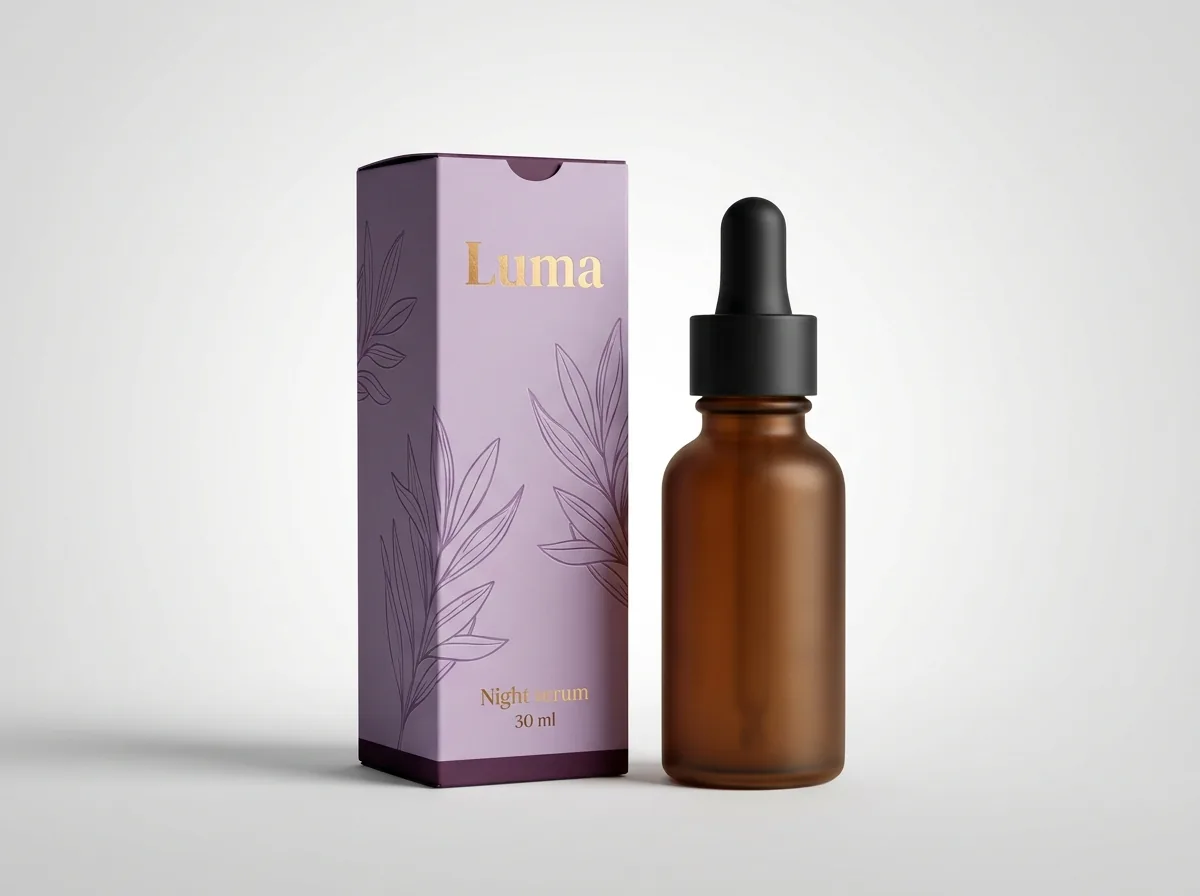
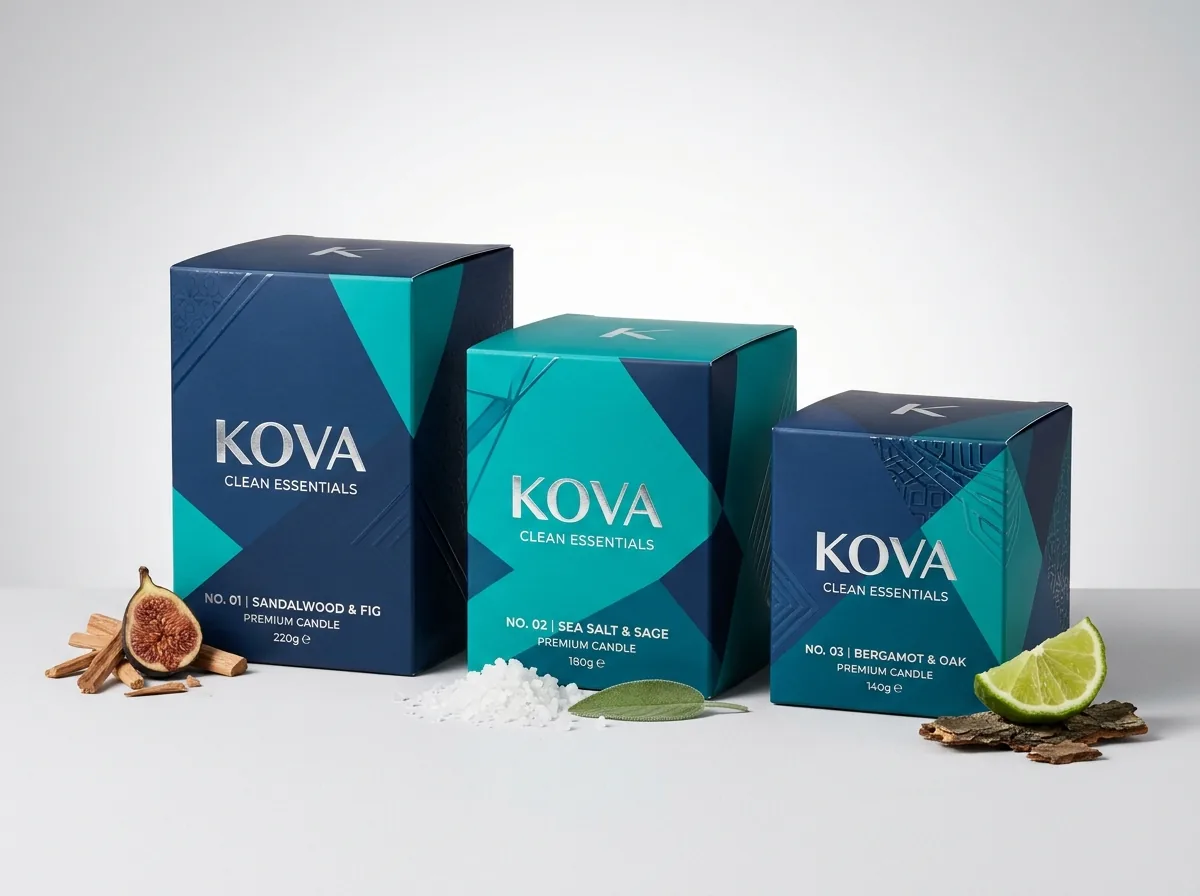
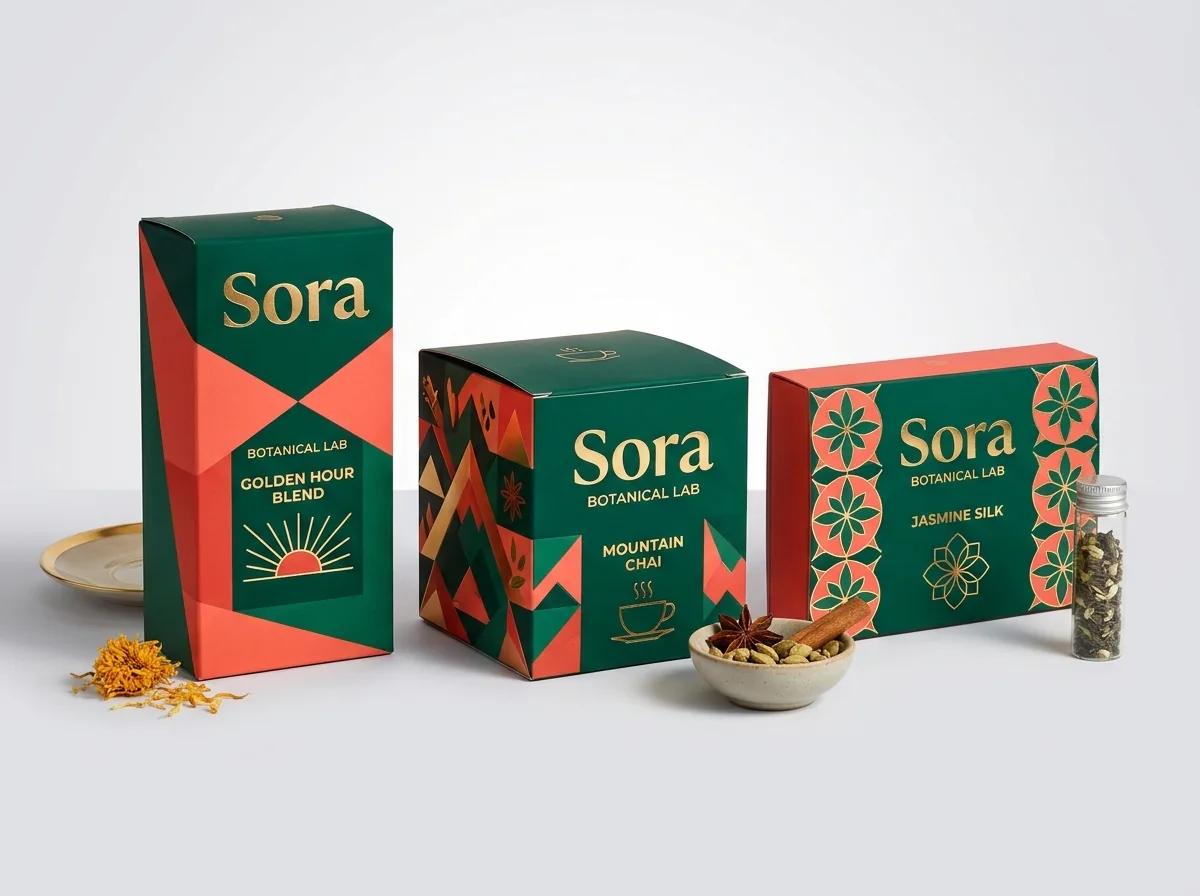
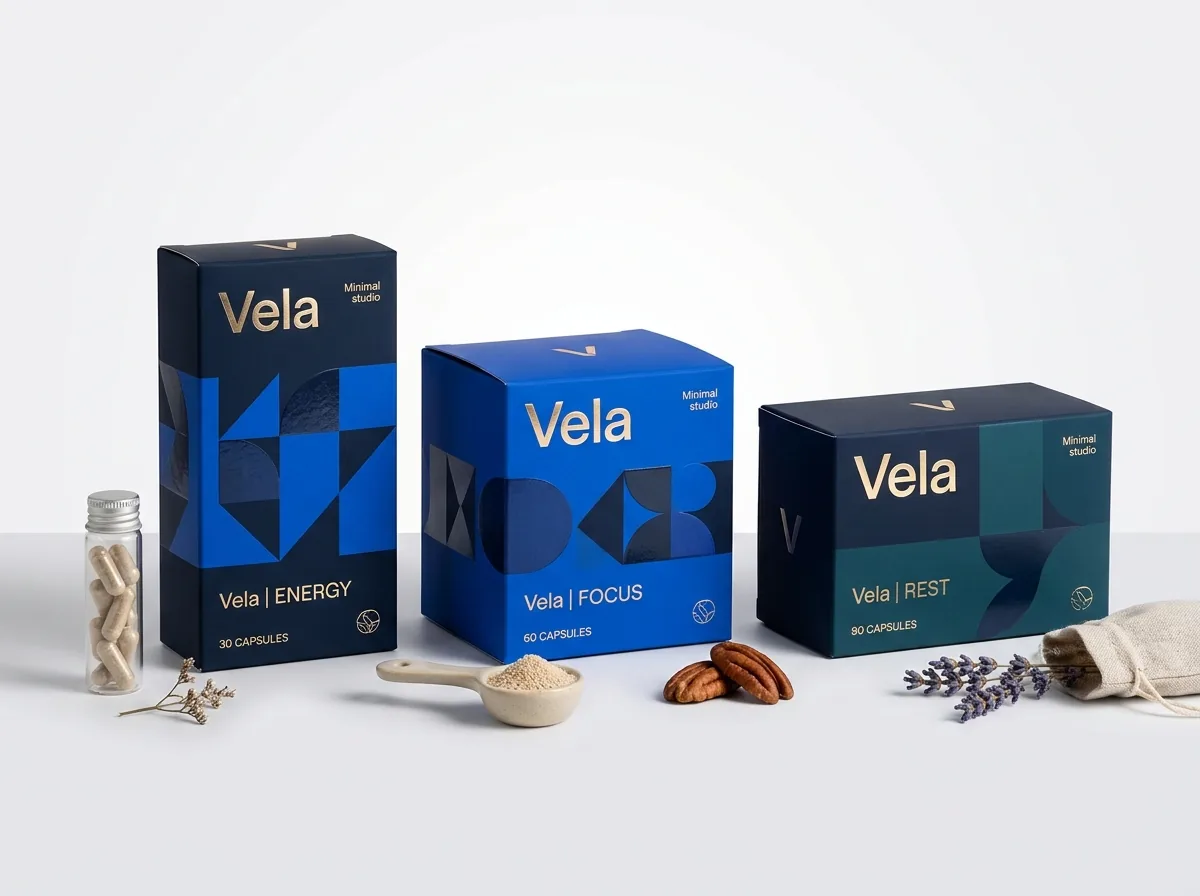
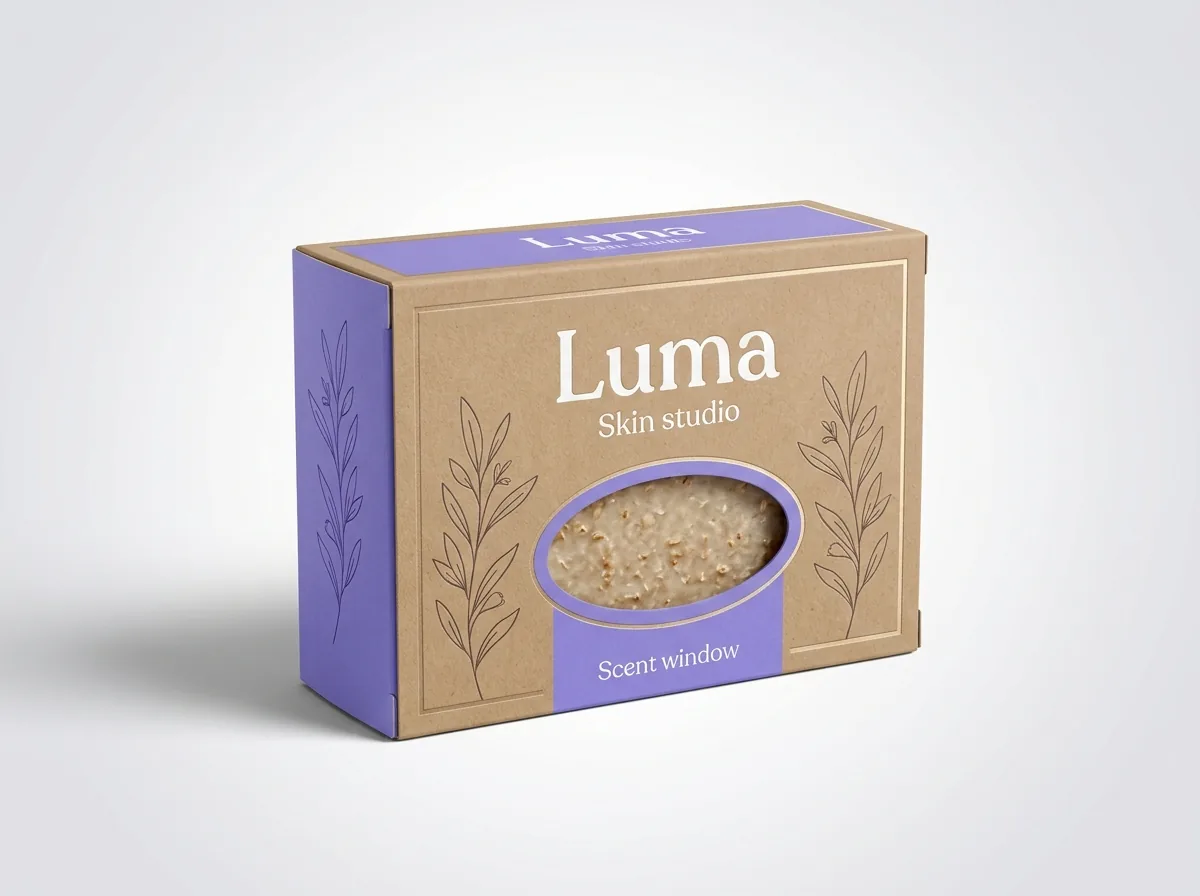
Ready to order product boxes? Compare up to 3 quantities with a free 3D mockup.
Request a Quote →Questions about product boxes
Are custom product box dimensions measured on the inside or the outside?
Custom product box dimensions are always specified as interior usable dimensions in Length × Width × Depth (L × W × D) order. Our structural team automatically adds the physical thickness of the 16 pt, 18 pt, 24 pt, or E-flute board to the outer dieline panels and tuck flaps so your product fits the exact inside cavity you request.
How much clearance should I add around a glass bottle or jar for a product box?
Add 1/16 to 1/8 inch (1.5 to 3 mm) to both the bottle diameter (for interior Length and Width) and the full standing height including the cap or dropper (for interior Depth). That small allowance lets the bottle slide smoothly into the box without rattling or bowing the walls.
What is the difference between 18 pt and 24 pt paperboard for product boxes?
An 18 pt paperboard sheet is 0.018 inches thick (about 350 gsm) and is the industry standard for lightweight retail cartons under 12 to 14 oz, such as 30 ml serums, soaps, and tea boxes. A 24 pt paperboard sheet is 0.024 inches thick (about 450 gsm), offering noticeably stiffer wall resistance for heavier 12 oz to 28 oz glass jars and multi-piece kits.
When should I switch from paperboard to E-flute corrugated board for a product box?
Switch to 1/16-inch E-flute micro-corrugated board whenever your single product weighs more than 1.5 lb (24 oz) or is a fragile heavy vessel like a 9 oz to 12 oz glass candle jar, ceramic mug, or heavy electronics device. E-flute combines a smooth clay-coated outer printing surface with a crush-resistant fluted core.
Can I send you my bottle or jar dimensions and let you size the box and insert?
Yes. Simply enter your bottle or item measurements when you request a quote and let us know if you want a snug direct fit or a custom paperboard insert. Our packaging specialists will calculate the exact interior L × W × D and send a free 2D dieline and 3D mockup before you pay.
Still have a question? Ask a packaging specialist.
Request a Quote →Request your product boxes quote
Tell us your size and quantities, and one dedicated account manager prepares pricing for each tier.
- Free design & AI-to-print studio + 3D mockup
- No die or plate charges · 4–5 day rush available
- Free shipping to all 50 states
- 10% off your first order
We verified interior Length × Width × Depth (L × W × D) measurement conventions, +1/16 to +1/8 inch clearance tolerances, and paperboard caliper-to-weight pairings against Paperboard Packaging Council (PPC) folding carton design standards and Fibre Box Association (FBA) E-flute specifications. A packaging specialist checked every formula and size row. Spot something wrong? Tell us and we fix it.
Sources
What changed
- October 24, 2026: First published with 3-step L × W × D sizing formula, clearance rules by container type, 16 pt to E-flute board chart, and 8-category size table.
More guides
New packaging guides by email
Sizes, materials and design tips. Unsubscribe anytime.