
How do I lay out botanical names and warnings on small essential oil boxes?
Short answer: Keep the front panel of your custom essential oil boxes clean with the common oil name, italicized Latin binomial, plant part and volume, then dedicate the side and back panels to dilution ratios, aromatic notes and safety cautions in 6 pt single-color black ink.
On this page
- What belongs on each panel of a 10 ml or 15 ml essential oil carton
- How do I keep 6 pt Latin names, dilution ratios and warnings sharp on press
- How do I design 10 to 20 essential oil scents to gang-run on one dieline
- Why do laminated essential oil boxes need a glue-and-ink knockout window
- How does CubitPack help set up multi-SKU essential oil artwork for free
- Common mistakes
- FAQs
Request a custom quoteFree dieline & 3D mockup
A 10 ml or 15 ml essential oil carton is only 1.125 to 1.25 inches wide on each side, yet aromatherapy buyers expect far more technical detail than on a typical cosmetic product: the italicized Latin botanical species, plant part distilled, extraction method, country of origin, topical carrier dilution ratios, diffuser drop counts, phototoxicity or child-safety warnings, and a GC/MS batch code. Trying to squeeze all of that onto a wrap-around bottle label forces the font down to an unreadable 4 pt blur. By moving the dilution table, safety cautions and barcode onto the four flat panels of the outer carton - and leaving an unlaminated knockout window on the bottom flap for lot stamping - you keep both the bottle and the box crystal clear. CubitPack sets up your dielines and checks small-type legibility for free.
What belongs on each panel of a 10 ml or 15 ml essential oil carton?
When a customer picks up an essential oil carton in a health food store or apothecary, they read the box in a predictable order: front identity first, scent profile and diffuser/topical instructions second, and purity/safety specifications third. Dividing your text across the four vertical faces and two end flaps prevents any single 1.25-inch wall from turning into a wall of tiny text. Follow the panel-by-panel architecture below when setting up artwork for custom printed essential oil boxes. Keep all text at least 1/8 inch (0.125 in) inside the fold score lines so words never wrap around the vertical box corners.
| Carton panel | Recommended copy & graphics | Prepress legibility rule |
|---|---|---|
| Front panel | Brand logo, common name ('Lavender'), Latin binomial ('Lavandula angustifolia'), net volume ('0.5 fl oz / 15 ml') | Use a color-coded Pantone wrap band per botanical family |
| Left side panel | Plant part ('Flowering tops'), extraction ('Steam distilled'), origin, aroma notes, blends-well-with list | Use clean bullet icons; keep body type at 6.5 pt to 7.5 pt |
| Back panel | Ingredient declaration, topical dilution chart (1% to 3% drops per tsp carrier oil), diffuser drop count | Print text in 100% K black on light board or crisp white knockout |
| Right side panel | Safety cautions (external use only, keep out of reach of children, phototoxicity if citrus), distributor address, barcode | Rotate the UPC barcode vertically (ladder orientation) on narrow panels |
| Top tuck flap | Oil name and matching Pantone color circle so customers can identify bottles from above in storage drawers | Center the circle inside the top flap safe margin |
| Bottom flap | Unvarnished white knockout rectangle for ink-jetting GC/MS batch lot number and harvest/expiration date | Ask prepress to hold back lamination over the stamp rectangle |
How do I keep 6 pt Latin names, dilution ratios and warnings sharp on press?
On a 1.125-inch or 1.25-inch wide panel, your back-panel directions and safety warnings will naturally sit between 6 pt and 7 pt type. At that small scale, two common graphic design habits ruin readability: using a thin serif font, or printing small black text in 4-color CMYK "rich black" (a mix of cyan, magenta, yellow and black plates). Even a microscopic registration shift between four ink plates blurs 6 pt letters. Instead, set all side- and back-panel copy in a clean, open sans-serif typeface using 100% K (single-plate black ink) over a light background. Only the Latin binomial species name (*Lavandula angustifolia*, *Mentha piperita*, *Melaleuca alternifolia*, *Boswellia carterii*) should be italicized. If you use citrus oils like bergamot, cold-pressed lime or bitter orange, box off the UV sun-sensitivity warning with a thin rule border so users never miss it.
- Set all 6 pt to 7 pt body text in 100% K (single-plate black) rather than 4-color CMYK rich black.
- Avoid printing mandatory safety warnings in metallic gold foil or pale pastel ink that disappears under store lights.
- Rotate the UPC barcode 90 degrees into a vertical ladder orientation so the bars have plenty of width on a 1.25-inch panel.
- Include a simple 2-row dilution table (for example, '2% Adult Topical = 6 drops per 10 ml carrier oil').
How do I design 10 to 20 essential oil scents to gang-run on one dieline?
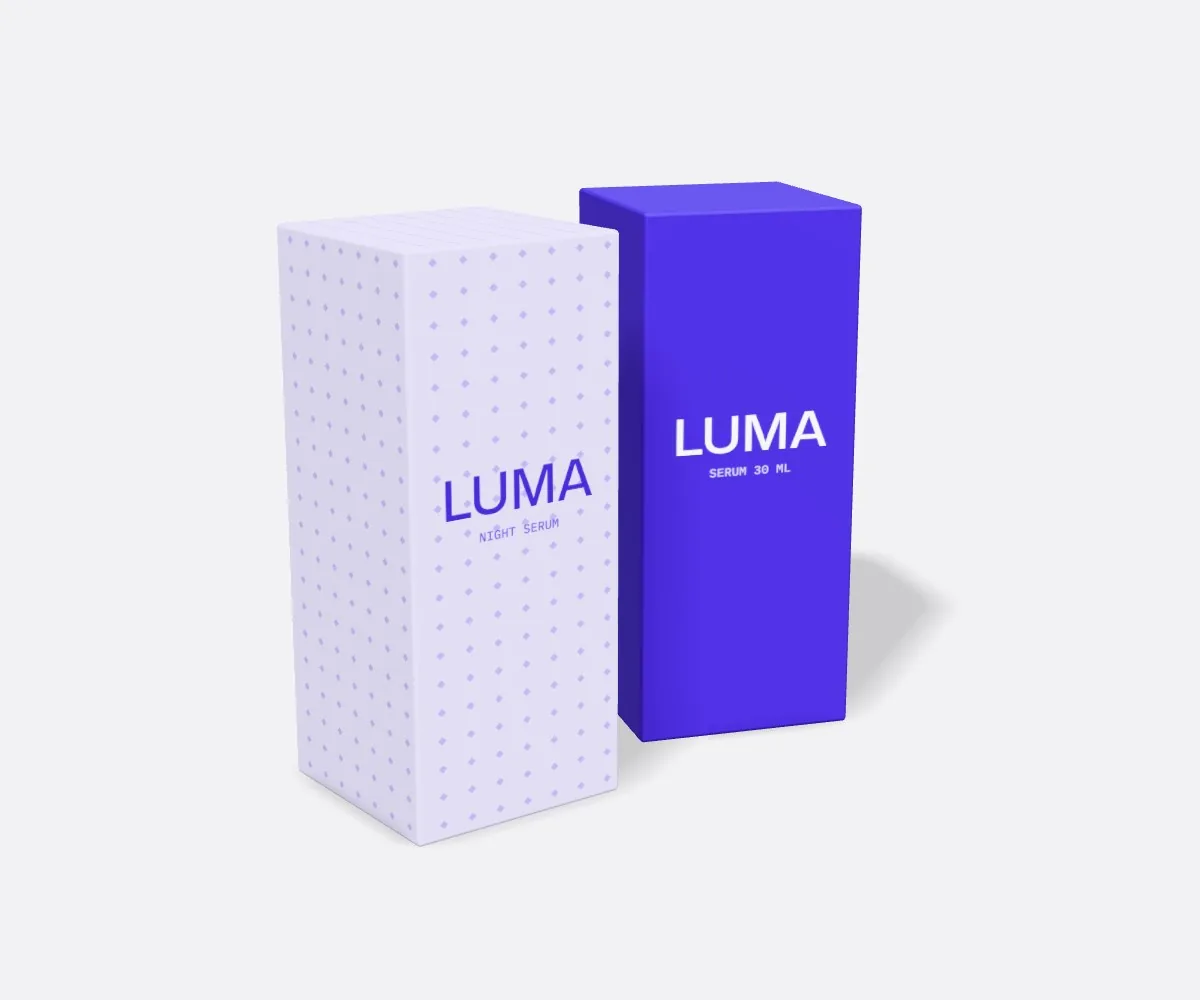
Almost every essential oil company carries a wide catalog of single notes and blends - often ten to twenty-five SKUs all bottled in the exact same 15 ml euro-dropper vial or 10 ml rollerball cylinder. If you build a locked master grid on one 1.25 × 1.25 × 2.875 inch dieline, CubitPack can gang-run multiple scents together in one order starting at 1,000 total cartons. Group your oils into five or six visual color families using guaranteed Pantone color printing bands: soft purple for floral oils, cool green for mint and eucalyptus, warm yellow-orange for citrus, earthy ochre or brown for woods and resins, and deep blue for evening sleep blends. Lock your brand logo and gold foil stamping drop emblem in the exact same position on every file so all SKUs share one structural setup and one foil stamping plate.
- Keep the dieline dimensions, logo position and foil stamping layer identical across every single-oil SKU.
- Assign a distinct Pantone wrap band and matching top-flap circle to each botanical scent family.
- Swap only the front common/Latin name, side origin/extraction notes, back cautions and vertical UPC barcode per file.
- Combine 5, 10 or 15 oil designs into one combined order quantity to unlock lower per-box pricing.
Know your size? Compare pricing across up to 3 quantities.
Request a Quote →Why do laminated essential oil boxes need a glue-and-ink knockout window?
Serious aromatherapy buyers, spas and holistic practitioners look for a GC/MS (Gas Chromatography / Mass Spectrometry) batch lot number and distillation date on every bottle and box so they can look up the third-party purity report on your website. Because batch numbers change with every distillation lot, you don't hard-print them into the main box artwork; you stamp, ink-jet or sticker them during filling. If your boxes are finished with protective matte lamination or soft-touch lamination, standard water-based date-stamp ink will smudge right off the slick polypropylene film. Tell our prepress team to leave a 0.75 × 0.375 inch uncoated, unlaminated white "knockout window" on the bottom tuck flap (or apply one of our custom roll labels), so your lot stamper or thermal coder bites into raw paperboard and dries instantly. You can also place a small 0.625 × 0.625 inch QR code next to the knockout window linking directly to your online GC/MS batch lookup page, keeping at least 0.0625 inch of clear white quiet zone around the QR matrix so phone cameras scan it effortlessly on the first try. In the same way, our prepress team automatically keeps glue flaps free of lamination so the side seam bond holds tight for the life of the bottle.
How does CubitPack help set up multi-SKU essential oil artwork for free?
Setting up fifteen or twenty separate print files with different Latin names, plant origins, dilution notes and barcodes takes real prepress care. With CubitPack's free design help and free custom dielines, our team builds your master 5 ml, 10 ml or 15 ml dieline template, verifies that every 6 pt warning and vertical barcode meets print tolerances, or converts your AI moodboard via print your AI design. If you are launching a new wellness brand from scratch, our complete brand identity design service creates your logo, botanical color system and typography for $250 (or $50 with a qualifying packaging order). Before you pay a cent, you receive a flat 2D digital proof and rotatable 3D mockup for every single scent SKU in your order so you can double-check spelling, Latin binomial italics and barcode numbers side by side. Production takes 10–14 business days (with 4–5 day rush available), shipping is free across all 50 states, and first-time orders receive 10% off.
What are the most common essential oil box layout mistakes?
Tiny 1-inch to 1.25-inch panels punish small prepress errors. Check these five layout mistakes before approving your proof
- Placing a horizontal UPC barcode across a 1.125-inch panel where the quiet zones get clipped by the fold scores; rotate the barcode vertically instead.
- Printing 6 pt botanical Latin names and safety warnings in 4-color CMYK rich black instead of 100% single-plate black ink.
- Forgetting to put the oil name or color dot on the top tuck flap, forcing customers to pull every box out of a drawer to find Peppermint.
- Laminating the entire bottom flap so rubber-stamped or ink-jetted GC/MS batch lot codes smear off the film.
- Omitting phototoxicity warnings on cold-pressed citrus oils (bergamot, lime, lemon, grapefruit) or child-safety notes on wintergreen and eucalyptus.
Find your size
Suggested inside size: 1.0 × 1.0 × 2.375 in
A starting point. Your account manager confirms the size with you before the proof.
Quote this size →Packaging for this
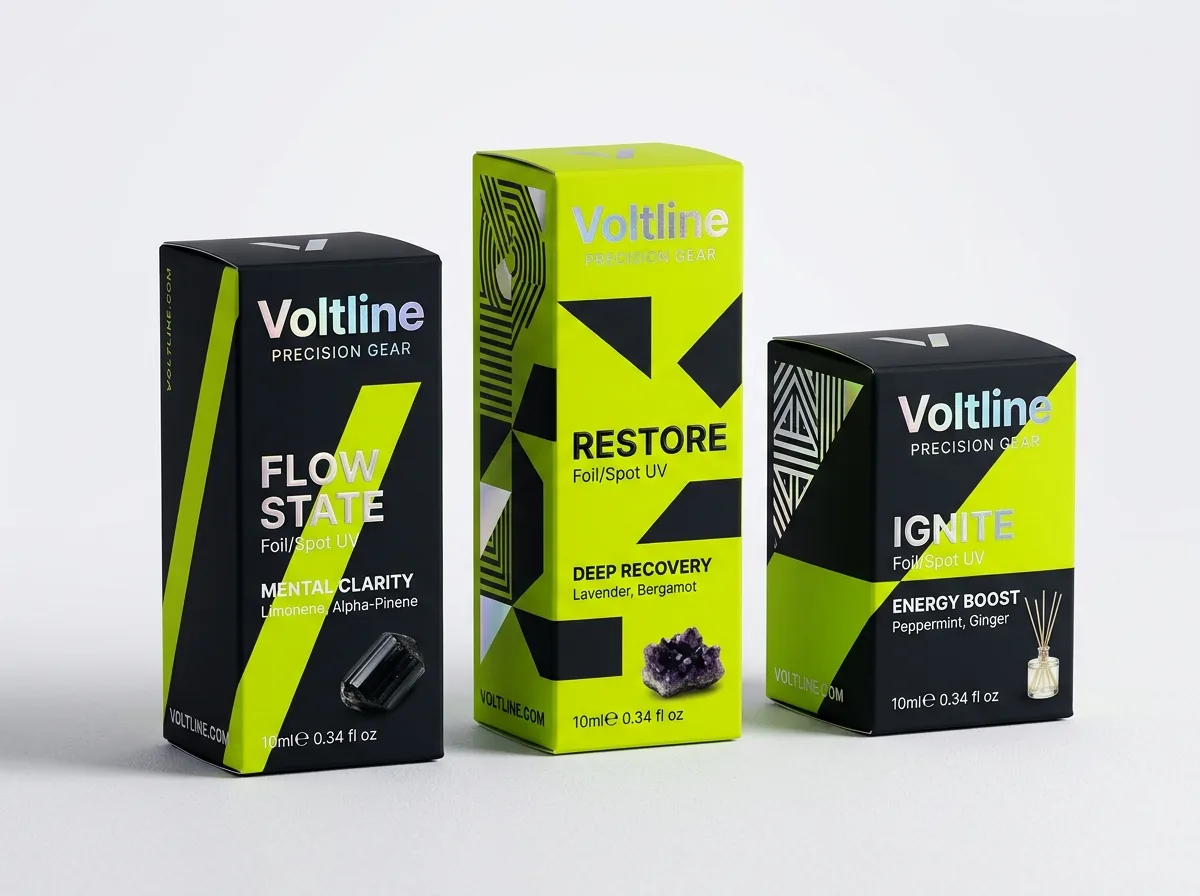
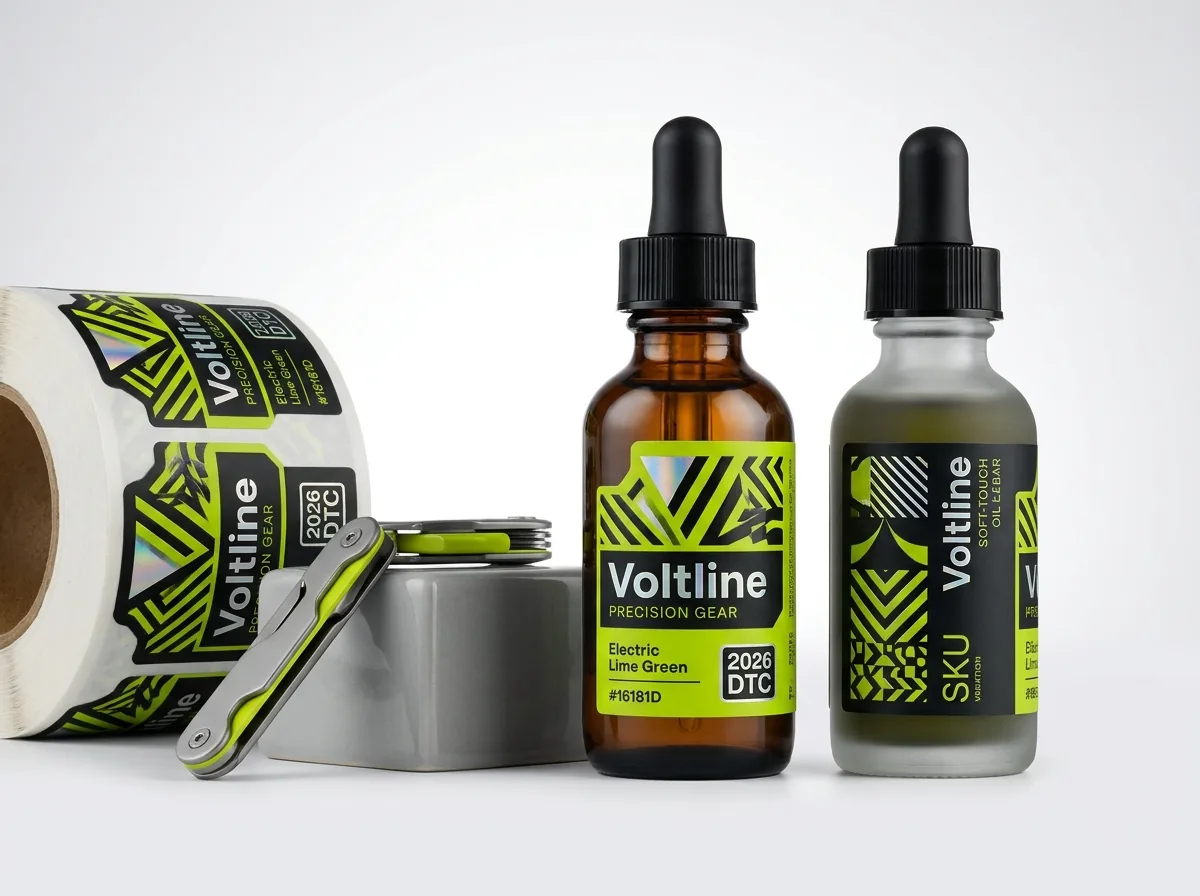
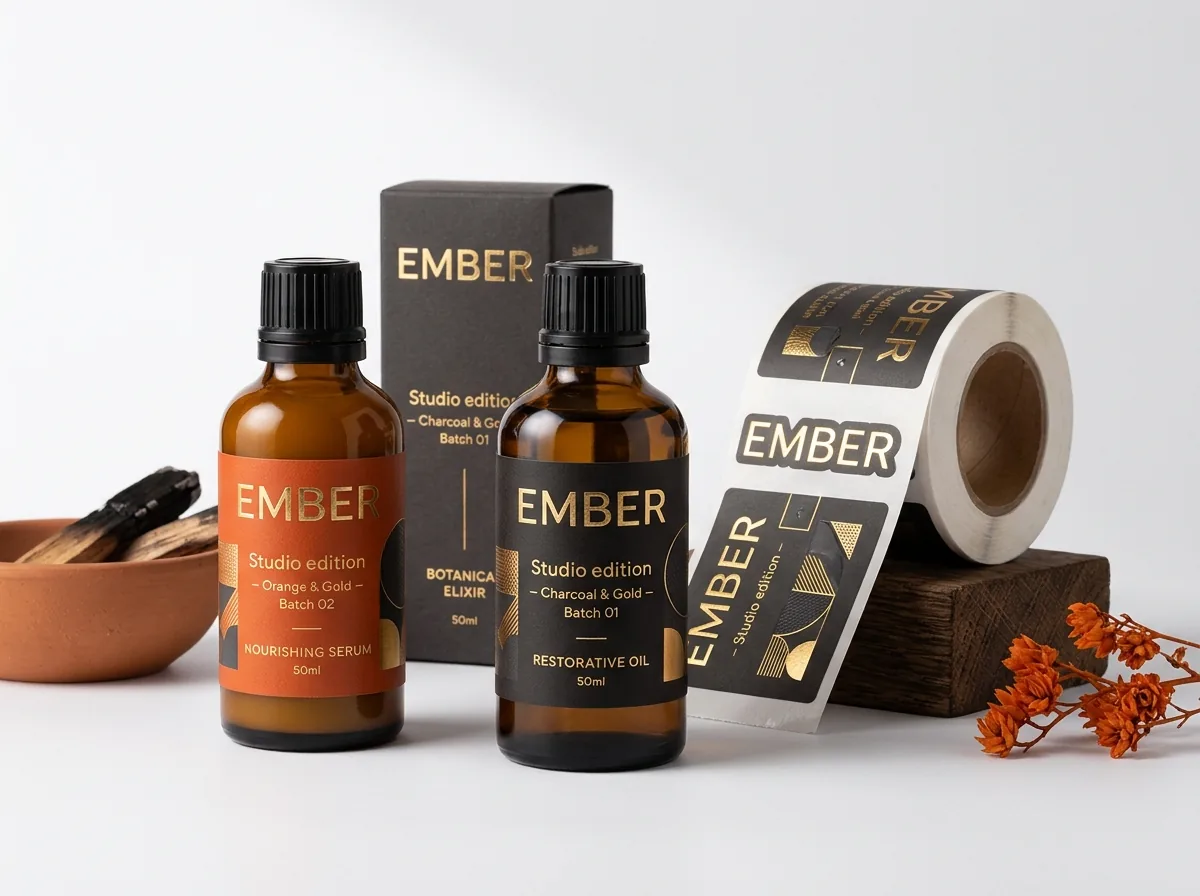
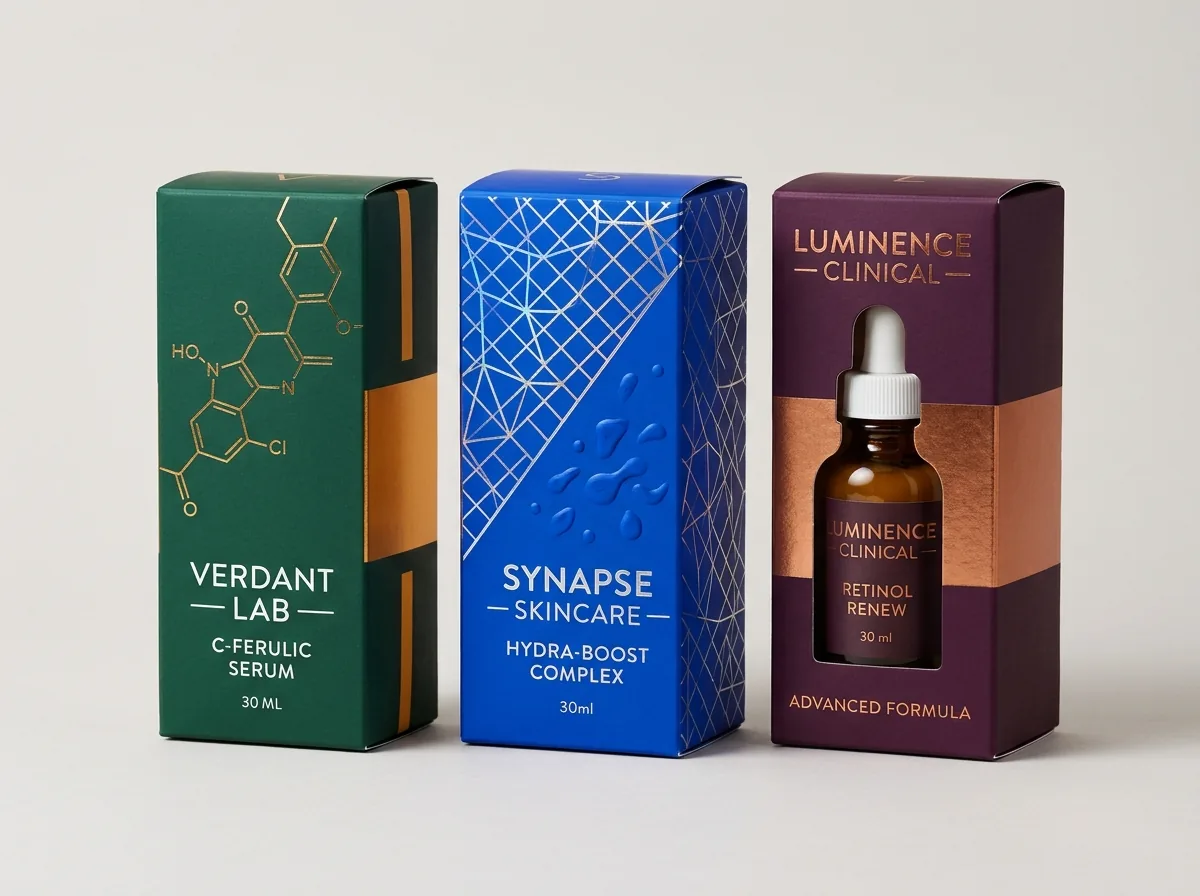
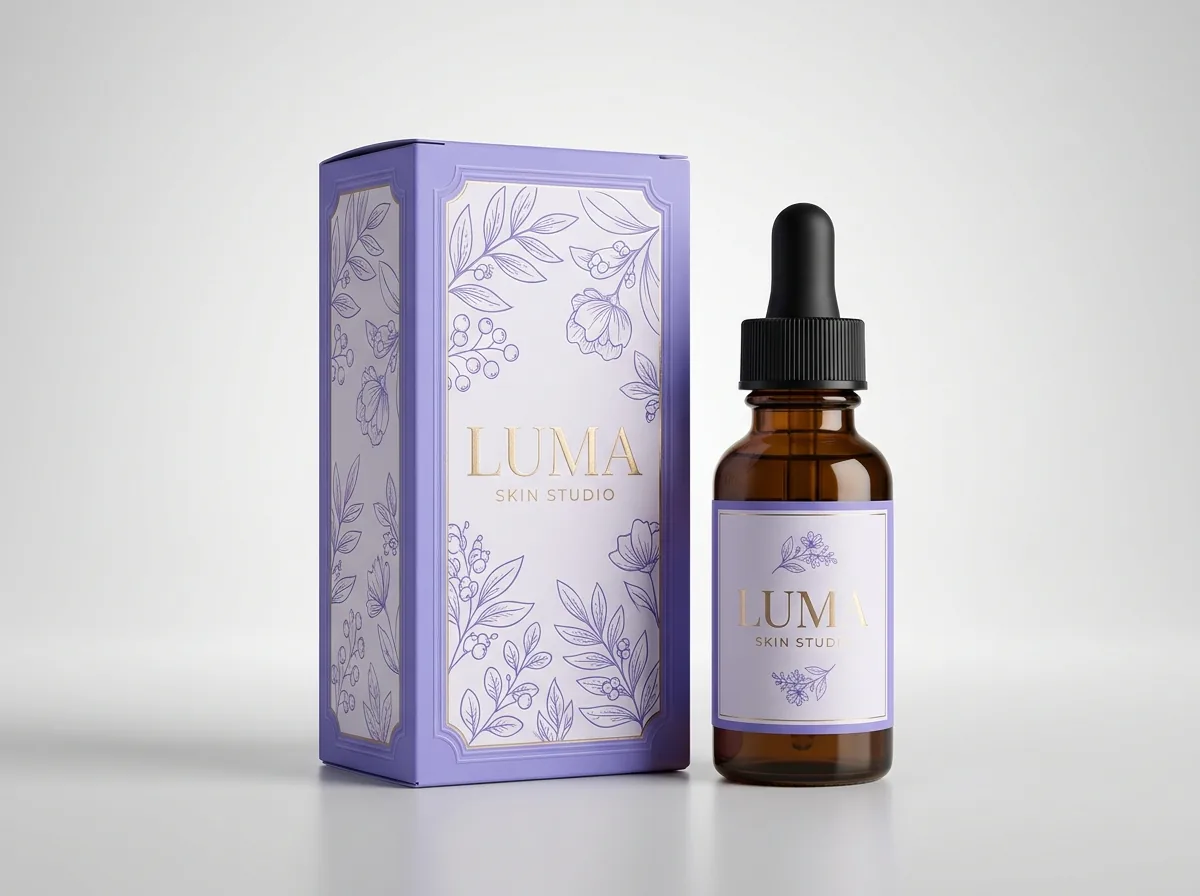
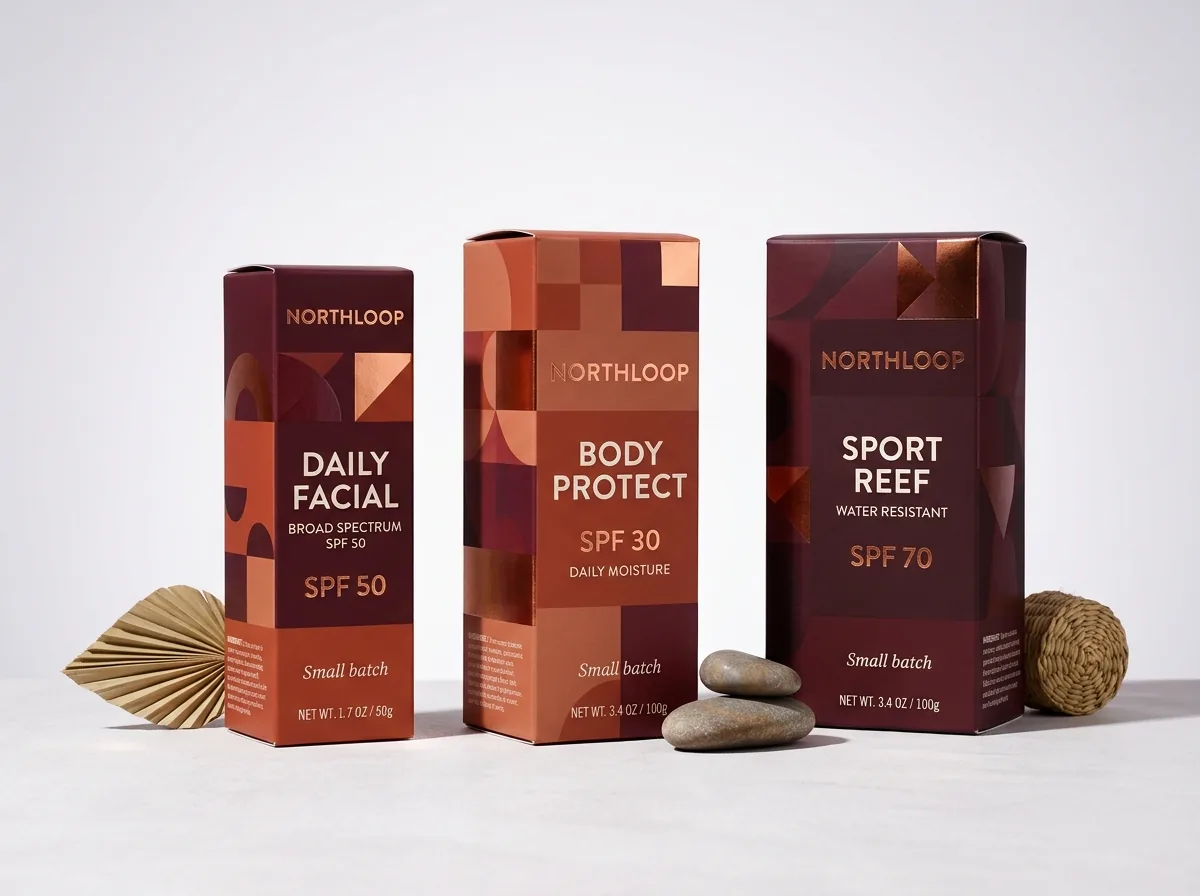
Ready to order essential oil boxes? Compare up to 3 quantities with a free 3D mockup.
Request a Quote →Questions about essential oil boxes
What is the smallest readable font size on a 10 ml or 15 ml essential oil box?
Keep side- and back-panel text at 6 pt or larger in a clean, regular-weight sans-serif font printed in 100% single-plate black ink on a light background. If you print white text knocked out of a dark background, step up to at least 6.5 pt or 7 pt.
How do I fit a UPC barcode on a 1.125-inch or 1.25-inch wide carton panel?
Turn the barcode 90 degrees so the bars run horizontally like rungs on a ladder (vertical ladder orientation). That lets the barcode use the 2.625-inch or 2.875-inch height of the box while easily preserving the required white quiet zones.
Should an essential oil box be classified as a cosmetic or a household fragrance product?
In the US, intended use determines the labeling rules: an essential oil marketed for skin or hair application (such as a facial oil or topical roll-on) follows FDA cosmetic labeling rules, while an oil marketed strictly for room diffusers follows CPSC/FTC household rules.
Can I print dilution instructions inside the box instead of on the back panel?
Yes! Printing a detailed carrier-oil dilution chart and diffuser guide on the inside of the carton using inside printing is a great way to declutter the outside panels - just include a 'See inside box for dilution guide' note on the exterior.
Can you match my box Pantone colors to my bottle wrap labels?
Yes. CubitPack produces both custom essential oil boxes and custom essential oil bottle labels, and we guarantee Pantone color matching so your lavender, peppermint and citrus color bands match across the bottle and carton.
What if I don't have a graphic designer to lay out all 15 of my essential oil SKUs?
Our free design help covers your dieline and layout setup. Once we lock in your master box layout together, our prepress team can help populate your scent names, Latin binomials, color bands and barcodes across your lineup.
Still have a question? Ask a packaging specialist.
Request a Quote →Request your essential oil boxes quote
Tell us your size and quantities, and one dedicated account manager prepares pricing for each tier.
- Free design & AI-to-print studio + 3D mockup
- No die or plate charges · 4–5 day rush available
- Free shipping to all 50 states
- 10% off your first order
This layout guide combines US cosmetic and household labeling guidelines (FDA and CPSC) with CubitPack's small-panel prepress, vertical barcode and multi-SKU gang-run standards. A packaging specialist checked every specification. Spot something wrong? Tell us and we will fix it.
Sources
What changed
- October 22, 2026: First published.
- October 22, 2026: Updated specifications, terminology, and verified source links.
More guides
New packaging guides by email
Sizes, materials and design tips. Unsubscribe anytime.