
What size essential oil box fits 5 ml, 10 ml and 15 ml bottles?
Short answer: Measure the base diameter and capped height of your glass vial, then add 1/16 to 1/8 inch of clearance. Typical inside sizes for custom essential oil boxes are 1.0 × 1.0 × 2.375 in for 5 ml, 1.125 × 1.125 × 2.625 in for 10 ml euro-droppers, and 1.25 × 1.25 × 2.875 in for 15 ml bottles.
On this page
- How do I measure an essential oil vial and cap for a custom carton
- What are the standard essential oil box dimensions for single vials and sets
- Why do 10 ml euro-dropper vials and 10 ml rollerball vials take different boxes
- How much clearance do child-resistant caps and pipette droppers add
- How do I calculate the inside dimensions of a 3-bottle or 6-bottle gift box
- Common mistakes
- FAQs
Request a custom quoteFree dieline & 3D mockup
Essential oil bottles come in two distinct glass shapes that require very different carton proportions: short DIN-18 euro-dropper vials with orifice reducers, and tall slim cylindrical rollerball vials for pulse-point blends. Even when both hold exactly 10 ml (1/3 fl oz) of liquid, a 10 ml euro-dropper bottle takes a 1.125 × 1.125 × 2.625 inch carton while a 10 ml roll-on bottle takes a 0.875 × 0.875 × 3.5 inch carton. Standard 5 ml (1/6 fl oz) vials fit a 1.0 × 1.0 × 2.375 inch box, and 15 ml (0.5 fl oz) aromatherapy vials fit a 1.25 × 1.25 × 2.875 inch box. If your oil uses a wider push-and-turn child-resistant closure or an internal corrugated liner, add 1/8 to 1/4 inch accordingly. Every CubitPack carton is cut to your exact inside dimensions with no die or plate charges.
How do I measure an essential oil vial and cap for a custom carton?
Because 5 ml, 10 ml and 15 ml essential oil vials are compact, even a 1/16-inch discrepancy in cap diameter or shoulder height can make a box feel either too loose or too tight to close. Always measure a physical glass bottle from your supplier with the actual closure screwed all the way down over the orifice reducer or rollerball housing. Check both the glass body diameter at the base and the outer diameter of the cap collar. On standard tamper-evident DIN-18 euro-dropper caps, the plastic tamper-evident breakaway ring is virtually flush with a 10 ml or 15 ml bottle wall, but on a smaller 5 ml vial (or any vial fitted with a two-piece push-and-turn child-resistant cap), the cap collar is often wider than the glass base. Take whichever diameter is larger and add 1/16 to 1/8 inch (0.0625 to 0.125 in) to set your inside length and inside width. Then measure the vertical height from the flat table to the top of the cap and add 1/8 inch so the top dust flaps fold flat when ordering printed essential oil cartons.
- Snap the orifice reducer or stainless rollerball insert fully into the neck and screw the cap tight.
- Measure both the glass base diameter and the outer cap ring diameter with digital calipers or a ruler.
- Use the wider of those two numbers plus 1/16 to 1/8 inch as your inside box length (L) and width (W).
- Measure total vertical height from the bottom glass heel to the top of the cap and add 1/8 inch for height (H).
- Write dimensions as L × W × H in inches (for a single round vial, L and W are equal).
What are the standard essential oil box dimensions for single vials and sets?
While CubitPack builds every dieline to order with zero tooling fees, most amber, cobalt green and ultraviolet violet essential oil bottles follow international DIN-18 neck standards or standard 10 ml roll-on tube dimensions. Use the reference chart below to benchmark your single-bottle cartons and multi-bottle gift sets. Pay close attention to rows two and three: both hold 10 ml (1/3 fl oz), yet their inside dimensions are completely different because a euro-dropper bottle is short and wide whereas a rollerball bottle is tall and slender.
| Essential oil vial or set | Typical inside box size (L × W × H) | Recommended box style |
|---|---|---|
| 5 ml (1/6 fl oz) amber euro-dropper vial | 1.0 × 1.0 × 2.375 in | Reverse tuck end |
| 10 ml (1/3 fl oz) euro-dropper vial (tamper cap) | 1.125 × 1.125 × 2.625 in | Reverse or straight tuck end |
| 10 ml (1/3 fl oz) tall rollerball / roll-on vial | 0.875 × 0.875 × 3.5 in | Straight tuck end |
| 15 ml (0.5 fl oz) standard euro-dropper bottle | 1.25 × 1.25 × 2.875 in | Reverse or straight tuck end |
| 30 ml (1 fl oz) euro-dropper or glass pipette bottle | 1.5 × 1.5 × 3.5 in (or 4.25 in with pipette) | Straight tuck or auto lock bottom |
| 3-bottle trio set (three 10 ml or 15 ml vials) | 3.875 × 1.375 × 3.0 in | Tray and sleeve or tuck box with divider |
| 6-bottle starter set (2 × 3 grid of 15 ml vials) | 4.0 × 2.75 × 3.0 in | Two-piece or magnetic box with cell grid |
| 6-bottle roll-on set (six 10 ml rollerballs flat) | 6.0 × 4.0 × 1.25 in | Magnetic closure or mailer with foam cradle |
Why do 10 ml euro-dropper vials and 10 ml rollerball vials take different boxes?
New wellness brands often order "10 ml essential oil boxes" without specifying how the oil is dispensed, only to discover that two entirely different 10 ml glass bottles exist across the aromatherapy industry. Pure undiluted single oils (such as 100% lavender or peppermint for ultrasonic diffusers) are bottled in a squat 10 ml euro-dropper vial that measures roughly 0.98 inches (25 mm) in diameter and 2.44 inches (62 mm) tall with its tamper-evident orifice reducer cap. That bottle requires a 1.125 × 1.125 × 2.625 inch square carton. Pre-diluted topical blends (such as sleep, stress or temple relief oils diluted in fractionated coconut or jojoba oil) are bottled in a tall cylindrical 10 ml rollerball tube that measures roughly 0.78 inches (20 mm) in diameter and 3.35 inches (85 mm) tall with its screw-on cap. That slender cylinder swims inside a euro-dropper box and is too tall to close the lid; it needs a 0.875 × 0.875 × 3.5 inch straight tuck end box. If you sell both pure diffuser oils and roll-on blends, tell your account manager so we set up each dieline accurately.
Know your size? Compare pricing across up to 3 quantities.
Request a Quote →How much clearance do child-resistant caps and pipette droppers add?
Under US Poison Prevention Packaging Act rules administered by the CPSC, certain essential oils high in methyl salicylate or cineole (such as wintergreen, sweet birch and eucalyptus oils) require child-resistant push-and-turn closures when sold in consumer sizes. A two-piece child-resistant cap has an outer plastic shell that spins freely unless pressed down, adding about 1/8 inch (3 mm) to both the cap diameter and the vertical height compared with a standard ribbed cap. Similarly, if you replace a flat plastic orifice reducer with a rubber-bulb glass pipette dropper on a 15 ml or 30 ml aromatherapy blend, the rubber squeeze bulb adds 0.6 to 0.85 inches to the total height. Always measure the exact cap style your batch uses before finalizing your carton height.
How do I calculate the inside dimensions of a 3-bottle or 6-bottle gift box?
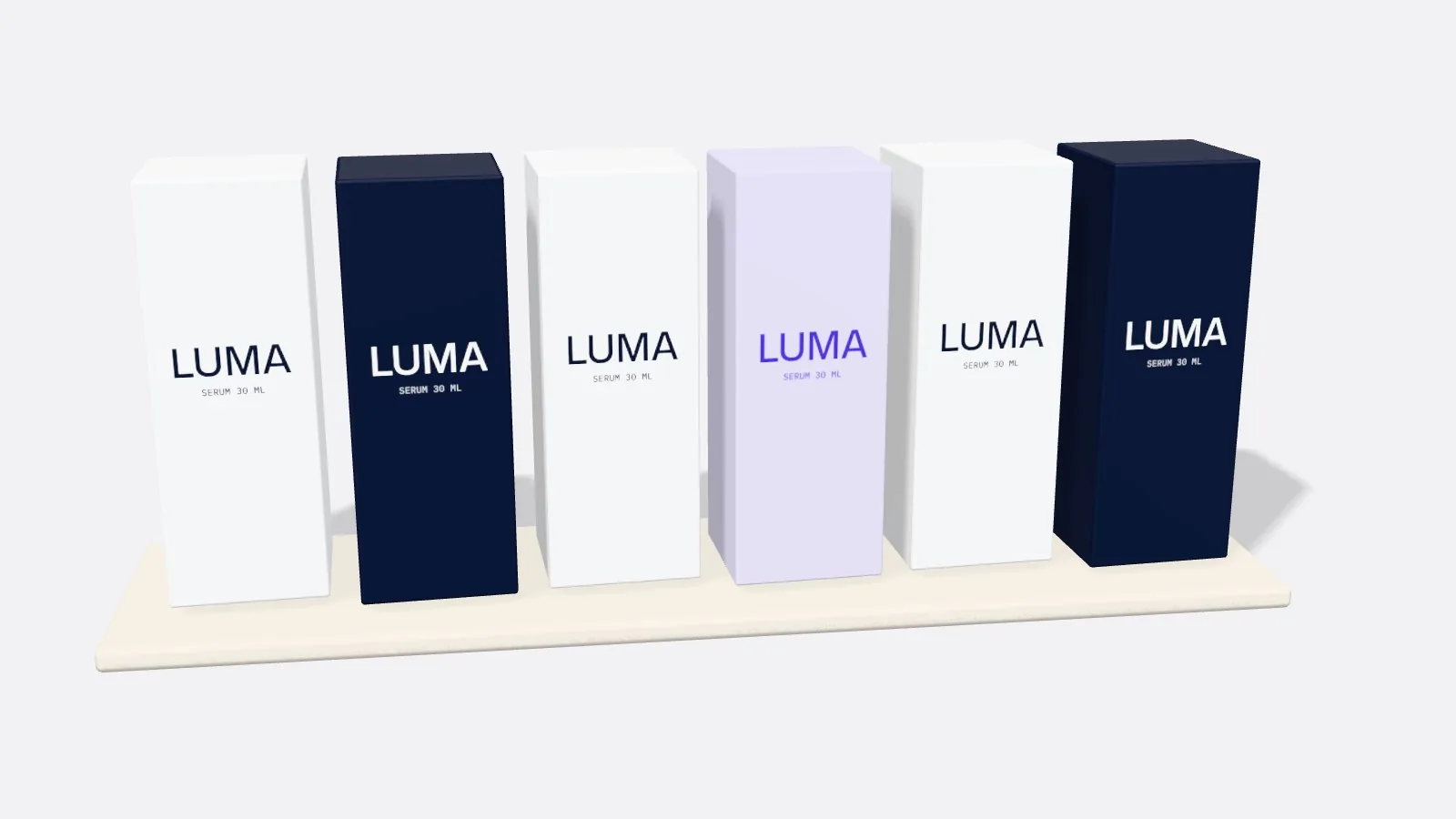
When packing three, six or twelve glass essential oil vials in a single discovery set, the bottles must never touch glass-to-glass. Either an interlocking paperboard cell partition or a die-cut EVA foam insert sits between every vial to absorb parcel drops and vibrations. To calculate the inside length and width of a partitioned gift box using custom cardboard inserts, multiply the bottle diameter by the number of columns and rows, then add 1/16 inch per cardboard divider wall (or 3/8 inch per foam bridge between cavities) plus 1/8 inch of outer clearance. For example, three 15 ml bottles (each 1.125 inches wide) lined up in a 3 × 1 row with two cardboard divider walls fit neatly inside a 3.875 × 1.375 × 3.0 inch tray and sleeve box. Six 15 ml bottles arranged 3 wide by 2 deep fit a 4.0 × 2.75 × 3.0 inch two-piece box or magnetic closure box. If you lay six 10 ml rollerball bottles flat face-up inside a foam tray so every scent label faces the buyer when the lid opens, a 6.0 × 4.0 × 1.25 inch footprint gives each roll-on cylinder a clean 3/8-inch foam border.
What are the most common essential oil box sizing mistakes?
Millimeter differences matter on tiny aromatherapy cartons. Check these five sizing traps before approving your dieline proof
- Ordering a squat 10 ml euro-dropper box (1.125 × 1.125 × 2.625 in) for a tall 10 ml rollerball bottle (0.875 × 0.875 × 3.5 in).
- Measuring the glass base of a 5 ml vial instead of its wider tamper-evident or child-resistant cap ring, making the carton too narrow at the top.
- Switching from a flat orifice reducer cap to a rubber-bulb glass pipette without adding 3/4 inch to the box height.
- Sizing a 3-pack or 6-pack box by multiplying the bottle diameter without adding thickness for the internal divider walls.
- Making a tiny 1-inch box out of overly thick, stiff board without adjusting the tuck flap scores, causing the top flap to spring open.
Find your size
Suggested inside size: 1.0 × 1.0 × 2.375 in
A starting point. Your account manager confirms the size with you before the proof.
Quote this size →Packaging for this
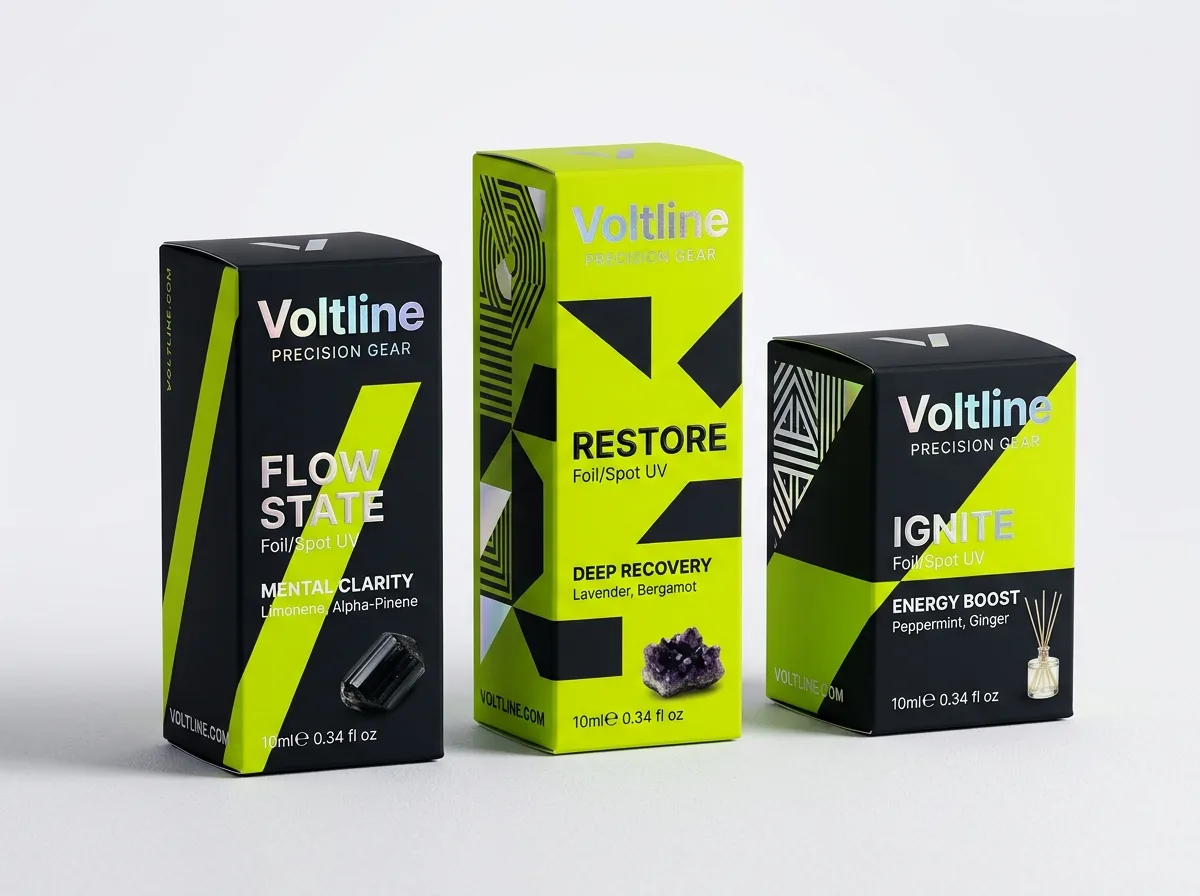
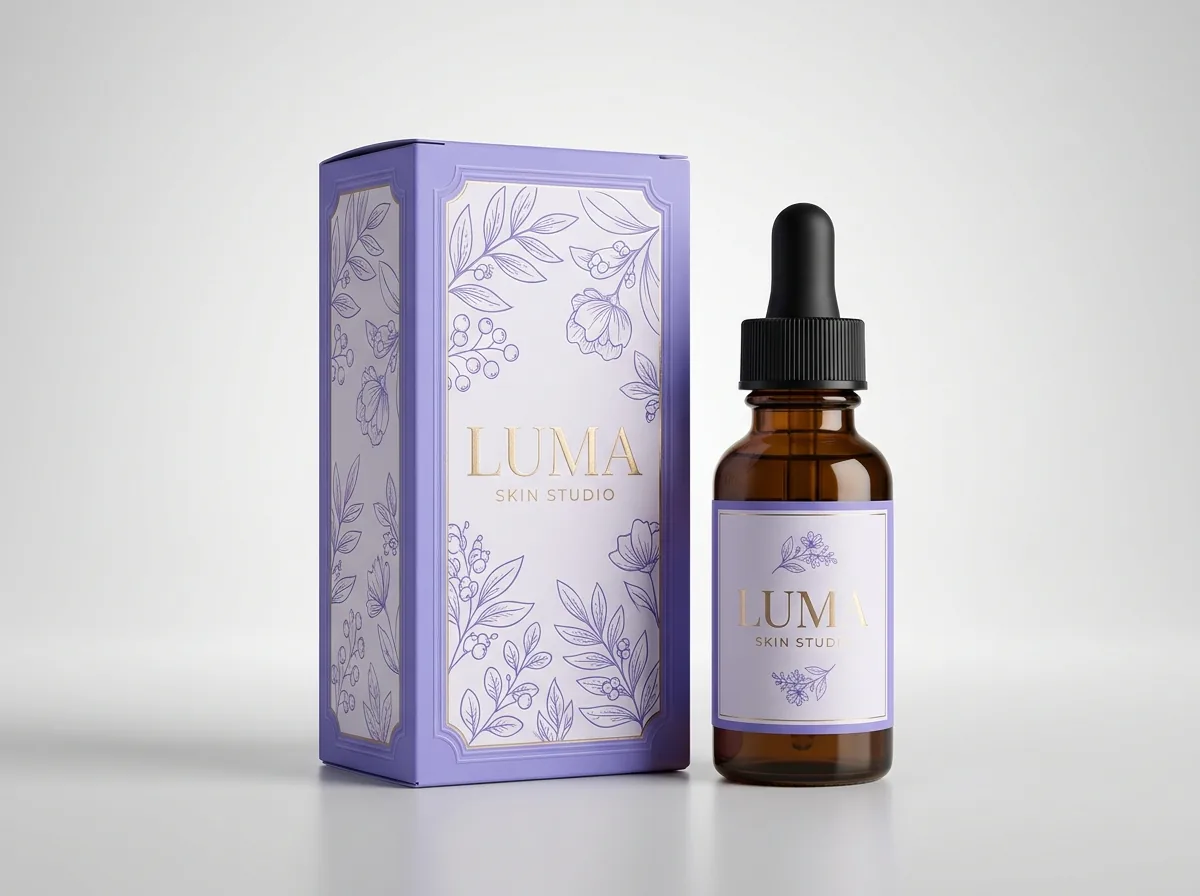
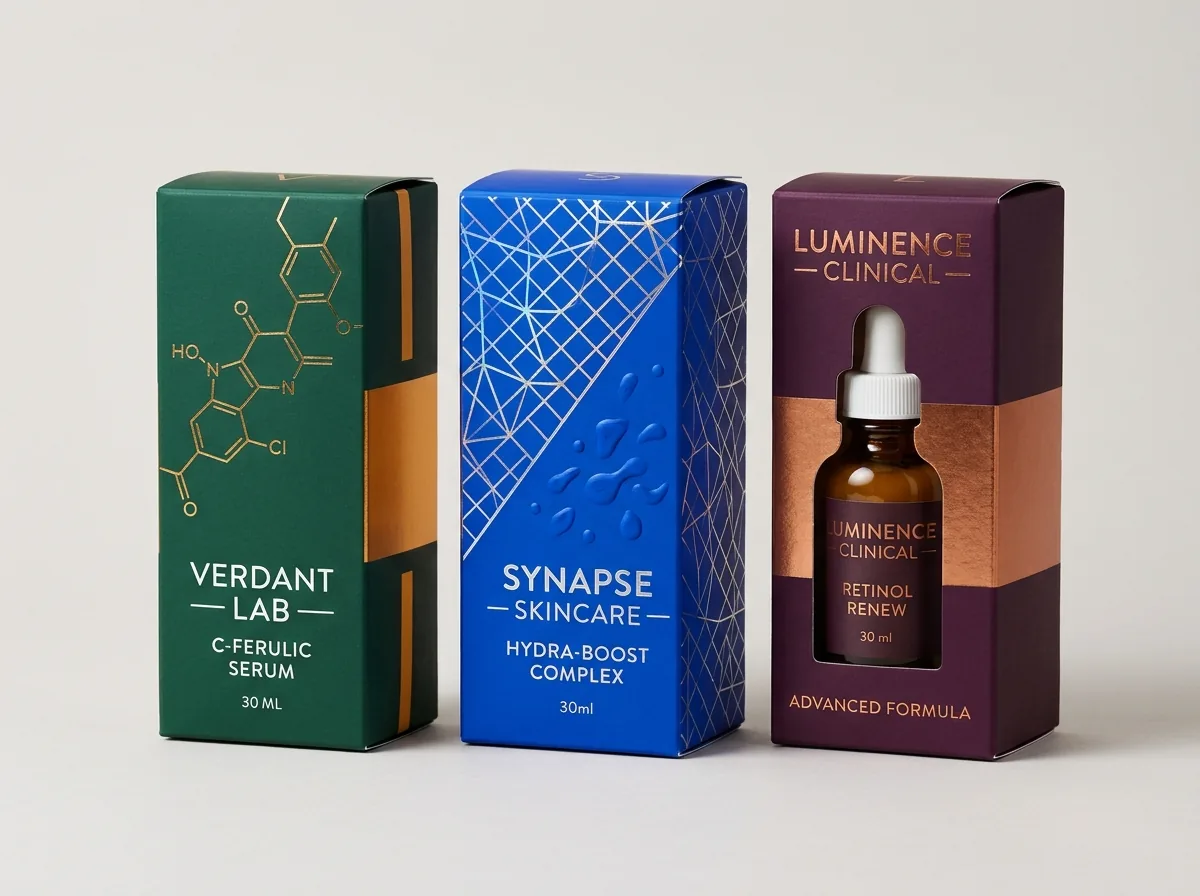

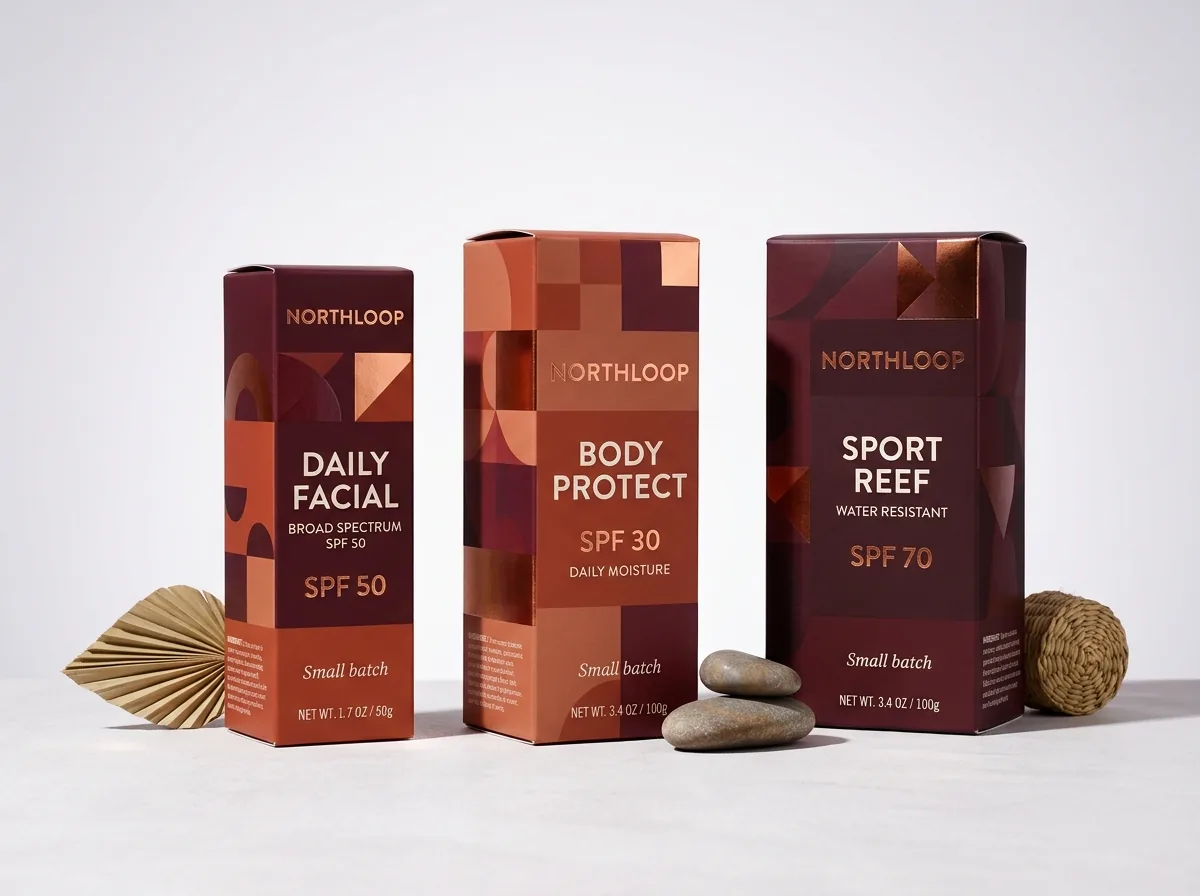
Ready to order essential oil boxes? Compare up to 3 quantities with a free 3D mockup.
Request a Quote →Questions about essential oil boxes
Are essential oil box sizes listed as inside or outside dimensions?
All CubitPack box sizes are quoted as inside dimensions (length × width × height in inches), because the inside cavity is what must fit your amber glass vial and cap. The outside dimensions will be slightly larger by the thickness of the paperboard.
What is the standard size for a 15 ml essential oil box?
Most 15 ml (0.5 fl oz) amber glass DIN-18 euro-dropper bottles measure about 1.12 inches in diameter and 2.72 inches tall with the tamper-evident orifice cap attached. A 1.25 × 1.25 × 2.875 inch inside carton is the standard snug fit.
Can I order both 10 ml rollerball boxes and 15 ml euro-dropper boxes in the same quote?
Yes. Because rollerballs and euro-droppers have different dimensions, each size has its own custom dieline (with zero die charges on either). List both sizes in your quote request and your account manager will price both together.
How do I size a box for a 6-bottle essential oil set where the bottles lie flat?
If you lay six 10 ml rollerball or 15 ml euro-dropper bottles flat face-up inside a die-cut EVA foam tray (so every label faces the customer when the lid opens), allow 3/8 inch of foam between bottles - typically around 6.5 × 4.25 × 1.5 inches.
What size counter display box holds 12 or 24 single essential oil cartons?
For twelve 1.25 × 1.25 inch 15 ml cartons arranged 4 wide by 3 deep, a counter display tray is roughly 5.375 × 4.125 inches inside. For twenty-four cartons arranged 6 wide by 4 deep (6 scents × 4 deep), it is roughly 8.0 × 5.5 inches.
Can I test my bottle inside a physical sample box before running 1,000 units?
Yes. Every order includes a free 2D digital proof and 3D mockup before payment. You can also request a paid physical sample cut to your exact millimeter or inch dimensions (credited toward your production order) or order our $50 sample kit.
Still have a question? Ask a packaging specialist.
Request a Quote →Request your essential oil boxes quote
Tell us your size and quantities, and one dedicated account manager prepares pricing for each tier.
- Free design & AI-to-print studio + 3D mockup
- No die or plate charges · 4–5 day rush available
- Free shipping to all 50 states
- 10% off your first order
The measurements in this guide are based on standard 5 ml, 10 ml, 15 ml and 30 ml DIN-18 euro-dropper vials and 10 ml glass roll-on cylinders with 1/16 to 1/8 inch folding clearance. A CubitPack packaging specialist verified every row. Spot a mistake? Let us know and we will fix it.
Sources
What changed
- October 22, 2026: First published.
- October 22, 2026: Updated specifications, terminology, and verified source links.
More guides
New packaging guides by email
Sizes, materials and design tips. Unsubscribe anytime.