
How do I design concealer boxes for 30+ undertones and shades?
Short answer: Keep one master dieline across your entire concealer lineup, lock your brand logo and ingredient panel in fixed layers, and swap only the top-flap shade badge, Pantone swatch band, and UPC barcode per SKU. That lets us gang-run 20 to 40 shades of custom concealer boxes with zero die fees.
On this page
- How should I map the four vertical panels and top flap of a concealer box
- Why are top-flap shade badges and matte swatch bands so important
- How do I position a die-cut window on a doe-foot concealer carton
- How do I fit INCI ingredients and 30+ barcodes onto a 0.875 inch panel
- How does multi-SKU gang printing keep 30-shade concealer runs simple
- Common mistakes
- FAQs
Request a custom quoteFree dieline & 3D mockup
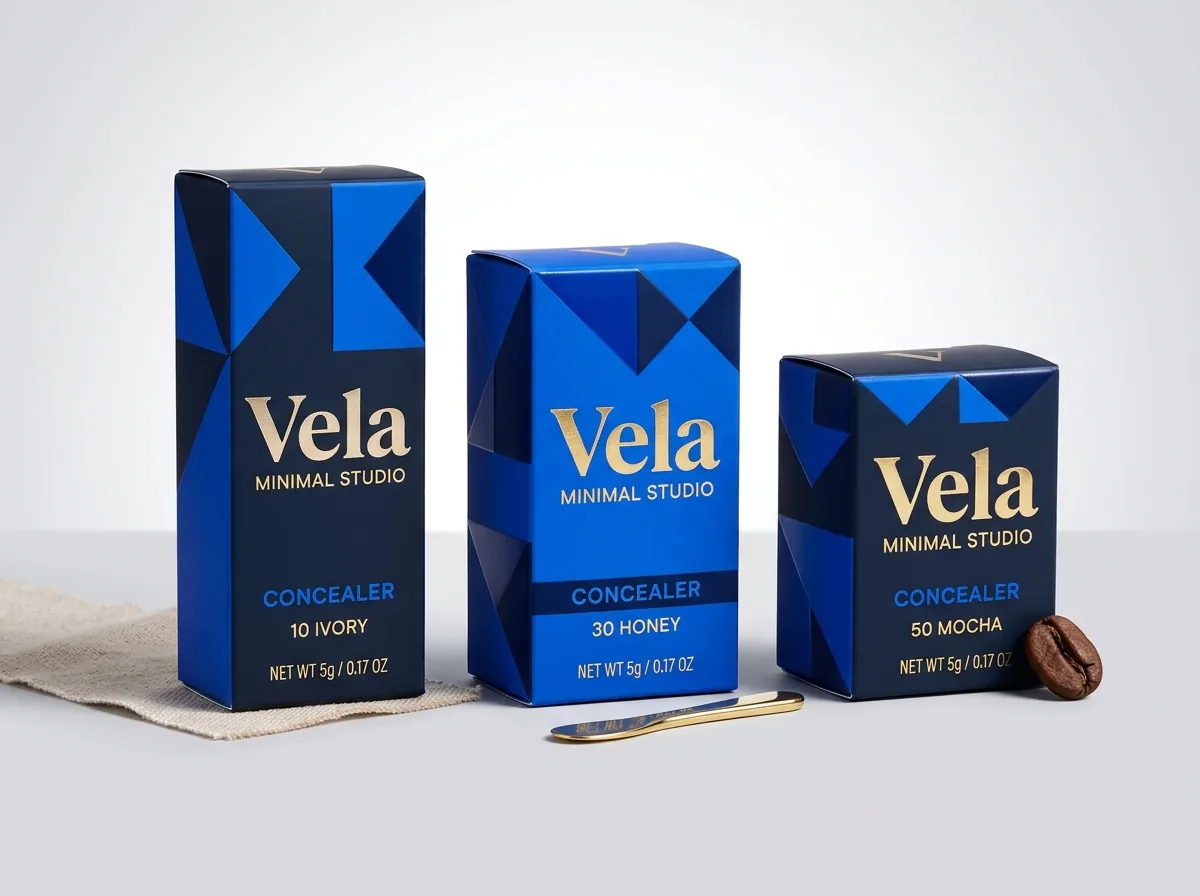
Designing packaging for a modern complexion line means managing 20 to 40 skin tones, plus peach, green, yellow, and lavender color correctors, on a narrow 0.875 inch wide carton without confusing shoppers or multiplying prepress setup costs. The smartest workflow uses a single master dieline where your front brand mark, formula claims, and rear INCI ingredient declaration stay identical across every shade in a formula group, while a dedicated variable layer holds the shade number, undertone code (C, W, N, or O), calibrated Pantone swatch band, and SKU-specific UPC barcode. Pairing that layout with low-glare matte lamination ensures fair, olive, and deep swatch bands look true to life under bright store LEDs. At CubitPack, we gang all of your shades on press when producing custom printed concealer boxes with guaranteed Pantone matching and free design support.
How should I map the four vertical panels and top flap of a concealer box?
A standard 0.875 × 0.875 × 4.5 inch concealer carton gives you four tall, narrow vertical panels plus a 0.875 inch square top tuck flap and bottom flap. Because beauty stores stand concealer cartons upright in deep acrylic gondola slots, shoppers browsing the display see the top tuck flap and the top third of the front panel first. Use the panel layout map below to assign every required piece of retail and regulatory copy so nothing feels crowded and only the necessary elements change from shade to shade when ordering concealer packaging boxes. Keeping the left panel and back panel identical across every skin-tone SKU lets our prepress team check your master template once and step your variable shade codes across all 30 or 40 artboards without risking a typo in your ingredient deck.
| Carton panel or zone | What to place here | Fixed vs variable across 30+ shades |
|---|---|---|
| Top tuck flap (0.875 × 0.875 in) | Bold shade code (e.g., 210N), shade name, full swatch flood | Variable per SKU (swatch + code) |
| Front panel (upper two-thirds) | Brand logo, product title, coverage & finish callouts | Fixed across all shades |
| Front panel (lower third or slot) | Calibrated swatch band OR vertical die-cut window | Variable swatch (or fixed window cut) |
| Left side panel | Undertone guide (Cool / Warm / Neutral / Olive) & directions | Fixed across all shades |
| Back panel | Full INCI ingredient list, net weight (fl oz / mL), distributor | Fixed across shared-formula shades |
| Right side panel | 90-degree vertical ladder UPC barcode & batch/PAO icon | Variable barcode per SKU |
| Bottom tuck flap | Repeat shade number for drawers and flat vanity storage | Variable shade number per SKU |
Why are top-flap shade badges and matte swatch bands so important?
In brick-and-mortar retail stores and pro makeup kits, concealer boxes sit vertically in tight rows ordered from fairest to deepest. If you print the shade name in small type on the back panel and leave the top flap solid white or black, shoppers have to pull ten cartons out of the slot just to find '240 Medium Olive.' Flooding the entire top tuck flap with the shade's calibrated skin-tone swatch and printing a high-contrast alphanumeric code (120C, 240O, 380W) in 10 pt to 12 pt bold type makes the entire gondola row readable in one glance. Just as critical is how that swatch band responds to overhead store lighting. High-gloss UV coatings create specular glare under retail LED spotlights, making deep espresso shades look washed out and shifting warm golden vs cool pink undertones. Specifying matte lamination or soft-touch lamination removes surface glare so printed Pantone skin-tone swatches match the liquid formula inside the vial.
How do I position a die-cut window on a doe-foot concealer carton?
If your liquid concealer is filled into a clear PETG or glass bottle, a front die-cut window on a custom window box lets the actual pigment act as your swatch, meaning you don't even have to print different skin-tone ink bands on the front panel. However, doe-foot vials have a hidden trap at the top of the bottle: the plastic wiper insert. Every doe-foot bottle has a translucent plastic wiper plug pressed into the neck that scrapes excess concealer off the wand stem as you pull the applicator out. That wiper plug sits right below the cap collar and often looks cloudy or unappealing after the vial is filled. Always measure from the bottom of the bottle up to the base of the wiper ring, and keep the top edge of your die-cut window at least 3/16 inch below the wiper so shoppers see only smooth, solid pigment through the cutout.
Know your size? Compare pricing across up to 3 quantities.
Request a Quote →How do I fit INCI ingredients and 30+ barcodes onto a 0.875 inch panel?
Complexion formulas carry long INCI ingredient lists, including water, silicones or botanical oils, film formers, and 'May Contain (+/-): Titanium Dioxide (CI 77891), Iron Oxides (CI 77491, CI 77492, CI 77499)' pigment declarations. Because the 'May Contain' clause allows all shades in a single complexion line to share one unified ingredient deck under US FDA cosmetic labeling rules, you can lock that entire back-panel ingredient block across all 30 or 40 skin-tone SKUs. On a 0.875 inch wide panel, set your ingredient text in a clean 5 pt to 5.5 pt condensed sans-serif font with dark high-contrast ink. On the adjacent side panel, rotate each SKU's unique UPC-A barcode 90 degrees into a vertical ladder orientation. A horizontal barcode is too wide for a 0.875 inch panel and loses its left and right white quiet zones over the fold scores, whereas a vertical ladder barcode scans effortlessly at retail registers.
- Use a unified 'May Contain (+/-)' pigment list so all 30 skin-tone shades share one fixed back-panel ingredient plate.
- Keep a separate back-panel ingredient layer only if color correctors (green chromium oxide or ultramarines) differ in base formula.
- Rotate every SKU's UPC barcode 90 degrees vertically (ladder style) with a solid white box behind black bars.
- Keep all text and barcode quiet zones at least 1/16 inch (0.0625 in) inside the dashed fold score lines.
How does multi-SKU gang printing keep 30-shade concealer runs simple?
New beauty founders often worry that launching 24 or 36 concealer shades means paying 36 separate die charges and ordering 36,000 boxes. Because CubitPack never charges die or plate fees and gangs shared-size SKUs across the press sheet, you can combine your entire complexion range into a single production run as long as every shade uses the same dieline dimensions. Even better, you do not have to split your total box quantity equally across every shade. In a typical complexion launch, core fair-light, light-medium, medium-tan, and deep-neutral shades sell at two to three times the velocity of ultra-fair, olive, or pastel color-corrector SKUs. Share your shade distribution list with your account manager, or pair your concealers with matching custom foundation boxes and custom cosmetic labels, and we will map out the sheet layout and provide a digital proof for every single SKU before payment. When setting up your Adobe Illustrator or PDF prepress file, place the shared dieline, brand logo, coverage claims, and INCI ingredient list on a locked master layer, then create one clearly named sub-layer per shade (for example, '110C-Fair-Cool' through '480N-Rich-Neutral') containing only the top-flap badge, front swatch band, bottom shade code, and vertical barcode.
What are the most common concealer box artwork and prepress mistakes?
Managing dozens of complexion SKUs on a narrow carton requires strict layer discipline. Avoid these five prepress errors before approving your proofs
- Placing a front die-cut window too high on a doe-foot vial carton, exposing the cloudy plastic wiper plug inside the bottle neck instead of the concealer shade.
- Printing skin-tone swatch bands under high-gloss lamination, which reflects store spotlights and distorts undertone accuracy.
- Leaving the top tuck flap blank or un-numbered on cartons displayed upright in retail gondola trays.
- Running a horizontal UPC barcode across a narrow 0.875 inch side panel where the outer bars wrap over the fold scores and fail scanner checks.
- Using dark charcoal text over deep espresso swatch bands on the top flap instead of switching to high-contrast white text on shades 330 and deeper.
Find your size
Suggested inside size: 0.75 × 0.75 × 5.0 in
A starting point. Your account manager confirms the size with you before the proof.
Quote this size →Packaging for this
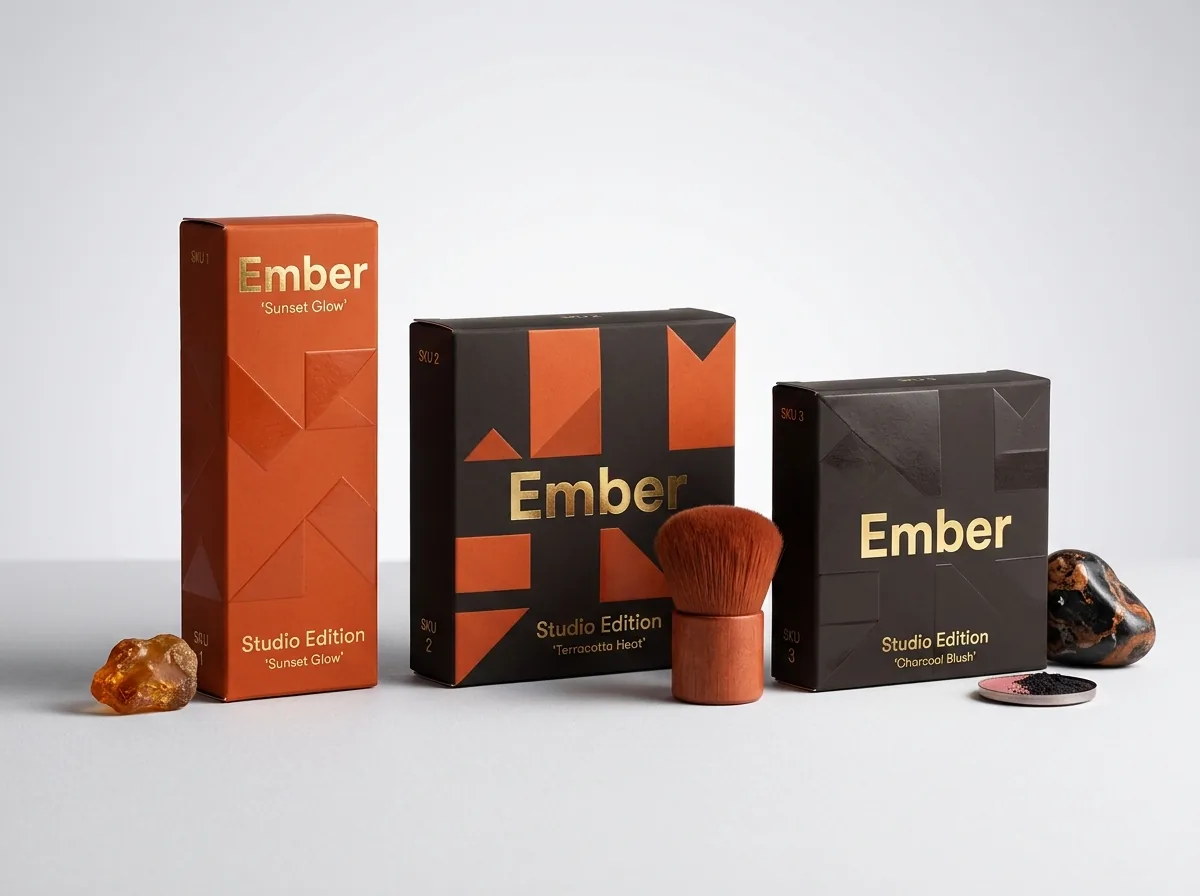
Ready to order concealer boxes? Compare up to 3 quantities with a free 3D mockup.
Request a Quote →Questions about concealer boxes
Do I pay extra die charges when printing 30 different concealer shades?
No. CubitPack never charges die or plate fees, and because all 30 shades of the same concealer vial share one master dieline, they use the exact same cutting layout. You simply provide the variable artwork files for your shades.
Can I order different quantities per shade in a multi-SKU concealer run?
Yes. Complexion brands rarely sell equal volumes of every shade. Tell your account manager your target breakdown, such as higher counts on core neutral shades and lower counts on edge shades or color correctors, and we will structure the gang run accordingly.
How does CubitPack guarantee accurate skin-tone swatch colors on the box?
Every order includes our Pantone (PMS) color match guarantee. You can specify Pantone SkinTone guide numbers or standard PMS spot inks for your top-flap and front swatch bands, and pair them with matte lamination for glare-free accuracy.
Can you print a shade chart or usage guide on the inside of my concealer box?
Yes. Inside printing is available on all folding cartons. Many brands print an undertone key or color-correcting face map on the inside of a tray-and-sleeve lid or inside a single carton without crowding the outer panels.
What file format should I send for a 20-to-40 shade concealer launch?
Send a layered vector PDF or Adobe Illustrator file on our custom dieline with the shared brand/ingredient artwork on a locked master layer and each shade's swatch, code, and barcode on clearly named SKU layers or artboards. Our designers also set this up for free.
Will I receive a proof for every single concealer shade before paying?
Yes. Our prepress team generates a complete set of flat 2D dieline proofs plus an interactive 3D mockup before payment so you can verify every shade number, undertone letter, swatch color, and barcode across your lineup.
Still have a question? Ask a packaging specialist.
Request a Quote →Request your concealer boxes quote
Tell us your size and quantities, and one dedicated account manager prepares pricing for each tier.
- Free design & AI-to-print studio + 3D mockup
- No die or plate charges · 4–5 day rush available
- Free shipping to all 50 states
- 10% off your first order
This prepress guide combines US FDA cosmetic outer carton labeling rules (21 CFR Part 701, including 'May Contain' multi-shade pigment declarations), GS1 vertical ladder barcode standards, and retail gondola merchandising practices. Checked by a CubitPack packaging specialist. Spot something wrong? Tell us and we will fix it.
Sources
What changed
- October 22, 2026: First published.
- October 22, 2026: Updated specifications, terminology, and verified source links.
More guides
New packaging guides by email
Sizes, materials and design tips. Unsubscribe anytime.