
How do I design custom blush boxes, Pantone swatch bars and INCI panels across multiple cheek shades?
Short answer: Build one master dieline for your entire cheek collection, lock your brand logo and foil stamp in one fixed position, and swap only the Pantone-matched top-flap swatch band, shade name and UPC barcode per SKU. You can split custom blush boxes across multiple shades starting at 1,000 units.
On this page
- How do I set up one master dieline across 6 to 16 blush shades
- Which print finishes best signal matte, satin, shimmer and liquid blush formulas
- How do I prevent coral, rose and berry blush swatches from shifting color on press
- What US FDA and INCI color additive rules apply to outer blush cartons
- How can I keep unit costs low when launching multiple blush shades
- Common mistakes
- FAQs
Request a custom quoteFree dieline & 3D mockup
Designing packaging for a multi-shade blush line requires balancing shelf impact, color accuracy and production efficiency. Unlike single-SKU skincare products, a cheek launch usually spans 6 to 16 shades ranging from cool baby pink and warm apricot peach to toasted terracotta and deep berry plum, often across matte, satin and shimmer finishes. If every carton uses a completely different layout or box dimension, setup costs multiply quickly. Instead, color cosmetics brands lock in one master structural dieline, one background paperboard tone and one shared foil stamping plate, then dedicate the top tuck flap and lower front band to a Pantone-controlled shade swatch and finish badge. At CubitPack, we guarantee Pantone color matching on your cheek swatch bars, provide free prepress design help, and charge zero die or plate fees across your entire multi-shade production run, with free delivery to all 50 US states.
How do I set up one master dieline across 6 to 16 blush shades?
When shoppers browse a beauty gondola or studio drawer, they scan for two things in under three seconds: your brand identity and the exact cheek shade. Setting up a master dieline means keeping 80% of the carton artwork fixed across every SKU while isolating the 20% that changes by shade into clean, predictable zones. Keep your brand wordmark, hot foil stamping, embossed monogram, net weight line and company address in the exact same X-Y coordinates on every file. Then create a dedicated variable layer for the top tuck flap swatch bar, front shade number and name (such as 02 Rosewater or 07 Spiced Berry), UPC barcode and the specific color-additive tail of the INCI list. When you order printed blush compact cartons, our prepress team checks your multi-SKU files and builds a 3D mockup before you pay.
- Lock one structural dieline across all shades that share the same compact or vial mold.
- Keep metallic foil and embossing artwork in identical coordinates so one die plate covers every shade.
- Place a full-bleed color swatch band and large shade name on the top tuck flap for vertical bin browsing.
- Repeat the shade number and finish callout (Matte, Satin, Shimmer or Dewy) on the lower front panel.
- Assign a unique UPC-A or EAN-13 barcode and SKU code on the bottom or back flap for each shade.
Which print finishes best signal matte, satin, shimmer and liquid blush formulas?
Because shoppers cannot open sealed retail cartons to touch the makeup, the tactile feel of the paperboard should tell their fingers what the blush formula looks like on the skin. By combining one base lamination with selective surface finishes over the swatch bar, you can distinguish a velvet matte powder from a glass-skin liquid cheek tint at a glance. For example, a brand selling both a pressed velvet blush and a dewy liquid cheek wand can wrap both cartons in the same warm cream soft-touch lamination so the collection looks unified on the shelf, then apply a raised high-gloss spot UV coat strictly over the liquid blush swatch band. When a customer runs a thumb across the box, the glossy swatch immediately communicates a wet, luminous cheek finish. Use the reference table below to pair your cheek formula with the right board stock, lamination and swatch bar accent.
| Blush formula type | Recommended carton lamination | Swatch bar & accent finish |
|---|---|---|
| Velvet matte pressed powder blush | Soft-touch lamination | Flat Pantone spot ink + blind debossed shade code |
| Luminous satin or baked mineral blush | Matte lamination on white card | Satin varnish or rose gold foil border around swatch |
| High-pearl shimmer or blush-highlighter duo | Soft-touch or matte lamination | Hot metallic foil stamping (champagne, copper or rose gold) |
| Dewy liquid blush wand or serum cheek drops | Soft-touch or matte base carton | Raised high-gloss spot UV droplet over the shade band |
| Juicy jelly tint or cream blush chubby stick | High-shine gloss lamination | Full-bleed Pantone color block wrap |
| Clean-beauty botanical or refillable pan | Uncoated kraft or recycled board | Opaque white ink base + Pantone cheek swatch |
How do I prevent coral, rose and berry blush swatches from shifting color on press?
Cheek pigments live in the most delicate zone of the color spectrum. In standard 4-color CMYK process printing, a 3% fluctuation in magenta or yellow ink density on press can turn a cool lilac-pink blush swatch into a warm peach, or make a muted terracotta look muddy brown. When the printed box flap does not match the powder pan inside, return rates climb. To lock in shade accuracy, specify Pantone (PMS) spot inks for the top-flap swatch bars of your hero cheek shades rather than building them solely from CMYK halftones. Also remember that lamination changes perceived color: soft-touch lamination and matte film slightly mute bright neons and deepen dark berries by a half-shade, whereas gloss lamination and spot UV increase saturation and contrast. At CubitPack, our Pantone color match is guaranteed, and we reprint if a Pantone shade is clearly off.
Know your size? Compare pricing across up to 3 quantities.
Request a Quote →What US FDA and INCI color additive rules apply to outer blush cartons?
Under the US Fair Packaging and Labeling Act (FPLA) and FDA cosmetic regulations, any required label information must appear on the outer retail carton so consumers can read it before purchasing. On a compact carton measuring 2.5 × 2.5 inches, the back panel is your dedicated regulatory canvas, while the narrow 0.625-inch side panels carry recycling icons, batch lot codes, PAO (Period After Opening) jar symbols and cruelty-free bunny badges. Blush formulas contain a shared base of binders and emollients (such as Mica, Squalane, Silica or Caprylic/Capric Triglyceride) followed by shade-specific color additives (such as Titanium Dioxide CI 77891, Iron Oxides CI 77491/77492/77499, Red 7 Lake, Red 28 Lake or Ultramarines). For multi-shade cheek lines that share a base formula, US regulations allow color additives that vary by shade to be listed at the end of the INCI declaration after the phrase "May Contain (+/-):". That allows all your blush shades to share the exact same back-panel ingredient block without resetting type on every SKU!
How can I keep unit costs low when launching multiple blush shades?
Launching an 8-shade blush collection does not require ordering 8,000 boxes. At CubitPack, our 1,000-unit folding carton minimum can be split across multiple shades in one combined production run when every SKU shares the same structural dieline. You can also pair your individual retail cartons with custom PR boxes (starting at 50 rigid units) and custom cosmetic labels for compact base stickers. To get the best price per carton across your shade split, keep your board stock, lamination type and foil stamping plate identical on all shades so press operators never have to swap mechanical dies between SKUs. You also receive 10% off your first order, zero die or plate charges, and our price-beat guarantee on any written US competitor quote for the same specs.
- Use a single "May Contain (+/-)" INCI block on the back panel if your shades share one base formula.
- Keep foil stamping limited to the brand logo and border so one stamping die serves all shades.
- Select 2 designs or 3+ designs in the quote form and list your shade count and quantities in the notes.
- Order a paid printed sample of your trickiest pastel and deep berry shades before full production (credited to your order).
What are the most common blush box design and prepress mistakes?
Even a well-sized compact carton can fail on the retail shelf if the shade swatch shifts on press or the ingredient text is unreadable. Watch out for these five artwork mistakes
- Printing pale baby-pink or coral swatch bars in 4-color CMYK without Pantone spot control, resulting in warm or muddy color drift on press.
- Placing the shade name only on the back or bottom of the carton instead of the top tuck flap, hiding the shade when boxes sit in display trays.
- Setting 5 pt metallic foil or low-contrast pastel pink text for the back-panel INCI ingredient list, which blurs and fails legibility checks.
- Changing the position of the foil-stamped brand logo from shade to shade, which forces separate stamping setups instead of one shared plate.
- Running heavy black or deep plum ink across unlaminated fold scores, causing the paperboard surface to crack and show white fibers along the edges.
Find your size
Suggested inside size: 2.5 × 2.5 × 0.625 in
A starting point. Your account manager confirms the size with you before the proof.
Quote this size →Packaging for this
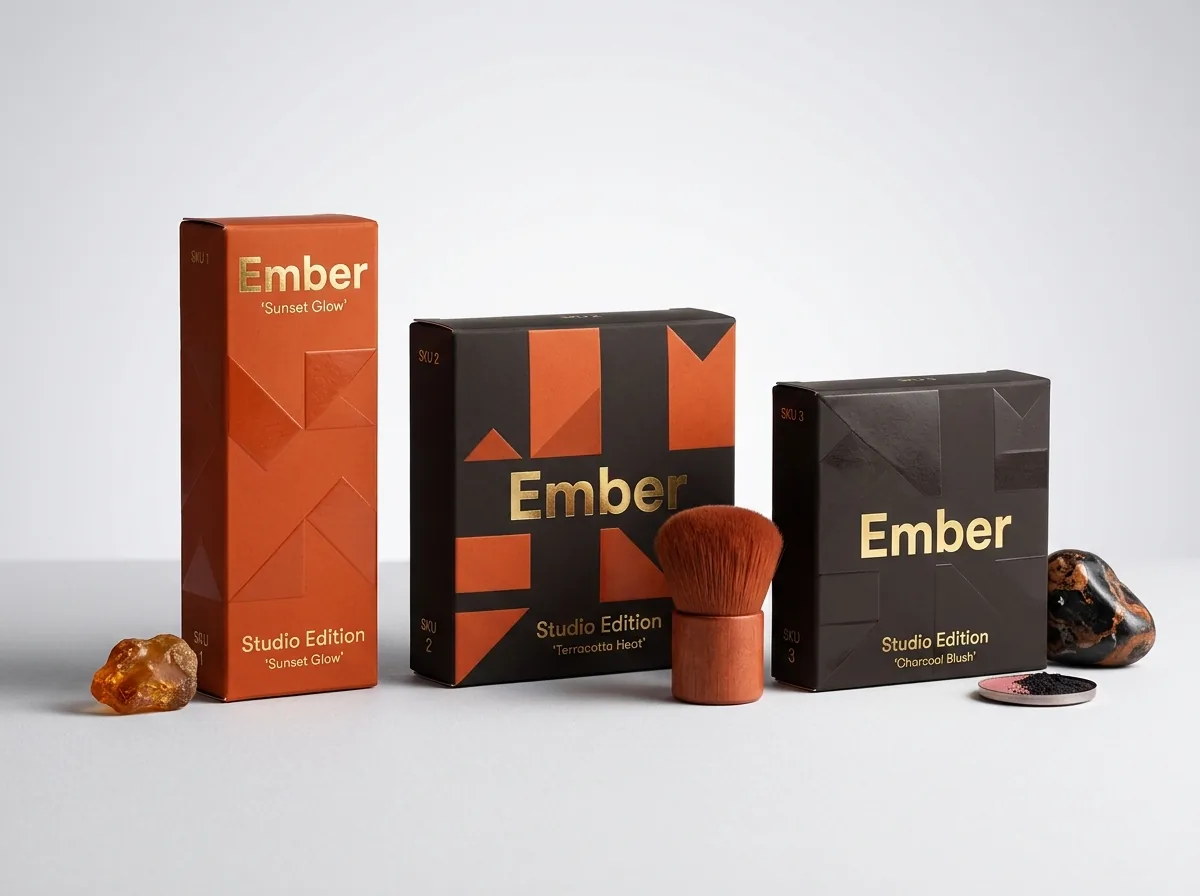
Ready to order blush boxes? Compare up to 3 quantities with a free 3D mockup.
Request a Quote →Questions about blush boxes
Can I split a 1,000-box order across 6 or 10 different blush shades?
Yes. As long as all your blush shades use the exact same inside box dimensions and structural dieline, we can split a 1,000-unit folding carton order across multiple shade designs. Pick 2 designs or 3+ designs in the quote form and list your shade breakdown in the notes.
Why should I put the blush shade swatch on the top tuck flap?
In cosmetic retail stores, makeup artist kits and warehouse pick bins, blush cartons are almost always stored upright in shallow trays or drawers. Printing a full-bleed color band and shade number on the top flap lets shoppers and pickers spot the shade immediately from above.
How do you guarantee that my printed box swatch matches my blush pigment?
Specify Pantone (PMS) spot color codes for your shade bands or send us a physical pigment drawdown. Our Pantone color matching is guaranteed, and we will reprint at no cost if a Pantone shade on your finished boxes is clearly off.
What is the minimum font size for the INCI ingredient list on a blush carton?
Under US FDA cosmetic labeling guidelines, mandatory ingredient declarations generally require at least 1/16 inch letter height (roughly 6 pt to 8 pt type depending on font x-height), with a smaller allowance on very small packages. Always print INCI text in high-contrast dark ink.
Can I use both soft-touch lamination and gloss spot UV on the same blush box?
Yes. Pairing a velvety soft-touch laminated carton with a raised high-gloss spot UV swatch bar or droplet pattern is one of the most popular combinations for liquid cheek tints and cream blush sticks.
What if I only have rough shade ideas or an AI mockup for my blush boxes?
Send us your logo, shade names and reference image. Every CubitPack order includes free design help, free custom dielines, and a 2D digital proof plus a 3D mockup to review and approve before you pay.
Still have a question? Ask a packaging specialist.
Request a Quote →Request your blush boxes quote
Tell us your size and quantities, and one dedicated account manager prepares pricing for each tier.
- Free design & AI-to-print studio + 3D mockup
- No die or plate charges · 4–5 day rush available
- Free shipping to all 50 states
- 10% off your first order
This design and prepress guide draws on US FDA cosmetic labeling rules, Pantone color management standards and CubitPack's decided production specs in our published product specifications, reviewed by a packaging specialist. Spot something wrong? Tell us and we will fix it.
Sources
What changed
- October 22, 2026: First published.
- October 22, 2026: Updated specifications, terminology, and verified source links.
More guides
New packaging guides by email
Sizes, materials and design tips. Unsubscribe anytime.