
Single cube bath bomb boxes vs divided multi-pack trays: which fits your lineup?
Short answer: Use single 2.625-inch paperboard cube cartons for individual scent SKUs sold at retail counters and build-your-own bundle bars, and use corrugated or tray-and-sleeve multi-pack boxes with interlocking cardboard grid dividers when shipping 4, 6 or 12 bath bombs together in custom bath bomb boxes.
On this page
- How do single cubes, hexagonal boxes, gable carriers and divided gift trays compare
- When are single cube boxes or hexagonal cartons the smartest choice
- Why do 4-pack, 6-pack and 12-pack bath bomb sets need interlocking grid dividers
- Should my multi-pack bath bomb box use folding paperboard or corrugated board
- How do gable boxes work for build-your-own bath bomb bundles at markets
- Common mistakes
- FAQs
Request a custom quoteFree dieline & 3D mockup
Bath bombs are sold in two very different ways: as single impulse treats at boutique checkout counters and apothecary tables, or as 4-pack, 6-pack and 12-pack variety gift sets ordered online for birthdays, holidays and Mother's Day. A single folding paperboard cube carton gives you the lowest unit cost per bomb, stacks into neat color-coded pyramids on retail shelves, and lets shoppers mix and match individual scents across your entire line. However, shipping six loose single cubes inside an unpadded mailing bag still risks crushed corners, whereas shipping a 6-pack or 12-pack set totaling 1.5 to 3.5 pounds demands a heavier outer structure, either a corrugated mailer or a double-wall tray-and-sleeve box, fitted with interlocking cardboard cell dividers that isolate each sphere from impact so every bath fizzer arrives round, unchipped and ready for retail or direct-to-consumer gifting.
How do single cubes, hexagonal boxes, gable carriers and divided gift trays compare?
When planning your lineup of custom printed bath bomb packaging, look at both the total weight of the package and how the customer buys it. A single 4.5 oz bath sphere needs light six-sided immobilization on a retail shelf, while a six-bomb gift box weighs nearly two pounds and must survive parcel sorting chutes without letting adjacent spheres knock together. Most bath and body brands eventually pair two complementary structures: a single 2.625-inch paperboard cube (or hexagon box) for individual scents at checkout counters, and a divided corrugated mailer or tray-and-sleeve box for online multi-packs and seasonal gift bundles. Use the comparison table below to weigh single cube cartons, hexagonal cradles, handle gable boxes and divided multi-pack trays across capacity, board stock, sphere-to-sphere isolation, parcel protection and unit cost.
| Feature | Single cube / hexagon carton | Gable carrier box (3 to 4 bombs) | Divided multi-pack tray / mailer (4 to 12 bombs) |
|---|---|---|---|
| Typical capacity & weight | 1 bath sphere (2.5 to 8 oz) | 3 to 4 spheres (12 to 20 oz) | 4, 6, 9 or 12 spheres (1.2 to 3.5 lb) |
| Recommended board stock | White card, kraft or recycled paperboard | Heavy card or light corrugated | Corrugated board or double-wall tray & sleeve |
| Sphere-to-sphere isolation | Each sphere has its own 6-wall cube | Moderate (nest in tissue or pack single cubes inside) | High (interlocking cardboard grid partition) |
| E-commerce parcel readiness | Needs outer shipping box | Best for in-person carry-out | Corrugated mailer ships directly or in poly bag |
| Retail shelf merchandising | Stacks in color-coded rows by scent | Stands on table with built-in gift handle | High-ticket holiday & gift-table centerpiece |
| Unit packaging cost per bomb | Lowest cost per single SKU | Economical bundle carrier | Higher per box, but divides cost across 6-12 bombs |
When are single cube boxes or hexagonal cartons the smartest choice?
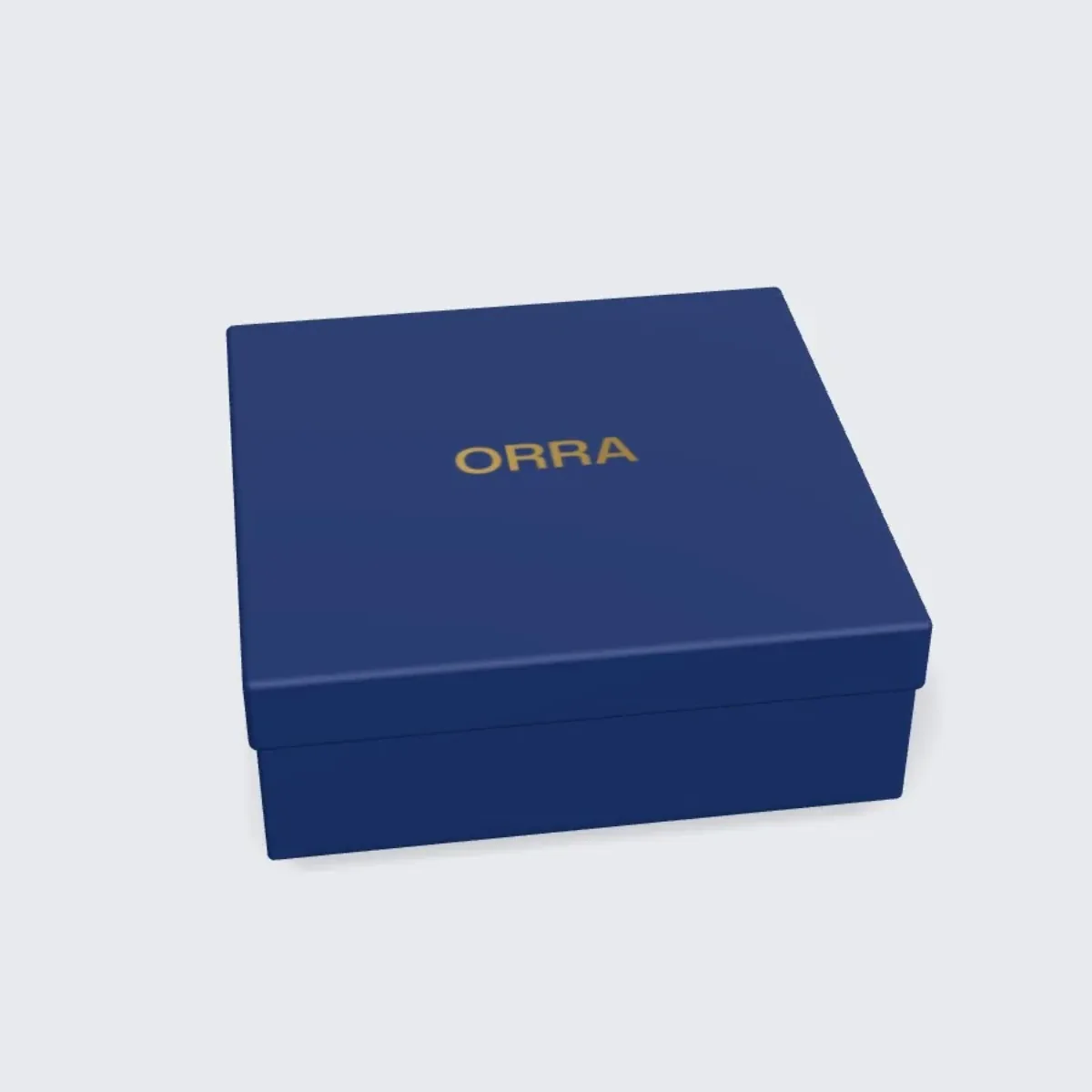
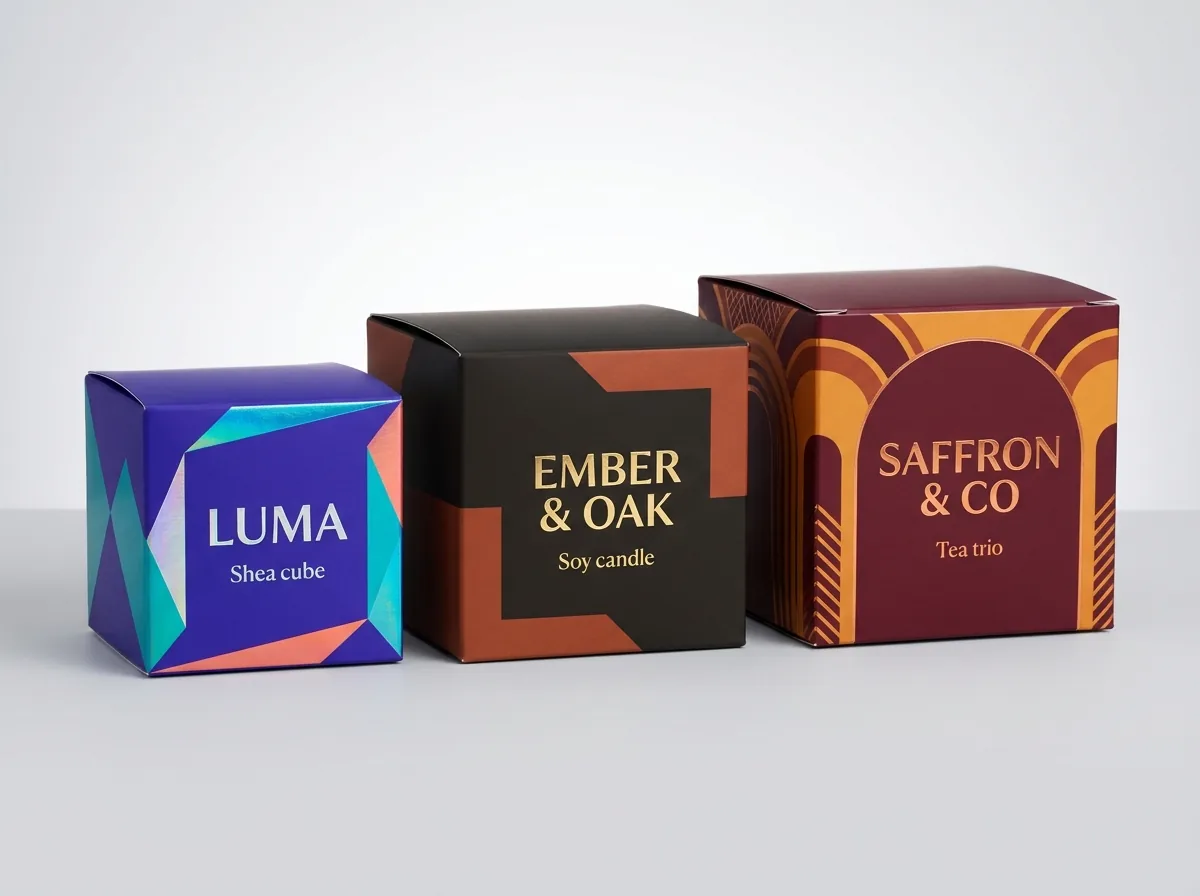
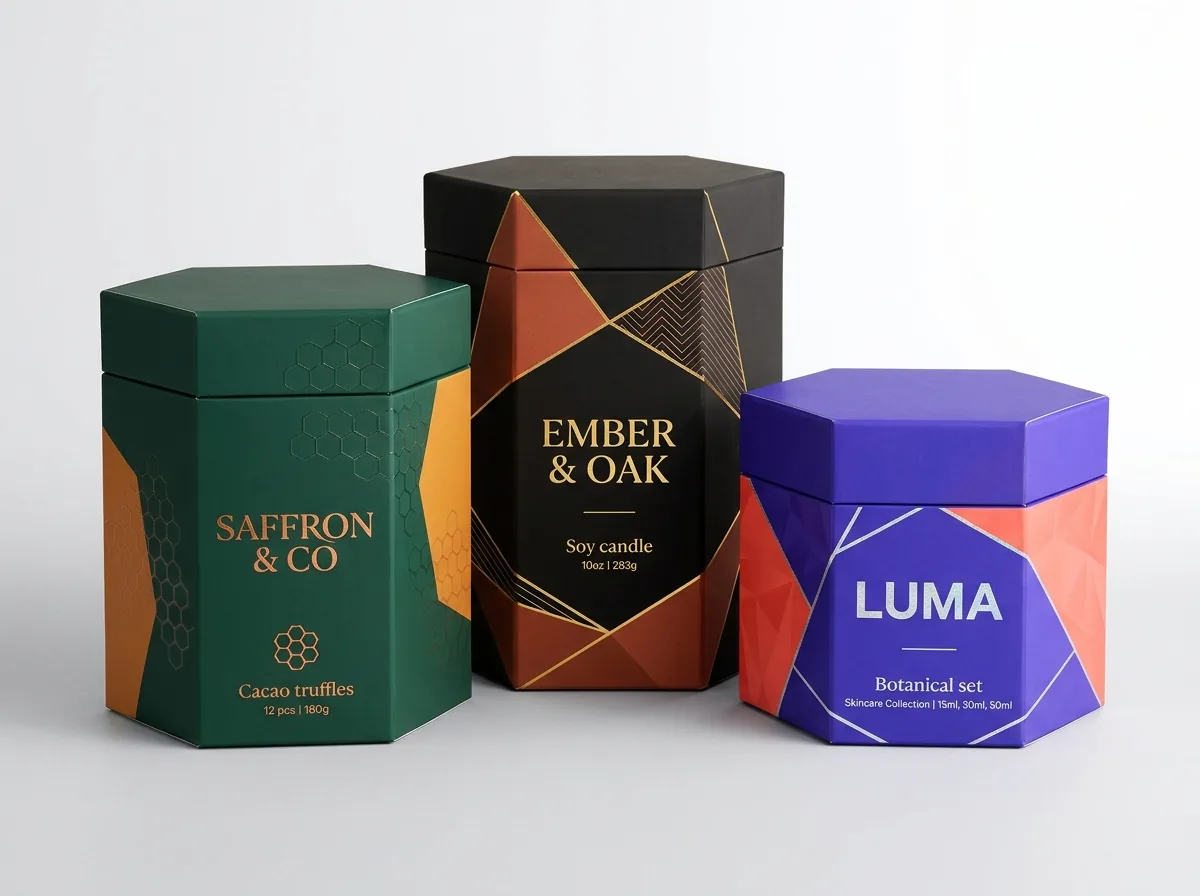
If you sell into gift shops, salons, spas or grocery stores, or let online shoppers pick any individual scent on your website, single custom cube boxes are your foundational workhorse. A 2.625 × 2.625 × 2.625 inch folding carton turns a round, rolling sphere into a flat-sided building block that clerks can stack four high on a shelf and label with a scannable UPC barcode. Because all your 2.5-inch bath bombs share one identical cube dieline, you can print lavender, eucalyptus, rose and citrus cartons in a single gang run while keeping unit costs low. For brands that want a silhouette that stands out from standard square cubes, custom hexagon boxes wrap six angled side panels around the equator of the sphere. Because a hexagon matches a circle more closely than a square does, the six vertical panels hug the bath bomb around its circumference with almost zero wasted corner air space, giving you a distinctive honeycomb look on the shelf. Both single cubes and hexagonal cartons also work inside build-your-own gift bundles: you can drop four or six printed single cubes directly into a master gift tray or mailer box so each scent remains individually labeled with its own INCI ingredient list.
- Reverse tuck cube: economical everyday choice for 2.0 in and 2.5 in spheres under 5 oz.
- Auto lock bottom cube: pre-glued crash-lock floor that holds heavy 3.0 in (7 to 8 oz) jumbo spheres without popping open.
- Window cube: circular, star or cloud cutout on the front panel that frames the swirled bath bomb inside.
- Hexagon box: six-sided geometric column that cradles round bath spheres or stacked shower steamers.
Why do 4-pack, 6-pack and 12-pack bath bomb sets need interlocking grid dividers?
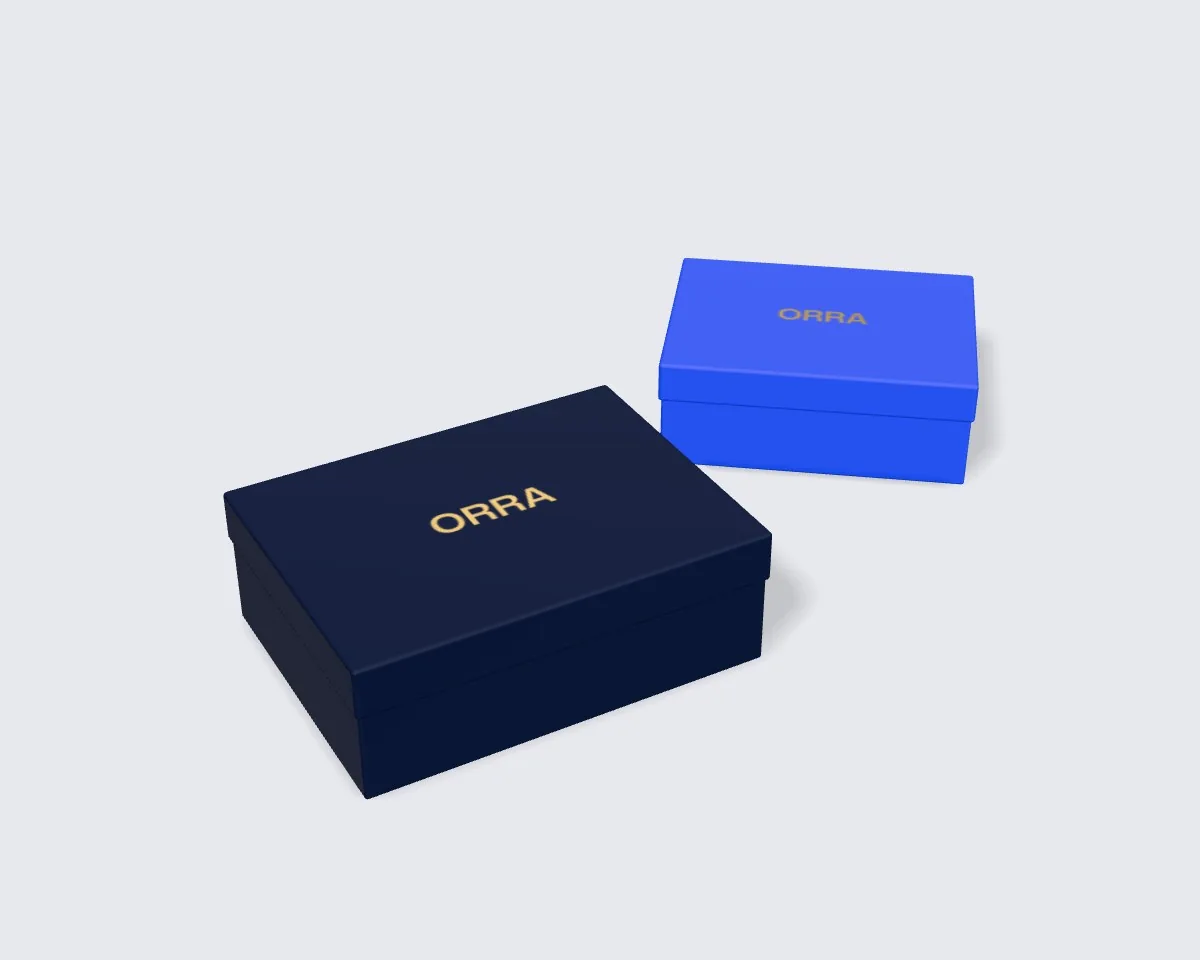
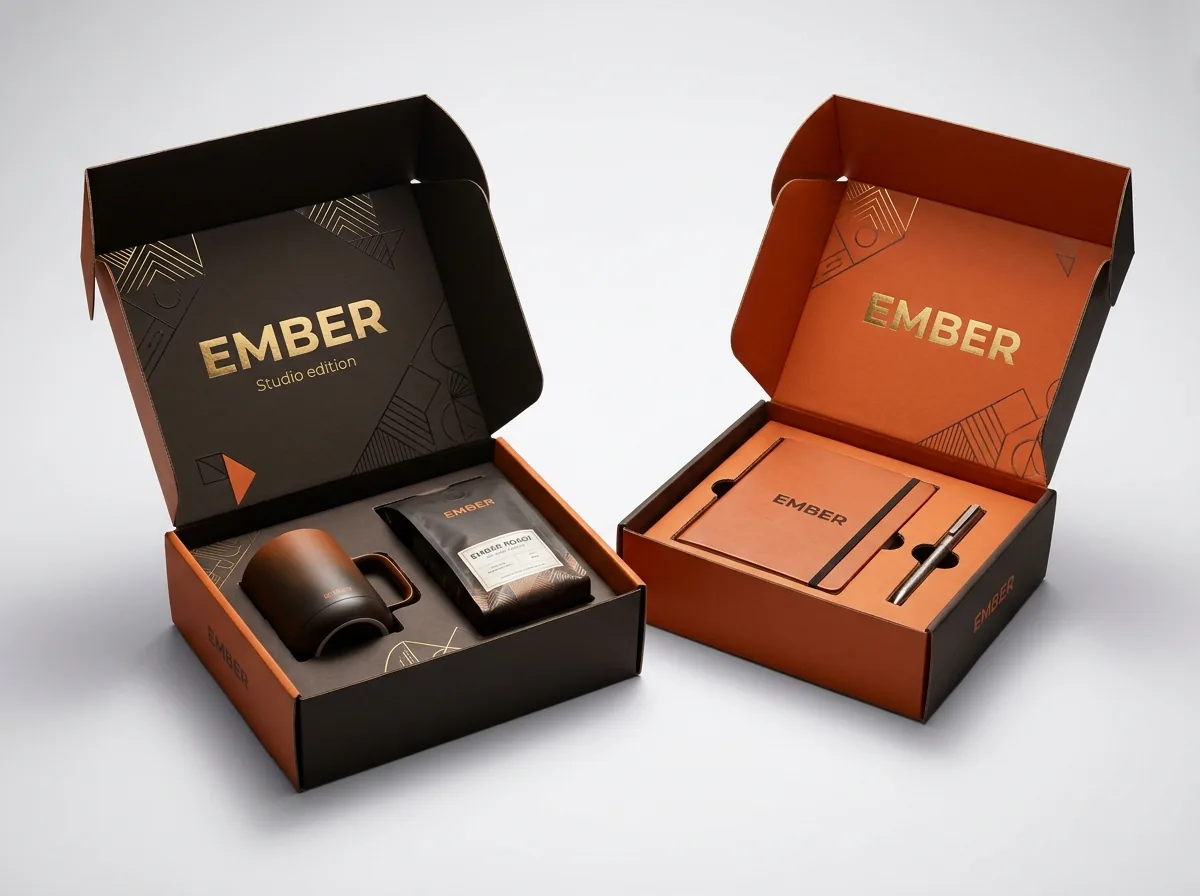
Multi-pack bath bomb gift sets are among the highest-converting items in bath and body e-commerce, especially when a customer wants to sample six or twelve scents in one purchase. However, putting six naked or shrink-wrapped bath bombs into an open box cushioned only with crinkle paper is a recipe for broken powder: during parcel vibration, the heavy spheres migrate through the shredded paper until they touch and crack each other. Fitting a custom tray and sleeve box, a two-piece setup box, or a custom mailer box with slotted interlocking custom cardboard inserts solves the problem mechanically. Each bath bomb sits in its own 2.625 × 2.625 inch cell with a double-thick cross-braced cardboard wall between every neighbor. When the customer slides off the sleeve or opens the mailer lid, all six or twelve spheres sit in a clean, photogenic grid with zero plastic bubble wrap. You can even print the scent names inside the lid right above each grid cell so the recipient knows which bath fizzer is lavender, eucalyptus, rose or citrus.
Know your size? Compare pricing across up to 3 quantities.
Request a Quote →Should my multi-pack bath bomb box use folding paperboard or corrugated board?
Weight is the dividing line between folding paperboard (cardstock) and corrugated flute board. A single 4.5 oz bath bomb or a 3-pack of mini 2 oz spheres weighs under 12 ounces total, so standard white card or kraft folding paperboard has plenty of tensile stiffness. Once you step up to four, six, nine or twelve full-size 4.5 to 5 oz bath bombs, the product weight jumps to 1.2 to 3.5 pounds. At that weight, a single-wall paperboard carton will flex in the middle when lifted with one hand. For 6-packs and 12-packs, especially those shipped directly through USPS, UPS or Amazon FBA, choose a corrugated roll-end tuck-front mailer box or a heavy tray-and-sleeve box where the folded double-wall tray sides and internal grid dividers create a rigid structural beam that resists warehouse stacking loads and corner drops. You can also pack four or six individual printed cube boxes inside a master corrugated gift box so the single cubes act as their own internal dividers.
How do gable boxes work for build-your-own bath bomb bundles at markets?
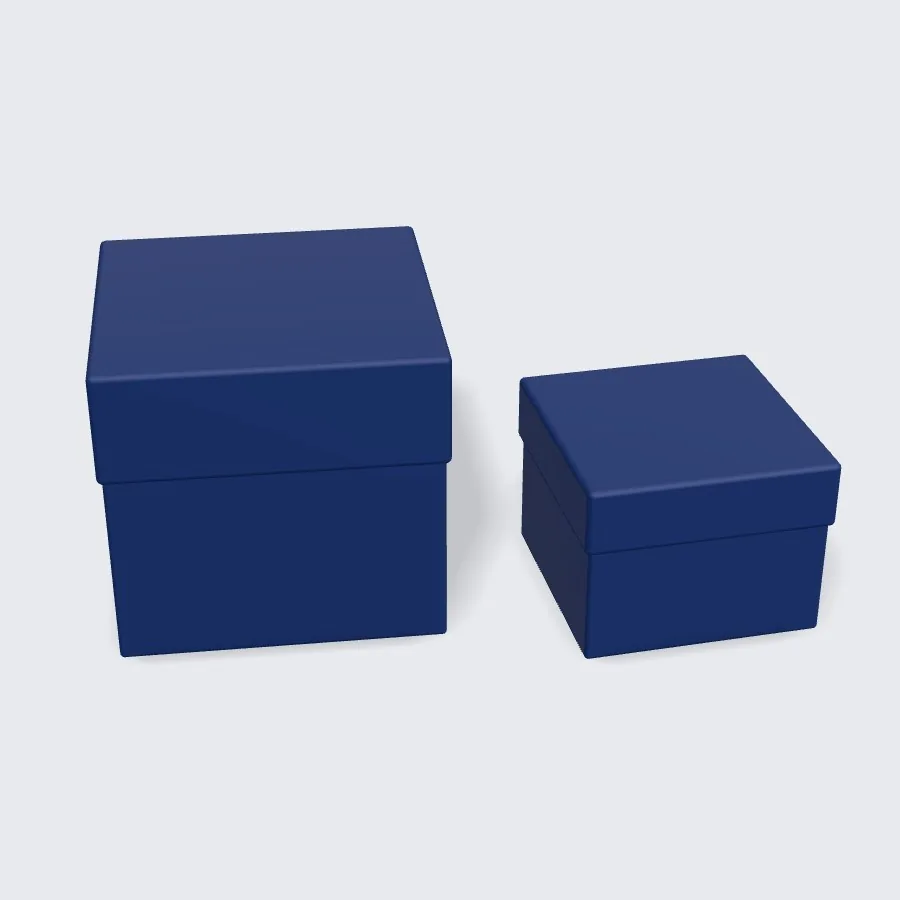
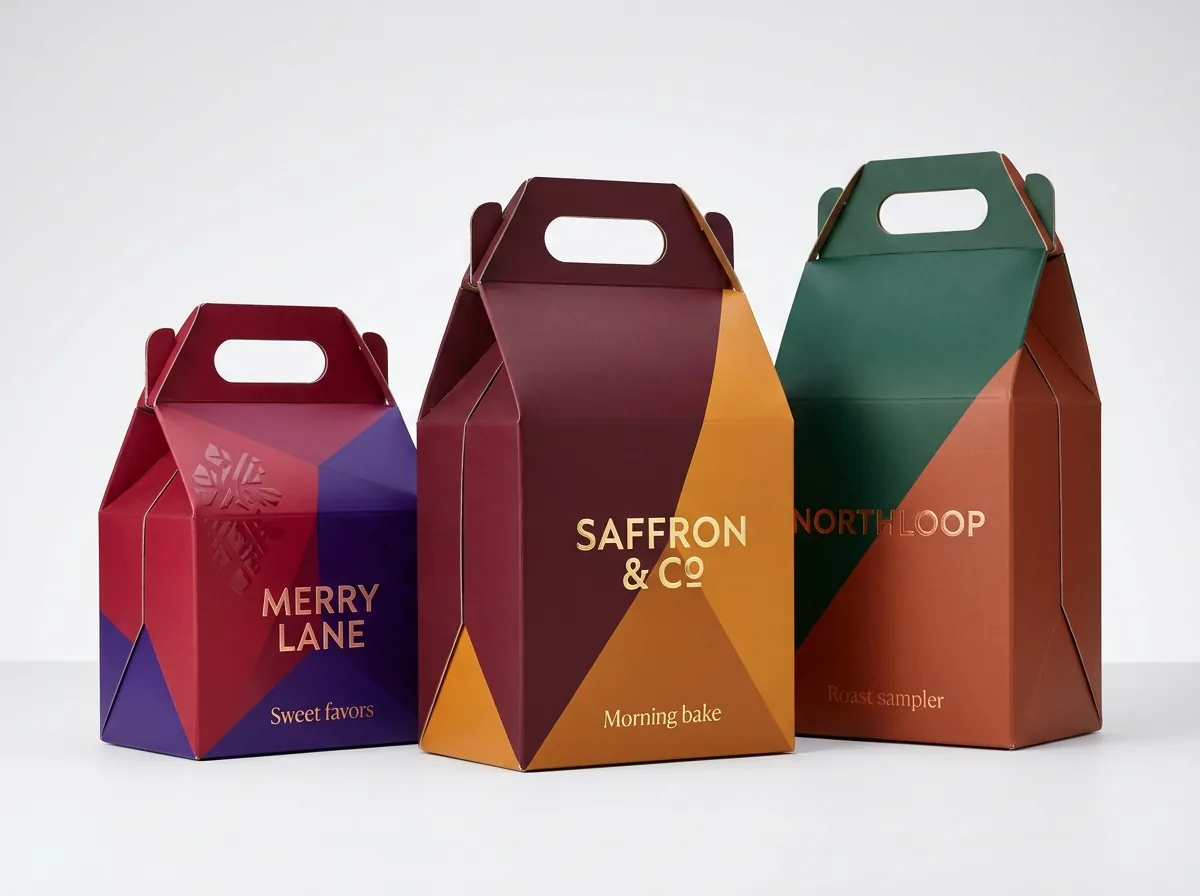
At farmers markets, craft shows and boutique tables, offering a 'Pick Any 3 or 4 Bath Bombs' bundle deal boosts average order value immediately. Instead of bagging loose spheres in a plastic sack where they knock together as the shopper walks around the market, keep a stack of flat-folded custom gable boxes under your counter. A gable carton pops open in seconds, holds three or four shrink-wrapped bath bombs nestled in a sheet of custom tissue paper (or three single cube boxes side by side), and locks at the top into a built-in carry handle. Adding three small round peek windows across the front panel lets the customer's chosen scent colors show through the carrier while giving them a ready-to-gift handle box with no extra gift bag needed. Because CubitPack charges zero die or plate fees, you can order both single cubes and multi-pack carriers cut to match your exact mold size.
What mistakes do brands make when choosing between single and multi-pack bath bomb boxes?
Picking the wrong structure for heavy bath spheres leads to cracked fizzers in the mail or wasted fulfillment time. Avoid these five mistakes
- Packing 6 or 12 bath bombs into a gift box with loose crinkle paper instead of interlocking cardboard grid dividers, allowing the spheres to collide and crack.
- Using thin single-wall folding paperboard for a heavy 2-pound 6-pack bath bomb set instead of sturdy corrugated board or a double-wall tray.
- Using a standard reverse tuck bottom on a single cube holding a heavy 8 oz jumbo sphere, where the bottom flap can spring open.
- Ordering 6 different sizes of single boxes when all scents could use one shared 2.625-inch cube dieline.
- Mailing thin retail window cubes in unpadded poly bags instead of packing them inside a corrugated shipping or mailer box.
Find your size
Suggested inside size: 2.125 × 2.125 × 2.125 in
A starting point. Your account manager confirms the size with you before the proof.
Quote this size →Packaging for this
Ready to order bath bomb boxes? Compare up to 3 quantities with a free 3D mockup.
Request a Quote →Questions about bath bomb boxes
Can I pack individual printed cube boxes inside a larger 4-pack or 6-pack gift box?
Yes, and many growing brands do exactly that so they don't need separate cardboard grid dividers. Four 2.625-inch printed cube boxes fit 2 × 2 inside a 5.375 × 5.375 × 2.75 inch outer sleeve or mailer box, and the individual cubes act as their own structural dividers.
Do interlocking cardboard grid dividers ship flat with the boxes?
Yes. Slotted cardboard partition strips ship flat in bundles (or pre-assembled on request) and slot together in a few seconds like a tic-tac-toe grid before dropping into the base of your gift tray or mailer box.
Are there extra die charges for adding grid dividers or hexagonal boxes?
No. CubitPack never charges die or plate fees on any box style, window cutout or internal cardboard divider. Our design team builds the box and partition dielines together for free.
Which box style is fastest to assemble by hand for a 1,000-unit run?
For single bath bombs, an auto lock bottom cube pops open and locks its floor in one second, saving three manual bottom folds per bomb compared with a reverse tuck cube. For gift sets, a roll-end tuck-front mailer with a pre-slotted grid is very fast to pack.
Can I add a clear window to the lid of a 6-pack bath bomb gift box?
Yes. Both two-piece lids and slide-on outer sleeves can have a large rectangular window or six individual round peek holes punched directly over the six grid cells so shoppers see every bath bomb in the assortment.
What is the minimum order for divided bath bomb gift boxes?
Folding carton and tray-and-sleeve bath bomb boxes start at 1,000 units, while custom mailer boxes start at 250 units and rigid gift boxes start at 50 units. Your account manager can quote the exact family that fits your gift set.
Still have a question? Ask a packaging specialist.
Request a Quote →Request your bath bomb boxes quote
Tell us your size and quantities, and one dedicated account manager prepares pricing for each tier.
- Free design & AI-to-print studio + 3D mockup
- No die or plate charges · 4–5 day rush available
- Free shipping to all 50 states
- 10% off your first order
This structural comparison is based on TAPPI folding carton and partition guidelines plus ISTA parcel drop-test principles for multi-item brittle bath sets. Checked by a CubitPack packaging specialist. Spot something off? Tell us and we will fix it.
Sources
What changed
- October 22, 2026: First published.
- October 22, 2026: Updated specifications, terminology, and verified source links.
More guides
New packaging guides by email
Sizes, materials and design tips. Unsubscribe anytime.