
How do I keep bath bombs from chipping, crumbling or losing fizz inside custom boxes?
Short answer: To keep bath bombs from crumbling or losing fizz, dry cured spheres thoroughly before sealing them in tight polyolefin shrink wrap or foil, then pack them in custom bath bomb boxes sized within 1/8 inch of the sphere diameter (with ring cradles or grid dividers) so they cannot roll or absorb humidity.
On this page
- Why do spherical bath bombs crack or powder inside loose boxes
- How do inner wraps, carton styles and finishes prevent bath bomb damage
- How do shrink wrap, foil and laminated boxes keep bath bombs fizzy
- How do I stop pastel and botanical bath bomb colors from fading on shelves
- What FDA ingredient and caution statements belong on a bath bomb box
- Common mistakes
- FAQs
Request a custom quoteFree dieline & 3D mockup
Bath bombs fail in transit and on retail shelves for two distinct reasons: mechanical vibration that chips the brittle equatorial press seam, and ambient moisture that triggers a slow premature reaction between sodium bicarbonate (baking soda) and citric acid. Neither shrink wrap alone nor a loose stock box alone can prevent both problems. Shrink wrap seals out bathroom and warehouse humidity so the sphere never develops 'warts' or goes flat in the tub, but a thin film bag offers zero crush or drop protection when parcels are tossed onto sorting belts. Conversely, a sturdy custom paperboard cube or corrugated gift box absorbs external impacts, yet only works if the inside dimensions hold the sphere within 1/8 inch of clearance (or inside a die-cut ring cradle or grid cell) so the heavy bomb cannot build momentum and hammer its own edges into powder.
Why do spherical bath bombs crack or powder inside loose boxes?
When you place a rectangular bar of soap inside a box, its six flat faces spread impact force across several square inches of paperboard. A spherical bath bomb does the exact opposite: it touches the six flat walls of a cube carton at only six tiny tangent points, top pole, bottom pole, and four points along the raised equatorial Saturn ring. If you pack a 2.5-inch bath bomb into a loose 3.0-inch stock box, the 4.5-ounce sphere has half an inch of runway to accelerate every time a parcel truck hits a bump or a shopper shakes the box. Because the equatorial seam where the two mold halves meet is the most brittle ridge on the sphere, repeated impacts shear that ring into loose powder. Sizing your custom printed bath bomb cartons to 2.625 × 2.625 × 2.625 inches (just 1/8 inch over the 2.5-inch mold diameter) keeps all six walls lightly touching the wrapped sphere so it cannot roll or bounce.
- 1/8 in cube clearance rule: keep inside box L × W × H within 0.125 in of the wrapped sphere diameter.
- Ring cradle stabilizer: add a flat die-cut card insert with a 1.5 in center hole at the bottom of the box for heavy 3 in spheres.
- Auto lock bottom floor: use a pre-glued crash-lock base on spheres over 5.5 oz so downward point load cannot pop the bottom flap.
- Grid partitions for sets: isolate every bomb in its own 2.625 in cell so adjacent spheres never collide.
How do inner wraps, carton styles and finishes prevent bath bomb damage?
Protecting a bath fizzer from factory press to customer bathtub requires pairing the right primary moisture wrap with the right secondary carton structure and exterior finish. Because bath bombs combine fragile chalky dry acids with moisture-sensitive essential oils and water-soluble colorants, every layer of packaging serves a specific protective job. Use the troubleshooting table below to match each common bath bomb failure mode to its packaging fix.
| Bath bomb failure mode | Root cause in storage or transit | Packaging & structural fix |
|---|---|---|
| Chipped equator & loose powder in box | Box is >1/4 in larger than sphere diameter | Size inside cube to mold diameter + 1/8 in (e.g. 2.625 in cube) |
| Warting (bumps) or swollen cracked shell | Humid air reacting with baking soda + citric acid | Dry bomb 24-48 hr, shrink-wrap tightly, then box in laminated card |
| Weak or flat fizz in the bathtub | CO2 gas escaped over months in unsealed wrap | Polyolefin shrink wrap or foil wrap + snug closed or window carton |
| Cracked spheres in 6-pack gift sets | Bombs shifting through loose crinkle paper | Interlocking cardboard grid dividers + corrugated or tray-and-sleeve box |
| Faded pastel or neon colors on front face | UV and retail LED light bleaching lake/mica dyes | Use smaller 1.5 in peek window or solid-walled color-coded box |
| Polysorbate 80 or oil rings on carton | Unwrapped bath melt or truffle touching raw board | Foil wrap or butter paper cup + matte laminated carton |
How do shrink wrap, foil and laminated boxes keep bath bombs fizzy?
The fizz in every bath bomb and shower steamer comes from an acid-base reaction between dry sodium bicarbonate and dry citric acid that stays dormant until water touches the sphere. When relative humidity climbs above 55% to 60% in a summer warehouse, coastal shop or steamy bathroom, moisture vapor in the air sets off micro-reactions on the surface of an unwrapped bomb, forming hard bumpy 'warts' or swelling the sphere until it splits the box. Always allow freshly pressed bath bombs to dry thoroughly in a dehumidified room for 24 to 48 hours, then seal each sphere in polyolefin shrink wrap (or pleated aluminum foil for luxury bath truffles and shower steamers) before loading it into your carton. On the outside of the box, adding matte lamination or soft-touch lamination keeps bathroom moisture from softening the paperboard walls. Because the bath bomb is already sealed in clear shrink film inside, you can use an open die-cut window on custom window boxes without paying for a second plastic window patch.
Know your size? Compare pricing across up to 3 quantities.
Request a Quote →How do I stop pastel and botanical bath bomb colors from fading on shelves?
Water-soluble FD&C dyes, D&C lakes and natural plant colorants (such as butterfly pea flower, beet root or spirulina) used in bath bombs are sensitive to overhead retail LED and sunlight exposure. If a bath bomb sits behind a huge front window for sixty days on a sunny boutique table, the exposed circle of the sphere can bleach white while the hidden back half stays bright pink or blue. You have two design solutions. First, keep your front peek window modest, around 1.25 to 1.5 inches in diameter on a 2.625-inch cube, so the deep recessed shadow of the box shields most of the sphere while still proving the color inside. Second, many luxury bath brands skip the window completely and print a vibrant full-bleed pastel gradient, tie-dye swirl or spot UV bubble pattern on the outside of a solid custom cube box, blocking 100% of UV light so the bath bomb looks fresh the day the customer unboxes it.
What FDA ingredient and caution statements belong on a bath bomb box?
In the United States, bath bombs, bubble bars and shower steamers are regulated as cosmetics by the FDA under the Fair Packaging and Labeling Act (FPLA). Because a round shrink-wrapped bath bomb is difficult to read when a tiny 1.5-inch sticker is stuck over a curved, bumpy surface, printing your mandatory regulatory copy directly onto the flat walls of the outer cube carton makes compliance clean and legible. Your outer carton needs four elements: the statement of identity ('Bath Bomb' or 'Effervescent Bath Soak') on the front panel, the net weight in both ounces and grams (e.g., Net Wt 4.5 oz / 128 g) on the bottom 30% of the front panel, the full descending INCI ingredient declaration (Sodium Bicarbonate, Citric Acid, etc.) on the back or side panel, and your company name and address. In addition, the FDA recommends cautionary statements on foaming or oil-containing bath products (warning users to avoid eye contact, keep out of reach of children, and watch for a slippery tub floor).
- Front panel: brand name, scent name, product identity ('Bath Bomb') and net weight in oz / g.
- Side panel 1: full INCI ingredient list including fragrance, essential oils, Polysorbate 80 and FD&C colorants.
- Side panel 2: tub directions ('Drop into warm bath water...') plus slippery-tub and skin-irritation caution lines.
- Bottom panel: retail UPC barcode (on a clean white box) and lot/batch stamp area.
What are the most common mistakes that ruin bath bombs inside boxes?
Most damaged bath bombs trace back to moisture trapped before wrapping or excess rattle room inside the carton. Avoid these five mistakes
- Shrink-wrapping and boxing bath bombs before they have fully dried for 24 to 48 hours, trapping residual water that causes the bomb to swell and crack its box.
- Packing unwrapped naked bath bombs directly into unlaminated paperboard in humid summer months, causing warting and dead fizz.
- Leaving 1/4 inch to 1/2 inch of empty space around a sphere inside a cube box without a ring cradle, letting the equatorial seam crumble in transit.
- Using a massive front window on bath bombs colored with light-sensitive dyes or plant extracts that bleach under store lighting.
- Putting a tiny, hard-to-read ingredient sticker on the twisted shrink-wrap knot instead of printing clear INCI text and tub cautions on the flat box walls.
Find your size
Suggested inside size: 2.125 × 2.125 × 2.125 in
A starting point. Your account manager confirms the size with you before the proof.
Quote this size →Packaging for this
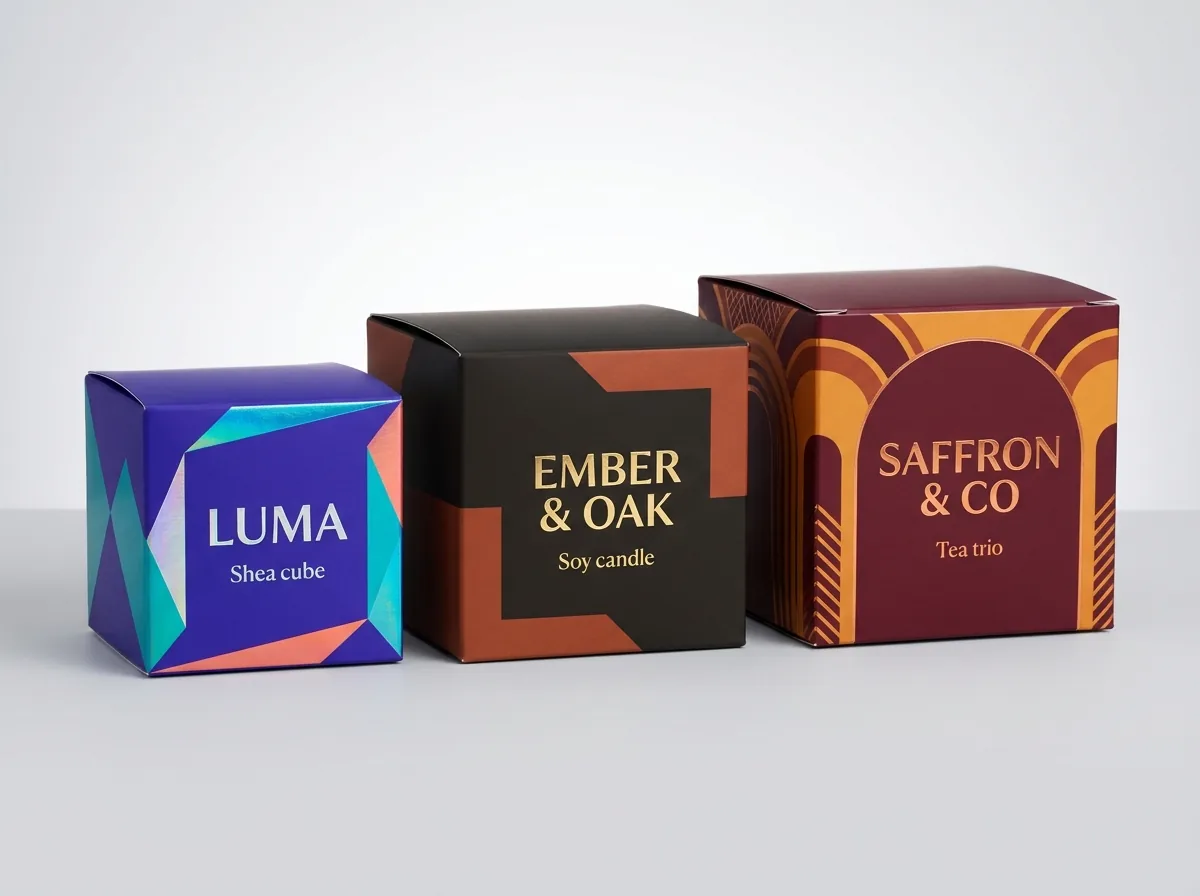
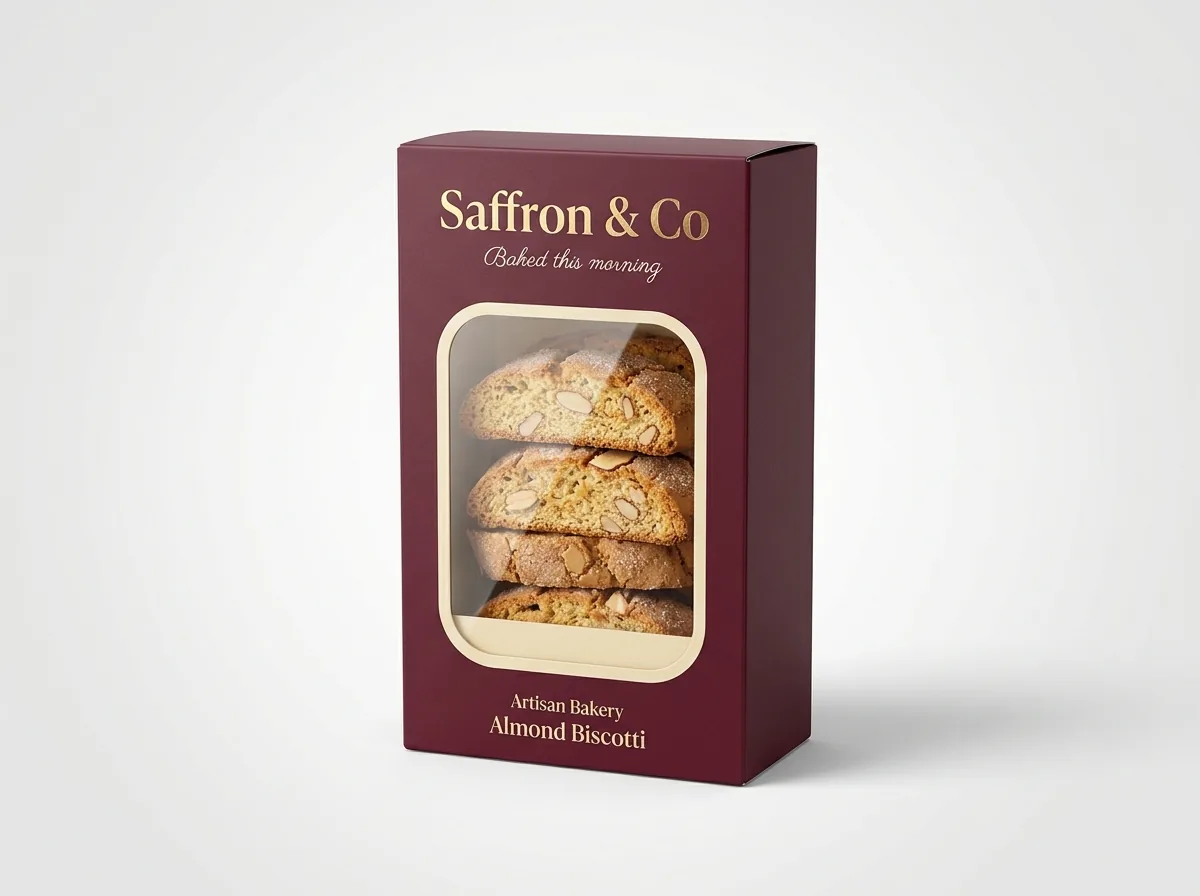

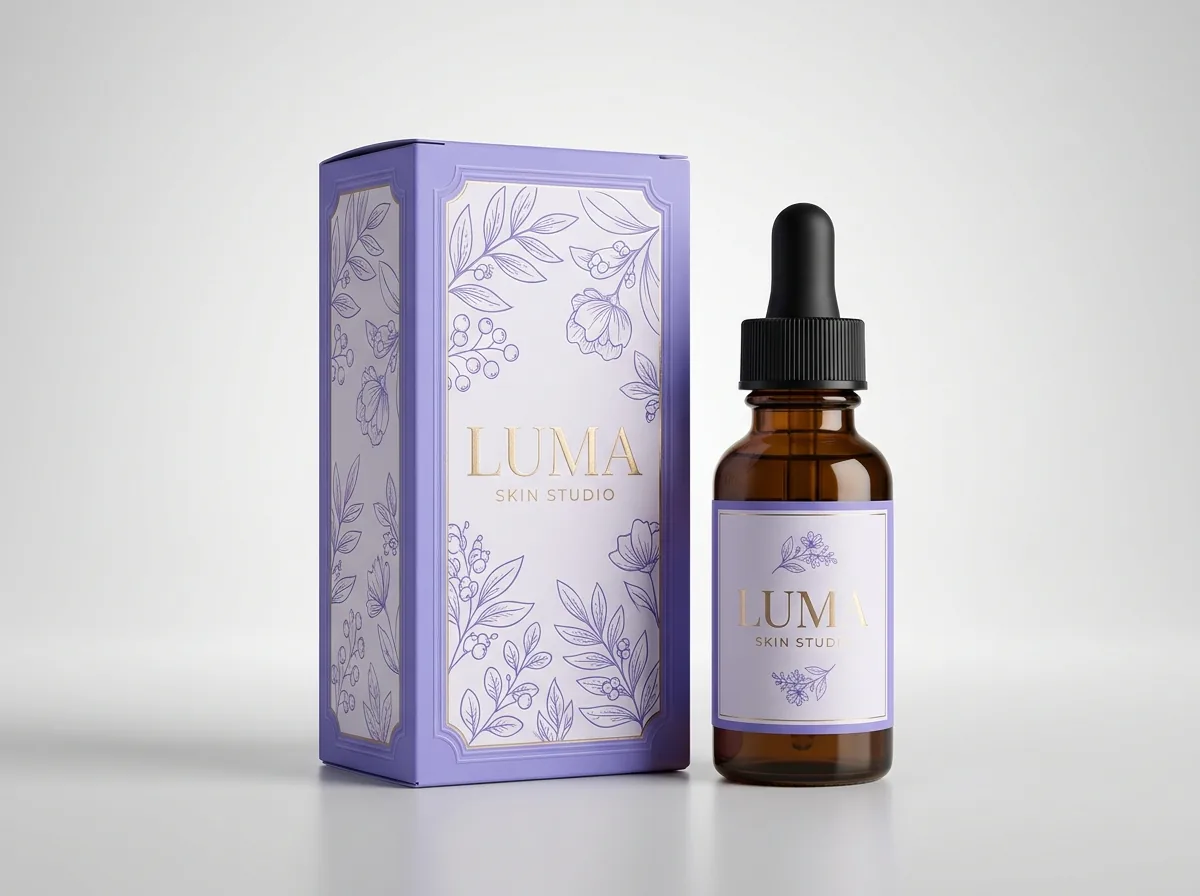
Ready to order bath bomb boxes? Compare up to 3 quantities with a free 3D mockup.
Request a Quote →Questions about bath bomb boxes
Can I pack bath bombs in custom boxes without shrink wrap if I live in a dry climate?
Even if your studio is in a dry state, parcel trucks and customer bathrooms are humid. A thin polyolefin shrink wrap or aluminum foil wrap around the sphere before boxing is the safest way to guarantee the baking soda and citric acid stay dry until bath time.
What is a ring cradle insert and when does a bath bomb box need one?
A ring cradle is a flat square of paperboard with a circular hole in the center that sits on the floor of the cube carton. It cups the bottom pole of the bath bomb so heavy 3-inch spheres or flower-topped bombs cannot roll upside down.
How do I keep cocoa-butter bath truffles or oil-rich bath bombs from staining the box?
Bath bombs made with high amounts of cocoa butter, shea butter or coconut oil can leave oil rings if they touch raw paperboard in warm weather. Wrap them in foil, shrink film or custom butter paper first, and choose a matte or soft-touch laminated carton.
How should I package menthol and eucalyptus shower steamers so the scent doesn't escape?
Menthol crystals and eucalyptus essential oil evaporate quickly in open air. Seal each shower steamer tablet in foil or barrier film first, then stack 4 to 6 wrapped tablets inside a custom printed tuck-end carton.
Can I print different colors and scent names across one 1,000-box bath bomb order?
Yes. As long as all your bath bombs use the same 2.625-inch cube dieline (or the same shower steamer box size), you can split your 1,000-box minimum across multiple scent designs with zero die or plate charges.
How can I test drop protection before shipping my bath bomb gift sets?
Order a physical prototype of your box and interlocking grid divider from CubitPack, load it with your wrapped bath bombs, and perform a 6-sided parcel drop test on your studio floor before approving your full production run.
Still have a question? Ask a packaging specialist.
Request a Quote →Request your bath bomb boxes quote
Tell us your size and quantities, and one dedicated account manager prepares pricing for each tier.
- Free design & AI-to-print studio + 3D mockup
- No die or plate charges · 4–5 day rush available
- Free shipping to all 50 states
- 10% off your first order
This guide combines ISTA parcel vibration/shock protection principles for brittle spheres with US FDA cosmetic bath preparation labeling rules (21 CFR Part 701 & 740.17). Checked by a CubitPack packaging specialist. Spot an error? Tell us and we will fix it.
Sources
What changed
- October 22, 2026: First published.
- October 22, 2026: Updated specifications, terminology, and verified source links.
More guides
New packaging guides by email
Sizes, materials and design tips. Unsubscribe anytime.