
How do I choose custom jewelry box inserts, slit cuts and foil finishes?
Short answer: Pick dense die-cut EVA foam inserts when packing heavy sterling silver, solid gold, hoops and rings that need firm slit tension, or choose removable die-cut card pads for lightweight demi-fine studs and pendant chains. On the outside of custom jewelry boxes, pair soft-touch or matte paper wraps with hot foil stamping.
On this page
- EVA foam vs EPE foam vs paperboard card inserts: which should I choose
- How do you lay out a universal multi-slit insert pad for earrings, necklaces and rings
- Should I choose black, cream or brand-colored inserts, and how do I prevent tarnish
- Which exterior finishes and foil details work best on small jewelry boxes
- What drives the cost of custom jewelry boxes and inserts
- Common mistakes
- FAQs
Request a custom quoteFree dieline & 3D mockup
While the outer rigid box catches the customer's eye first, the interior insert pad does the hard engineering work: it holds delicate earring posts upright, prevents 18-inch necklace chains from knotting into a ball during parcel shipping, and frames fine metal against a clean contrasting backdrop. Jewelry brands choose between three core insert materials - high-density closed-cell EVA foam, lighter EPE foam, and die-cut paperboard jewelry cards - and then specify exact blade cuts for each piece type. By combining pinholes for stud posts, curved C-cuts for hoops, diagonal corner slits for pendant chains and a center slot for rings onto a single universal pad, one insert layout serves almost your entire catalog without extra die fees. On the exterior, small rigid boxes reward tactile finishes like soft-touch lamination, blind debossing and crisp metallic foil stamping that start at 50 rigid boxes.
EVA foam vs EPE foam vs paperboard card inserts: which should I choose?
When configuring custom printed jewelry boxes, the insert material sets both the visual presentation and the mechanical grip on your jewelry hardware. Unlike loose cotton fill from decades past - which snags prongs and lets chains migrate to the bottom of the box - modern die-cut inserts lock each piece in place. High-density custom EVA foam inserts are the industry benchmark for fine and demi-fine jewelry because EVA has fine, uniform pores and strong elastic memory: when you push a ring band, hoop wire or cuff into a slit, the foam squeezes back gently so the piece never shakes loose in transit. Custom EPE foam inserts offer a lighter, more economical cushioning option for larger box cavities, while custom cardboard inserts (die-cut paperboard display cards) are popular for lightweight earrings, dainty chains and plastic-free packaging goals.
| Insert material | Grip & spring memory | Best jewelry match | Branding options |
|---|---|---|---|
| EVA foam pad | High elastic memory; grips posts, bands and cuffs tightly | Rings, hoops, fine pendants, heavy cuffs and bridal sets | Optional top card or velvet flock |
| EPE foam pad | Lighter polyethylene cushion; moderate slit grip | Larger charm kits, watch cases and protective base layers | Usually topped with a printed card face |
| Die-cut card pad | Flat paperboard riser with pierced holes and notches | Stud sets, dainty pendant chains, anklets and flat bracelets | Full CMYK, Pantone or foil stamp right on the card |
| Card + foam combo | Printed card laminated over an EVA foam base | Demi-fine collections wanting printed care text + foam grip | Foil logo or care line printed on the top card face |
How do you lay out a universal multi-slit insert pad for earrings, necklaces and rings?
Ordering a separate insert dieline for studs, a second dieline for hoops, a third for pendants and a fourth for rings forces your warehouse team to stock four different boxes. Because CubitPack never charges cutting die fees, our structural designers can combine all four cut patterns onto a single universal 3.5 × 3.5 inch insert pad. When arranged symmetrically, the unused cuts blend into the pad as clean, intentional design lines while giving your packers a single box that holds any piece in your line. Below is the exact five-cut geometry we use on universal demi-fine pads.
- Two top corner diagonal slits (⅜ in long at 45 degrees): hold a pendant necklace chain centered on the pad while the clasp and spare chain drop underneath.
- Two center pinholes (spaced ¾ in to 1 in apart): pierced for straight stud earring posts with butterfly or screw backs fastened behind the pad.
- Two curved C-notches or vertical T-slits: allow huggie hoops, sleeper hoops and French-wire drop earrings to hook through without bending the wire.
- One horizontal center slot (1.25 in wide): grips a single ring band upright or anchors a delicate chain bracelet across the middle of the pad.
- One side ribbon notch or finger tab: lets the customer lift the removable pad out of the drawer to retrieve the necklace chain underneath.
Should I choose black, cream or brand-colored inserts, and how do I prevent tarnish?
The color of your interior insert pad changes how metal tones and gemstones read on camera and under store lights. Warm cream, ivory and soft sand pads make 14k and 18k yellow gold, rose gold vermeil, pearls and colored gemstones glow warmly without harsh shadows. Deep charcoal and matte black pads create maximum specular contrast for sterling silver, platinum, white gold and colorless diamonds. If your collection uses sterling silver, gold vermeil or raw brass, talk to your account manager about tarnish prevention during long warehouse storage. Unbleached high-sulfur papers can accelerate silver oxidation over several months in humid climates; pairing low-sulfur laminated wraps, closed-cell EVA foam, an inner zip pouch or a small anti-tarnish paper tab under the insert pad keeps silver bright until unboxing.
Know your size? Compare pricing across up to 3 quantities.
Request a Quote →Which exterior finishes and foil details work best on small jewelry boxes?
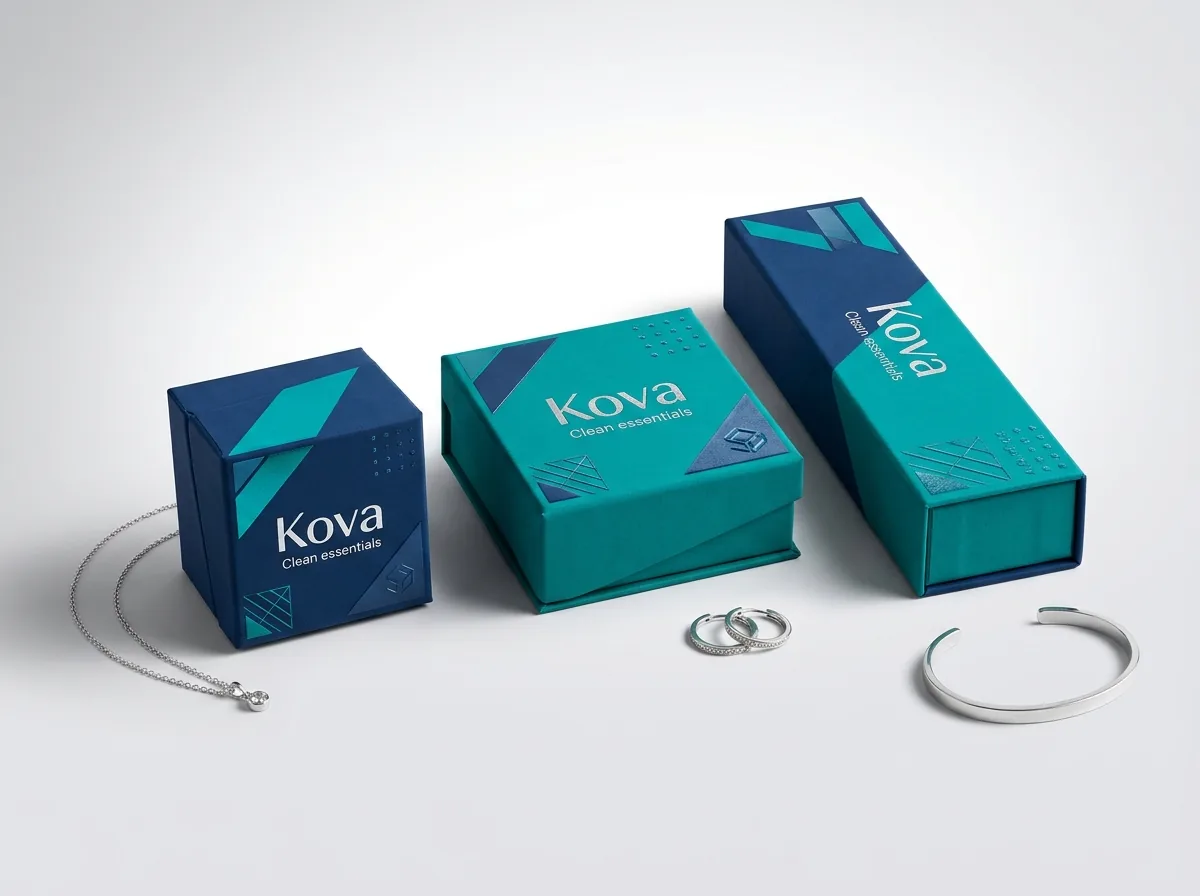
Because a jewelry box has a compact 2 × 2 inch or 3.5 × 3.5 inch lid, the customer holds it inches from their eyes and feels every square inch of the surface with their fingertips. That proximity makes tactile paper wraps and precision stamping far more impactful on jewelry boxes than on large shipping cartons. Our most requested luxury combination pairs a smooth matte or velvety soft-touch lamination with metallic foil stamping in gold, rose gold, silver or copper matched to your metal line. For a quiet, architectural aesthetic, many fine jewelers skip metallic foil on the outer lid and use blind embossing or debossing over textured uncoated paper, then place a surprise foil-stamped message or care instruction inside the lid.
What drives the cost of custom jewelry boxes and inserts?
Four choices shape your unit quote on custom jewelry boxes: the box structure (50-unit rigid setups vs 1,000-unit folding cartons), the insert construction (flat die-cut card vs multi-layer EVA foam), the number of separate box sizes in your order, and the number of finishing passes (such as combining exterior foil stamping with interior lid printing and a satin ribbon pull). To get the richest look at the lowest unit price, consolidate your earrings, pendants and bracelets into one 3.5 × 3.5 × 1.25 inch rigid box with a universal multi-slit foam pad, and use one foil stamp pass on the lid. Keeping the same outer box dimension across all SKUs lets our production line run one continuous rigid chipboard (gray board) setup while cutting your universal EVA foam pads on a single die. If you also want a removable paperboard display card inside the foam tray or a matching care card tucked underneath the pad, tell your account manager on the quote so we gang-print the cards alongside your box wrap. At CubitPack, you never pay die or plate charges, you get 10 percent off your first order, we beat any written US competitor quote for identical specs, and you can test finishes first with our $50 sample kit or a paid pre-production sample credited to your order.
- Consolidate box footprints: pooling studs, hoops and pendants into one 3.5 × 3.5 in box unlocks higher quantity price breaks.
- Use universal multi-slit pads: one EVA foam die cut with pinholes, C-notches and diagonal slits eliminates separate insert SKUs.
- Pick one hero finish: a single hot-foil stamp or blind deboss on soft-touch paper delivers high contrast without multi-pass setup.
- Compare three quantities: enter 50, 100 and 250 (or 500 and 1,000) in Step 1 of the quote form to see where unit cost drops.
What are the most common custom jewelry box insert and finish mistakes?
Most insert and finishing problems happen when slit spacing is guessed without testing actual earrings or when fine typography is over-inked. Check these five items before approving your proof
- Placing stud earring pinholes less than ½ inch apart, causing wide statement studs or cluster earrings to overlap and scratch each other.
- Cutting straight vertical slits for hoop earrings without a curved C-notch, which forces packers to bend delicate sleeper wires to insert them.
- Using loose un-slitted cotton batting for fine pendant chains, allowing the chain to slide into a knotted ball during parcel shipping.
- Setting tiny 4-point serif text in metallic hot foil on a textured paper wrap, where the foil bridges across tight letter counters.
- Printing dark unlaminated ink inside the tray or lid where it can rub against white pearls, silk cords or satin pouches.
Find your size
Suggested inside size: 2 × 2 × 1.5 in
A starting point. Your account manager confirms the size with you before the proof.
Quote this size →Packaging for this
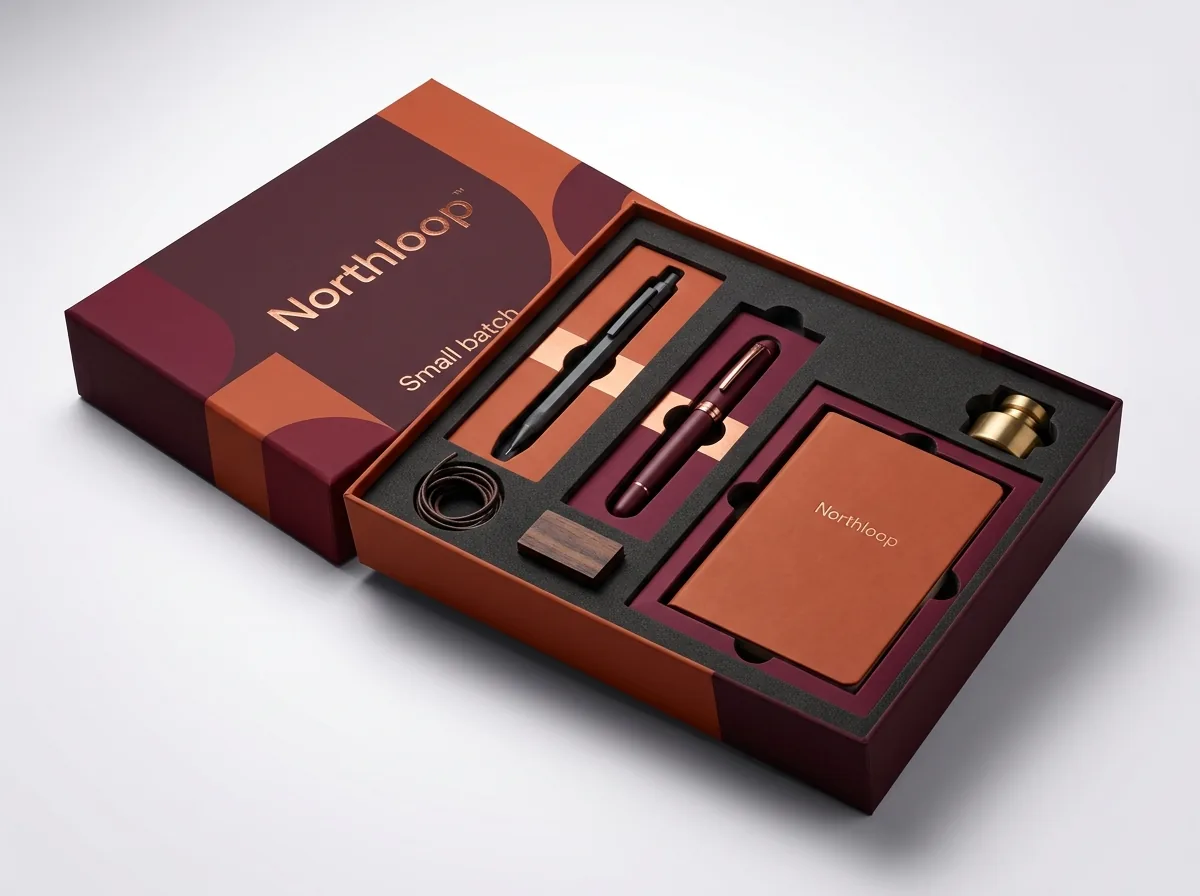

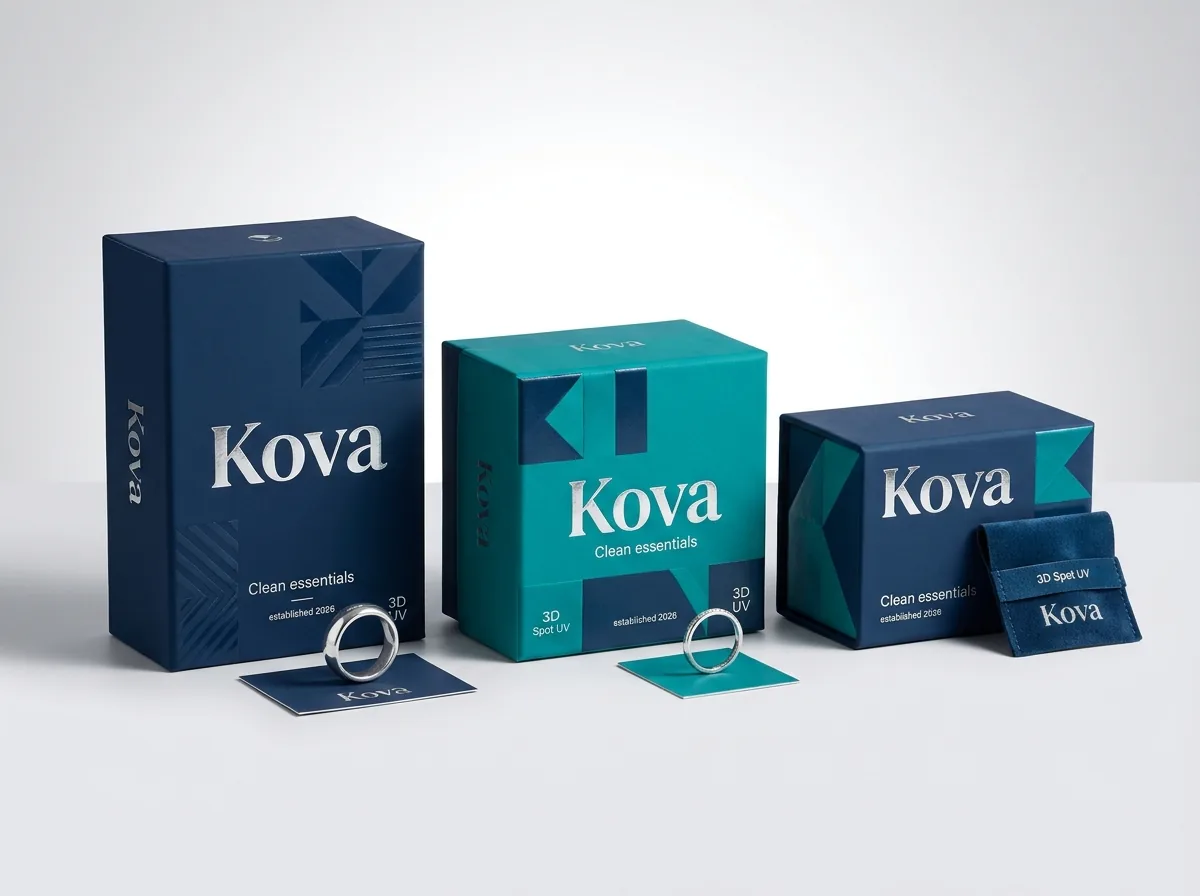
Ready to order jewelry boxes? Compare up to 3 quantities with a free 3D mockup.
Request a Quote →Questions about jewelry boxes
Do custom die-cut foam or card inserts cost extra die fees?
No. CubitPack never charges cutting die or printing plate fees for either your outer jewelry box or your interior EVA foam, EPE foam or paperboard insert pad. Our design team draw the exact pinhole, C-cut and chain-slit dieline for free.
What is the difference between EVA foam and EPE foam for jewelry boxes?
EVA (ethylene-vinyl acetate) is a denser, smoother closed-cell foam with strong elastic memory that grips ring bands, earring posts and cuffs tightly without crumbling. EPE (expanded polyethylene) is a lighter, softer cushioning foam often used in larger protective trays.
Can one insert pad really hold earrings, necklaces and rings?
Yes. A universal multi-slit pad uses two diagonal top-corner slits for pendant chains, two center pinholes for studs, two C-notches for hoops, and a horizontal center slot for a ring or chain bracelet - all on one 3.5 × 3.5 inch pad.
What foil stamping colors can I use on custom jewelry boxes?
You can choose metallic gold, champagne gold, rose gold, silver, copper, matte black or holographic foil stamping, and pair it with Pantone-matched paper wraps, soft-touch lamination or blind debossing.
Can you print care instructions on the insert card or inside the lid?
Yes. Many jewelry brands print or foil-stamp a short care line (such as 'Store in this box away from moisture and perfume') on the inside of the box lid, underneath the removable insert pad, or on a matching thank-you insert card.
How do I test my jewelry pieces in the insert slits before full production?
Every order includes a free 2D dieline proof showing exact slit measurements and a 3D mockup before payment. If you want to test physical post spacing and slit grip with your actual jewelry pieces first, ask for a paid custom prototype credited to your order.
Still have a question? Ask a packaging specialist.
Request a Quote →Request your jewelry boxes quote
Tell us your size and quantities, and one dedicated account manager prepares pricing for each tier.
- Free design & AI-to-print studio + 3D mockup
- No die or plate charges · 4–5 day rush available
- Free shipping to all 50 states
- 10% off your first order
The insert slit specifications and finishing guidelines in this guide combine closed-cell EVA foam density standards, commercial hot-foil stroke tolerances and CubitPack's decided offers in our published product specifications. A CubitPack packaging specialist verified every detail. Spot something wrong? Tell us and we will fix it.
Sources
What changed
- October 22, 2026: First published.
- October 22, 2026: Updated specifications, terminology, and verified source links.
More guides
New packaging guides by email
Sizes, materials and design tips. Unsubscribe anytime.